SEOUL, South Korea (AP) — South Korea’s military said Monday it concluded North Korea planted mines that injured three South Korean soldiers at their heavily fortified border last month, urging the North to apologize and remove other mines.
The announcement came days after North Korea denied responsibility for the Sept. 21 blasts and threatened “merciless” retaliation if provoked over the case. It followed South Korea's earlier, preliminary finding that said there was a “very high possibility” that mines buried by North Korea caused the explosions.
On Monday, South Korea's Joint Chiefs of Staff said it reached a final conclusion that North Korean mines planted just south of the border exploded and injured the three soldiers who were working on creating a patrol route in a densely vegetated area. It cited a joint investigation of the site with the American-led U.N. Command, forensic analysis of TNT and other substances collected from the South Korean soldiers’ uniforms and one other North Korean mine discovered days after the blast.
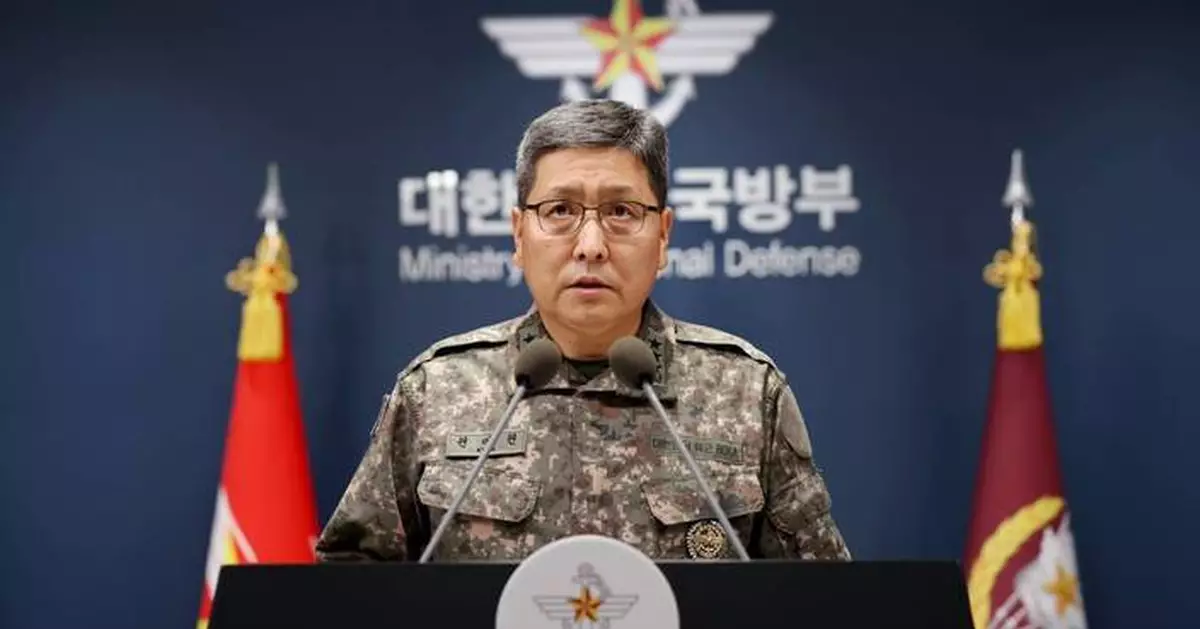
“Our military strongly urges North Korea to offer a sincere apology to our injured soldiers and immediately remove the mines that it installed in violation of an armistice agreement" that ended fighting in the 1950-53 Korean War, Lt. Gen. Kwon Dae-won, vice chairman of South Korea’s Joint Chiefs of Staff, told a televised briefing.
The armistice agreement prohibits both sides from committing any hostile act “within, from, or against” the Demilitarized Zone, a border buffer zone, and bans military or civilian personnel from crossing the military demarcation line without authorization from the armistice commission.
Despite its name, the DMZ is one of the world's most heavily armed border areas, with an estimated 2 million mines littered inside and along the zone. North Korea in recent years has added mines, barbed wire fences, anti-tank barriers and other front-line fortifications along the border, as leader Kim Jong Un declared South Korea his country’s main enemy.
South Korea’s military said North Korean soldiers violated the border's military demarcation line 17 times last year and 50 times this year during their border fortification works. South Korea responded by firing warning shots. In November 2025, South Korea proposed talks on clarifying the borderline, but North Korea didn’t respond.
Kwon said the South Korean military removed a North Korean minefield around the blast site on Monday and will remove other North Korean minefields placed south of the border unless North Korea voluntarily eliminates them.
South Korea's military earlier said it would take unspecified corresponding steps against North Korea if the North is conclusively found responsible for the mine blasts. But South Korea didn't immediately announce any substantial punitive steps on Monday.
In 2015, mine blasts at the border blamed on North Korea pushed the two Koreas to the brink of an armed conflict, after South Korea's then conservative government resumed front-line propaganda broadcasts for the first time in 11 years.
Kim's sister and senior official, Kim Yo Jong, last week called the preliminary South Korean assessment on the blasts a “conspiratorial farce" and vowed to take “immediate and merciless retaliatory action” if South Korea opens fire at North Korean soldiers fortifying the border.
The latest mine explosions came at a delicate time when South Korea's liberal government is making efforts to coordinate a resumption of talks between North Korea and the U.S., hoping that would help restart its own talks with the North and promote peace on the Korean Peninsula. North Korea has been shunning all forms of dialogue with South Korea and the U.S. since Kim Jong Un’s high-stakes nuclear diplomacy with U.S. President Donald Trump fell apart in 2019.
North Korea said Saturday it test-fired an intermediate-range ballistic missile that it claimed cannot be intercepted because of its low-altitude maneuverability and artificial intelligence capabilities. South Korea's Defense Ministry responded that the South Korean and U.S. militaries are capable of intercepting that missile.
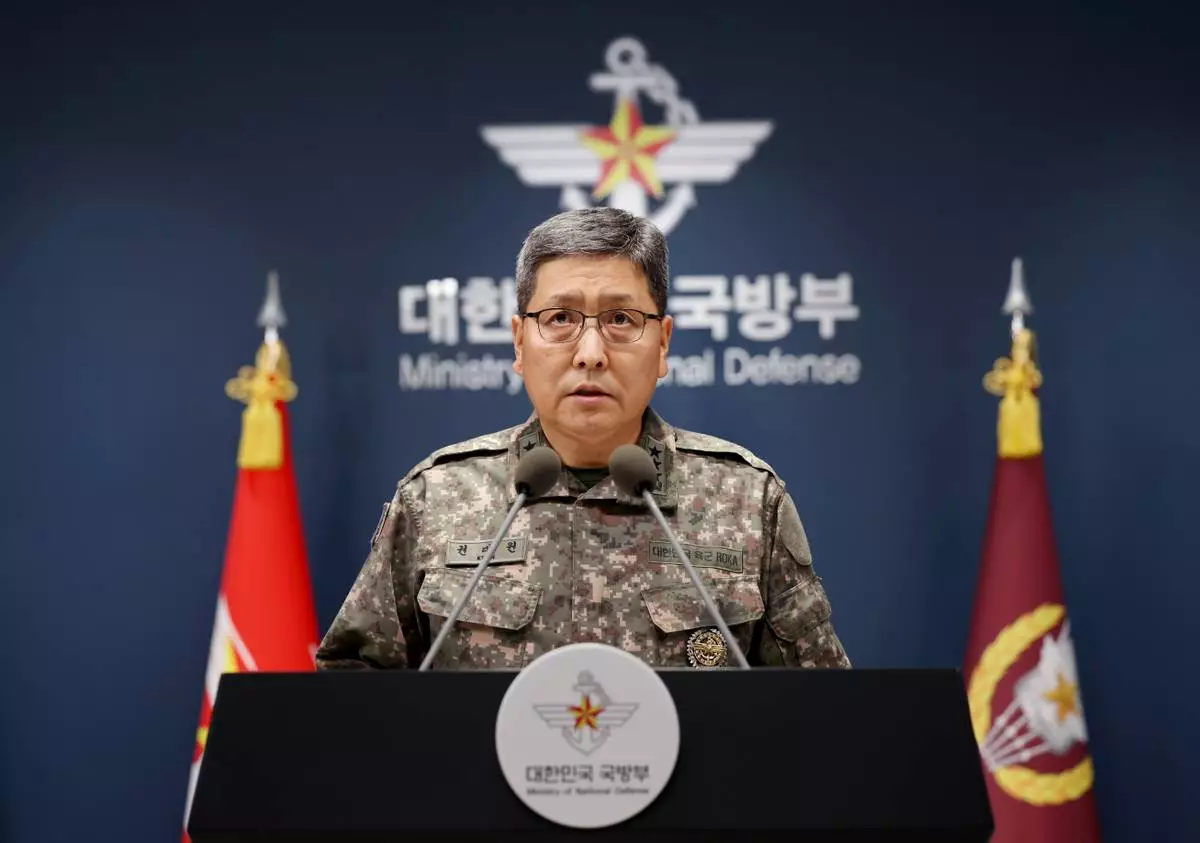
Lt. Gen. Kwon Dae-won, vice chairman of South Korea's Joint Chiefs of Staff, speaks during a briefing at the Defense Ministry in Seoul, South Korea, Monday, Oct. 5, 2026. (Lee Ji-eun/Yonhap via AP)