China's seawater desalination capacity has reached 3.077 million tons per day, according to an annual meeting of the National Seawater Desalination Industry Alliance.
The conference, held in late September in Guiyang City, southwest China's Guizhou Province, also discussed ways to advance the industry during the 15th Five-Year Plan period (2026-2030).
The National Development and Reform Commission, the Ministry of Natural Resources, and the Ministry of Water Resources issued in July an action plan for developing the seawater desalination industry.
According to the plan, China's total seawater desalination capacity is expected to exceed 4.5 million tonnes per day by 2030, with new desalination projects adding more than 1.5 million tonnes per day of capacity.
The progress will further improve the structure of water resource supply and alleviate water shortages in coastal cities and island areas.

China's seawater desalination capacity tops 3 million tons daily

China's seawater desalination capacity tops 3 million tons daily
Australia is vying to capture a larger portion of China's outbound tourism, with tour services increasingly seeking to understand and reach out to prospective Chinese travelers.
With the Mid-Autumn Festival and National Day separated by only three working days this year, some travelers used three days of leave to link the two breaks into a 13-day holiday, leading to longer trips and a surge in bookings for long-haul journeys. Australia is one of the most popular destinations.
On a recent rain-soaked morning, tour guide Pan Li picked up a family from east China's Fuzhou at a luxury resort in Far North Queensland and brought them into the Daintree Forest, the world's oldest surviving tropical rainforest. There, he gave them an in-depth tour of the forest's history and wildlife, all in Chinese.
Pan Li is among the first Mandarin-speaking graduates of a new course designed to help guides better explain the region's history and culture to visitors.
"When we do the tour in the rainforest, you don't just take guests to take a walk there and you say oh, this is a palm tree, and this is a banana tree, whatever. You want to tell them more stories behind the nature, I mean, about how the rainforest was formed and also our indigenous people, rainforest Aboriginal people, how long they have been living here," he said.
These specialized services, along with China's extended National Day holiday, have sparked a surge in tourism in Queensland.
"Right now it is helping to make us busy, it's keeping my staff busy. We've had to put on extra staff," said Richard Berman-Hardman, general manager of Skyrail Rainforest Cableway in Cairns, Queensland.
Many tourism operators in the state have recognized that in order to maximize their draw, they need to have a presence on Chinese social media.
"The investment we've made in, obviously, maintaining a RedNote page and profile and ensuring that the content that we're distributing on RedNote and via Chinese social media understands the nuances of the market," said Ben Woodward, director of sales and marketing at CaPTA Group, which operates some of North Queensland's leading wildlife parks, tours and attractions.
Before the COVID-19 pandemic, China was Australia's biggest source of international visitors. Afterward, recovery was slow, particularly in destinations like Cairns, which still lacks direct round-trip flights from the Chinese mainland.
In response, operators began making investments in marketing to Chinese travelers, and Queensland rapidly began to reap the benefits.
"Since then, the entire Queensland tourism industry has been incredibly active. I personally travel to China as part of sales missions, I have staff who are China market specialists," said Richard Berman-Hardman.
Businesses in Australia are adapting to make Chinese visitors feel more at home. One thing an increasing number of tourism related businesses across the region are doing to help attract visitors from China is by accepting Alipay and WeChat Pay, making it much easier for them to make payments. They are also adapting to a changing market, as more Chinese travelers move away from traditional group tours.
Home to two World Heritage sites, including the Great Barrier Reef, the region is particularly well suited to independent travellers building their own itineraries, a group represented by a growing number of young Chinese people.
"So for medium haul destinations like Cairns and the Great Barrier Reef, it becomes much more around the free and independent traveler, the driver traveler, the multi-day itinerary," said Mark Olsen, Chief Executive Officer of Tourism Tropical North Queensland.
This year, Chinese visitors are once again the region's highest-spending international tourists in Tropical North Queensland.
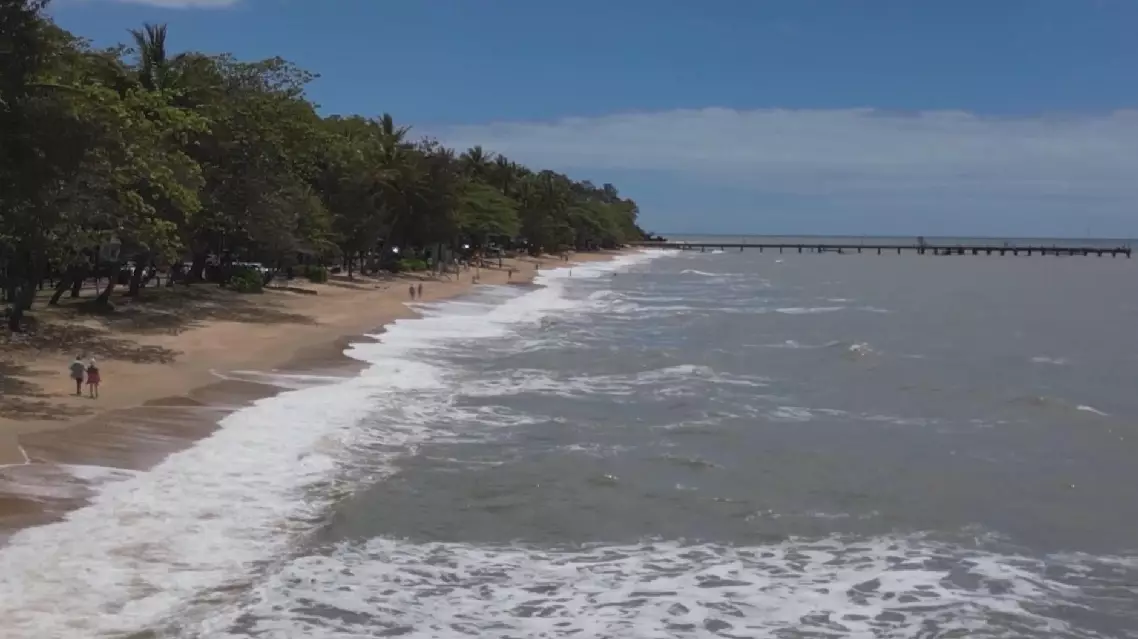
China’s extended holiday boosts tourism in Australia