China's 16th Arctic Ocean expedition is well underway, with the first-ever joint deployment of four vessels of ice breakers Xuelong and Xuelong 2, as well as research vessels Jidi and Tansuo 3, to enhance comprehensive environmental survey capability in the Arctic high seas.
The expedition is the first Arctic mission organized by China in 2026. With global warming intensifying and the Arctic temperatures rising by nearly four times the global average, investigations on the rapid and drastic changes in the Arctic natural environment carries global significance and international impact, and the four-ship formation allows more comprehensive research efforts covering multiple sectors.
"In previous years, we basically used one ship for expeditions. With four ships, the 16th expedition mainly covers ocean surveys, ice station surveys, and manned deep diving," said He Jianfeng, chief scientist of the expedition.
Because the atmosphere, sea ice and marine ecosystem feed back on one another, only synchronized, multi-sphere observations can capture the full picture of Arctic change. The multi-ship formation has greatly expanded the observation range in the Arctic Ocean, enabling simultaneous measurements at multiple positions to more precisely assess the underlying patterns of rapid Arctic climate change.
"The four-vessel deployment can greatly improve the breadth and depth of the overall survey. The entire Arctic Ocean is very vast. In the past, relying on a single ship, the surveyed area was relatively limited, and the parameters were also relatively limited," He said.
Xuelong and Xuelong 2 have so far completed their missions and returned to Shanghai, while Jidi and Tansuo 3 still remain on expedition and are expected to return in mid-October after a three-month mission.
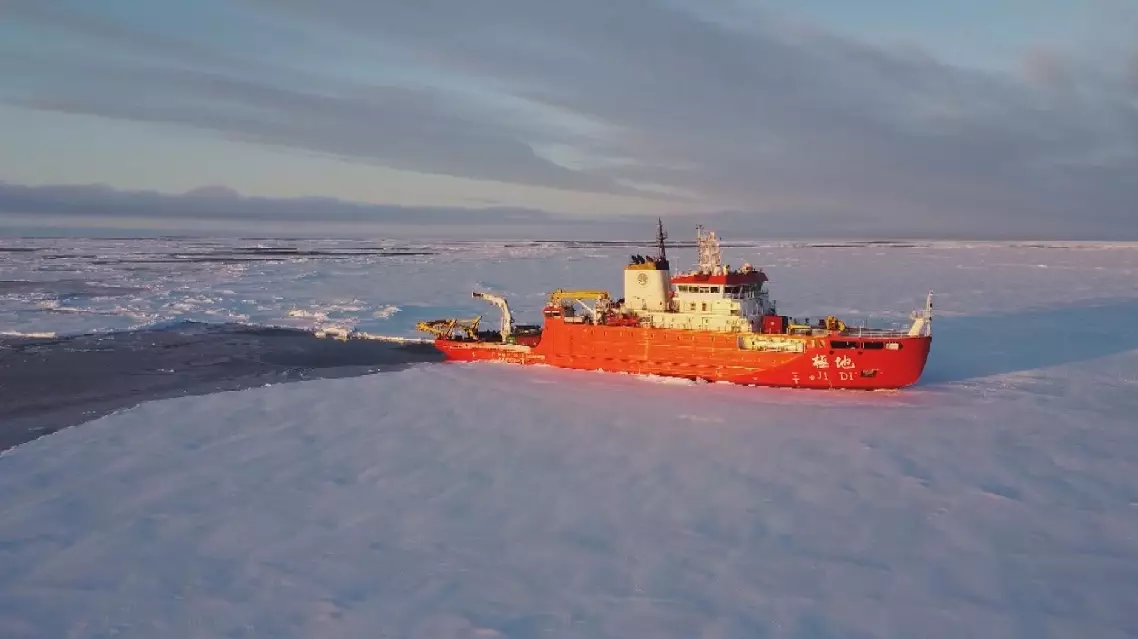
China enhances survey capability with 4-vessel deployment at 16th Arctic expedition