PARIS (AP) — Protesting pupils blockaded their high schools again Tuesday and adult demonstrators marched in support of the teenagers' weeks-old nationwide movement demanding more resources for the school system.
At the Hélène Boucher lycée, or high school, in Paris' 20th district, protesters tipped trash cans and bicycles on their sides to create a makeshift barricade in front of the school.
Click to Gallery
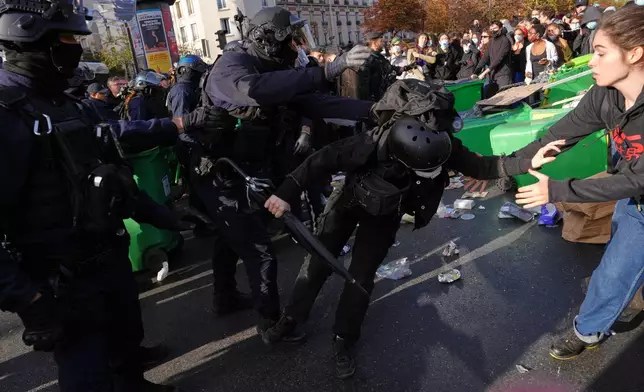
Riot police face high school students as they gather before a demonstration against under-resourced schools in Paris, Tuesday, Oct. 6, 2026. (AP Photo/Aurelien Morissard)
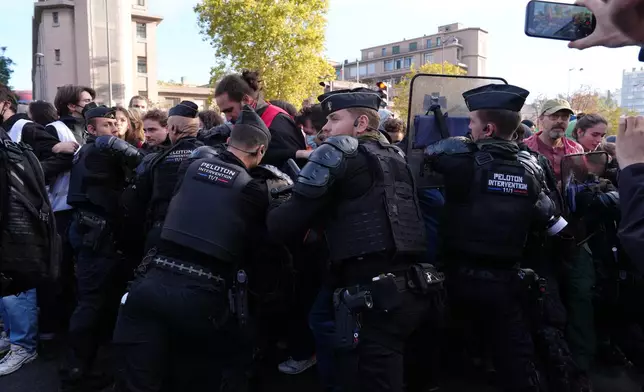
Riot police face high school students as they gather before a demonstration against under-resourced schools in Paris, Tuesday, Oct. 6, 2026. (AP Photo/Aurelien Morissard)
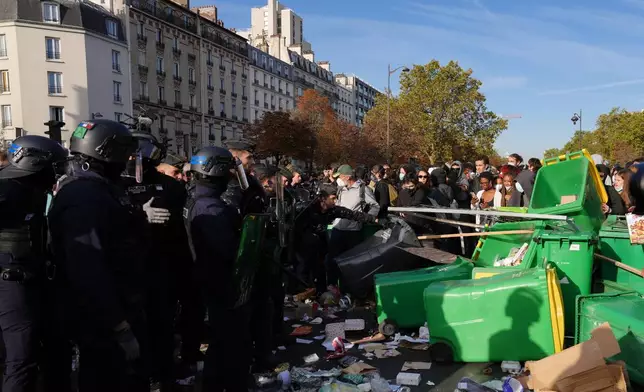
Riot police face high school students as they gather before a demonstration against under-resourced schools in Paris, Tuesday, Oct. 6, 2026. (AP Photo/Aurelien Morissard)
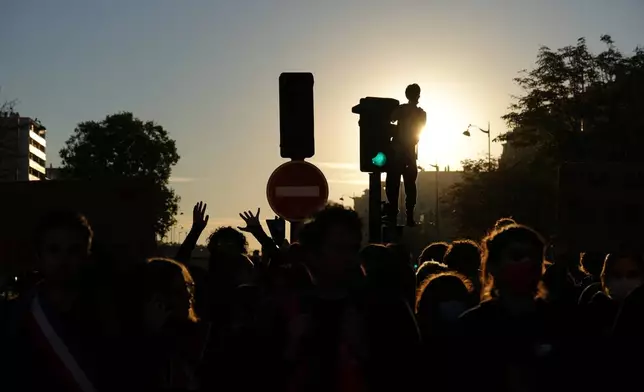
Students gather on the street before a demonstration against under-resourced schools, in Paris, Tuesday, Oct. 6, 2026. (AP Photo/Aurelien Morissard)
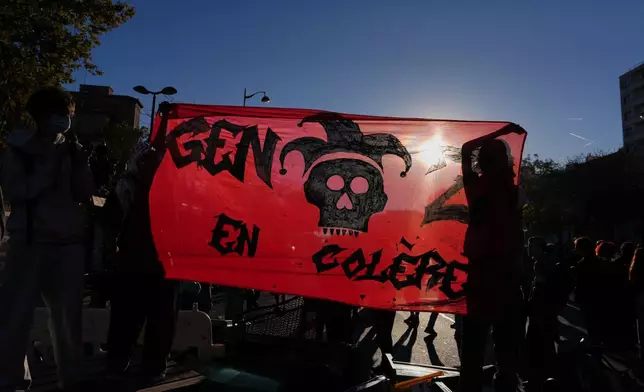
Students hold a banner reading "Youth in anger" as they gather before a demonstration against under-resourced schools, in Paris, Tuesday, Oct. 6, 2026. (AP Photo/Aurelien Morissard)
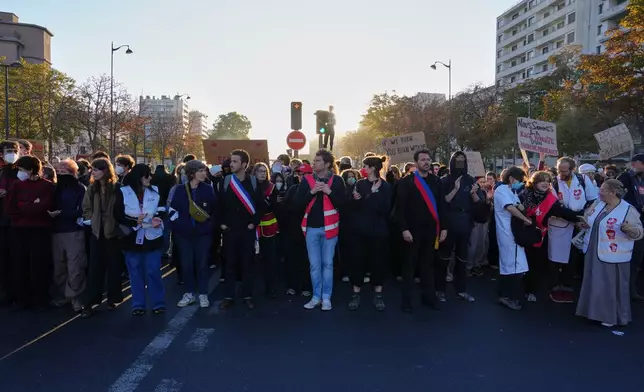
Students gather on the street before a demonstration against under-resourced schools, in Paris, Tuesday, Oct. 6, 2026. (AP Photo/Aurelien Morissard)
Like hundreds of others around the country, the school was closed. Authorities began shutting schools last week to take some steam out of the demonstrations after widespread damage to schools and mounting injuries among staff, students and police.
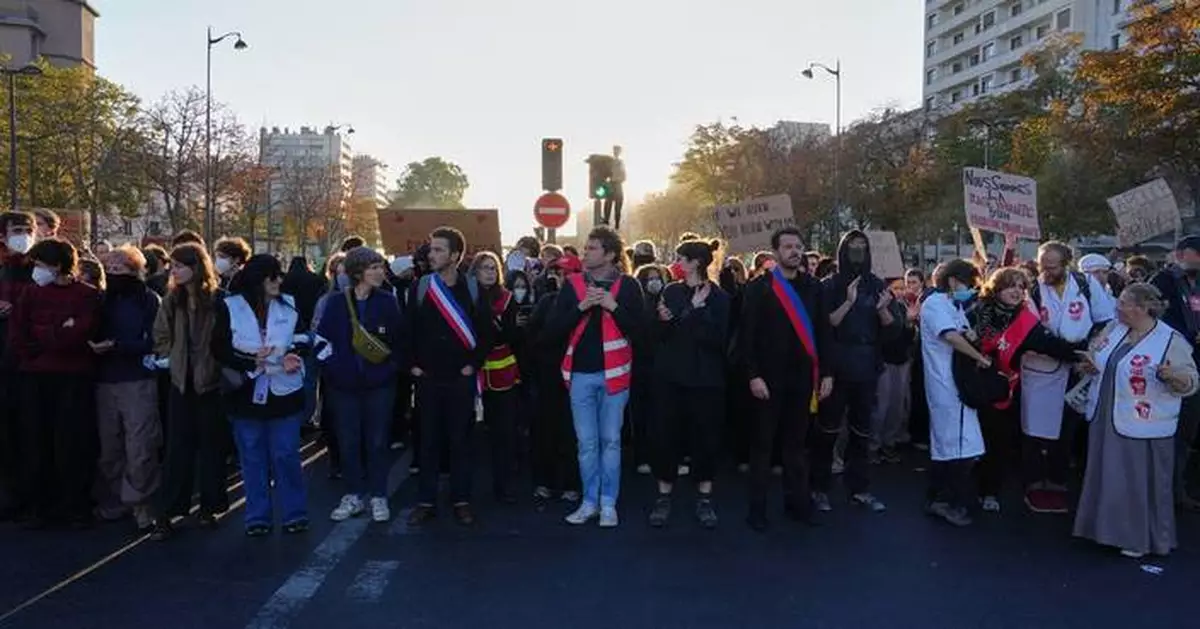
French media reported protests in other cities and towns on Tuesday morning. Flag- and placard-waving demonstrators responded to labor union calls for workers to march in support of the high school movement that is rattling the government of President Emmanuel Macron.
“You say ‘young people are the future’ so listen to them,” read a handwritten placard attached to a metal barrier outside a Paris school.
Interior Minister Laurent Nunez defended the government's muscular response, despite a growing list of gruesome injuries to young protesters blamed on police riot-control weapons. The latest was Monday, with a 15-year-old who lost a hand, seemingly ripped off by a police stun grenade.
Nunez said the police response to the protests has been proportionate in “almost all cases.”
The widespread use of arrests, tear gas and riot-control weapons against teenagers is fueling defiance and angering some parents and teachers. Officers have made more than 6,100 arrests, and 715 officers have been injured, Nunez said.
At Hélène Boucher on Tuesday, parents and other adults positioned themselves between protesters and police keeping watch.
School blockades and protests began in the Paris region in mid-September before spreading to other cities and towns. Demonstrators have voiced a range of grievances, often centering on a lack of resources and opportunities for students in disadvantaged schools despite the promise of France’s national motto: “Liberty, Equality, Fraternity.”
Students have drawn attention to rundown classrooms that lack basics such as desks and chairs, become sweltering in summer without air conditioning and, in some cases, are infested with rats. Other common complaints include staff shortages and exhausting workloads. French high school students’ compulsory classroom hours are among the highest in Europe.
__
Associated Press journalists John Leicester in Paris and Mike Corder in The Hague contributed.
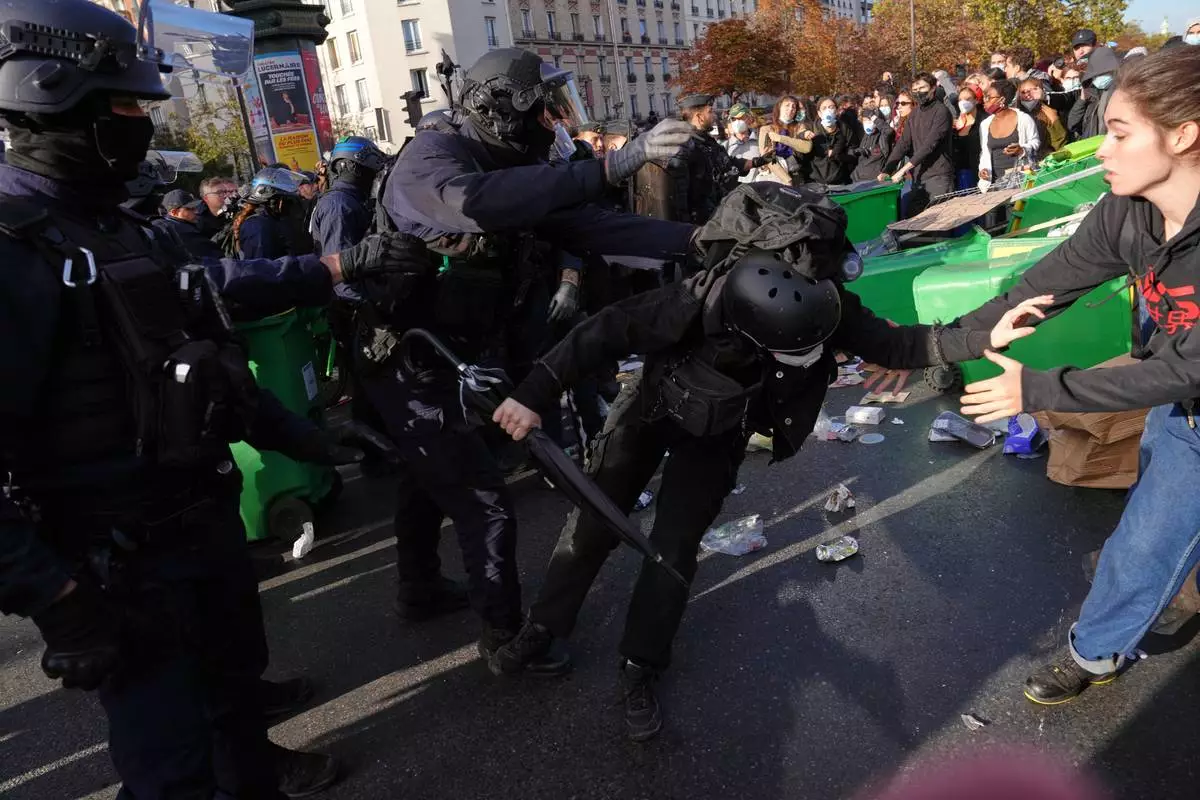
Riot police face high school students as they gather before a demonstration against under-resourced schools in Paris, Tuesday, Oct. 6, 2026. (AP Photo/Aurelien Morissard)
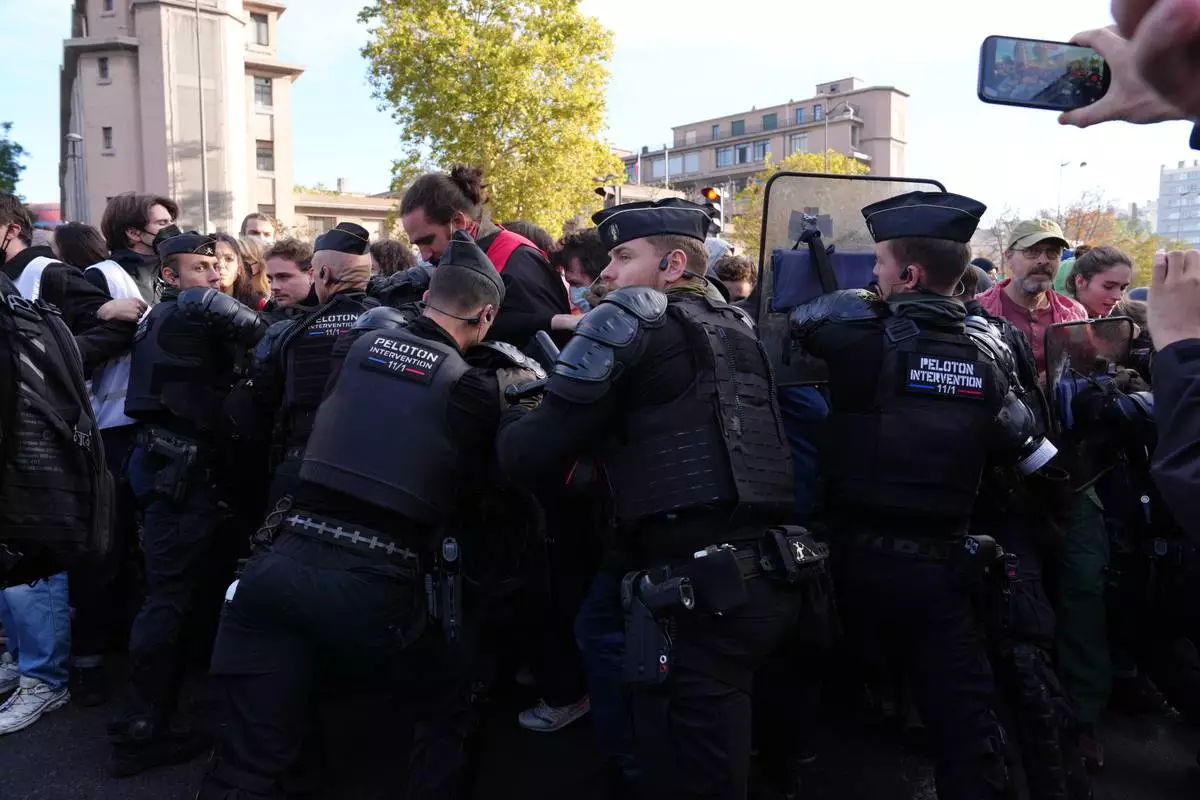
Riot police face high school students as they gather before a demonstration against under-resourced schools in Paris, Tuesday, Oct. 6, 2026. (AP Photo/Aurelien Morissard)
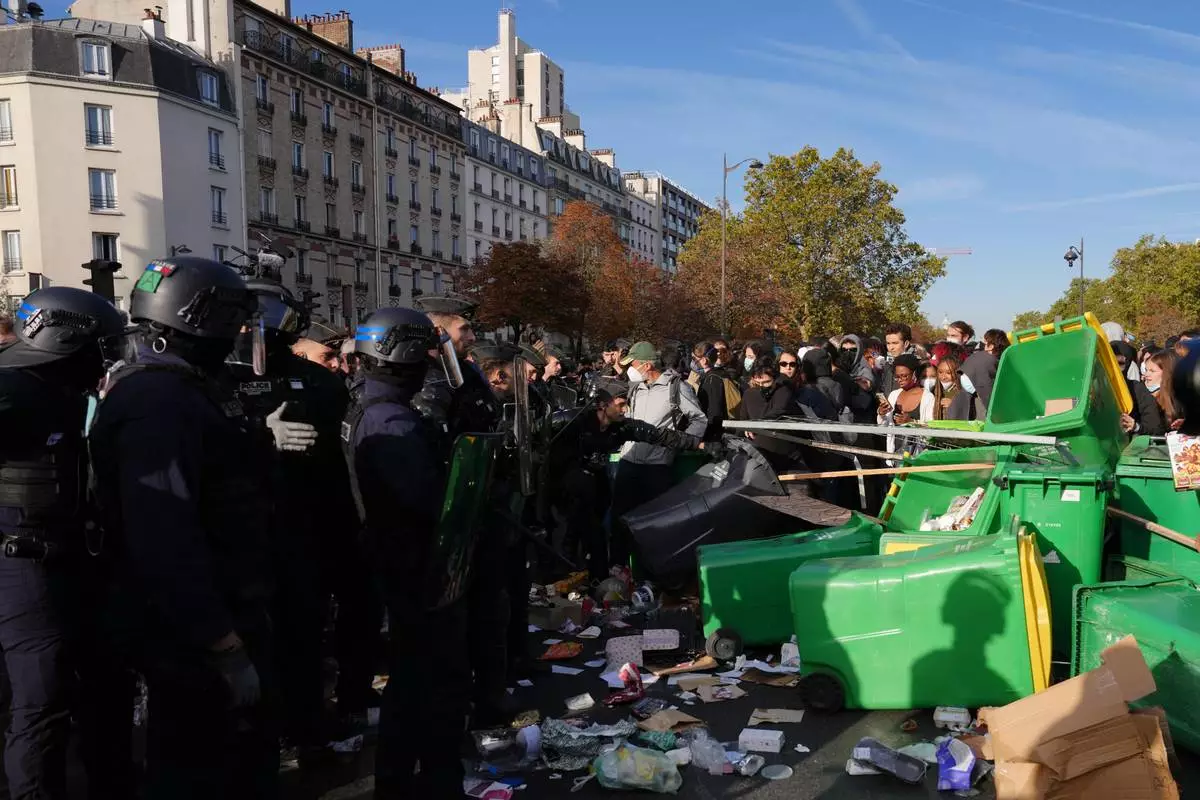
Riot police face high school students as they gather before a demonstration against under-resourced schools in Paris, Tuesday, Oct. 6, 2026. (AP Photo/Aurelien Morissard)
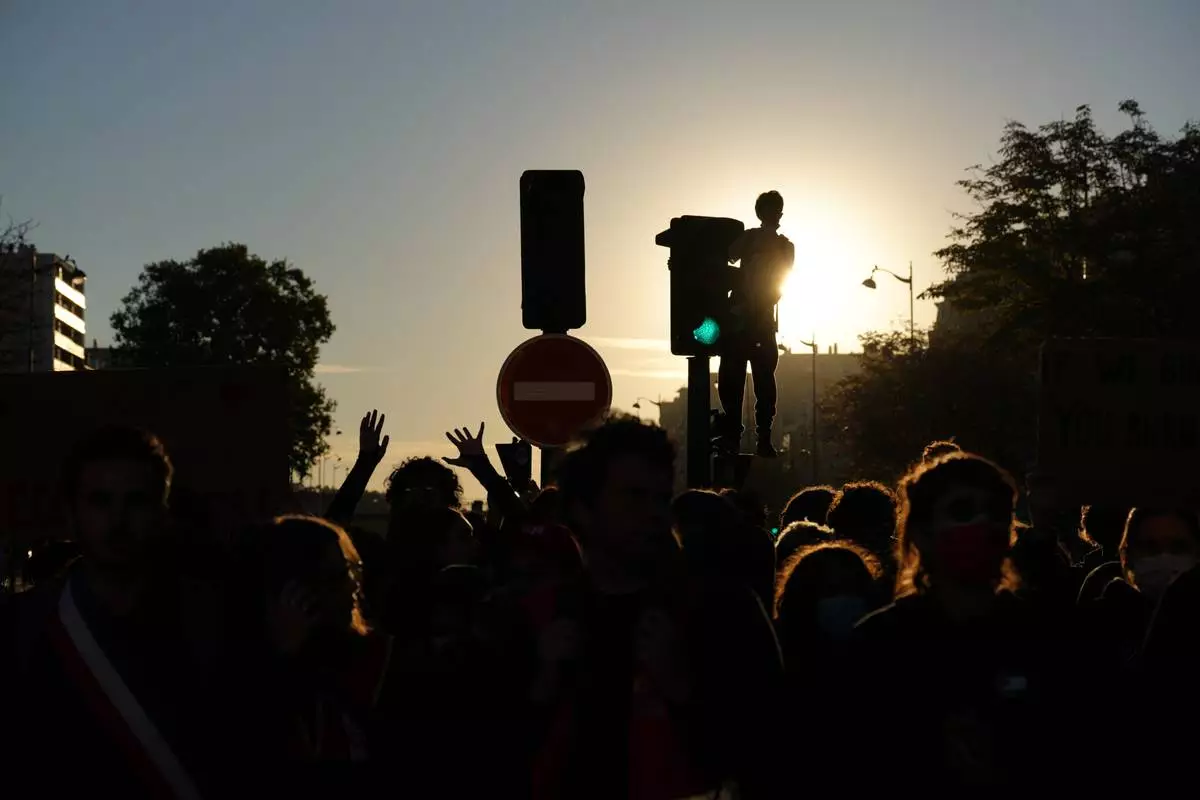
Students gather on the street before a demonstration against under-resourced schools, in Paris, Tuesday, Oct. 6, 2026. (AP Photo/Aurelien Morissard)
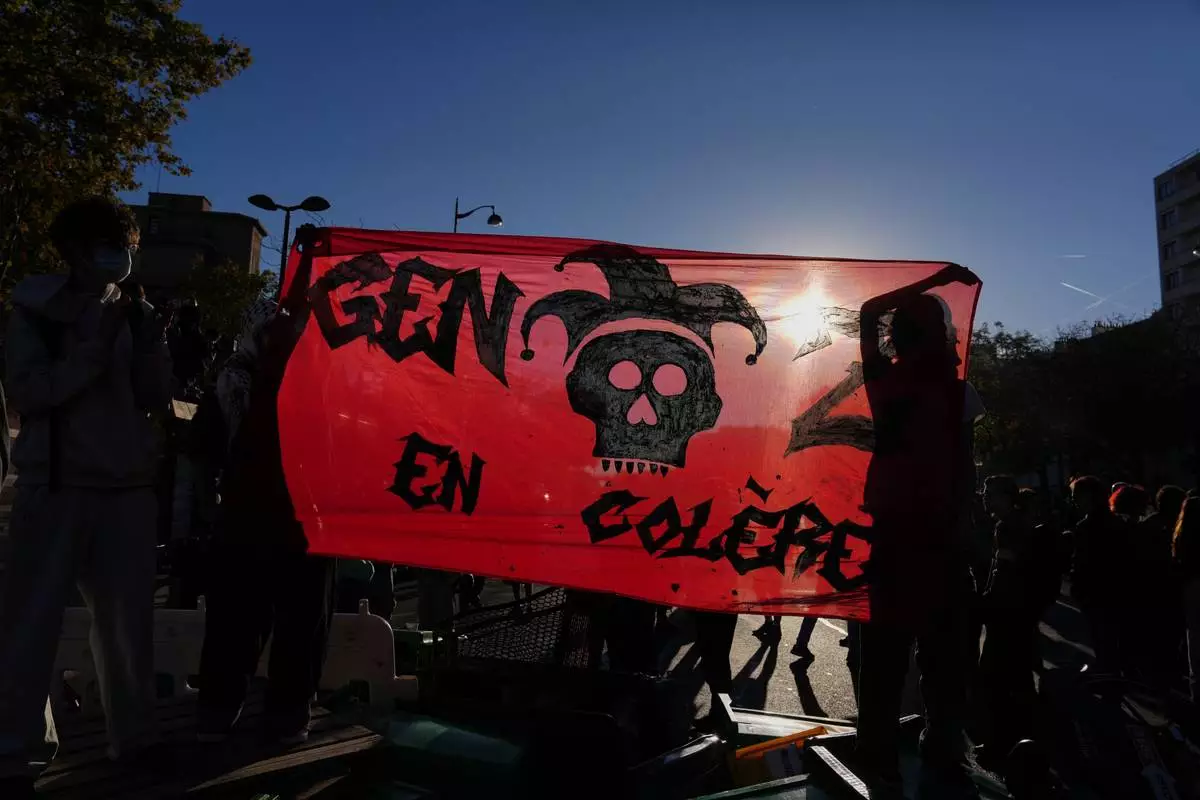
Students hold a banner reading "Youth in anger" as they gather before a demonstration against under-resourced schools, in Paris, Tuesday, Oct. 6, 2026. (AP Photo/Aurelien Morissard)
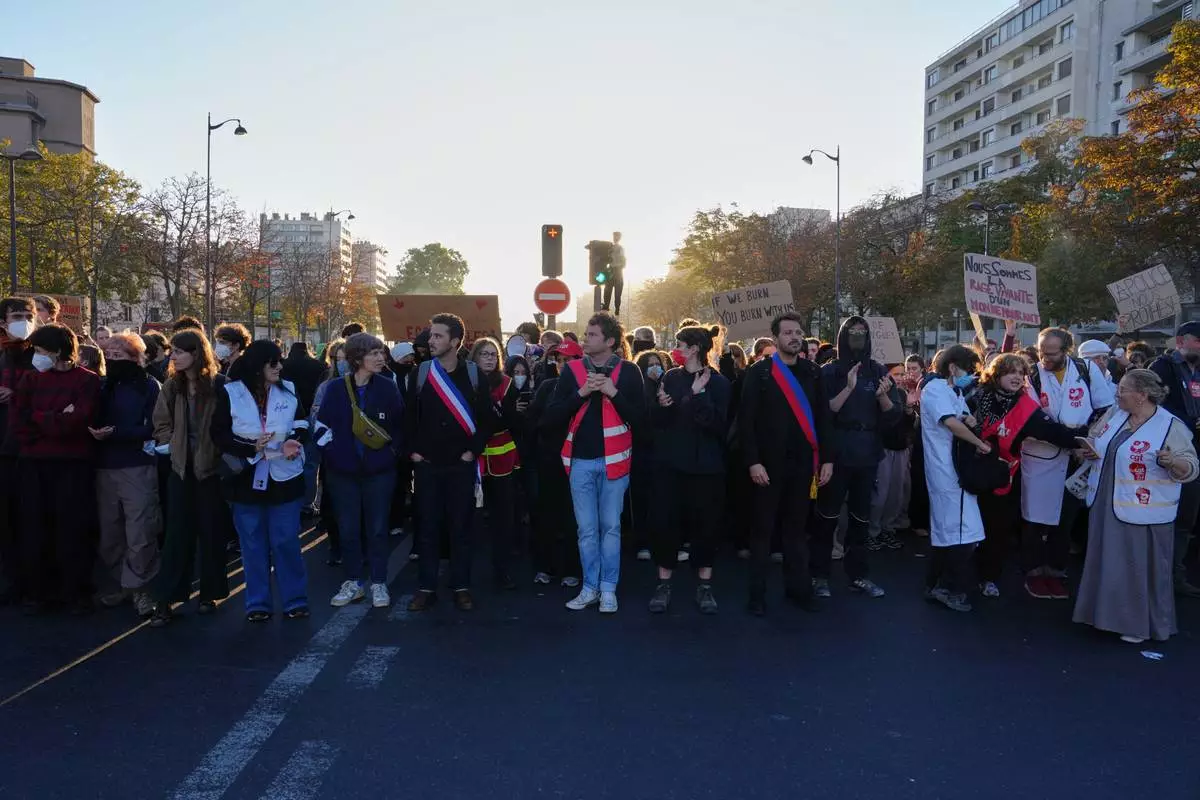
Students gather on the street before a demonstration against under-resourced schools, in Paris, Tuesday, Oct. 6, 2026. (AP Photo/Aurelien Morissard)