BANGKOK (AP) — Risks to Southeast Asia's energy supplies are multiplying faster than nations are coming up with solutions to meet rapidly rising demand for electricity, according to an International Energy Agency report released Tuesday.
Southeast Asia has a seemingly insatiable appetite for energy, but the region is now in a pinch as energy costs rise, partly due to the Iran war. Fast-growing Southeast Asian economies also need more electricity to power data centers and keep homes and businesses cool.
To beef up regional energy security, the report says Southeast Asian nations should share electricity amongst each other and diversify where they get their power. But countries face multiple hurdles, from territorial conflicts between neighbors to differing types of national energy markets, according to analysts, who warn these barriers may keep the region vulnerable to energy shocks.
“Southeast Asia is one of the world’s most dynamic regions, but its rising needs for energy to power its economic growth face challenges in an increasingly uncertain global energy landscape,” Fatih Birol, the IEA executive director, said in a statement.
With the Iran war now bleeding into its seventh month, the IEA warns energy security issues among the Association of Southeast Asian Nations will intensify as the region’s electricity demands outpace growth in power generation.
Rapid industrialization, urbanization and rising living standards are driving Southeast Asia's energy demand, which has risen almost 30% per person over the last 10 years. From now until 2030, the IEA forecasts demand will expand at an average annual rate of 5.4% because of demand for cooling, data centers and industry.
The energy crisis stemming from the closure of the Strait of Hormuz has been a wake-up call for Southeast Asia, which has suffered fuel shortages and soaring costs.
Unlike their wealthier East Asian neighbors Japan and South Korea, countries in Southeast Asia have limited energy reserves and fewer resources for dealing with the crisis.
To survive, countries went into a state of energy triage to conserve power, while also burning more coal and buying Russian crude oil. But as the conflict lengthened, it also led to new policies for cleaner power — from nuclear energy agreements, to solar power subsidies and incentives for buying electric vehicles.
That can help diversify the region’s energy sector, according to Amy Kong, with Zero Carbon Analytics. "The Iran war has given governments a bit of a reality check," she said.
If Southeast Asia wants to improve its energy security, nations need to continue diversifying energy supply sources and routes, make greater use of domestically available energy resources and accelerate electrification alongside efficiency improvements, the IEA said.
Countries need to act, and move faster, said Putra Adhiguna, with the Jakarta-based Energy Shift Institute.
“Southeast Asia is at a crossroads,” he said. “There needs to be much more drastic change in how the region adopts the energy transition and diversifies its traditional energy sources.”
The Associated Press’ climate and environmental coverage receives financial support from multiple private foundations. The AP is solely responsible for all content. Find AP’s standards for working with philanthropies, a list of supporters and funded coverage areas at AP.org.
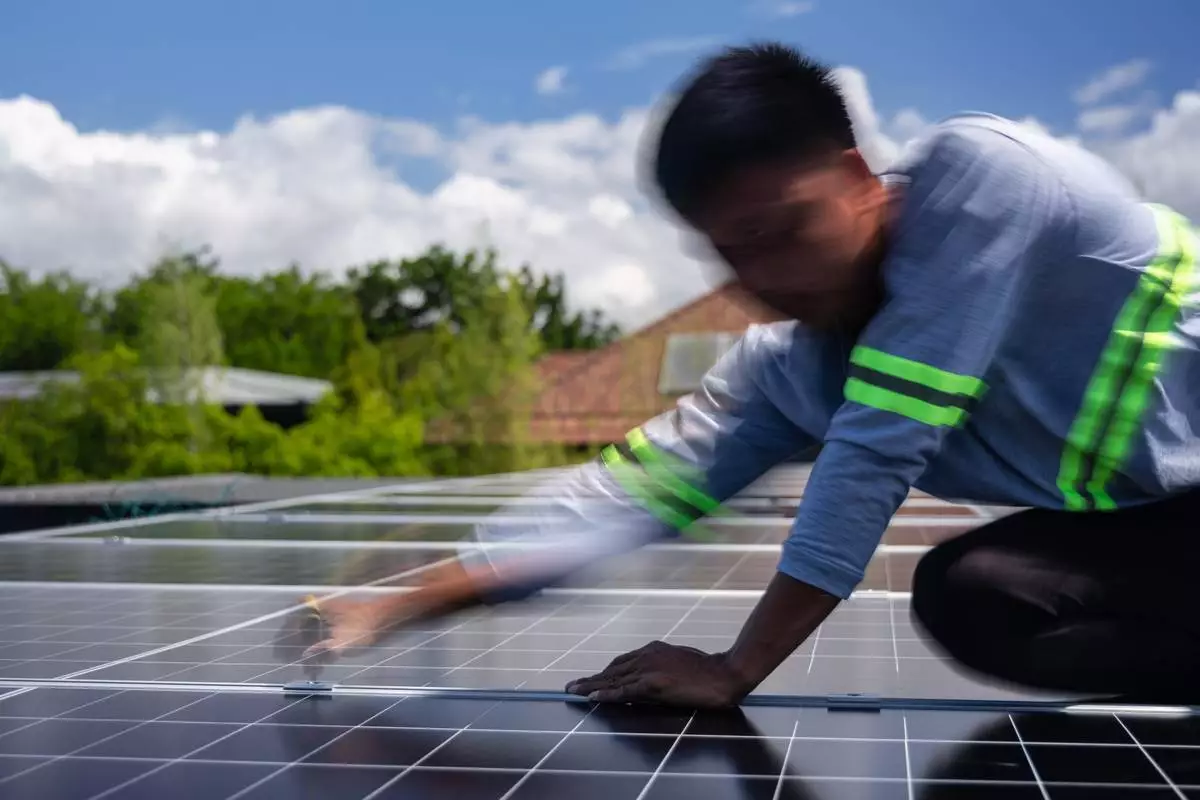
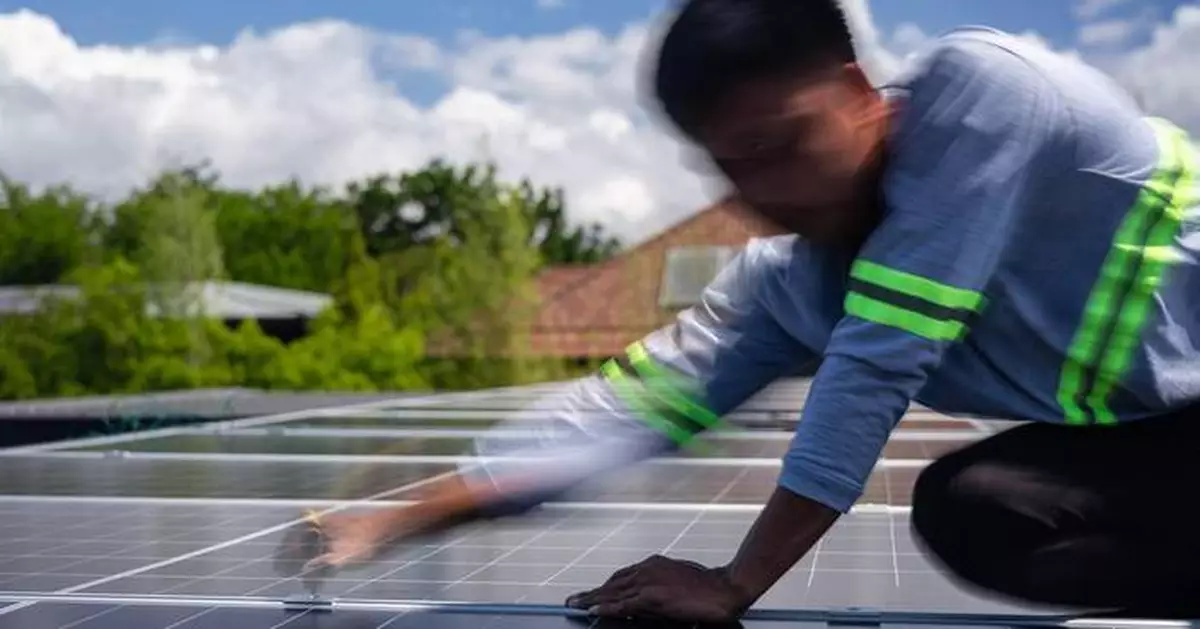
A solar installer secures a solar panel onto the roof of a home in Manila, Philippines, on May 1, 2026. (AP Photo/Anton L. Delgado)
PARIS (AP) — Protesting pupils blockaded their high schools again Tuesday and adult demonstrators marched in support of the teenagers' weeks-old nationwide movement demanding more resources for the school system.
At the Hélène Boucher lycée, or high school, in Paris' 20th district, protesters tipped trash cans and bicycles on their sides to create a makeshift barricade in front of the school.
Like hundreds of others around the country, the school was closed. Authorities began shutting schools last week to take some steam out of the demonstrations after widespread damage to schools and mounting injuries among staff, students and police.
French media reported protests in other cities and towns on Tuesday morning. Flag- and placard-waving demonstrators responded to labor union calls for workers to march in support of the high school movement that is rattling the government of President Emmanuel Macron.
“You say ‘young people are the future’ so listen to them,” read a handwritten placard attached to a metal barrier outside a Paris school.
Interior Minister Laurent Nunez defended the government's muscular response, despite a growing list of gruesome injuries to young protesters blamed on police riot-control weapons. The latest was Monday, with a 15-year-old who lost a hand, seemingly ripped off by a police stun grenade.
Nunez said the police response to the protests has been proportionate in “almost all cases.”
The widespread use of arrests, tear gas and riot-control weapons against teenagers is fueling defiance and angering some parents and teachers. Officers have made more than 6,100 arrests, and 715 officers have been injured, Nunez said.
At Hélène Boucher on Tuesday, parents and other adults positioned themselves between protesters and police keeping watch.
School blockades and protests began in the Paris region in mid-September before spreading to other cities and towns. Demonstrators have voiced a range of grievances, often centering on a lack of resources and opportunities for students in disadvantaged schools despite the promise of France’s national motto: “Liberty, Equality, Fraternity.”
Students have drawn attention to rundown classrooms that lack basics such as desks and chairs, become sweltering in summer without air conditioning and, in some cases, are infested with rats. Other common complaints include staff shortages and exhausting workloads. French high school students’ compulsory classroom hours are among the highest in Europe.
__
Associated Press journalists John Leicester in Paris and Mike Corder in The Hague contributed.

Riot police face high school students as they gather before a demonstration against under-resourced schools in Paris, Tuesday, Oct. 6, 2026. (AP Photo/Aurelien Morissard)
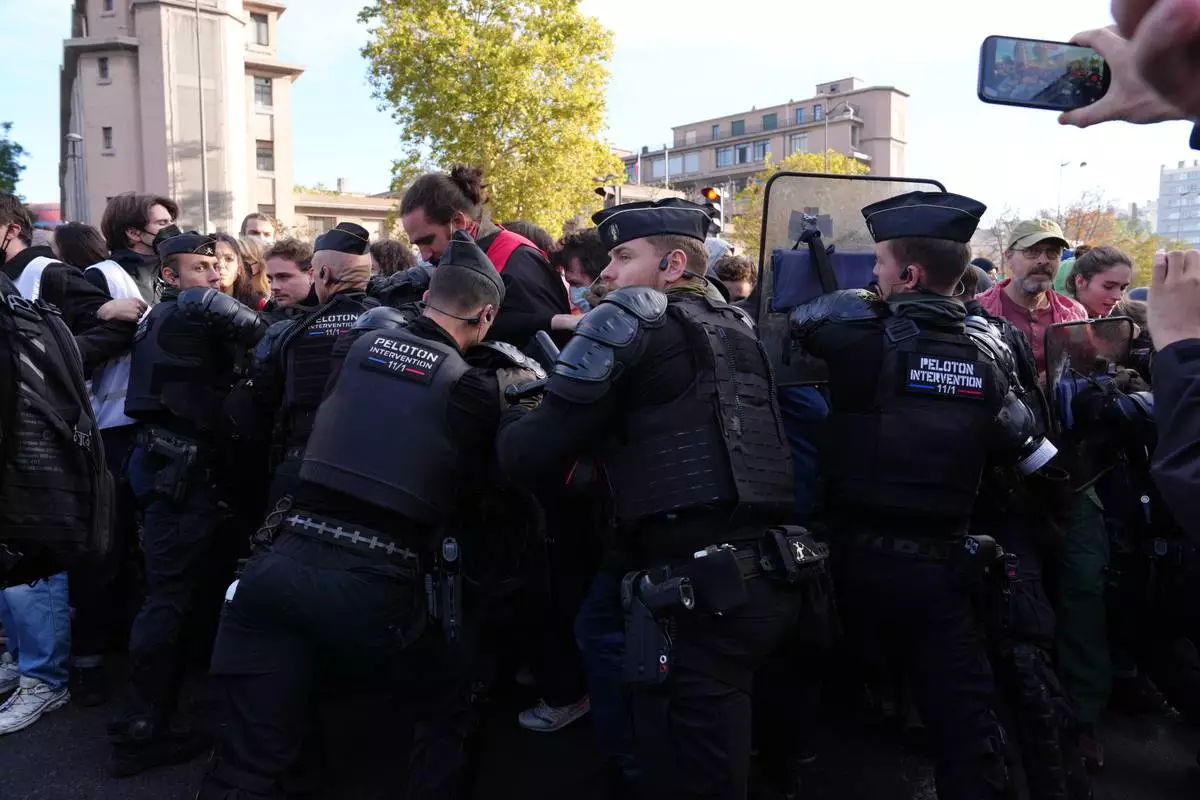
Riot police face high school students as they gather before a demonstration against under-resourced schools in Paris, Tuesday, Oct. 6, 2026. (AP Photo/Aurelien Morissard)
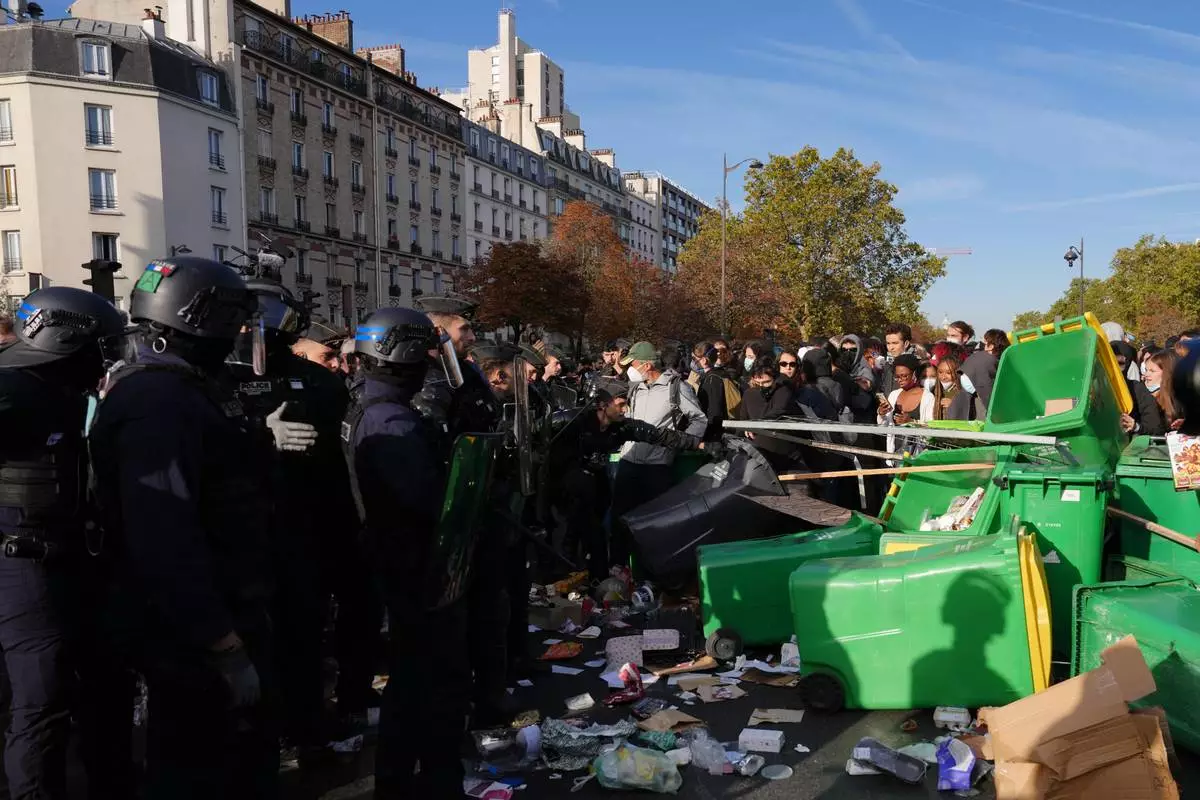
Riot police face high school students as they gather before a demonstration against under-resourced schools in Paris, Tuesday, Oct. 6, 2026. (AP Photo/Aurelien Morissard)
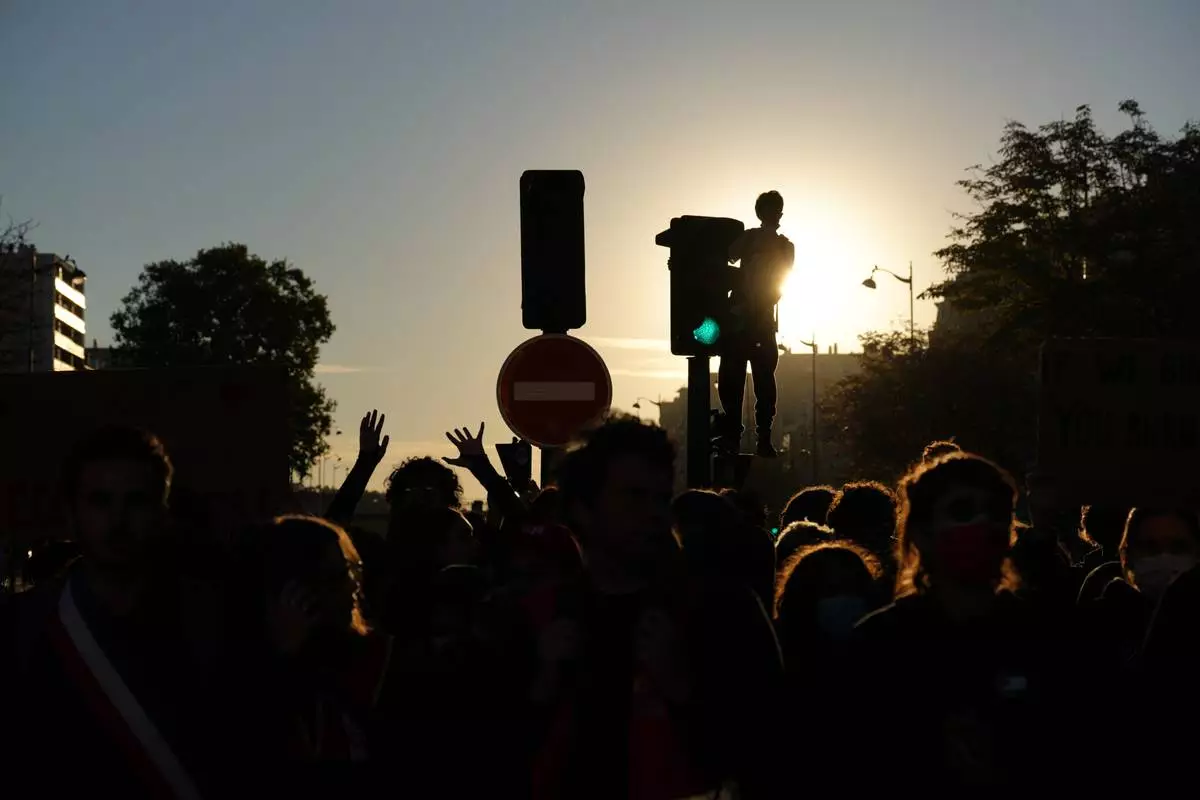
Students gather on the street before a demonstration against under-resourced schools, in Paris, Tuesday, Oct. 6, 2026. (AP Photo/Aurelien Morissard)
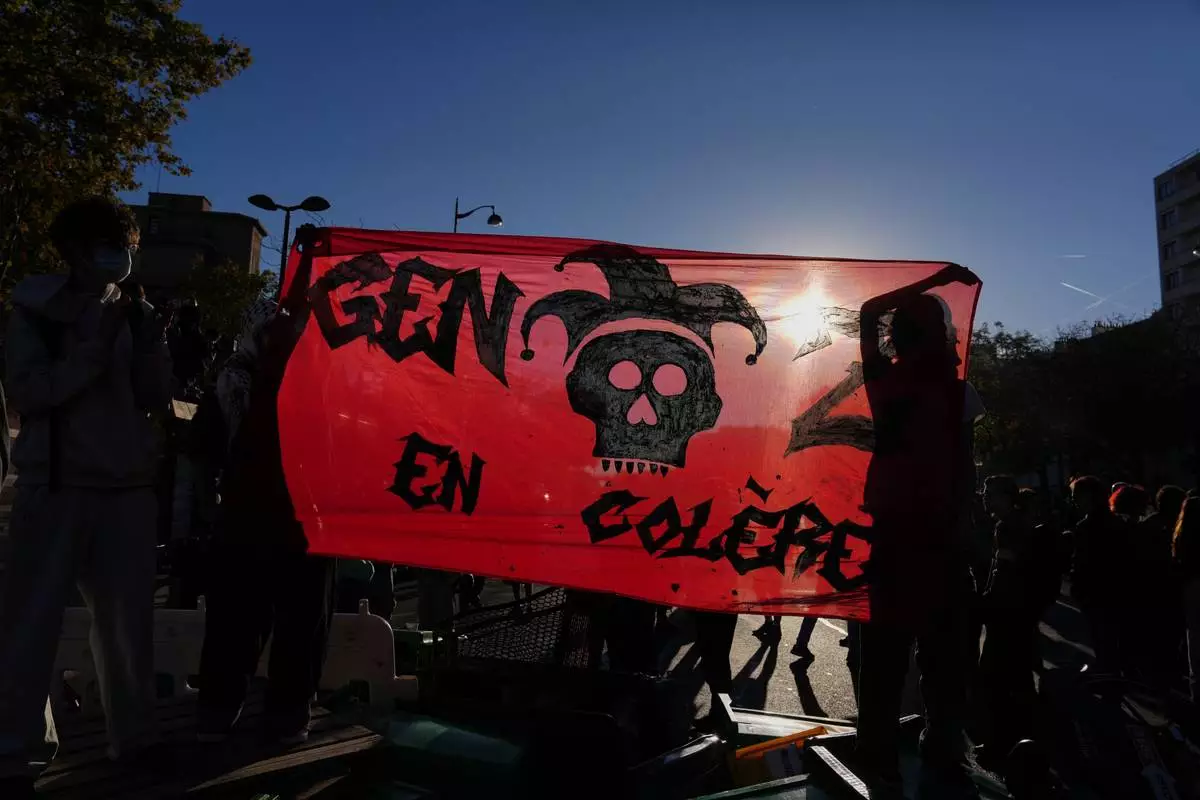
Students hold a banner reading "Youth in anger" as they gather before a demonstration against under-resourced schools, in Paris, Tuesday, Oct. 6, 2026. (AP Photo/Aurelien Morissard)
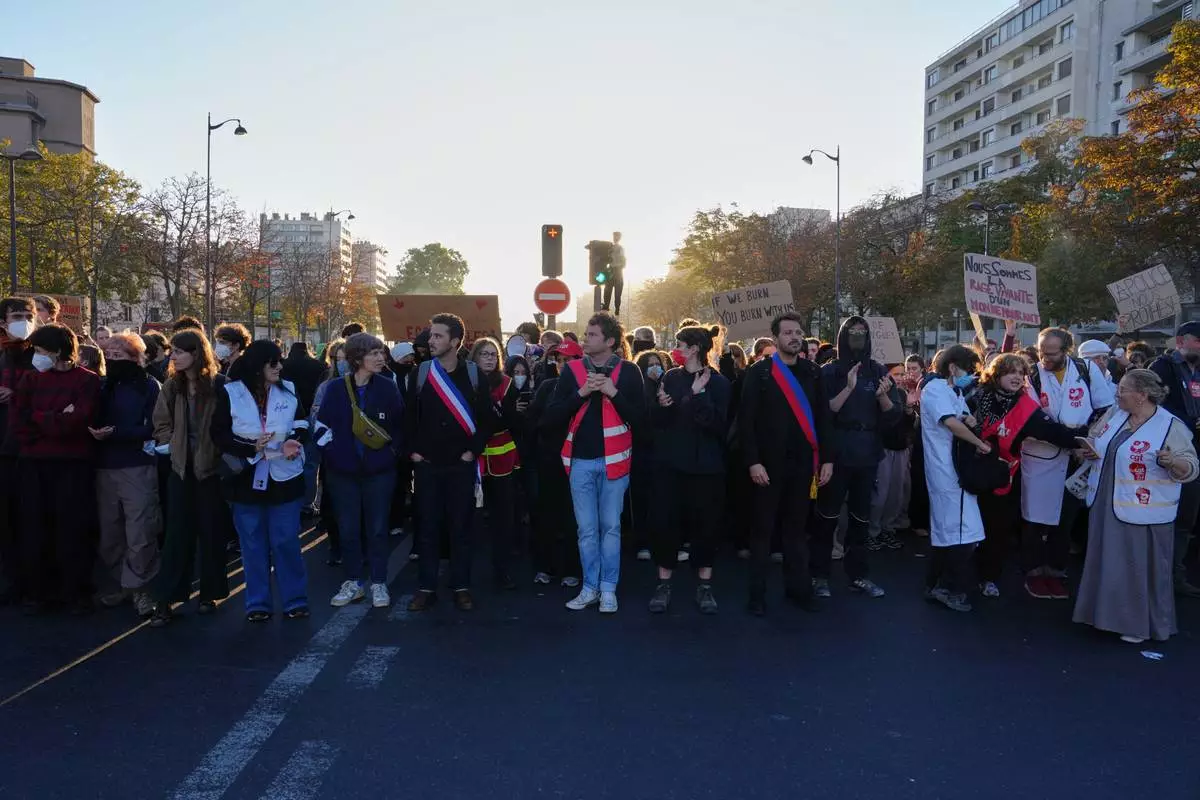
Students gather on the street before a demonstration against under-resourced schools, in Paris, Tuesday, Oct. 6, 2026. (AP Photo/Aurelien Morissard)