GENEVA (AP) — The World Health Organization says a possible case of pneumonic plague in Russia presents a “very low” risk outside the country as investigators look into what caused the death from pneumonia of a lab employee there last week.
The U.N. health agency said on Tuesday that it has been in contact with Russian authorities following reports of the death last week of a woman who worked at the Irkutsk Anti-Plague Research Institute of Siberia and the Far East.
The case and the investigation, led by Russian officials, have revived memories of the COVID-19 pandemic and allegations that the coronavirus may have emerged at a Chinese lab. WHO has not provided a definitive answer to how the pandemic began.
Here's what to know about the case and how experts are mobilizing after the woman's death:
The incubation period for pneumonic plague — which means lung-based and is the most virulent form of the disease — can be as short as 24 hours, according to WHO. It’s a less common but severe form that can spread between people through respiratory particles.
If untreated, the illness can be fatal, but recovery rates are high if detected and treated in time — within 24 hours of the onset of symptoms, WHO says.
Symptoms include shortness of breath and coughing, often involving the coughing up of blood.
The more common form of plague — bubonic plague — is caused by the bite of an infected flea, and can develop into open sores filled with pus.
Pneumonia is a form of acute respiratory infection that is mostly caused by viruses or bacteria, and is spread generally through contact with infected people or from airborne droplets. WHO says pneumonia is the single largest infectious cause of death in children worldwide.
Through an international health alert system, Russian health officials on Tuesday said a full range of preventive measures had been carried out — including tracing of the deceased woman's contacts, medical monitoring and lab tests.
“Test results showed no presence of dangerous infectious disease pathogens in any of the contacts,” said the note from Russian authorities, which was relayed to The Associated Press by WHO.
"Based on available data, laboratory test results, and health status, medical monitoring for 100% of the contacts has now been concluded," it said. “The epidemiological situation is stable and remains under monitoring.”
The woman died at a hospital in Shelekhov, a town just outside the city of Irkutsk, and its mayor said the hospital was placed under quarantine. The top officials from Russia’s national public health watchdog traveled to the region on Friday.
On Monday, Kremlin spokesman Dmitry Peskov advised the public to follow official statements from the watchdog agency, Rospotrebnadzor, rather than “rumors or speculation.”
WHO spokesman Christian Lindmeier told a U.N. briefing on Tuesday that the institute where the woman worked “studies dangerous pathogens,” including plague in a part of Siberia where the disease "occurs naturally in wild animals.”
He said Russian officials have not yet asked for WHO experts to deploy to Russia, where authorities are "looking into whether pneumonic plague caused her death.”
In recent days, WHO has brought in technical experts to its Geneva headquarters and the European regional office in Copenhagen in connection with the investigation, including specialists in high-threat pathogens.
“The WHO initial risk assessment from the information available estimates ... the risk to be moderate-to-low for Irkutsk; a low risk for the Russian Federation as a whole; and very low for the WHO European region,” Lindmeier said.
U.S. President Donald Trump said on Monday that he was watching the situation with concern and that the United States would be willing to help, though he said he had not spoken to Russian President Vladimir Putin about the case.
Asked about Trump’s remarks, Kremlin spokesman Peskov said Tuesday that “it is always very good when mutual assistance is offered.” He wouldn’t elaborate further, deferring to Rospotrebnadzor.
U.S. Secretary of State Marco Rubio urged Russian authorities to share more information.
“Maybe there’s nothing there. Maybe it’s bigger than we thought. We don’t know,” he said at a news conference in Iceland. “We’re watching it very closely and I think the whole world is watching it very closely."
“We encourage Russia to be more transparent and share more information with the world,” Rubio said, adding this has so far been “quite limited, but hopefully that will change in the next few hours and days.”
Ian Jones, professor of virology at the University of Reading, said that “plague carries a huge history and is still present in many parts of the world, including Russia,” although because of modern living conditions and antibiotics, its potential was limited.
Dr. Glenn Wortmann, at the MedStar Washington Hospital Center, said the bacteria that cause plague don't “travel very far” and a person would “really need to be face-to-face” with an infected person to get pneumonic plague.
“The chance of this spreading widely in Russia and then extending here to the U.S. will not happen, not with this type of bacteria, because it’s not spread easily and we have antibiotics to stop it from spreading,” he added.
Associated Press writers Dasha Litvinova in Tallinn, Estonia, and Matthew Lee in Reykjavik, Iceland, contributed to this report.

This undated photo released in 2019 by the Irkutsk Anti-Plague Research Institute of Siberia and Far East, shows the institute workers in a lab. (The Irkutsk Anti-Plague Research Institute of Siberia and Far East via AP) ADDITION: adding photo was released in 2019
PARIS (AP) — Tens of thousands of demonstrators marched in cities across France on Tuesday in support of protests by school pupils demanding more education funding, increasing pressure on the government of outgoing President Emmanuel Macron.
As pupils again blockaded high schools, large crowds waving flags and placards gathered in Marseille, Strasbourg and other cities. The demonstrations showed how protests that began at a high school in the Paris region in mid-September have grown into a nationwide movement — the latest of many that have marked Macron’s nearly decade-long tenure.
“We need to listen to them,” said Léa Monimart, a demonstrator in the northern city of Lille. “They are 17 years old; they are not completely clueless, and they know what they are talking about. It’s important to show that there are adults who support them.”
The Interior Ministry estimated that 86,000 people took part in demonstrations outside Paris on Tuesday morning. More were gathering in the capital for a protest scheduled for the afternoon.
More than two weeks of class boycotts and school blockades, and policing that has led to more than 6,100 arrests, mostly of minors, have become a flashpoint in the early days of the presidential election campaign.
Felix Barney, a university student, described the police response as disproportionate. “It doesn’t have any sense to hit minors,” he said.
“Riot police, batons, rubber bullets, tear gas,” said Aurélien Le Coq, a lawmaker with the far-left France Unbowed party. Its presidential candidate is strongly backing the protests.
The violence is “absolutely unbearable,” Le Coq said.
The teenage protesters have struck a chord amid widespread discontent in France. Frustrations extend beyond immediate difficulties, such as fuel prices that have soared because of the Iran war, to broader concerns about constraints on public spending, rising poverty and wealth inequality under Macron, who cannot run for a third consecutive term.
Against that backdrop, pupils’ complaints that education funding shortfalls are endangering their futures have found a sympathetic audience.
“You say ‘young people are the future,’ so listen to them,” read a handwritten placard attached to a metal barrier outside a Paris school.
At the Hélène Boucher lycée, or high school, in Paris' 20th district, protesters tipped trash cans and bicycles on their sides to create a makeshift barricade.
Like hundreds of others around the country, the school was closed. Authorities began shutting schools last week to take some steam out of the demonstrations after widespread damage to schools and mounting injuries among staff, students and police. Classes were totally or partially suspended Tuesday at 891 schools, according to the Education Ministry.
Facing accusations that it was ignoring protesters, the ministry launched an online portal inviting high school students to anonymously describe the difficulties they face at school and the changes they want to see.
Interior Minister Laurent Nunez on Tuesday defended policing methods used against high schoolers, despite a growing list of gruesome injuries blamed on officers' riot-control weapons. The latest was a 15-year-old boy who lost a hand on Monday in an incident involving a police stun grenade.
Nunez said the police response has been proportionate in “almost all cases.”
The widespread use of arrests, tear gas and riot-control weapons against teenagers is fueling defiance and angering some parents and teachers. Nunez said protests transformed at times into rioting, requiring police intervention. He said 715 officers have been injured.
At Hélène Boucher, parents and other adults positioned themselves Tuesday between protesters and police keeping watch.
“They are our children. Teachers, parents, federations, we all share the same goal: the protection of children’s rights, and it is a legitimate right to demonstrate and to make demands,” said Emilia Sichili Suriam, who is a member of an association of parents.
Demonstrators have voiced a range of grievances, often centering on a lack of resources and opportunities for students in disadvantaged schools despite the promise of France’s national motto: “Liberty, Equality, Fraternity.”
Students have drawn attention to rundown classrooms that lack basics such as desks and chairs, become sweltering in summer without air conditioning and, in some cases, are infested with rats. Other common complaints include staff shortages and exhausting workloads. French high school students’ compulsory classroom hours are among the highest in Europe.
__
Associated Press journalists John Leicester, Masha Macpherson and Catherine Gaschka in Paris, Mark Carlson in Lille, France, and Mike Corder in The Hague contributed.
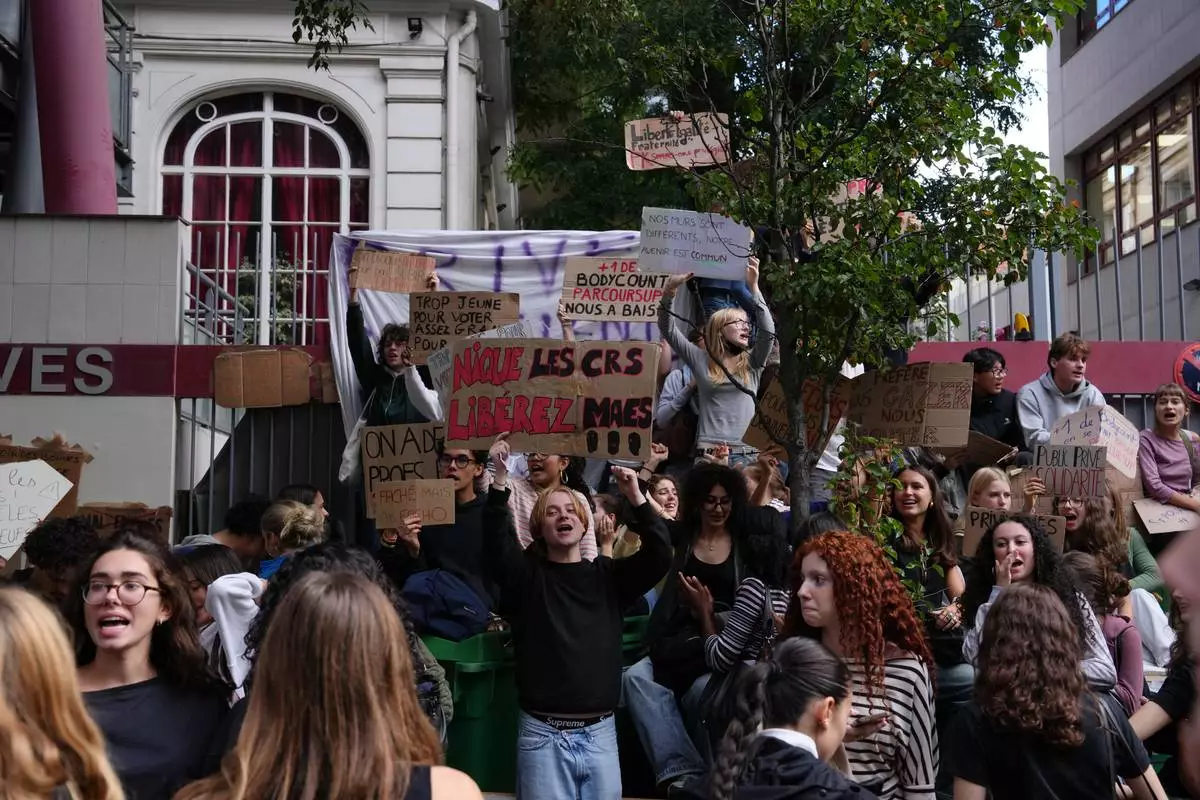
EDS NOTE: OBSCENITY - Students block the entrance of a high school before a demonstration against under-resourced schools, in Paris, Tuesday, Oct. 6, 2026. (AP Photo/Aurelien Morissard)
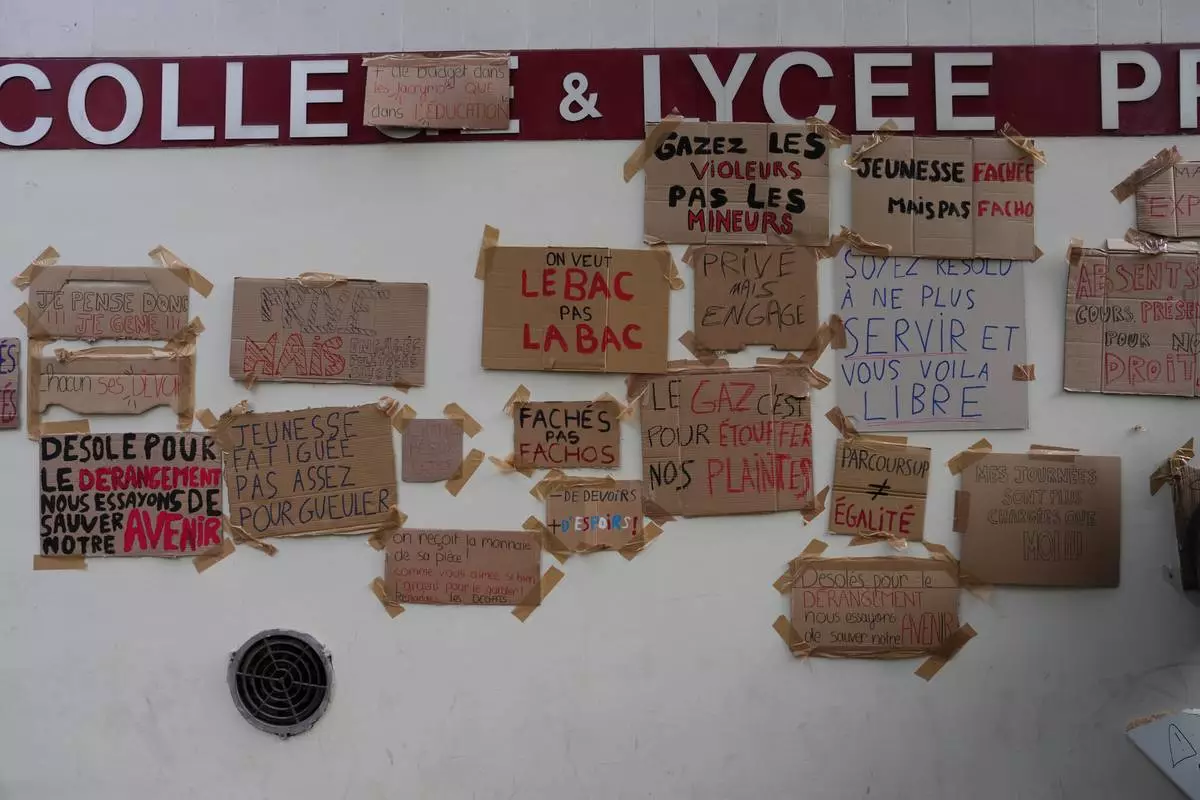
Protest slogans are posted on a school wall by high school students as they gather before a demonstration against under-resourced schools, in Paris, Tuesday, Oct. 6, 2026. (AP Photo/Aurelien Morissard)
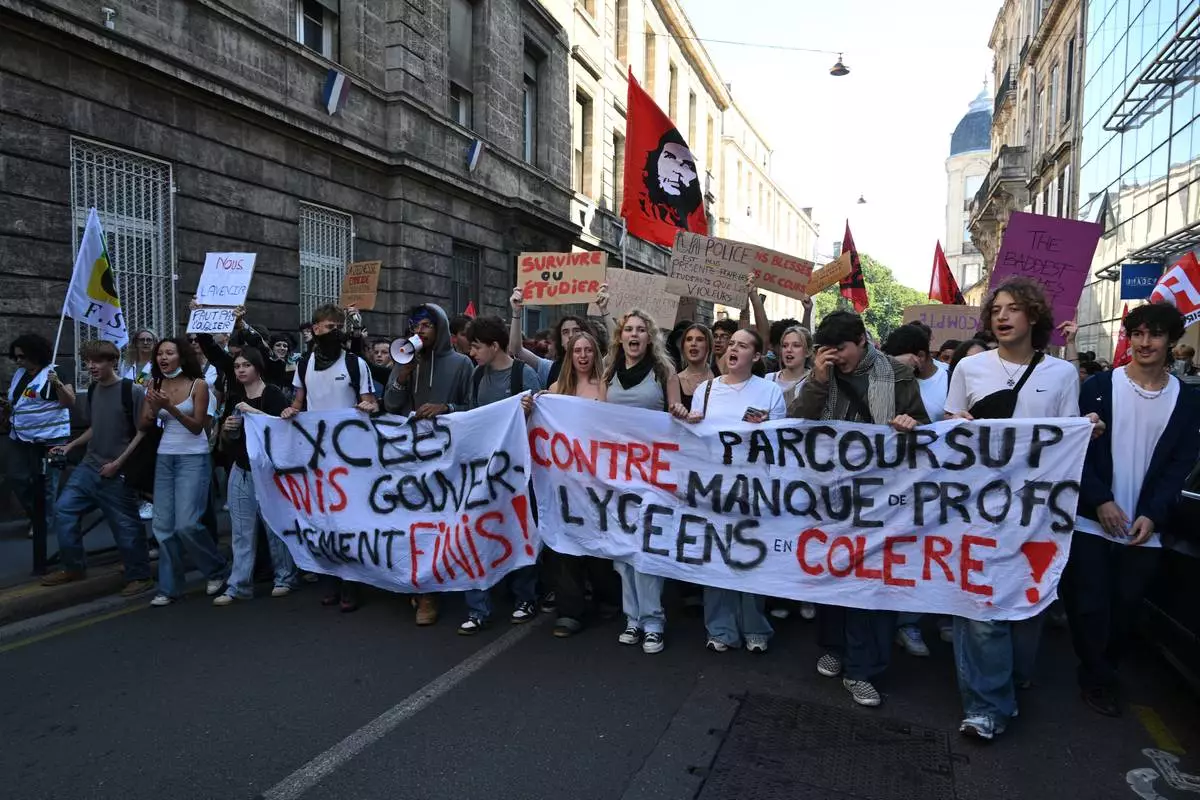
High school students march during a protest against under-resourced schools, in Bordeaux, France, Tuesday, Oct. 6, 2026. (AP Photo/Caroline Blumberg)
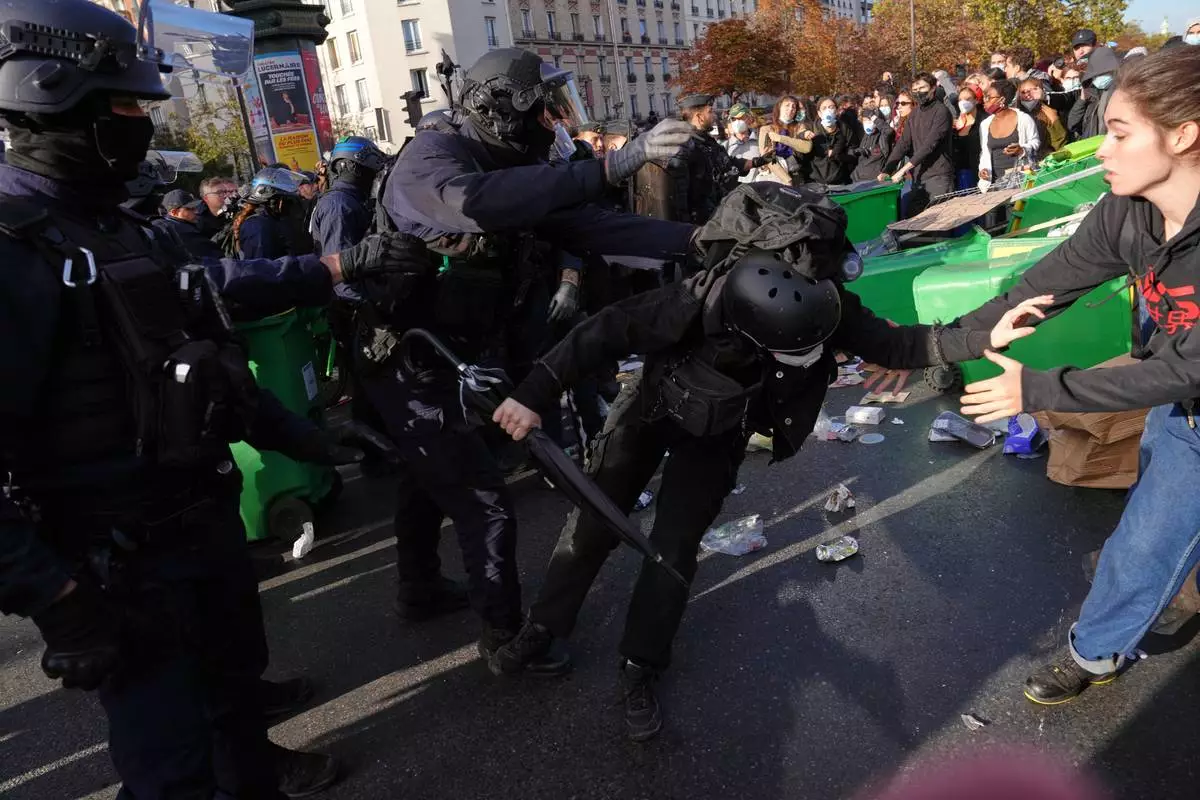
Riot police face high school students as they gather before a demonstration against under-resourced schools in Paris, Tuesday, Oct. 6, 2026. (AP Photo/Aurelien Morissard)
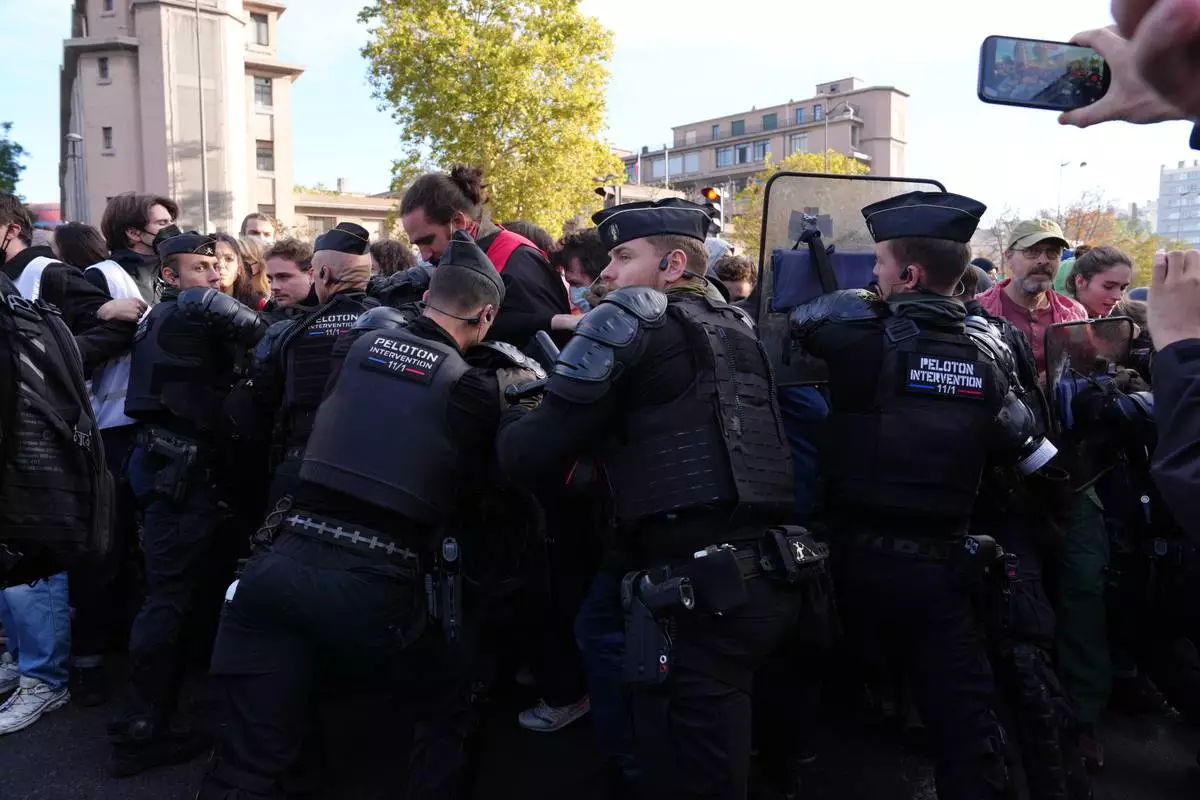
Riot police face high school students as they gather before a demonstration against under-resourced schools in Paris, Tuesday, Oct. 6, 2026. (AP Photo/Aurelien Morissard)
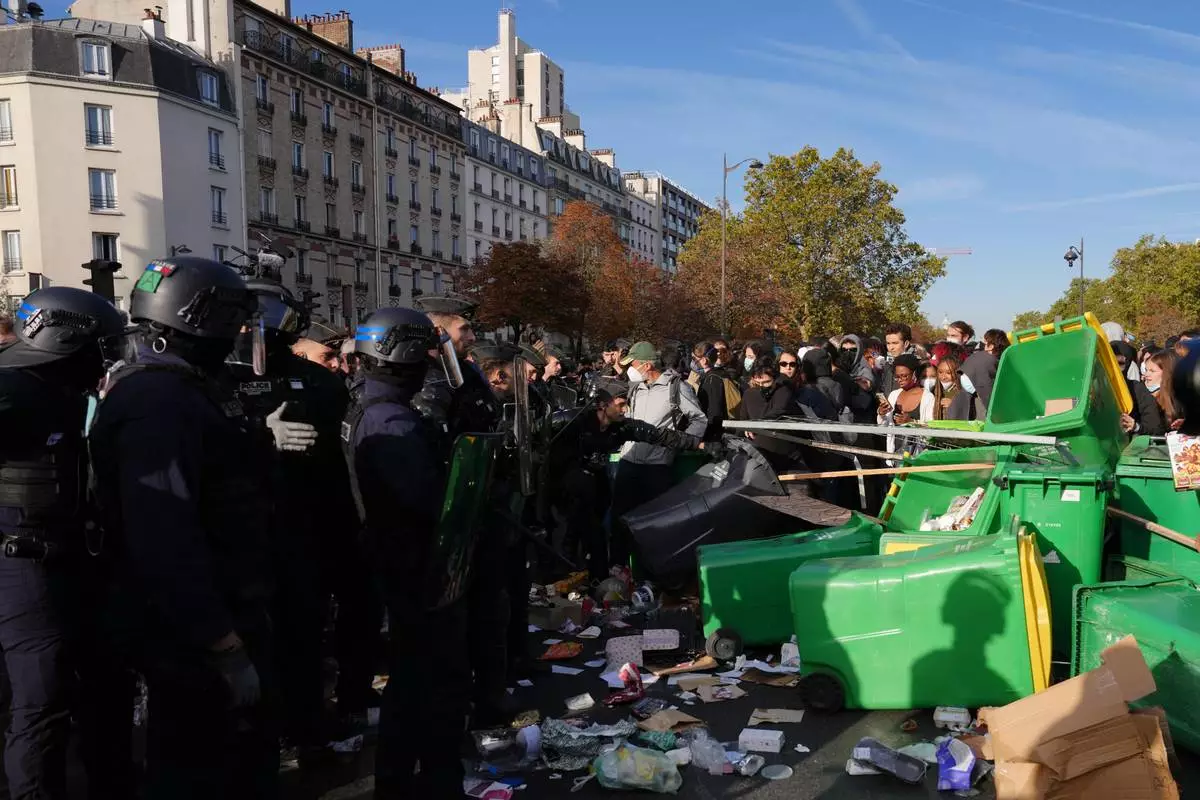
Riot police face high school students as they gather before a demonstration against under-resourced schools in Paris, Tuesday, Oct. 6, 2026. (AP Photo/Aurelien Morissard)
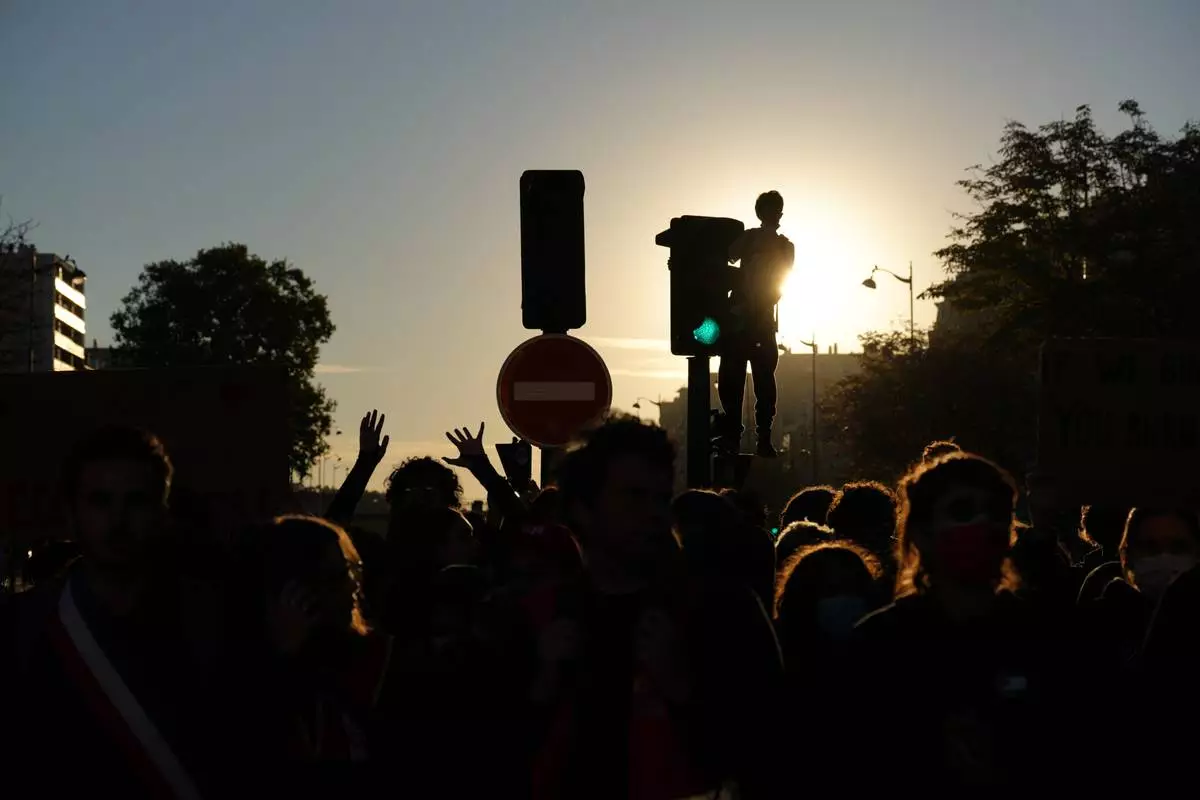
Students gather on the street before a demonstration against under-resourced schools, in Paris, Tuesday, Oct. 6, 2026. (AP Photo/Aurelien Morissard)
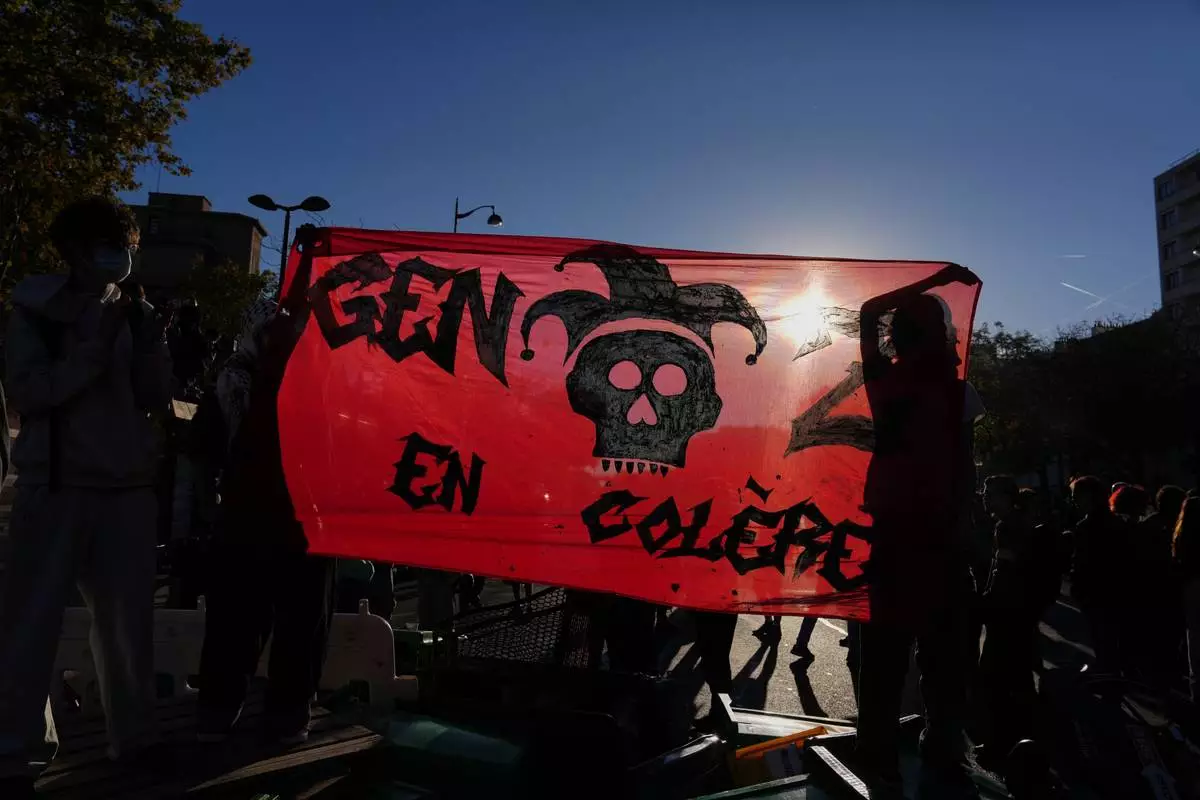
Students hold a banner reading "Youth in anger" as they gather before a demonstration against under-resourced schools, in Paris, Tuesday, Oct. 6, 2026. (AP Photo/Aurelien Morissard)
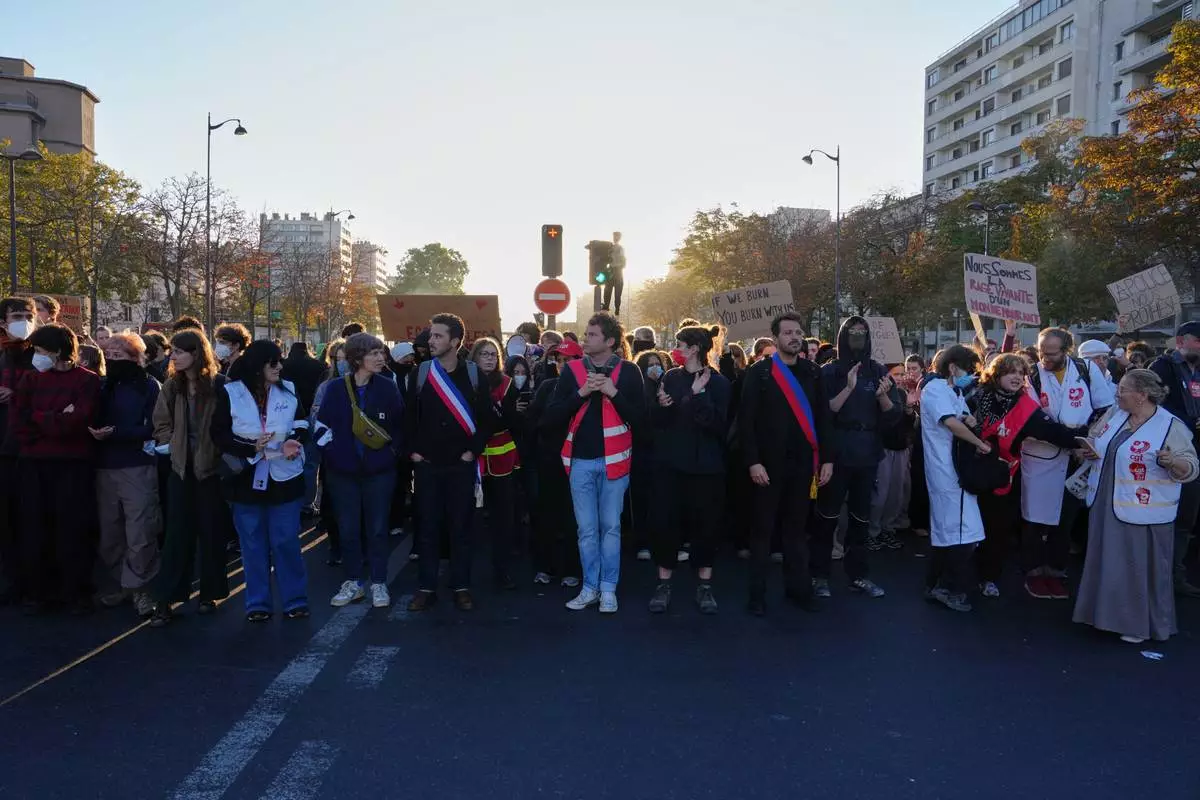
Students gather on the street before a demonstration against under-resourced schools, in Paris, Tuesday, Oct. 6, 2026. (AP Photo/Aurelien Morissard)