SAN DIEGO--(BUSINESS WIRE)--Oct 6, 2026--
DEXCOM, INC. (NASDAQ: DXCM), the global leader in glucose biosensing, announced today the launch of the fifth season of Dexcom U, the company’s one-of-a-kind NIL (Name, Image and Likeness) program exclusively for college athletes with diabetes.
This press release features multimedia. View the full release here: https://www.businesswire.com/news/home/20261006690020/en/
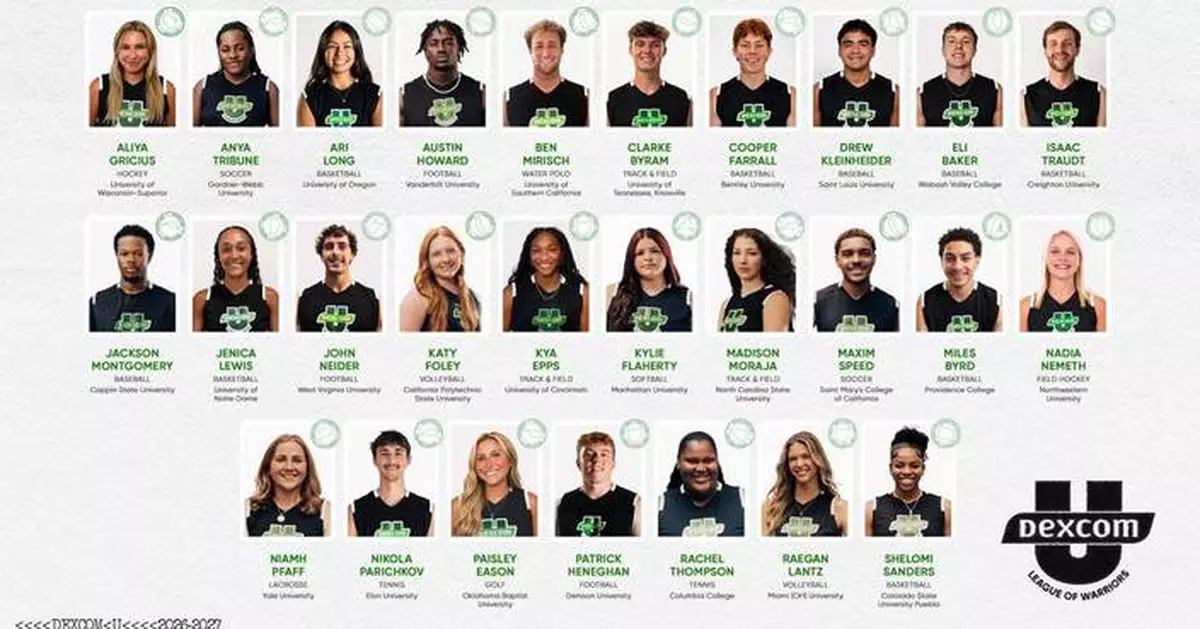
Now in its fifth year, this marks the program’s largest and most expansive roster to date, featuring 27 college athletes, 12 new and 15 returning, across 13 sports. The expansion is backed by new research showing that programs like Dexcom U have the potential to improve confidence, reduce stigma and barriers to athletic participation, and empower young athletes with diabetes to pursue their ambitions without limits. 1 Dexcom U athletes receive access to exclusive events and mentorship from elite athletes including Mason Miller (San Diego Padres), Mark Andrews (Baltimore Ravens), Adonai Mitchell (New York Jets), Josh Gesky (Green Bay Packers), and Jordan Morris (Seattle Sounders)—and a supportive network of peers who champion each other on and off the field.
Each athlete relies on Dexcom continuous glucose monitors like Dexcom G7 or Dexcom G7 15 Day to manage their diabetes with real-time data delivered to their smartphone or smartwatch *, empowering them to better manage their diabetes while competing and breaking new barriers in sports and in life. The 2026-2027 Dexcom U roster includes the following athletes:
New athletes:
Returning athletes:
A diabetes diagnosis can be a life-changing moment for young athletes, often bringing fear and uncertainty about whether their athletic dreams are still possible. In those early days, many look to role models living with Type 1 diabetes for inspiration. Dexcom U athletes started their journeys in that same place, wondering if a diagnosis meant the end of their athletic dreams. Today they are competing at the collegiate level and using their platforms to send a clear message to the next generation: diabetes does not have to stand in the way of pursuing your dreams.
“Football has been a part of my life for as long as I can remember, so when I was diagnosed with Type 1 diabetes when I was 15, it forced me to reimagine how I train and fuel my body. With the support of my coaches, I was able to come back stronger than ever,” said Austin Howard, Vanderbilt University football player and first-year Dexcom U athlete. “I’m excited to join Dexcom U and be part of a community that understands the challenges of being a student athlete with diabetes and are determined not to let it stop us.”
Dexcom U Days create moments of connection and mentorship for the next generation of athletes with diabetes
This fall, Dexcom will host “Dexcom U Days” at select Dexcom U athletes’ games across the country, bringing youth athletes with diabetes together with Dexcom U athletes in a meaningful way, creating the kind of connection many collegiate athletes wish they had when they were first diagnosed. Fall Dexcom U Day games include:
New research shows mentorship and technology drive confidence for athletes with diabetes
Building on its 2022 research, Dexcom conducted a new survey examining how a Type 1 diabetes diagnosis shapes sports participation, mental health and daily life. The 2026 findings reveal persistent barriers to athletic engagement—but also promising shifts in attitudes and representation within the diabetes community:
To learn more about Dexcom U, visit www.dexcom.com/dexcomu.
Survey Methodology
The survey was conducted online from July 8-14, 2026, among 1,004 U.S. adults with Type 1 diabetes or parents of children under age 18 with Type 1 diabetes. Respondents included both continuous glucose monitoring (CGM) users and non-users and were recruited from the dQ&A U.S. Patient Panel to reflect the age distribution of the U.S. Type 1 diabetes population.
About Dexcom
Dexcom empowers people to take control of health through innovative biosensing technology. Founded in 1999, Dexcom has pioneered and set the standard in glucose biosensing for more than 25 years. Its technology has transformed how people manage diabetes and track their glucose, helping them feel more in control and live more confidently.
Dexcom. Discover what you’re made of. For more information, visit www.dexcom.com.
*Smart device sold separately. For a list of compatible devices, visit www.Dexcom.com/compatibility.
1 Dexcom, data on file, 2026
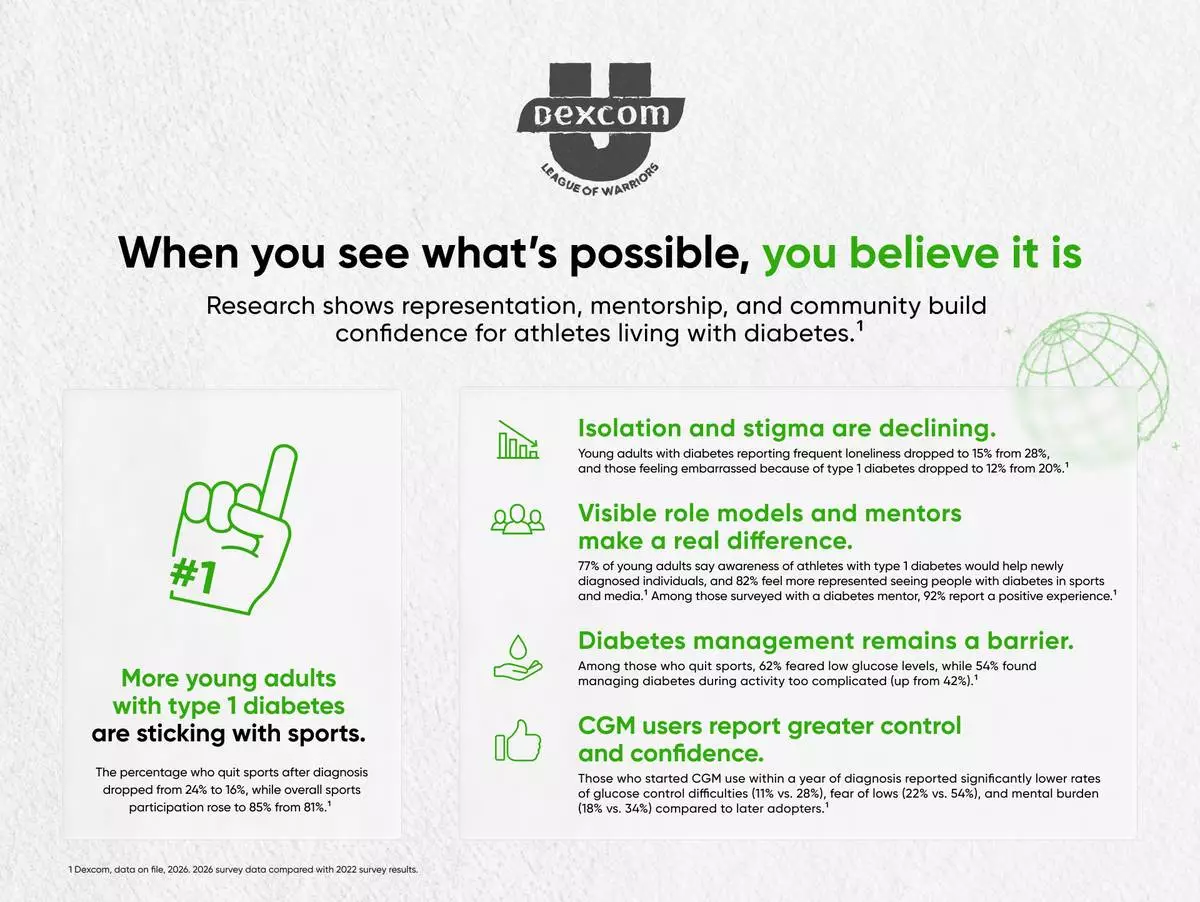
New research shows young adults with Type 1 diabetes are sticking with sports longer and feeling less isolated than they did since the launch of Dexcom U in 2022.
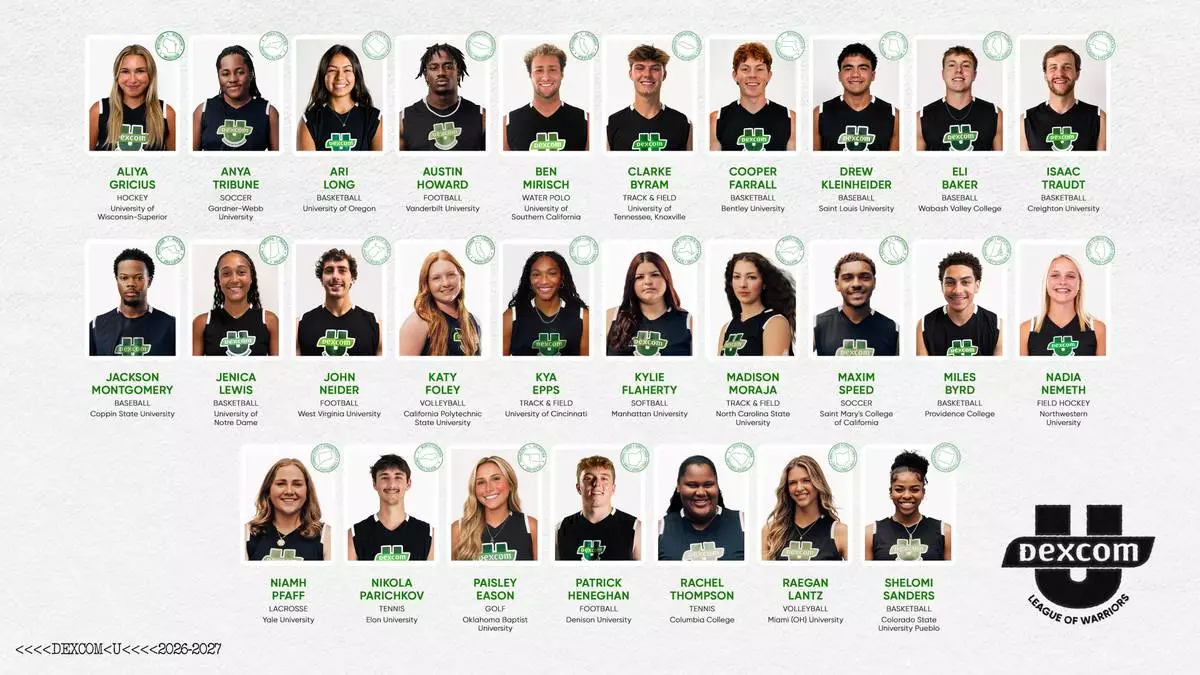
Dexcom U's season five roster features 27 athletes with Type 1 diabetes across 13 sports, marking the program’s largest roster to date.
CHICAGO (AP) — It’s official: Skydance-owned Paramount has closed its $81 billion takeover of Warner Bros. Discovery.
The companies completed the deal on Tuesday, ushering in a new Hollywood giant with the now shorter “Skydance” nametag. The merger brings two of America’s oldest moviemaking studios together. And HBO Max, titles ranging from “Harry Potter” to “Sinners” and even networks like CNN find themselves under the same roof as Paramount+, CBS and the likes of “Top Gun” and “The Godfather.”
All of them will come under the helm of billionaire David Ellison, and his new co-CEO Ynon Kreiz. That further concentrates power in an industry already run by just a handful of major players. Ellison’s Skydance bought out Paramount for $8 billion just last year, and set its sights on Warner — an even bigger fish — very soon after.
What followed erupted into a tumultuous, roughly year-long fight over Warner’s fate.
Skydance Corp. emerges from one of the biggest tie-ups ever in the media and entertainment industry. Including billions of dollars in debt, the Warner acquisition amounted to nearly $111 billion.
“Today is a historic day, not just for Skydance but for our entire industry," Ellison said in a statement Tuesday. "We couldn’t be more excited to get to work.”
Here’s a look at some of the key moments that got us here.
The early days of Paramount's quest for Warner turned into a messy bidding war.
Months after disclosing it was open to selling parts or even all of its business, Warner initially struck a studio and streaming deal with Netflix back in December. But Skydance-owned Paramount, which claimed Warner management “never engaged meaningfully” with its previous proposals, soon launched a hostile counterbid aimed at taking over the entire company — including networks like CNN and Discovery.
The Hollywood giants spent much of early 2026 in a heated back-and-forth over who had a stronger offer on the table, with Warner leadership repeatedly backing Netflix as its preferred suitor. But Paramount eventually upped its offer to buy all of Warner for $31 per share, and Netflix opted to bow out of the race. Warner and Paramount inked a mutual merger agreement by late February.
Hollywood was closely watching the fight over Warner's future. And from awards shows to online petitions, A-list celebrities and other creatives made their voices known.
In April, thousands of movie stars, writers, directors and other professionals announced their “unequivocal opposition” to the Paramount-Warner merger. The open letter — which was signed by long-outspoken critics of the deal like Jane Fonda and Mark Ruffalo, as well as Hollywood heavyweights from Denis Villeneuve to J.J. Abrams — warned of fewer jobs and “less choice for audiences in the United States and around the world.”
Meanwhile, some other stars lined up to back Paramount as Ellison reiterated his commitments to the movies. At CinemaCon this past spring, the company debuted a glossy mini movie about the studio directed by Jon M. Chu and narrated by Tom Cruise — who ended the spot atop the iconic Paramount water tower, with the words “the future is paramount and the future looks pretty great from here." Director James Cameron also doubled down on his support of Ellison.
The prospect of a new Warner owner also loomed over awards season this year, from #BlockTheMerger pins to more subtle nods in acceptance speeches. When accepting her Emmy last month, “Remarkably Bright Creatures” actor Sally Field — who also signed the open letter in opposition to the Paramount-Warner deal — stressed that “unique storytelling matters” and “we can’t let those voices be silenced, or compromised or merged.”
Many industry critics were also outspoken when Netflix's studio and streaming deal was on the table, with particular focus on the future of movies staying in theaters.
Trump has regularly attacked reporting he deems unfavorable at CNN (most recently attempting to bar the outlet from the White House altogether). And over the course of the Warner buyout, his administration wasn't afraid to chime in about hopes for a new owner.
In December — days after Paramount launched its hostile bid for Warner — the president said that CNN spread “poison and lies,” adding that “I think the people who have run CNN for the last long period of time are a disgrace" and "it’s imperative that CNN be sold.”
The White House took aim again at CNN in March, over the network's coverage of the U.S.-Israeli war against Iran. At the time, Secretary of Defense Pete Hegseth told reporters that “the sooner David Ellison takes over that network, the better.”
Ellison has said editorial independence will be maintained at CNN, and under a since-finalized settlement with the states, the company also agreed to form a “News Editorial Independence Board." But critics point to turmoil already seen at CBS under Skydance ownership — and aren’t convinced this new body will move the needle much, because Ellison is set to have ample oversight over appointments. Outside this board, however, the combined company is retaining Mark Thompson as CNN’s editor-in-chief.
Trump has separately continued to criticize CBS coverage under Skydance ownership. Still, the president has held a long relationship with the billionaire Ellison family. Paramount's chief reportedly hosted a dinner in Washington in Trump’s honor back in April, on the same day Warner shareholders gave their greenlight for the merger. And in June, just two days after the U.S. Justice Department said it wouldn't intervene in the deal, Ellison attended an Ultimate Fighting Championship match on the White House lawn for Trump’s 80th birthday (streamed by Paramount+).
To help fund its Warner buyout, Paramount racked up billions of dollars in financial backing from three Gulf countries: Saudi Arabia, Qatar and the United Arab Emirates. The Federal Communications Commission approved the company’s request for sizeable indirect ownership from those foreign investors.
Paramount previously disclosed it expected those funds to indirectly own nearly 50% of equity interests — but no voting rights — of what is now the larger Skydance. But the company asked for clearance of up to 100% to account for potential future investments, which the FCC granted, citing in part that access to more capital would strengthen the broadcast industry and was therefore “in the public interest.”
Critics — including FCC’s sole Democratic Commissioner, Anna Gomez — have called the move alarming and unprecedented. They argue that amount of money opens the door to behind-the-scenes influence.
Paramount cleared antitrust hurdles for its Warner acquisition from regulators worldwide over the summer, including the Trump administration's Justice Department.
But in July, Democratic attorneys general from 12 states — led by California's Rob Bonta — sued to block the merger, alleging the combined company would “extinguish competition” and lead to fewer choices for consumers, particularly movie theatergoers and cable customers across the U.S.
The Writers Guild of America followed suit. And Paramount agreed to put its Warner buyout on ice well into next year so the challenges could head toward a larger antitrust trial.
Settlement agreements emerged in September. The states' terms, eventually approved by a judge, include pledges from the company to increase film production in the U.S. over the next five years, commit millions of dollars to a fund aimed at supporting workers displaced by the merger and again establish new editorial monitoring of CNN and CBS.
Settling these challenges marked a key hurdle ahead of closing the deal. Critics decried the deal as capitulating to corporate pressure and said the remedies were too weak.
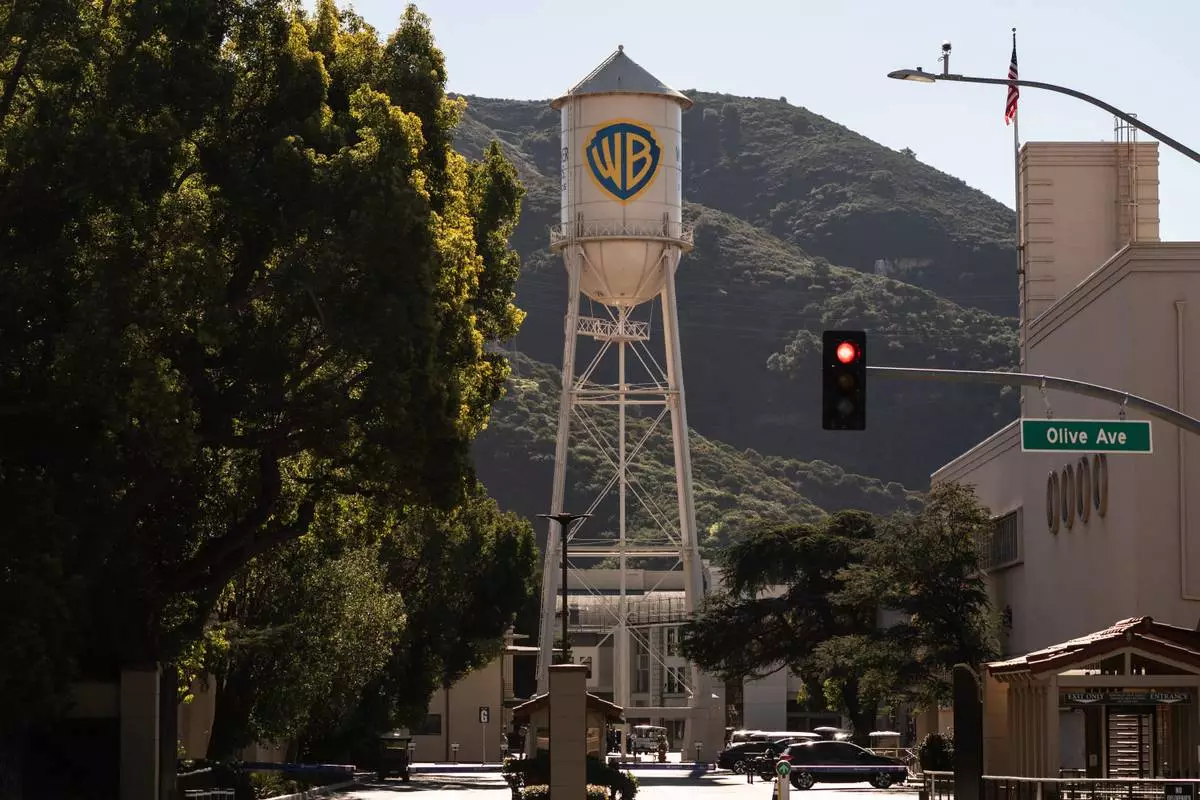
FILE - The Warner Bros. water tower is seen at Warner Bros. Studios in Burbank, Calif., on Dec. 5, 2025. (AP Photo/Jae C. Hong, File)