SAN DIEGO--(BUSINESS WIRE)--Oct 6, 2026--
DEXCOM, INC. (NASDAQ: DXCM), the global leader in glucose biosensing, announced today the launch of the fifth season of Dexcom U, the company’s one-of-a-kind NIL (Name, Image and Likeness) program exclusively for college athletes with diabetes.
This press release features multimedia. View the full release here: https://www.businesswire.com/news/home/20261006690020/en/
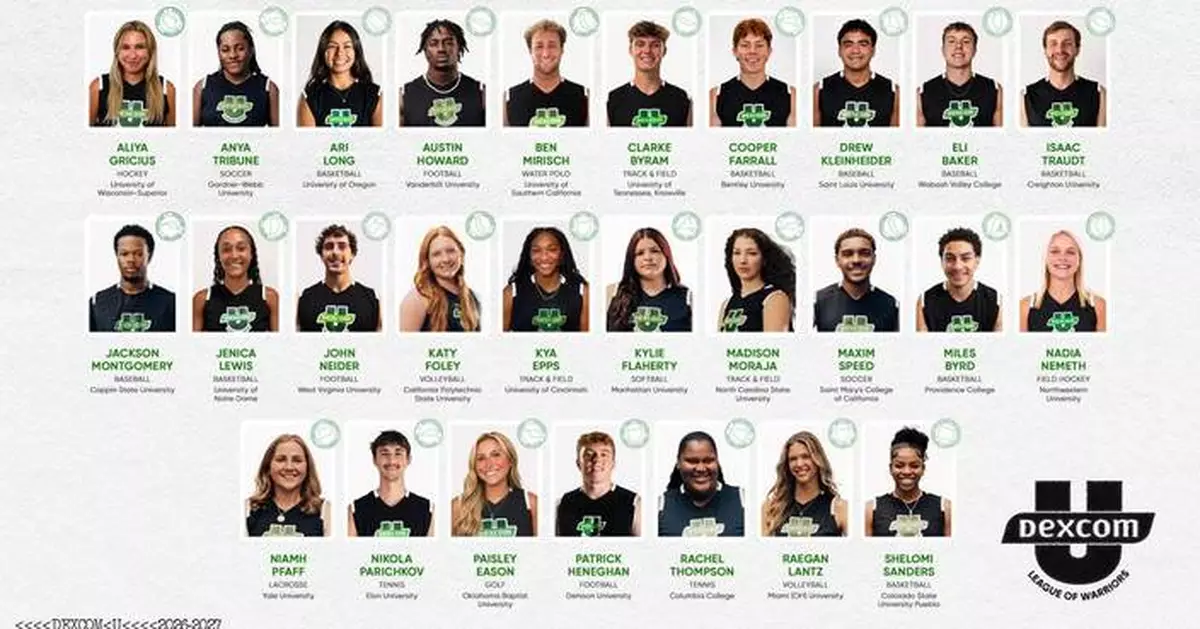
Now in its fifth year, this marks the program’s largest and most expansive roster to date, featuring 27 college athletes, 12 new and 15 returning, across 13 sports. The expansion is backed by new research showing that programs like Dexcom U have the potential to improve confidence, reduce stigma and barriers to athletic participation, and empower young athletes with diabetes to pursue their ambitions without limits. 1 Dexcom U athletes receive access to exclusive events and mentorship from elite athletes including Mason Miller (San Diego Padres), Mark Andrews (Baltimore Ravens), Adonai Mitchell (New York Jets), Josh Gesky (Green Bay Packers), and Jordan Morris (Seattle Sounders)—and a supportive network of peers who champion each other on and off the field.
Each athlete relies on Dexcom continuous glucose monitors like Dexcom G7 or Dexcom G7 15 Day to manage their diabetes with real-time data delivered to their smartphone or smartwatch *, empowering them to better manage their diabetes while competing and breaking new barriers in sports and in life. The 2026-2027 Dexcom U roster includes the following athletes:
New athletes:
Returning athletes:
A diabetes diagnosis can be a life-changing moment for young athletes, often bringing fear and uncertainty about whether their athletic dreams are still possible. In those early days, many look to role models living with Type 1 diabetes for inspiration. Dexcom U athletes started their journeys in that same place, wondering if a diagnosis meant the end of their athletic dreams. Today they are competing at the collegiate level and using their platforms to send a clear message to the next generation: diabetes does not have to stand in the way of pursuing your dreams.
“Football has been a part of my life for as long as I can remember, so when I was diagnosed with Type 1 diabetes when I was 15, it forced me to reimagine how I train and fuel my body. With the support of my coaches, I was able to come back stronger than ever,” said Austin Howard, Vanderbilt University football player and first-year Dexcom U athlete. “I’m excited to join Dexcom U and be part of a community that understands the challenges of being a student athlete with diabetes and are determined not to let it stop us.”
Dexcom U Days create moments of connection and mentorship for the next generation of athletes with diabetes
This fall, Dexcom will host “Dexcom U Days” at select Dexcom U athletes’ games across the country, bringing youth athletes with diabetes together with Dexcom U athletes in a meaningful way, creating the kind of connection many collegiate athletes wish they had when they were first diagnosed. Fall Dexcom U Day games include:
New research shows mentorship and technology drive confidence for athletes with diabetes
Building on its 2022 research, Dexcom conducted a new survey examining how a Type 1 diabetes diagnosis shapes sports participation, mental health and daily life. The 2026 findings reveal persistent barriers to athletic engagement—but also promising shifts in attitudes and representation within the diabetes community:
To learn more about Dexcom U, visit www.dexcom.com/dexcomu.
Survey Methodology
The survey was conducted online from July 8-14, 2026, among 1,004 U.S. adults with Type 1 diabetes or parents of children under age 18 with Type 1 diabetes. Respondents included both continuous glucose monitoring (CGM) users and non-users and were recruited from the dQ&A U.S. Patient Panel to reflect the age distribution of the U.S. Type 1 diabetes population.
About Dexcom
Dexcom empowers people to take control of health through innovative biosensing technology. Founded in 1999, Dexcom has pioneered and set the standard in glucose biosensing for more than 25 years. Its technology has transformed how people manage diabetes and track their glucose, helping them feel more in control and live more confidently.
Dexcom. Discover what you’re made of. For more information, visit www.dexcom.com.
*Smart device sold separately. For a list of compatible devices, visit www.Dexcom.com/compatibility.
1 Dexcom, data on file, 2026
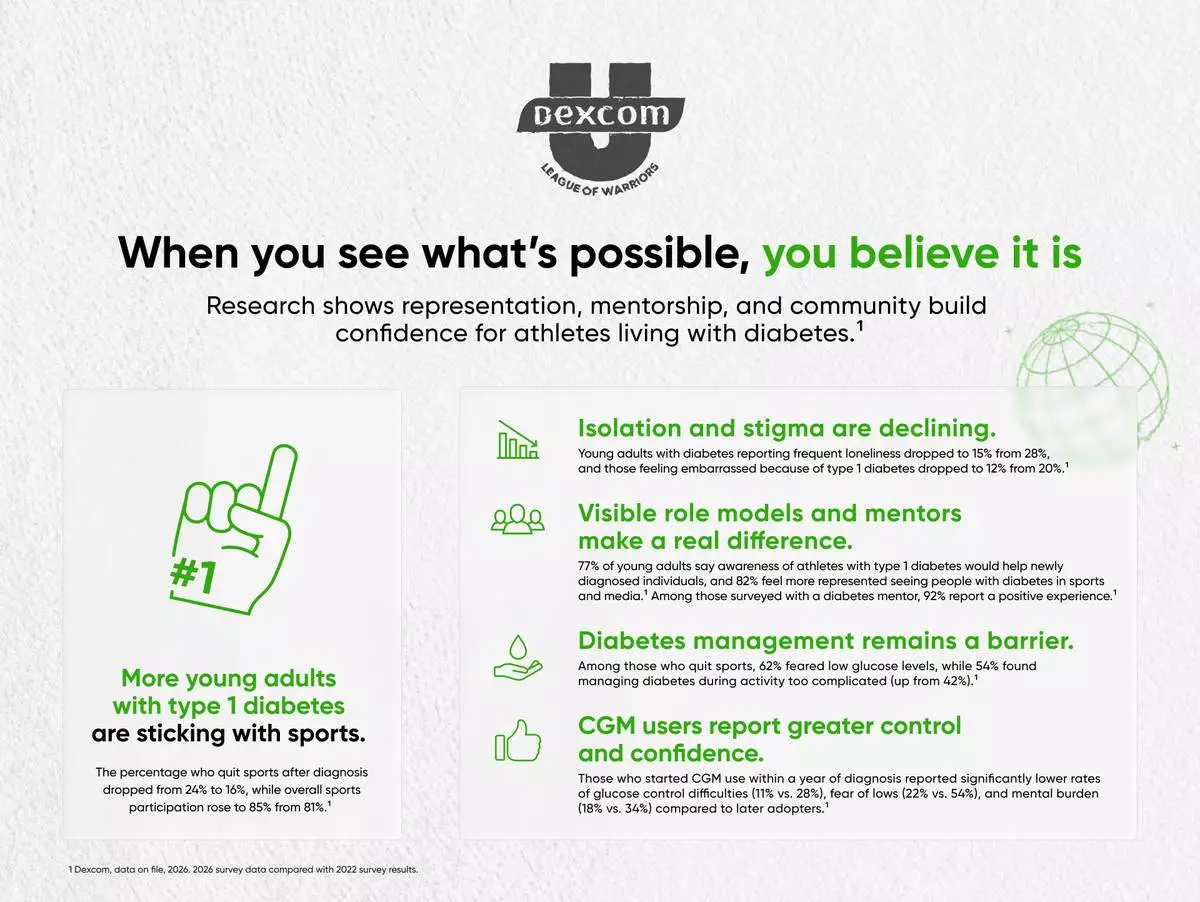
New research shows young adults with Type 1 diabetes are sticking with sports longer and feeling less isolated than they did since the launch of Dexcom U in 2022.
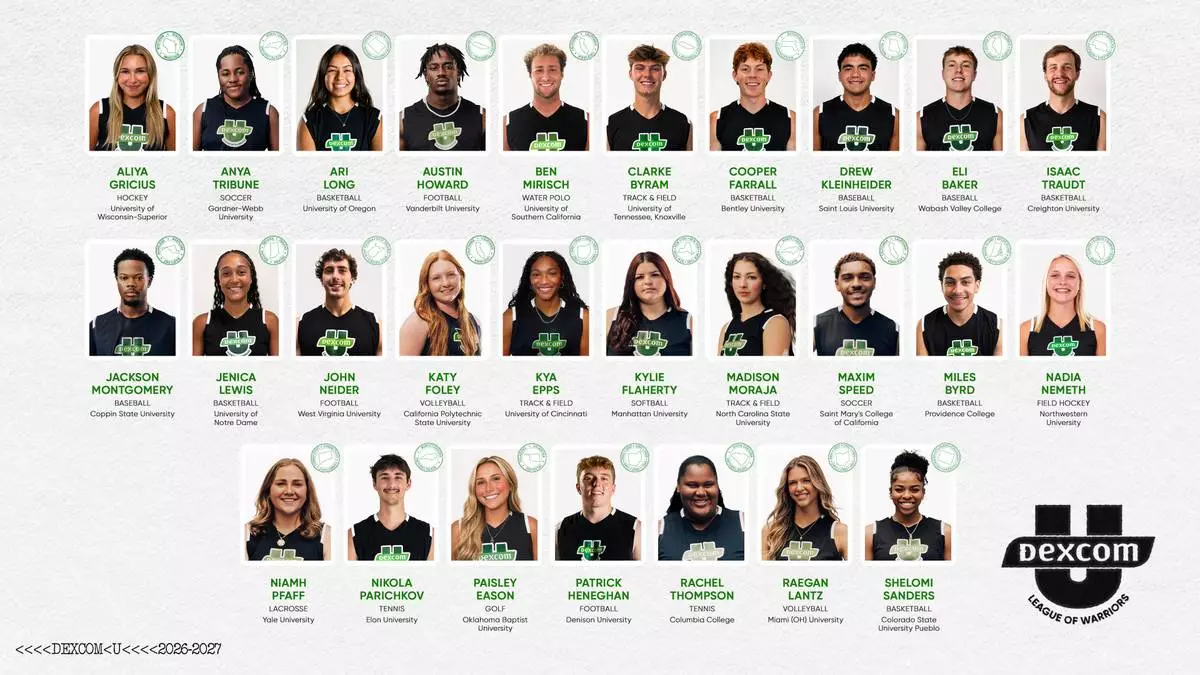
Dexcom U's season five roster features 27 athletes with Type 1 diabetes across 13 sports, marking the program’s largest roster to date.
STOCKHOLM (AP) — Belgian-born scientist Francis Halzen won the Nobel Prize in physics Tuesday for his efforts to demystify a rare group of neutrinos, tiny cosmic particles that researchers believe offer clues to how the universe evolved.
“It was a great surprise, and I obviously didn’t expect it,” Halzen said, speaking to the Nobel Physics Committee by phone from Italy, in a call broadcast at the news conference to announce the winner.
Halzen said it was predicted that he would win the prize, but the announcement still made him feel “strange.”
“I am working on a proposal, and I hope that this prize will help getting it approved,” he said to chuckles from the audience.
Neutrinos are tiny cosmic particles with no electric charge and extraordinarily small mass, making them difficult to detect. Yet they are everywhere: They spew from stars like the sun, and trillions zip through our bodies every second.
Scientists cannot glimpse the mysterious ghost particles zooming around on their own, so they measure what happens when the particles collide with other bits of matter. Neutrinos bump into other particles only rarely, so scientists build large detectors to improve their odds of catching collisions.
Halzen had the idea to turn the vast Antarctic ice into such a detector. The Nobel committee said his work was instrumental to the construction of the IceCube Neutrino Observatory in Antarctica, which glimpsed the first high-energy neutrinos from faraway galaxies.
“This experiment in the Antarctic is a revolutionary way of understanding the universe that we didn’t have before,” said Michael Moloney, chief executive officer for the American Institute of Physics.
When a neutrino interacts with ice in the detector, it produces a flash of light that’s picked up by sensors. The transparent ice makes it easier for scientists to pick up on faint signals from the mysterious ghost particles, and the sensors are buried about 8,200 feet (2,500 meters) deep to protect against interference from cosmic rays and radiation.
The 82-year-old scientist is affiliated with the University of Wisconsin–Madison in the U.S., which operates the observatory. Efforts by The Associated Press to reach him were not immediately successful.
“IceCube is like no other telescope in the world,” the university's interim chancellor, Eric M. Wilcots, said in a news release. “And there is no other scientist quite like Francis Halzen, whose idea to create a neutrino detector under almost a mile of ice has led to a remarkable multinational and multi-institutional scientific collaboration and a fundamental shift in how we think about the universe.”
Halzen helped pull the curtain back on an elusive crew of neutrinos that scientists say carry clues about the development of other galaxies and the universe as a whole.
“It’s all part of working out the story of where we are in the universe, what’s our place in the universe, how did our galaxy form?” said Jonathan Bagger, chief executive officer of the American Physical Society.
Supported by the National Science Foundation, the IceCube Neutrino Observatory is a massive collaborative effort that today involves more than 400 scientists in 14 countries.
In a post on social media, Belgian Prime Minister Bart De Wever said Halzen is the 11th Belgian to win a Nobel Prize. De Wever called the award “impressive recognition for a lifetime dedicated to shedding light on the great mysteries of the cosmos through its smallest components.”
A representative from the IceCube Neutrino Observatory did not immediately return a request for comment.
Ellen Moons, secretary-general of the Royal Swedish Academy of Sciences, announced the award Tuesday in Stockholm. She is the first woman to head the prestigious academy and present the award.
The prize money this year is 12 million Swedish kronor (about $1.2 million), whether for an individual, a small group of laureates or an organization.
Last year, three scientists won the Nobel Prize in physics for research on the strange behavior of subatomic particles called quantum tunneling that enabled the ultrasensitive measurements achieved by MRI machines and laid the groundwork for better cellphones and faster computers.
The announcements of this year's prizes began Monday with the Nobel Prize in medicine being awarded to three scientists whose work led to a tool that uses light to help unravel how the brain works.
This week's awards continue Wednesday with the chemistry prize and literature on Thursday. After Friday’s peace prize is awarded, the Nobel Memorial Prize in Economic Sciences will be announced Monday.
Dazio reported from Berlin, and Ramakrishnan reported from New York. Alexa St. John in Detroit contributed to this report.
AP Nobel Prizes: https://apnews.com/hub/nobel-prizes
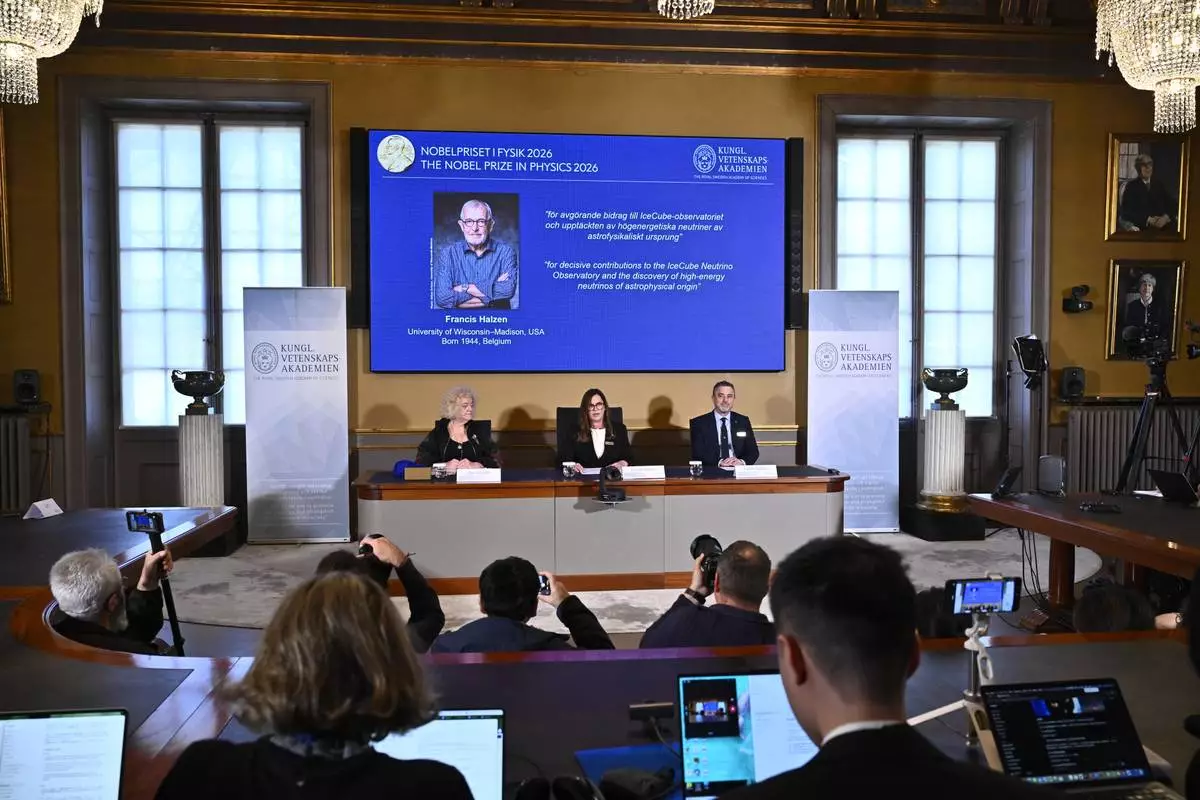
A portrait of Francis Halzen is shown on the screen during the announce of the recipient of the 2026 Nobel Prize in Physics at the Royal Swedish Academy of Sciences, Stockholm, Sweden, Oct. 6, 2026. (Christine Olsson/TT News Agency via AP)
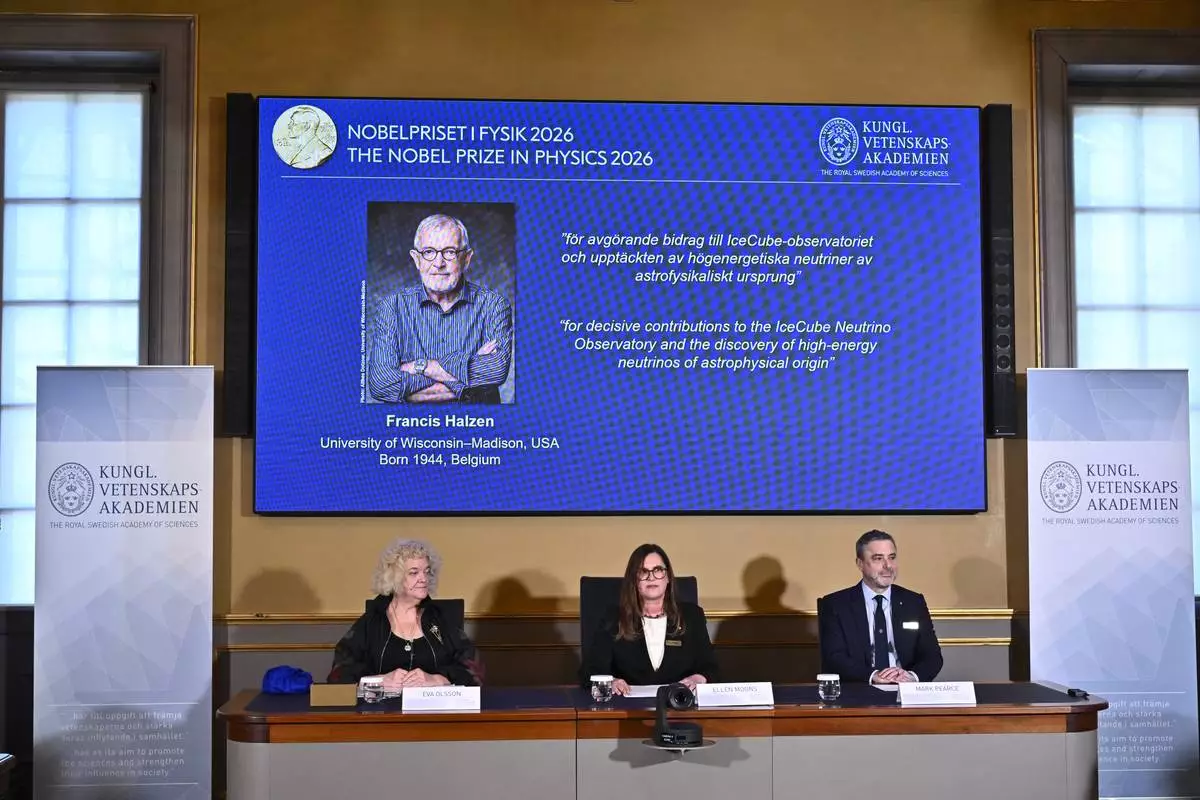
A portrait of Francis Halzen is shown on the screen as Eva Olsson, Ellen Moons, and Mark Pearce announce as the recipient of the 2026 Nobel Prize in Physics during a press conference at the Royal Swedish Academy of Sciences, Stockholm, Sweden, Oct. 6, 2026. (Christine Olsson/TT News Agency via AP)
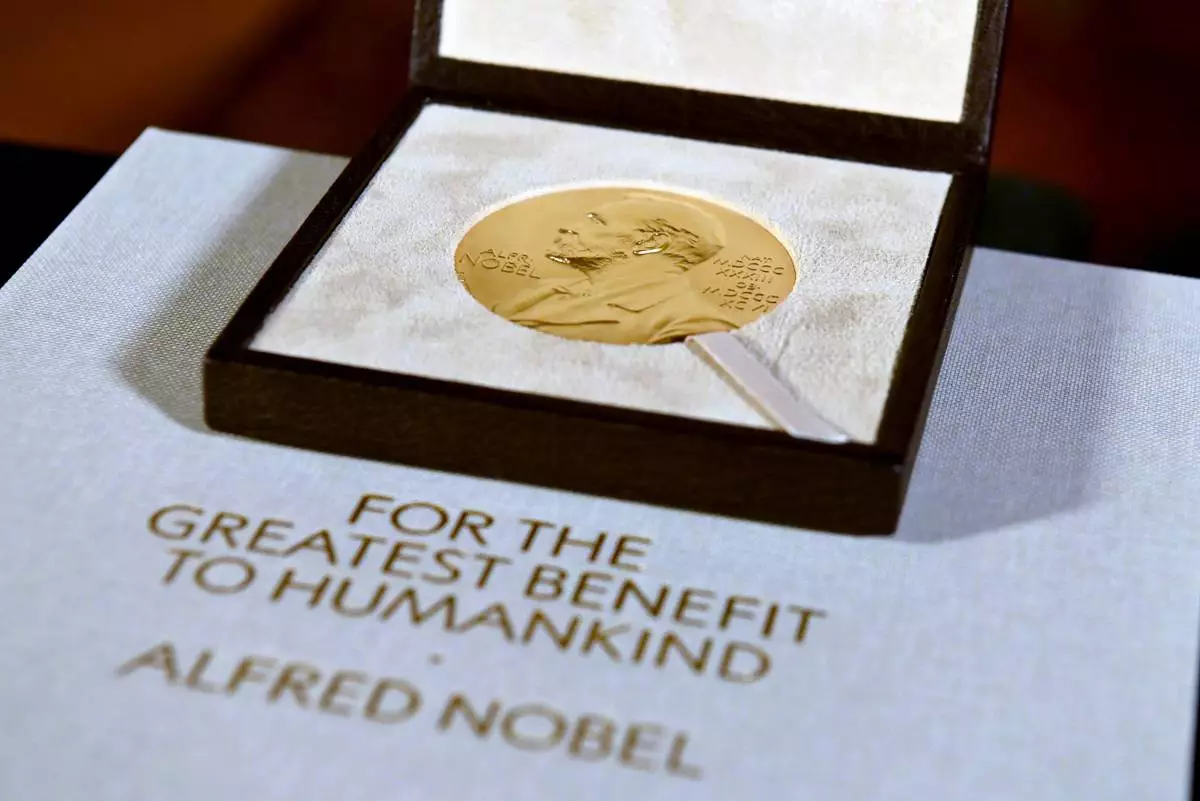
FILE - A Nobel diploma and medal are displayed, Dec. 8, 2020, during a ceremony in New York. (Angela Weiss/Pool Photo via AP, File)
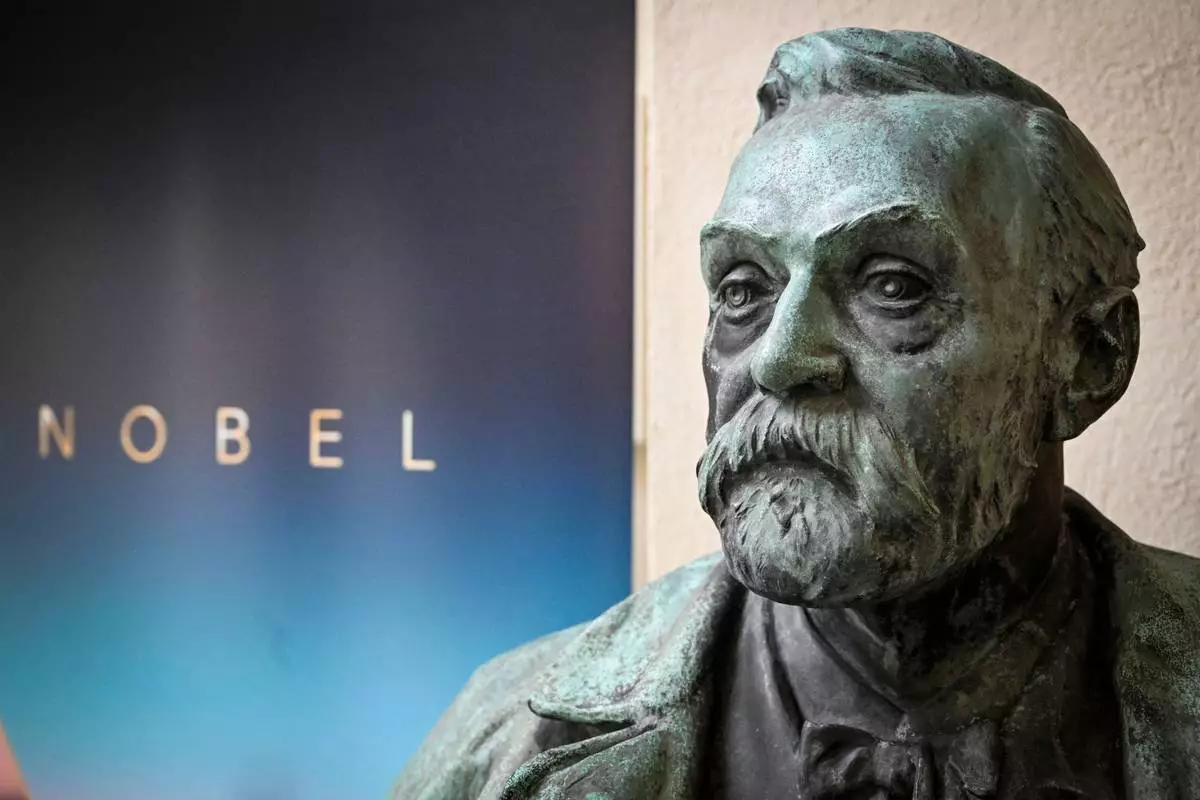
FILE - A bust of Alfred Nobel on display following a press conference to announce the Nobel Committee for Physiology or Medicine at the Karolinska Institute in Stockholm, Sweden, on Oct. 3, 2022. (Henrik Montgomery/TT News Agency via AP, File)