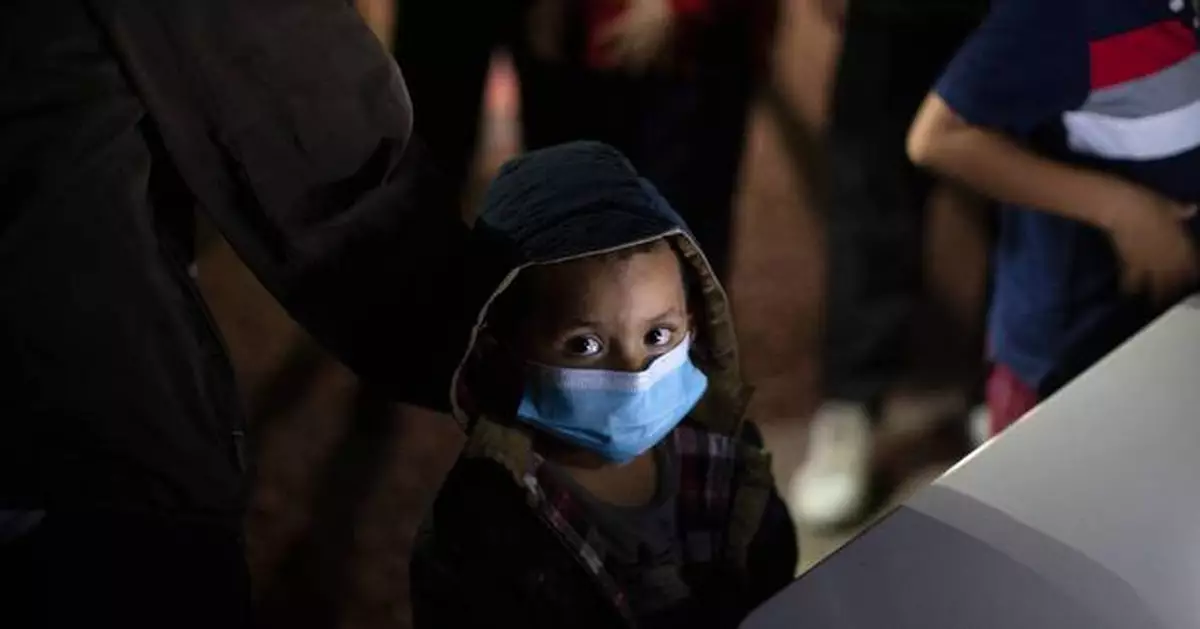
MIAMI (AP) — The Trump administration is creating a team of attorneys to represent children who traveled alone to the United States in immigration proceedings, which critics say would deprive them of having lawyers who aren't employed by the government and could put them at greater risk of deportation.
The U.S. Health and Human Services Department lawyers will “provide direct legal advice and counsel” to unaccompanied migrant children, according to an announcement in the Federal Register signed by Secretary Robert F. Kennedy Jr. The decision, announced last week without fanfare, offered no details beyond that broad mandate.
Health and Human Services said in a statement that its Unaccompanied Alien Children Legal Representation Division will work under its general counsel's direction toward “safely reuniting these children with their families and ensuring they have the legal support they need.”
“This new division will give the Department an additional mechanism to provide these children direct legal support while dedicated public servants work around the clock to safely reunify them with their families,” the department told The Associated Press in a brief statement. It didn't answer additional questions, including whether it would continue to contract with nongovernmental groups for legal representation or when its new legal division is expected to be fully operational.
The move appears to lay the groundwork for one of the biggest changes since guaranteed free legal representation for unaccompanied migrant children was introduced in 2008. It comes after the administration cut ties with the Acacia Center for Justice, a nongovernmental organization that managed 24,000 cases and held a contract to provide representation through a vast network of legal service providers.
The change means migrant children will not have an independent representative to advocate for them who doesn't have a conflict of interest, said Shaina Aber, the Acacia Center's executive director.
“Placing children’s legal representation and services inside of the same agency that holds children in federal immigration custody is an unprecedented step that does not meet basic standards of independence of counsel,” Aber said. It “will only give HHS new opportunities to forsake children’s rights and well-being.”
Wendy Young, president of Kids in Need of Defense, a nonprofit that provides free legal representation and social services to unaccompanied children, called the creation of the new in-house HHS legal team “part of a pattern of attacks that this administration has engaged in, in terms of undermining zealous representation of unaccompanied children in their immigration proceedings.”
The new division will work independently from other government agencies that deal with the minors, including the HHS Office of Refugee Resettlement, which is responsible for the custody and care of the children who arrive in the U.S. without a parent or legal guardian.
There is some precedent for government-paid attorneys defending clients against government prosecutors in civilian and military courts, but as criminal defense lawyers and not in immigration court.
But Young noted that the child's lawyer, the judge, and government attorneys seeking deportation will all be federal employees. Judges are appointed by the Justice Department and prosecutors work at the Department of Homeland Security.
“A government attorney who’s employed by the government most likely would be coached and encouraged to take the position of encouraging the child to agree to voluntary departure and to leave the United States rather than to present a full representation of the facts of their case,” Young said.
Amid the uncertainty, children have been going to their court hearings without legal representation lately, according to advocates.
Americans for Immigrant Justice, another nonprofit that provides free legal representation to unaccompanied immigrant children, said it has been challenging to secure lawyers for the minors since the government suspended funding to legal aid organizations on July 31 through Acacia.
Sui Chung, the group's executive director, said the need for legal representation exceeds the available resources.
“To deny legal counsel to the most vulnerable among us — children who have already fled trauma — is a fundamental breakdown of the fairness our Constitution promises," Chung said. “Children deserve our strongest protection."
The government recently awarded a contract to another organization, Our Rescue, with a potential value of up to $244 million. The transition to Our Rescue, which has been challenged by Acacia, has led to short-term arrangements, including a temporary contract with the U.S. Committee for Refugees and Immigrants.
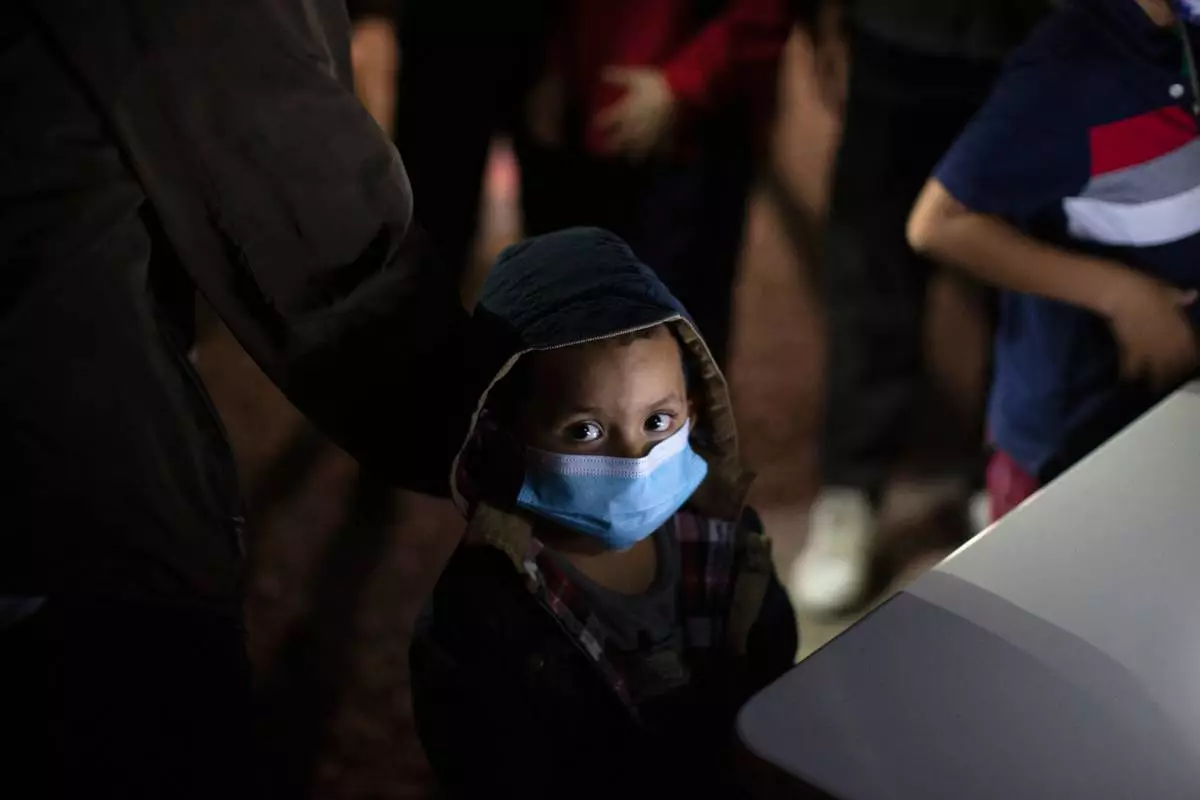
FILE - An unaccompanied minor looks up as he waits to answer questions from a U.S. Border Patrol agent at an intake site after he was smuggled on an inflatable raft across the Rio Grande River, March 24, 2021, in Roma, Texas. (AP Photo/Dario Lopez-Mills, File)
The shock gloves immigration agents could soon use to control detainees and protesters worked so powerfully during a military exercise that participants felt intense pain, stopped fighting immediately and feared additional exposures, according to a previously unreleased Army study.
Immigration and Customs Enforcement leaders were aware of the findings before signing a $16.7 million contract to purchase 6,000 pairs of shock gloves in August, according to records obtained by the watchdog group American Oversight and shared with The Associated Press.
The shocks had a profound impact on Army employees who played the role of combative prisoners during the exercise, which took place at the military prison at Fort Leavenworth in Kansas in October 2024. The participants, several of whom were large-statured men, stopped resisting seconds after officers applied shocks by touching gloves to their skin, and were left with “fatigue, soreness and excessive apprehensiveness to being shocked again,” the study found.
“After experiencing the effects of the GLOVE, ... participants stated just seeing the GLOVE was enough to make them want to comply,” the authors wrote.
ICE has called the gloves “distraction and de-escalation devices" that will be safer than other non-lethal options to subdue targets for arrest and deportation and protesters who create civil disturbances. The agency has argued the rapid compliance they cause will keep officers safer and prevent incidents from requiring potentially lethal force.
But critics have warned the gloves will give ICE another weapon to intimidate and brutalize people even as the agency is under fire for excessive force that has left a trail of deaths and injuries across the nation. The gloves, they note, are easy to discharge, do not leave a mark and have not been extensively used in settings outside of jails. The manufacturer warns they should not be used on high-risk populations such as kids, pregnant women or disabled people.
“The military assessment in ICE’s own files shows that these gloves can cause ‘intense pain’ and force compliance. It does not establish that they are safe,” said Chioma Chukwu, executive director of American Oversight. “Everyone should be alarmed that ICE is preparing to deploy a tool designed to inflict, at best, intense pain, without showing that it is safe for the people who will be subjected to it.”
ICE released the study and other documents to American Oversight as part of the group's Freedom of Information Act lawsuit against the agency seeking records related to its use of force.
The military prison study assessed whether the gloves could be used effectively to forcibly remove combative prisoners from their cells, to respond to disturbances in common areas and to transport uncooperative inmates. Role-playing employees conducted several scenarios with and without the gloves to test their impact, including violent encounters in which inmates were to fight as hard as they could.
The study found the devices “increased the efficiency” of teams carrying out forced cell extractions and responding to disturbances by reducing the length of physical encounters, keeping guards from becoming exhausted and preventing injuries. They did not “significantly change” the time it took to control inmates during escorts but required less effort.
“GLOVE provides a boost in confidence to smaller or less trained members,” the study found. “Inmate compliance was immediate” compared to other methods, it added.
The electric jolt does not cause the body to freeze like a Taser shock does, but instead “works by overloading the peripheral nerve endings” of the skin to cause pain, the study said. Participants who were wet or had oil on their skin described even more powerful shocks, with one reporting discomfort for 30 minutes afterward.
ICE's contract requires the manufacturer, Compliant Technologies LLC, to deliver the gloves within six months. Its owner, Jeff Niklaus, said he was unavailable for an interview, citing a busy workload.
White House border czar Tom Homan has said it could “be awhile” before the gloves are in the field because ICE is still ironing out training and policy issues. A statement released Tuesday by ICE did not address questions about the study and the status of the rollout, but said "officers are highly trained in de-escalation tactics.”
U.S. Sen. Catherine Cortez Masto of Nevada said ICE has not responded to an Aug. 27 letter in which she and 15 other Democratic Senate colleagues called for ICE to abandon its plan to buy the gloves or explain how they would be used and managed to avoid abuse. She said she still wants answers.
“Without ICE’s responses to legitimate questions from 16 United States Senators, the American public is being left in the dark about how these electric shock gloves are being deployed and what, if any, training the agents who use them have received,” she said.
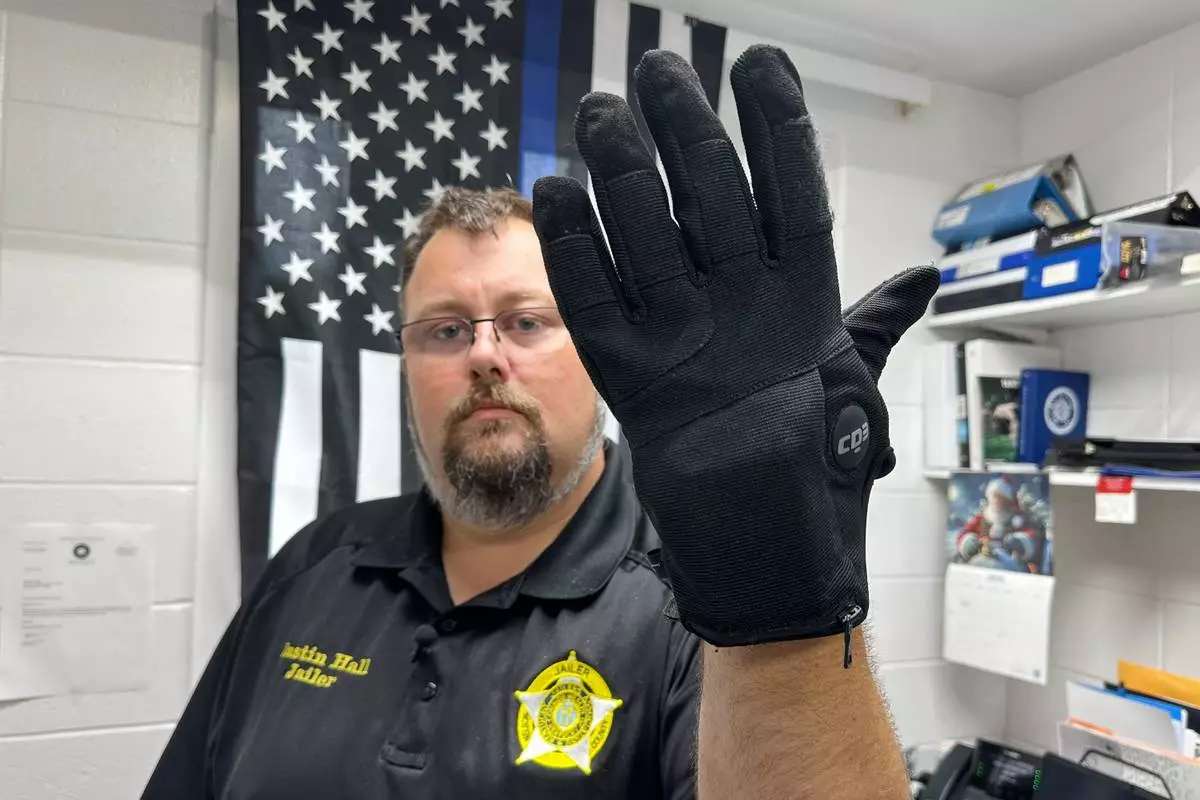
FILE - Nelson County, Ky., jailer Justin Hall shows an electric shock glove that is used at his facility, Aug. 13, 2026, in Bardstown, Ky. (AP Photo/Dylan Lovan, File)