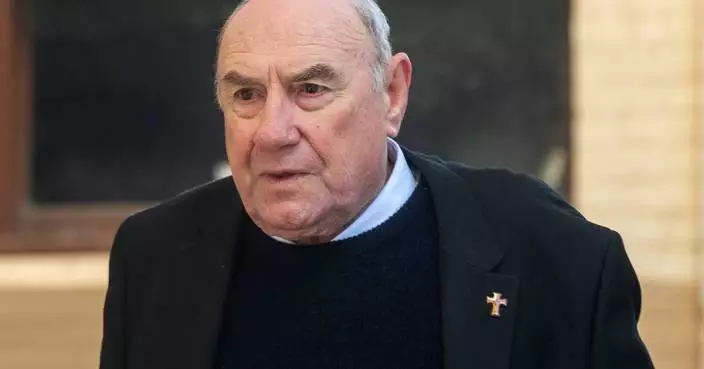
PRISTINA, Kosovo (AP) — Lawmakers in Kosovo elected economist and academic Justina Shiroka Pula as the country’s new president in a marathon late-night session, moments before a constitutional deadline that would have forced a snap election.
The election late Tuesday was a significant moment in a political crisis in the small Balkan nation that has caused legislative deadlock for over 19 months and two early parliamentary elections.
Click to Gallery
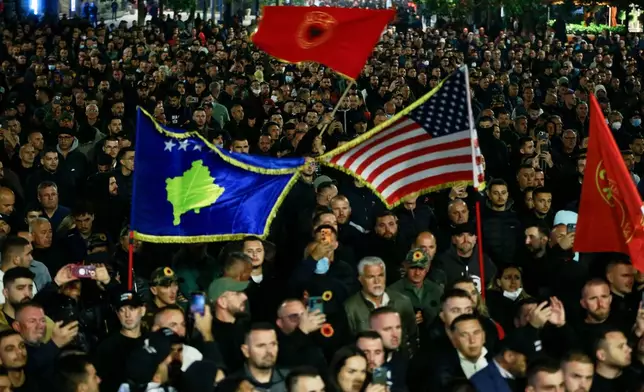
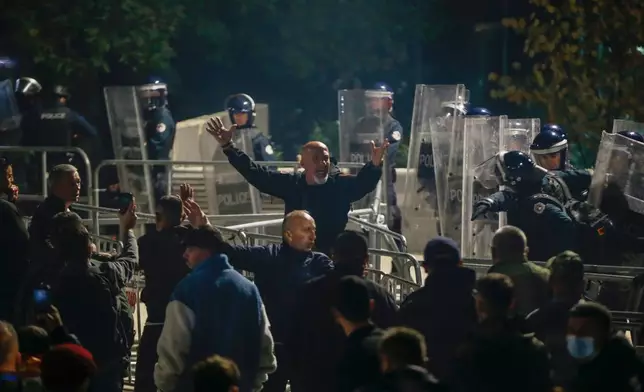
People take part in a protest near the parliament building ahead of the extraordinary parliament session to elect the new president in capital Pristina, Kosovo, Tuesday, Oct. 6, 2026. (AP Photo/Visar Kryeziu)
People take part in a protest near the parliament building ahead of the extraordinary parliament session to elect the new president in capital Pristina, Kosovo, Tuesday, Oct. 6, 2026. (AP Photo/Visar Kryeziu)
People take part in a protest near the parliament building ahead of the extraordinary parliament session to elect the new president in capital Pristina, Kosovo, Tuesday, Oct. 6, 2026. (AP Photo/Visar Kryeziu)
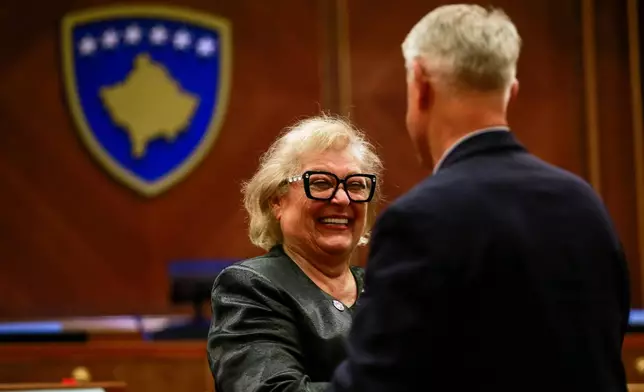
Kosovo lawmaker congratulates newly elected Kosovo's President Justina Shiroka Pula, center, in Kosovo's capital Pristina on Tuesday, Oct. 6, 2026. (AP Photo/Visar Kryeziu)
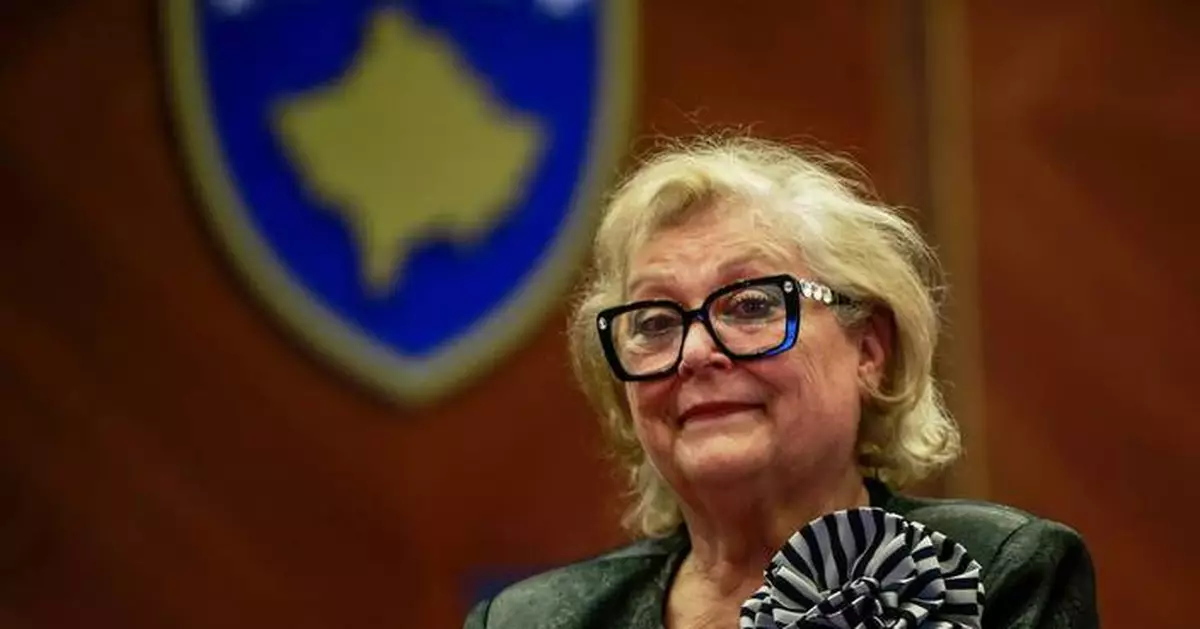
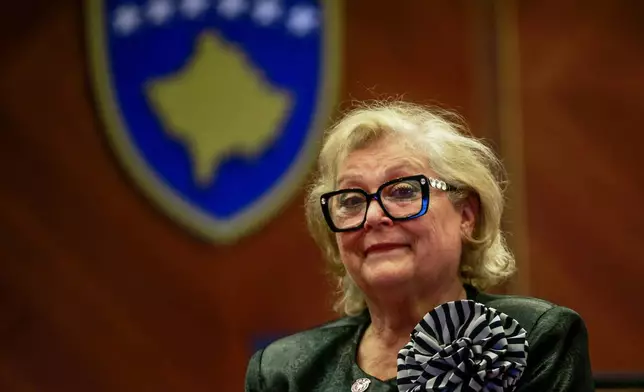
Newly elected Kosovo President Justina Shiroka Pula is seen after she was elected in Kosovo's capital Pristina on Tuesday, Oct. 6, 2026. (AP Photo/Visar Kryeziu)
Just before Shiroka Pula was elected, lawmakers also approved a law limiting the powers of a special court in The Hague, Netherlands, which was set up to investigate and prosecute war crimes committed by the Kosovo Liberation Army (KLA) during the country's 1998-99 war for independence from Serbia.
During the extraordinary session in Parliament, Shiroka Pula secured 81 votes in the 120-seat parliament. Outside, thousands of protesters had gathered demanding that the legislature pass the law limiting the powers of the war crimes court, known as the Specialist Chambers.
Shiroka Pula recently served as president of the Academy of Sciences and Arts of Kosovo. She will become Kosovo’s third female president since the country’s post-war independence. She was a last-minute consensus candidate backed by the ruling Self-Determination movement and the largest opposition party, the Democratic Party of Kosovo.
The role of president in Kosovo is largely ceremonial, though office holders do play an important role in foreign policy and serve as commander-in-chief of the armed forces. She will have to endorse the law limiting the power of the Hague court for it to become binding.
In her speech after taking the oath late Tuesday, Shiroka Pula said: “Today, I accept with great honor and full responsibility the duty of President of the Republic of Kosovo.”
“This mandate does not belong to one person alone, it belongs to our citizens, our institutions, and the state for which many generations have sacrificed,” she said.
Shiroka Pula’s election came after over two weeks of protests following a verdict by The Hague-based court convicting four of Kosovo's wartime rebel leaders of war crimes, including the country's former president Hashim Thaci. They were sentenced to between 13 and 25 years in prison.
Kosovo has criticized the verdicts as unjust, maintaining that the KLA, which Thaci had led before entering politics, had fought against Serbian oppression. Both residents and politicians feared the court ruling would tarnish Kosovo’s independence struggle.
More than 13,000 people, mostly ethnic Albanians, were killed during the conflict in Kosovo, while about 1 million ethnic Albanian Kosovars were driven from their homes during the fighting.
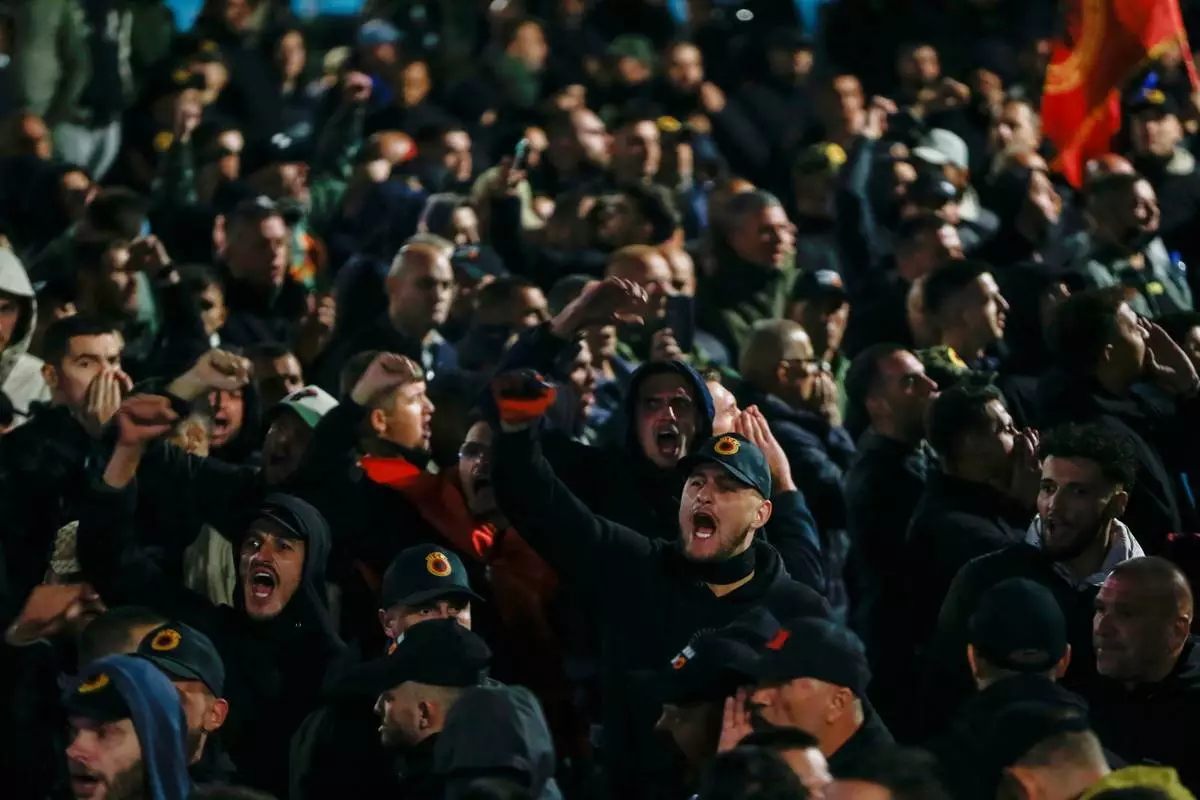
People take part in a protest near the parliament building ahead of the extraordinary parliament session to elect the new president in capital Pristina, Kosovo, Tuesday, Oct. 6, 2026. (AP Photo/Visar Kryeziu)
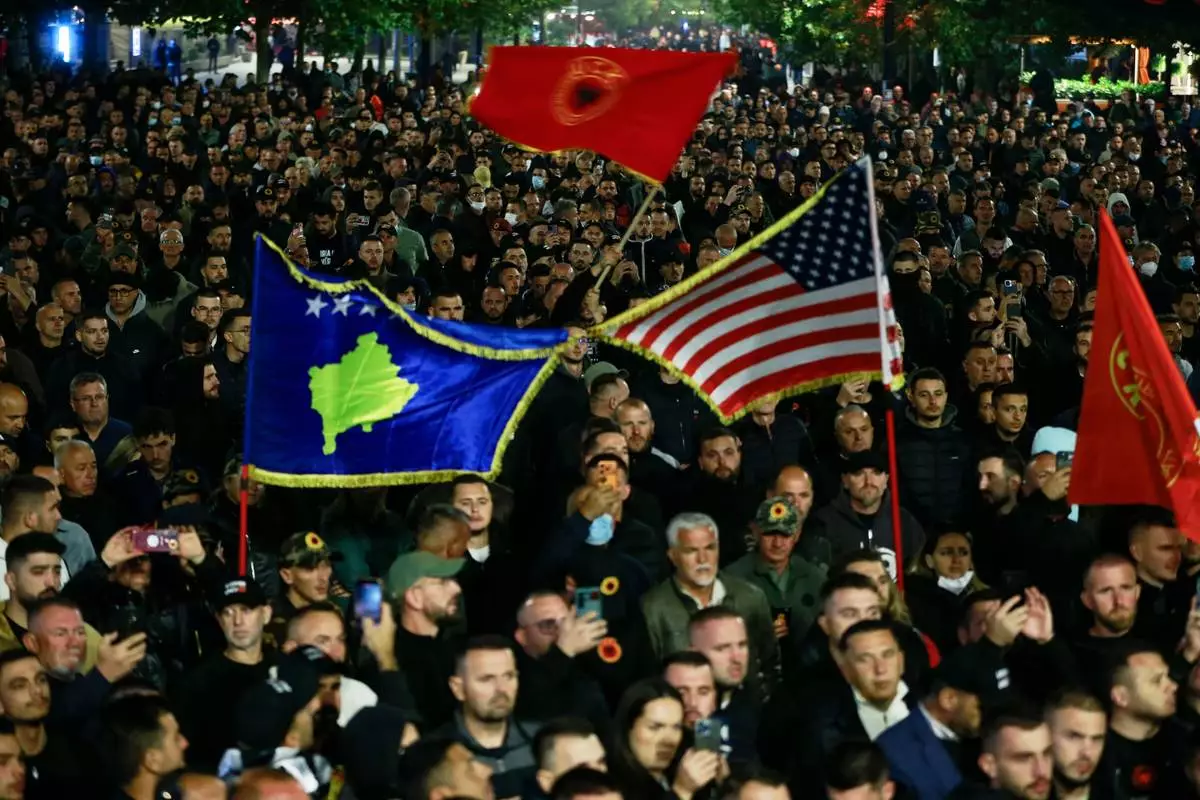
People take part in a protest near the parliament building ahead of the extraordinary parliament session to elect the new president in capital Pristina, Kosovo, Tuesday, Oct. 6, 2026. (AP Photo/Visar Kryeziu)
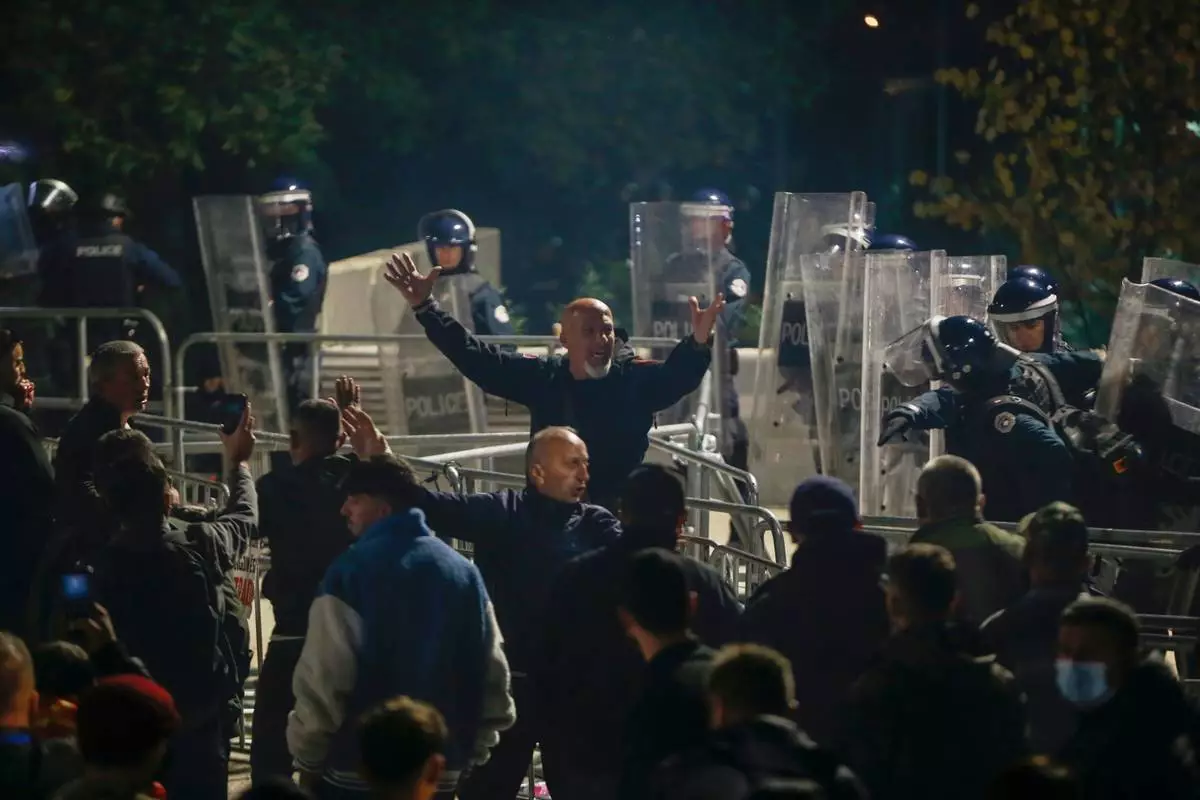
People take part in a protest near the parliament building ahead of the extraordinary parliament session to elect the new president in capital Pristina, Kosovo, Tuesday, Oct. 6, 2026. (AP Photo/Visar Kryeziu)
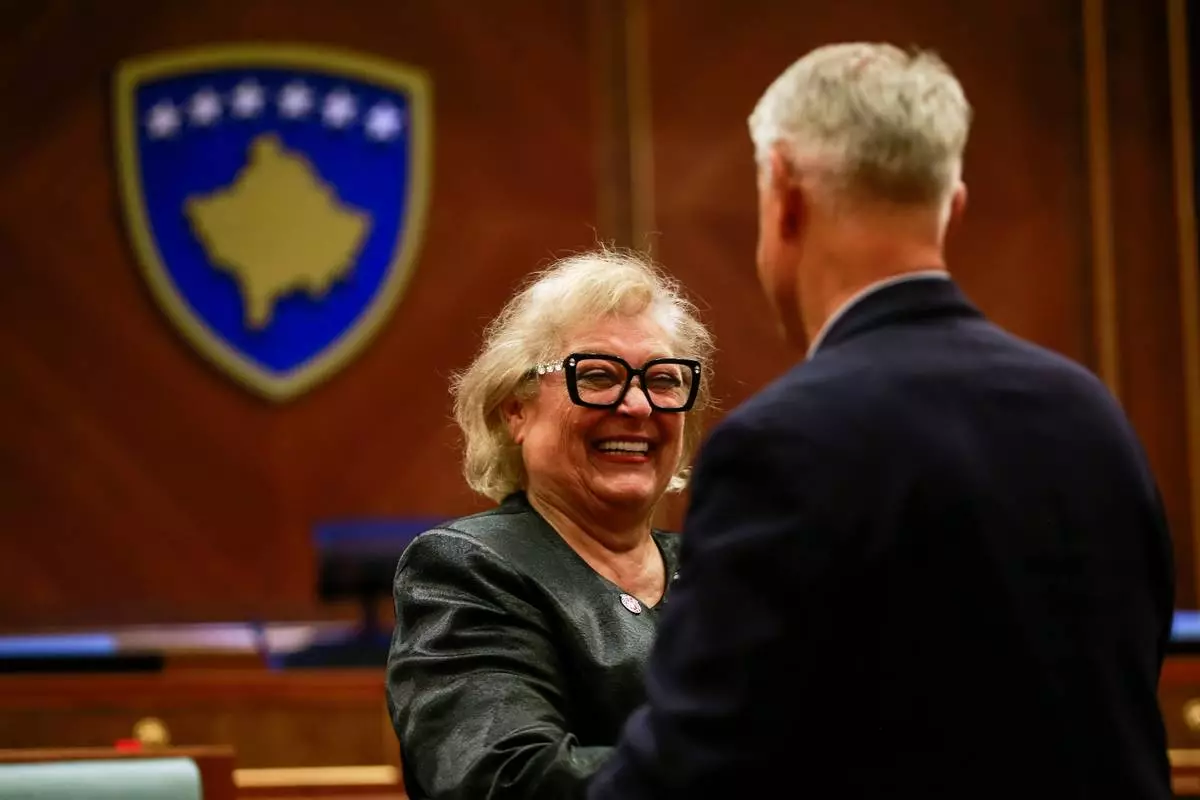
Kosovo lawmaker congratulates newly elected Kosovo's President Justina Shiroka Pula, center, in Kosovo's capital Pristina on Tuesday, Oct. 6, 2026. (AP Photo/Visar Kryeziu)
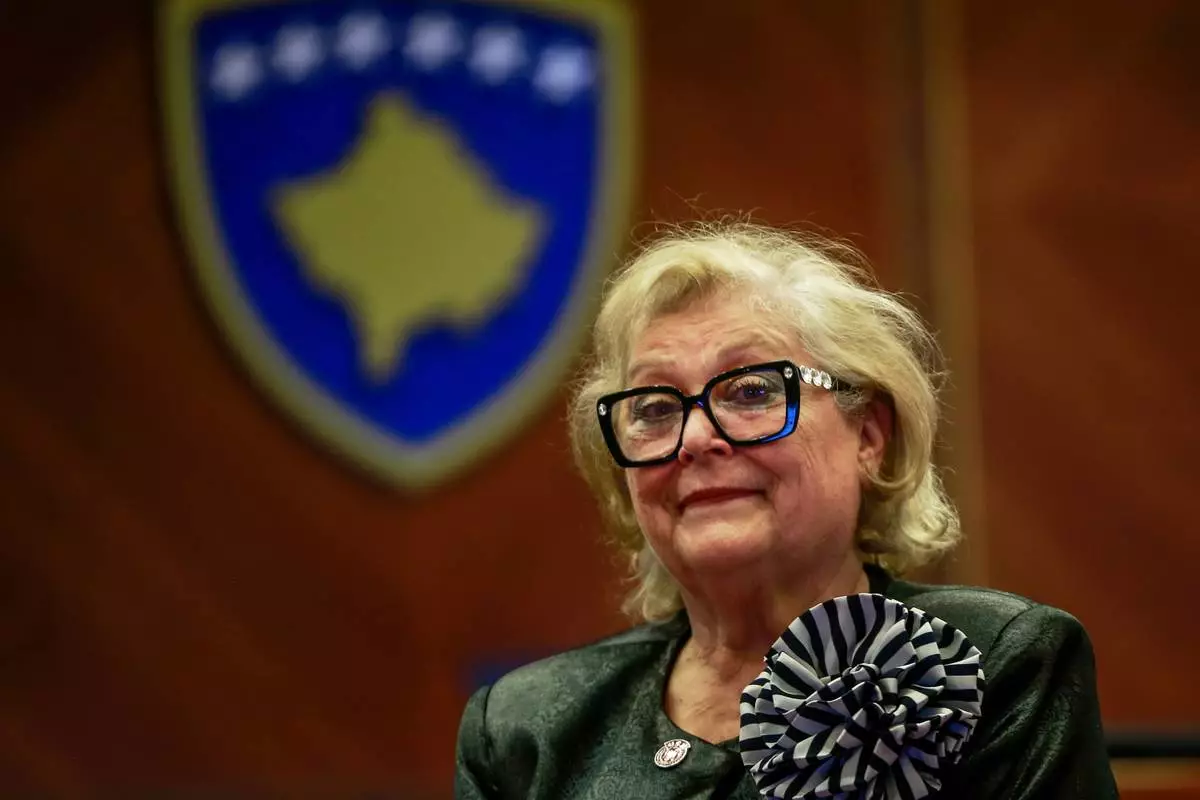
Newly elected Kosovo President Justina Shiroka Pula is seen after she was elected in Kosovo's capital Pristina on Tuesday, Oct. 6, 2026. (AP Photo/Visar Kryeziu)
REIM, Israel (AP) — Israelis gathered on Wednesday to commemorate the Oct. 7, 2023, Hamas-led attack that killed 1,200 people, saw 251 taken hostage, and sparked a devastating war in Gaza that has left much of the territory in ruins and its 2 million people living in dire conditions.
In southern Israel, families mourned at intersections, bomb shelters, and the site of a music festival that the militants overran three years ago in the deadliest attack against Israel. It is the first anniversary that all the hostages are home, marking a new stage of grief.
For Palestinians, the anniversary brings another day of life of misery and difficulties after an Israeli retaliatory campaign in Gaza that has killed tens of thousands of people.
Most of the population of about 2 million people lives in vast, squalid tent camps, with large parts of the strip’s cities reduced to rubble. More than half the territory remains in the hands of the Israeli military. Despite a ceasefire deal reached nearly a year ago, Israeli strikes continue almost daily.
For the region, the day highlights a startling transformation over the past three years.
Israeli troops occupy a large chunk of southern Lebanon in their conflict with the Hezbollah militant group, which began firing on Israel in 2023 in support of Hamas. Iran and the United States are locked in a confrontation that has seen attacks across Gulf Arab countries and has shaken the global economy — a conflict that Israel helped launch and that the Gaza war paved the way for, even if they weren’t directly connected.
In Reim, the town where the music festival was underway on the day of the attack, families gathered around photos of their killed relatives. They hugged at 6:29 a.m. — the exact time the first rockets were launched three years ago — as booms from explosions in nearby Gaza were heard.
Anya Davitashili, who lost her 25-year-old son, Sean, said she comes to the site every Saturday because it’s where she feels closest to him.
“I have a video of him dancing here that ends at 6:29 in the morning, it’s in front of my eyes all the time,” she said. “Every morning, you wake up and there is just endless missing.”
Hundreds of people came to pay their respects to the more than 350 people killed in and around the festival site.
Elkana Bohbot, 37, is marking the anniversary in Israel for the first time, after being released from 738 days of captivity last year. For most of that time, he said, he was held 50 meters (165 feet) underground in a dark, damp tunnel.
Bohbot, who was abducted from the festival, was kept in a small cell with other hostages, given very little food, and allowed to bathe only every few weeks, he said. His captors forced him to take part in several propaganda videos, including one where he acts out a fake call to his family.
In the 11 months since his release, Bohbot has undergone physical and emotional rehabilitation. In August, his wife, Rivka, gave birth to a daughter, fulfilling a promise that Bohbot made to himself in the tunnels to give his 5-year-old son, Reem, a sibling.
The newborn Michele is “not a symbol for my people, she is more of a symbol for the enemy,” Bohbot told The Associated Press. “So this child is the message for you that we were here, and we will always be here forever.”
No events are expected on Wednesday in Gaza, where Israel’s offensive has devastated the territory and displaced around 90% of its population, often multiple times. Restrictions on the entry of goods and aid have contributed to a severe hunger crisis.
More than 74,000 Palestinians have been killed in Gaza, according to the territory's Health Ministry, which does not distinguish between civilians and militants in its figures but says around half were women and children. The numbers from the ministry, part of the Hamas-run government, are seen as generally reliable by U.N. agencies and independent experts.
While a ceasefire that took effect on Oct. 10 has halted the heaviest fighting, Israeli strikes have continued, targeting what Israel says are Hamas militants. Since the ceasefire, 1,460 Palestinians have been killed in Gaza, according to the ministry. Seven Israeli soldiers have been killed in that period.
Hamas portrayed the Oct. 7 attack as a response to decades of Israeli military occupation, land seizures and settlement construction. But the Palestinians’ dream of an independent state appears even more distant.
A contentious election in Israel at the end of the month hangs over this year's anniversary. The government’s official memorial services took place on Oct. 5, closer to the Hebrew calendar's anniversary of the attack.
The separate commemorations reflected deep divisions over Prime Minister Benjamin Netanyahu, his handling of the war and his reluctance to launch an official inquiry into failings of the day.
Former Prime Minister Naftali Bennett, who is hoping to unseat Netanyahu in Israel's upcoming elections, looked at the photos of the dead in Reim and spoke with sobbing family members.
Gadi Eisenkot, the head of the opposition Yashar! party, met with families at a bomb shelter in southern Israel where many were killed as they tried to flee.
The attack set in motion a cascade of events that led to wars across the Middle East as Israel confronted Hamas, Hezbollah and their backer Iran. Israel has seized swaths of territory in Syria and Lebanon, where more than 300,000 Lebanese remain displaced. The United States joined Israel in attacking Iran’s military and nuclear program in two rounds, battering Iran and upending global markets far from the battlefield.
Violence has also risen across the Israeli-occupied West Bank, where Israel’s far-right government has emboldened extremist settlers who have attacked Palestinians and destroyed their property.
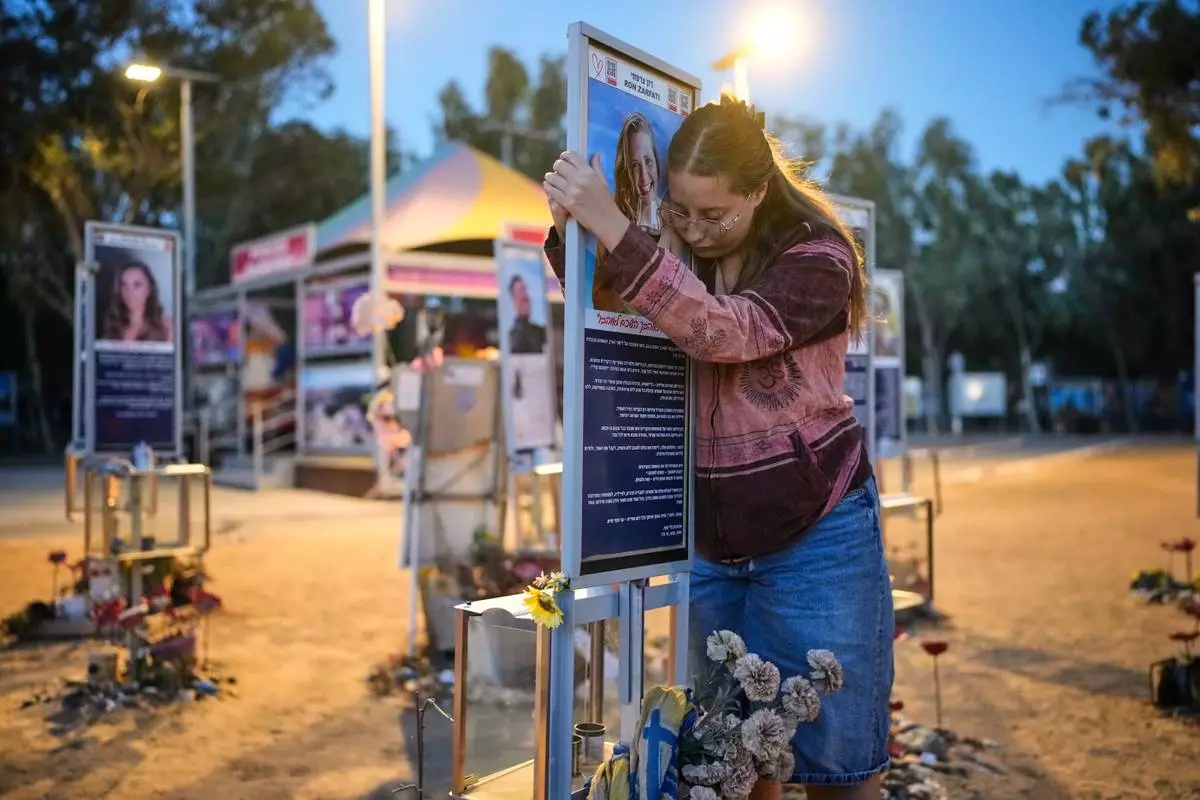
Raz Zarfati, sister of Ron Zarfati who was killed in the Oct. 7, 2023, Hamas attack on Israel, attend a memorial marking the third anniversary of the attack at the Nova music festival site near Kibbutz Reim, southern Israel, Wednesday, Oct. 7, 2026. (AP Photo/Ohad Zwigenberg)
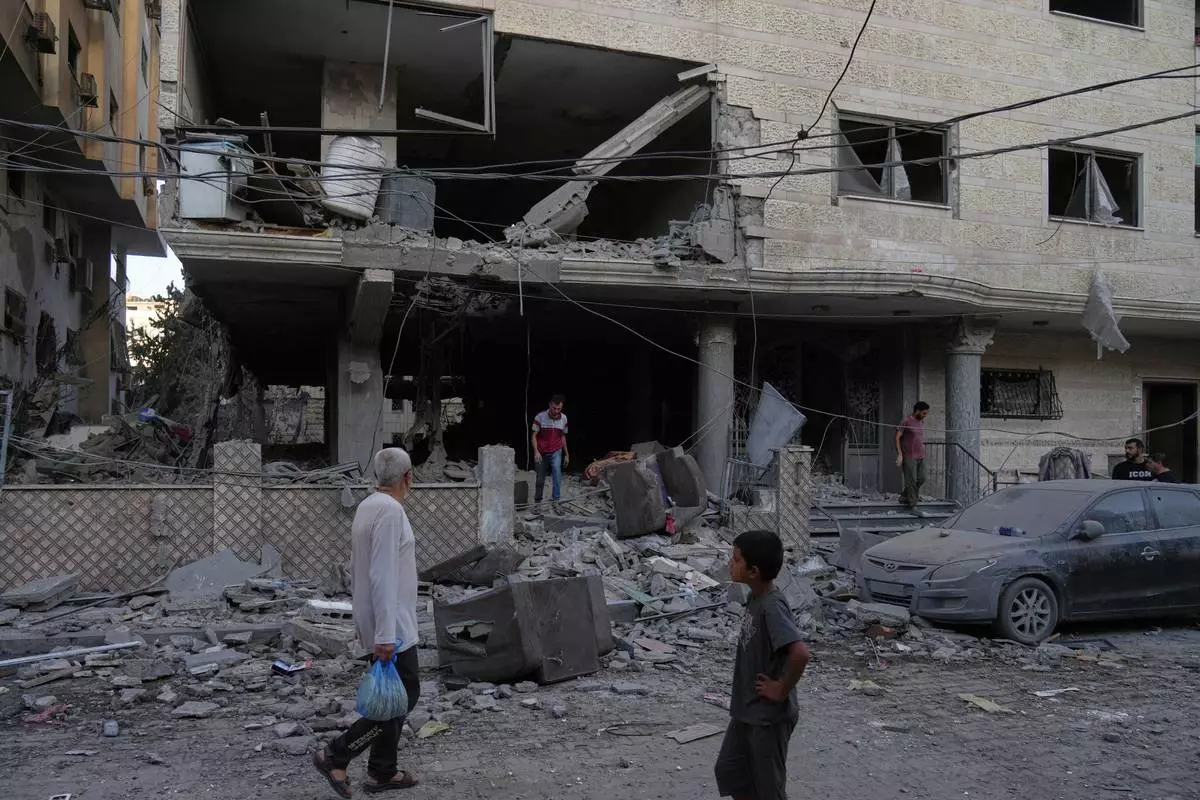
Palestinians inspect the site of an early morning Israeli airstrike in Gaza city, Saturday, Oct. 3, 2026. (AP Photo/Jehad Alshrafi)
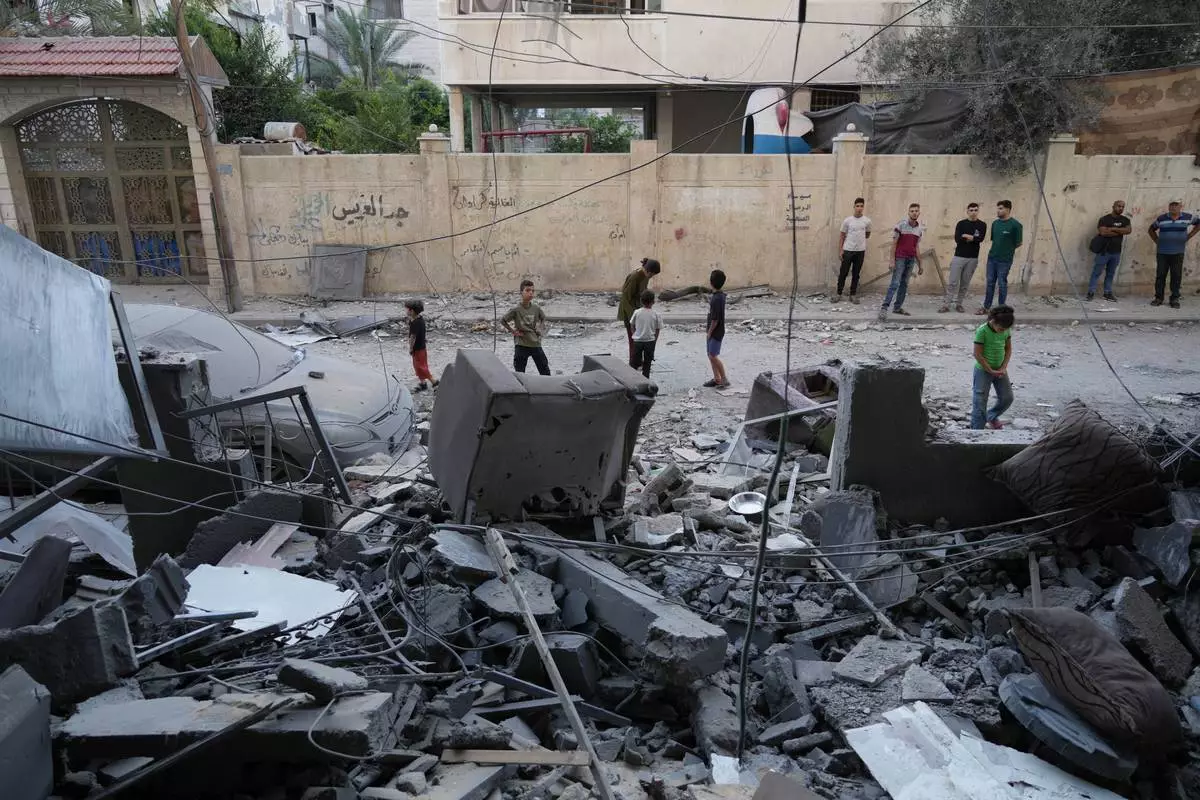
Palestinians inspect the site of an early morning Israeli airstrike in Gaza city, Saturday, Oct. 3, 2026. (AP Photo/Jehad Alshrafi)
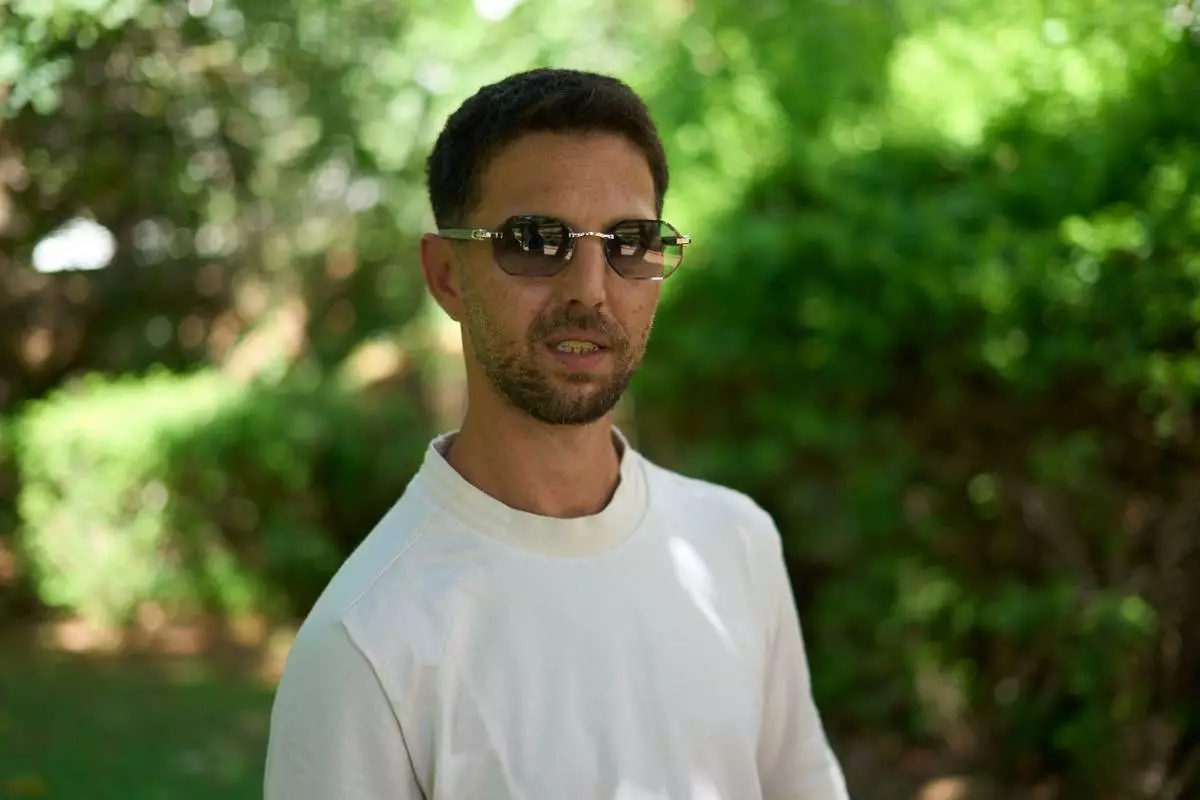
Released hostage Elkana Bohbot poses in Kadima Zoran, Israel, Sunday, Sept. 27, 2026, before marking the Oct. 7 anniversary in Israel for the first time following his release from 738 days in captivity in the Gaza Strip. (AP Photo/Ariel Schalit)
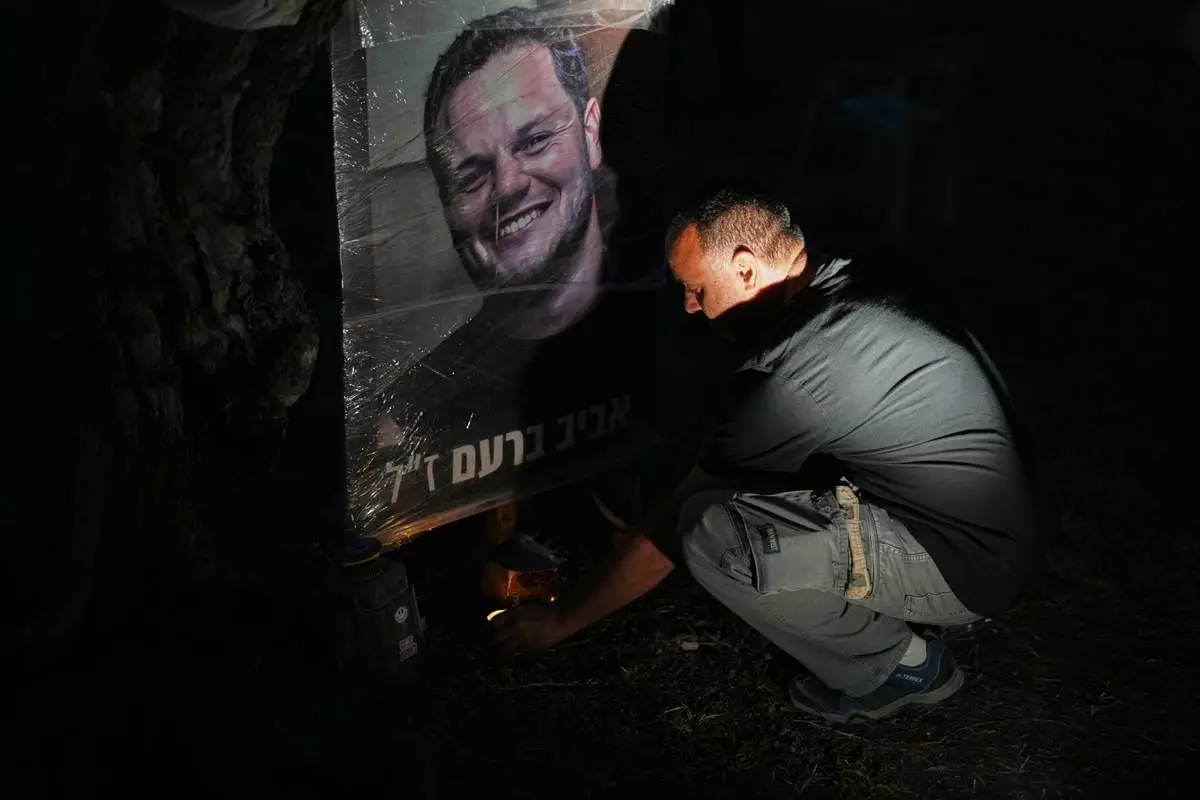
People attend a memorial service marking the third anniversary of the Oct. 7, 2023, Hamas cross-border attack on Israel, in Kibbutz Kfar Aza, southern Israel, where many community members were killed and abducted, Wednesday, Oct. 7, 2026. (AP Photo/Ariel Schalit)
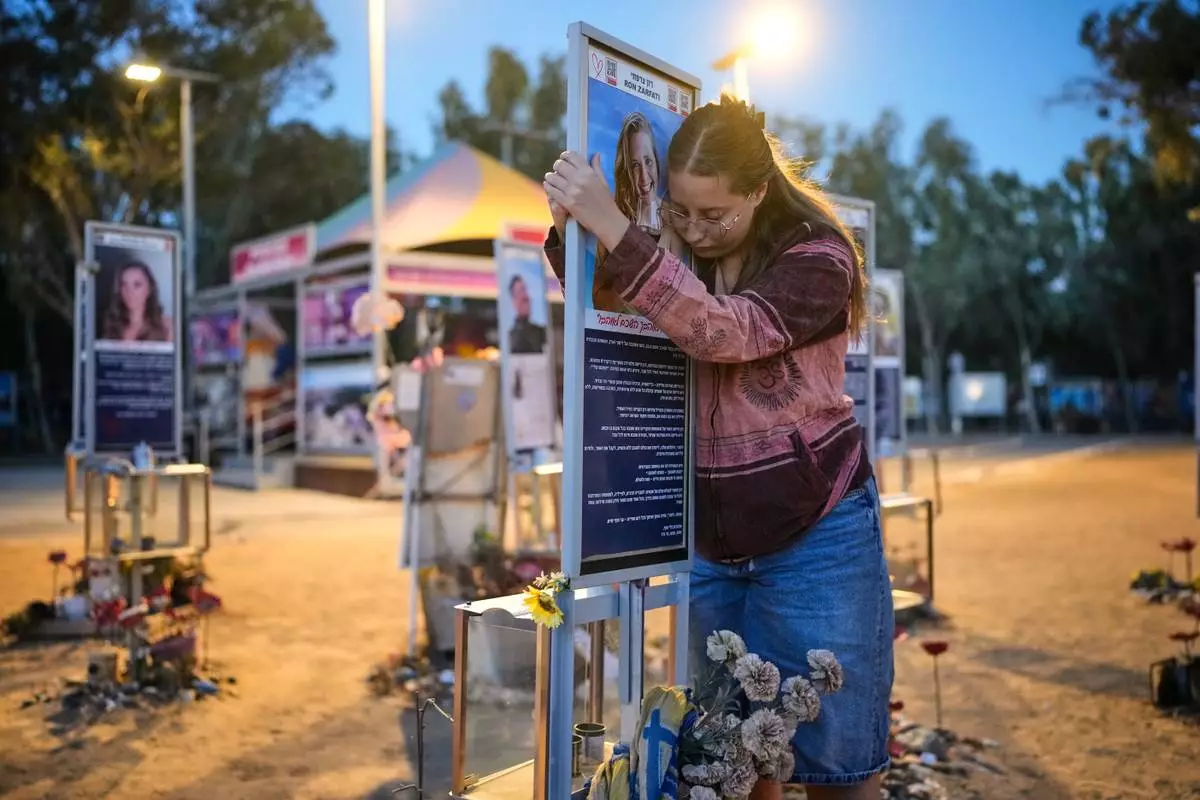
Raz Zarfati, sister of Ron Zarfati who was killed in the Oct. 7, 2023, Hamas attack on Israel, attend a memorial marking the third anniversary of the attack at the Nova music festival site near Kibbutz Reim, southern Israel, Wednesday, Oct. 7, 2026. (AP Photo/Ohad Zwigenberg)