The Ebola outbreak in Congo is creating new hot spots where there's little to no support for patients, responders and officials say, as health workers admit there could still be a long way to go in fighting the disease that has killed over 4,000 people.
More than 70% of new cases are still coming from outside of known contacts and at least 60% of deaths are outside of treatment centers, Africa CDC Director-General Dr. Jean Kaseya told The Associated Press. “There are so many other people who are becoming sick, who are not tested, treated, or listed,” said Kaseya on Tuesday.
The conflict-battered, remote North Kivu province, which has emerged as the new epicenter, now accounts for around 40% of all newly confirmed cases in Congo, compared with 24% at the end of August. But the response on the ground is “chaotic,” said Stephanie Hoffmann, a project coordinator with Doctors Without Borders (MSF). “There is a lack of coordination and organization, but there’s certainly a lack of actors present here,” Hoffmann told the AP.
Congo's deadliest Ebola outbreak — caused by the Bundibugyo virus, which has no approved vaccine or treatment — was declared in May under some of the most challenging conditions imaginable fueled by mass population movements, rebel violence, mistrust and poor welfare of front line workers.
Congo has recorded more than 8,500 cases in the outbreak, according to government data, making it the fastest-growing Ebola outbreak on record and the country’s deadliest. On Tuesday, Kenya reported its first Ebola case, a man who arrived from Congo and died while receiving treatment.
The biggest challenge to date is contact tracing, Dr. Kayesa said. Only 23% of expected contacts of Ebola patients have so far been traced. The disease is spreading in a region of Congo with intense population movements due to economic activities, conflict displacement and mining, and where there’s deep mistrust with the government and misinformation about the virus.
“I’m unable to tell you when we can stop this outbreak unless we implement the village-centered approach,” the Africa CDC chief said, calling for direct involvement of villages and local leaders in contact tracing, burials of deceased patients and isolation of cases.
Many Ebola treatment centers in North Kivu are struggling with shortages of health workers and supplies, contributing to more deaths among patients, the World Health Organization has said.
North Kivu’s case fatality rate of 58% is the highest among Congo’s seven affected provinces. The disease has spread to half of its 34 health zones. In nine of those 17 affected zones, more than half of patients with confirmed infections have died, according to Health Ministry data.
Desperate for care, patients in some parts of North Kivu have turned to regular health facilities, MSF said.
“Local healthcare workers are the ones feeling this the most because they have to make the decision between sending their community members home to potentially die by themselves or putting themselves at risk to help treat them in their health center,” said Hoffmann, coordinator of MSF’s Ebola treatment center in Butembo, North Kivu.
Nearly five months after the outbreak was declared, it has become harder to track in parts of North Kivu, where residents still have “a hard time believing the disease exists,” said Michel Ngimba of the National Institute of Biomedical Research in Butembo.
He described cases in which families were reluctant to report a death or allow a sample to be taken from someone who died with Ebola symptoms. In other cases, families “want to arrange the funeral quickly,” Ngimba said, potentially creating new chains of transmission because the bodies of people who die from Ebola are highly contagious.
“The situation has become more difficult to monitor (and) surveillance has to deal with situations that are highly fluid and sometimes difficult to document,” he said.
——
AP writer Sebastien Kitsa Musayi in Beni, Congo contributed.
——
For more on Africa and development: https://apnews.com/hub/africa-pulse
The Associated Press receives financial support for global health and development coverage in Africa from the Gates Foundation. The AP is solely responsible for all content. Find AP’s standards for working with philanthropies, a list of supporters and funded coverage areas at AP.org.
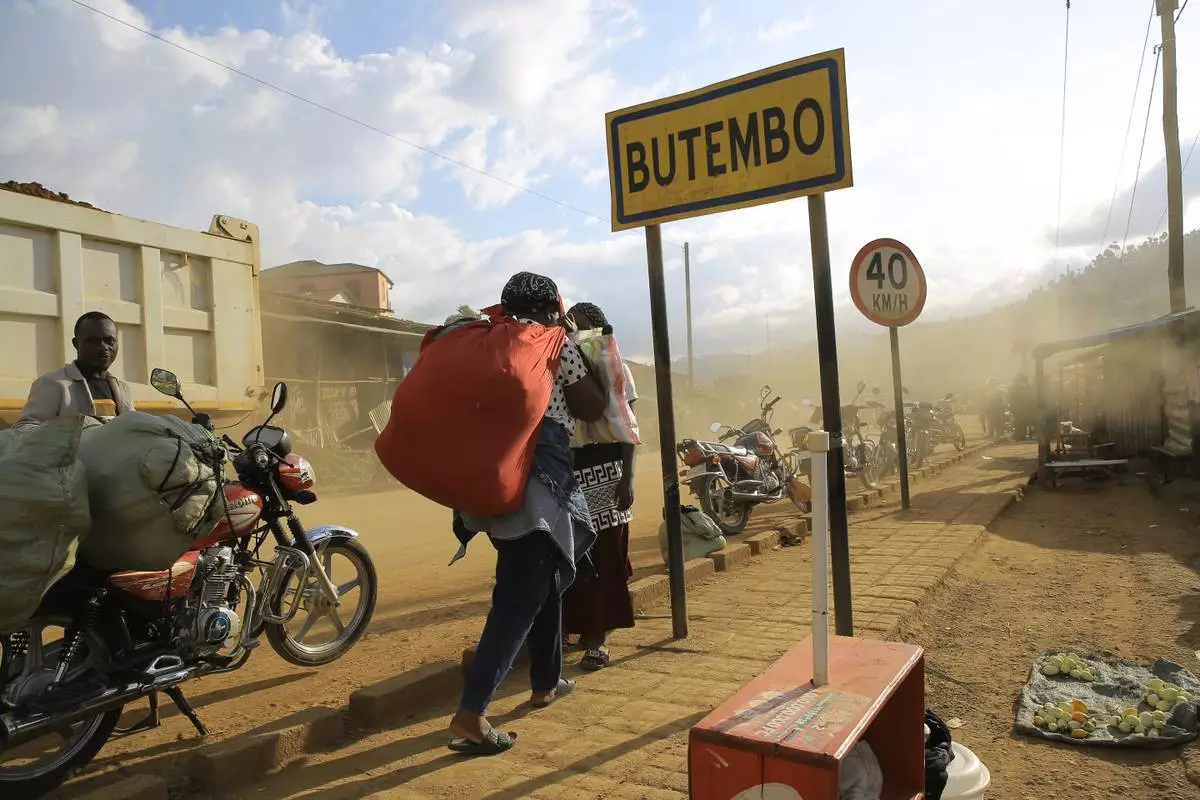
People walk along a street in Butembo, Congo, Wednesday, Sept. 30, 2026. (AP Photo/Sebastien Kitsa Musayi)
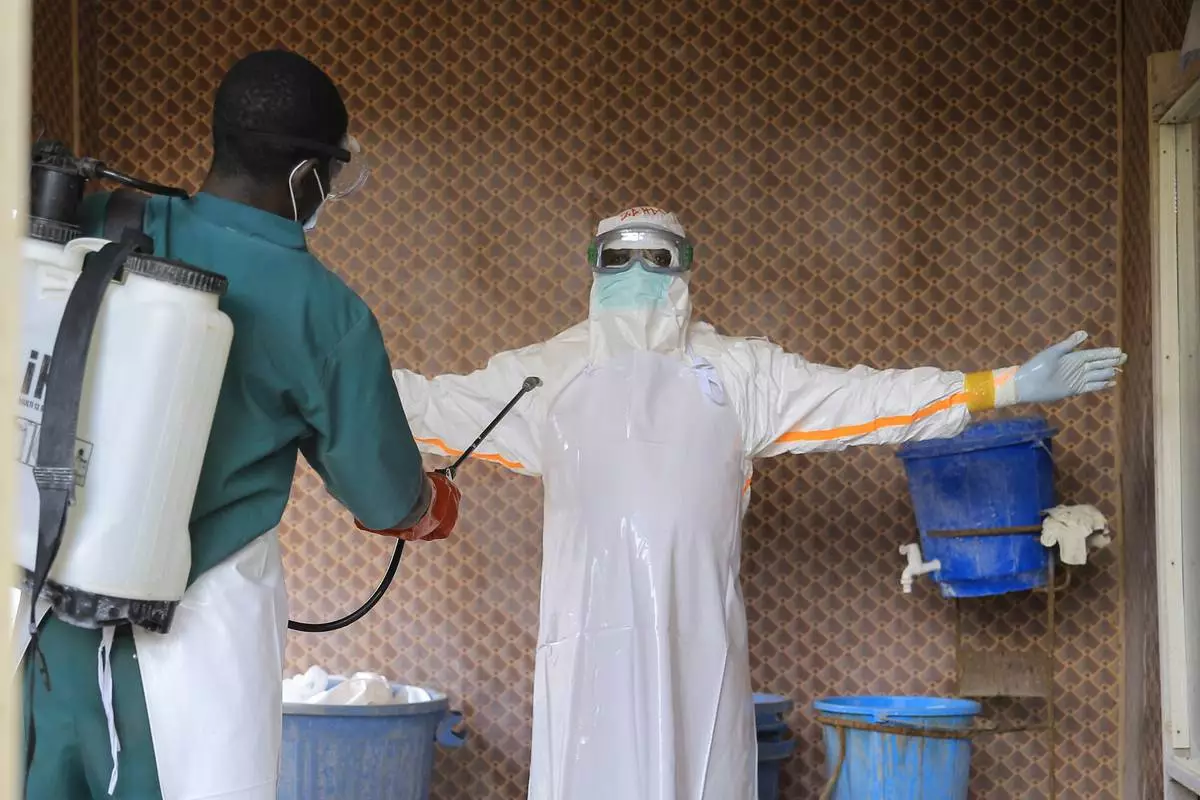
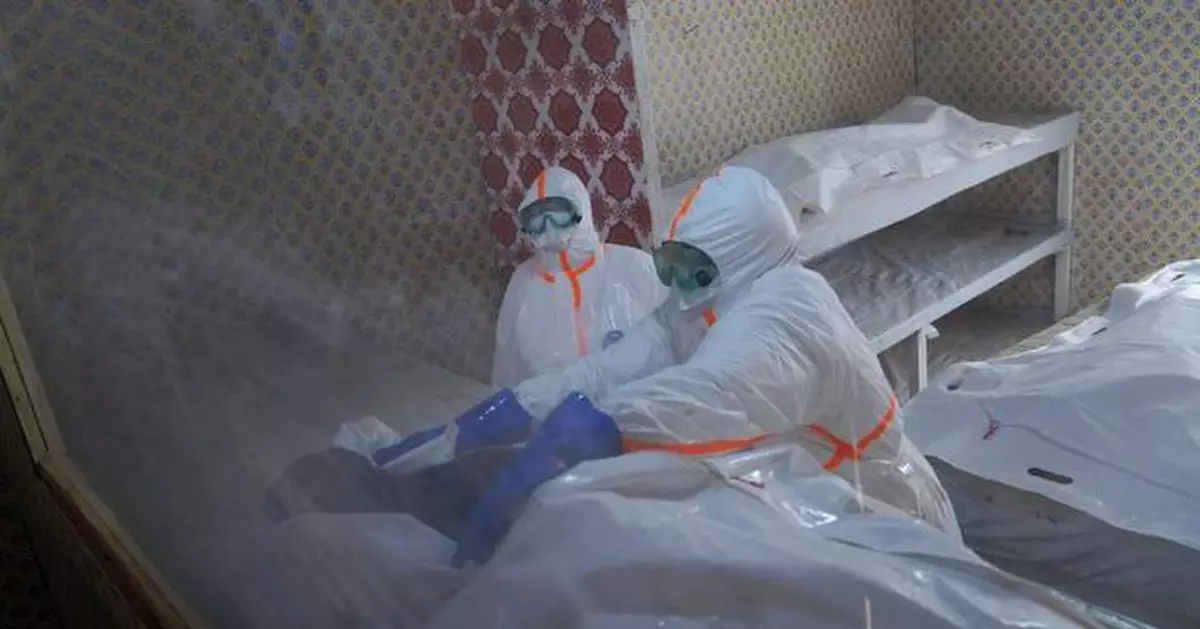
A healthcare worker in protective clothing is disinfected by a colleague inside a treatment center for Ebola patients in Beni, North Kivu province, eastern Congo, Saturday, Sept. 26, 2026. (AP Photo/Sebastien Kitsa Musayi)
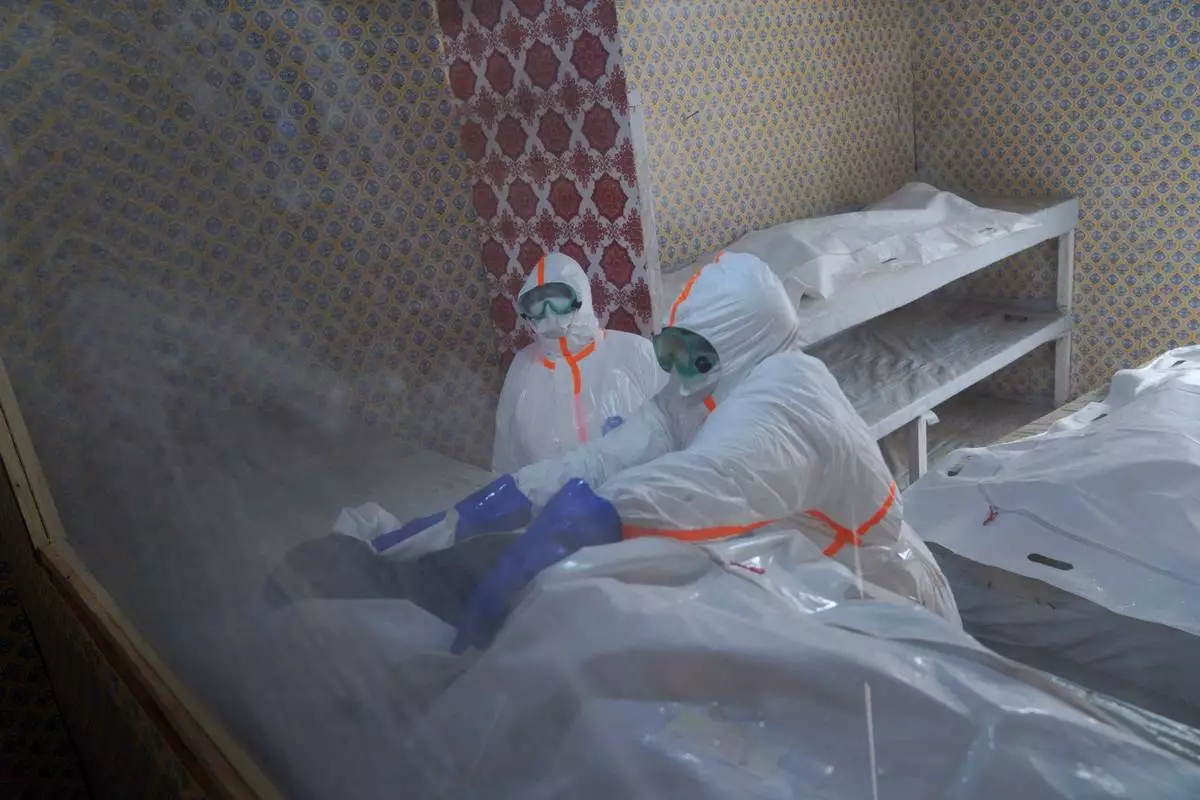
Health workers prepare to transfer the body of Abineno Justine, a 38-year-old woman who died of the Ebola virus, to a coffin ahead of her burial in Bunia, Congo, Friday, Sept. 4, 2026. (AP Photo/Dieudonne Dirole)
Tropical Storm Isaias formed Wednesday in the warm waters off eastern Mexico and forecasters predicted it will quickly strengthen into the first hurricane of the Atlantic season before striking the U.S. Gulf Coast later in the week.
Communities in Isaias' potential path moved quickly to prepare with landfall forecast as soon as Friday evening. Some Gulf oil wells paused production and an Alabama beach city canceled a weekend festival known to draw thousands of tourists. Governors in Florida and Alabama declared a state of emergency for dozens of counties.
As it moves inland, Isaias might also disrupt Saturday's college football showdown between rivals Georgia and Alabama — a game President Donald Trump has planned to attend.
Isaias could become a major Category 3 hurricane, with winds of 111 mph (178 kph) or stronger, before it strikes land, said Michael Brennan, director of the U.S. National Hurricane Center.
“We’re expecting multiple dangerous, life-threatening impacts along portions of the northern Gulf Coast beginning Friday and continuing into the weekend," Brennan said in a video briefing Wednesday.
The storm was on track to tie or break a 121-year-old record as the latest arriving initial hurricane of the Atlantic season. According to the National Weather Service, the record dates to 1905, when the year’s first Atlantic hurricane formed on Oct. 8.
The Atlantic hurricane season has been unusually quiet this year because of a strong El Niño, which disrupts storm formation over that ocean. Storm activity has been above average in the Pacific, where Tropical Storm Simon also formed Wednesday off Mexico.
The Miami-based hurricane center issued a hurricane watch Wednesday for the northern Gulf Coast from Bay St. Louis, Mississippi, to Indian Pass on the Florida Panhandle. The watch means hurricane conditions are possible within 48 hours.
Brennan said dangerous storm surge could affect an even wider area, from southeast Louisiana to Florida's Big Bend. Heavy rains of 3 to 7 inches (7 to 18 centimeters) could trigger flash flooding near the coast, with accumulations of 1 to 3 inches (3 to 8 centimeters) as far inland as Tennessee and the western Carolinas.
Isaias was centered about 225 miles (365 kilometers) west-northwest of Progreso, Mexico, and about 500 miles (805 kilometers) south-southwest of the Mississippi River’s mouth, according to the hurricane center. It had maximum sustained winds of 65 mph (100 kph) and was moving east-northeast at 8 mph (13 kph).
Forecasters predict Isaias (pronounced ees-ah-EE’-ahs, according to the hurricane center) will become a hurricane by Thursday as it turns northward toward the U.S. Gulf Coast. Though its path and timing could shift, the storm is expected to make landfall late Friday or early Saturday.
Isaias is expected to strike along a wide swath of coastline that's no stranger to major hurricanes. One of the 20th century's worst storms, Hurricane Camille, killed more than 250 people after hitting land near Waveland, Mississippi, in 1969. Hurricane Katrina in 2005 razed neighborhoods in Mississippi, flooded New Orleans and killed nearly 1,400 people. And Hurricane Michael leveled homes and buildings near Panama City, Florida, in 2018.
Ahead of the storm, oil and gas producers shut down a significant share of offshore production in the Gulf, which accounts for almost 15% of crude pumped annually in the U.S.
As of Wednesday, producers had temporarily halted about 25% of the oil produced in the region, taking about 511,000 barrels a day off the market, according to the Marine Minerals Administration. It said eight of the Gulf's 371 manned oil platforms had been evacuated.
With oil prices already high, the production cuts are steep enough to affect oil markets, though other Gulf hurricanes have caused larger disruptions, said Jim Burkhard, global head of crude oil market research for S&P Global Energy. More concerning, he said, is whether Isaias strikes as a powerful storm near refineries.
“I would characterize the oil market risk as moderate, but rising,” Burkhard said in an email.
In Gulf Shores, Alabama, the storm threat caused organizers to cancel the National Shrimp Festival that had been scheduled for Thursday through the weekend. The event drew an estimated 325,000 people last year.
Gulf Shores resident Maranie Adams spent Wednesday gathering water and other supplies as her family moved some belongings, including a hot tub motor, to higher ground.
Adams said she, her husband and two adult sons plan to ride out the storm at home, roughly a half-mile from shore. Sheltering with them indoors will be the family’s flock of chickens, including five roosters.
“We’re having to get crates to bring them into the house so they don’t blow away,” Adams said. “It’s going to be noisy.”
Alabama Gov. Kay Ivey issued a state of emergency for 40 counties, saying in a post on X, “While I hope for minimal impacts, we must take preparations seriously."
In Florida, Gov. Ron DeSantis declared one for 25 counties in the Panhandle and Big Bend regions. The declaration activates the state's emergency management plan for hurricanes, allowing officials to deploy disaster responders and equipment. The state is also planning to deploy a Miami-based urban search and rescue task force.
In Pensacola on the Florida Panhandle, electric utilities were prepositioning crews to quickly repair any power outages. City officials provided sand for residents to fill sandbags to protect their homes against flooding. And Pensacola Mayor D.C. Reeves urged people to check on elderly neighbors and others who might need help.
“Obviously no need to panic at this point," Reeves told a news conference Wednesday. "This is really about preparation.”
Rico reported from Atlanta and Collins reported from Hartford, Connecticut. Associated Press journalists Russ Bynum in Savannah, Georgia, and Julie Walker in New York contributed to this report.
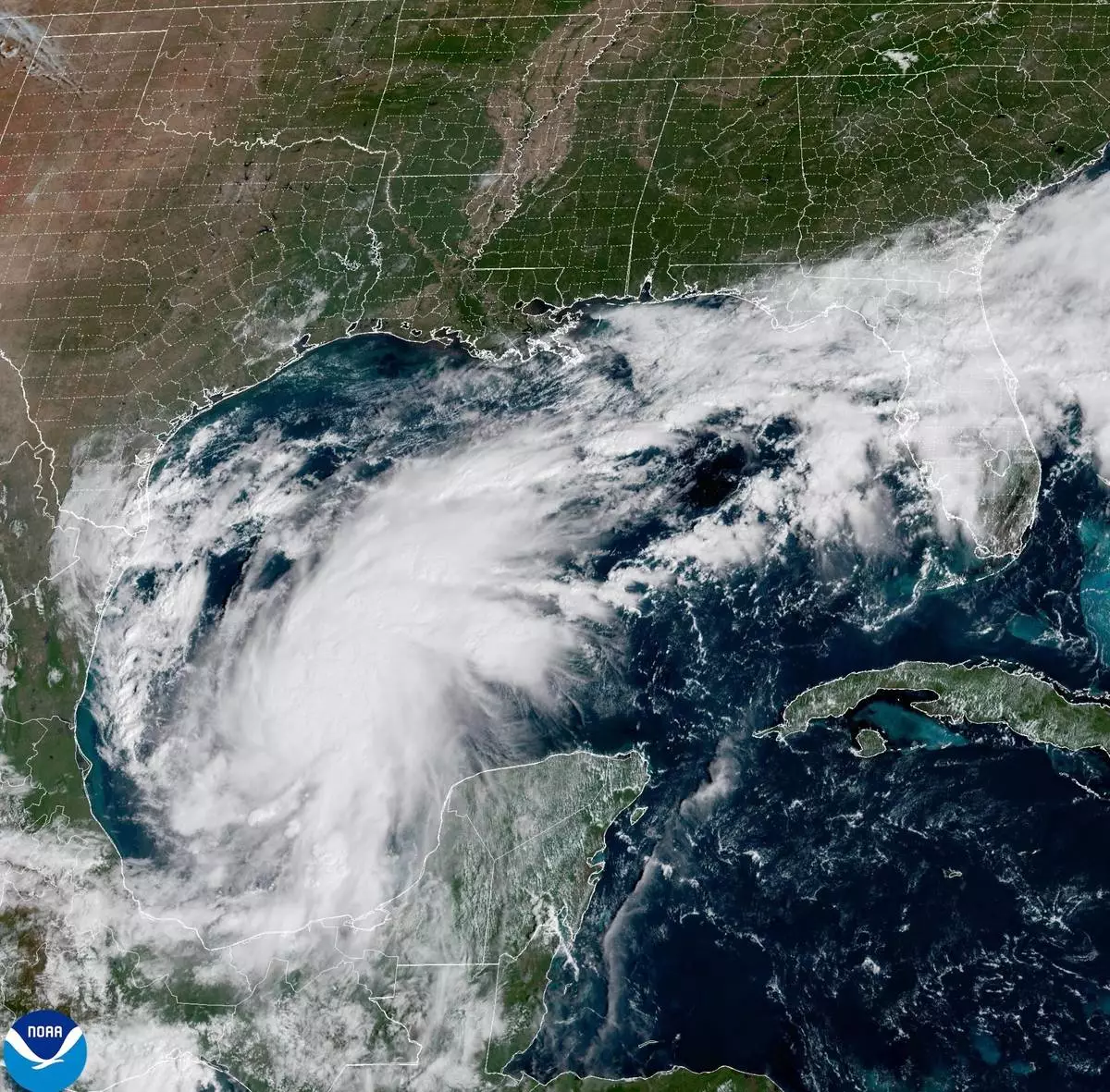
This satellite image from the National Oceanic and Atmospheric Administration shows Tropical Storm Isaias off the eastern coast of Mexico on Wednesday, Oct. 7, 2026. (National Oceanic and Atmospheric Administration via AP)
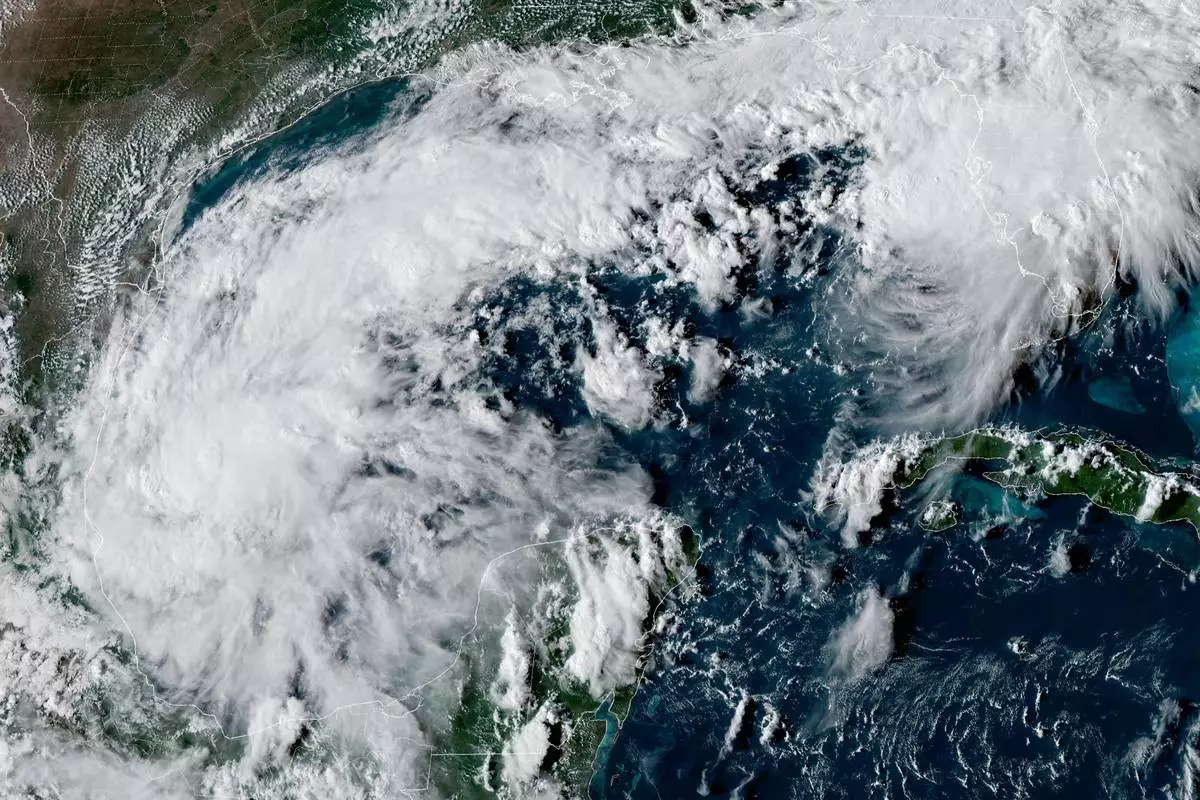
This satellite image from the National Oceanic and Atmospheric Administration shows Tropical Depression Nine forming over the Gulf of Mexico on Tuesday, Oct. 6, 2026. (NOAA via AP)