GENEVA (AP) — A top official with the World Health Organization said Wednesday the U.N. health agency doesn’t know how a lab worker in Siberia died amid concerns about plague, and she urged Russia to provide more information.
Maria Van Kerkhove, WHO director of Epidemic and Pandemic Management, said the agency doesn’t know what the “causative agent’ was behind the woman’s Oct. 2 death, and “this is why we need more information.”
Click to Gallery
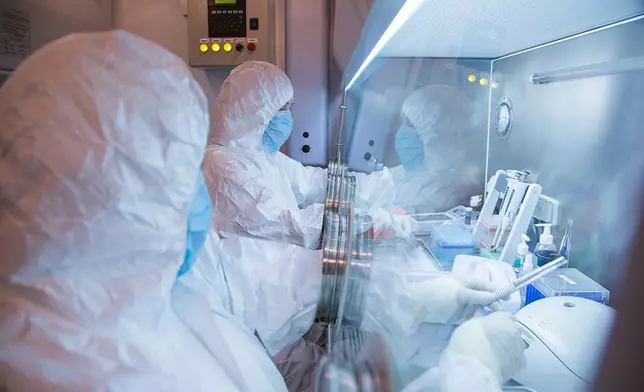
This undated photo released in 2019 by the Irkutsk Anti-Plague Research Institute of Siberia and Far East, shows the institute workers in a lab. (The Irkutsk Anti-Plague Research Institute of Siberia and Far East via AP) ADDITION: adding photo was released in 2019
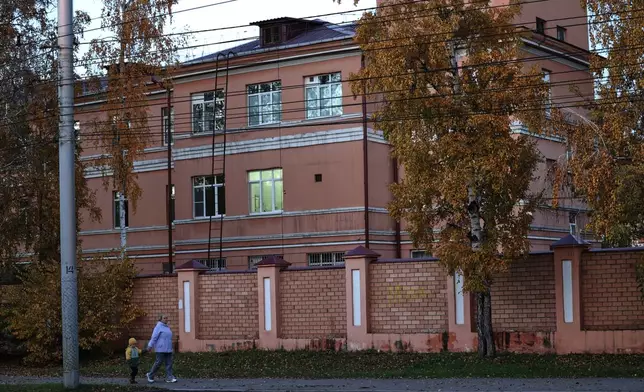
Electric scooters are parked next to the building of the Irkutsk Anti-Plague Research Institute of Siberia and the Far East in Irkutsk, Russi, on Wednesday, Oct. 7, 2026. (AP Photo)
People walk past the fence of the building of the Irkutsk Anti-Plague Research Institute of Siberia and the Far East in Irkutsk, Russi, on Wednesday, Oct. 7, 2026. (AP Photo)
A woman with her child walks past the building of the Irkutsk Anti-Plague Research Institute of Siberia and the Far East in Irkutsk, Russia, on Wednesday, Oct. 7, 2026. (AP Photo)
In its tersely worded statements, Russia's public health watchdog, Rospotrebnadzor, does not link the case to pneumonic plague, saying only that “extensive” testing found no evidence the lab worker's illness was caused by any of the pathogens she worked with at the Irkutsk Anti-Plague Research Institute of Siberia and the Far East.
Russia has said she died of pneumonia -- a “typical” acute respiratory viral infection -- and its health authorities have found no cases of plague recently, WHO has said, acknowledging that pneumonia is commonplace.
“We don’t understand how she was infected,” Van Kerkhove said.
The comments suggested the U.N. health agency has more questions than answers about the situation at the lab, which focuses on plague and was founded about a century ago to study the disease in a region where it is endemic.
Since the suspicious death of the lab worker, Russian authorities have kept a tight lid on information about it. The incident has been surrounded by secrecy and claims that it could have been caused by pneumonic plague.
While the case has raised global concerns, Russian state TV and other national state-controlled media have steered clear of the subject. Some state-sponsored news outlets withdrew earlier reports about the case.
Rospotrebnadzor said Sunday the lab worker was diagnosed with “pneumonia of unknown etiology,” meaning its origin was not known.
A state TV station in Irkutsk reported she died Oct. 2 in a hospital in Shelekhov, a town just outside Irkutsk. Officials have quarantined a hospital and are monitoring the contacts of the worker, who died of what unconfirmed media reports said could have been pneumonic plague — a less common but severe form of plague that can spread from person to person.
Moscow informed the WHO that no case of plague has been registered in the Irkutsk region in southeastern Siberia.
President Donald Trump said Tuesday he would speak about the issue “very soon” with Russian President Vladimir Putin and report about it “probably tomorrow.” Wednesday is the Kremlin leader's 74th birthday.
Kremlin spokesman Dmitry Peskov said Wednesday that a Putin-Trump call hasn’t been set yet but could be organized quickly.
Trump said the U.S. stands ready to help Russia. Asked what the U.S. intelligence community was saying about the case, Trump said the U.S. is in “very deep discussions” on the topic.
In response to WHO requests, Russia declared that no case of plague had recently been registered in the Irkutsk region, the U.N. organization said.
Russian health authorities reported a full range of preventive measures had been carried out — including tracing the dead woman’s contacts, medical monitoring and lab tests, the WHO said. The Russian note relayed to The Associated Press by the WHO said the test showed “no presence of dangerous infectious disease pathogens in any of the contacts.”
The Geneva-based organization said it has requested further information to clarify the cause of the severe pneumonia, the pathogen that prompted the public health measures, and media reports that a second employee had pneumonia of undetermined cause.
Peskov referred all questions to Rospotrebnadzor, which does not mention suspected plague in its reports.
In its latest statement Tuesday, the agency said “the sanitary and epidemiological situation in the Irkutsk region, the cities of Irkutsk and Shelekhov is calm.” Authorities were completing a “complex of prophylactic measures and medical observation over contacts,” it said, adding that so far they have found two cases of COVID-19 and two cases of rhinovirus.
“No other infectious pathogens have been found among contacts,” it said.
Judy Twigg, professor of political science at Virginia Commonwealth University, noted that while the measures taken by Russian health authorities “have been swift and serious,” officials sought to play down the situation and “any statements that strayed from that party line ... were edited or deleted within hours.”
“What we are watching is less a failure to respond than a failure of candor,” Twigg said in written comments.
Vasily Vlassov, professor at the department of healthcare administration and economics at Russia’s Higher School of Economics, said the measures taken appeared “sensible,” focusing on treating the sick, isolating them and their contacts, looking for new cases and carrying out final disinfection.
But he said it wasn't clear whether more transparency was possible if those dealing with the situation didn’t have enough certainty, and “maybe, they still don’t.” Deceiving the public “always turns out to be harmful,” he added, and distrust of Russia’s official narrative is “natural” and “almost inevitable.”
In the Soviet era, crises with dangerous outbreaks of infection had "a thick veil of secrecy — people were told nothing.”
The news outlet Lyudi Baikala — or “People of Baikal” — identified the dead lab worker as Darya Shipilova, 28, and said she first was hospitalized with cold symptoms Sept. 29 and died three days later.
It quoted colleagues as saying she was a highly qualified and diligent researcher. They also emphasized that security rules at the facility are extremely strict.
The report quoted Shipilova's neighbors as saying a team of disinfection experts did several cleanups of her apartment, leaving a strong antiseptic smell.
Shipilova’s mother, who worked as a doctor in the past, described her daughter as hard-working and dedicated, according to independent Russian news outlet Glubina, adding that she had not gotten official documents describing the cause of death.
Irkutsk Gov. Igor Kobzev said she died of a “particularly dangerous infection” and everyone who came into contact with her has remained under medical supervision.
The hospital where she died was under quarantine, no longer admitting or discharging patients, although its outpatient clinic has continued operating, according to Mayor Maxim Modin.
Twigg noted that Russia has criminalized “false information” about threats to public safety in 2020 amid the COVID-19 pandemic, “so silence is the one safe move for everyone below the top.”
“Personalist regimes without electoral accountability tend to treat bad news as a loyalty problem rather than focusing on the actual problem to be addressed,” she said.
She warned that “a government that is not believed when it says ‘there is no outbreak’ will not be believed when it must actually say ‘there is one; do the following.’ We saw this with COVID.”
Pneumonic plague and the more well-known bubonic plague — also called the “Black Death” — are caused by the same bacteria, said Simon Clarke of the University of Reading in the U.K.
Pneumonic plague results from breathing in the bacteria, causing an infection in the lungs. Bubonic plague is spread by flea bites from rodents carrying the bacteria called Yersinia pestis. It had not been eliminated, but it's not spread very easily and it is treatable with antibiotics.
“People think the plague is gone. It was something that occurred 500 years ago, and it’s not. It’s here amongst us,” Clarke said. “Unless you get rid of those wild animals, which of course is not possible, then you’re not going to get rid of the bacteria. It’s just something that is with us.”
The incubation period for pneumonic plague — the disease's most virulent form — can be as short as 24 hours, the WHO said. The lung-based illness is a less common but severe form of plague that can spread between people via respiratory particles. If untreated, the illness can be fatal, but recovery rates are high if detected and treated in time, it said.
__
Dasha Litvinova in Tallinn, Estonia contributed.
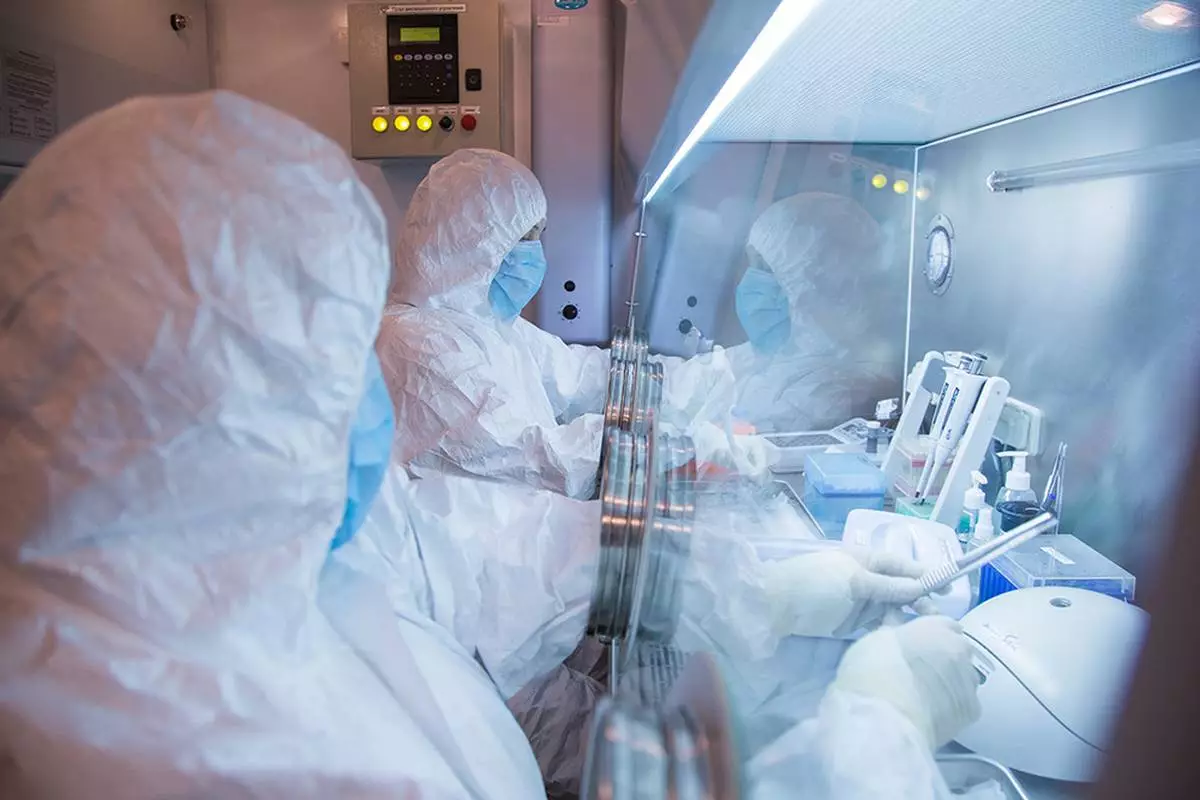
This undated photo released in 2019 by the Irkutsk Anti-Plague Research Institute of Siberia and Far East, shows the institute workers in a lab. (The Irkutsk Anti-Plague Research Institute of Siberia and Far East via AP) ADDITION: adding photo was released in 2019

Electric scooters are parked next to the building of the Irkutsk Anti-Plague Research Institute of Siberia and the Far East in Irkutsk, Russi, on Wednesday, Oct. 7, 2026. (AP Photo)

People walk past the fence of the building of the Irkutsk Anti-Plague Research Institute of Siberia and the Far East in Irkutsk, Russi, on Wednesday, Oct. 7, 2026. (AP Photo)

A woman with her child walks past the building of the Irkutsk Anti-Plague Research Institute of Siberia and the Far East in Irkutsk, Russia, on Wednesday, Oct. 7, 2026. (AP Photo)
Republicans are increasingly anxious that the $1 billion at their disposal may not be enough to fend off sweeping midterm election losses as the party reckons with President Donald Trump’s unpopularity, persistent cost concerns and the fallout from the war in Iran. Despite their cash advantage, the spending is coming in late, forcing MAGA Inc. to pay much higher rates because of the shrinking availability of air time.
Trump's Department of Homeland Security proposed a $70,000 fee on Wednesday for each international student seeking to work in the United States after they graduate, as it seeks to reduce foreign enrollment in U.S. higher education. DHS says requiring universities to pay the fees will shut down a “pipeline for cheap foreign labor.”
And the White House said Trump will announce Wednesday that all Americans under age 18 are being automatically enrolled in Trump Accounts. The accounts are linked to Social Security numbers and require using a Trump Accounts app. The White House said automatic enrollment makes it easier for families to participate. Treasury Secretary Scott Bessent and philanthropists Michael and Susan Dell are expected to attend.
The Latest:
Standing in front of the ruins of the Acropolis, Secretary of State Marco Rubio made the case for nationalism, while trying to maintain the importance of global alliances.
In a sweeping and dramatic speech about ancient civilization that reflected his political aspirations beyond being America’s top diplomat, Rubio warned European countries that decisions made in the next decade “will determine whether the West maintains its place at the head of the world, or resigns itself to a future of atrophy and servitude and decline.”
“We will either choose to act now, or lose the choice to act at all,” he said. “Under President Trump, the United States has made its choice. We choose the unapologetic pursuit of national power.”
Rubio also said despite “passions” that have strained U.S.-Europe relations, allied-countries must work to “rebuild our institutions and our alliances to face these threats together.”
Mike Rogers, the Republican nominee for Senate in Michigan, released an ad Wednesday calling for an end to President Donald Trump’s trade war with Canada, marking the second recent break with the president by the battleground state candidate.
“We know that Canada is not our enemy,” Rogers says in the video. “We need to end this tariff war now.”
The U.S. and Canada have been locked in an escalating trade war since Trump imposed 50% tariffs on roughly $20 billion worth of Canadian goods this summer. Rogers previously defended some of the tariffs as “necessary.”
Rogers has also recently called for the U.S. war with Iran to “end quickly.” He had previously backed the war.
Rogers, once a critic of Trump, has aligned himself closely with the president since his first Senate campaign in 2024 and has Trump’s endorsement this year. Rogers faces progressive Democrat Abdul El-Sayed for the open Senate seat.
The $70,000 fee proposed Wednesday for international students seeking to work in the United States is just the latest Trump administration effort to reduce foreign enrollment in U.S. higher education. A Department of Homeland Security statement described the fee as a response to visa fraud and abuse that created a “pipeline for cheap foreign labor.”
And Trump on Tuesday said he has a call scheduled with Russian President Vladimir Putin to discuss a possible case of plague at a Siberian research institute. Speaking to reporters at the White House, Trump said he would be talking with Putin about the case “very soon.”
The Latest:
Last year, the Republican administration began suddenly terminating the legal status of thousands of international students, detaining and deporting many of them, as part of its wider efforts to crack down on immigration and reshape higher education.
This summer, the administration finalized a rule that sought to prevent international students from staying in the U.S. for more than four years without approval from the federal government. The move drew swift backlash from higher education leaders who said it would increase the burden on schools and noted that many programs are longer than four years by design. A federal court prevented the rule from taking effect in September.
The $70,000 fee proposed Wednesday for international students seeking to work in the United States is just the latest Trump administration effort to reduce foreign enrollment in U.S. higher education. A Department of Homeland Security statement described the fee as a response to visa fraud and abuse that created a “pipeline for cheap foreign labor.”
It would require schools to pay for each student participating in an optional practice training program, known as OPT, in jobs related to their major during or after their time in school. Students are generally eligible for one year of work post-graduation, though certain science, technology, engineering and math majors are eligible for an additional two years. The initial application would cost $70,000, plus a $30,000 fee for each renewal.
The public has 60 days to comment on the proposal before DHS can finalize it and put it into effect. The proposal also could face legal challenges from higher education groups or business associations that could delay it.
The White House said the president is announcing that all Americans under age 18 are being automatically enrolled in Trump Accounts.
The Treasury Department described the new initiative last week, saying it’s opening accounts for all children with a valid Social Security Number, which their parents or guardians can claim through the Trump Accounts app.
Children born during Trump’s second term automatically qualify for $1,000 from the government. Other minors can invest their own money into the tax-advantaged accounts, and draw on it when they turn 18 for costs like school or a home.
The White House said automatic enrollment makes it easier for families to participate.
Treasury Secretary Scott Bessent and Michael and Susan Dell are expected to be among those attending the 1 p.m. event at the White House.
The Federal Communications Commission is considering loosening rules on political robocalls, including those with artificial intelligence-generated voices, ahead of November’s midterms.
Federal law currently bans most robocalls to cellphones unless the caller gets consent beforehand. The conservative Club for Growth is asking the Republican-led FCC to allow political groups to use artificial or prerecorded voices in unsolicited wireless calls.
The FCC advanced the request for public comment and could rule on it as soon as late October.
Consumer advocacy groups warn the proposed change could trigger a surge of unwanted, partisan and potentially misleading automated calls as voters cast their ballots. The potential perils became evident two years ago when AI robocalls imitating then-President Joe Biden targeted thousands of primary voters in New Hampshire.
The FCC didn’t respond to a request for comment. Ana Gomez, the sole Democratic commissioner, said she opposes the move.
▶ Read more
Secretary of State Marco Rubio says there should be no confusion over the Trump administration’s ultimate goal with respect to the Iran war — and that is to prevent the country from ever developing a nuclear weapon.
Rubio made the comments on Wednesday at a news conference in Athens with the Greek foreign minister after Vice President JD Vance told Reuters that the administration might be able to accept an agreement that calls for Iran to make a “meaningful” decrease in its capacity for nuclear enrichment.
President Donald Trump has previously said Iran should not be allowed the capability to enrich.
“I don’t understand where the confusion is about the nuclear program,” Rubio said. “Iran cannot have a nuclear weapon. Simple, period, end of story. I’m not going to go into the details about what would be acceptable or not. I can tell you this: that they’re not going to ever have a nuclear program.”
Republican Sen. Susan Collins argued during the first of four debates with Democrat Troy Jackson that she’s the most independent senator in Congress, repeatedly voting against Trump’s agenda. “I’m not exactly his favorite senator,” she said.
Jackson, a former state Senate president and logger, pointed to Collins’ critical vote to confirm Supreme Court Justice Brett Kavanaugh, a Trump nominee who eventually helped overturn the constitutional right to abortion. “Would you trust her to pick the next Supreme Court justice?” he asked.
Collins argued that her seniority and experience in the Senate have resulted in money and resources for Maine. She touted her ability to remove certain items from Trump’s trade war with Canada, including pulp, concrete and road salt.
Jackson’s response: “We can’t eat road salt.”
▶ Read more
Supreme Court Justice Samuel Alito told The Associated Press in a rare interview that rhetoric about the court from Trump and his administration doesn’t sit well with him.
“I personally am not pleased with that,” he said. “Everybody in this country has the right to criticize what we do. The substance of their criticism can be quite harsh. If we deserve it, then that’s fine. But rhetoric is a different story.”
Alito also criticized the escalating volume of emergency appeals before the court, but said there’s little the justices can do to change the trajectory. Such petitions have skyrocketed during Trump’s second administration, putting the court at the center of hotly debated issues such as the Republican president’s new ballroom construction and his proposed restrictions on mail ballots in the midterm elections.
Alito spoke in connection with his first book, “So Ordered: An Originalist’s View of The Constitution, The Court and Our Country.”
▶ Read more
“Anyone who is stealing from the American people, shortchanging the American people, or screwing over the American people, you are now on notice,” House Democratic leader Hakeem Jeffries said.
An AP-NORC poll in September found registered voters nationally are more likely to describe Republicans than Democrats as corrupt.
Democratic candidate Jamie Ager, a farmer running for an open North Carolina U.S. House seat where Republican Rep. Chuck Edwards dropped his reelection bid after an ethics investigation into improper conduct with female staff, has been campaigning on that sentiment. “I’ve had enough of self-serving politicians who keep getting richer at our expense,” Ager said.
Rebecca Bennett, a Democratic congressional candidate in New Jersey, has criticized Republican Rep. Tom Kean Jr. over stock trading disclosures during a four-month absence from Congress. Kean didn’t disclose his hospitalization for depression until he returned to Washington, and he said it was financial advisers, not him, trading the stocks.
Democrat Kamala Harris entered the final stretch of the 2024 campaign with significantly more money than Trump only to lose every critical swing state and the White House. Elon Musk’s $25 million didn’t lift his preferred candidate to a Wisconsin Supreme Court seat. And Tom Steyer didn’t advance in the California governor’s race despite spending $216 million of his own money.
The $1 billion that Republicans have amassed compares with roughly $579 million held by a comparable collection of major Democratic groups.
Senate Democratic leader Chuck Schumer said his party is facing an “obscene” amount of spending that could swamp them in the midterms.
“We’re never going to have as much money as them,” Schumer told the AP. “I sum up the election in this sentence: Can a massive Republican advantage in money beat a massive Democratic advantage in better candidates and political climate? I bet it can’t.”
The challenge is acute in places like Texas, where Trump will travel on Wednesday for the second time in a week to stump for Republican Ken Paxton’s Senate campaign. The state hasn’t elected a Democratic senator since 1988, yet MAGA Inc. has spent more than $22 million in the past month, according to the ad tracking firm AdImpact.
Texas PAC, which is aligned with Senate Majority Leader John Thune, has spent more than $83 million on advertising in the past month, an extraordinary amount to protect what’s normally a safe Republican seat. But while Texas PAC was charged $450,000 to air a single spot in the Austin market during a football game, Democratic Senate nominee James Talarico’s campaign paid $50,000 for a spot during the same game in the same market, according to AdImpact.
Republicans are increasingly anxious that the $1 billion at their disposal may not be enough to fend off sweeping midterm election losses as the party reckons with Trump’s unpopularity, persistent cost concerns and the fallout from the war in Iran.
The cash advantage, spread out across a half-dozen groups, is driven largely by the Trump-aligned MAGA Inc., which had nearly $416 million on hand at the end of August and increased its spending on critical races in September.
But that money may have come too late, forcing the president’s group to pay much higher rates because of the shrinking availability of air time. Four Republican Senate campaign officials said groups that reserved advertising time last spring paid much lower rates than MAGA Inc. and its affiliated groups. Now, the Trump-connected organizations are sometimes paying more than five times what they would have spent if they had acted earlier.
▶ Read more
Trump on Tuesday said he has a call scheduled with Russian President Vladimir Putin to discuss a possible case of plague at a Siberian research institute.
Speaking to reporters at the White House, Trump said he would be talking with Putin about the case “very soon.” Health authorities are investigating after the death of an employee at an anti-plague institute, which authorities attributed to pneumonia with an unknown cause.
Asked what the U.S. intelligence community was saying about the case, Trump said the U.S. is in “very deep discussions” on the topic. “We’ll be able to report about it, probably tomorrow,” Trump said.
The World Health Organization on Tuesday said the case presents a “very low” risk outside Russia. The United Nations agency said it was in contact with Russian authorities following reports of the death last week of a woman who worked at the Irkutsk Anti-Plague Research Institute of Siberia and the Far East.
▶ Read more

Russian President Vladimir Putin, right, toasts with Russian soldiers during a meeting with teachers at the Kremlin in Moscow, Monday, Oct. 5, 2026. (Kristina Solovyova, Sputnik, Kremlin Pool Photo via AP)
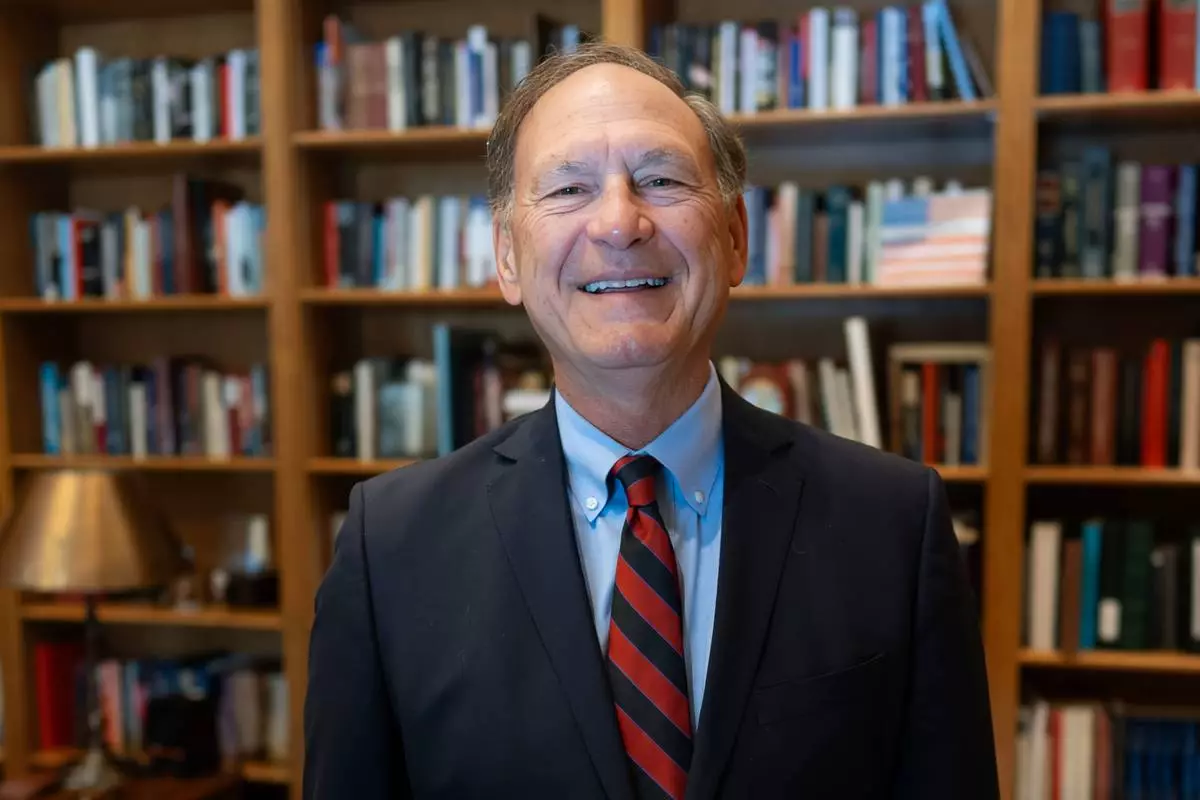
Associate Justice Samuel Alito stands in his chambers at the Supreme Court during an Associated Press interview, in Washington, Tuesday, Sept. 29, 2026. (AP Photo/J. Scott Applewhite)
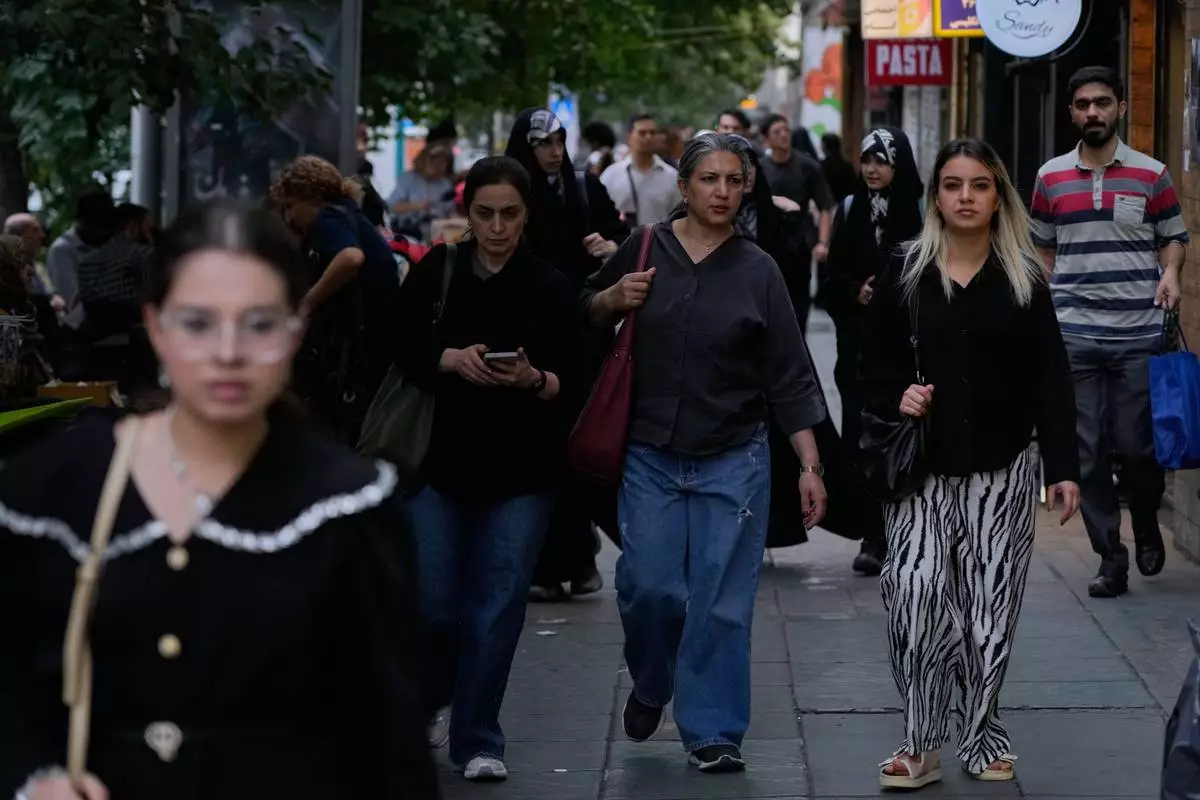
Pedestrians walk along Islamic Revolution street in Tehran, Tuesday, Oct. 6, 2026. (AP Photo/Vahid Salemi)

President Donald Trump speaks at an event for Anduril Industries, Inc., at Sparrows Point Shipyard, Tuesday, Oct. 6, 2026, in Sparrows Point, Md. (AP Photo/Julia Demaree Nikhinson)