Christa Pike regaining consciousness and speaking a week after receiving two doses of execution drugs in Tennessee has astonished even some medical professionals and left many people wondering: How did she survive?
Attorneys for Pike, 50, called her recovery “medically unprecedented” after she was placed on a ventilator following the bungled Sept. 30 attempt to make her the first woman put to death in Tennessee in 200 years. On Wednesday, they told a judge that Pike was “speaking limitedly” and that they expect a long recovery.
Pike is the only person to survive after receiving lethal injection drugs during an execution, according to the Death Penalty Information Center. Many details of the execution process remain secretive, and Tennessee officials say they are investigating what went wrong.
Still, medical experts raised a few possibilities that could explain how Pike was able to survive the injections, including the potential drug quality and the placement of IV lines. Tennessee's executioners had difficulties earlier this year with IV lines for another execution, leading to it being called off.
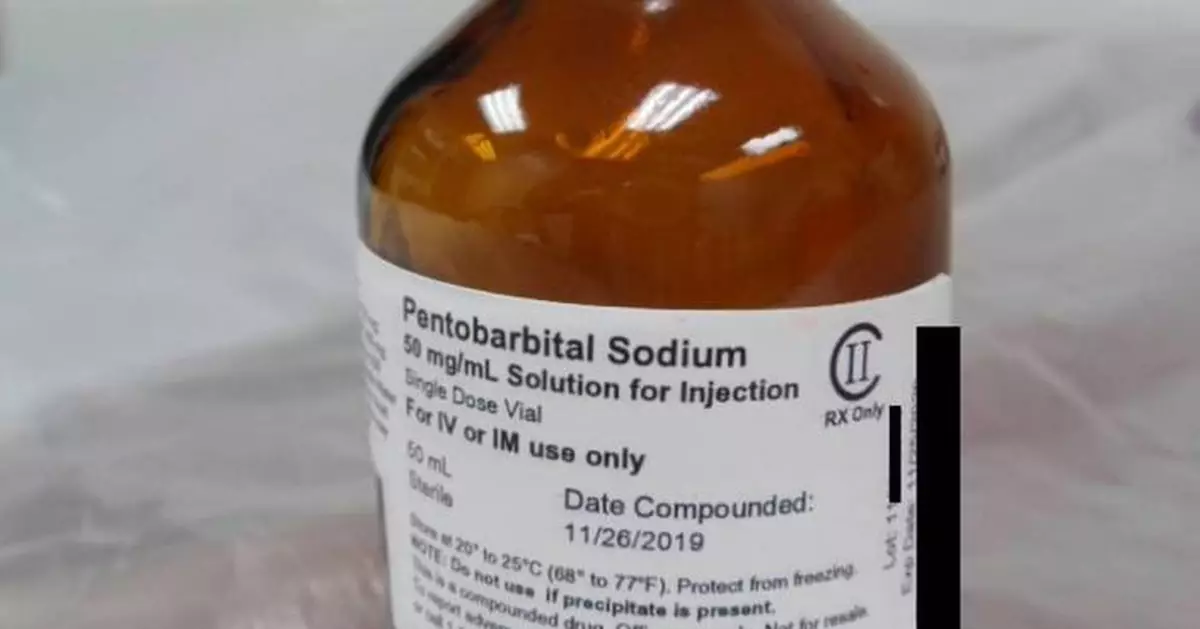
The 5-gram dose of pentobarbital used in executions is many more times the amount than what should put someone in a medical coma, said Dr. Jonathan I. Groner, a retired pediatric general surgeon at Ohio State University College of Medicine who has studied lethal injections.
“The fact that she woke, on one hand, says she got really little of it into her system. So that’s kind of shocking,” Groner said. “It says how badly they botched the execution.”
At high doses the potent barbiturate should make a person lose consciousness and stop breathing.
Groner said the IV might have been placed improperly, or Pike's veins could have been fragile and burst, causing the drug to seep into the surrounding tissue instead of flowing through the bloodstream. Pike's attorneys have said she was poked with needles at least seven times in the state’s death chamber and that she has a lifelong blood disorder that makes it tough to get needles into her veins.
Another possible problem could be the drug quality, said Michaela Almgren, a South Carolina pharmacist and educator who has consulted on several lethal injection cases.
Many major pharmaceutical companies refuse to supply drugs for lethal injections, which has raised questions about how states get them. Court orders have revealed that some states have turned to compounding pharmacies, which create custom drugs from raw ingredients and operate with less regulatory oversight.
Tennessee does not disclose its drug supplier and has not said where Pike’s supply came from. Almgren said that makes it difficult to track if a drug was prepared, tested, handled and administered properly.
That also means the public may never know exactly what happened in Pike’s case.
Pike’s attorneys asked a court to order the Tennessee Department of Correction to preserve evidence, including drug lot numbers, records and other information from the attempted execution. A judge said Wednesday that she would issue an order to preserve “anything that was in the actual room.”
Outgoing Tennessee Gov. Bill Lee has paused executions and ordered a “comprehensive, third-party review to determine exactly what occurred” with Pike.
Before the execution attempt, Pike’s attorneys told courts and prison officials that she had medical conditions that could complicate a lethal injection and make it agonizing.
Dr. Joel Zivot, a professor of anesthesiology and surgery in Atlanta who consulted as an expert for Pike’s legal team, said Pike has a blood-clotting disorder that causes her body to produce an excess of platelets. Her lawyers had argued that the condition could cause clotting at injection sites or bleeding that could affect her lungs.
State protocol calls for a second dose of pentobarbital if the first doesn’t result in death, but it doesn't spell out what to do if an inmate survives the second injection.
The attempted execution got underway around 7:30 p.m. on Sept. 30 when Pike was given a chance to make a final statement. About five minutes later, Pike raised her head and said her arm was hurting. At some point she appeared to lose consciousness, but she could be heard audibly breathing until media were escorted from the witness room at 8:53 p.m. An ambulance arrived at the prison at 9:14 p.m. to take Pike to a hospital.
When Pike arrived at the hospital, doctors likely tried to stabilize her breathing, checked how much pentobarbital was in her system and worked to quickly flush it out, said Dr. Michael Baden, the former chief medical examiner of New York City. Doctors may have also been dealing with muscle damage, both from the effects of the pentobarbital and because some may have entered muscle tissue near the injection site, he said.
Pike’s lawyers said her arms were left burned and blistered from the failed attempt. She was unconscious and on a ventilator for several days.
“She was very fortunate that there was enough (pentobarbital) to put her into a deep sleep, but they were able to keep her breathing going and they were able to start flushing it out,” Baden said.
Associated Press writer Kim Chandler in Montgomery, Alabama, contributed to this report.
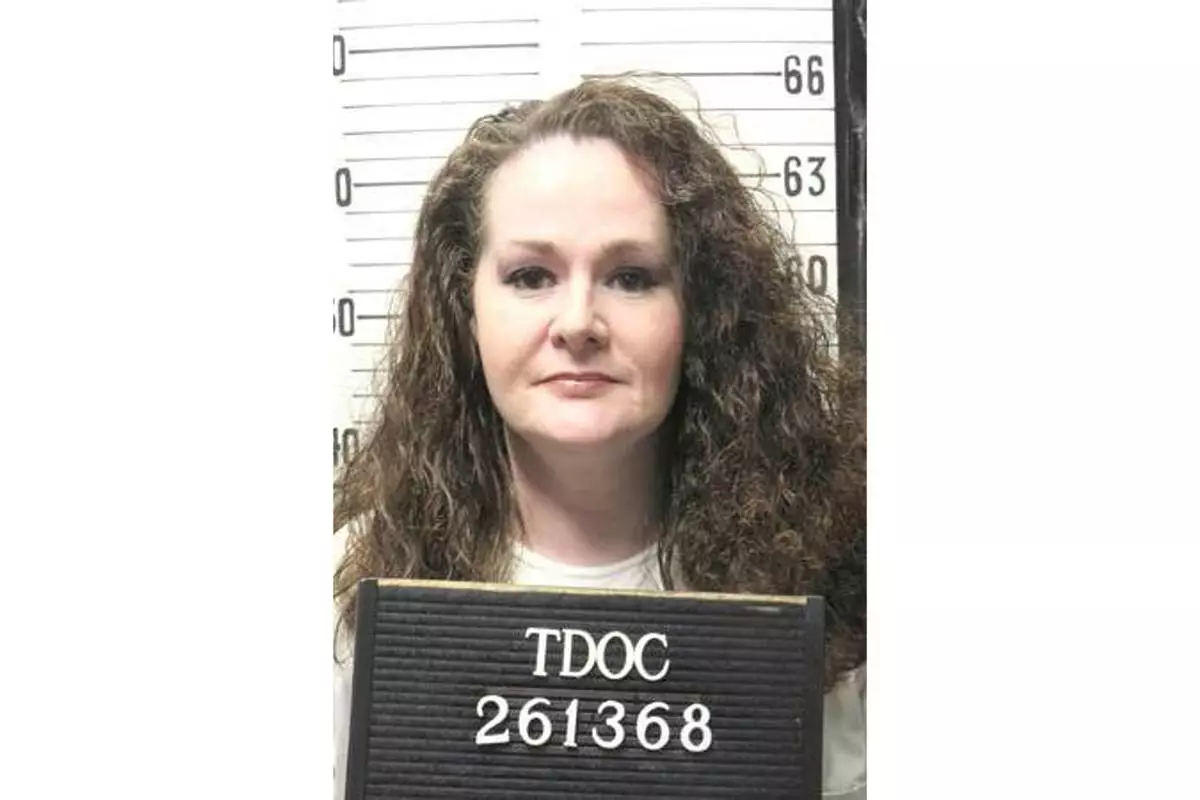
This photo provided by the Tennessee Department of Correction shows Christa Pike on Jan. 12, 2023. (TDOC via AP)

Emergency vehicles arrive at Riverbend Maximum Security Institution after the execution of Christa Pike was halted Wednesday, Sept. 30, 2026, in Nashville, Tenn. (AP Photo/George Walker IV)
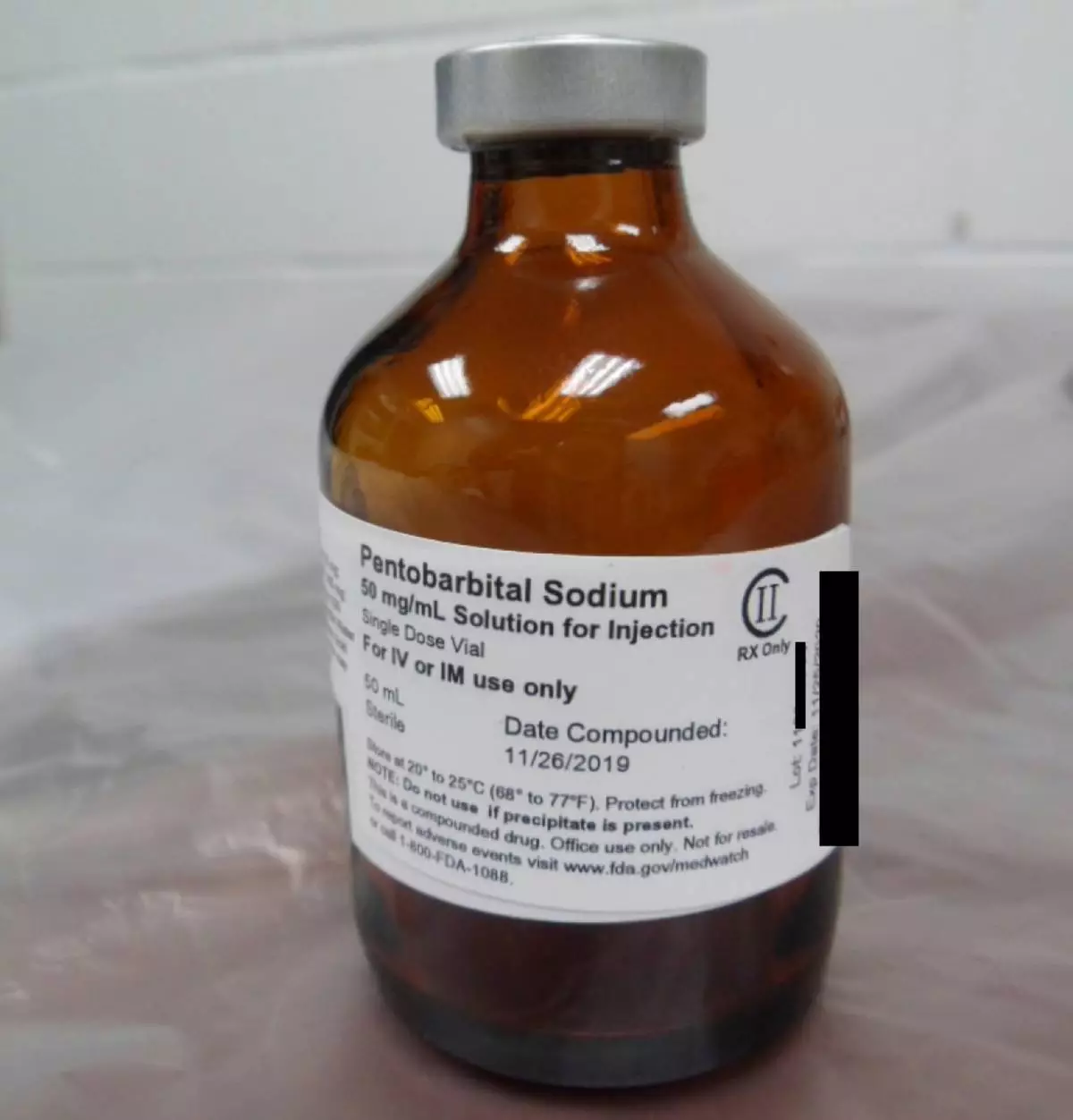
FILE - This photo provided by the U.S. Department of Justice shows a vial of pentobarbital used in the executions of two inmates in July 2020, according to court filings. The photo was filed in U.S. District Court in Washington on Aug. 13, 2020, as part of litigation over the use of pentobarbital in executions. (Department of Justice via AP, File)
Republicans are increasingly anxious that the $1 billion at their disposal may not be enough to fend off sweeping midterm election losses as the party reckons with President Donald Trump’s unpopularity, persistent cost concerns and the fallout from the war in Iran. Despite their cash advantage, the spending is coming in late, forcing MAGA Inc. to pay much higher rates because of the shrinking availability of air time.
Trump's Department of Homeland Security proposed a $70,000 fee on Wednesday for each international student seeking to work in the United States after they graduate, as it seeks to reduce foreign enrollment in U.S. higher education. DHS says requiring universities to pay the fees will shut down a “pipeline for cheap foreign labor.”
And the White House said Trump will announce Wednesday that all Americans under age 18 are being automatically enrolled in Trump Accounts. The accounts are linked to Social Security numbers and require using a Trump Accounts app. The White House said automatic enrollment makes it easier for families to participate. Treasury Secretary Scott Bessent and philanthropists Michael and Susan Dell are expected to attend.
The Latest:
Trump said he would be willing to put a presidential retreat at his Trump International Golf Club in West Palm Beach, Florida because “it seems that all presidents play golf.”
“This wouldn’t be for me,” Trump said. “This would be for all future presidents.”
Trump said the location, which is near a public library, would be ideal because it’s close to the airport and there are not houses or “high buildings” surrounding the greens.
“I love Alabama. I’ve got to go to the game,” Trump responded, when asked if Tropical Storm Isaias — which could become the year’s first Atlantic hurricane — might affect his plans to attend the game in Tuscaloosa, Alabama, on Saturday night.
Forecasts have the storm menacing the Gulf Coast. That might affect Alabama in coming days.
Trump said he didn’t want to do “anything to take the focus” away from “all of the great people that work on those things,” including first responders and police, adding “We’ll have to see” about his travel plans.
Ahead of the Nobel Peace Prize being announced, Trump said he deserved the award from the Norwegian Nobel Committee but, “They have a reputation for maybe not giving it to people like me.”
Trump, who launched a war in Iran this year, went through his accomplishments for which believed qualified him for the Nobel. He also noted that the 2025 winner, Venezuela’s María Corina Machado, gave him her award.
“Whether I get it or not, I have done far more,” Trump said. “And I think it would be a great discredit to them” if he goes unrecognized.
The president said Paxton is “a great attorney general” and that he thought he’d be “a great senator.”
In leaked, recent audio, Paxton, the Texas attorney general, was recorded as saying his campaign was being run by Washington, rather than himself.
Trump’s endorsement of Paxton helped him beat incumbent Republican Sen. John Cornyn in the GOP primary. But Paxton is now locked in a close race with Democrat James Talarico — even in America’s largest reliably Republican state.
Asked if he now regretted backing Paxton, Trump said that Paxton was “the best attorney general of the whole country.”
Asked if the recent death of a Russian lab worker was a sign that a plague might be developed as bioweapon, Trump said, “We don’t think so so. We’re going to find out soon enough, but we don’t think so.”
Trump had previously indicated that he would speak with Russian President Vladimir Putin about the issue. When asked if the situation was similar to dealing with China on the coronavirus during his first term, Trump suggested that Russia was staying relatively quiet on the issue just as China did before the virus turned into a global pandemic.
“China didn’t say much and Russia is not saying much either, but they do say they have it very much under control,” Trump said.
Trump says that 70 million children under the age of 18 will now have automatic “Trump Accounts” set up by the government to invest in stocks.
Parents and legal guardians need formally claim the accounts by using the program’s website or mobile phone app. Trump called the accounts “a passion of love” that promotes capitalism.
The accounts were part of the 2025 tax overhaul and allow after-tax contributions of up to $5,000 a year, with the government seeding accounts with $1,000 for children born between 2025 and 2028.
Trump says he will press two of his top political advisers on their outside consulting work amid scrutiny over their efforts to help a pro-Russian government in the Balkans.
The New York Times reported Tuesday that as Trump was campaigning last week ahead of next month’s midterm elections, advisers James Blair and Chris LaCivita were in Bosnia-Herzegovina’s Serb-majority entity of Republika Srpska assisting with local elections.
“Chris LaCivita and James Blair are outside consultants,” Trump wrote on his Truth Social site. “They are allowed to do work for others, just like all consultants in Washington, D.C.”
“I do not have any idea who else they work for but will, on reflection, ask them and, if there’s a conflict, I will terminate them, immediately!” he wrote.
Blair served as White House deputy chief of staff before departing to lead Trump’s outside political operation. LaCivita was co-manager of his winning 2024 campaign.
The two did not immediately respond to requests for comment.
Standing in front of the ruins of the Acropolis, Secretary of State Marco Rubio made the case for nationalism, while trying to maintain the importance of global alliances.
In a sweeping and dramatic speech about ancient civilization that reflected his political aspirations beyond being America’s top diplomat, Rubio warned European countries that decisions made in the next decade “will determine whether the West maintains its place at the head of the world, or resigns itself to a future of atrophy and servitude and decline.”
“We will either choose to act now, or lose the choice to act at all,” he said. “Under President Trump, the United States has made its choice. We choose the unapologetic pursuit of national power.”
Rubio also said despite “passions” that have strained U.S.-Europe relations, allied-countries must work to “rebuild our institutions and our alliances to face these threats together.”
Mike Rogers, the Republican nominee for Senate in Michigan, released an ad Wednesday calling for an end to President Donald Trump’s trade war with Canada, marking the second recent break with the president by the battleground state candidate.
“We know that Canada is not our enemy,” Rogers says in the video. “We need to end this tariff war now.”
The U.S. and Canada have been locked in an escalating trade war since Trump imposed 50% tariffs on roughly $20 billion worth of Canadian goods this summer. Rogers previously defended some of the tariffs as “necessary.”
Rogers has also recently called for the U.S. war with Iran to “end quickly.” He had previously backed the war.
Rogers, once a critic of Trump, has aligned himself closely with the president since his first Senate campaign in 2024 and has Trump’s endorsement this year. Rogers faces progressive Democrat Abdul El-Sayed for the open Senate seat.
The $70,000 fee proposed Wednesday for international students seeking to work in the United States is just the latest Trump administration effort to reduce foreign enrollment in U.S. higher education. A Department of Homeland Security statement described the fee as a response to visa fraud and abuse that created a “pipeline for cheap foreign labor.”
And Trump on Tuesday said he has a call scheduled with Russian President Vladimir Putin to discuss a possible case of plague at a Siberian research institute. Speaking to reporters at the White House, Trump said he would be talking with Putin about the case “very soon.”
The Latest:
Last year, the Republican administration began suddenly terminating the legal status of thousands of international students, detaining and deporting many of them, as part of its wider efforts to crack down on immigration and reshape higher education.
This summer, the administration finalized a rule that sought to prevent international students from staying in the U.S. for more than four years without approval from the federal government. The move drew swift backlash from higher education leaders who said it would increase the burden on schools and noted that many programs are longer than four years by design. A federal court prevented the rule from taking effect in September.
The $70,000 fee proposed Wednesday for international students seeking to work in the United States is just the latest Trump administration effort to reduce foreign enrollment in U.S. higher education. A Department of Homeland Security statement described the fee as a response to visa fraud and abuse that created a “pipeline for cheap foreign labor.”
It would require schools to pay for each student participating in an optional practice training program, known as OPT, in jobs related to their major during or after their time in school. Students are generally eligible for one year of work post-graduation, though certain science, technology, engineering and math majors are eligible for an additional two years. The initial application would cost $70,000, plus a $30,000 fee for each renewal.
The public has 60 days to commen t on the proposal before DHS can finalize it and put it into effect. The proposal also could face legal challenges from higher education groups or business associations that could delay it.
The White House said the president is announcing that all Americans under age 18 are being automatically enrolled in Trump Accounts.
The Treasury Department described the new initiative last week, saying it’s opening accounts for all children with a valid Social Security Number, which their parents or guardians can claim through the Trump Accounts app.
Children born during Trump’s second term automatically qualify for $1,000 from the government. Other minors can invest their own money into the tax-advantaged accounts, and draw on it when they turn 18 for costs like school or a home.
The White House said automatic enrollment makes it easier for families to participate.
Treasury Secretary Scott Bessent and Michael and Susan Dell are expected to be among those attending the 1 p.m. event at the White House.
The Federal Communications Commission is considering loosening rules on political robocalls, including those with artificial intelligence-generated voices, ahead of November’s midterms.
Federal law currently bans most robocalls to cellphones unless the caller gets consent beforehand. The conservative Club for Growth is asking the Republican-led FCC to allow political groups to use artificial or prerecorded voices in unsolicited wireless calls.
The FCC advanced the request for public comment and could rule on it as soon as late October.
Consumer advocacy groups warn the proposed change could trigger a surge of unwanted, partisan and potentially misleading automated calls as voters cast their ballots. The potential perils became evident two years ago when AI robocalls imitating then-President Joe Biden targeted thousands of primary voters in New Hampshire.
The FCC didn’t respond to a request for comment. Ana Gomez, the sole Democratic commissioner, said she opposes the move.
▶ Read more
Secretary of State Marco Rubio says there should be no confusion over the Trump administration’s ultimate goal with respect to the Iran war — and that is to prevent the country from ever developing a nuclear weapon.
Rubio made the comments on Wednesday at a news conference in Athens with the Greek foreign minister after Vice President JD Vance told Reuters that the administration might be able to accept an agreement that calls for Iran to make a “meaningful” decrease in its capacity for nuclear enrichment.
President Donald Trump has previously said Iran should not be allowed the capability to enrich.
“I don’t understand where the confusion is about the nuclear program,” Rubio said. “Iran cannot have a nuclear weapon. Simple, period, end of story. I’m not going to go into the details about what would be acceptable or not. I can tell you this: that they’re not going to ever have a nuclear program.”
Republican Sen. Susan Collins argued during the first of four debates with Democrat Troy Jackson that she’s the most independent senator in Congress, repeatedly voting against Trump’s agenda. “I’m not exactly his favorite senator,” she said.
Jackson, a former state Senate president and logger, pointed to Collins’ critical vote to confirm Supreme Court Justice Brett Kavanaugh, a Trump nominee who eventually helped overturn the constitutional right to abortion. “Would you trust her to pick the next Supreme Court justice?” he asked.
Collins argued that her seniority and experience in the Senate have resulted in money and resources for Maine. She touted her ability to remove certain items from Trump’s trade war with Canada, including pulp, concrete and road salt.
Jackson’s response: “We can’t eat road salt.”
▶ Read more
Supreme Court Justice Samuel Alito told The Associated Press in a rare interview that rhetoric about the court from Trump and his administration doesn’t sit well with him.
“I personally am not pleased with that,” he said. “Everybody in this country has the right to criticize what we do. The substance of their criticism can be quite harsh. If we deserve it, then that’s fine. But rhetoric is a different story.”
Alito also criticized the escalating volume of emergency appeals before the court, but said there’s little the justices can do to change the trajectory. Such petitions have skyrocketed during Trump’s second administration, putting the court at the center of hotly debated issues such as the Republican president’s new ballroom construction and his proposed restrictions on mail ballots in the midterm elections.
Alito spoke in connection with his first book, “So Ordered: An Originalist’s View of The Constitution, The Court and Our Country.”
▶ Read more
“Anyone who is stealing from the American people, shortchanging the American people, or screwing over the American people, you are now on notice,” House Democratic leader Hakeem Jeffries said.
An AP-NORC poll in September found registered voters nationally are more likely to describe Republicans than Democrats as corrupt.
Democratic candidate Jamie Ager, a farmer running for an open North Carolina U.S. House seat where Republican Rep. Chuck Edwards dropped his reelection bid after an ethics investigation into improper conduct with female staff, has been campaigning on that sentiment. “I’ve had enough of self-serving politicians who keep getting richer at our expense,” Ager said.
Rebecca Bennett, a Democratic congressional candidate in New Jersey, has criticized Republican Rep. Tom Kean Jr. over stock trading disclosures during a four-month absence from Congress. Kean didn’t disclose his hospitalization for depression until he returned to Washington, and he said it was financial advisers, not him, trading the stocks.
Democrat Kamala Harris entered the final stretch of the 2024 campaign with significantly more money than Trump only to lose every critical swing state and the White House. Elon Musk’s $25 million didn’t lift his preferred candidate to a Wisconsin Supreme Court seat. And Tom Steyer didn’t advance in the California governor’s race despite spending $216 million of his own money.
The $1 billion that Republicans have amassed compares with roughly $579 million held by a comparable collection of major Democratic groups.
Senate Democratic leader Chuck Schumer said his party is facing an “obscene” amount of spending that could swamp them in the midterms.
“We’re never going to have as much money as them,” Schumer told the AP. “I sum up the election in this sentence: Can a massive Republican advantage in money beat a massive Democratic advantage in better candidates and political climate? I bet it can’t.”
The challenge is acute in places like Texas, where Trump will travel on Wednesday for the second time in a week to stump for Republican Ken Paxton’s Senate campaign. The state hasn’t elected a Democratic senator since 1988, yet MAGA Inc. has spent more than $22 million in the past month, according to the ad tracking firm AdImpact.
Texas PAC, which is aligned with Senate Majority Leader John Thune, has spent more than $83 million on advertising in the past month, an extraordinary amount to protect what’s normally a safe Republican seat. But while Texas PAC was charged $450,000 to air a single spot in the Austin market during a football game, Democratic Senate nominee James Talarico’s campaign paid $50,000 for a spot during the same game in the same market, according to AdImpact.
Republicans are increasingly anxious that the $1 billion at their disposal may not be enough to fend off sweeping midterm election losses as the party reckons with Trump’s unpopularity, persistent cost concerns and the fallout from the war in Iran.
The cash advantage, spread out across a half-dozen groups, is driven largely by the Trump-aligned MAGA Inc., which had nearly $416 million on hand at the end of August and increased its spending on critical races in September.
But that money may have come too late, forcing the president’s group to pay much higher rates because of the shrinking availability of air time. Four Republican Senate campaign officials said groups that reserved advertising time last spring paid much lower rates than MAGA Inc. and its affiliated groups. Now, the Trump-connected organizations are sometimes paying more than five times what they would have spent if they had acted earlier.
▶ Read more
Trump on Tuesday said he has a call scheduled with Russian President Vladimir Putin to discuss a possible case of plague at a Siberian research institute.
Speaking to reporters at the White House, Trump said he would be talking with Putin about the case “very soon.” Health authorities are investigating after the death of an employee at an anti-plague institute, which authorities attributed to pneumonia with an unknown cause.
Asked what the U.S. intelligence community was saying about the case, Trump said the U.S. is in “very deep discussions” on the topic. “We’ll be able to report about it, probably tomorrow,” Trump said.
The World Health Organization on Tuesday said the case presents a “very low” risk outside Russia. The United Nations agency said it was in contact with Russian authorities following reports of the death last week of a woman who worked at the Irkutsk Anti-Plague Research Institute of Siberia and the Far East.
▶ Read more

Russian President Vladimir Putin, right, toasts with Russian soldiers during a meeting with teachers at the Kremlin in Moscow, Monday, Oct. 5, 2026. (Kristina Solovyova, Sputnik, Kremlin Pool Photo via AP)
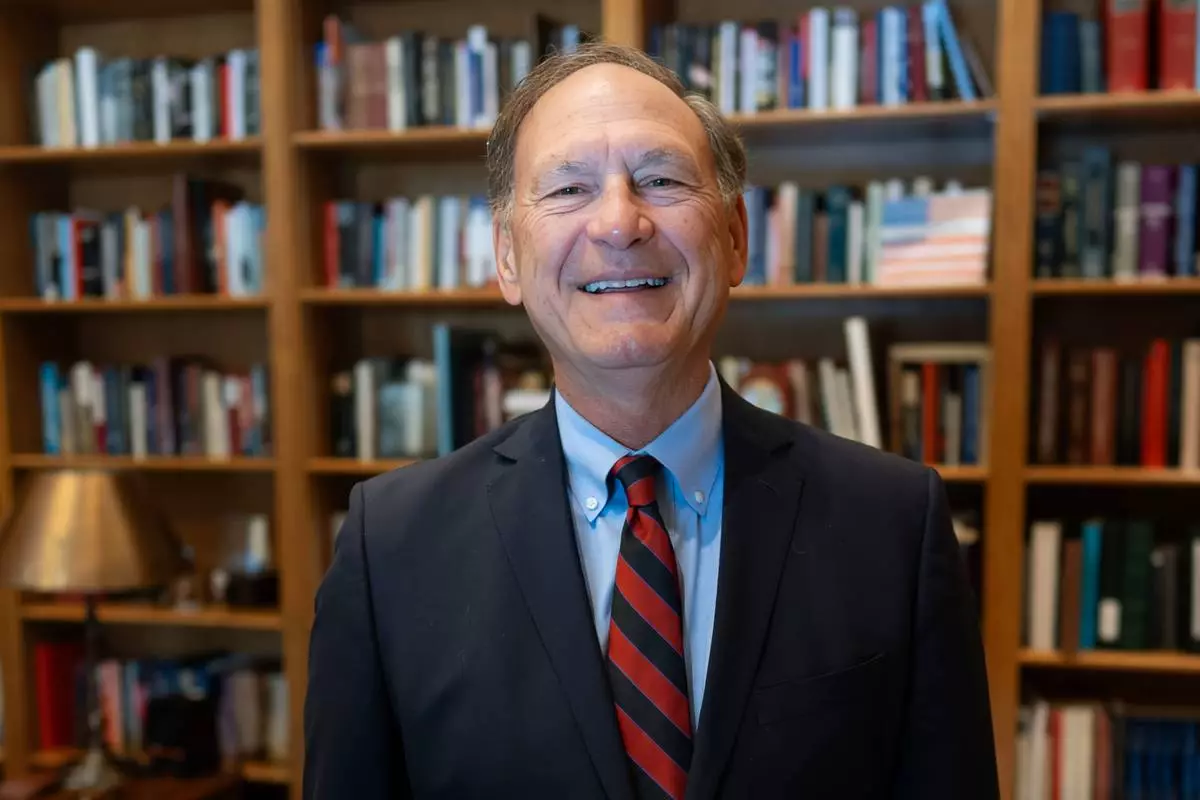
Associate Justice Samuel Alito stands in his chambers at the Supreme Court during an Associated Press interview, in Washington, Tuesday, Sept. 29, 2026. (AP Photo/J. Scott Applewhite)
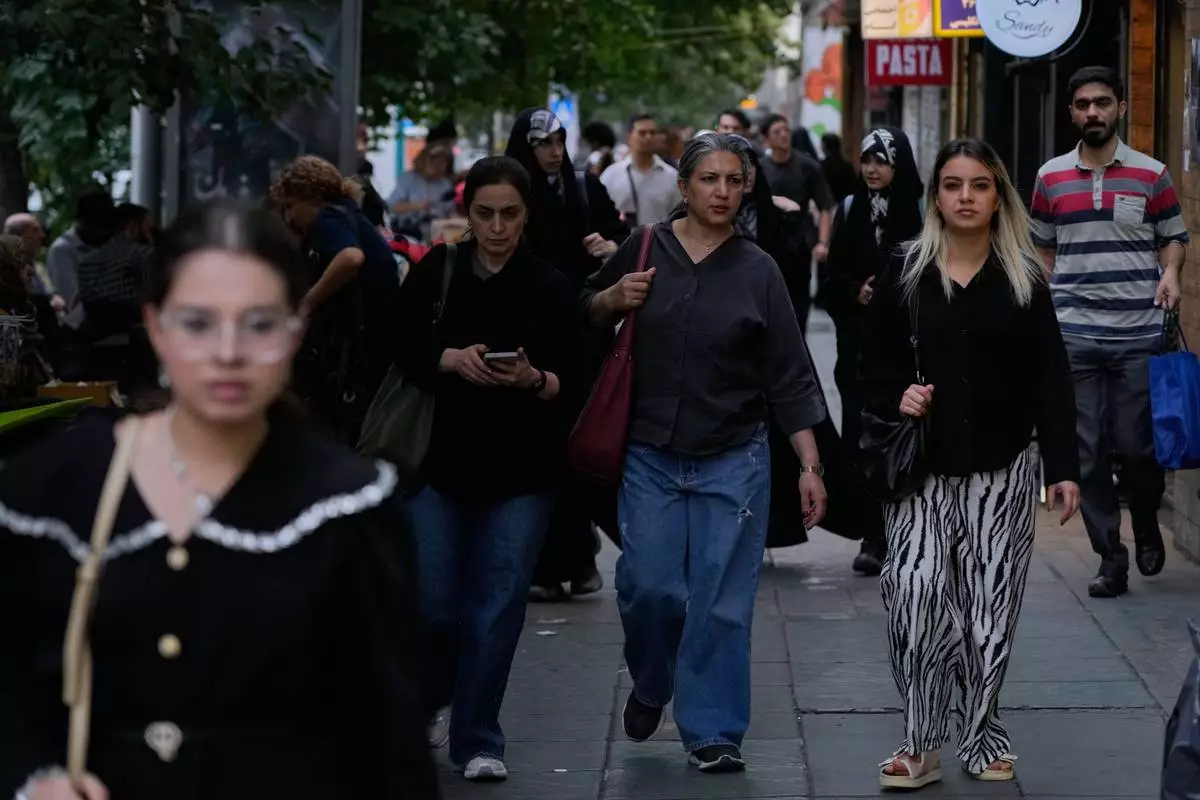
Pedestrians walk along Islamic Revolution street in Tehran, Tuesday, Oct. 6, 2026. (AP Photo/Vahid Salemi)
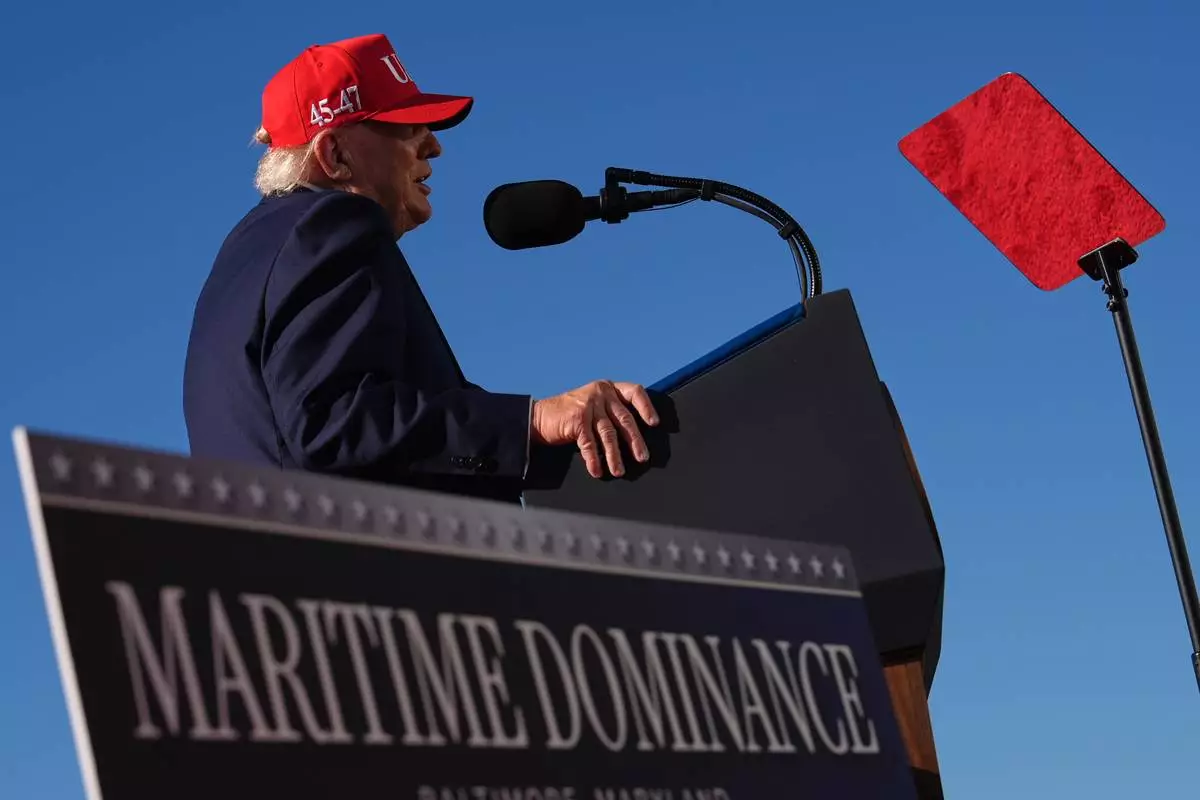
President Donald Trump speaks at an event for Anduril Industries, Inc., at Sparrows Point Shipyard, Tuesday, Oct. 6, 2026, in Sparrows Point, Md. (AP Photo/Julia Demaree Nikhinson)