China recorded more than 2.1 billion cross-regional passenger trips during this year's National Day holiday, as improvements in the country's integrated transport network helped meet strong travel demand and inject fresh vitality into the economy.
China's Ministry of Transport said on Wednesday that the total number of cross-regional passenger trips during the holiday period from Oct. 1 to 7 is estimated at 2.144 billion, up 0.7 percent year on year.
Rail travel remained robust throughout the holiday, with daily passenger departures exceeding 20 million for three consecutive days.
As China's high-speed rail network continues to expand, travel has become increasingly convenient. Four high-speed rail lines opened ahead of the holiday, including the Xiongshang (Xiong'an to Shangqiu) section of the Beijing-Hong Kong high-speed railway and the Harbin-Yichun high-speed railway, linking regions across northern and northeastern China and boosting tourism along the routes.
Road travel remained popular, with more than 1.96 billion road trips recorded during the holiday. Nearly 80 percent of them were made by private vehicles, while new energy vehicle traffic increased 35 percent year on year.
Meanwhile, the number of severely congested sections of expressways longer than 10 kilometers fell 70 percent year on year.
China's car rental market was also active, with the average daily rental rate rising 25 percent from a year earlier.
In the civil aviation sector, passenger traffic averaged around 2.4 million trips per day. While air passenger flows remained strong in major cities, improvements to regional airports helped drive rapid growth in passenger traffic to tourism destinations known for their distinctive local attractions.
"An average of more than 300 million cross-regional passenger trips per day effectively unleashed residents' consumption potential and boosted both online and offline consumer services. The safe, orderly and efficient flow of people and goods within urban clusters and metropolitan areas, as well as between urban and rural areas, has strengthened consumption momentum and created more room for economic growth," said Gao Bo, deputy director of the Transport Services Department under the Ministry of Transport.
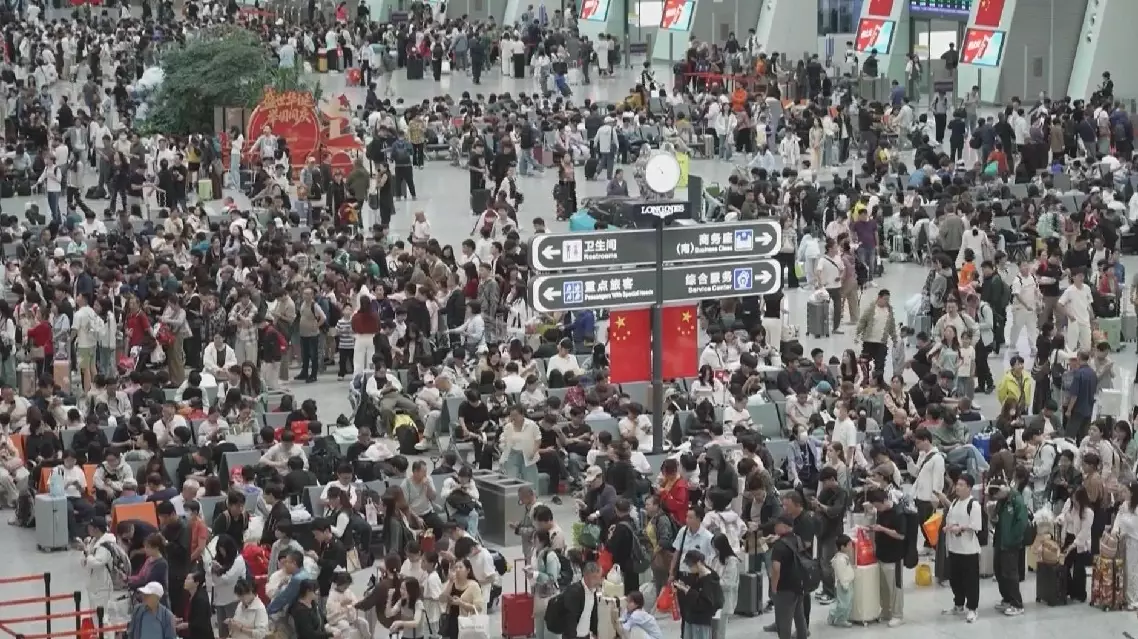
China sees strong travel demand during National Day holiday
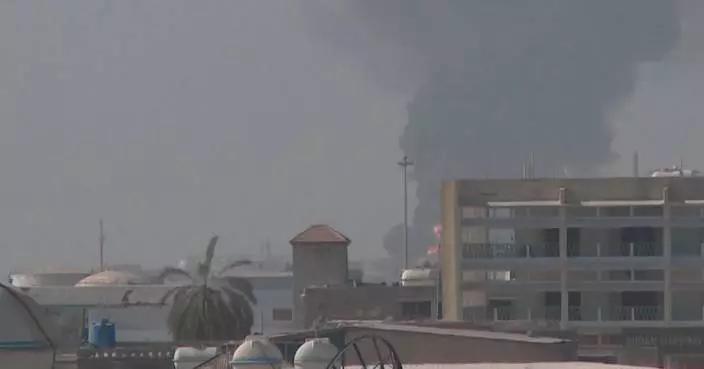
The airstrikes early Sunday, which local authorities attributed to Saudi aircraft, targeted a station and the headquarters of the Yemen Petroleum Company in the capital, Sanaa, injuring at least six employees and damaging facilities.
Anis Al-Asbahi, spokesman for the local health and environment authorities, confirmed in a statement that six people had been injured in the attacks, which he said were carried out by "Saudi enemy aircraft."
The attacks forced the oil company's station on 60th Street out of service, while its headquarters also sustained material damage.
Najib Qadi, an official at the company, condemned the strikes, saying that civilian infrastructure should not be targeted and that the attacks constituted a war crime.
"The Yemen Petroleum Company is a service provider and is considered civilian infrastructure that must not be targeted. Targeting it constitutes a war crime, as it has no military activities whatsoever and serves purely civilian purposes. Despite this, it continues to be repeatedly targeted," he said.
Ammar Al-Osaili, an eyewitness to the airstrikes, said local residents relied on the station for fuel and that the facility served purely civilian purposes, with no military activities.
"This morning, the facility was hit in an airstrike. This is a national facility from which we supply fuel to vehicles. All our activities are related to this fuel station, which serves the public. It has no military purpose and contains nothing that could harm the aggressor," he said.
Mohammed Al-Huzaizi, an employee of the Yemen Petroleum Company, said the attacks were launched to halt the company's operations.
"We can see the damage caused to the Yemen Petroleum Company's station. There are also civilian employees who have been injured at the station. But praise be to Allah in all circumstances. This happened at dawn, at around 5:00 or 5:30 a.m. The aggressor deliberately targeted it to bring the Yemen Petroleum Company's operations to a halt," he said.
Apart from the capital Sanaa, several other regions of Yemen also sustained varying degrees of damage from a series of attacks, including the southwestern province of Taiz and the southern port city of Aden.
At least five people were killed, and 18 others were injured in airstrikes attributed to the Saudi-led coalition and a Houthi drone attack across Yemen on Sunday, according to Houthi-run media and a security official.
Also on Sunday, the Saudi-led coalition in Yemen said in a statement that its air defenses had intercepted and destroyed a Houthi drone launched toward the Riyadh region.
The statement provided no further details on the intended target or whether the attack caused casualties or damage.
The developments come amid intensifying fighting between the Houthis and Yemen's government forces supported by the Saudi-led coalition. In recent days, the Houthis have claimed repeated missile and drone strikes on Saudi airports and oil facilities, while Houthi media have reported intensified Saudi airstrikes across Yemen.
Yemen has been mired in conflict since late 2014, when the Houthis seized Sanaa and much of northern Yemen, prompting Saudi-led military intervention in 2015 in support of the internationally recognized government.
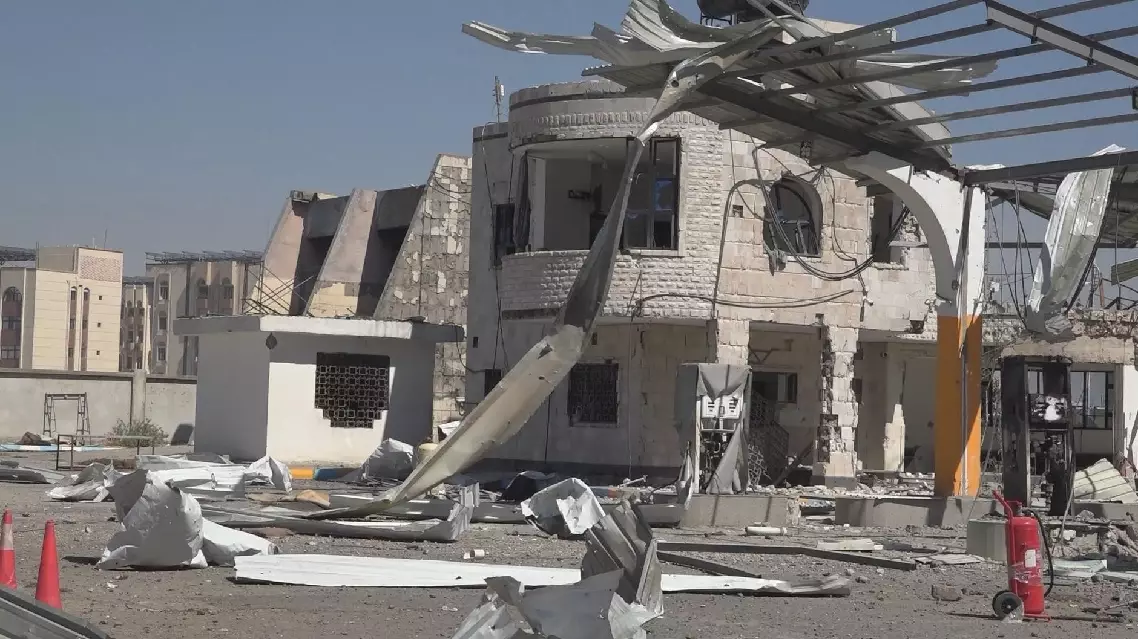
Airstrikes severely damage oil facilities, injure at least six in Yemen's Sanaa