SOFIA, Bulgaria (AP) — Bulgaria’s president said Wednesday that Russia’s war in Ukraine has led to “a significant deterioration” in security in the Black Sea region.
President Iliana Yotova spoke to reporters after an emergency meeting of the country’s Security Council following drone attacks on ships off Bulgaria’s Black Sea coast. While she didn't directly blame Russia for those strikes because there's an ongoing investigation by Bulgarian authorities, Yotova said that the war in Ukraine was undermining security for commercial vessels.
“Russia’s war against Ukraine has led to a significant deterioration of the security environment in the Black Sea region,” she said. “There is a growing trend of attacks by maritime and aerial drones against commercial vessels, leading to damage and the sinking of ships, as well as loss of life.”
Senior government and security officials discussed the Balkan country’s maritime security and critical infrastructure in the context of the war in Ukraine.
“The Security Council categorically condemns the attacks on commercial vessels in the Black Sea as a gross violation of international law and demands a fast check to identify the perpetrators,” Yotova said.
On Tuesday, two commercial vessels were struck by drones in the first attack on shipping in the NATO member’s exclusive economic zone in the Black Sea.
Sea and aerial drones attacked the two ships about 80 miles (128 kilometers) off Bulgaria’s coast.
The Togo-flagged ship Alfa Watan suffered critical structural damage and sank at the scene. The second vessel, the Palau-flagged Able, caught fire after the attack. A Bulgarian ferry evacuated all 18 crew members.
Bulgarian maritime authorities said on Wednesday that the search efforts for the crew of Alfa Watan had been suspended and wouldn't resume.
Vice Admiral Rumen Nikolov, who led the rescue operation, said that no survivors or bodies had been found. He said that the drone strike had sparked an extremely powerful explosion, and the ship had sunk almost instantly.
Bulgarian authorities said that the origin of the drones was under investigation, but Ukrainian President Volodymyr Zelenskyy blamed Russia for the drone strikes.
In a statement sent to local media on Wednesday, the Russian Embassy in Sofia rejected Russian involvement in the drone attacks on the two ships, saying “they were not among the targets hit by Russian armed forces.”
It quoted the Defense Ministry in Moscow as saying that “to determine the ‘nationality’ of the drones used to strike the ships, it is necessary to wait for the results of the investigation.”
Tuesday’s attacks came a day after a Turkish-owned cargo ship carrying corn caught fire following a drone attack and later sank in the Black Sea. Two people died and 11 crew members were rescued.
While Bulgaria and Romania are still narrowing down the list of suspects, the European Commission confirmed on Wednesday that they had asked for satellite imagery following the attacks, and that the European Union, which has a center that analyzes data from space, is providing them.
Should the allegations made by Zelenskyy prove true, the attacks conducted on a NATO member’s territory would mark a new escalation in what European leaders and intelligence officials have said is a growing hybrid campaign by Russia aimed at testing the military alliance and the 27-nation EU.
Hybrid attacks can aim to destabilize a country, probe its defenses, strain resources, or influence public opinion — often in a way that makes it hard to identify those responsible.
An Associated Press interactive map tracking the incidents of hybrid attacks shows an escalation, from 59 in March 2025 to more than 200 at this point.
Lorne Cook contributed to this report from Brussels.

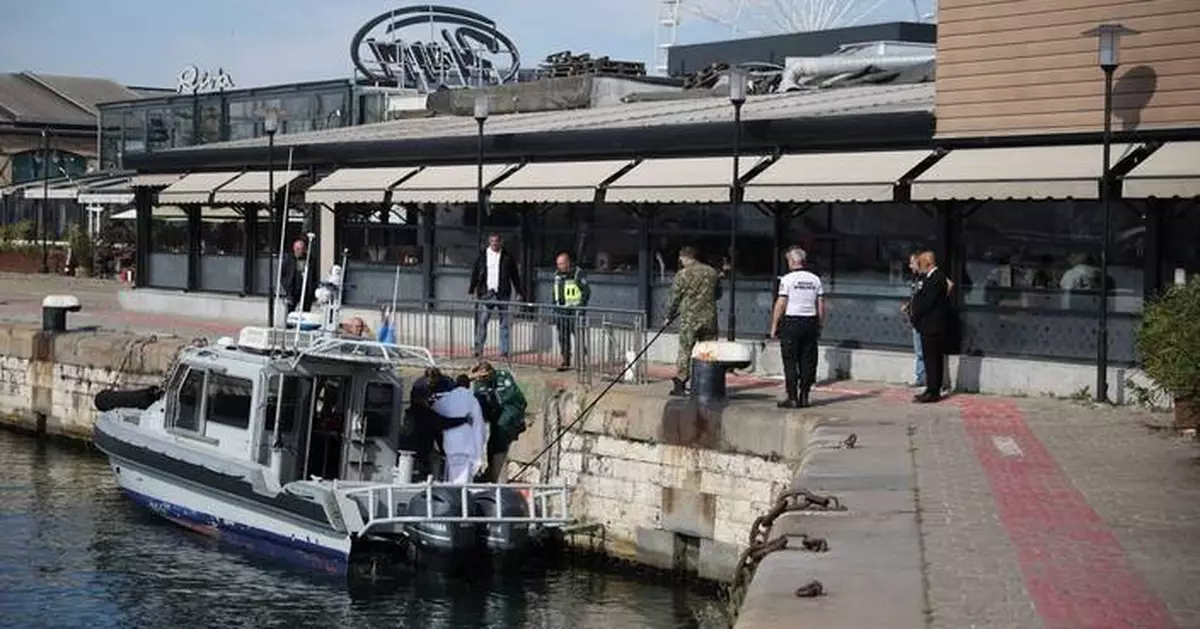
Bulgarian authorities take an injured crew member to a hospital after two commercial vessels were attacked in the NATO member's Black Sea economic zone on Tuesday, Oct. 6, 2026, Varna, in what was the first such attack on shipping in the area. (Bulgarian News Agency via AP)
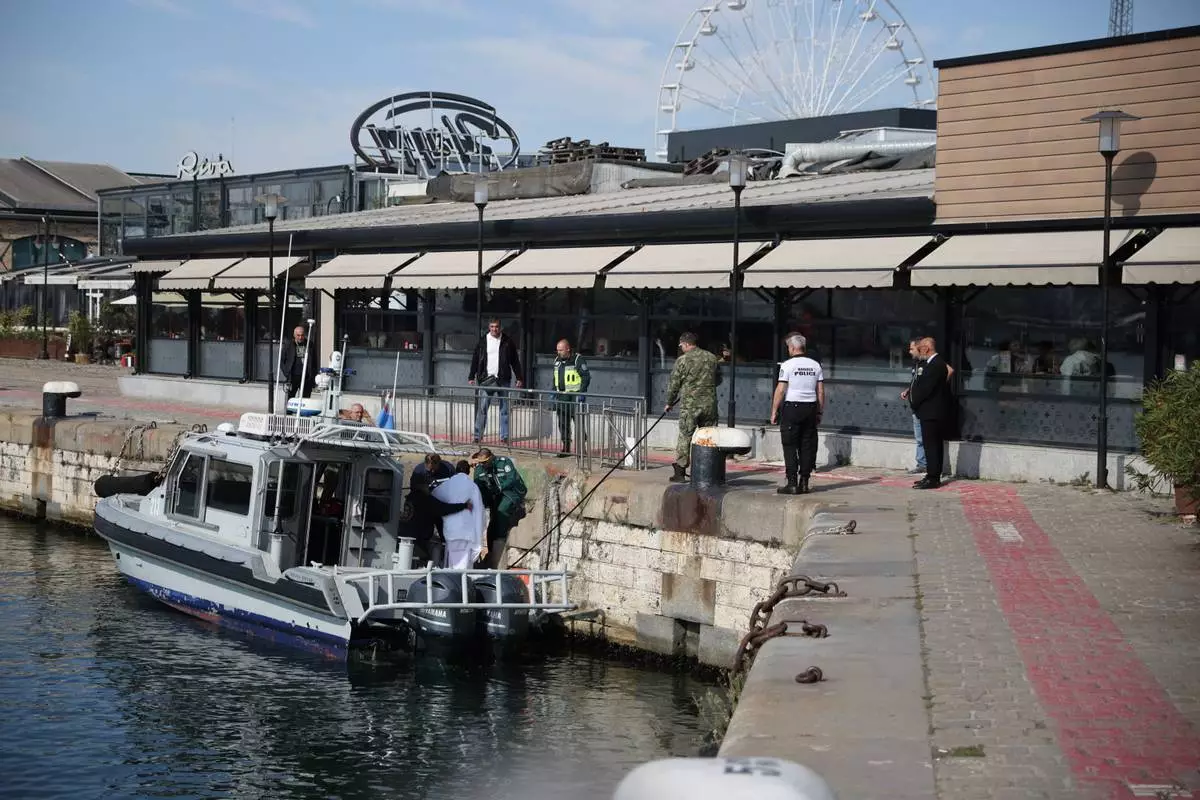
Bulgarian authorities take an injured crew member to a hospital after two commercial vessels were attacked in the NATO member's Black Sea economic zone on Tuesday, Oct. 6, 2026, Varna, in what was the first such attack on shipping in the area. (Bulgarian News Agency via AP)
JERUSALEM (AP) — As Israel gears up for its first elections since the Hamas-led Oct. 7, 2023 attack, Prime Minister Benjamin Netanyahu and his opponents are putting it at the heart of their campaigns.
Nearly every poster, stump speech or televised debate seems to reference the attack, which has scarred the country and remains fresh in the minds of voters. Three years on, the worst security failure in Israel’s history now threatens to end the career of its longest-serving prime minister.
“October 7 is kind of a framework for the entire political discussion that is going on,” said Tamar Hermann, an expert on Israeli public opinion at the Israel Democracy Institute, a Jerusalem think tank. “All of us are post-traumatic in a way.”
Netanyahu’s opponents want him to pay for the failures that led to the deadliest day in Israel’s 78-year history and plunged the country into a series of inconclusive wars. His defenders say Netanyahu was betrayed by the military establishment and that he has led Israel through a dramatic rebound from its darkest hour.
A loss in the Oct. 27 election would likely end the career of the soon-to-be 77-year-old Netanyahu. A victory would mark the greatest turnaround yet for a man who has defied naysayers for three decades.
On the morning of Oct. 7, Hamas militants fired several thousand rockets into Israel and thousands of militants attacked through holes blown in the border fence or with boats or motorized paragliders. Some 1,200 people were killed and 251 others taken hostage.
Israel responded with a military offensive that has killed over 74,000 Palestinians in the Gaza Strip, according to local health authorities, left the territory in ruins and sparked an ongoing humanitarian catastrophe. Israel later went to war against Hezbollah militants in Lebanon, seized a chunk of Syria, attacked targets in Yemen and joined the U.S. in two wars against Iran.
Hundreds of Israelis, mostly young soldiers, have died, and nearly every household has been touched by the violence. Netanyahu promised “total victory,” but Hamas, Hezbollah and Iran’s theocratic government all remain intact.
Israel’s international standing has plummeted, a number of foreign governments have accused it of genocide — a charge it vehemently rejects — and Netanyahu is now wanted by the International Criminal Court.
After a string of resignations by top security officials, Netanyahu is the only senior figure from Oct. 7 still in office, making this month’s election in many ways a referendum on his leadership.
Netanyahu and his opponents have put Oct. 7 at the forefront of their campaigns — for different reasons.
His opponents — from across the political spectrum — call his outgoing coalition “the massacre government,” a reference to the Oct. 7 attack occurring on their watch. Netanyahu says he has led a “war of redemption.”
His chief rival is Gadi Eisenkot, a former military chief whose son and nephew were killed in battle in Gaza. The opponents have pledged to form a government of “repair and reconstruction” — beginning with the formation of an official commission of inquiry into Oct. 7. They also have vowed to end draft exemptions for ultra-Orthodox religious men, a long-standing policy that has outraged the secular majority at a time of war, and accuse Netanyahu of threatening Israel's democratic institutions.
“The most fateful elections in the history of the State of Israel are between evasion and enlistment,” Eisenkot wrote on X. “Between taking responsibility and fleeing from responsibility.”
Netanyahu has repeatedly rejected calls for a commission of inquiry while trying to shift the blame to security officials. He recently accused the then-head of the Shin Bet security service, Ronen Bar, of withholding information ahead of the attack. Bar has vowed to file a defamation lawsuit.
Netanyahu has meanwhile denied reports in American media outlets that the United Arab Emirates and Egypt warned him ahead of Oct. 7.
He insists the country is stronger than ever.
“Our enemies expected us to collapse,” Netanyahu said in a recent address to the United Nations. “Well, we didn’t collapse. Instead, we rose and fought like lions.”
Eisenkot’s new Yashar party list includes two parents who lost children on Oct. 7. Netanyahu’s Likud party also includes two grieving parents, among them the mother of a policeman killed in battle on Oct. 7 whose remains were the last to be returned to Israel as part of a ceasefire. Another Likud candidate lost both legs while serving in Gaza.
The leader of the dovish Democrats party, Yair Golan, is a retired general who put on his uniform and rushed to the southern border to fight on Oct. 7. The centrist Together party’s list has another former general, Noam Tibon, who also battled militants as he rescued his son’s family, and the mother of a soldier killed that day.
Other parties have also added people directly impacted by the attack.
Organizers, including victims' relatives, say they are keeping politics out of a mass memorial service in Tel Aviv on Wednesday. But they have hardly concealed their anger at the country’s leadership.
“We will not let anyone evade responsibility,” Yonatan Shamriz, whose brother was taken hostage and mistakenly killed by Israeli soldiers after escaping captivity, said in a radio interview.
Largely missing from the Israeli public discourse is any discussion of the dire situation in Gaza or the fate of the Palestinians.
Israeli leaders have said little about the unprecedented death toll in Gaza, the humanitarian catastrophe and the lack of reconstruction. Instead, they have focused largely on the country’s pain over Oct. 7.
There is almost no mention of peace talks, and even Netanyahu’s challengers largely oppose the establishment of a Palestinian state alongside Israel, the international community's preferred solution for the decades-old conflict.
When a pair of Israeli filmmakers released a documentary last month about civilian deaths in Gaza, party leaders across the spectrum, including Eisenkot, accused them of treason.
Polling suggests a close race between Netanyahu and his chief rival, Eisenkot, with an uncertain outcome.
According to the Israel Democracy Institute, over 60% of Israelis say their attitudes toward Oct. 7 are a central factor in whom to vote for. That number jumps to 68% among the Jewish majority; Arab voters are most concerned with a crime wave in their communities.
But Hermann, the IDI polling expert, said this doesn’t necessarily mean bad news for Netanyahu. She says the past three years have hardened attitudes on both sides.
Just because everyone says Oct. 7 is important, she said, “doesn’t mean that they will come out with the same conclusion.”
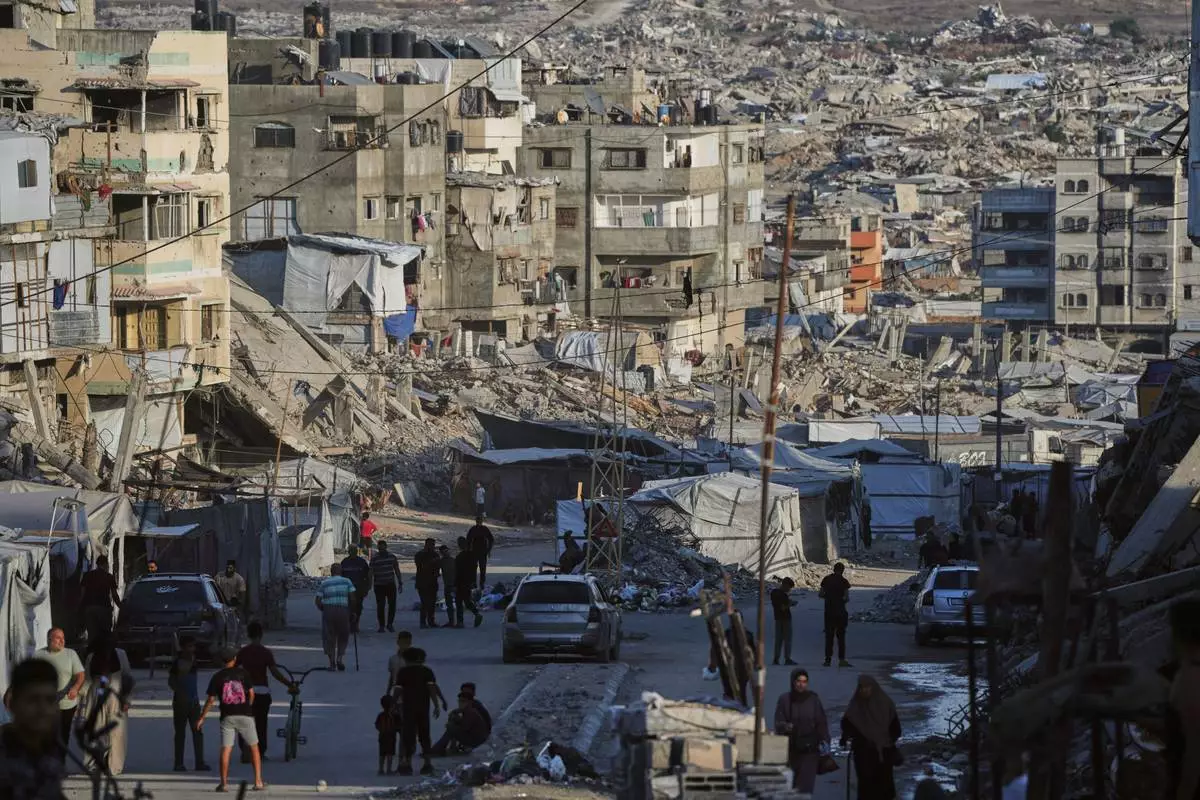
Palestinians walk along a street surrounded by buildings destroyed in Israeli military strikes during the Israel-Hamas war in Gaza City, Tuesday, Oct. 6, 2026. (AP Photo/Jehad Alshrafi)
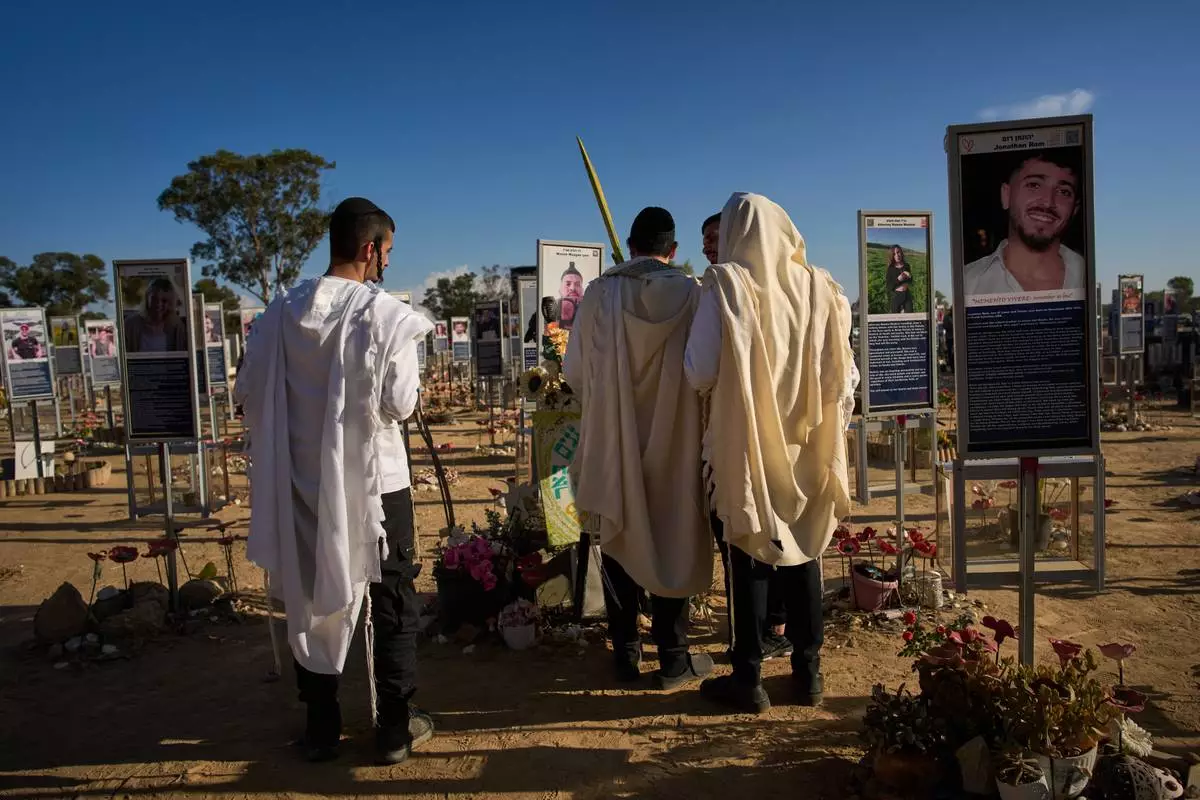
Jews wearing prayer shawls for the holiday of Sukkot visit the site of the Nova music festival, where hundreds of revelers were killed and abducted three years prior in the Oct. 7 Hamas attack, near Kibbutz Reim in southern Israel, Friday, Oct. 2, 2026. (AP Photo/Oded Balilty)

Israel's Prime Minister Benjamin Netanyahu, center, lays a wreath during a state memorial ceremony in memory of those killed in the Oct. 7, 2023, Hamas attack on Israel, at Mount Herzl Cemetery in Jerusalem, Monday, Oct. 5, 2026. (Debbie Hill/Pool Photo via AP) ADDITION: Adds context of memorial ceremony.
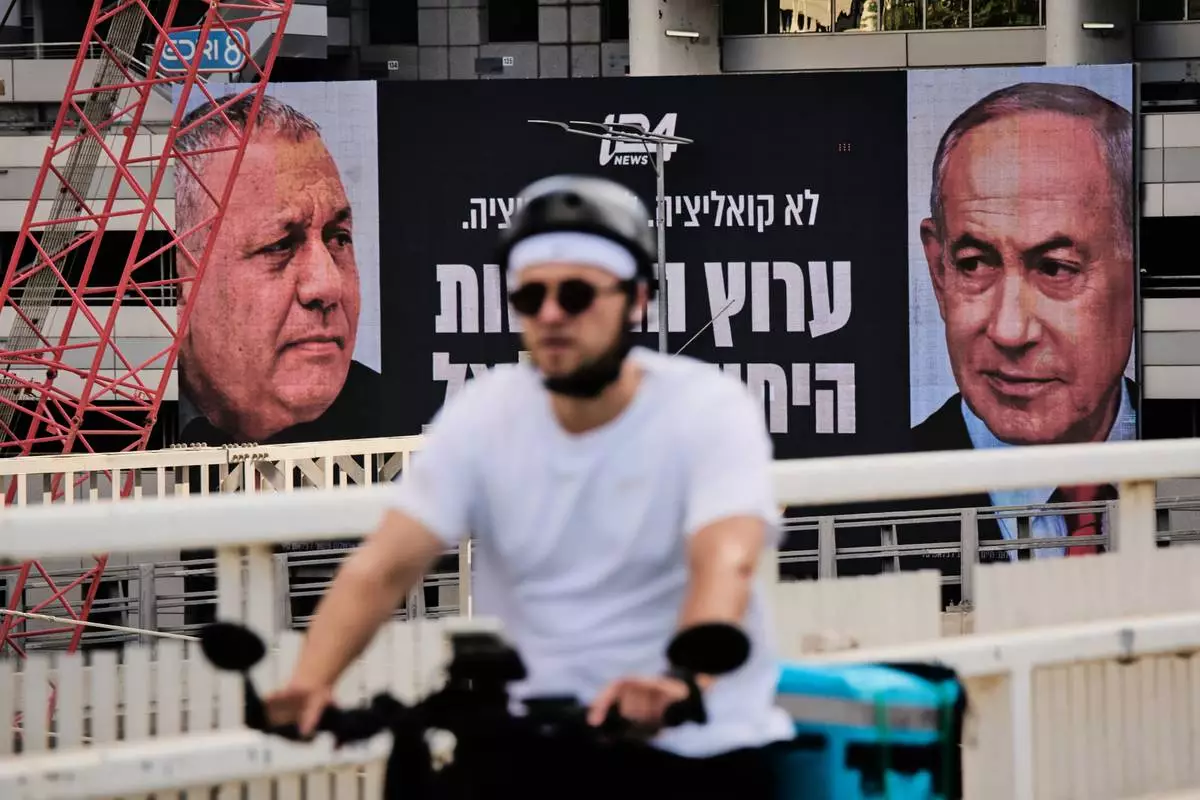
A man rides bicycle past a television channel advertisement featuring Israeli Prime Minister Benjamin Netanyahu, right, and his main rival, opposition candidate Gadi Eisenkot, ahead of Israel's general election, in Ramat Gan, Israel, Wednesday, Sept. 23, 2026. (AP Photo/Oded Balilty)