Associated Press (AP) — Ana Beatriz Bon Raggio is not persuaded by either left-leaning Brazilian President Luiz Inácio Lula da Silva or far-right Sen. Flávio Bolsonaro ahead of the second round of the presidential election on Oct. 25.
“The right mixes religion and faith, whereas I think those things should be separate, while (Lula’s) Workers’ Party has robbed the country,” said Bon Raggio, a 19-year-old studying theater in Rio de Janeiro, while walking around a shopping mall in downtown Rio. “I’m very undecided.”
Her distrust is rooted in history: Bolsonaro is under investigation for corruption and Lula was jailed for 19 months on corruption and money laundering charges that were later annulled. Bolsonaro’s father, former president Jair Bolsonaro, is currently serving a 27-year sentence for planning a coup after his 2022 defeat to Lula.
As the second round nears, both Lula and Bolsonaro are hyperfocused on winning over undecided voters such as Bon Raggio, as well as those who voted for one of the eliminated candidates in the first round. More than 33 million, or 21% of the electorate, did not go to the polls on Sunday.
The abstention percentage is the highest since 1998 for a first round. First-round non-voting has been slowly increasing since 2006, according to data from Brazil’s electoral court. Not voting in Brazil incurs a small fine as participation is mandatory for literate citizens aged 18 to 70.
“Abstention of 20% isn’t ideal,” said the president of Brazil’s electoral court, Kassio Nunes Marques, after Sunday’s vote. “The idea is to intensify and perfect all the available mechanisms to diminish this percentage in the second round.”
Neither Lula nor Bolsonaro received more than 50% during the first round on Sunday, and will now face each other in the runoff scheduled for Oct. 25.
Bolsonaro has at least two advantages: He received 2 million more votes than Lula on Sunday and the candidates who placed third, fourth and fifth — Augusto Cury, Renan Santos and Ronaldo Caiado — are all on the right of the political spectrum. Caiado, who garnered around 2.6 million votes, endorsed Bolsonaro on Tuesday. Cury and Santos have said they will not support either candidate.
Nearly six million people cast a blank or spoiled vote — including Alexandre Moreira, a 21-year-old university student. Ahead of the second round, he is also undecided, though he's leaning toward Lula because he believes the incumbent is open-minded.
“But things are more expensive, and I’m feeling it,” said Moreira, who works three part-time jobs to earn a living while studying.
He pointed to the rising price of gasoline, which has increased from 5 reais ($1) a liter in January 2023 to 6.54 reais ($1.31) in September 2026, according to Brazil’s National Agency for Petroleum, Natural Gas and Biofuels.
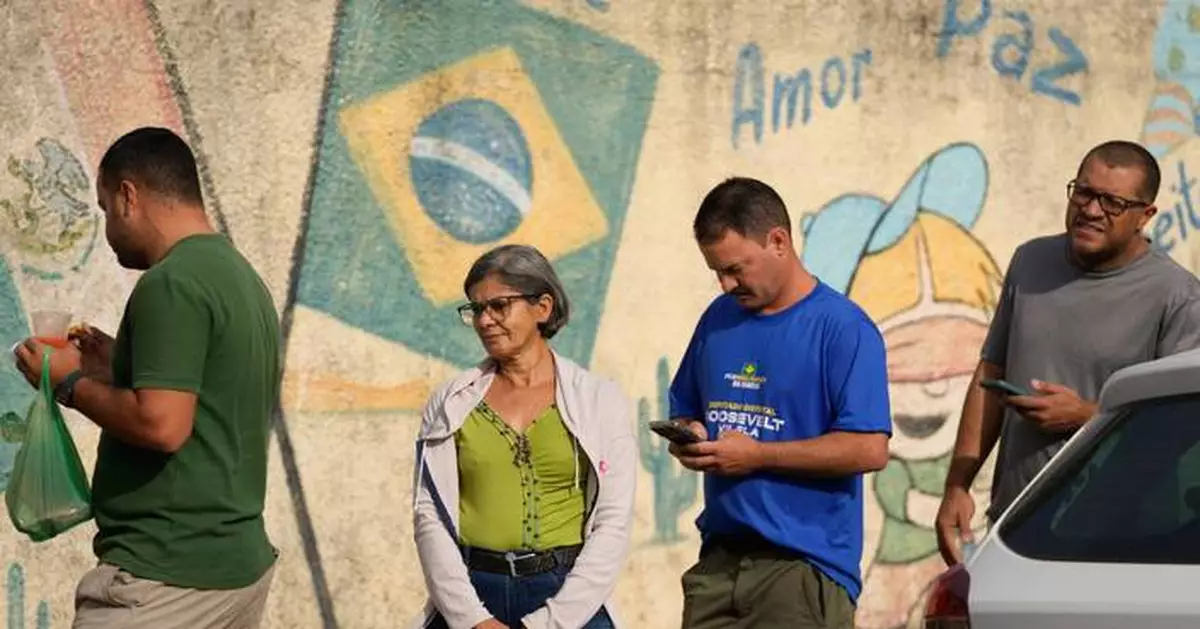
On Sunday, many lined up to cast their vote wearing either red hats and T-shirts — signaling support for Lula’s party — or the yellow and green of the Brazilian flag traditionally used by Bolsonaro's movement, reflecting the polarization gripping the country.
But others feel alienated, misrepresented and worn out by the opposing political forces, said Carolina Almeida de Paula, a political scientist from Rio de Janeiro State University.
“We talk a lot about polarization in Brazil, but we forget the higher percentage of people who don’t like this fight,” she said.
Brazil’s polling agency Datafolha predicted around 11% of people were undecided ahead of the first round. Around the same time in 2022, the Datafolha poll found just 2% were undecided.
Meri Oliveira, 62, is among those who won’t vote for either candidate in three weeks’ time. “Flávio Bolsonaro is as corrupt as Lula,” said Oliveira.
Oliveira called the current president “the biggest thief in Brazil” and referred to his stint in prison. She also decried Jair Bolsonaro’s misogynist comments and his handling of the pandemic, during which more than 700,000 people died in Brazil — the second-highest toll after the U.S.
Getting people to participate in the second round is difficult, Almeida de Paula said, adding that this year’s election campaigns have been atypically subdued after several scandals.
“We could see more mobilization ahead of the second round, which could bring many more votes. That could mean increasing votes for Bolsonaro or allowing Lula to turn the election around,” she said.
Bon Raggio, the theater student, said that if the vote were tomorrow, she would probably cast a blank ballot.
“Brazil’s situation is complicated; I don’t think it’s a good idea for either of them to govern,” she said. “But I could still change my mind.”
Follow AP’s coverage of Latin America and the Caribbean at https://apnews.com/hub/latin-america
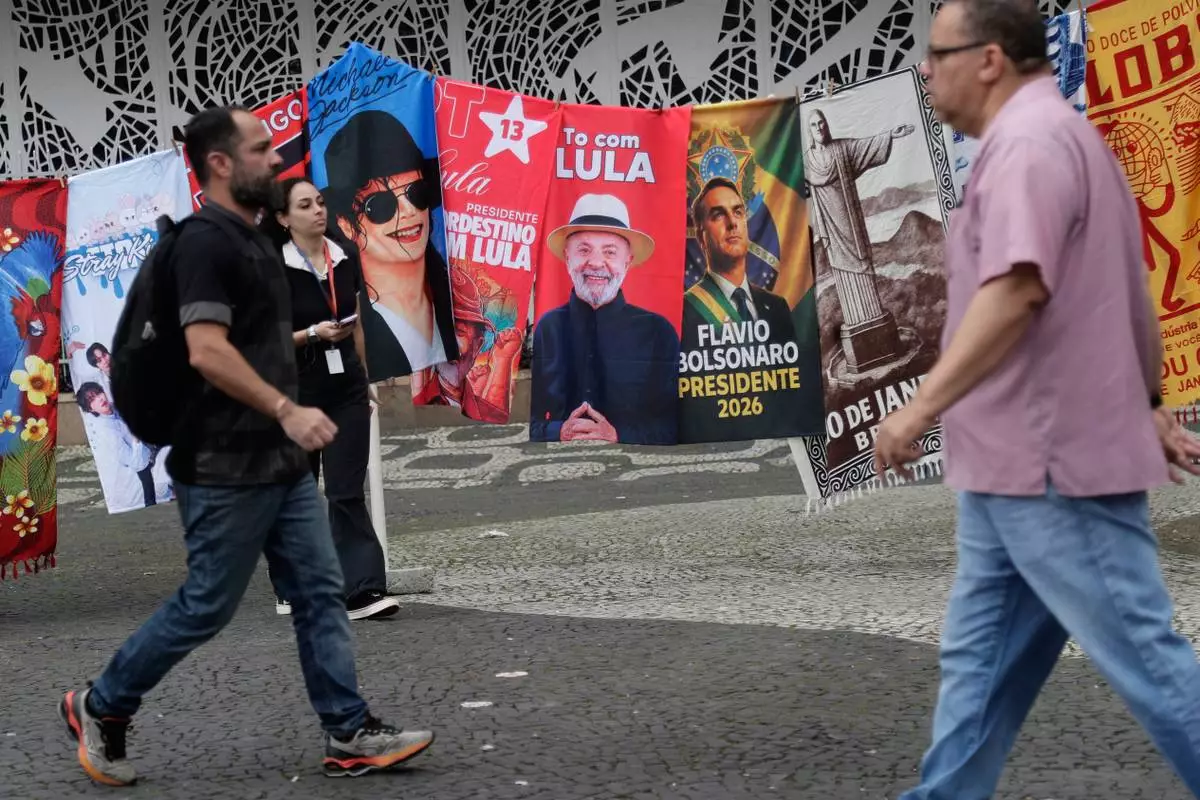
People walk past campaign flags of Brazilian President Luiz Inacio Lula da Silva, who is running for reelection, and opposition presidential candidate Sen. Flavio Bolsonaro, the day after the general election in Rio de Janeiro, Monday, Oct. 5, 2026. The runoff election is set for Oct. 25. (AP Photo/Bruna Prado)
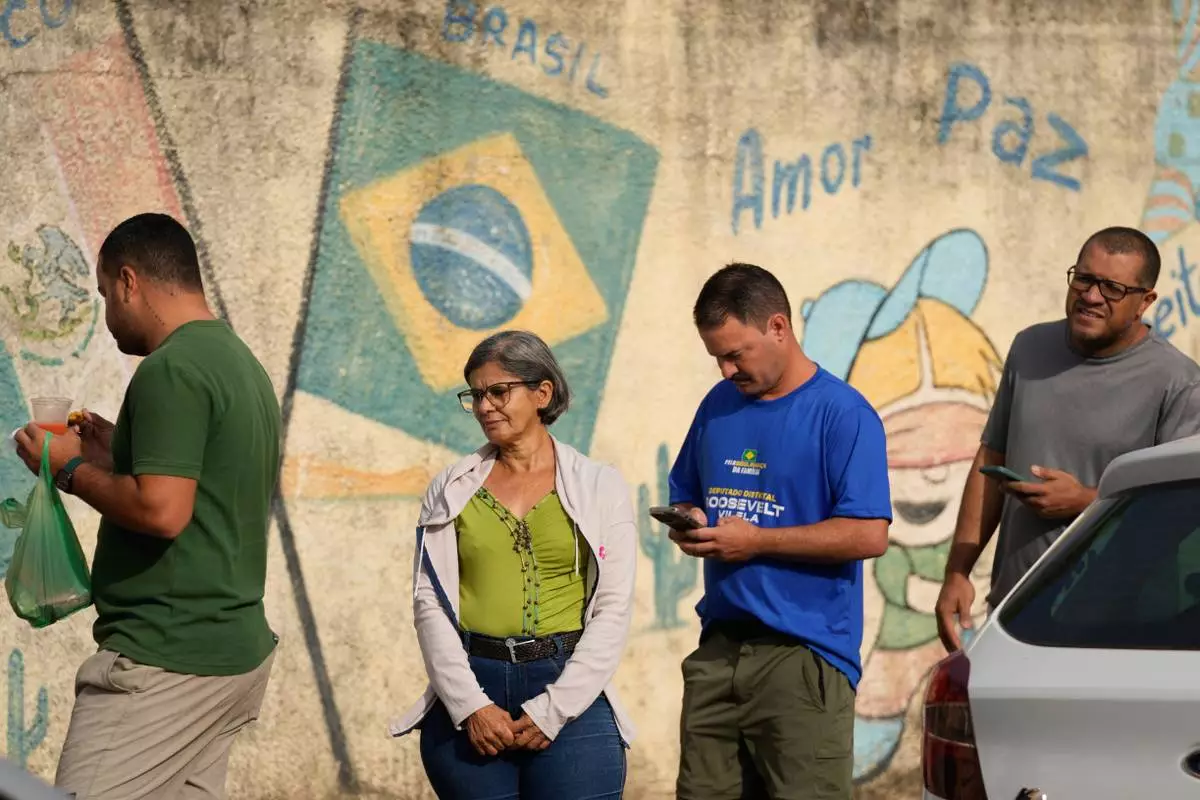
Voters line up at a polling station during general elections in Brasilia, Brazil, Sunday, Oct. 4, 2026. (AP Photo/Eraldo Peres)
STOCKHOLM (AP) — Scientists Henri B. Kagan and Kenso Soai won the Nobel Prize in chemistry Wednesday for untangling mysterious mirror images in molecules, a discovery that has been used to develop countless drugs and transformed modern medicine.
Many molecules come in versions that look alike but are not exactly identical, like right and left hands. Kagan, who is from France, and Soai, from Japan, found ways to make chemistry pick a side, describing and designing reactions to produce the desired mirror image.
“The medicines we have today would not be possible without this chemistry,” said Rigoberto Hernandez, president of the American Chemical Society.
Soai was shopping at a neighborhood supermarket when he heard he had won.
“I’m very excited to receive the very nice news,” Soai told the Nobel committee and journalists by phone. “Of course, this is one of the most exciting days in my life.”
Mirror images of the same molecule can have different properties. For example, one version of the chemical carvone smells like mint, while the other has a whiff of caraway, a spice often used in rye bread.
The alternate versions can also behave differently when interacting with other chemicals. When designing drugs to treat diseases, scientists are choosy about which mirror image they use. They want the version of a molecule to treat a cold, not one that will make the sniffles worse.
In the 1980s, Kagan’s work showed there might be a way to design reactions to produce one form of a molecule over the other. Years later, Soai perfected the process. He created the first-ever chemical reaction to efficiently produce only one of a molecule’s mirror images, in what’s now known as the Soai reaction.
“This is probably the coolest experiment in organic chemistry,” said Peter Somfai, a member of the Nobel Committee for Chemistry.
Kagan, 95, is affiliated with the Université Paris-Sud in Orsay, France. Soai, 76, is affiliated with the Tokyo University of Science. The Nobel committee described their work as a feat never previously achieved by anyone “other than life itself.”
The French Academy of Sciences, where Kagan is a member, congratulated him, as did French President Emmanuel Macron, who called the prize “an immense source of pride for the country” and “a recognition befitting a lifetime of research.”
“It might be difficult to say that this drug, or that drug, was developed using this,” Somfai said. “I would say all of them, because we use this as a tool, we use this as an understanding, how to develop catalysts, how they function.”
Life, too, prefers one mirror image over the other. DNA twists to the right, and the proteins in human bodies are made of mostly left-handed building blocks.
In addition to developing better medicines or perfumes, deciphering the mirror images of molecules can help scientists understand the chemical architecture of life, said chemist Holden Thorp, editor-in-chief of the journal Science.
“There are still fascinating aspects that remain unknown and surely more yet to be discovered,” Soai said at a news conference hosted by his university in Tokyo. "I hope to do what I can, however modestly, to contribute to help advance research in this field."
Japan’s largest newspaper, Yomiuri, distributed an extra edition with a headline proclaiming “Nobel Prize Mr. Soai,” with a big photo of the scientist. The papers quickly disappeared as office workers picked them up on their way home.
The Royal Swedish Academy of Sciences announced the winner in Stockholm.
Last year, three scientists won the chemistry Nobel for their development of new molecular structures that can trap vast quantities of gas inside, laying the groundwork to potentially suck greenhouse gases out of the atmosphere or harvest moisture from desert environments.
This year's prizes began with the Nobel for medicine, awarded Monday to three scientists whose work led to a tool that uses light to help unravel how the brain works. The physics award announced Tuesday recognized a scientist's efforts to demystify a rare group of neutrinos.
The literature prize is set to be awarded Thursday. After Friday’s peace prize is awarded, the Nobel Memorial Prize in Economic Sciences will be announced Monday.
The prize money this year is 12 million Swedish kronor (about $1.2 million), whether for an individual, a small group of laureates or an organization.
This story has been corrected to correct that Kagan, not Soai, is 95.
Ramakrishnan reported from New York. Dazio reported from Berlin. Associated Press journalists Alexa St. John in Detroit, Catherine Gaschka in Paris and Mari Yamaguchi in Tokyo contributed to this report.
AP Nobel Prizes: https://apnews.com/hub/nobel-prizes
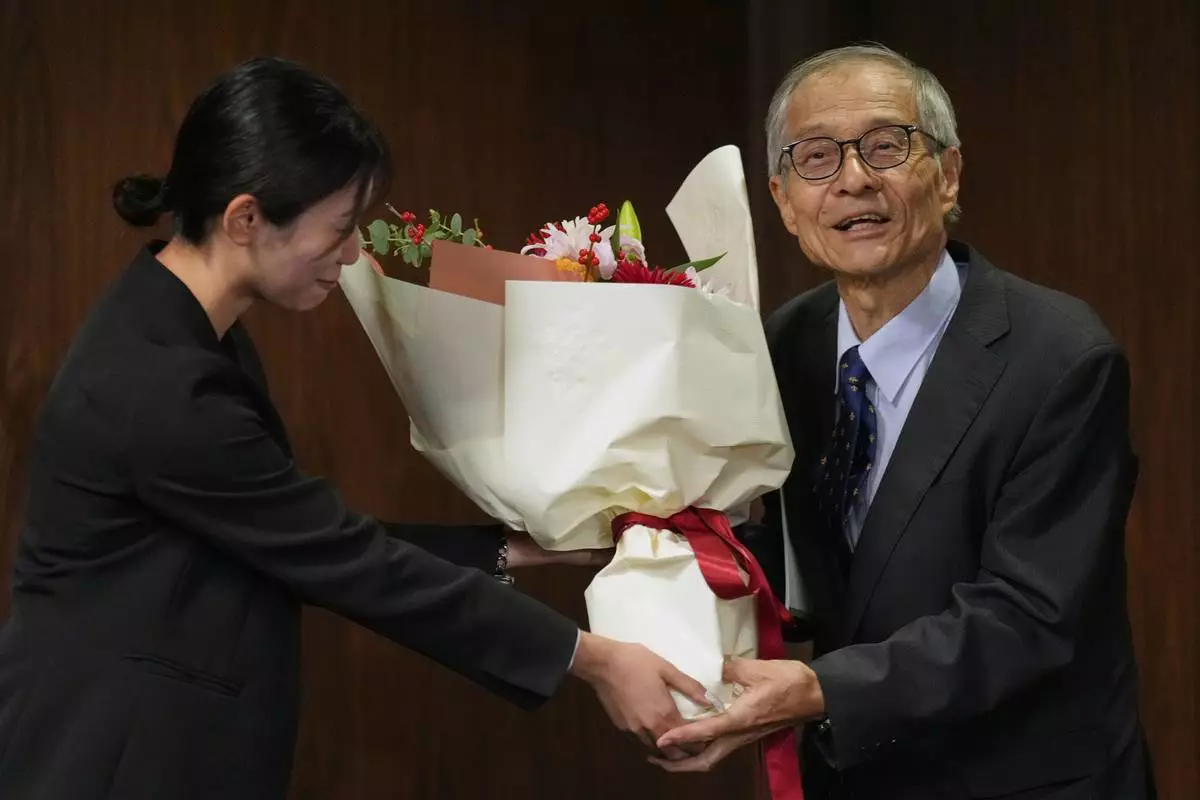
Japanese chemist Kenso Soai receives a bouquet of flowers from a university staff member before the press conference at Tokyo University of Science in Tokyo, Wednesday, Oct. 7, 2026, after winning the Nobel Prize in chemistry. (AP Photo/Hiro Komae)
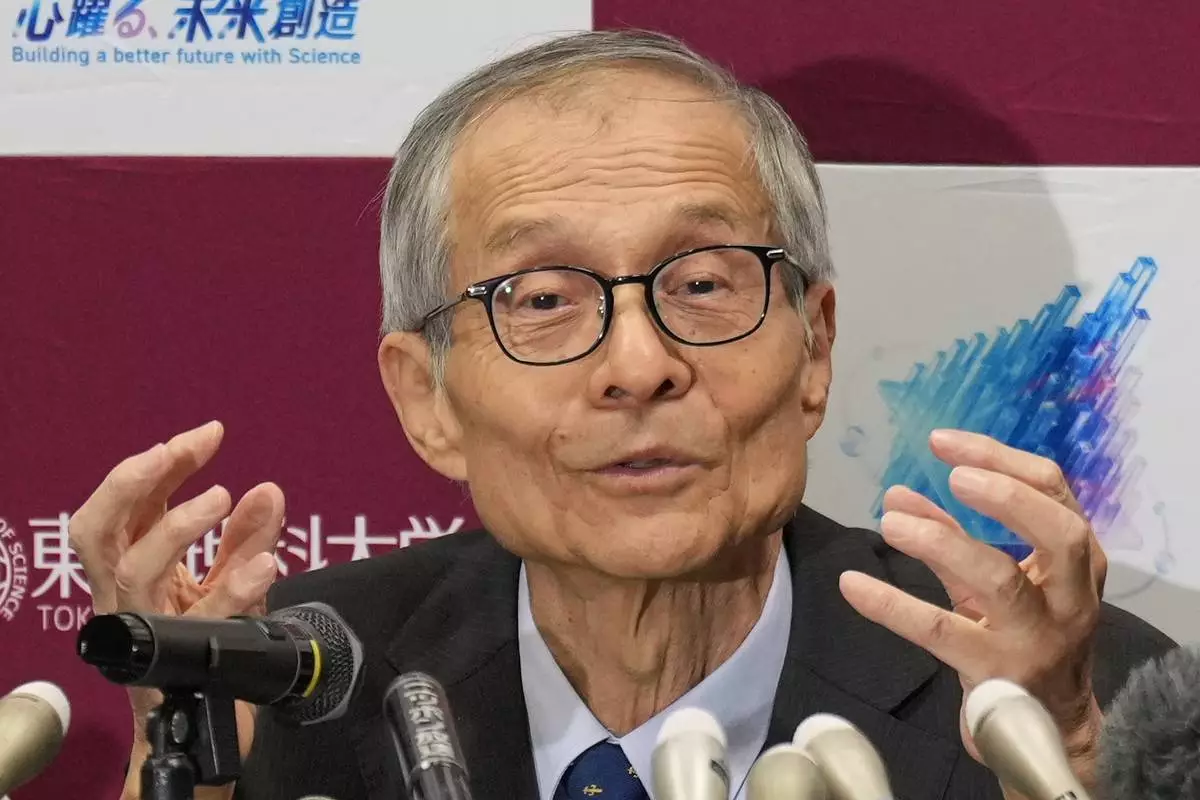
Japanese chemist Kenso Soai, speaks during a news conference at Tokyo University of Science in Tokyo, Wednesday, Oct. 7, 2026, after winning the Nobel Prize in chemistry. (AP Photo/Hiro Komae)
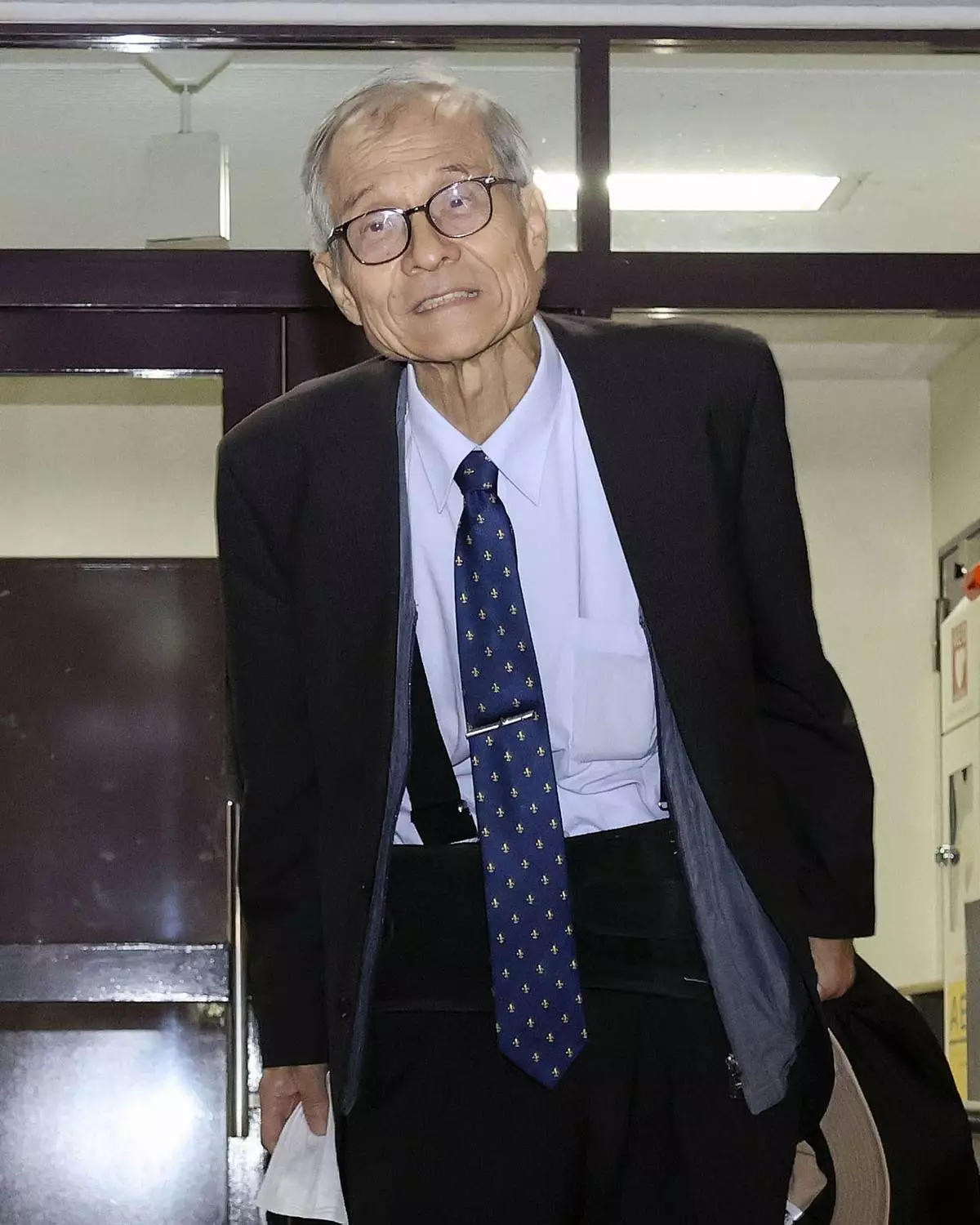
Japanese chemist Kenso Soai, who won the 2026 Nobel Prize in Chemistry, leaves home for a press conference, in Shiki, Saitama prefecture, Wednesday, Oct. 7, 2026. (Kyodo News via AP)
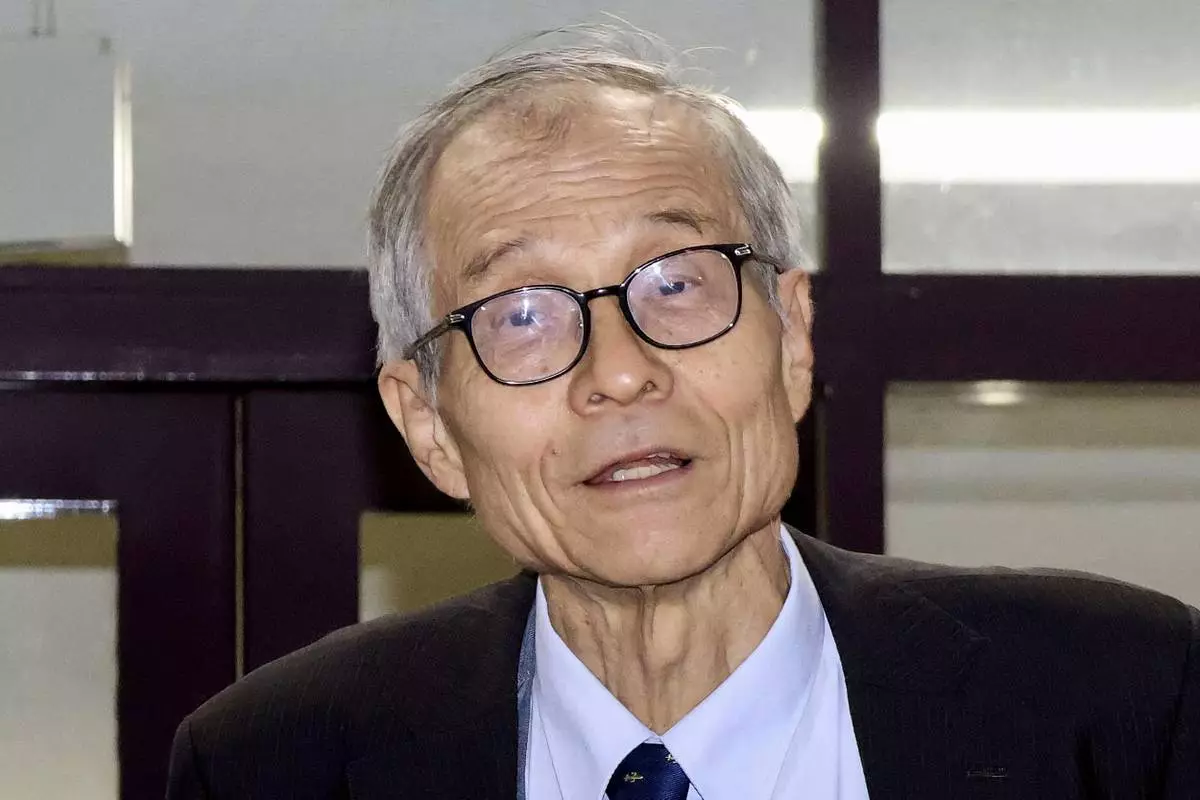
Japanese scientist Kenso Soai, winner of the 2026 Nobel Prize in Chemistry, leaves home for a press conference, in Shiki, Saitama prefecture, Wednesday, Oct. 7, 2026. (Kyodo News via AP)
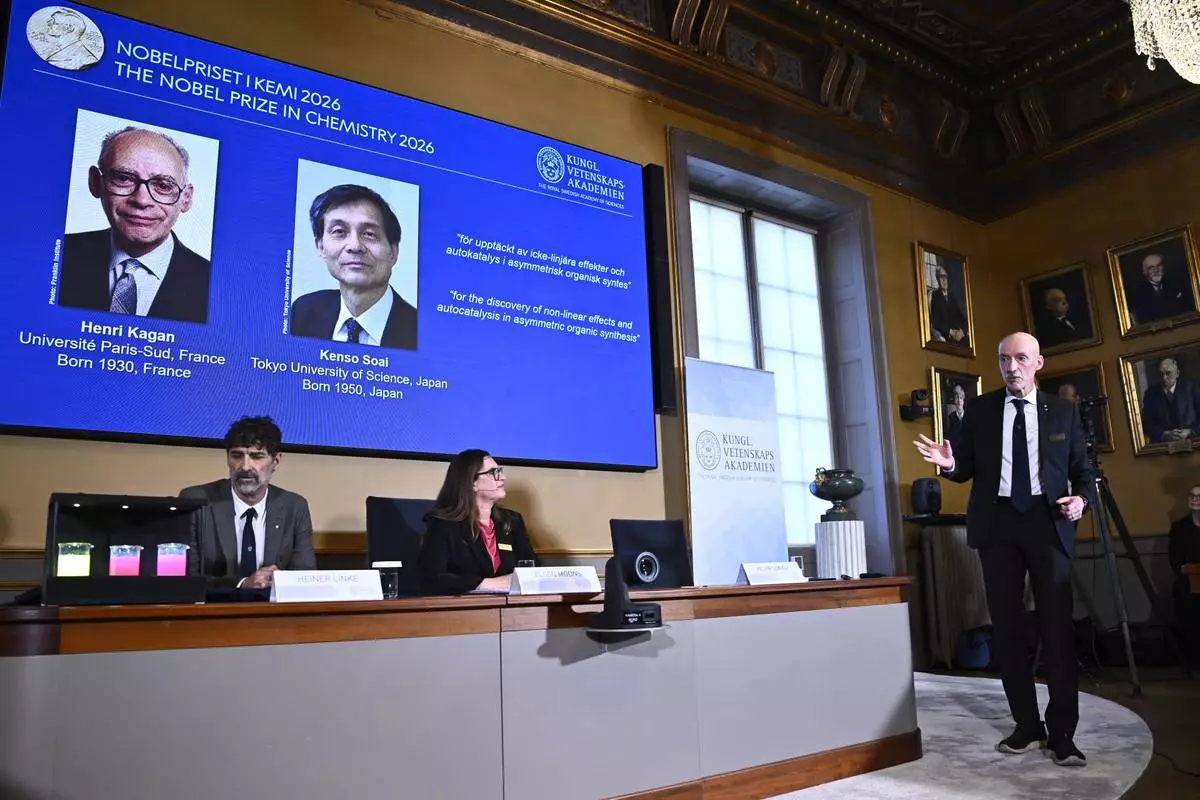
Portraits of Henri Kagan and Kenso Soai are shown on the screen as they are awarded the 2026 Nobel Prize in Chemistry, at the Royal Swedish Academy of Sciences in Stockholm, Sweden, on Oct. 7, 2026. Photo: (Fredrik Sandberg/TT News Agency via AP)
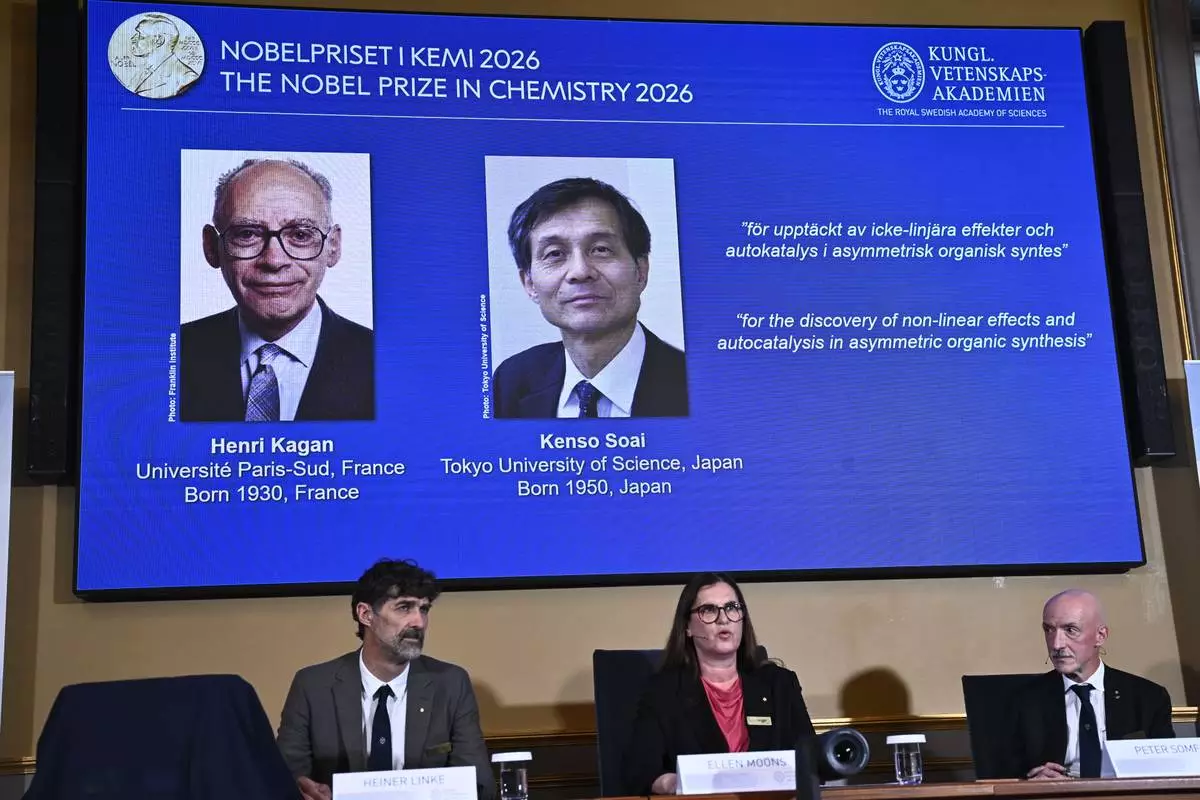
Portraits of Henri Kagan and Kenso Soai are shown on the screen as they are awarded the 2026 Nobel Prize in Chemistry, at the Royal Swedish Academy of Sciences in Stockholm, Sweden, on Oct. 7, 2026. Photo: (Fredrik Sandberg/TT News Agency via AP)
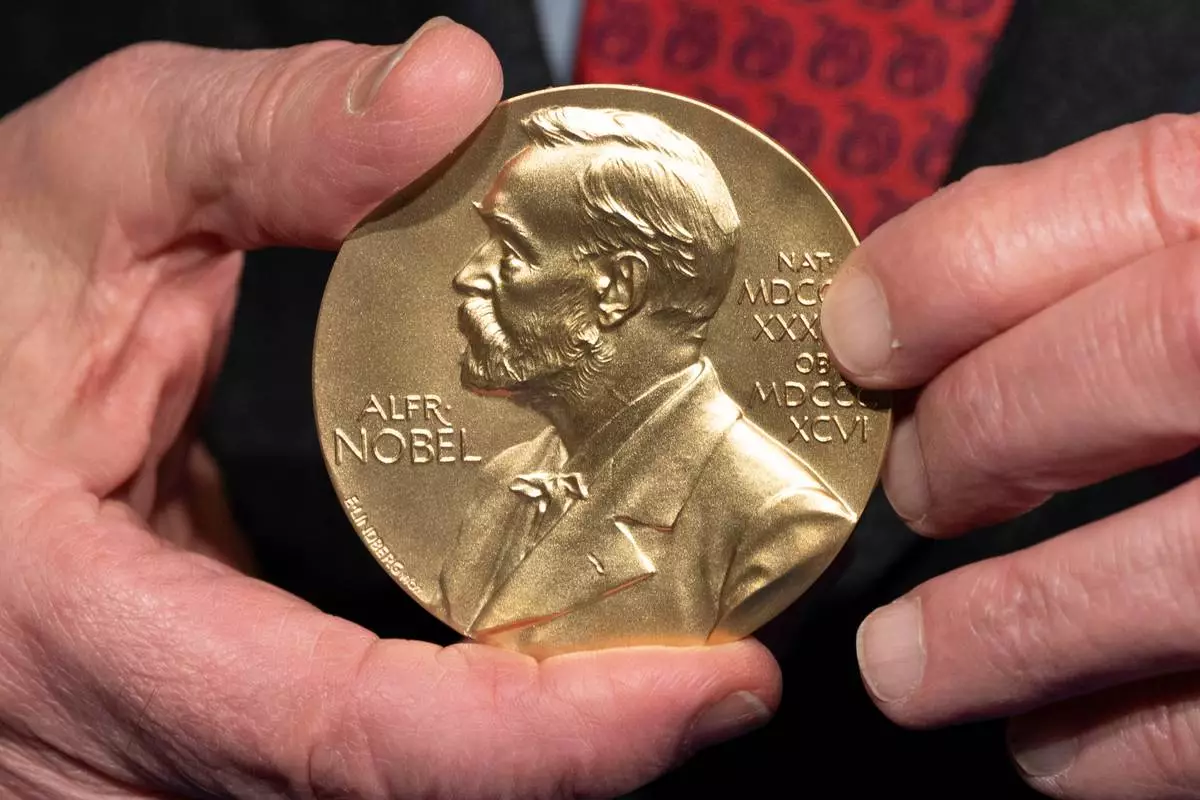
FILE - A close-up view of a Nobel Prize medal at the National Institutes of Health (NIH) in Bethesda, Md., Dec. 8, 2020. (AP Photo/Jacquelyn Martin, File)