President Donald Trump has turned emergency relief into a campaign talking point in the final sprint to the midterm elections, approving disaster declarations in consequential states and coupling endorsements with funding announcements. As the country braces for a major hurricane barreling toward the U.S. Gulf Coast, the moves have revived questions about whether the administration is politicizing disaster recovery.
The latest example came Wednesday, when Trump voiced support for Republican Rep. Tom Tiffany in Wisconsin’s governor race while pledging millions to help with recent storms.
In addition, the president recently joked that he would cut off money to North Carolina, which is still healing from Hurricane Helene two years ago, if Republican Senate candidate Michael Whatley lost. And the day before an Ohio campaign rally with Sen. Jon Husted last Saturday, Trump approved a disaster declaration for the state while leaving 15 other requests pending.
Disaster survivor advocates say they want elected officials to prioritize their recovery — not wield it as a political tool.
“Recovery isn’t partisan,” said Sierra Lindsey-Kos, co-founder and co-executive director of Extreme Weather Survivors, an advocacy nonprofit.
“Neighbors help each other without asking who anyone voted for, and that’s exactly the way it should be," she said.
The White House rejected the idea that it's injecting politics into disaster recovery. “There is no politicization to the president’s decisions on disaster relief,” spokesperson Lauren Bis said Tuesday.
Trump has frequently mentioned disaster support in social media posts about the midterms, sometimes announcing new funding in conjunction with reminders of endorsements for Republican candidates like Ashley Hinson in Iowa and Andy Barr in Kentucky.
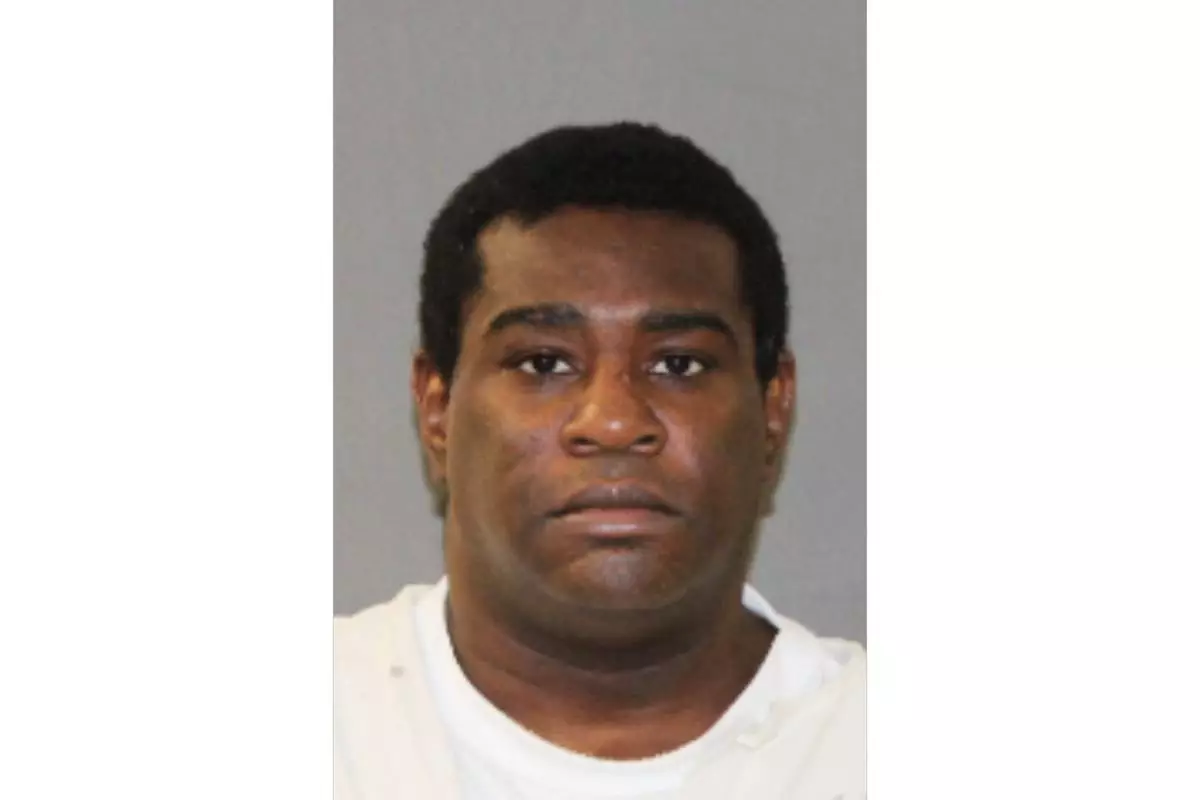
On Wednesday, Trump posted that he’d spoken to Tiffany, “who has my Complete and Total Endorsement to be the next Governor of the Great State of Wisconsin,” and told him about $17.9 million in disaster funds were coming to the state. “18 Million Dollars should help, A LOT,” Trump wrote. Tiffany is up against Democratic nominee David Crowley in Wisconsin’s governor’s race.
A spokesperson for Democratic Gov. Tony Evers said their office had not been informed about the money, and Evers responded to the post on social media.
"Clearly, President Trump and Congressman Tiffany are continuing to play politics with emergency aid that’s meant to help communities recover in the wake of disasters like tornadoes and floods."
FEMA later confirmed that Trump approved a disaster declaration for Wisconsin, along with West Virginia and Guam, though he didn’t announce those on social media.
Even creating the perception that disaster relief and votes are connected has traditionally been “out of bounds,” said Rafael LeMaitre, FEMA spokesperson under former President Barack Obama.
“It diminishes the integrity of the disaster management system and it erodes trust in the way the government addresses disasters generally,” he said.
When Trump held a rally in North Carolina for Republican Senate candidate Michael Whatley, the president acknowledged the state was still waiting for billions of dollars in federal recovery funds for Hurricane Helene.
“Now if Michael loses, I’m not sending it,” he said. “No, I’m only kidding, you’re getting it,” he added.
Republican Jennifer Balkcom, a congressional candidate in a western North Carolina district, later defended Trump's comments.
"I don’t know if he was being funny,” Balkcom told WLOS ABC News 13. “I think he was trying to persuade voters to vote for Michael Whatley.”
While the joke might not faze Trump’s most dedicated supporters, others found it off putting, said Jon Council, who works for the organizing group Down Home North Carolina.
“That just doesn’t strike me as a person or administration that’s taking the conditions on the ground here seriously, and taking the responsibility to the American taxpayer seriously,” Council said.
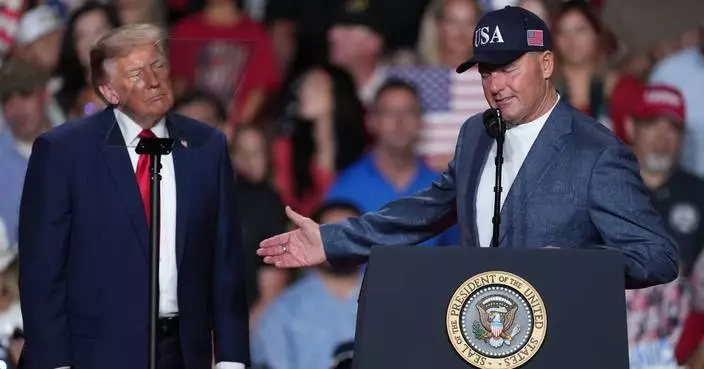
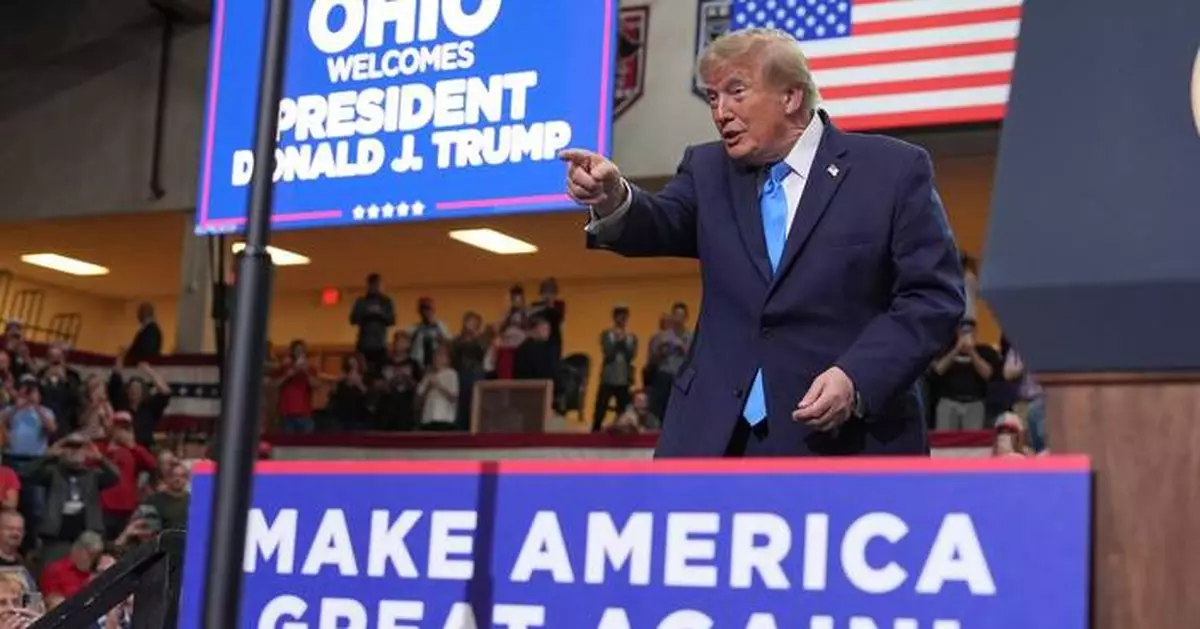
Trump also brought up disaster relief funds at a campaign rally in Ohio last Saturday, telling supporters in a high school gymnasium in Vandalia that he had signed a “special” disaster declaration for the state after August severe weather.
“You had some bad storms, and Jon and everybody wanted me to help, and I took care of it,” Trump said, referring to Republican Senator Jon Husted, who is running a tight reelection race against Democrat Sherrod Brown.
The major disaster declaration for Ohio authorizes direct assistance to residents of seven of the 23 counties requested by Republican Governor Mike DeWine. It came while 15 other requests from states, tribes and territories remain pending, including two from Hawaii, which experienced back-to-back hurricanes in August and September.
Trump did not answer pending disaster requests before rallying in two other Republican states last week with less consequential races, Oklahoma and Nebraska.
Andrew Rumbach, a senior fellow at the Urban Institute who tracks presidential disaster declarations, said politicians “have always tried to use disasters to their advantage." However, he said this White House's behavior has been “unusual and frankly concerning."
An Associated Press analysis in July found that Trump had approved more than three-quarters of the requests from states that voted for him in the 2024 election but less than half the requests from states that did not.
A FEMA spokesperson said Tuesday that “any suggestion that disaster decisions are politically motivated does not reflect how this process works or how FEMA carries out its mission.”
Politics has permeated recent communications from FEMA itself.
A September news release about preparations for a nor'easter storm listed 18 Republican members of Congress with whom it said agency leadership was “working closely” during the weather event, omitting mention of any Democrats despite the states mentioned being Democrat-led.
A FEMA spokesperson did not address questions about why only Republican representatives were named.
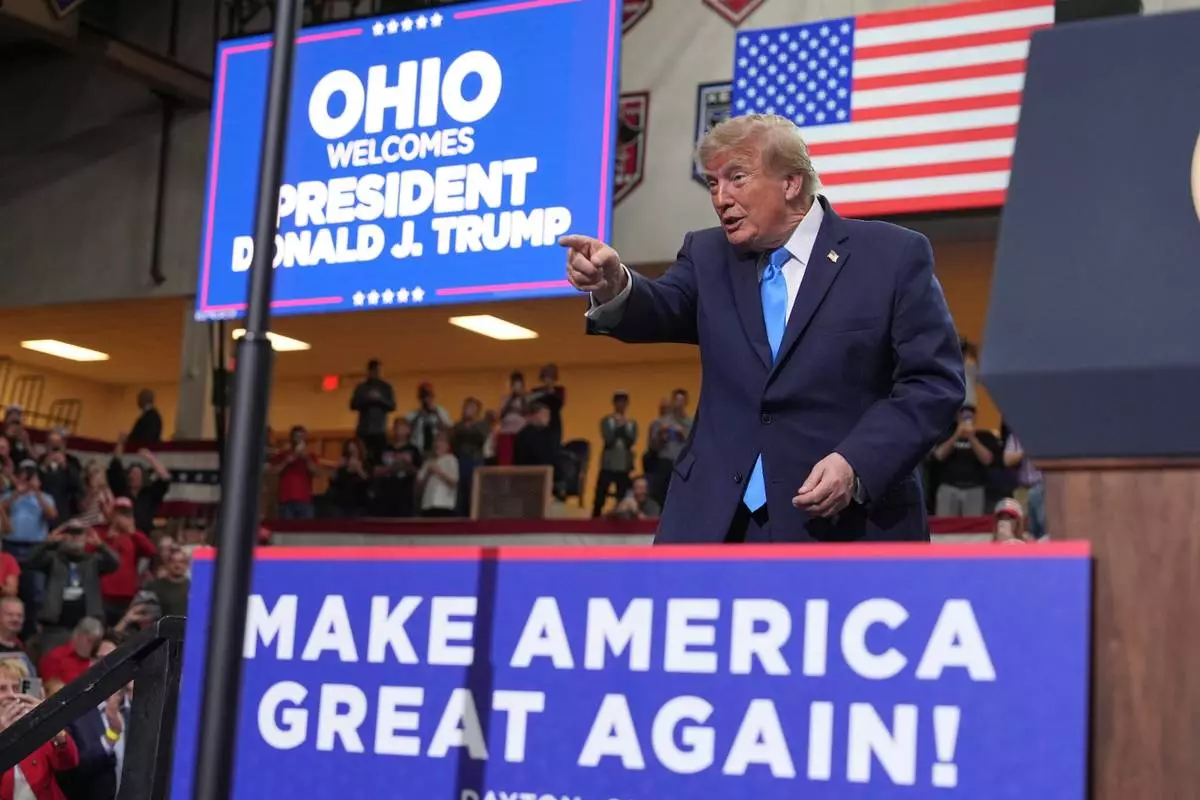
President Donald Trump departs after speaking during an event at Butler High School in Vandalia, Ohio, Saturday, Oct. 3, 2026. (AP Photo/Mark Schiefelbein)