Skip to Content Facebook Feature Image

Gruesome injuries throw spotlight on France's policing of high school protests

News

Gruesome injuries throw spotlight on France's policing of high school protests
News

News

Gruesome injuries throw spotlight on France's policing of high school protests

2026-10-08 15:07 Last Updated At:16:57

PARIS (AP) — The police tear gas grenade shattered the 14-year-old’s jaw and many of his teeth. The officer who fired it was taken into custody a week later and charged with violent mutilation, punishable by up to 15 years in prison. Following surgery, the boy cannot speak and can only eat with a straw, his mother says.

Other adolescents have also suffered life-changing injuries blamed on police weaponry during nationwide protests by high school students demanding more funding for run-down schools. In the former mining town of Lens, a 15-year-old lost a hand in an incident involving a police stun grenade. In Tours, in the wine-making Loire region, the prosecutor there says a police riot-control round is suspected in the partial blinding of a 16-year-old.

More Images
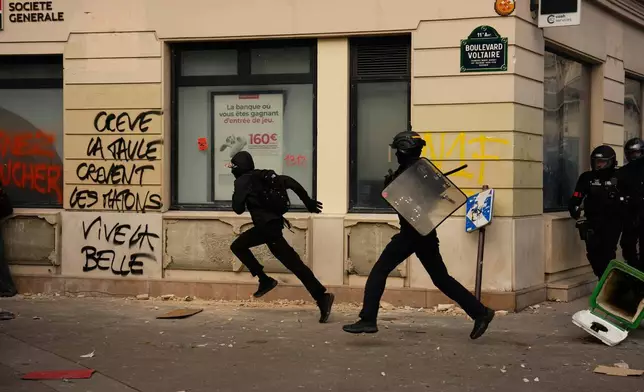
A police officer chases a protester during scuffles following a demonstration against under-resourced schools, in Paris, Tuesday, Oct. 6, 2026. (AP Photo/Teresa Suarez)
A police officer chases a protester during scuffles following a demonstration against under-resourced schools, in Paris, Tuesday, Oct. 6, 2026. (AP Photo/Teresa Suarez)

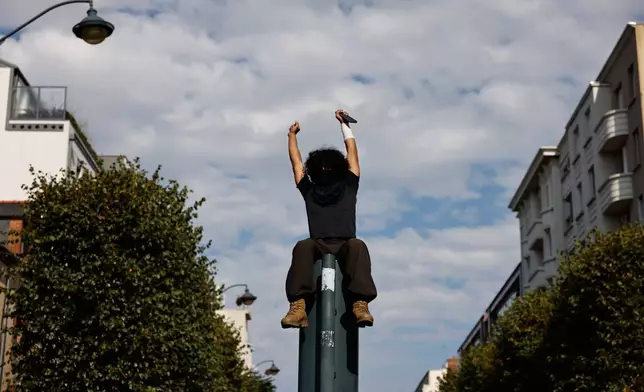
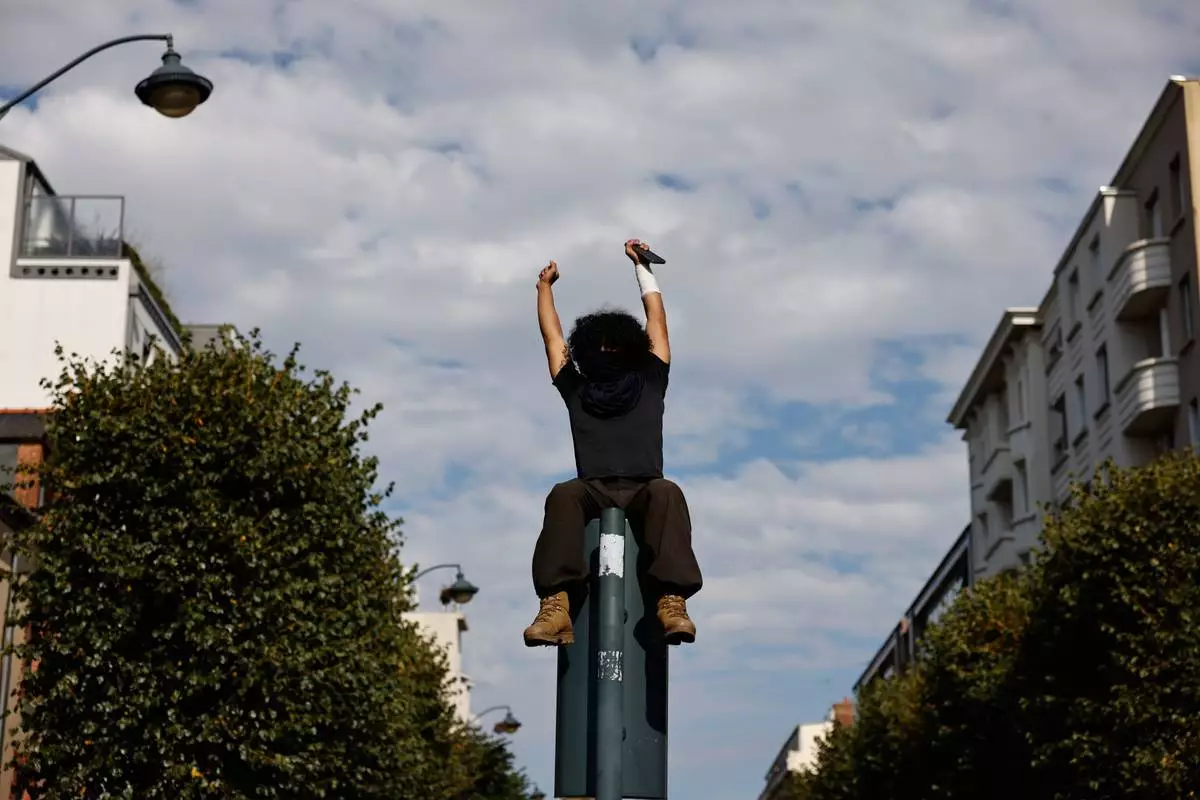
A student attends a protest against under-resourced schools, in Rennes, western France, Tuesday, Oct. 6, 2026. (AP Photo/Jeremias Gonzalez)
A student attends a protest against under-resourced schools, in Rennes, western France, Tuesday, Oct. 6, 2026. (AP Photo/Jeremias Gonzalez)

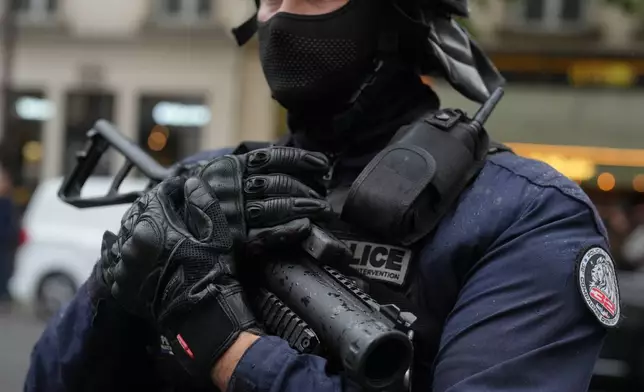
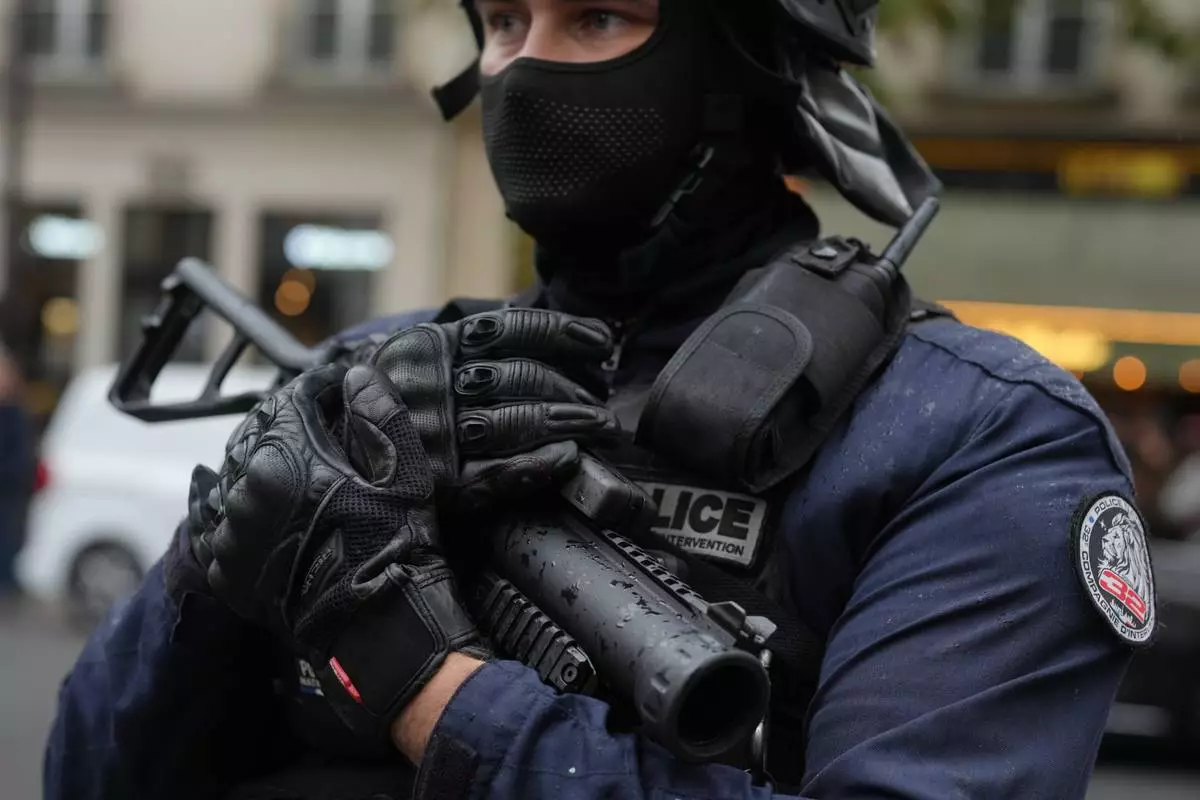
A policeman holds a LBD flash-ball gun as he faces students during a protest against under-resourced schools, in Paris, Wednesday, Oct. 7, 2026. (AP Photo/Thibault Camus)
A policeman holds a LBD flash-ball gun as he faces students during a protest against under-resourced schools, in Paris, Wednesday, Oct. 7, 2026. (AP Photo/Thibault Camus)

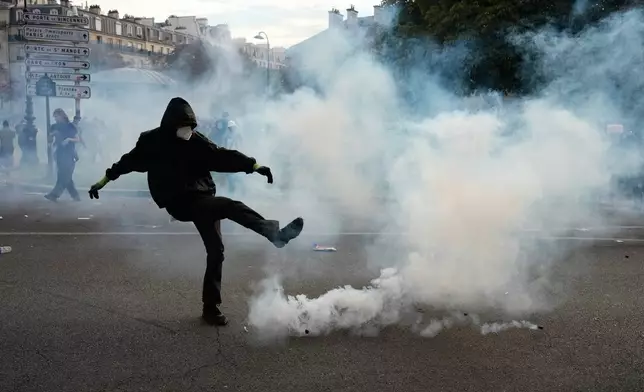
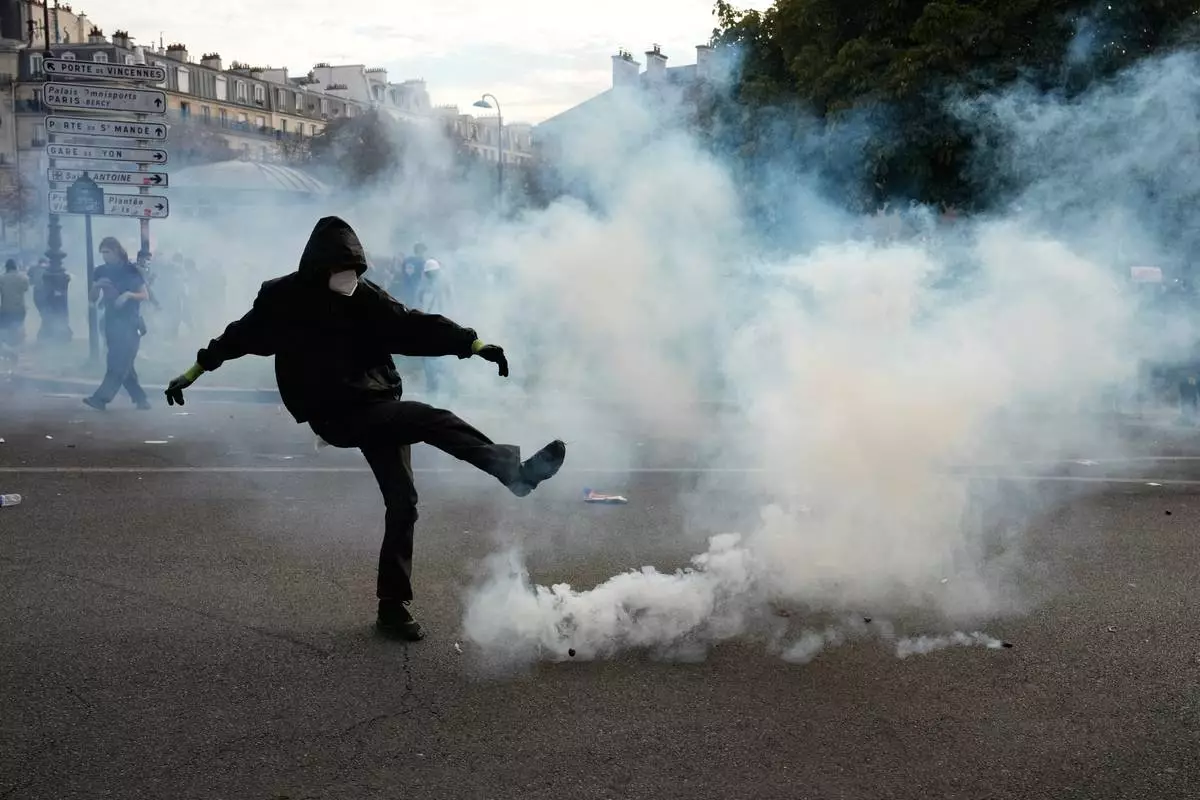
A protesters kicks a teargas canister during scuffles following a demonstration against under-resourced schools, in Paris, Tuesday, Oct. 6, 2026. (AP Photo/Teresa Suarez)
A protesters kicks a teargas canister during scuffles following a demonstration against under-resourced schools, in Paris, Tuesday, Oct. 6, 2026. (AP Photo/Teresa Suarez)

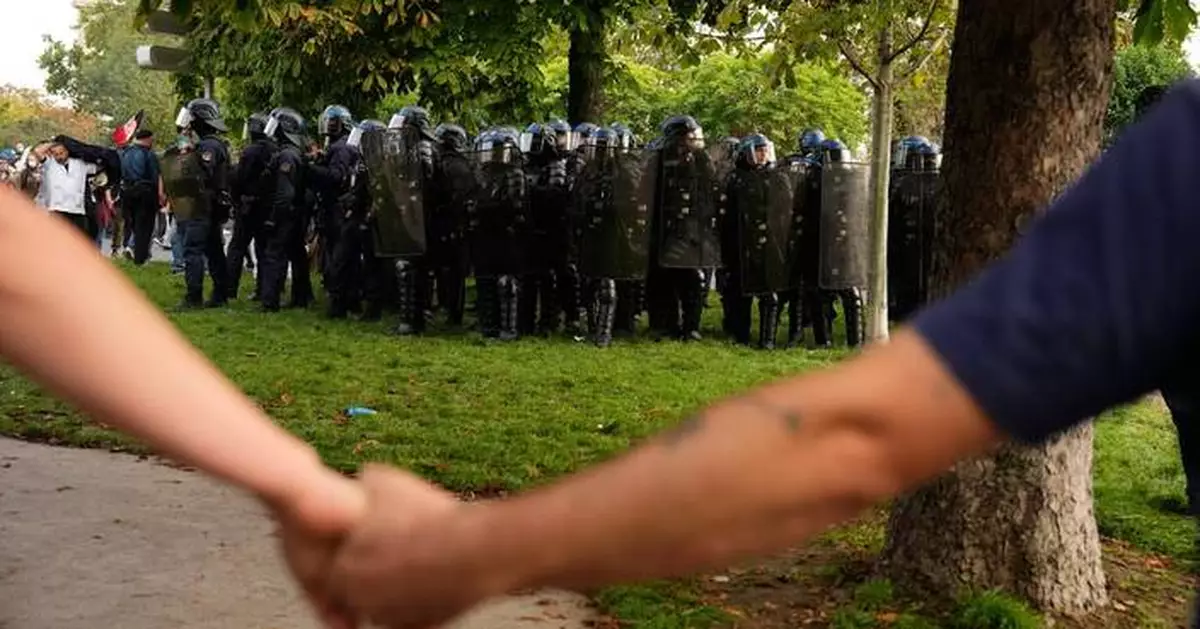
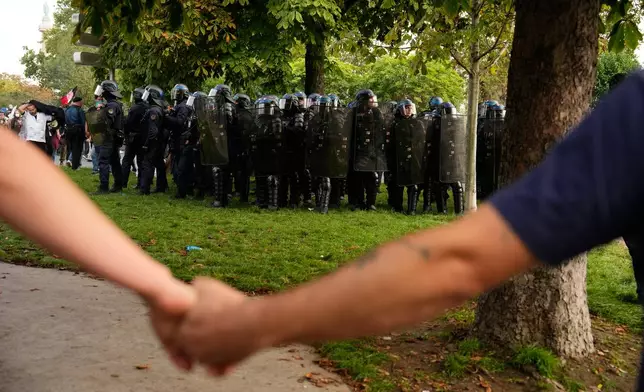
Protesters face police during a demonstration against under-resourced schools, in Paris, Tuesday, Oct. 6, 2026. (AP Photo/Teresa Suarez)

Protesters face police during a demonstration against under-resourced schools, in Paris, Tuesday, Oct. 6, 2026. (AP Photo/Teresa Suarez)

Beyond physical wounds, the massive use of police arrests and tactics that government critics and human rights campaigners allege have been unnecessarily violent is giving a generation of French schoolchildren — and soon-to-be voters — a real-life education about state power and their rights as citizens, and how the two sometimes clash.

“It politicizes you at an incredible speed,” said Alexis Baudelin, a Paris attorney for more than a dozen youngsters taken into custody.

“For many of them — for all of them — this was one of the first times that they'd taken part in a demonstration, coming together in a public space to voice demands they considered legitimate.”

According to the Interior Ministry, police have made more than 6,600 arrests — mostly of people under 18 — since protests began snowballing last week, including 488 people detained during nationwide demonstrations Tuesday. The movement demanding increased funds and more replacement teachers for schools started in a Paris-region high school in mid-September.

Lawyers and researchers who study French policing caution that the muscular response could spawn disillusioned young adults soured on the Republic and its promises of “ Liberty, Equality, Fraternity. ” Police have been less forgiving with teenage protesters than they previously were when farmers, a powerful lobby in France, doused government buildings with manure, blocked roads and set fires.

Baudelin, the lawyer, said his young clients have had a crash course in "unrestrained violence from the police.”

“Being locked up for hours and hours with nothing, in cells that are for the most part extremely unsanitary, in police stations that smell terrible, where you can’t sleep, with police officers telling you that if you don’t talk, if you don’t tell the truth, threatening you, telling you that your life is going to be ruined," he said.

“It’s an experience that can be deeply traumatic and is completely out of proportion."

Amid a growing outcry, Interior Minister Laurent Nunez announced Wednesday that the model of stun grenade suspected of mutilating the teenager in Lens will no longer be used against high schoolers, in light, he said, of a "strong possibility" that such a weapon was involved in ripping off the pupil's hand.

“We need to understand exactly what happened,” Nunez said.

Still, he has also defended police actions as proportionate in “almost all cases.” He says police have been obliged to intervene when protests led to rioting, vandalism and other violence, and have done so mindful that they're largely dealing with children.

“You don’t handle a high schoolers’ movement in the same way as one by adults,” the minister said to broadcaster RTL.

In the case of the 14-year-old with a smashed jaw and teeth, the officer who fired his grenade launcher directly at him during a protest in Saint-Ouen l’Aumone, northwest of Paris, said during questioning in custody that he acted in “a fraction of a second” to protect a female colleague who'd exchanged blows with the boy, according to a statement from the prosecutor's office leading the investigation.

It described the officer's actions as disproportionate, resulting in a preliminary charge against him of violence by a public official causing mutilation or permanent disability. Suspended from duty and barred from carrying a gun, he is the first officer facing potential prosecution in 18 investigations opened so far into suspected police misconduct during the protests.

The boy, Eden, sent his mother a video from outside his school, showing police and some protesters, just moments before the officer shot him with the gas grenade, she said, speaking to The Associated Press and other media on condition that she not be identified to preserve the anonymity of her child.

But when she then called him, it was one of his classmates who answered, screaming that her son had been hit in the face and was on the ground, bleeding with his jaw and top teeth broken and bottom teeth "completely ripped out,” she said.

“It’s shameful, it's appalling, it’s violent, it’s disgusting, it’s despicable — I could give you a whole list of words," she said. "They are dealing with children. And children demanding what? Simply better conditions in which to study.”

In the crowds that demonstrated in Paris on Tuesday, marching boisterously from one city square to another, AP found three Paris-region teenagers who said they were arrested, handcuffed, searched, held in custody but then released with no criminal charges last week.

Samy and Warkya, both 17, said they were detained together with another friend. They believe that police picked on them because of their color. Warkya and the other friend are Black and Samy described himself as Arab. French officials have repeatedly denied that there is racism in the police ranks. Prime Minister Sébastien Lecornu said in parliament this week that such accusations are “lies.”

Samy said the officers who stopped them said, “'You, you and you, you’re coming with us.'" There was no apparent motive, because “we weren't wearing hoodies, we had nothing on us, our faces were visible," he said.

“Here in France, they don’t listen to us. They would rather send in the police than listen to us and put measures in place to improve our daily lives," he said.

Warkya said her first experience of police custody only reinforced her determination to protest but also taught her to run when officers appear.

“The police are more powerful than us," she said. “There's nothing we can do.”

Sam McNeil in Brussels contributed to this report.
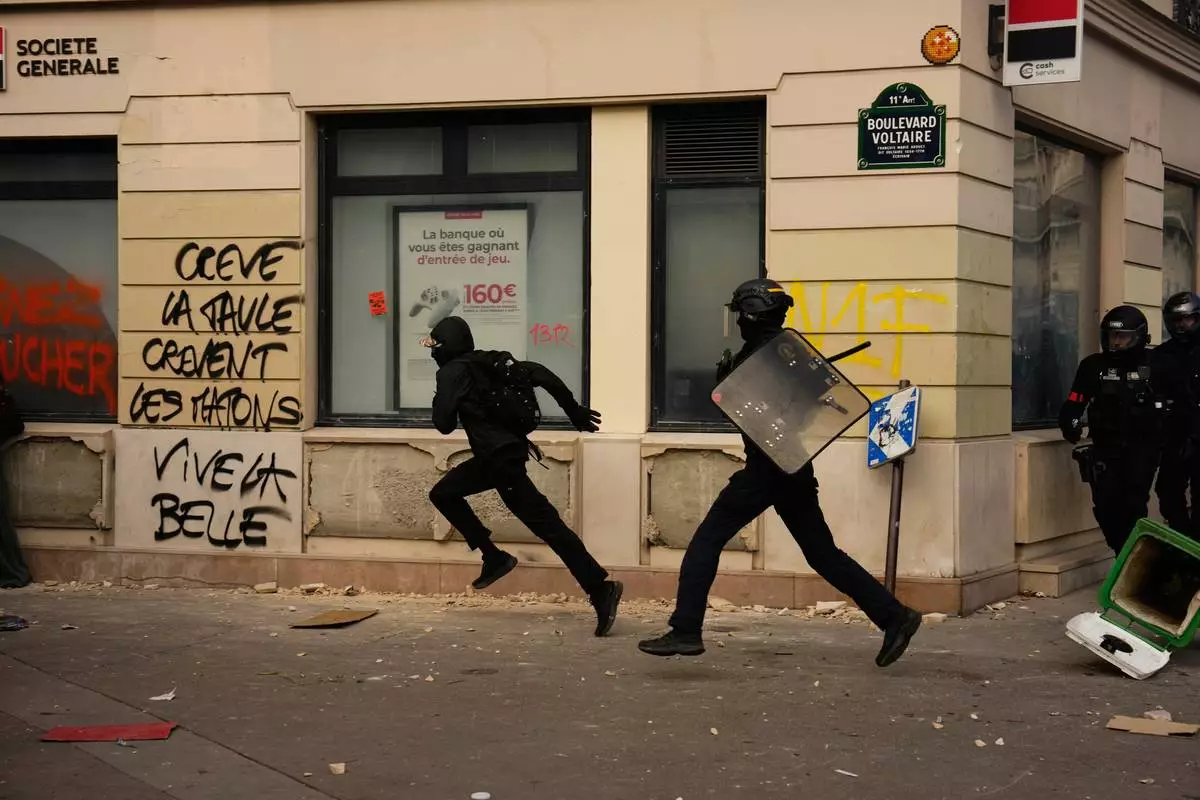
A police officer chases a protester during scuffles following a demonstration against under-resourced schools, in Paris, Tuesday, Oct. 6, 2026. (AP Photo/Teresa Suarez)
A police officer chases a protester during scuffles following a demonstration against under-resourced schools, in Paris, Tuesday, Oct. 6, 2026. (AP Photo/Teresa Suarez)

A student attends a protest against under-resourced schools, in Rennes, western France, Tuesday, Oct. 6, 2026. (AP Photo/Jeremias Gonzalez)
A student attends a protest against under-resourced schools, in Rennes, western France, Tuesday, Oct. 6, 2026. (AP Photo/Jeremias Gonzalez)

A policeman holds a LBD flash-ball gun as he faces students during a protest against under-resourced schools, in Paris, Wednesday, Oct. 7, 2026. (AP Photo/Thibault Camus)
A policeman holds a LBD flash-ball gun as he faces students during a protest against under-resourced schools, in Paris, Wednesday, Oct. 7, 2026. (AP Photo/Thibault Camus)

A protesters kicks a teargas canister during scuffles following a demonstration against under-resourced schools, in Paris, Tuesday, Oct. 6, 2026. (AP Photo/Teresa Suarez)
A protesters kicks a teargas canister during scuffles following a demonstration against under-resourced schools, in Paris, Tuesday, Oct. 6, 2026. (AP Photo/Teresa Suarez)
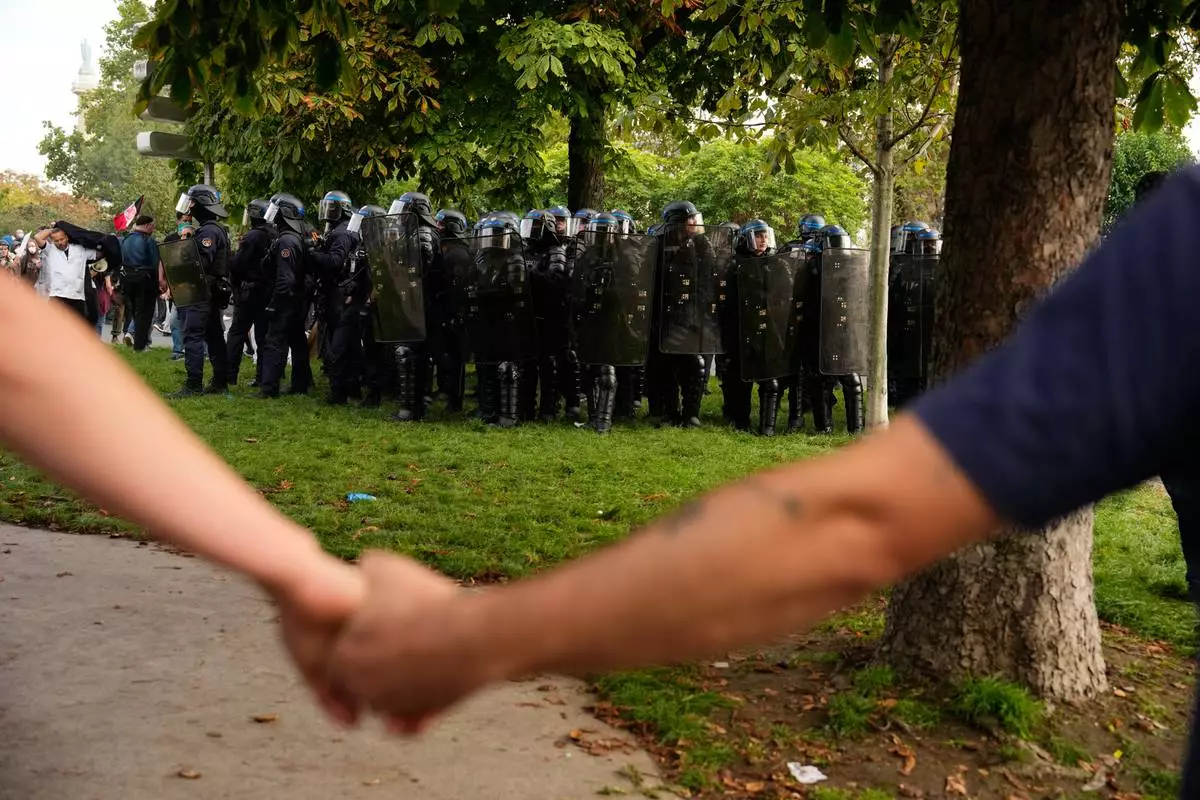
Protesters face police during a demonstration against under-resourced schools, in Paris, Tuesday, Oct. 6, 2026. (AP Photo/Teresa Suarez)
Protesters face police during a demonstration against under-resourced schools, in Paris, Tuesday, Oct. 6, 2026. (AP Photo/Teresa Suarez)
NEW YORK (AP) — More drops for stocks in the artificial intelligence industry dragged the U.S. market lower on Monday, led by Nvidia.

The weakness for tech stocks helped knock the S&P 500 index 1.9% lower and pushed the Nasdaq composite index to a 2.5% loss. The Dow also fell sharply as losses broadened into other sectors. AI-focused companies were by far the biggest weights on the market and have been behind much of the recent turbulence on Wall Street.

Nvidia sank 4.1% and was again the heaviest weight on Wall Street following its crisis of leadership. The company has lost $735 billion in market value since the scandal erupted about CEO Jensen Huang’s infidelities and his ties to an alleged Chinese spy.

Nvidia is one of the most influential companies in the world not only because its chips are powering much of the world’s move into AI technology but also because its cash has helped companies across the industry to grow.

Now, following Huang’s resignation as Nvidia’s CEO last week, both the chip company and the broad industry are facing a more uncertain future without the leather-jacketed man who became one of AI’s biggest celebrities.

It’s the latest challenge for the AI industry, which had already been shaken by criticism that stock prices in the industry shot too high and were in a bubble. The sweeping victories for Democrats in this month’s U.S. midterm elections also raised worries about possible restrictions on further construction of AI data centers.

“The market was already worried about this risk before what happened at Nvidia,” Zhiwei Zhang, president and chief economist at Pinpoint Asset Management, said in a commentary. “Now the risk has become even more serious.”

The sector is also now facing more scrutiny from the U.S. government. The Trump administration on Monday issued new rules to restrict remote access to advanced U.S. computing chips and servers.

Outside of Nvidia, other chip companies also fell. They had climbed in the earlier days of Nvidia’s fall on hopes that they could gain a competitive advantage. But Broadcom dropped 3.9% and notched its second straight loss on concerns about the broader industry. Advanced Micro Devices fell 5.6%.

CoreWeave, which buys Nvidia chips and then rents out access to them to customers over the cloud, sank 6.1%. GE Vernova, which is helping to power AI data centers, fell 4.9%.

The next big milestone for the AI industry may arrive Tuesday after trading in the U.S. stock market ends for the day. That’s when Nvidia will report its latest quarterly results, and interim CEO Colette Kress is set to speak to Wall Street. Investors have become accustomed to Nvidia not only reporting stronger results than analysts expected for each quarter but also giving a forecast for upcoming revenue that’s well above expectations.

Elsewhere on Wall Street, L3Harris Technologies fell 3.9% after officials in President Donald Trump’s administration suggested the contractor for the Federal Aviation Administration may be at fault for a nationwide ground stop Friday. L3Harris said Saturday that it’s supporting the FAA in its investigation.

Summit Therapeutics sank 16.5% after the biopharmaceutical company said the U.S. Food and Drug Administration indicated it cannot approve its application for a therapy to treat certain patients with lung cancer.

Tyson Foods rose 8.7% after reporting a stronger profit for the latest quarter than analysts expected. The company behind the Jimmy Dean and Hillshire Farm brands, though, also reported weaker revenue than expected after selling less beef than it did a year earlier.

Overall, the S&P 500 shed 145.08 points to close at 7,416.59, marking the third straight loss for the benchmark index. The Dow Jones Industrial Average fell 739.38 points, or 1.4%, to 51,608.17. The Nasdaq composite fell 626.52 points to 24,509.76.

The recent swings for AI stocks have overshadowed what's been another strong earnings reporting season for U.S. companies. The big businesses in the S&P 500 index are on track to deliver earnings per share for the summer nearly 32% higher than a year earlier, according to FactSet.

It's the third straight quarter of growth above 25% for the index, which is important because corporate profits are one of the two big levers that set stock prices over the long term, along with interest rates.

In the bond market, Treasury yields eased back following last week's jump due to a worse-than-expected report on U.S. inflation.

The yield on the 10-year Treasury fell to 5.13% from 5.15% late Friday, though it remains well above a low of 4.80% reached earlier this month. Higher yields make borrowing money more expensive for everyone, and they’ve already hurt the housing industry through expensive mortgage rates.

Yields fell as oil prices sank, which took away some of the upward pressure on inflation. The price for a barrel of Brent crude oil fell 3.5% to $92.44. It’s been yo-yoing amid uncertainty about what will happen in the war with Iran.

In stock markets abroad, indexes were mixed in Europe.

AP Business Writers Chan Ho-him and Michelle Chapman contributed to this report.

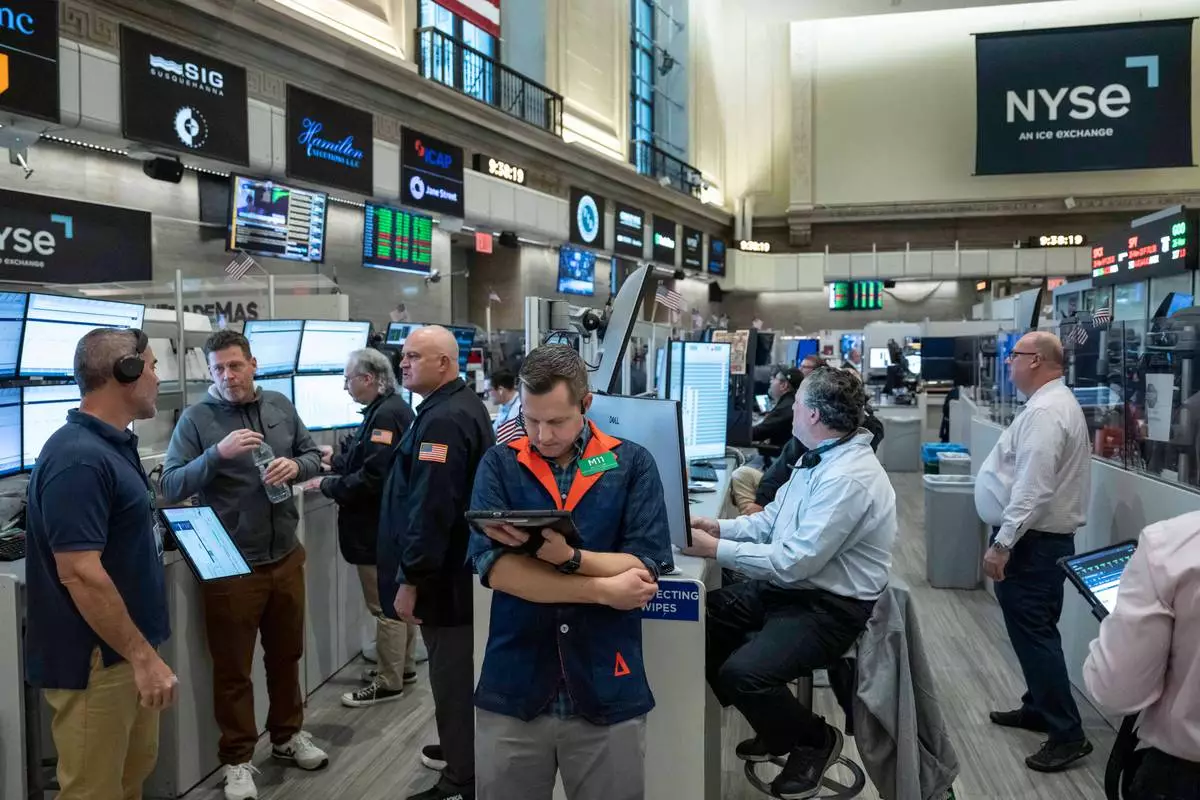
Options traders, including Bill Taylor, center, work on the floor of the New York Stock Exchange in New York, Monday, Nov. 9, 2026. (AP Photo/Yuki Iwamura)

Options traders, including Bill Taylor, center, work on the floor of the New York Stock Exchange in New York, Monday, Nov. 9, 2026. (AP Photo/Yuki Iwamura)

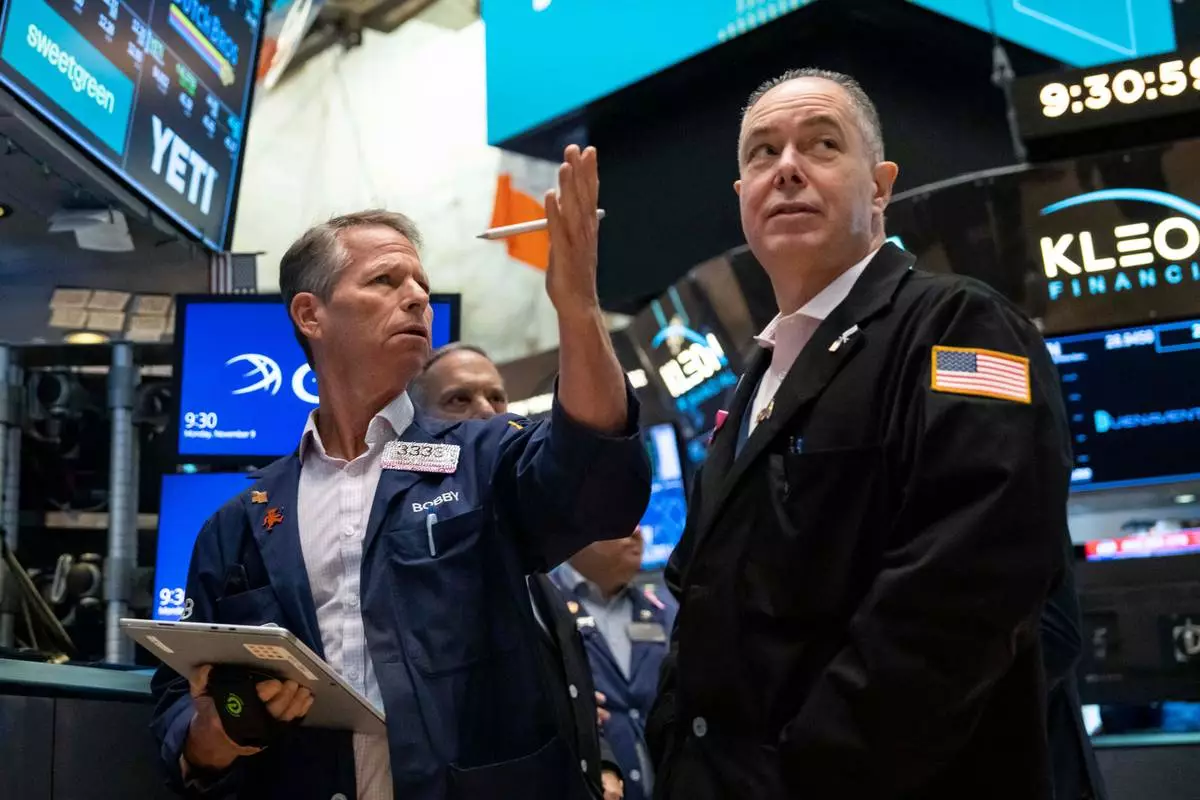
Trader Robert Charmak, left, works on the floor of the New York Stock Exchange in New York, Monday, Nov. 9, 2026. (AP Photo/Yuki Iwamura)

Trader Robert Charmak, left, works on the floor of the New York Stock Exchange in New York, Monday, Nov. 9, 2026. (AP Photo/Yuki Iwamura)

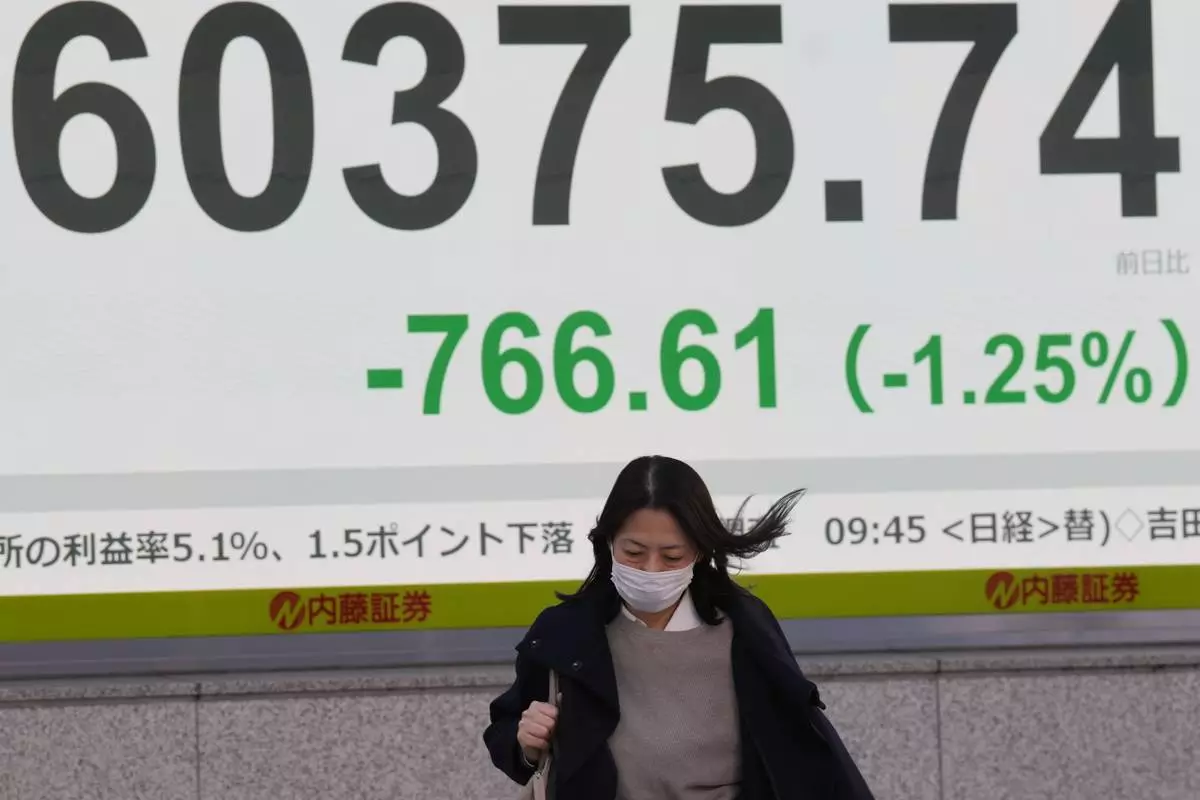
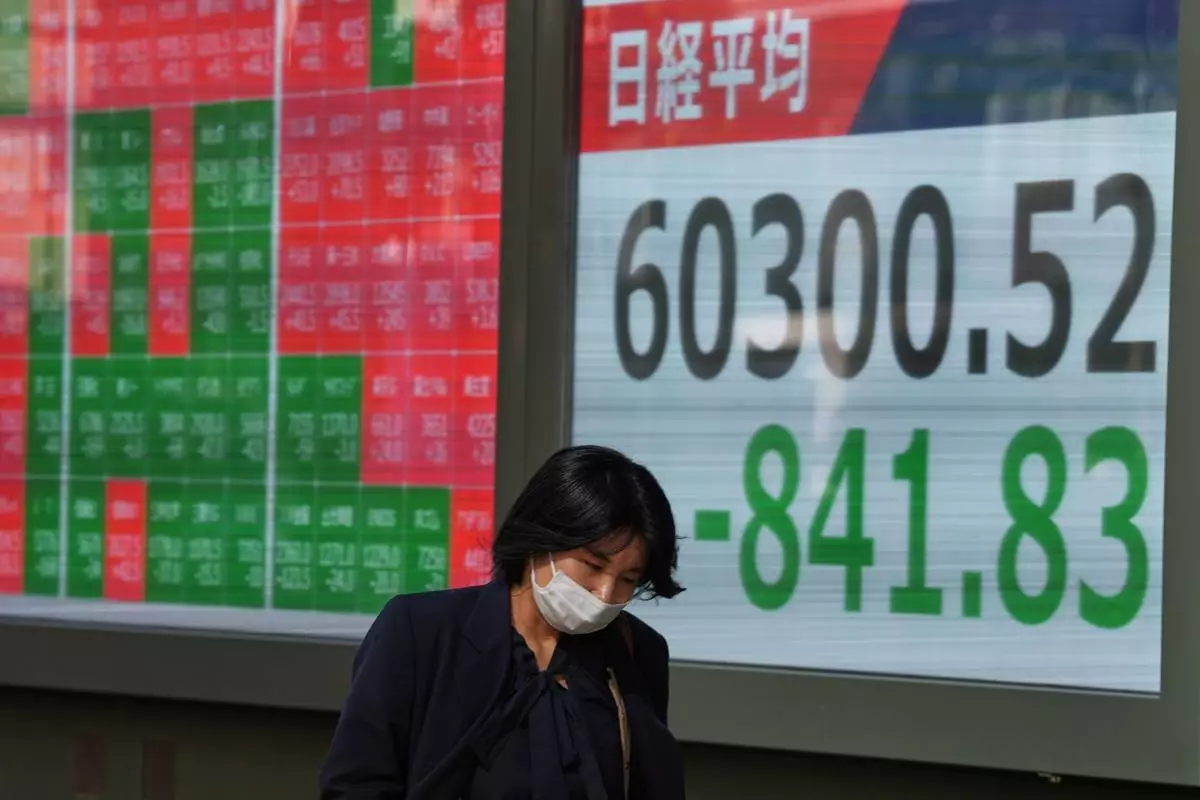
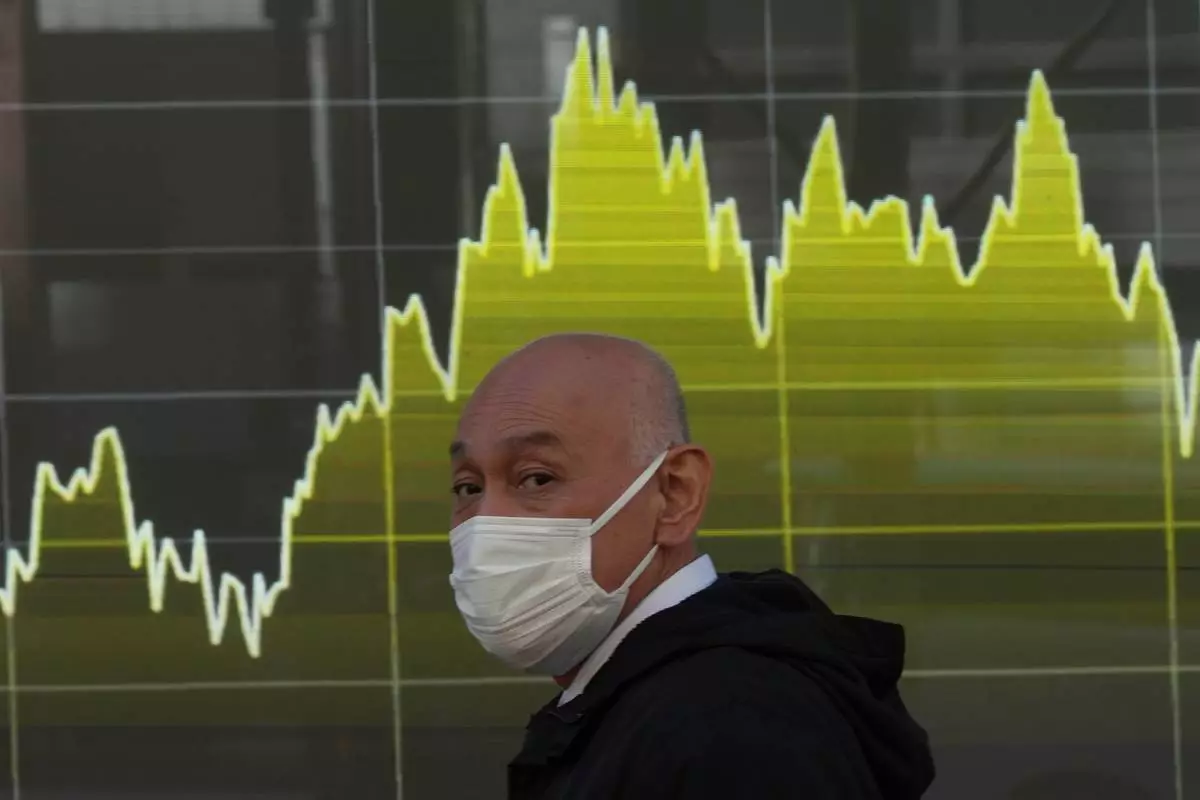
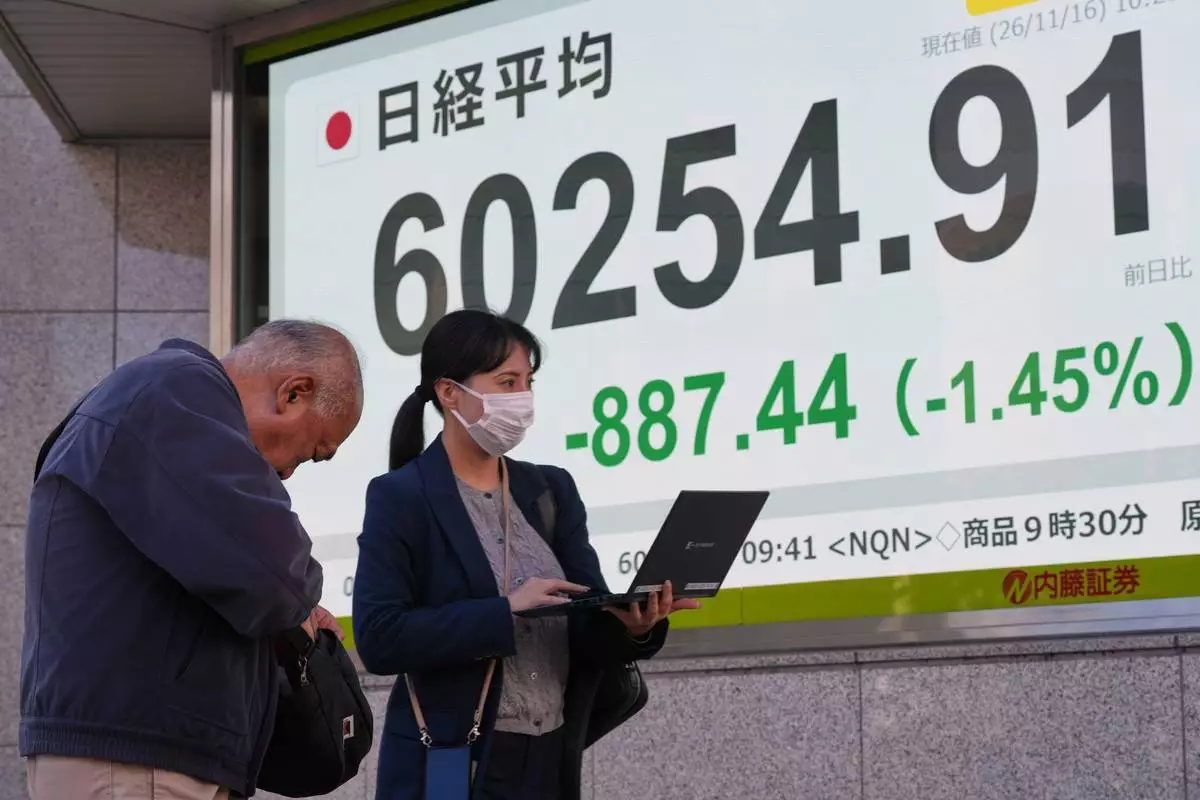
A person walks in front of an electronic stock board showing Japan's Nikkei index at a securities firm Monday, Nov. 16, 2026, in Tokyo.(AP Photo/Eugene Hoshiko)

A person walks in front of an electronic stock board showing Japan's Nikkei index at a securities firm Monday, Nov. 16, 2026, in Tokyo.(AP Photo/Eugene Hoshiko)

People walk in front of an electronic stock board showing Japan's Nikkei index at a securities firm Monday, Nov. 16, 2026, in Tokyo. (AP Photo/Eugene Hoshiko)

People walk in front of an electronic stock board showing Japan's Nikkei index at a securities firm Monday, Nov. 16, 2026, in Tokyo. (AP Photo/Eugene Hoshiko)

A person walks in front of an electronic stock board showing Japan's Nikkei index at a securities firm Monday, Nov. 16, 2026, in Tokyo.(AP Photo/Eugene Hoshiko)

A person walks in front of an electronic stock board showing Japan's Nikkei index at a securities firm Monday, Nov. 16, 2026, in Tokyo.(AP Photo/Eugene Hoshiko)

A person walks in front of an electronic stock board showing Japan's Nikkei index at a securities firm Monday, Nov. 16, 2026, in Tokyo. (AP Photo/Eugene Hoshiko)

A person walks in front of an electronic stock board showing Japan's Nikkei index at a securities firm Monday, Nov. 16, 2026, in Tokyo. (AP Photo/Eugene Hoshiko)

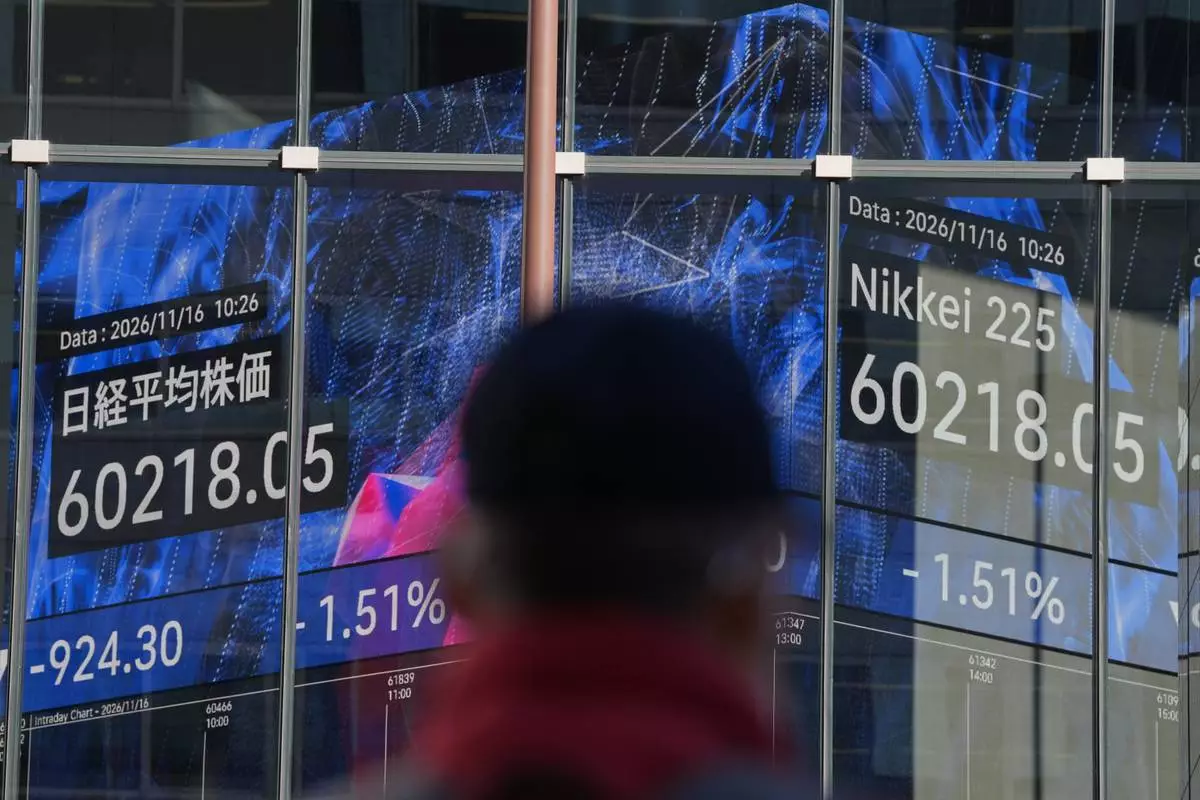
A person watches an electronic stock board showing Japan's Nikkei index at a securities firm Monday, Nov. 16, 2026, in Tokyo. (AP Photo/Eugene Hoshiko)

A person watches an electronic stock board showing Japan's Nikkei index at a securities firm Monday, Nov. 16, 2026, in Tokyo. (AP Photo/Eugene Hoshiko)

Recommended Articles