Civilians in Yemen continue to flee their homes amid the ongoing conflict, as the humanitarian crisis worsens by the day, UN humanitarians said Wednesday.
Since Aug. 1, more than 184,000 people have been displaced nationwide, including over 21,000 people in the past week alone, the UN Office for the Coordination of Humanitarian Affairs (OCHA) said, citing the International Organization for Migration.
According to OCHA, the United Nations and its humanitarian partners have reached more than 126,000 people with life-saving assistance. Nevertheless, it warned that needs continue to outpace the resources available.
The World Health Organization warned of major funding shortfalls as rising displacement, disease outbreaks and conflict put more pressure on an already fragile health system, OCHA said. "Cholera cases have tripled in recent weeks -- including in displacement camps -- while measles, dengue and malaria continue to spread."
Key roads connecting Taiz governorate with major surrounding cities, including Hodeidah, Aden and Sanaa, remain blocked, the office said, adding that the closure severely restricts the movement of civilians and commercial supplies, as well as humanitarian access.
Shortages of essential commodities and medical supplies are being reported, with sharp increases in food and fuel prices, and growing concerns over the availability of flour, cooking gas and medicines, OCHA said.
The office said it was alarmed by reports of civilian casualties, damage to civilian property and heightened risks from explosive hazards, which are further constraining humanitarian access and the safe movement of civilians.
"OCHA continues to assess the humanitarian impact and calls on all parties to protect civilians and facilitate humanitarians' efforts to safely and swiftly reach them with the support they need," it said.
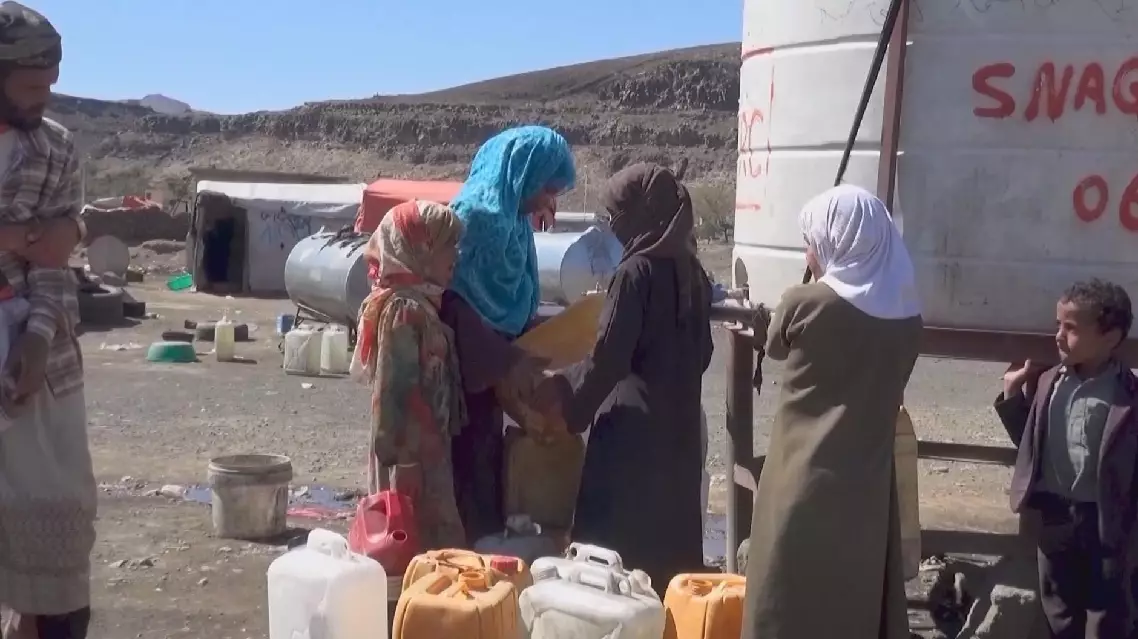
Civilians in Yemen continue to flee homes amid insecurity: UN
At least 40 percent of autumn grain in China has been harvested so far, according to the Ministry of Agriculture and Rural Affairs, as autumn harvest is in full swing across the country.
Currently, northeast China has entered the peak harvest season for autumn grain.
In Heilongjiang Province, more than 4.53 million hectares of grain have been harvested, accounting for about 30 percent of the province's total.
In Youyi County, Shuangyashan City, over 6,666 hectares of glutinous rice have entered the peak harvesting period.
Through standardized cultivation practices, the production of glutinous rice in the county has largely achieved full mechanization across the entire process - from plowing and sowing to harvesting and storage.
The local government is also actively promoting contract farming models, under which the harvested glutinous rice is transported to enterprises for storage and processing, turning harvests into income for farmers.
In Heilongjiang's Bei'an City, a major soybean-producing region in northeast China, more than 6,666 hectares of soybeans are ready for harvest.
This year, local farmers have expanded the cultivation of cold-tolerant, early-maturing, high-yielding varieties to tap into the potential for increased soybean production.
"We're staggering harvest operations according to the ripening pace of each plot to minimize field loss as much as possible," said Liu Tiemin, head of the Bei'an Second Service Team of China Rongtong Agricultural Development Group.
In Yushu City, northeast China's Jilin Province, 60,000 hectares of rice have entered the peak harvest season.
This year, local authorities have vigorously promoted mechanized rice farming, with machine harvesting accounting for 90 percent of the total.
"This year's rice yield has been excellent, with actual measured yields of around 22,000 jin (11 tonnes) per hectare, and the quality is good as well," said Xu Yuqing, chairman of the Minyue Agricultural Machinery and Planting Professional Cooperative.
In northeast China's Liaoning Province, the autumn grain harvest is nearly halfway complete, with the pace slightly faster than the same period last year.
The province has coordinated the allocation of agricultural machinery and organized cross-regional operations.
In Changtu County, Tieling City, the harvesting of more than 266,666 hectares of corn is in full swing.
Local authorities have further promoted the integration of mechanized corn harvesting with conservation tillage on black soil; with the utilization of shredding and spreading devices, crop residues are returned to the fields to protect the soil.
In north China's Hebei Province, nearly 2 million hectares of corn have been harvested, accounting for about 60 percent of the planted area.
Hebei has deployed 810,000 units of agricultural machinery across the province and promoted an integrated operation model of mechanized harvesting, drying, and storage.
More than 80 percent of the autumn grain harvest in central China's Henan Province has been completed, and the autumn planting of winter wheat is underway simultaneously.
In Fengqiu County, Xinxiang City, local authorities are leveraging a smart agricultural service platform to deliver the agricultural supplies needed for autumn planting directly to the fields.
This initiative has already covered more than 13,000 farming households across 19 towns, saving farmers more than 2.1 million yuan (about 313,221 U.S. dollars) in planting costs.
In east China's Anhui Province, more than 30 percent of the autumn grain has been harvested, with new equipment playing a crucial role in reducing losses and increasing income.
In Guoyang County, Bozhou City, local authorities have vigorously promoted intelligent agricultural machinery for direct grain harvesting this year.
These machines can complete multiple operations, including corn ear removal and threshing, in one go.
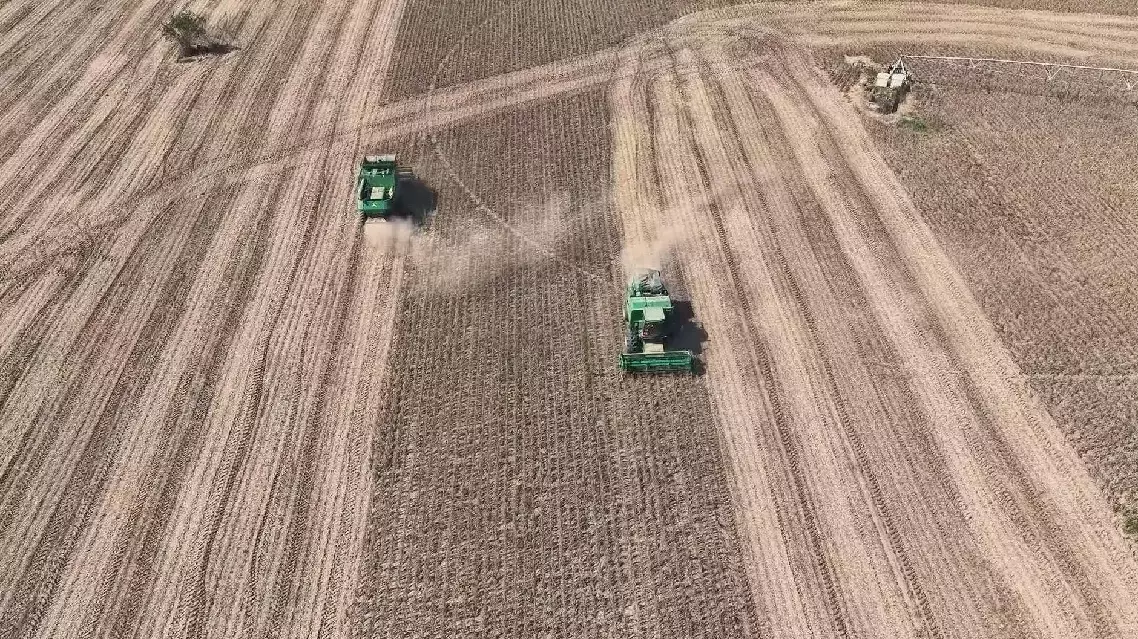
China harvests 40 pct of autumn grain