China launched the first batch of its 2026 special treasury bonds on Thursday to bolster the core capital and risk resilience of eight key state financial enterprises.
The move is expected to further strengthen the institutions' operational capacity, resilience to risks and ability to serve the real economy, providing stronger support for the country's steady and sound economic growth, according to a circular issued by the ministry.
The eight institutions include the Industrial and Commercial Bank of China, the Agricultural Bank of China, two policy financial institutions, and four state-owned commercial insurers.
The first phase, worth 150 billion yuan (around 22.37 billion U.S. dollars), is a five-year fixed-rate interest-bearing bond. Its coupon rate will be determined through competitive bidding. Interest begins accruing on Friday, with annual payments.
On September 7, the Ministry of Finance announced that it plans to issue 300 billion yuan (around 44.75 billion U.S. dollars) in special treasury bonds this year to support eight central financial enterprises in replenishing their core Tier 1 capital.
The 150 billion yuan tranche is the first installment of the 300 billion yuan plan. A seven-year tranche is scheduled for bidding on November 18, with details to be announced before issuance.
This marks the second round of such capital injections, following a 500 billion yuan (around 74.58 billion U.S. dollars) issuance in 2025 that supported four major state-owned banks
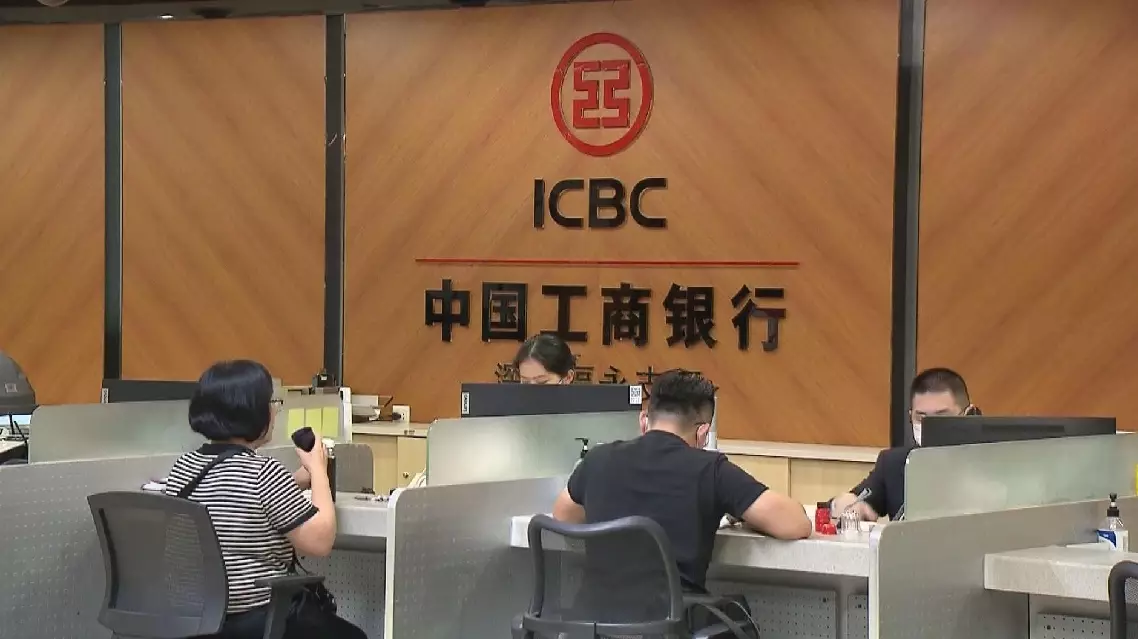
China issues first batch of 2026 special treasury bonds
China unveiled its MAZU all-in-one device, an intelligent meteorological early-warning solution, to the world on Wednesday at a China Pavilion side event during the 31st United Nations Climate Change Conference (COP31) in Antalya, Türkiye, offering a Chinese solution for global meteorological disaster prevention and reduction.
MAZU, short for multi-hazard, alert, zero-gap and universal, is an AI-driven meteorological early-warning platform named after Mazu, the traditional Chinese goddess of the sea and protector of sailors.
The device looks like a carry-on suitcase and weighs about 20 kilograms, which is easy to ship anywhere and deploy quickly on site. Once online, it draws on global meteorological data via China's self-developed cloud-based early-warning system to deliver a complete meteorological service solution for local users.
As a comprehensive solution launched by China in response to the UN Early Warnings for All initiative, MAZU combines China's cloud resources with local data from each country, tailoring its approach to each nation's specific needs.
The MAZU solution has so far been deployed in eight countries, including Pakistan, Ethiopia and Sri Lanka, and has been tested through cloud-based trials in more than 50 countries. It has become a global public service product for disaster prevention and mitigation, helping more developing countries improve their climate governance capacity.
"We will share basic knowledge of managing disaster prevention and mitigation, experience in inter-agency coordination and government decision-making, as well as the most advanced forecasting software, satellite monitoring technology and artificial intelligence technology for disaster prevention and mitigation, along with personnel training, truly 'teaching people how to fish'," said Zhang Xingying, director of the Department of International Cooperation at the China Meteorological Administration.
"That will help us to get into people's hands with early warning. And they can make decisions, whether it's in agriculture, whether it's in mining, whether it's in tourism, or infrastructure, or in health. We like that very much," said Gilbert Siame, minister of Green Economy and Environment of Zambia.
"Its partners don't just receive this system; they build it with China. That's what South-South cooperation looks like. Who looks forward to working with China to align MAZU with each country's national early warning road-mode is WMO," said Josefina Bunge, chief of staff at the World Meteorological Organization (WMO).
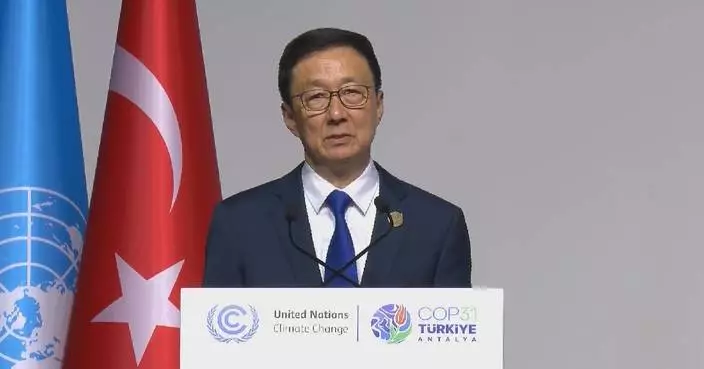
COP31 opened Monday with a focus on translating global climate commitments into concrete action. According to the organizers, it will focus on three key areas: implementing emissions reduction targets, delivering climate finance to developing countries, and strengthening adaptation and resilience, with the aim of turning commitments made at previous climate summits into tangible outcomes.
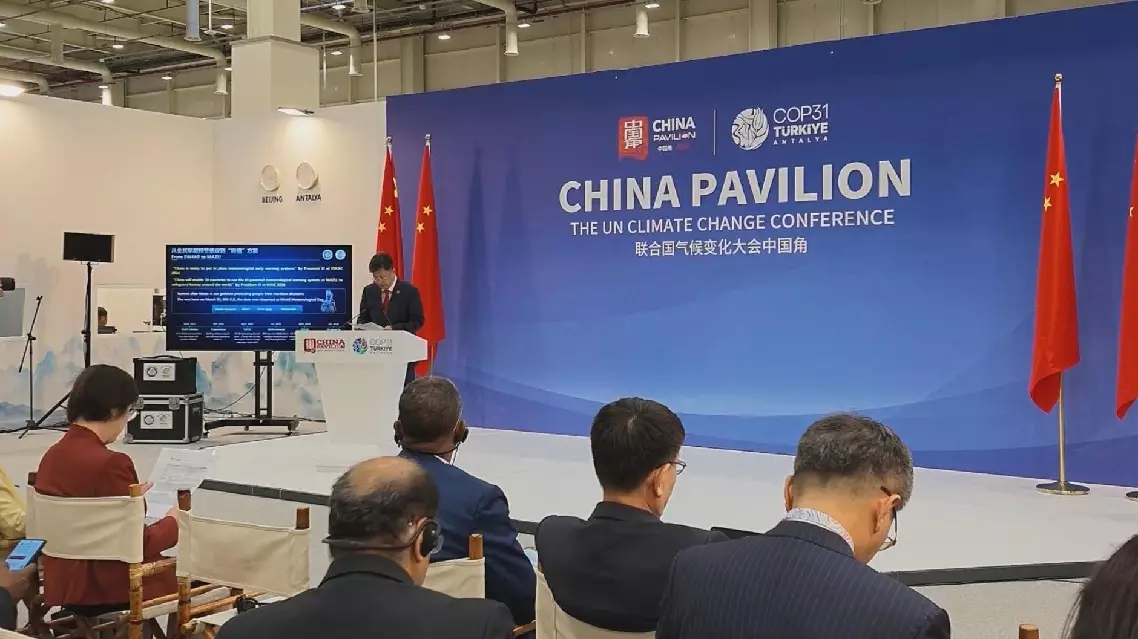
MAZU early warning device makes global debut at COP31