DUBLIN--(BUSINESS WIRE)--Oct 8, 2026--
TensorX, the Irish sovereign AI inference company, has reached $5 million in revenue as demand for private AI infrastructure continues to grow across Europe and beyond. Tim Grant, who joined the company as Executive Chairman in May, has been appointed Chief Executive Officer to lead as its growth accelerates.
This press release features multimedia. View the full release here: https://www.businesswire.com/news/home/20261008373051/en/
TensorX is a neocloud that delivers inference on open-source AI models using dedicated NVIDIA GPUs with zero data retention, so customer data is not stored, reused or sent outside Europe. Since it began serving customers, the company has raised $10 million in seed funding led by Darius Cubed Ventures.
Over seven months, TensorX’s paying customer base grew to over 5,000, ranging from businesses paying a few euros a month to organisations spending thousands of euros depending on their inference needs. The company has dedicated customers paying for reserved capacity on its platform, including APEX:E3, which is building AI applications for enterprises. September marking the company’s first month in which combined shared and dedicated token usage exceeded 1 trillion tokens.
“Progressive businesses are building real AI powered applications right now and they want access to the most performant open source AI models as they evolve, but they also need control over where their data is processed and the infrastructure that runs it,” said Tim Grant, Chief Executive Officer of TensorX.
“We are seeing that demand translate into real usage and commercial growth. Our focus now is on building out GPU capacity, the team and the infrastructure to support that growth while maintaining the level of control our customers require. We also have plans to enter into other jurisdictions to deliver truly sovereign AI as per client needs in multiple locations around the world.”
Between February and September 2026, monthly token volume on TensorX’s shared inference platform grew from 5.63 billion to 1.1 trillion, a 171-fold increase in seven months, compounding at an average of 108% month on month. Growth was recorded in every month of that period, with September alone adding 451 billion tokens, which was more than the platform processed in its first six months combined.
The growth has been driven by customer acquisition rather than a single workload. Active customer domains increased by more than 1,000 over the same period, while monthly API requests rose from 264,917 to 34.5 million.
“Tim has spent his career building and scaling infrastructure in regulated markets, and he has been working alongside us since May,” said Shane Morton, Founder of TensorX.
“As TensorX enters its next phase of growth, his experience will be invaluable as we scale the business and infrastructure around the demand we are seeing.”
One of TensorX's dedicated customers, APEX:E3, is using the platform to build AI applications for enterprises.
“TensorX turbo charged the output of our development team and enabled us to deploy our own A3 coding assistant. TensorX is simply the only platform we trust with our most sensitive data, ” said Usman Khan, CEO, APEX:E3.
Across Europe, it is clear that businesses in regulated sectors including financial services, healthcare and defence are looking to adopt AI while retaining greater control over where their data is processed and how their infrastructure is managed. Accenture found that 62% of European organisations are seeking sovereign AI solutions, rising to 76% in banking, while Gartner expects European spending on sovereign cloud infrastructure to more than triple between 2025 and 2027.
TensorX currently owns its own fleet of 96 NVIDIA B300 GPUs in production in Ireland, with additional 96 GPUs available in Finland. The company is currently finalising an order for a significant increase in its GPU fleet. TensorX has around 20 employees and plans to grow the team in the coming months, scaling to meet client demand.
About TensorX
TensorX is an Irish AI infrastructure company providing private, sovereign inference on dedicated NVIDIA GPUs. With zero data retention and infrastructure in Ireland and Finland, TensorX enables organisations to deploy advanced AI with control over where their workloads are processed and how their data is handled. The company supports open-source models and is backed by Darius Cubed Ventures.
About Tim Grant
Tim Grant is Chief Executive Officer of TensorX and Chairman of APEX:E3, a financial technology company providing multi-asset data analytics and AI-powered tools for financial markets, and TradeLocker, a trading platform connecting traders, brokers and proprietary trading firms. He began his career at UBS, where he became a Managing Director in New York, and went on to lead R3's research lab, run SIX Digital Exchange in Zurich, head Galaxy Digital in Europe and lead Deus X Capital as Chief Executive.
Notes to Editors

TensorX has around 20 employees and plans to grow the team in the coming months, scaling to meet client demand.
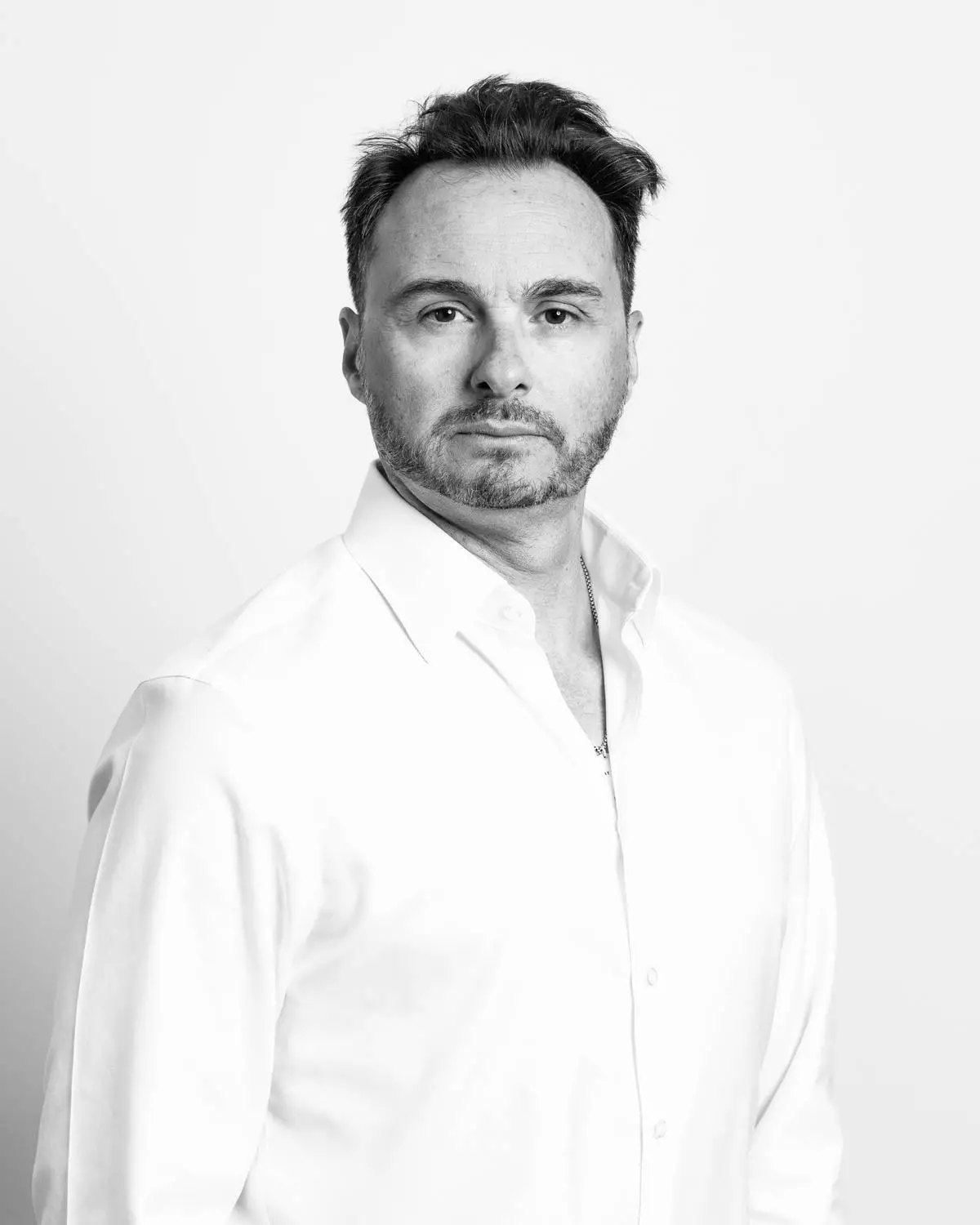
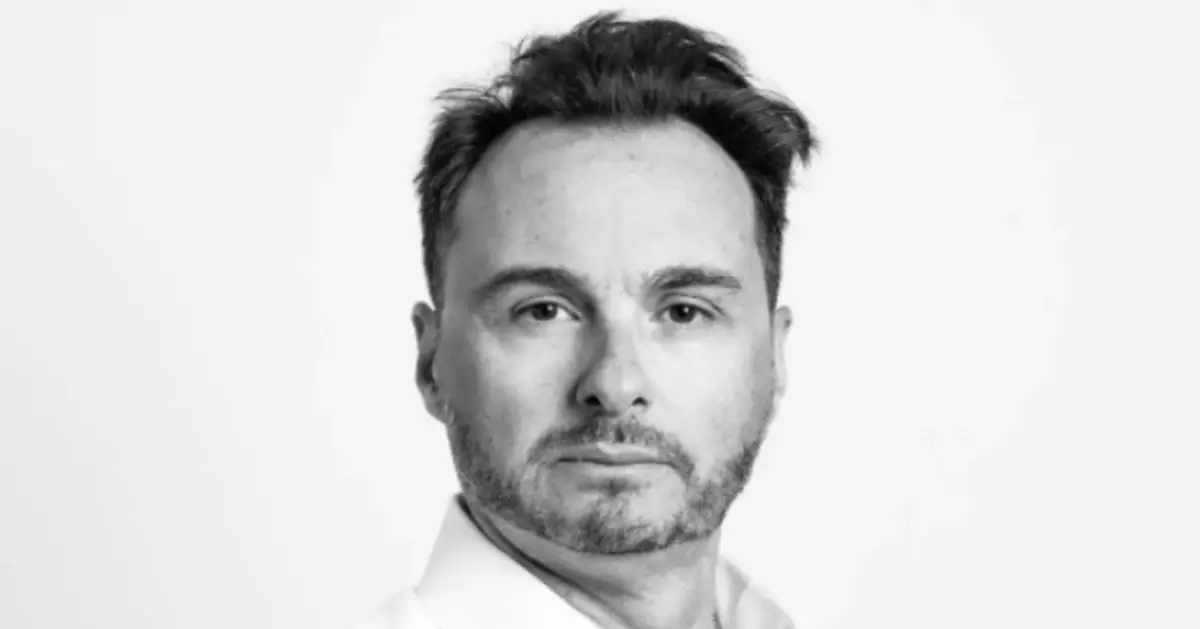
Tim Grant, Executive Chairman since May, is appointed Chief Executive Officer as the Dublin company serves more than 5,000 paying customers and expands its infrastructure across Europe.
KYIV, Ukraine (AP) — Ukraine’s advances in drone technology and tactics have captured the world’s attention. Despite those innovations, one problem has plagued the country since the start of Russia’s invasion: a shortage of combat-ready troops.
Ukraine always has been outmanned by Russia, but as the war drags through its fifth year, the need for personnel is increasingly acute, commanders and analysts say, with some units at only half strength. There just aren't enough forces to fully exploit the battlefield advantages resulting from the drone innovations.
“Based on the equipment and the number of people we have today, we barely have enough to hold the sector we currently have,” said a deputy commander of the Da Vinci Wolves battalion in eastern Ukraine's Pokrovsk area, a focus of Russia’s offensive.
“To move forward would inevitably mean greater losses,” said the deputy commander, who insisted on identifying himself only as “Afer” because of military rules.
Long-standing mobilization problems, including draft dodging and desertion, make it harder for Ukraine to build its reserves, according to military experts, resulting in only incremental changes along the 1,250-kilometer (775-mile) front line.
Ukraine needs to be able to commit forces quickly without taking them from elsewhere on the front. Otherwise, commanders have fewer options to turn a temporary advantage into a sustained operation, said Nick Reynolds of the U.K.-based Royal United Services Institute, a defense and security think tank.
The shortage means that units can't be rotated often enough, he said, “leading to exhaustion and, in turn, exacerbating casualties.”
The Defense Ministry, which in July underwent a shake-up by President Volodymyr Zelenskyy, is trying to tackle the problem with reforms to mobilization, training and the way the army is organized.
Uneven performance by front-line units worsens the problem. Weaker formations suffer heavier losses, creating a cycle of high attrition and constant replenishment.
The ministry did not respond to Associated Press requests for comment, but one of its officials summarized the problem by saying, “There just are not enough people.”
Developing a new mobilization policy, including encouraging deserters to return to duty, is among the most sensitive issues under consideration, said the official, who was not authorized to brief the media and spoke on condition of anonymity.
Former Defense Minister Mykhailo Fedorov, who was replaced by Yevhenii Khmara in the summer shake-up by Zelenskyy, had sought to reorganize the military around fewer but stronger units. He wanted to reinforce those that performed well and disband the weaker ones.
Khmara has said he wants to continue those changes.
But the reforms will take time. Yehor Cherniev, a member of parliament's defense committee, said lawmakers have yet to see mobilization initiatives.
In June, Fedorov introduced reforms to military contracts designed to make infantry service more attractive by offering higher salaries and fixed terms of service.
Convincing Ukrainians who have little incentive to fight is a major challenge after more than four years of war, and the country is struggling to recruit enough troops from its estimated population of 39 million.
The pool of men aged 25-60 is relatively small following years of demographic decline from war-related displacement and migration. There are about 6.8 million men aged 25-59, according to U.N. figures provided by Ukraine's National Health System, but that includes wounded veterans and men otherwise unable to serve.
Official figures put the military’s strength at about 1 million, with only a small fraction deployed at the front.
Compulsory service applies only to men. Women are allowed to volunteer, and those with medical or pharmaceutical training are required to register with the military. Over 70,000 women are serving in the army, according to Defense Ministry statistics in January 2025.
In March, Fedorov said about 2 million Ukrainian men were evading service, while about 200,000 soldiers had deserted or left their units without authorization. The penalty for desertion is imprisonment of up to 12 years.
Some men flee the country illegally or hide at home. Recruiters sometimes stop them on streets and trains, and those without valid exemptions are sent into the army. In January 2025, the government said about 950,000 men had deferments at the request of businesses.
Russia, with an estimated population of 143 million, also is struggling to fill its military ranks. It launched a widely unpopular partial mobilization of 300,000 reservists months after launching the invasion, and hundreds of thousands of men fled abroad. Since then, the Kremlin has relied on volunteers lured by relatively high pay and benefits to sustain its force of what President Vladimir Putin has said numbers about 700,000 men fighting in Ukraine.
Ukraine's problem is not so much a shortage of personnel but how they are managed and deployed, said military analyst Taras Chmut, who also heads Come Back Alive, a charity providing assistance to the army.
Increasing the number of personnel in the defense forces does not necessarily increase their effectiveness, Chmut said.
Exhaustion, poor organization, inadequate training and the lack of a clear end-of-service date drive recruits to desert, according to soldiers and military analysts.
The consequences are felt immediately at the front, with fewer troops to replace battered units or available for emergencies, and a diminished ability to divert forces when an opening appears. Drones can sometimes alleviate the shortages.
With replacements scarce, some troops have spent up to a year at the front with little opportunity for rotation, said Afer, the deputy commander of the Da Vinci Wolves battalion. His unit is operating at only about half its strength while its area of responsibility has doubled, he said, meaning the same number of forces must defend about twice the territory.
Ideally, at least twice as many men are needed simply to hold current positions, but that doesn't take into account that a constant reserve of troops is needed to replace casualties, he said.
It's also a struggle to find qualified specialists who can operate increasingly sophisticated equipment on the battlefield, Afer said, adding that troops “who know how to think” are in short supply.
Ukraine can conduct localized offensives but not enough to shift the broader battlefield balance, despite mounting Russian losses. Even so, it has retaken territory in several areas, including in operations near the eastern city of Lyman.
Pavlo Narozhnyi, a Ukrainian military analyst, said he did not consider manpower an insurmountable problem for simply holding the defensive line.
“We can do limited offensives,” he said, pointing to recent actions in the Dnipropetrovsk and Lyman areas, “but it’s relatively small.”
Russian forces have occupied roughly 990 square kilometers (about 380 square miles) of Ukrainian territory since the beginning of 2026, while Ukrainian forces have retaken about 820 square kilometers (316 square miles), according to figures cited by Zelenskyy, who added that Kyiv aims to bring those figures closer to parity by year's end.
But RUSI's Reynolds said there would not be fundamental changes to the broader battlefield balance, with the front line essentially remaining the same.
——
Associated Press reporter Volodymyr Yurchuk contributed.
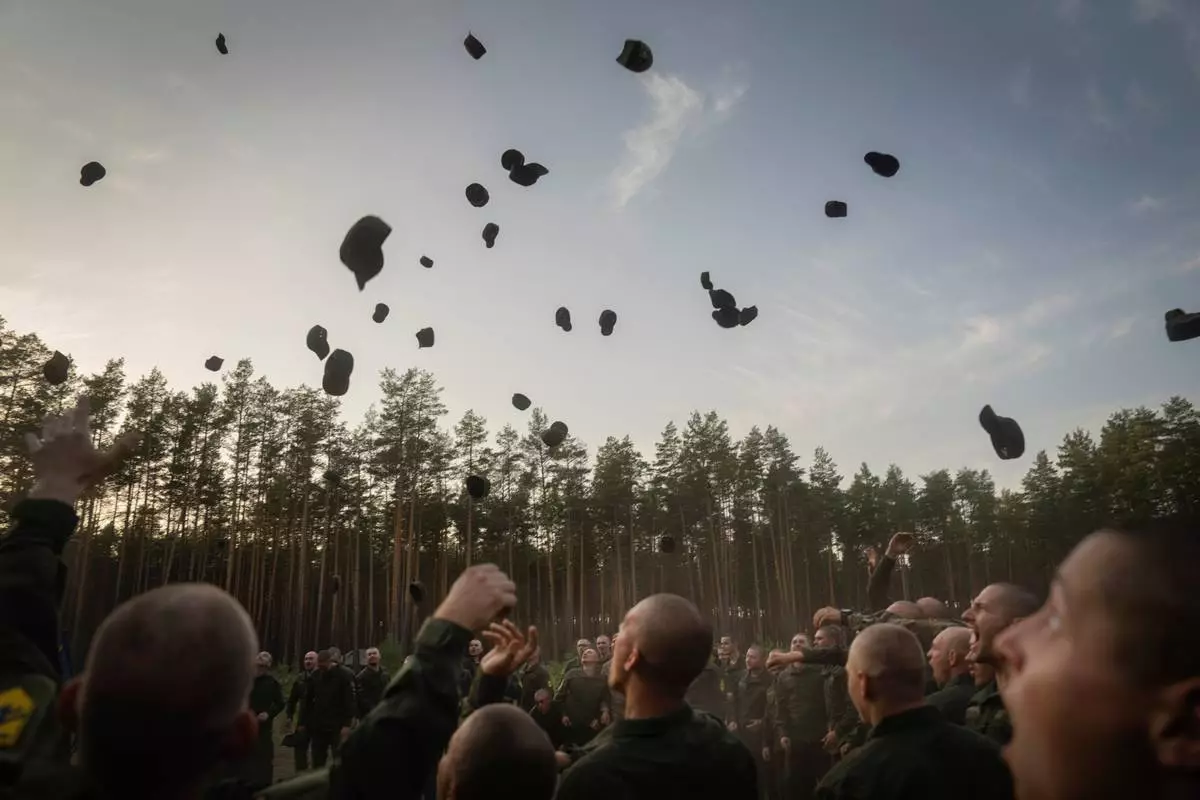
FILE - Newly recruited soldiers toss their hats as they celebrate the end of their training at a military base close to Kyiv, Ukraine, Monday, Sept. 25, 2023. (AP Photo/Efrem Lukatsky, File)
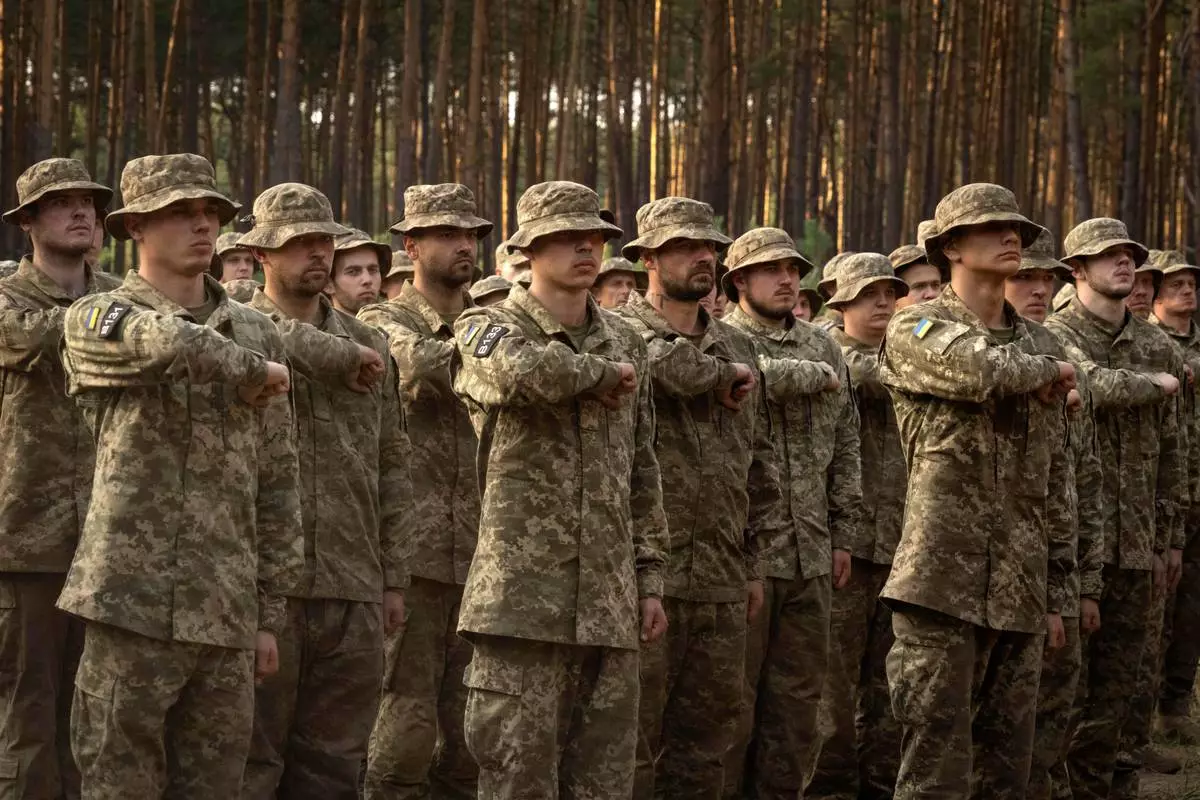
FILE - Newly recruited soldiers of Ukraine's 3rd Assault Brigade shout slogans at a military base close to Kyiv, Ukraine, Monday, Sept. 25, 2023. (AP Photo/Efrem Lukatsky, File)
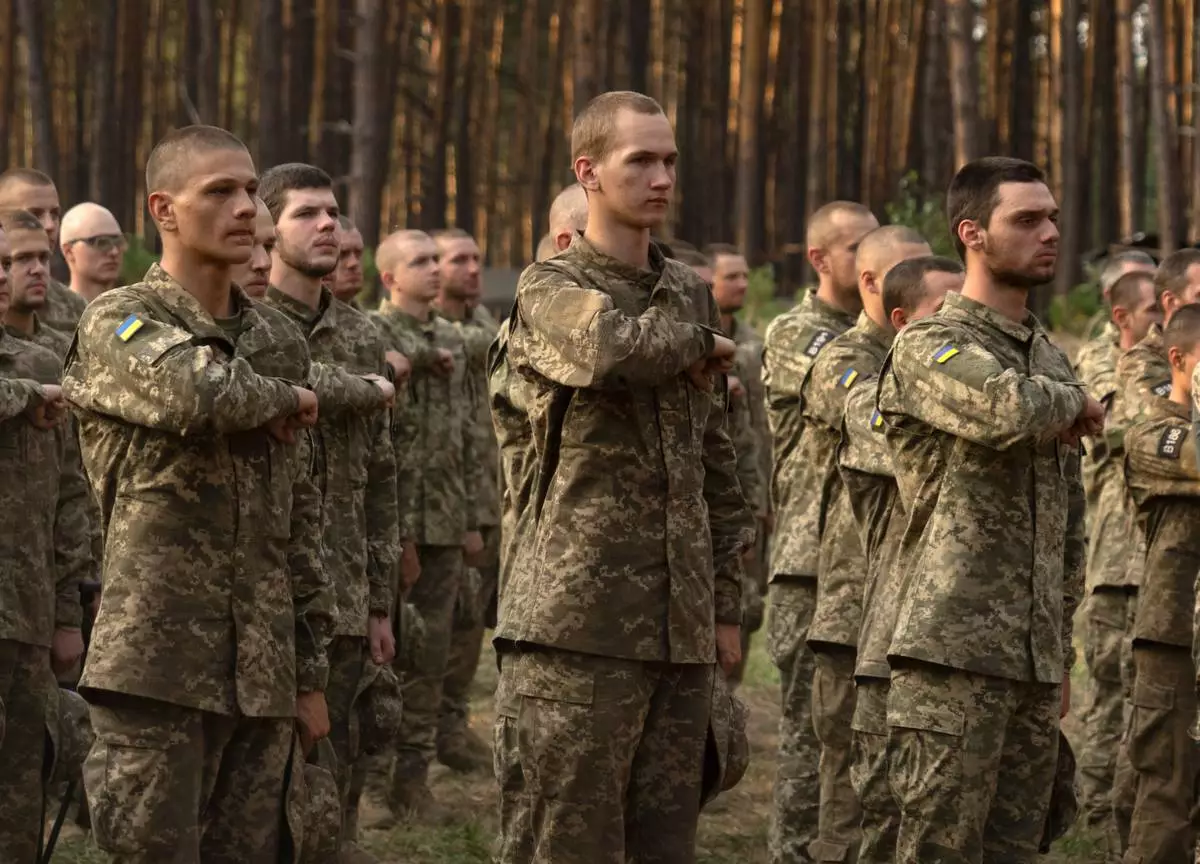
FILE - Newly recruited soldiers of Ukraine's 3rd Assault Brigade line up at a military base close to Kyiv, Ukraine, Monday, Sept. 25, 2023. (AP Photo/Efrem Lukatsky, File)
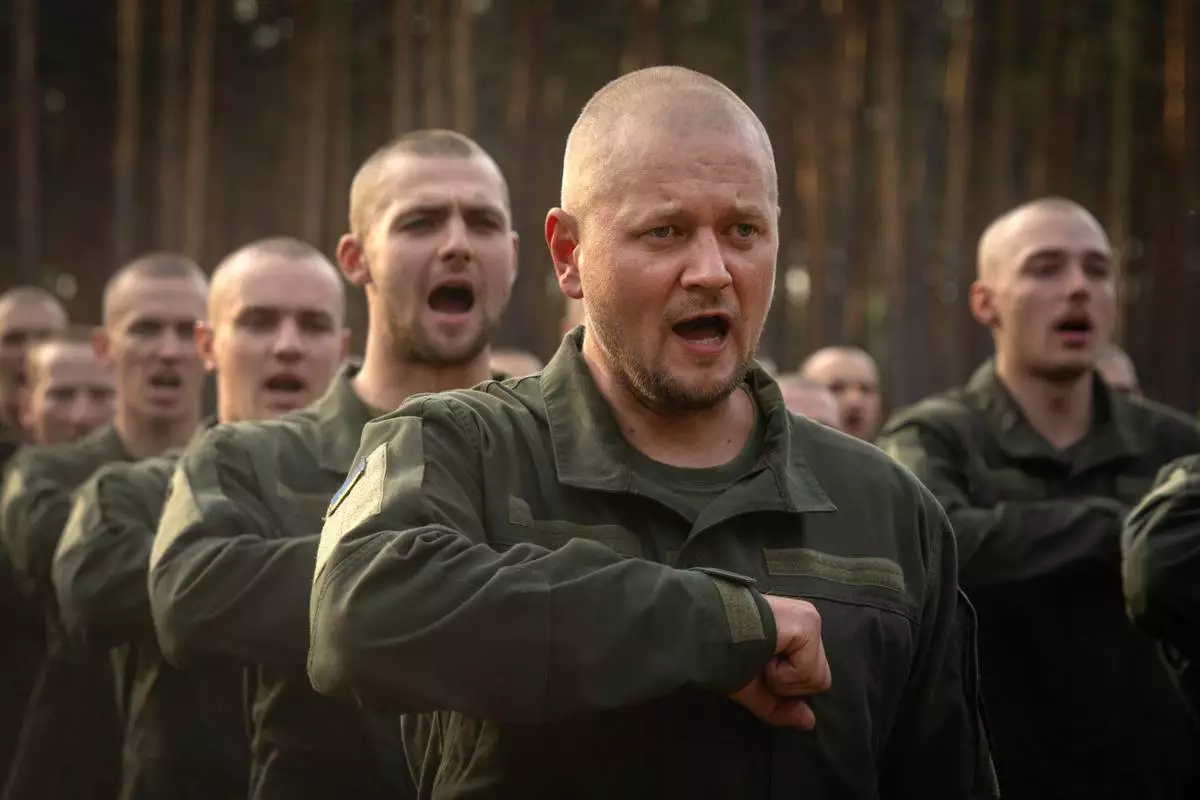
FILE - Newly recruited soldiers toss their hats as they celebrate the end of their training at a military base close to Kyiv, Ukraine, Monday, Sept. 25, 2023. (AP Photo/Efrem Lukatsky, File)