TURIN, Italy (AP) — Andre Agassi. Roger Federer. Novak Djokovic.
Only three men have claimed a career Grand Slam and also raised the trophy at the ATP Finals.
Click to Gallery
Germany's Alexander Zverev returns the ball to Russia's Danil Medmedev during their semifinal tennis match of the ATP World Tour Finals, in Turin, Italy, Saturday, Nov. 21, 2026. (AP Photo/Luca Bruno)
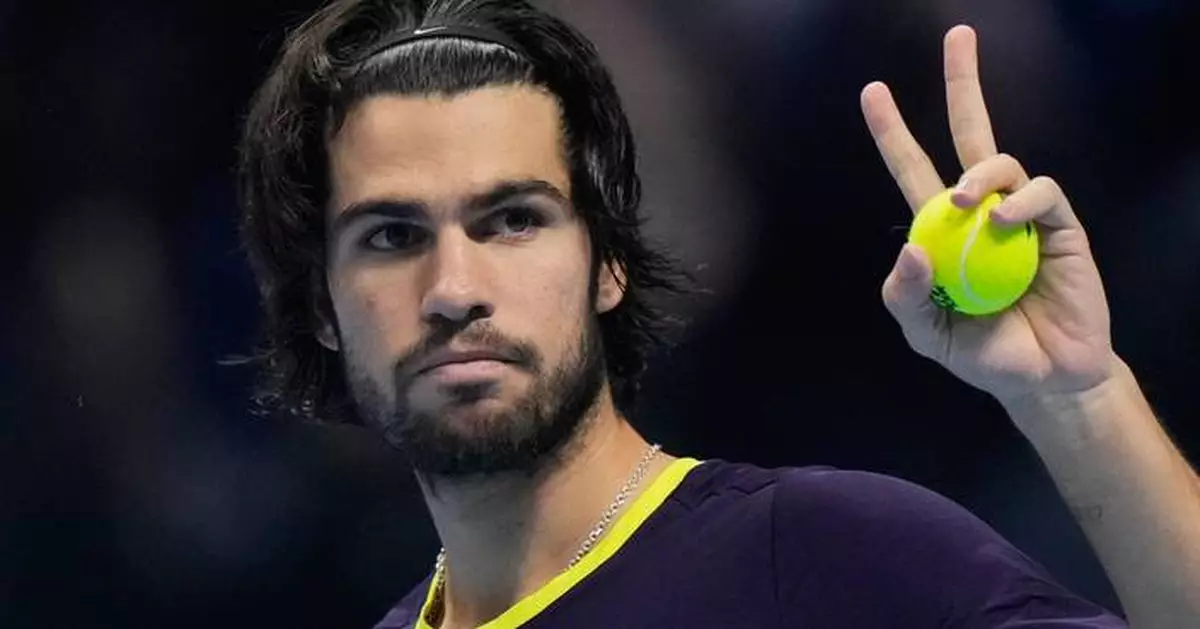
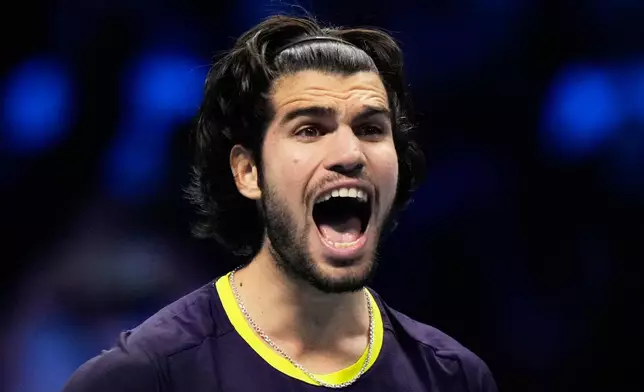
Spain's Carlos Alcaraz reacts after winning his semifinal tennis match against United States' Ben Shelton at the ATP World Tour Finals, in Turin, Italy, Saturday, Nov. 21, 2026. (AP Photo/Luca Bruno)
Germany's Alexander Zverev returns the ball to Russia's Danil Medmedev during their semifinal tennis match of the ATP World Tour Finals, in Turin, Italy, Saturday, Nov. 21, 2026. (AP Photo/Luca Bruno)
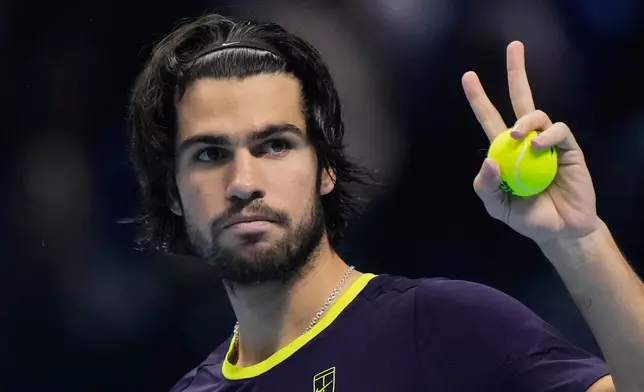
Spain's Carlos Alcaraz reacts during warm up against United States' Ben Shelton before their semifinal tennis match of the ATP World Tour Finals, in Turin, Italy, Saturday, Nov. 21, 2026. (AP Photo/Luca Bruno)
Carlos Alcaraz aims to become the fourth man to have his name on that elite list when he faces Alexander Zverev in the championship match Sunday at the season-ending event for the year’s top eight players.
For Zverev, it’s a major test of his No. 1 ranking. The German is seeking his third trophy at Finals after raising the trophy in 2018 and 2021.
Alcaraz enters on a 13-match winning streak after titles in Vienna and Paris but has been dealing with an injured left thigh.
At the start of the year, Alcaraz became the youngest man (at 22) to complete the career Grand Slam when he added an Australian Open title to his collection of French Open, Wimbledon and U.S. Open trophies. Alcaraz, who is now 23, has seven Grand Slam titles overall.
The 29-year-old Zverev claimed his first two Grand Slam titles this year by winning the French Open and the U.S. Open. But he hasn’t beaten Alcaraz or Jannik Sinner this year.
Zverev was also officially notified of a lawsuit filed by his former partner this week.
The final is scheduled to start at 6 p.m. local time (1700 GMT; 12 p.m. ET).
The winner will earn almost $5.2 million.
See AP’s full tennis coverage here

Germany's Alexander Zverev returns the ball to Russia's Danil Medmedev during their semifinal tennis match of the ATP World Tour Finals, in Turin, Italy, Saturday, Nov. 21, 2026. (AP Photo/Luca Bruno)
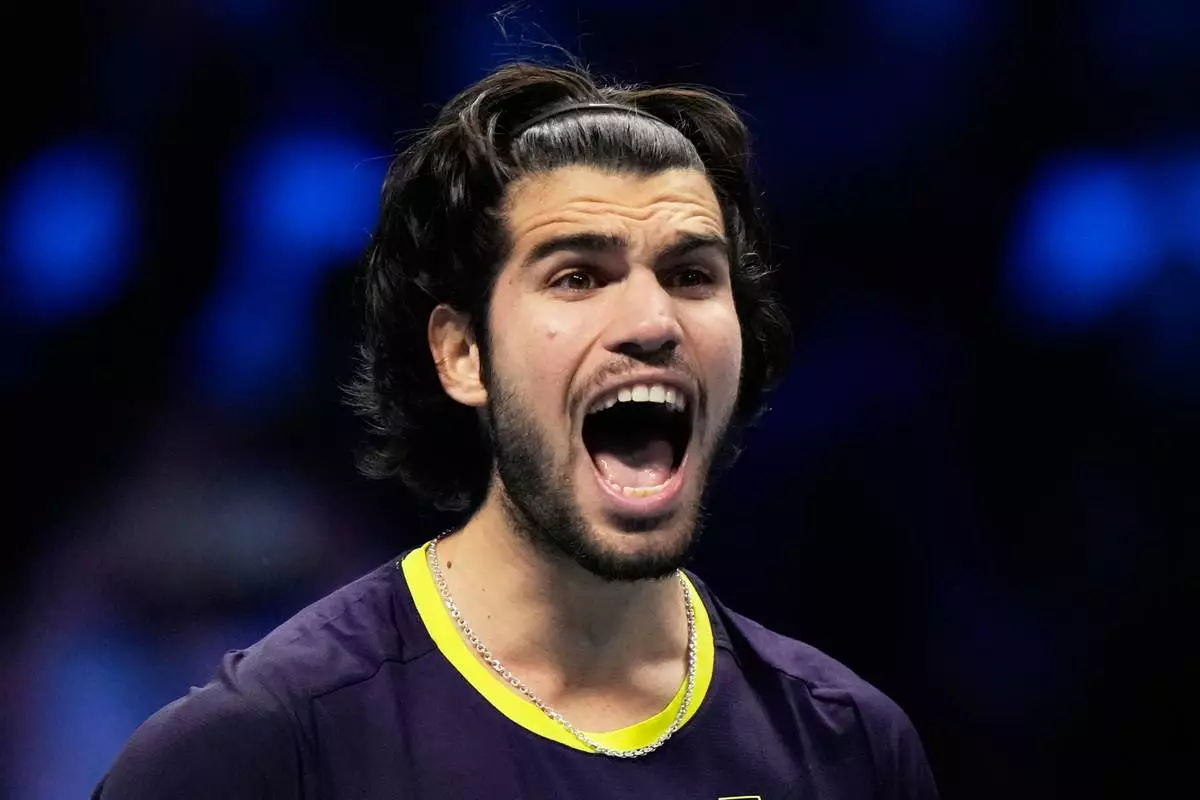
Spain's Carlos Alcaraz reacts after winning his semifinal tennis match against United States' Ben Shelton at the ATP World Tour Finals, in Turin, Italy, Saturday, Nov. 21, 2026. (AP Photo/Luca Bruno)

Germany's Alexander Zverev returns the ball to Russia's Danil Medmedev during their semifinal tennis match of the ATP World Tour Finals, in Turin, Italy, Saturday, Nov. 21, 2026. (AP Photo/Luca Bruno)
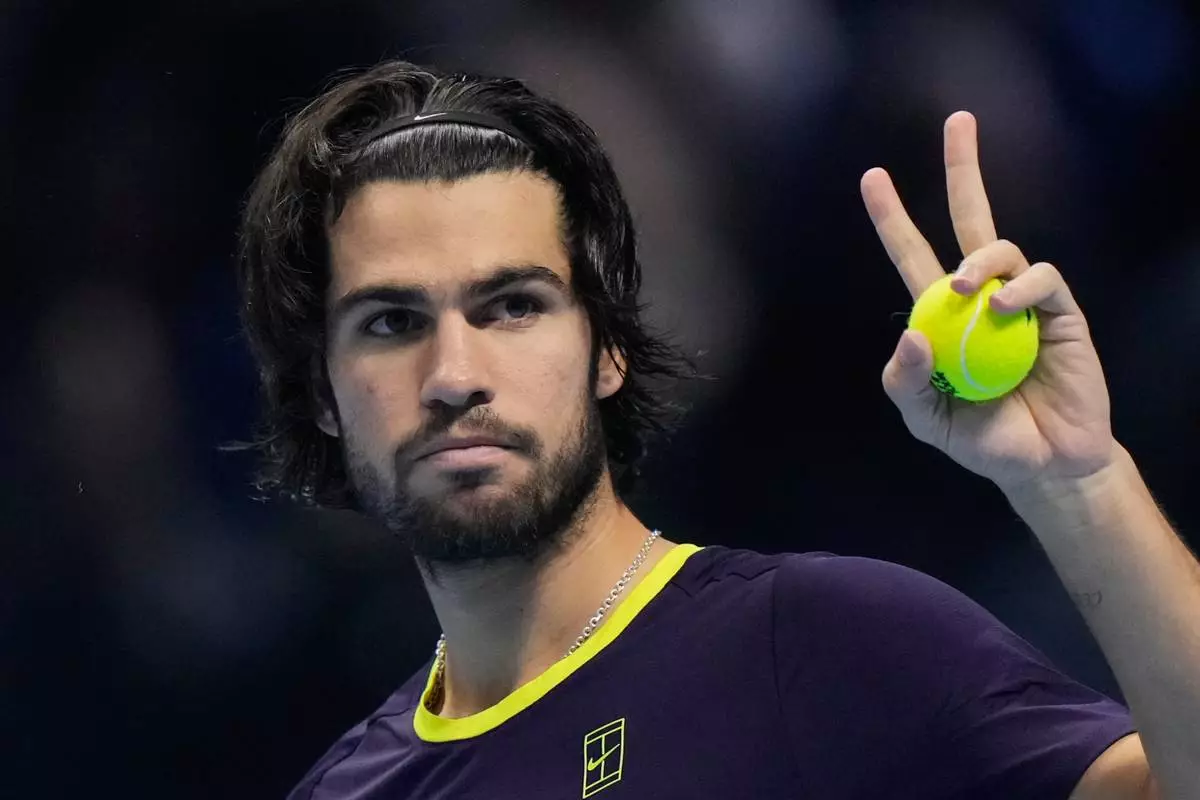
Spain's Carlos Alcaraz reacts during warm up against United States' Ben Shelton before their semifinal tennis match of the ATP World Tour Finals, in Turin, Italy, Saturday, Nov. 21, 2026. (AP Photo/Luca Bruno)
ANTALYA, Turkey (AP) — United Nations climate talks couldn’t reach an overarching agreement on Sunday because of disagreements over whether to mention the fossil fuels that cause global warming.
Expectations had already been low heading into the two-week negotiations in Turkey, but impasses over explicitly including fossil fuels and other issues, including money, proved irreconcilable.
Though the talks, called COP31, failed to reach a main agreement known as a cover decision, the meeting had already made progress on smaller issues.
This all happened as global warming accelerates with ever-worsening heat waves, floods, storms and droughts. The U.N. said it is now inevitable that the world will soon blow past the warming threshold established by the 2015 Paris climate agreement. And there is also a global energy shock due to the war in Iran. On top of that, a strong El Niño amplifies human-caused warming and causes more weather disasters.
Any pact approved at the talks requires near-unanimous consensus. Several countries and the 27-nation European Union said they could not accept the final proposal from the joint Turkish-Australian leadership, which didn’t mention fossil fuels. A considerably larger number of nations accepted the decision, often reluctantly, saying consensus on something was more important, though it ultimately failed. Russia and Saudi Arabia sought to keep fossil fuels out of the document.
“It’s unconscionable that we would have a climate act that makes no reference to fossil fuels,” Darragh O’Brien, Ireland’s climate minister, said on behalf of the EU at the climate talks, which were running nearly 48 hours overtime at the Turkish resort town of Antalya.
Previously, fossil fuels went unmentioned in COP final decisions for more than 25 years, said Alden Meyer, with the think tank E3G. Then, three years ago in the oil-rich United Arab Emirates, a groundbreaking agreement called for “transitioning away from fossil fuels” but since then there’s been no explicit mention of fossil fuels. The Turkish-Australian proposal recalled the Dubai in its entirety, but that wasn’t enough to many nations and environmental groups.
Adding to the disagreement was the fact that the draft included explicit language and a goal for carbon capture and storage for industrial polluters, which many nations and activists said would undermine efforts to reduce overall emissions.
“The failure of this COP to deliver ambitious, fair, science-based outcomes falls squarely on the shoulders of richer nations, petrostates, and the disgracefully incompetent duo of the Turkish and Australian COP presidents,” said Rachel Cleetus of the Union of Concerned Scientists.
As the proposed deal fell apart in the plenary session, Turkish Environment Minister Murat Kurum, the president of COP31, was absent, leaving it to Elchin Allahverdiyev of Azerbaijan to announce the failure.
“Unfortunately, we were unable to reach agreement on a cover decision. And that’s disappointing, very disappointing,” said Australia’s Chris Bowen, COP31's president of negotiations.
Bowen said the Dubai explicit call to wean away from coal, oil and natural gas that cause climate change is still in force: “Transition away from fossil fuels in the real world is happening. It’s happening. It’s happening at speed and it’s irreversible.”
Other climate issues weren’t settled, and many were deferred to next year’s negotiations in Ethiopia. They include details on transitioning away from fossil fuels, financial help for poorer nations to adapt to the warming world and action on gender and climate.
For this year's negotiations, Turkey made global electrification its signature issue. A proposal introduced separately from the main agreement calls for countries to increase the share of electricity in total final energy consumption from about 21% today to 35% by 2035. This would require nations to commit to measures such as switching transportation — including cars, trucks and planes — from fossil fuels to electricity and using electricity instead of coal to make industrial products. Nearly 100 nations signed up for this goal as part of the separate pledge.
In negotiations over the main agreement, the final proposal was distributed after 3 a.m. and negotiators had little time to register their objections. Many observers and countries blamed the two-headed leadership of Turkey and Australia for the failure to reach an overarching agreement.
Speaking at the meeting, Antwi-Boasiako Amoah, chair of the African Group of Negotiators, said, “With all due respect, Mr. President, you have not shown respect to a group of 54 countries (from Africa) and my country (Ghana) for that matter.”
Confusion ensued at the meeting. Kurum was caught on a hot mic telling U.N. climate chief Simon Stiell “to sit down,” as Stiell tried to advise him on proceedings onstage.
Earlier this week, Panamanian Environment Minister Juan Carlos Navarro said the talks were being held hostage by a “petroleum mafia” and needed to be reformed.
Manuel Pulgar-Vidal, president of COP20 and now climate energy lead at the World Wildlife Fund, said “COP31 left too much undone.”
“Too many once again shied away from the toughest decisions, including how to turn their commitment to transition away from fossil fuels into real action," he said. "The climate will not wait for governments to find their courage.”
Earlier this year, the United Nations Environment Program announced that the world will blow past the Paris Agreement temperature threshold of limiting long-term warming to 1.5 degrees Celsius (2.7 degrees Fahrenheit) above preindustrial times. The goal should now be to limit how much the world exceeds that threshold and then somehow come back down using systems to suck carbon out of the air, U.N. officials said.
The world is heading for between 2.7 C and 3 C (between 4.9 F and 5.4 F) of warming by the end of the century, scientists estimate. October 2026 had the largest temperature increase above preindustrial temperatures of any month on record at 1.8 C (3.2 F), according to Berkeley Earth, which said there’s a 97% chance that 2026 will end up as the warmest year on record.
Borenstein reported from Kensington, Maryland, Delgado from Bangkok and Arasu from Bengaluru, India.
The Associated Press’ climate and environmental coverage receives financial support from multiple private foundations. AP is solely responsible for all content. Find AP’s standards for working with philanthropies, a list of supporters and funded coverage areas at AP.org.
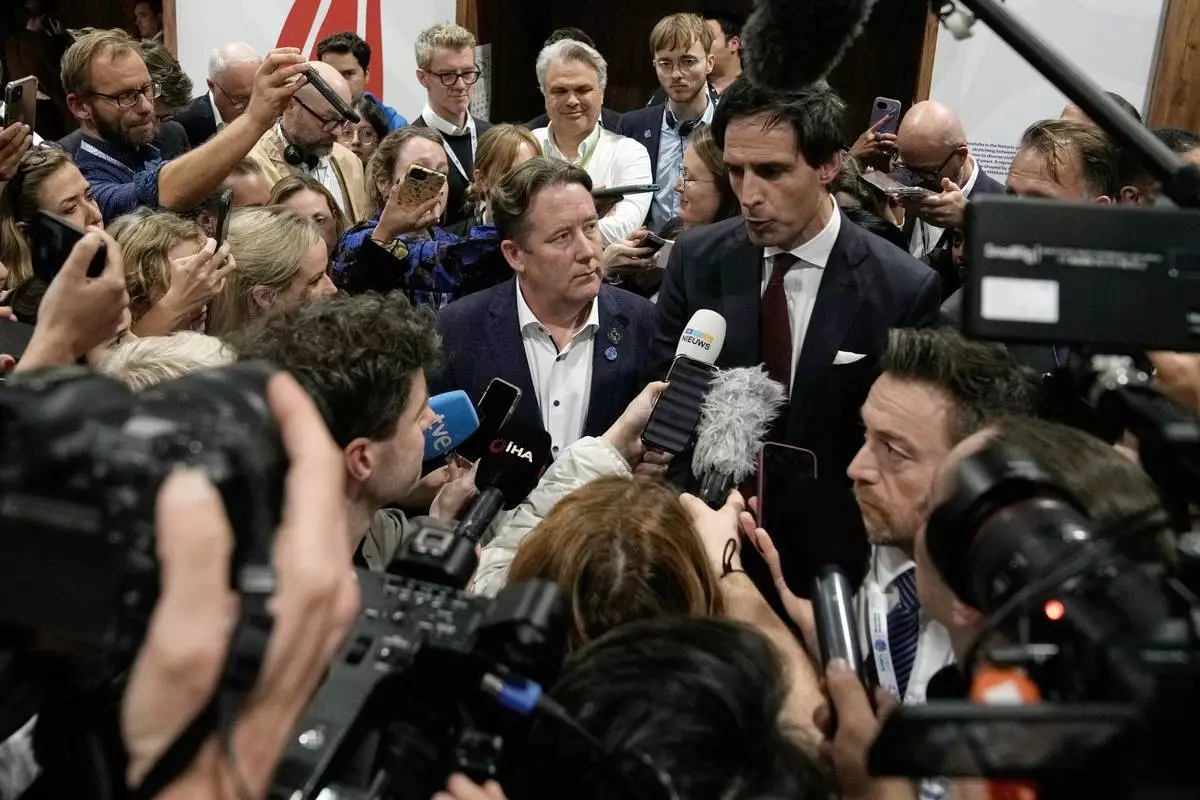
Darragh O'Brien, minister of climate, energy and the environment of Ireland, left, and Wopke Hoekstra, EU climate commissioner, speak outside a plenary session at the COP31 U.N. Climate Summit, Sunday, Nov. 22, 2026, in Antalya, Turkey. (AP Photo/Khalil Hamra)
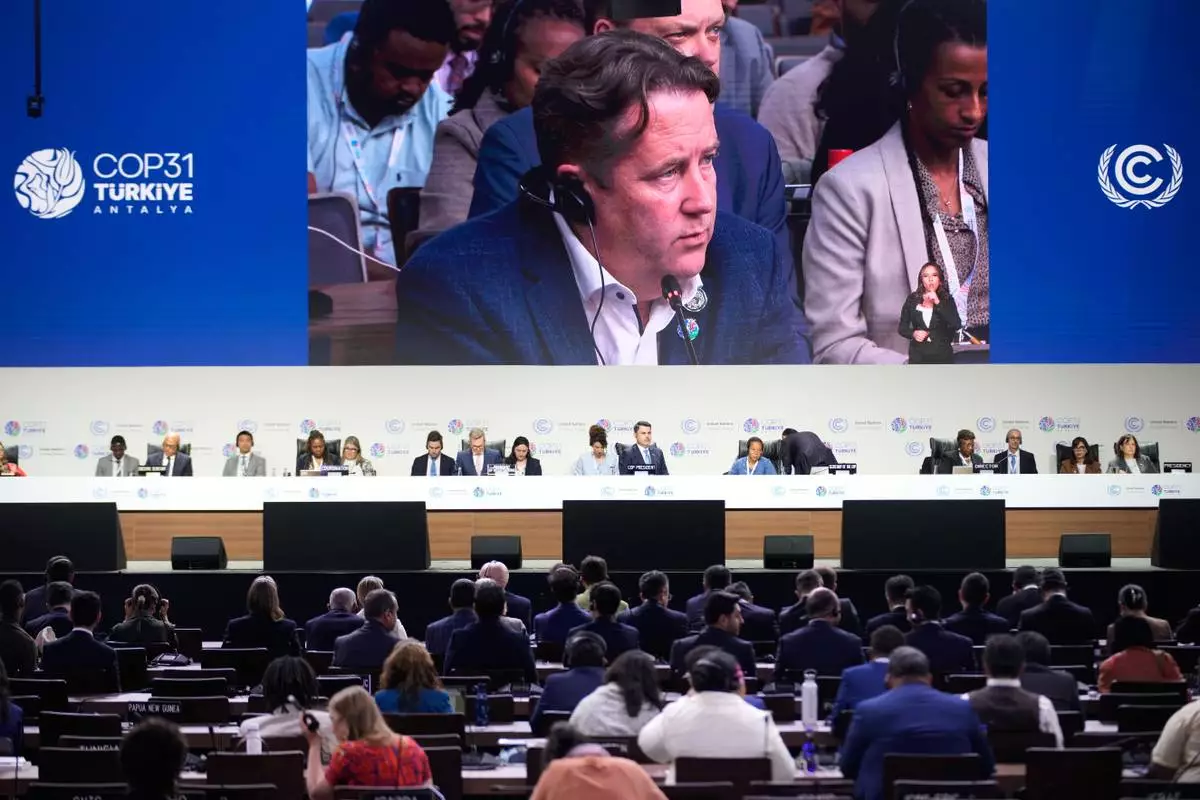
Darragh O'Brien, minister of climate, energy and the environment of Ireland, onscreen, speaks during a closing plenary session as COP31 President Murat Kurum, sits center, at the COP31 U.N. Climate Summit, Sunday, Nov. 22, 2026, in Antalya, Turkey. (AP Photo/Khalil Hamra)
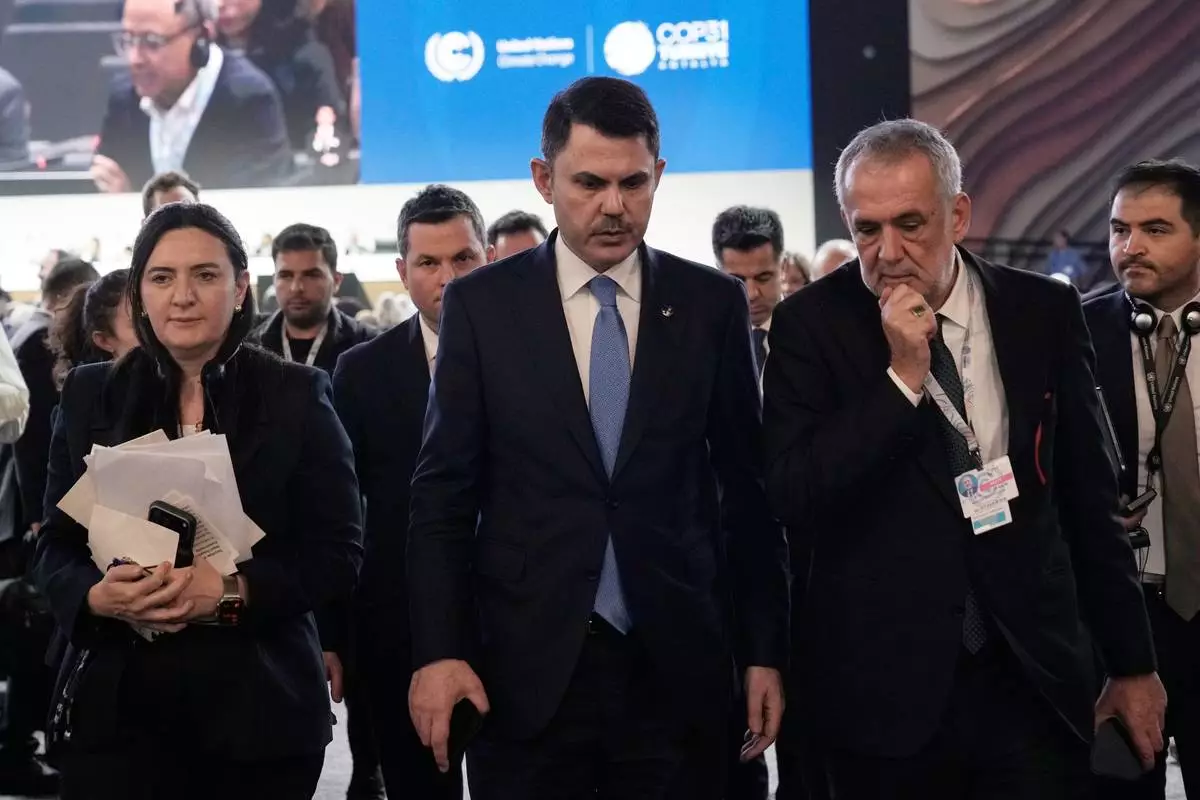
COP31 President Murat Kurum, center, leaves a closing plenary session at the COP31 U.N. Climate Summit, Sunday, Nov. 22, 2026, in Antalya, Turkey. (AP Photo/Khalil Hamra)
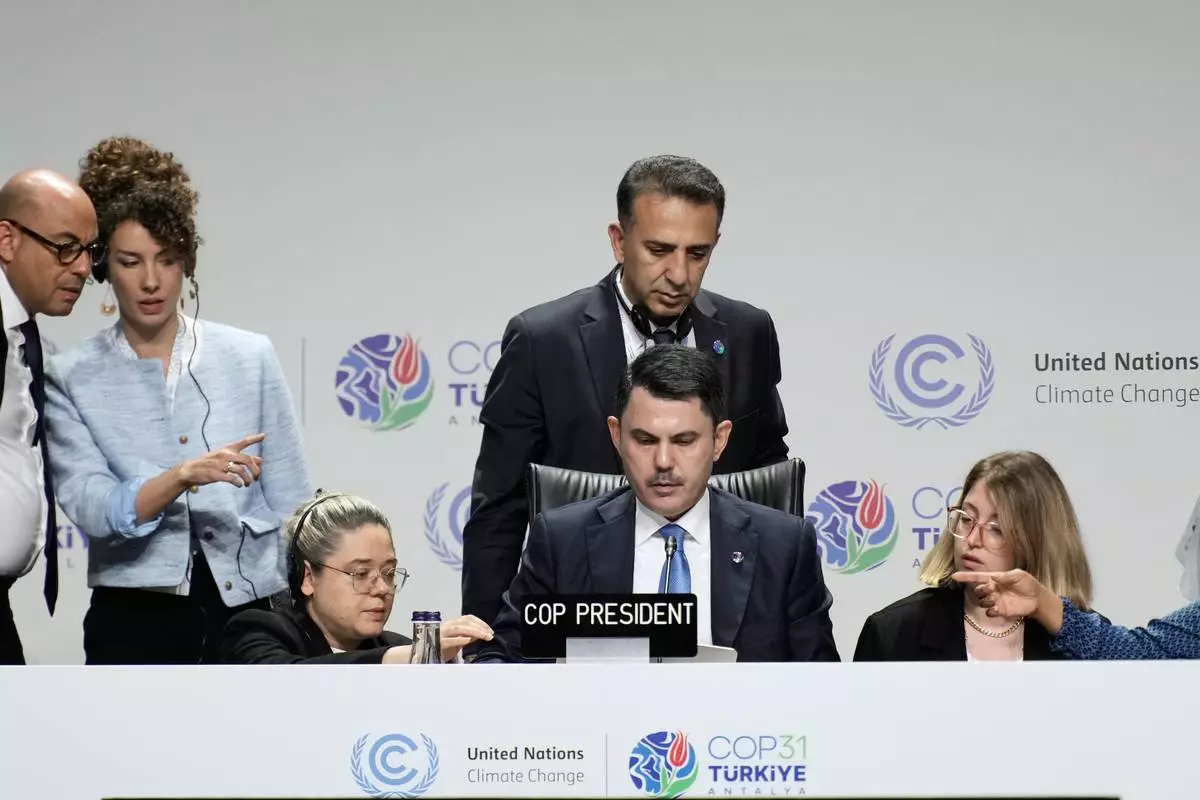
COP31 President Murat Kurum center, attends a closing plenary session at the COP31 U.N. Climate Summit, Sunday, Nov. 22, 2026, in Antalya, Turkey. (AP Photo/Khalil Hamra)
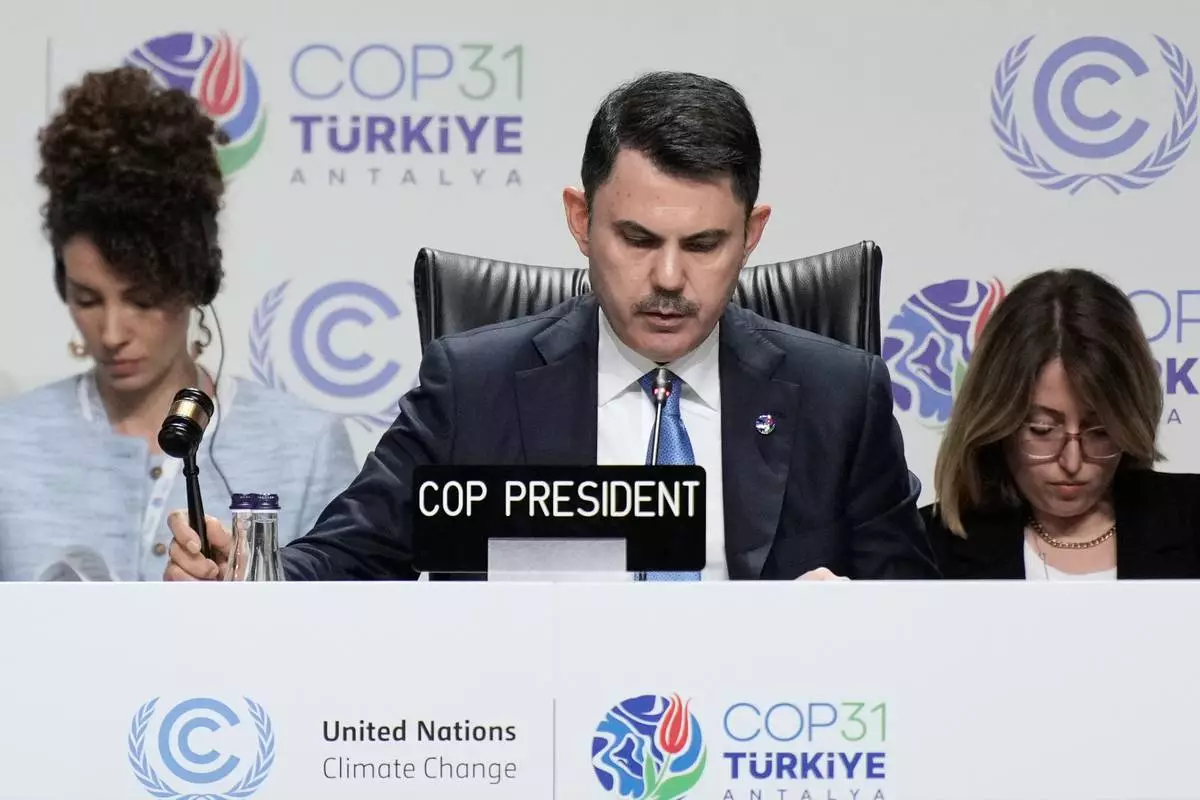
COP31 President Murat Kurum, center, bangs the gavel during a closing plenary session at the COP31 U.N. Climate Summit, Sunday, Nov. 22, 2026, in Antalya, Turkey. (AP Photo/Khalil Hamra)
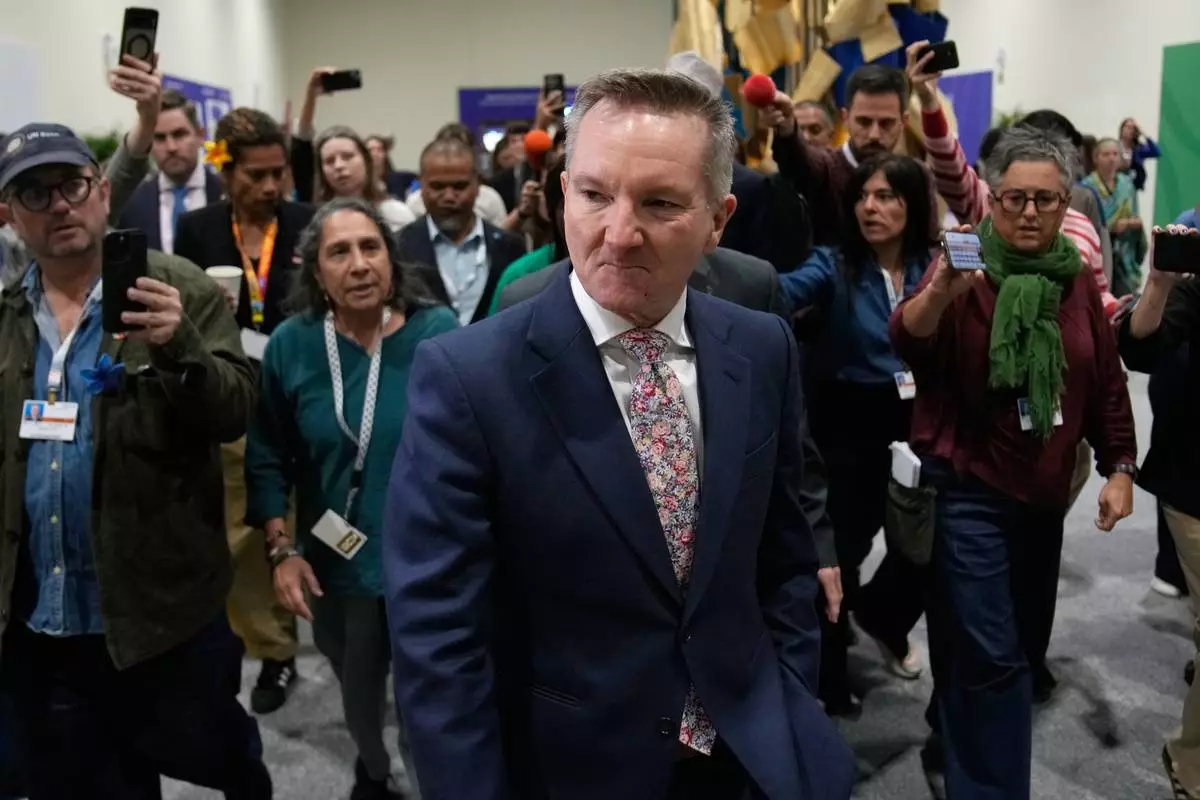
Chris Bowen, president of COP31 negotiations and minister for climate change and energy of Australia, walks through the venue for the COP31 U.N. Climate Summit, Sunday, Nov. 22, 2026, in Antalya, Turkey. (AP Photo/Khalil Hamra)
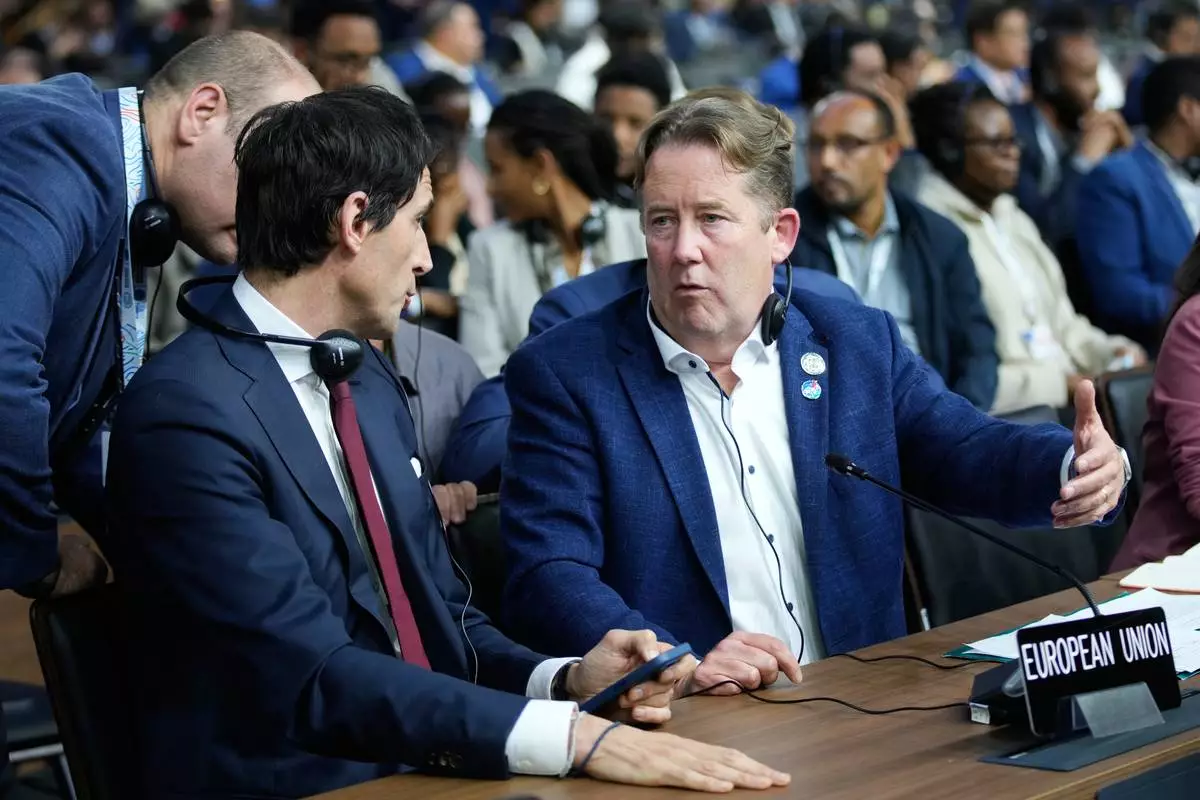
Wopke Hoekstra, EU climate commissioner, left, speaks with Darragh O'Brien, minister of climate, energy and the environment of Ireland, during a closing plenary session at the COP31 U.N. Climate Summit, Sunday, Nov. 22, 2026, in Antalya, Turkey. (AP Photo/Khalil Hamra)
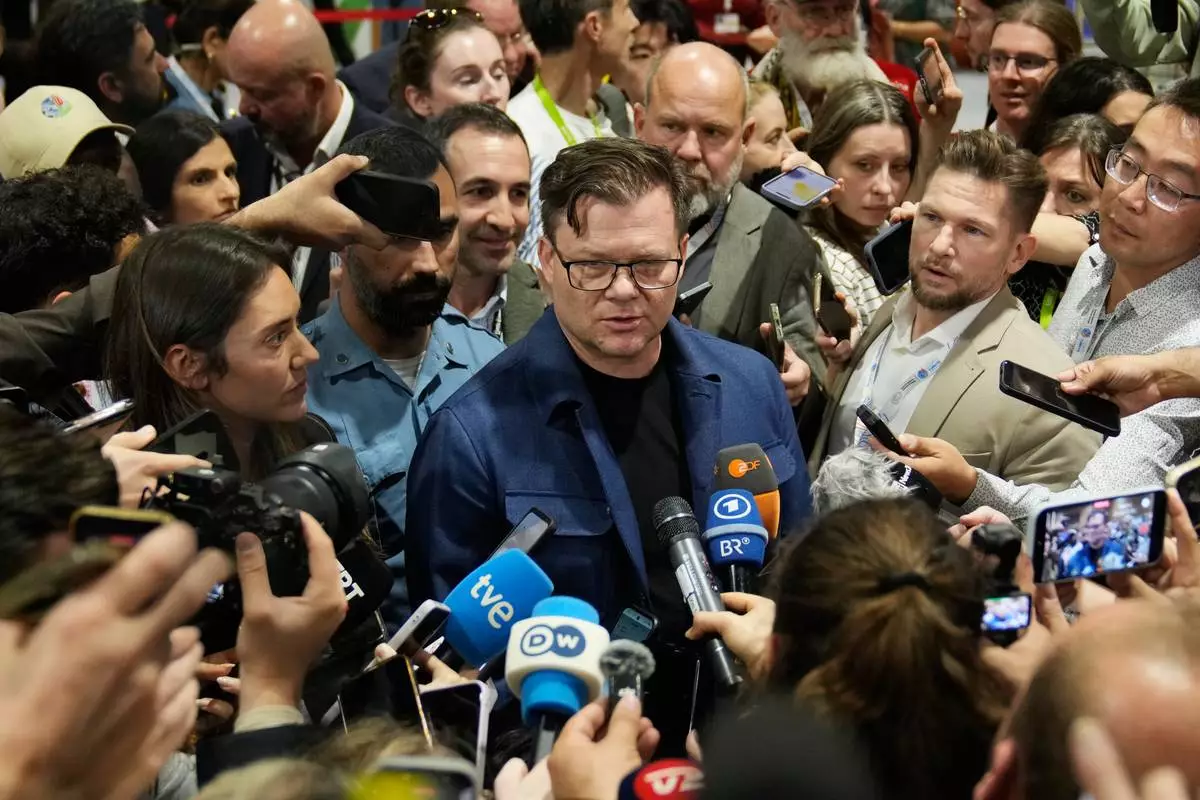
Carsten Schneider, Germany's minister of the environment, speaks to members of the media at the COP31 U.N. Climate Summit, Sunday, Nov. 22, 2026, in Antalya, Turkey. (AP Photo/Khalil Hamra)
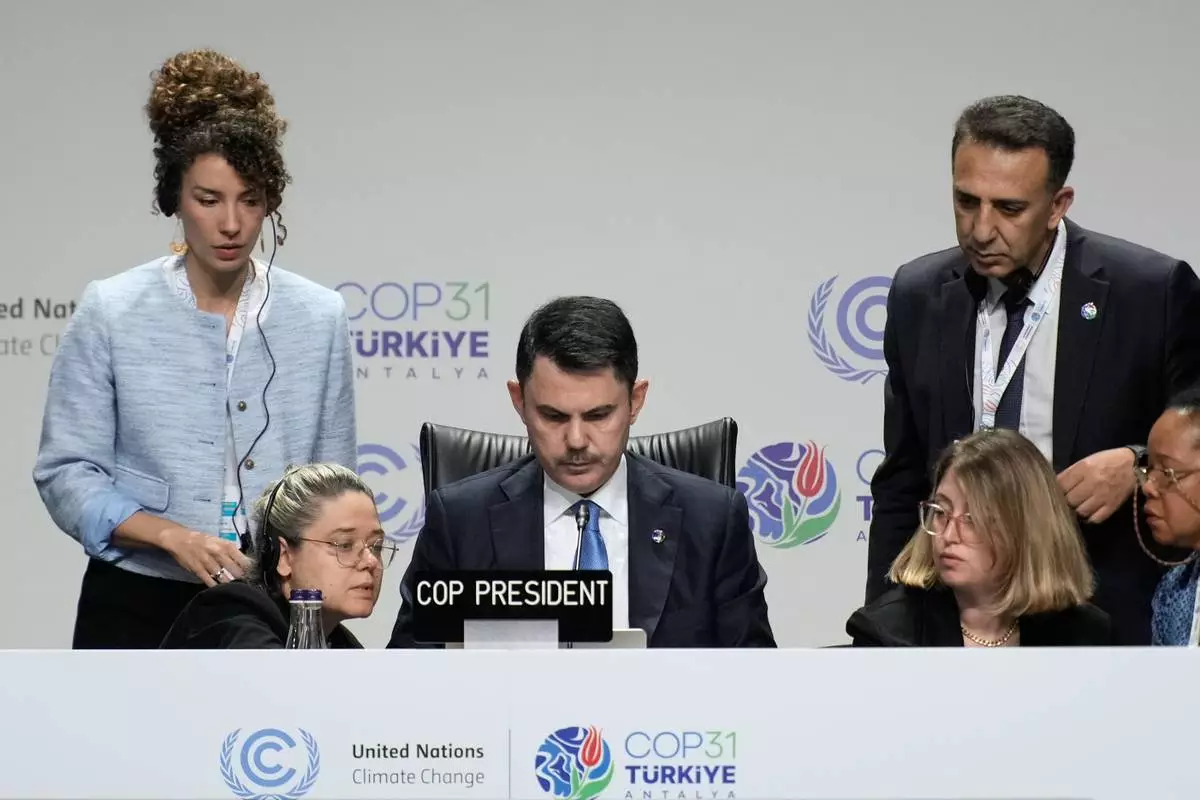
COP31 President Murat Kurum, sits at center, during a closing plenary session at the COP31 U.N. Climate Summit, Sunday, Nov. 22, 2026, in Antalya, Turkey. (AP Photo/Khalil Hamra)
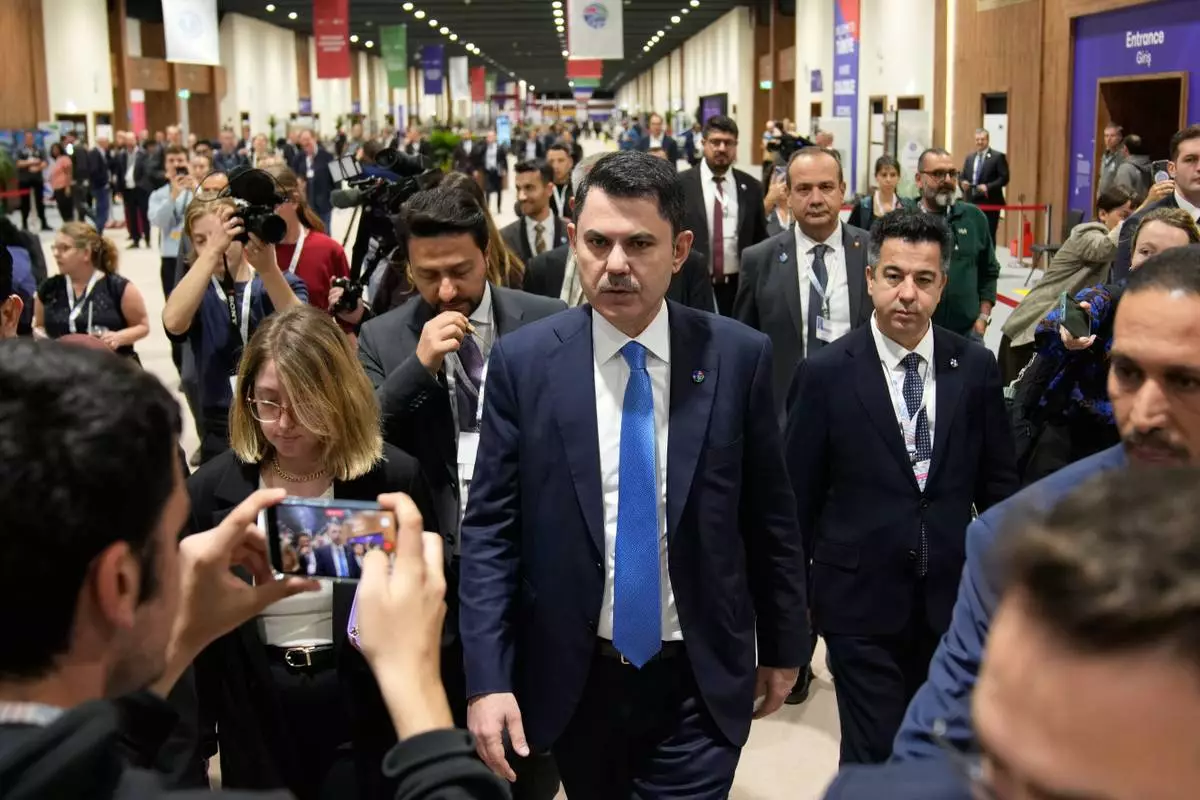
COP31 President Murat Kurum walks through the venue for the COP31 U.N. Climate Summit, Sunday, Nov. 22, 2026, in Antalya, Turkey. (AP Photo/Khalil Hamra)
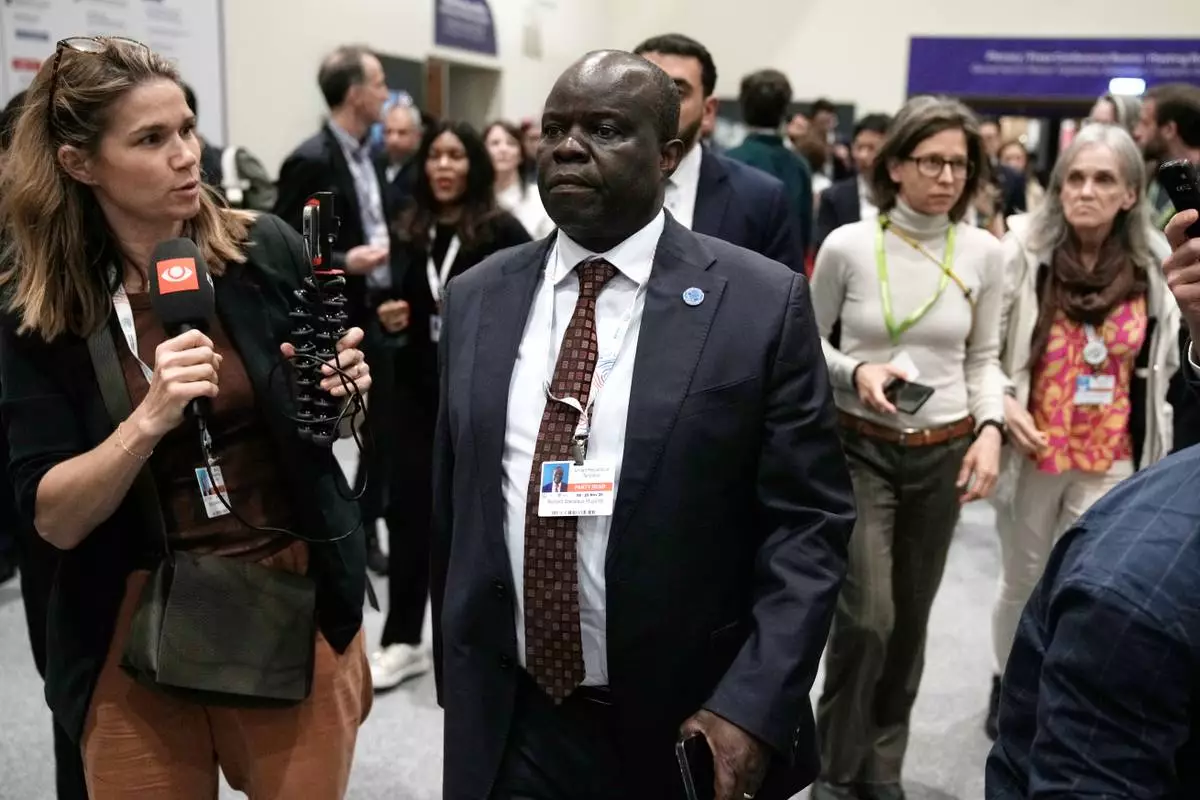
Richard Muyungi, Tanzania climate envoy, center, walks through the venue for the COP31 U.N. Climate Summit, Saturday, Nov. 21, 2026, in Antalya, Turkey. (AP Photo/Khalil Hamra)
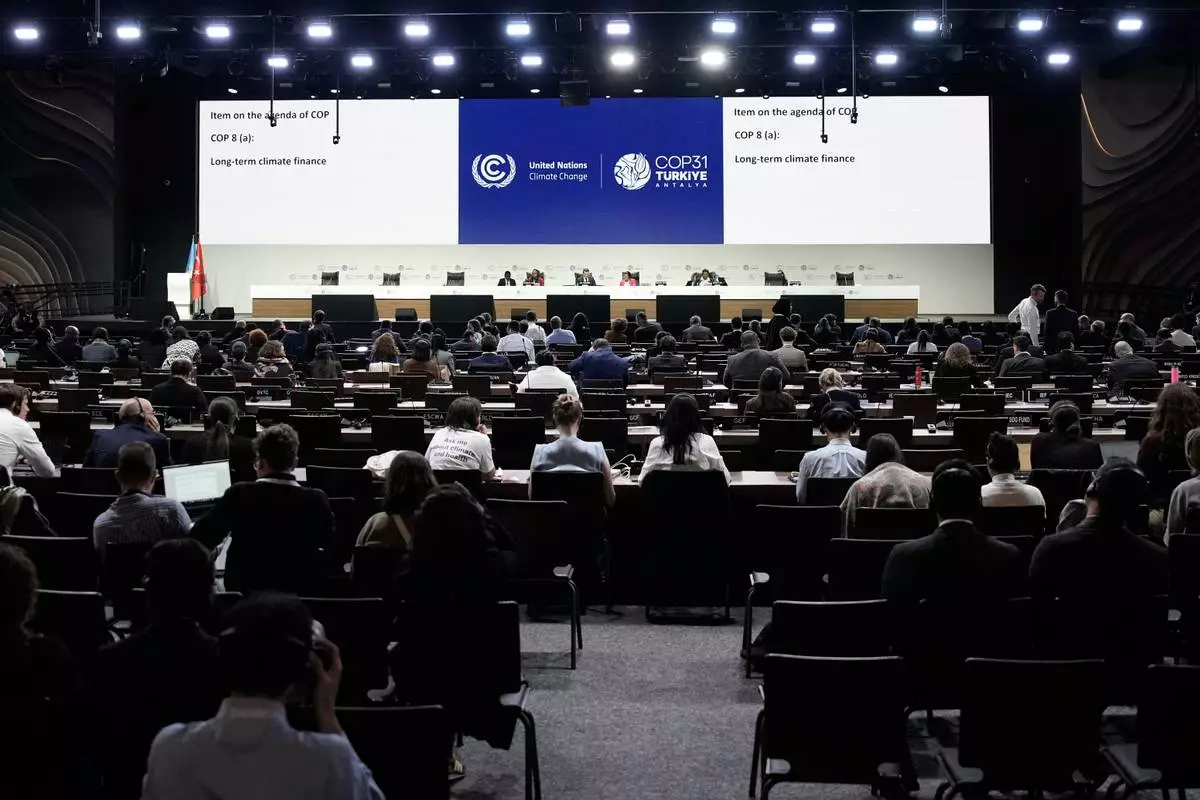
A closing plenary session takes place at the COP31 U.N. Climate Summit, Sunday, Nov. 22, 2026, in Antalya, Turkey. (AP Photo/Khalil Hamra)
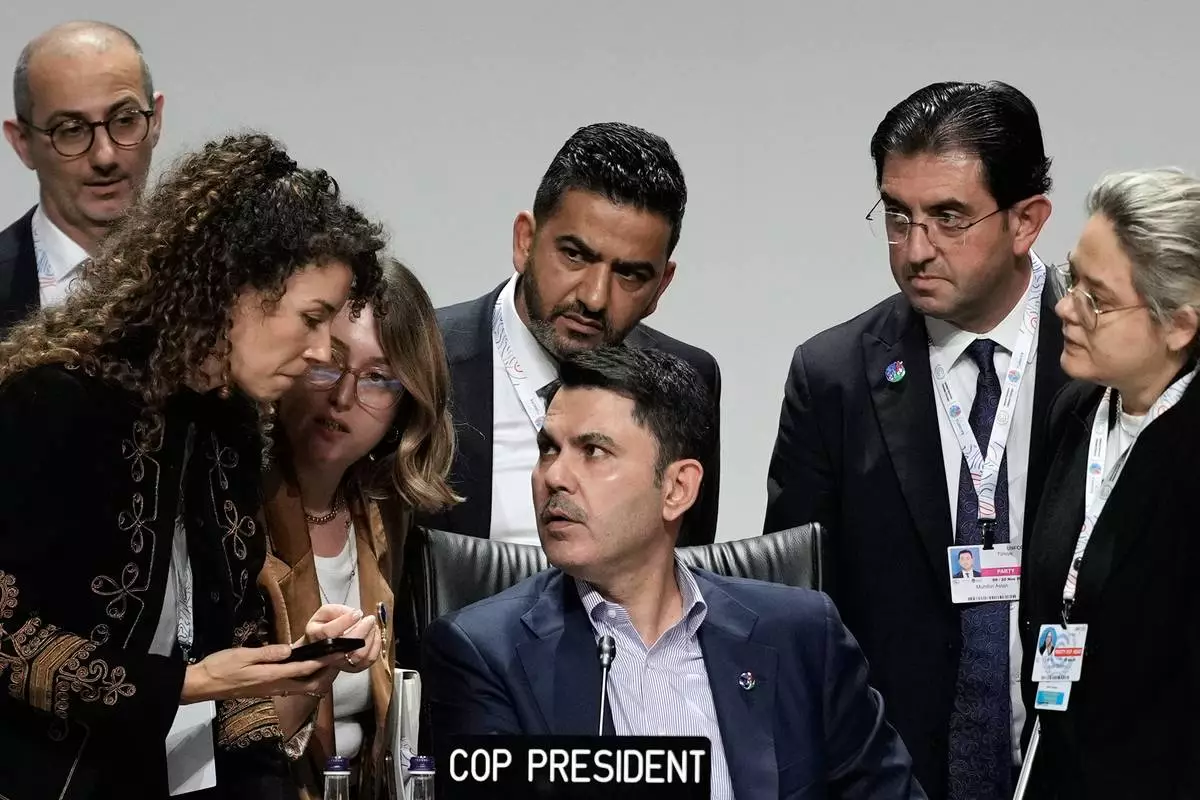
People gather around COP31 President Murat Kurum at a closing plenary during the COP31 U.N. Climate Summit, Sunday, Nov. 22, 2026, in Antalya, Turkey. (AP Photo/Khalil Hamra)