Things to watch this week in the Southeastern Conference:
No. 2 Georgia (5-0, 3-0 SEC) at No. 6 Alabama (5-0, 3-0), Saturday, 7:30 p.m. ET (ABC)
Two of the SEC’s three remaining unbeaten teams meet in a matchup that historically carries title implications, either in the SEC or the national version.
Georgia’s biggest challenge of the early season came in the form of a 38-14 win against Vanderbilt. The Bulldogs snapped a first quarter tie and scored 17 unanswered points in the second half. A Georgia offense led by Gunner Stockton has outscored its five opponents by a combined 190 points.
Alabama has found its spark under sophomore quarterback Keelon Russell, who has the third-best quarterback rating in the Bowl Subdivision while throwing for 1,414 yards and 11 touchdowns and rushing 184 yards and three scores.
Alabama comes off its biggest test of the season so far against Mississippi State – which it passed with flying colors — and a 56-23 win.
A battle between the SEC’s two highest-scoring teams could be a rainy affair depending on the path of Tropical Storm Isaias. Alabama was a 1 1/2-point favorite at midweek.
No. 1 Texas (4-0, 1-0) vs. Oklahoma (2-2, 0-1), Saturday, 3:30 p.m. ET (ABC)
Oklahoma hasn’t lived up to expectations this season, but the Red River Rivalry remains worth the watch.
The Sooners and quarterback John Mateer will look to get back on track after a 41-13 loss to Georgia in Week 4. Texas is coming off a 20-17 win at Tennessee followed by a bye week of its own.
Texas thumped Oklahoma last year 23-6 and is favored in this one. Neither offense is firing on all cylinders and the Sooners will need to protect Mateer from Texas pass-rusher extraordinaire Colin Simmons.
— Austin Simmons: The Missouri quarterback led the Tigers to a 45-17 win over Florida with a 340-yard, two-touchdown performance. He averaged 11.3 yards per pass while completing 76.7 percent of his throws and extended drives by converting 7-of-13 third-down attempts.
–- Jamal Roberts: The Missouri running back also played a large role in the statement-making win over the Gators with 24 carries for 211 yards and three scores. The Tigers were the biggest riser in this week’s AP Top 25, moving up 11 spots and knocking Florida down eight spots to No. 16.
—- Dejuan Lane: The Tennessee safety had a team-high 9 tackles, 2.5 for a loss, two sacks and a critical third-quarter interception that led to a touchdown drive, helping the Vols to a 24-14 win against Auburn.
Three unbeaten SEC teams remain: Alabama, Georgia and Texas. ... Georgia’s average of 51.4 points per game tops the SEC. … Texas has held its opponents to a conference-low 13.3 points per game, while Georgia closely follows (13.4). … LSU’s Princewill Umanmielen passed Colin Simmons on the leaderboard during the Longhorns’ week off, reclaiming the FBS lead with eight sacks. ...Kamario Taylor tops the SEC in passing yards (1,450) and ranks sixth nationally. … Taylor also leads the FBS in passing touchdowns with 17. ... Florida’s Jadan Baugh boasts an FBS-high 66 points this season.
Sign up for Top 25 poll alerts here. Visit the Top 25 here and see AP’s full college football coverage here.
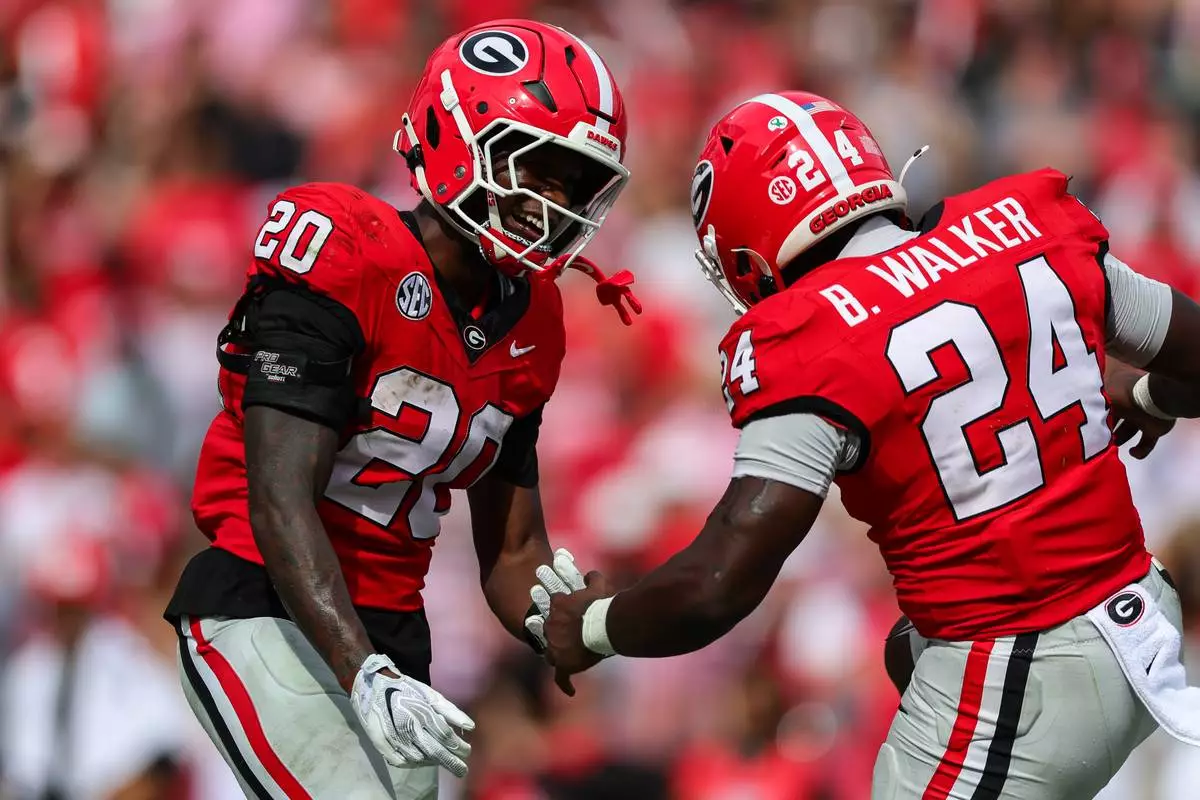
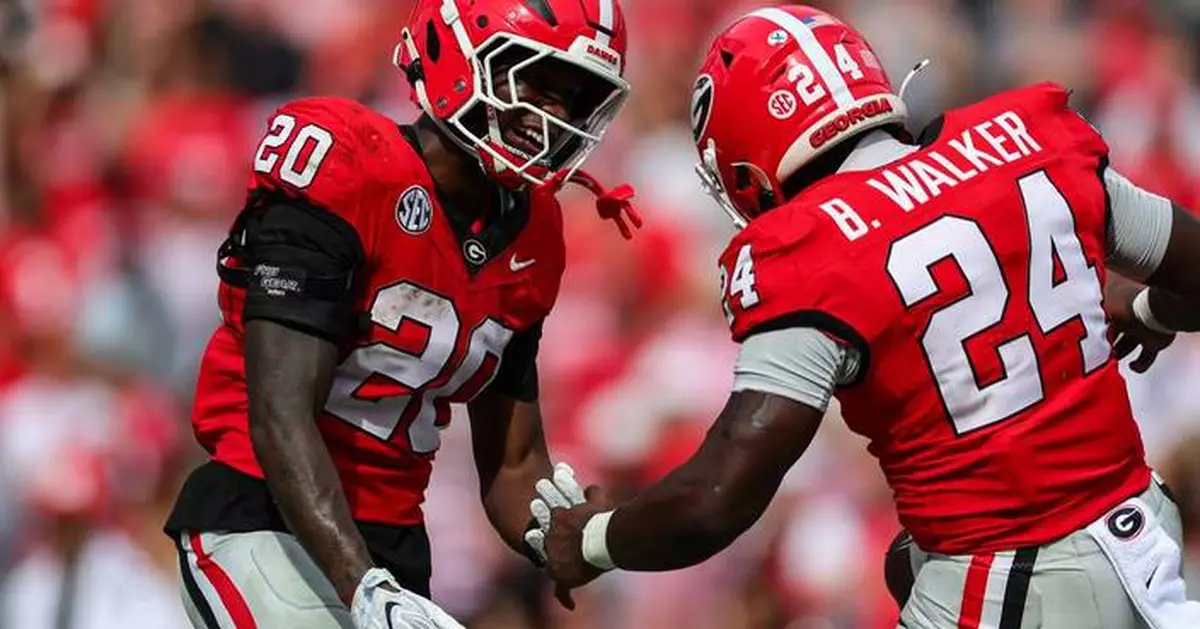
Georgia running back Dwight Phillips Jr. (20) high-fives running back Bo Walker (24) after scoring a touchdown during the second half of an NCAA college football game against Vanderbilt, Saturday, Oct. 3, 2026, in Athens, Ga. (AP Photo/Colin Hubbard)
NEW YORK (AP) — More drops for stocks in the artificial intelligence industry dragged the U.S. market lower on Monday, led by Nvidia.
The weakness for tech stocks helped knock the S&P 500 index 1.9% lower and pushed the Nasdaq composite index to a 2.5% loss. The Dow also fell sharply as losses broadened into other sectors. AI-focused companies were by far the biggest weights on the market and have been behind much of the recent turbulence on Wall Street.
Nvidia sank 4.1% and was again the heaviest weight on Wall Street following its crisis of leadership. The company has lost $735 billion in market value since the scandal erupted about CEO Jensen Huang’s infidelities and his ties to an alleged Chinese spy.
Nvidia is one of the most influential companies in the world not only because its chips are powering much of the world’s move into AI technology but also because its cash has helped companies across the industry to grow.
Now, following Huang’s resignation as Nvidia’s CEO last week, both the chip company and the broad industry are facing a more uncertain future without the leather-jacketed man who became one of AI’s biggest celebrities.
It’s the latest challenge for the AI industry, which had already been shaken by criticism that stock prices in the industry shot too high and were in a bubble. The sweeping victories for Democrats in this month’s U.S. midterm elections also raised worries about possible restrictions on further construction of AI data centers.
“The market was already worried about this risk before what happened at Nvidia,” Zhiwei Zhang, president and chief economist at Pinpoint Asset Management, said in a commentary. “Now the risk has become even more serious.”
The sector is also now facing more scrutiny from the U.S. government. The Trump administration on Monday issued new rules to restrict remote access to advanced U.S. computing chips and servers.
Outside of Nvidia, other chip companies also fell. They had climbed in the earlier days of Nvidia’s fall on hopes that they could gain a competitive advantage. But Broadcom dropped 3.9% and notched its second straight loss on concerns about the broader industry. Advanced Micro Devices fell 5.6%.
CoreWeave, which buys Nvidia chips and then rents out access to them to customers over the cloud, sank 6.1%. GE Vernova, which is helping to power AI data centers, fell 4.9%.
The next big milestone for the AI industry may arrive Tuesday after trading in the U.S. stock market ends for the day. That’s when Nvidia will report its latest quarterly results, and interim CEO Colette Kress is set to speak to Wall Street. Investors have become accustomed to Nvidia not only reporting stronger results than analysts expected for each quarter but also giving a forecast for upcoming revenue that’s well above expectations.
Elsewhere on Wall Street, L3Harris Technologies fell 3.9% after officials in President Donald Trump’s administration suggested the contractor for the Federal Aviation Administration may be at fault for a nationwide ground stop Friday. L3Harris said Saturday that it’s supporting the FAA in its investigation.
Summit Therapeutics sank 16.5% after the biopharmaceutical company said the U.S. Food and Drug Administration indicated it cannot approve its application for a therapy to treat certain patients with lung cancer.
Tyson Foods rose 8.7% after reporting a stronger profit for the latest quarter than analysts expected. The company behind the Jimmy Dean and Hillshire Farm brands, though, also reported weaker revenue than expected after selling less beef than it did a year earlier.
Overall, the S&P 500 shed 145.08 points to close at 7,416.59, marking the third straight loss for the benchmark index. The Dow Jones Industrial Average fell 739.38 points, or 1.4%, to 51,608.17. The Nasdaq composite fell 626.52 points to 24,509.76.
The recent swings for AI stocks have overshadowed what's been another strong earnings reporting season for U.S. companies. The big businesses in the S&P 500 index are on track to deliver earnings per share for the summer nearly 32% higher than a year earlier, according to FactSet.
It's the third straight quarter of growth above 25% for the index, which is important because corporate profits are one of the two big levers that set stock prices over the long term, along with interest rates.
In the bond market, Treasury yields eased back following last week's jump due to a worse-than-expected report on U.S. inflation.
The yield on the 10-year Treasury fell to 5.13% from 5.15% late Friday, though it remains well above a low of 4.80% reached earlier this month. Higher yields make borrowing money more expensive for everyone, and they’ve already hurt the housing industry through expensive mortgage rates.
Yields fell as oil prices sank, which took away some of the upward pressure on inflation. The price for a barrel of Brent crude oil fell 3.5% to $92.44. It’s been yo-yoing amid uncertainty about what will happen in the war with Iran.
In stock markets abroad, indexes were mixed in Europe.
AP Business Writers Chan Ho-him and Michelle Chapman contributed to this report.
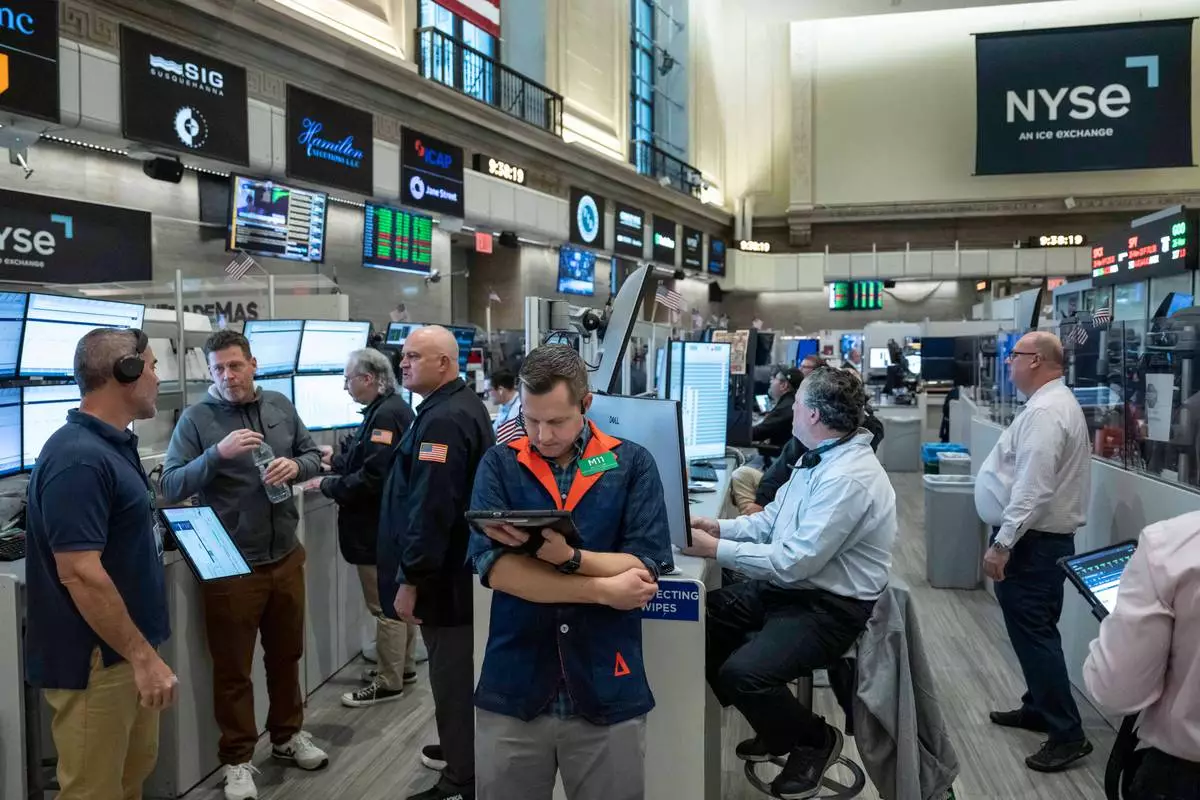
Options traders, including Bill Taylor, center, work on the floor of the New York Stock Exchange in New York, Monday, Nov. 9, 2026. (AP Photo/Yuki Iwamura)
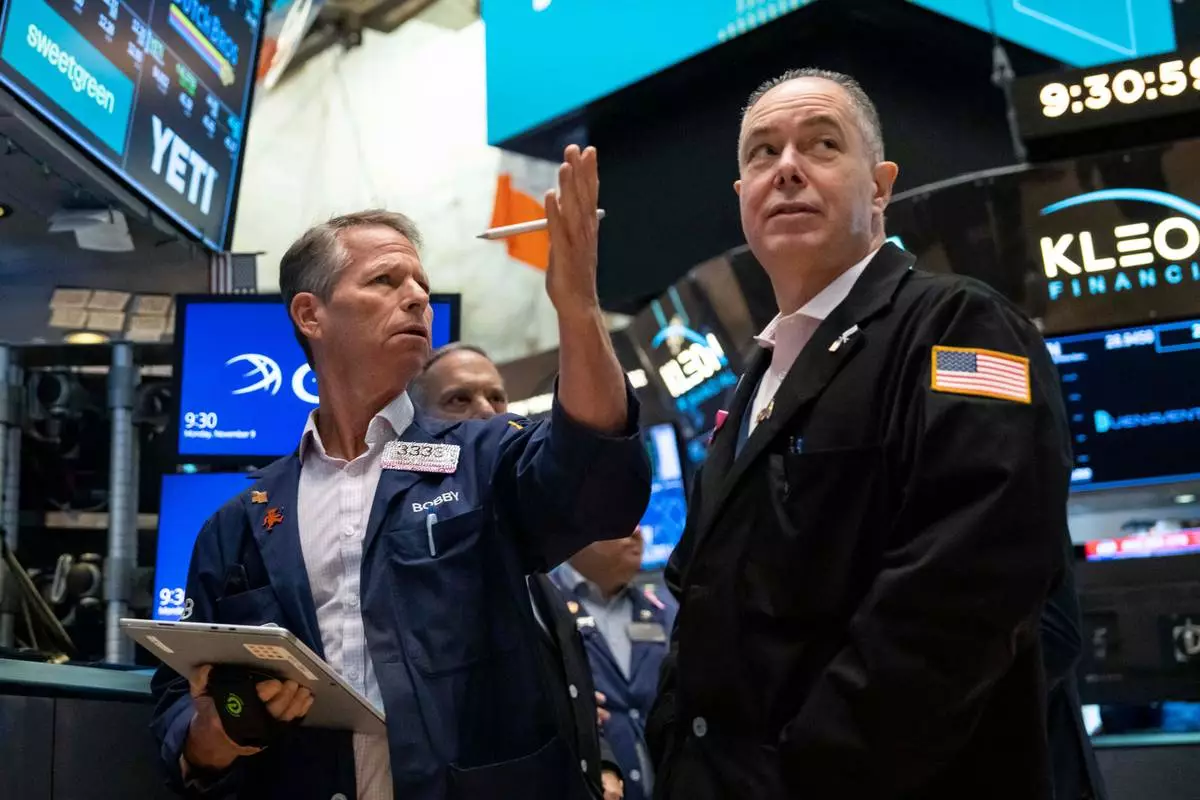
Trader Robert Charmak, left, works on the floor of the New York Stock Exchange in New York, Monday, Nov. 9, 2026. (AP Photo/Yuki Iwamura)
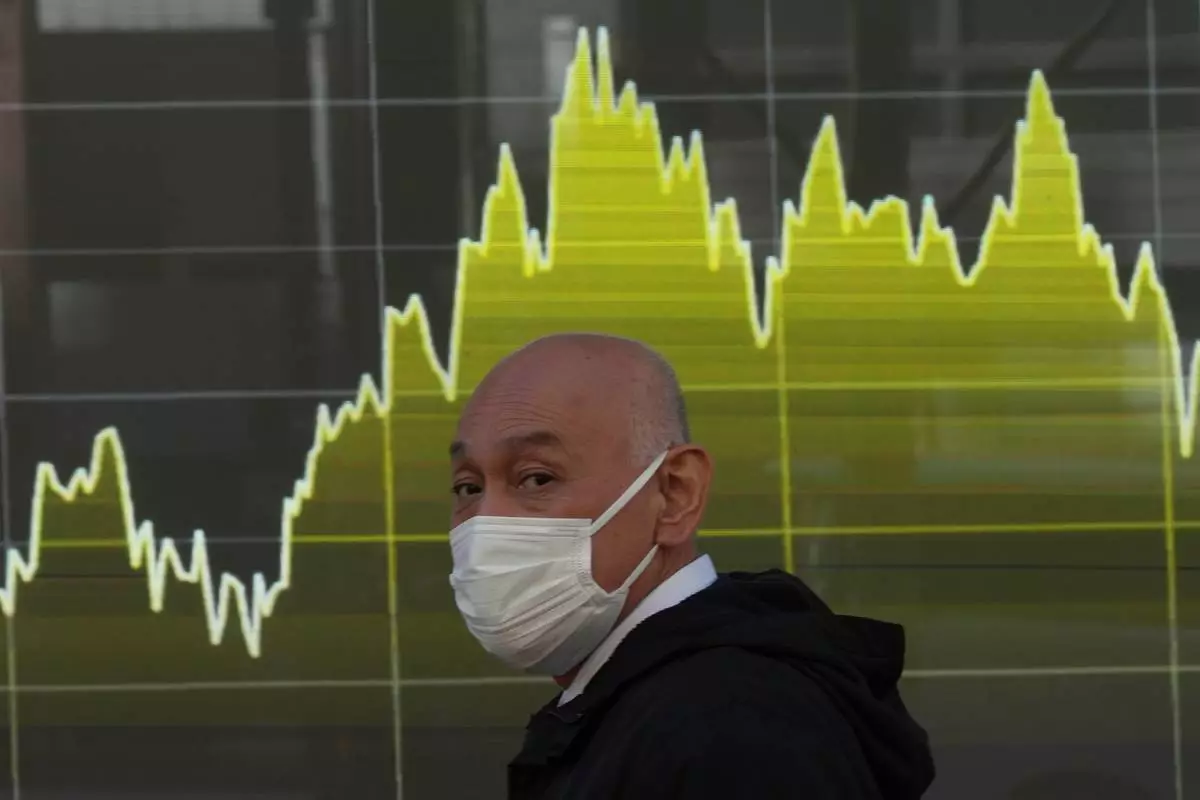
A person walks in front of an electronic stock board showing Japan's Nikkei index at a securities firm Monday, Nov. 16, 2026, in Tokyo.(AP Photo/Eugene Hoshiko)
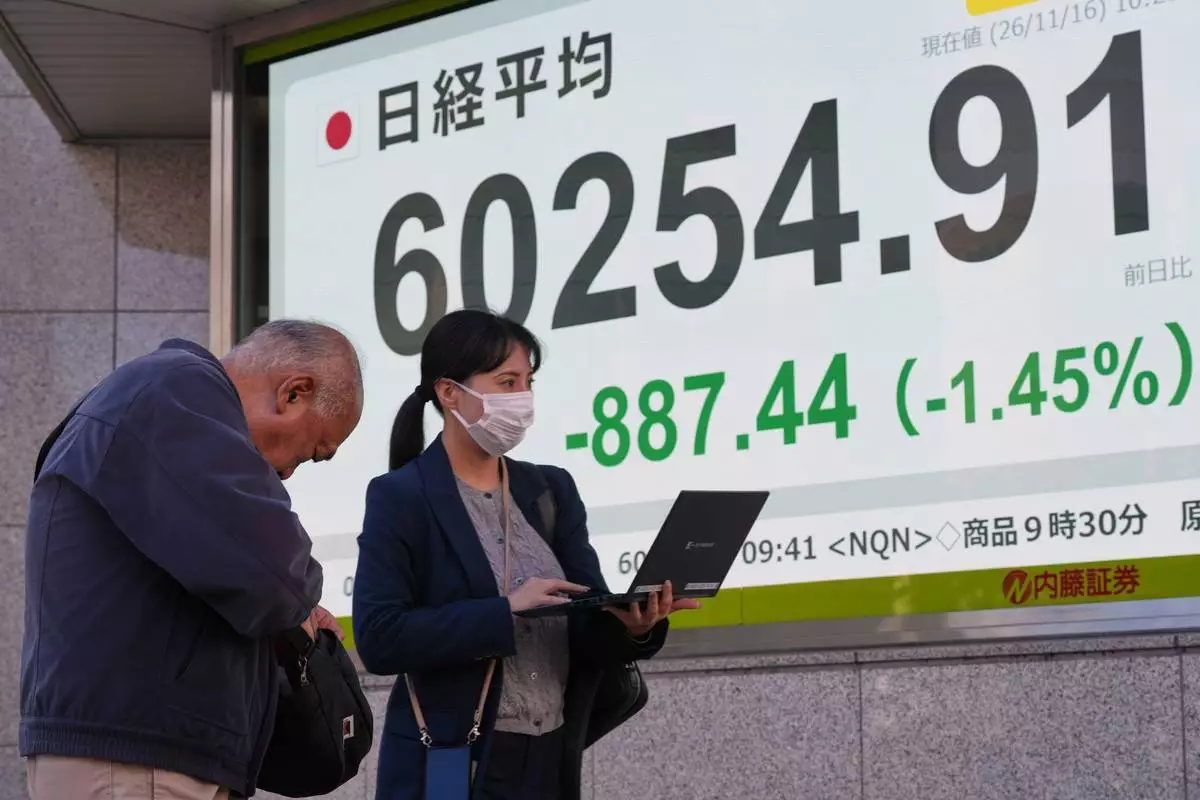
People walk in front of an electronic stock board showing Japan's Nikkei index at a securities firm Monday, Nov. 16, 2026, in Tokyo. (AP Photo/Eugene Hoshiko)
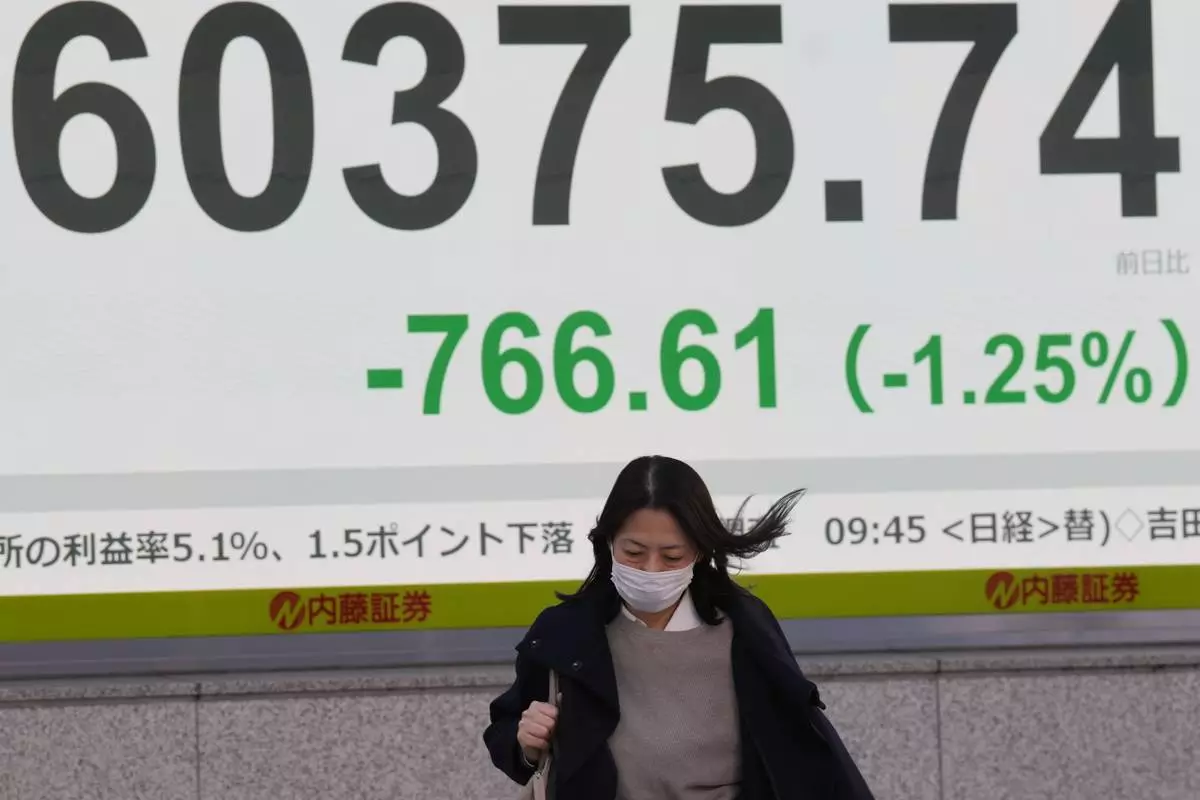
A person walks in front of an electronic stock board showing Japan's Nikkei index at a securities firm Monday, Nov. 16, 2026, in Tokyo.(AP Photo/Eugene Hoshiko)
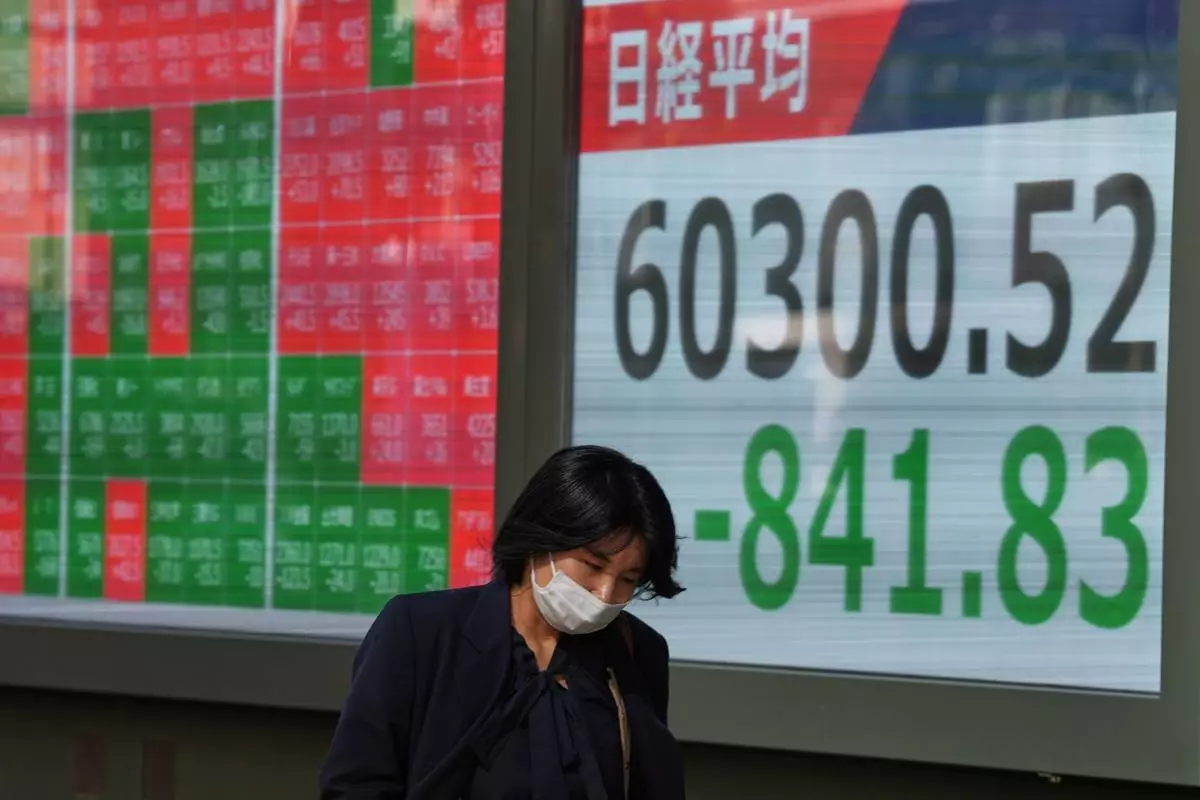
A person walks in front of an electronic stock board showing Japan's Nikkei index at a securities firm Monday, Nov. 16, 2026, in Tokyo. (AP Photo/Eugene Hoshiko)
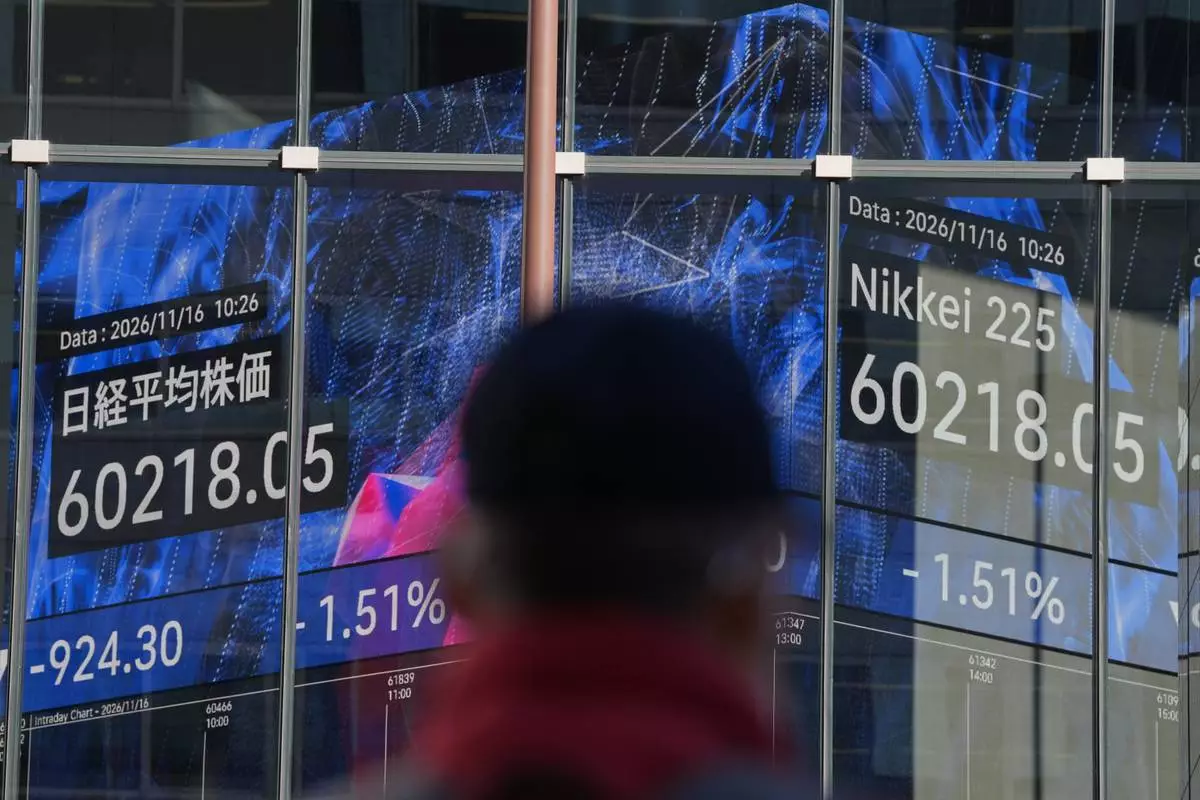
A person watches an electronic stock board showing Japan's Nikkei index at a securities firm Monday, Nov. 16, 2026, in Tokyo. (AP Photo/Eugene Hoshiko)