Skip to Content Facebook Feature Image

Judge says search warrants used to seize property from former Prince Andrew were unlawful

News

Judge says search warrants used to seize property from former Prince Andrew were unlawful
News

News

Judge says search warrants used to seize property from former Prince Andrew were unlawful

2026-10-09 00:48 Last Updated At:00:50

LONDON (AP) — Police investigating former Prince Andrew 's links to the late sex offender Jeffrey Epstein unlawfully searched his homes, a London judge said Thursday.

Justice Nicholas Hilliard said significant errors were made by Thames Valley Police in applying for search warrants and by a judge in granting them in the investigation into the disgraced former prince now known as Andrew Mountbatten-Windsor.

Mountbatten-Windsor was not in court, but he was already aware of the partial legal victory because police had previously conceded in July that the warrants were improper.

Police, however, had tried to keep the matter out of the public eye while the investigation continued, leading to a delay in its revelation.

Mountbatten-Windsor was arrested Feb. 19 on suspicion of misconduct in public office and police searched two of his homes.

His lawyers had asked the High Court judge to invalidate the warrants that allowed those searches.

Attorney Mark Stephens, who wasn’t involved in the case, said the development "opens a door to Andrew Mountbatten-Windsor’s lawyers to start to chisel away at some of the fruits of that unlawful warrant.”

The judge, however, said “the fact that the search warrants were quashed does not bring an investigation to an end, or mean that the whole of the investigation was unlawful.”

Hilliard said he still needs to rule on whether to return Mountbatten-Windsor’s property because there’s a provision by which police can retain unlawfully seized property for evidence.

Stephens said that under English law, there will be further hearings to determine exactly what, if any, evidence would be thrown out.

“The judge will make that decision based on whether or not it’s likely to be probative,” Stephens said. “But, of course, it’s very different in other countries. For example, in America, if you have the fruits of an unlawful warrant, then all that evidence is out. But that’s not the case in the U.K., so we’ve got a few more rounds to go here.”

The judge said the warrants were unlawful because the judge who issued them had not considered whether items being seized were subject to legal privilege or another protection known as “special procedure material.”

Thames Valley Police said in a statement that it accepted that the warrants must be quashed, but said the investigation was continuing.

King Charles III stripped his younger brother of his princely title last year as he sought to shield the rest of the royal family from the continuing fallout from Mountbatten-Windsor's links to Epstein.

While Mountbatten-Windsor, 66, continues to receive a stipend from the king’s private funds, Buckingham Palace has made it clear that those funds may not be used to fund his effort to challenge the search warrants.

The police investigation initially focused on allegations that Mountbatten-Windsor shared sensitive information with Epstein when the former prince was a U.K. trade envoy, but police later said they could also consider other matters.

Police questioned Mountbatten-Windsor for 11 hours before releasing him under investigation, meaning he was neither charged nor exonerated.

It was the first time in nearly four centuries that a senior British royal was placed under arrest.

The allegations against Mountbatten-Windsor came to light when the U.S. Justice Department released millions of pages of documents from its investigation into sex trafficking by Epstein and his connections to a network of wealthy, powerful men around the world.

Mountbatten-Windsor’s ties to Epstein have been a source of embarrassment to the royal family for more than a decade.

Lawmakers questioned the relationship as far back as 2011, when the then-prince was forced to give up his globetrotting role as the U.K.’s special trade envoy. Eight years later, he failed to explain his continuing ties to Epstein in a disastrous interview with the BBC, ending his career as a working member of the royal family.
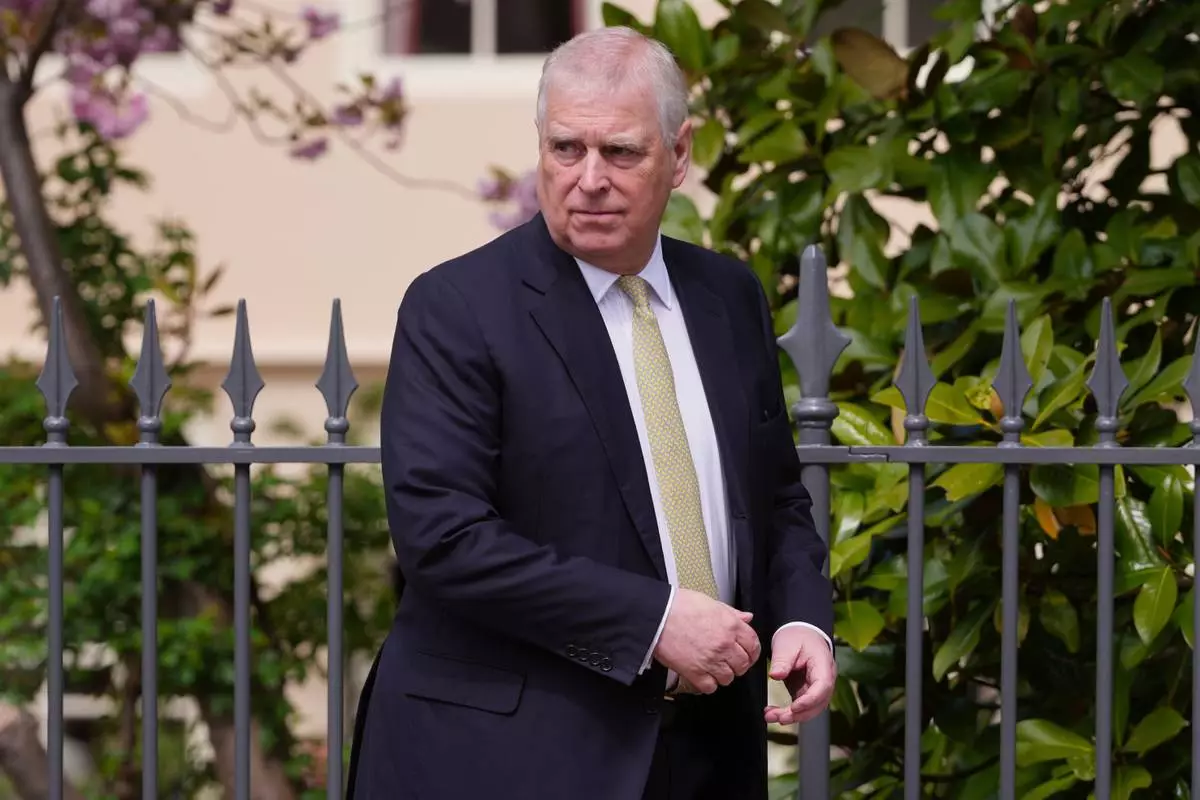
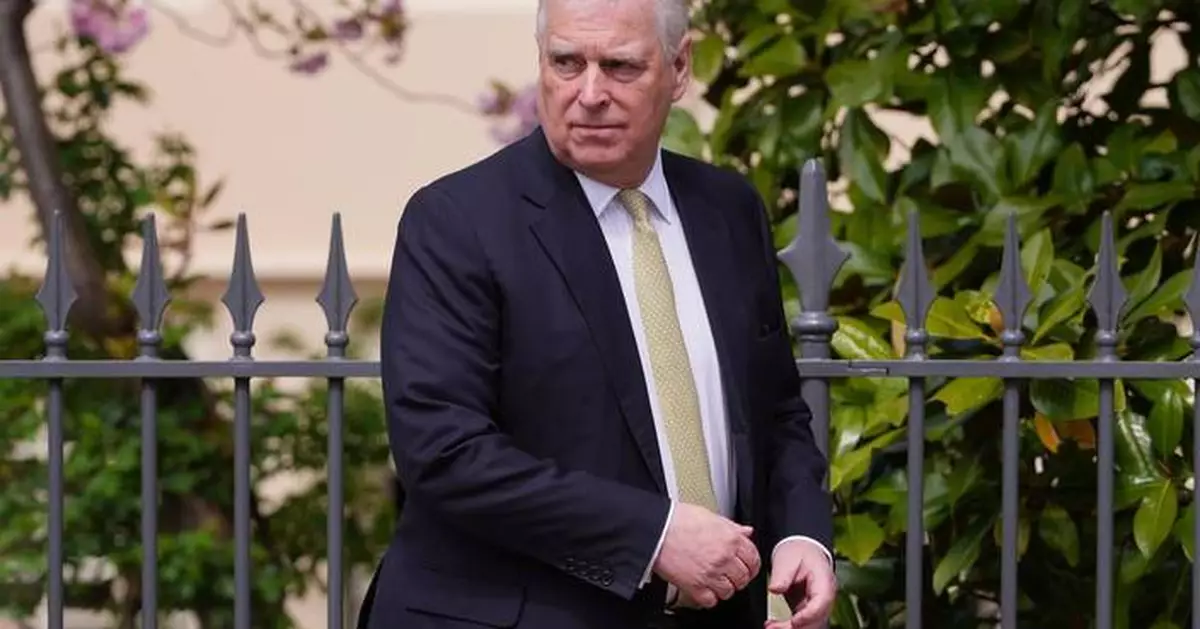
FILE - Britain's Andrew Mountbatten-Windsor, formerly known as Prince Andrew, looks round as he leaves after attending the Easter Matins Service at St. George's Chapel, Windsor Castle, England, April 20, 2025. (AP Photo/Kirsty Wigglesworth, File)

FILE - Britain's Andrew Mountbatten-Windsor, formerly known as Prince Andrew, looks round as he leaves after attending the Easter Matins Service at St. George's Chapel, Windsor Castle, England, April 20, 2025. (AP Photo/Kirsty Wigglesworth, File)
NEW YORK (AP) — A drop for Nvidia’s stock is pulling the U.S. market lower Thursday, threatening to upend the boom in artificial intelligence technology that carried Wall Street to record after record in recent years.

The S&P 500 fell 0.6% in its latest yo-yo move. The weakness for AI stocks dragged the Nasdaq composite down 0.9%, but the rest of the market was holding up better. The Dow Jones Industrial Average was down a modest 15 points, or less than 0.1%, as of 9:35 a.m. Eastern time.

Nvidia’s stock dropped 9.7% following the resignation of Jensen Huang, its CEO, co-founder and face of the brand. The chip company’s stock has been sinking since its board announced an investigation into Huang for a relationship with a woman suspected of being a Chinese government agent.

It’s a stunning fall for Nvidia, which had become Wall Street’s most valuable and influential stock because of its central role in the artificial intelligence boom. Its stock price set a record high last month after soaring an astounding 1,722% in four years. That compares with the already healthy gain of nearly 109% for the overall S&P 500 over the same time.

But Nvidia’s price dropped 27% from then through Wednesday on worries about whether Huang would remain and how Nvidia would navigate a future without him. Nvidia’s board answered the first question Thursday morning, when it said Huang resigned, and it named Chief Financial Officer Colette Kress as its interim CEO.

The second question remains to be determined. And it looms over the entire market because Nvidia and the broader AI industry have been the main reasons the U.S. stock market has set so many records in recent years.

Wall Street’s immediate reaction on Thursday was to punish stocks across the AI industry, though some of Nvidia’s rivals held up better in hopes of a competitive advantage.

CoreWeave, which buys Nvidia chips and then rents out access to them to customers over the cloud, fell 10.9%. Micron Technology, which sells memory for computers that’s been getting gobbled up in the AI frenzy, sank 3.1%. GE Vernova, which is helping to power AI data centers, slipped 0.8%.

But Broadcom rose 5.2%, and Advanced Micro Devices added 2%. They were two of the strongest forces limiting the S&P 500's losses.

Stocks also felt some pressure after President Donald Trump said he’s no longer interested in a deal with Iran to end their war, which briefly sent oil prices, worries about inflation and Treasury yields jumping. Instead of that, Trump said he asked his vice president to focus on investigating U.S. cities and states run by Democrats.

“We don’t need a deal with Iran,” Trump said on his social-media platform. “Those days have long since passed. We’ve got their money, Hundreds of Billions of Dollars, and we’ve got their Strait!”

The price for a barrel of Brent crude oil suddenly went from about $92 to more than $94 following Trump’s posting, before it later eased back. It was most recently at $93.34, up 0.6%.

It’s been swinging sharply since the United States and Israel began the war with Iran in late February, bouncing between roughly $70 and $150.

In the bond market, the yield on the 10-year Treasury climbed to 5.03% from 4.98% late Tuesday. Trading in the bond market had been closed Wednesday for Veterans Day.

In stock markets abroad, indexes rose modestly in Europe following a weaker finish in Asia.

Hong Kong’s Hang Seng fell 1.3% for one of the world’s biggest moves.

AP Business Writer Yuri Kageyama contributed to this report.

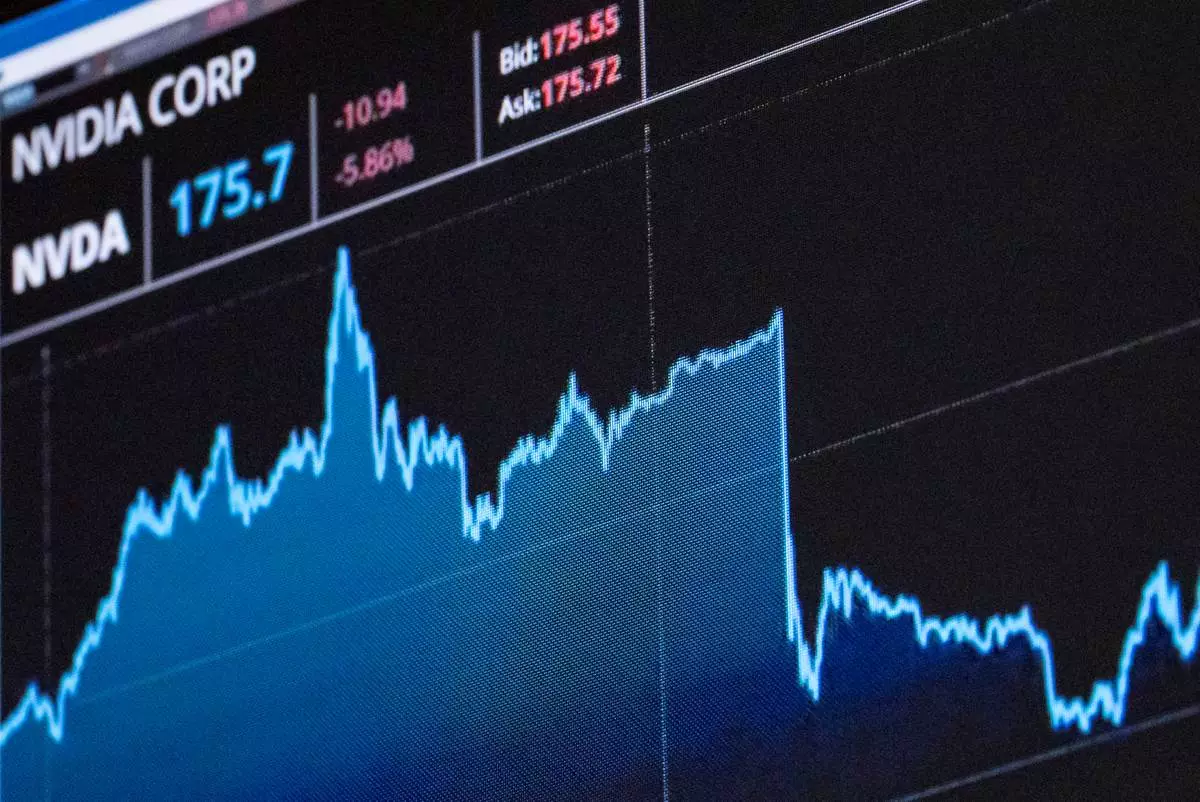
A screen on the floor of the New York Stock Exchange displays news about Nvidia's stock price in New York, Monday, Nov. 9, 2026. (AP Photo/Yuki Iwamura)

A screen on the floor of the New York Stock Exchange displays news about Nvidia's stock price in New York, Monday, Nov. 9, 2026. (AP Photo/Yuki Iwamura)

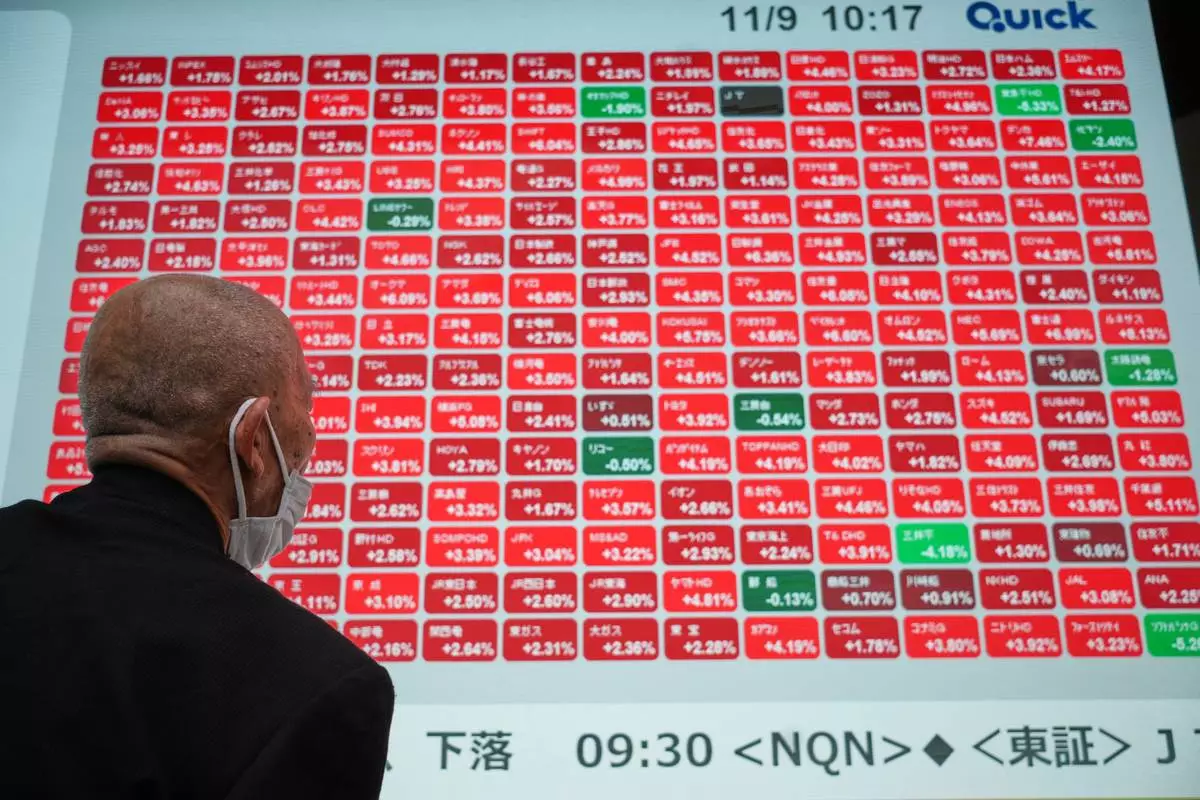
A person looks at an electronic display board showing Japan's Nikkei index at a securities firm, Monday, Nov. 9, 2026, in Tokyo. (AP Photo/Eugene Hoshiko)

A person looks at an electronic display board showing Japan's Nikkei index at a securities firm, Monday, Nov. 9, 2026, in Tokyo. (AP Photo/Eugene Hoshiko)

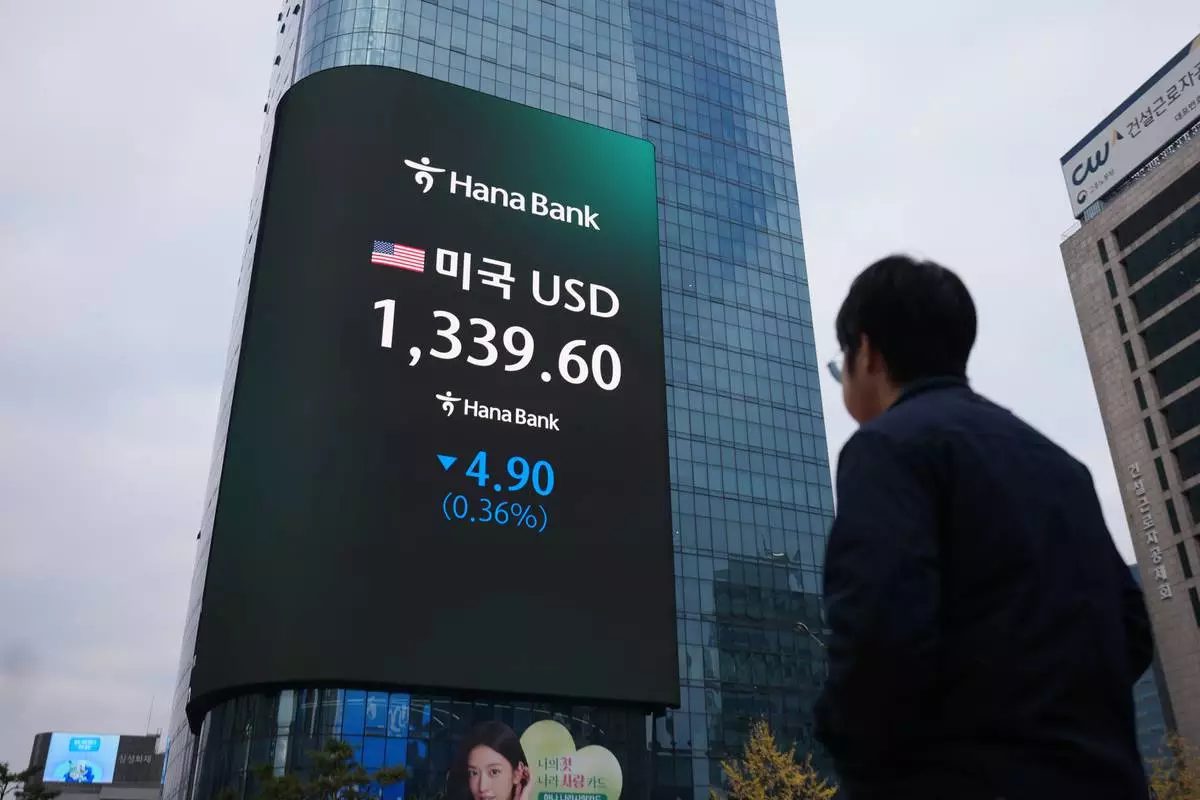
A person walks below a huge screen, displaying the foreign exchange rate between U.S. dollar and South Korean won in Seoul, South Korea, Wednesday, Nov. 11, 2026. (AP Photo/Lee Jin-man)

A person walks below a huge screen, displaying the foreign exchange rate between U.S. dollar and South Korean won in Seoul, South Korea, Wednesday, Nov. 11, 2026. (AP Photo/Lee Jin-man)

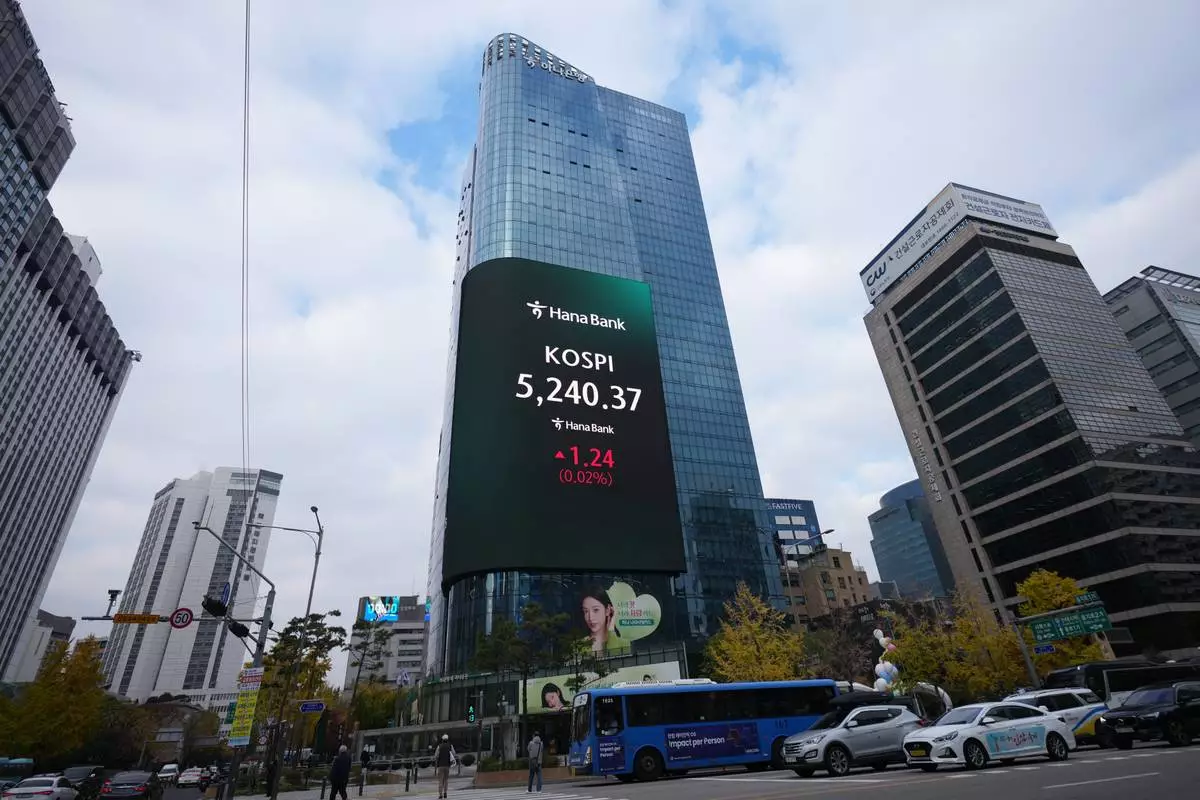
The screen showing the Korea Composite Stock Price Index (KOSPI) is seen in Seoul, South Korea, Wednesday, Nov. 11, 2026. (AP Photo/Lee Jin-man)

The screen showing the Korea Composite Stock Price Index (KOSPI) is seen in Seoul, South Korea, Wednesday, Nov. 11, 2026. (AP Photo/Lee Jin-man)

Recommended Articles