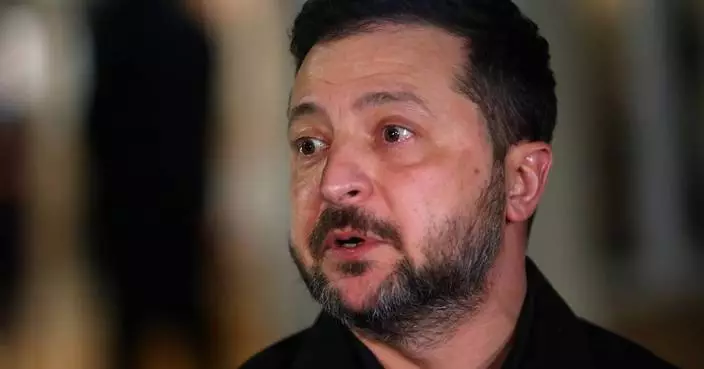
SEOUL, South Korea (AP) — South Korea said Thursday it will recall its ambassador to Ukraine, stepping up its protest against Ukrainian President Volodymyr Zelenskyy’s recent revelation of a supposedly secret transfer of two North Korean prisoners of war to South Korea.
The South Korean announcement came days after its President Lee Jae Myung threatened to take unspecified punitive steps if Ukraine refuses to apologize over the revelation.
South Korea’s Foreign Ministry didn’t say when the ambassador, Park Ki-chang, will be brought back home. A ministry statement said that South Korea will continue consultations with Ukraine, adding it hopes the dispute between the two countries would be resolved smoothly.
Ukrainian Foreign Ministry spokesperson Heorhii Tykhyi said Ukraine remains open to “constructive dialogue” despite Seoul’s decision to recall its ambassador.
“Diplomacy must prevail over emotions,” he said, according to local media outlet RBC-Ukraine.
South Korea and Ukraine became embroiled in a diplomatic row after Zelenskyy spoke about the transfer of the North Korean soldiers during his U.N. speech on Sept. 23. South Korea has accused Ukraine of violating a nondisclosure agreement on their transfer in mid-September, but Kyiv has denied agreeing to such a deal.
The soldiers were among thousands of North Korean troops deployed to support Russia’s war against Ukraine. Since their capture in early 2025, the soldiers had expressed their desires to resettle in South Korea, because they could face persecution if repatriated home. South Korea had said it would accept them, because it legally regards the North as part of its territory and has a policy of accepting and financially supporting North Korean defectors.
South Korean officials said the nondisclosure agreement was made because they were concerned about the safety of the North Korean soldiers and their relatives in the North. But many experts say South Korea's liberal government likely also worries the disclosure of their arrival may hurt its efforts to improve ties with North Korea.
North Korea's state media hasn't commented on the soldiers' transfer. But the North previously reacted with fury to major defections of its citizens, accusing South Korea of kidnapping them. North Korea has shunned any talks with South Korea and the U.S. and focused on bolstering its nuclear program since 2019.
It's unclear what other steps South Korea would take. Experts say maintaining good relations with Ukraine is in South Korean national interests because Kyiv could provide Seoul with intelligence about North Korea's expanding cooperation with Russia and its battlefield experiences. They say cooperation with Ukraine is important for South Korea's partnerships with many Western countries supporting Ukraine over the war.
Observers say Zelenskyy disclosed the transfer of the North Korean POWs to expose the danger of North Korea's military support to Russia as a way to win more international assistance.
South Korea has provided $445 million in humanitarian assistance to Ukraine since 2022. In July, Lee pledged $100 million in aid to Ukraine in a meeting with Zelenskyy.

FILE - Ukraine's President Volodymyr Zelenskyy speaks during the 81st session of the United Nations General Assembly at United Nations headquarters, on Sept. 23, 2026. (AP Photo/Seth Wenig, File)
NEW YORK (AP) — More drops for stocks in the artificial intelligence industry dragged the U.S. market lower on Monday, led by Nvidia.
The weakness for tech stocks helped knock the S&P 500 index 1.9% lower and pushed the Nasdaq composite index to a 2.5% loss. The Dow also fell sharply as losses broadened into other sectors. AI-focused companies were by far the biggest weights on the market and have been behind much of the recent turbulence on Wall Street.
Nvidia sank 4.1% and was again the heaviest weight on Wall Street following its crisis of leadership. The company has lost $735 billion in market value since the scandal erupted about CEO Jensen Huang’s infidelities and his ties to an alleged Chinese spy.
Nvidia is one of the most influential companies in the world not only because its chips are powering much of the world’s move into AI technology but also because its cash has helped companies across the industry to grow.
Now, following Huang’s resignation as Nvidia’s CEO last week, both the chip company and the broad industry are facing a more uncertain future without the leather-jacketed man who became one of AI’s biggest celebrities.
It’s the latest challenge for the AI industry, which had already been shaken by criticism that stock prices in the industry shot too high and were in a bubble. The sweeping victories for Democrats in this month’s U.S. midterm elections also raised worries about possible restrictions on further construction of AI data centers.
“The market was already worried about this risk before what happened at Nvidia,” Zhiwei Zhang, president and chief economist at Pinpoint Asset Management, said in a commentary. “Now the risk has become even more serious.”
The sector is also now facing more scrutiny from the U.S. government. The Trump administration on Monday issued new rules to restrict remote access to advanced U.S. computing chips and servers.
Outside of Nvidia, other chip companies also fell. They had climbed in the earlier days of Nvidia’s fall on hopes that they could gain a competitive advantage. But Broadcom dropped 3.9% and notched its second straight loss on concerns about the broader industry. Advanced Micro Devices fell 5.6%.
CoreWeave, which buys Nvidia chips and then rents out access to them to customers over the cloud, sank 6.1%. GE Vernova, which is helping to power AI data centers, fell 4.9%.
The next big milestone for the AI industry may arrive Tuesday after trading in the U.S. stock market ends for the day. That’s when Nvidia will report its latest quarterly results, and interim CEO Colette Kress is set to speak to Wall Street. Investors have become accustomed to Nvidia not only reporting stronger results than analysts expected for each quarter but also giving a forecast for upcoming revenue that’s well above expectations.
Elsewhere on Wall Street, L3Harris Technologies fell 3.9% after officials in President Donald Trump’s administration suggested the contractor for the Federal Aviation Administration may be at fault for a nationwide ground stop Friday. L3Harris said Saturday that it’s supporting the FAA in its investigation.
Summit Therapeutics sank 16.5% after the biopharmaceutical company said the U.S. Food and Drug Administration indicated it cannot approve its application for a therapy to treat certain patients with lung cancer.
Tyson Foods rose 8.7% after reporting a stronger profit for the latest quarter than analysts expected. The company behind the Jimmy Dean and Hillshire Farm brands, though, also reported weaker revenue than expected after selling less beef than it did a year earlier.
Overall, the S&P 500 shed 145.08 points to close at 7,416.59, marking the third straight loss for the benchmark index. The Dow Jones Industrial Average fell 739.38 points, or 1.4%, to 51,608.17. The Nasdaq composite fell 626.52 points to 24,509.76.
The recent swings for AI stocks have overshadowed what's been another strong earnings reporting season for U.S. companies. The big businesses in the S&P 500 index are on track to deliver earnings per share for the summer nearly 32% higher than a year earlier, according to FactSet.
It's the third straight quarter of growth above 25% for the index, which is important because corporate profits are one of the two big levers that set stock prices over the long term, along with interest rates.
In the bond market, Treasury yields eased back following last week's jump due to a worse-than-expected report on U.S. inflation.
The yield on the 10-year Treasury fell to 5.13% from 5.15% late Friday, though it remains well above a low of 4.80% reached earlier this month. Higher yields make borrowing money more expensive for everyone, and they’ve already hurt the housing industry through expensive mortgage rates.
Yields fell as oil prices sank, which took away some of the upward pressure on inflation. The price for a barrel of Brent crude oil fell 3.5% to $92.44. It’s been yo-yoing amid uncertainty about what will happen in the war with Iran.
In stock markets abroad, indexes were mixed in Europe.
AP Business Writers Chan Ho-him and Michelle Chapman contributed to this report.
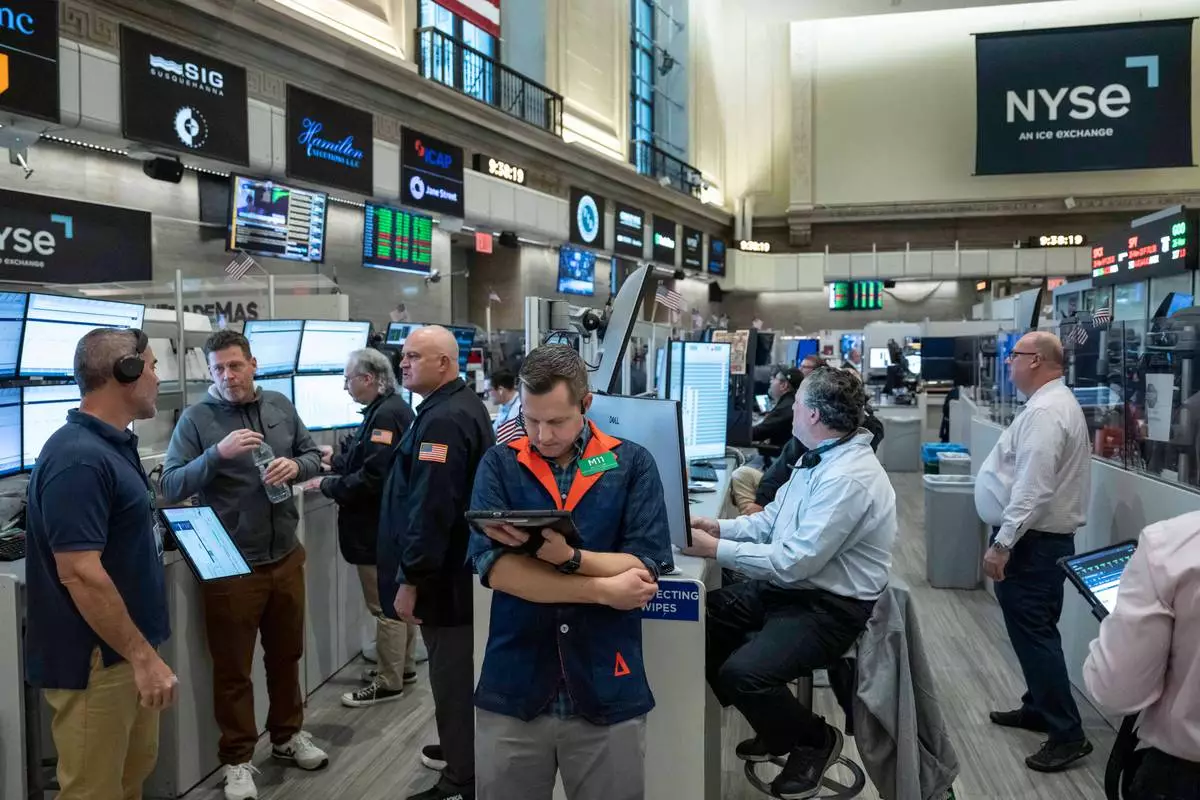
Options traders, including Bill Taylor, center, work on the floor of the New York Stock Exchange in New York, Monday, Nov. 9, 2026. (AP Photo/Yuki Iwamura)
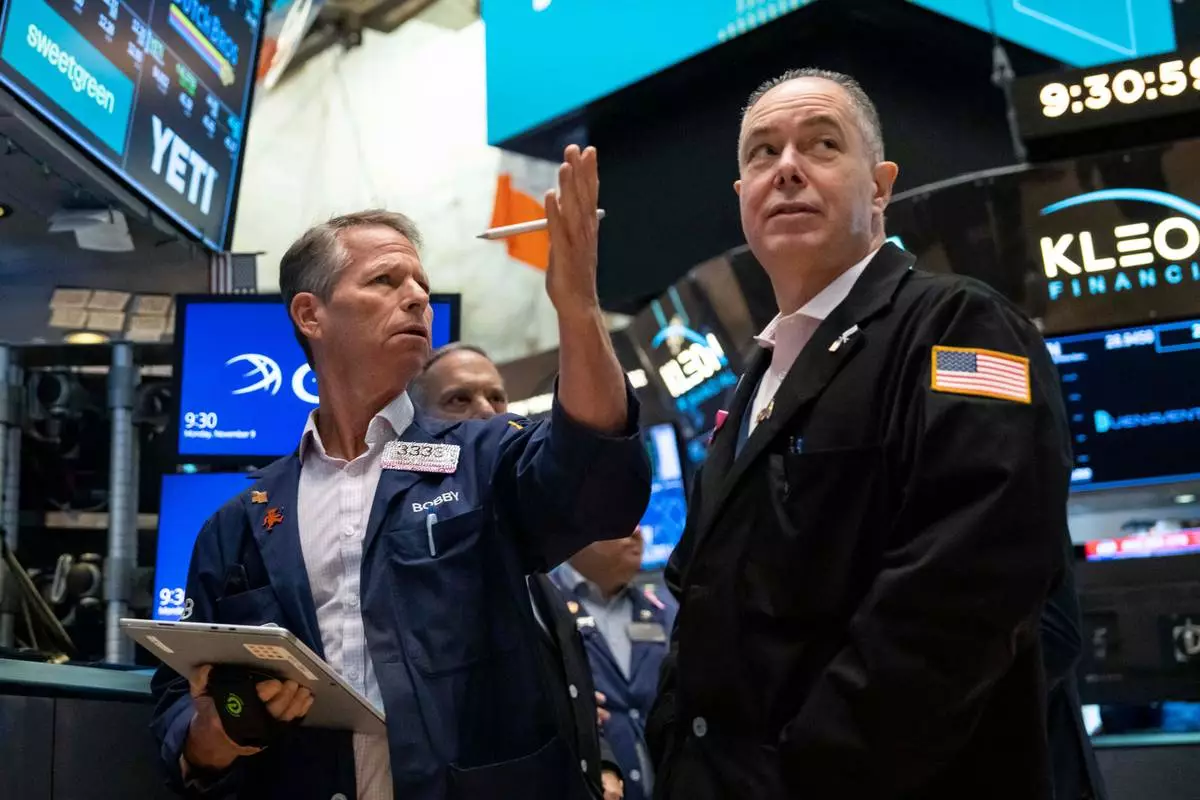
Trader Robert Charmak, left, works on the floor of the New York Stock Exchange in New York, Monday, Nov. 9, 2026. (AP Photo/Yuki Iwamura)
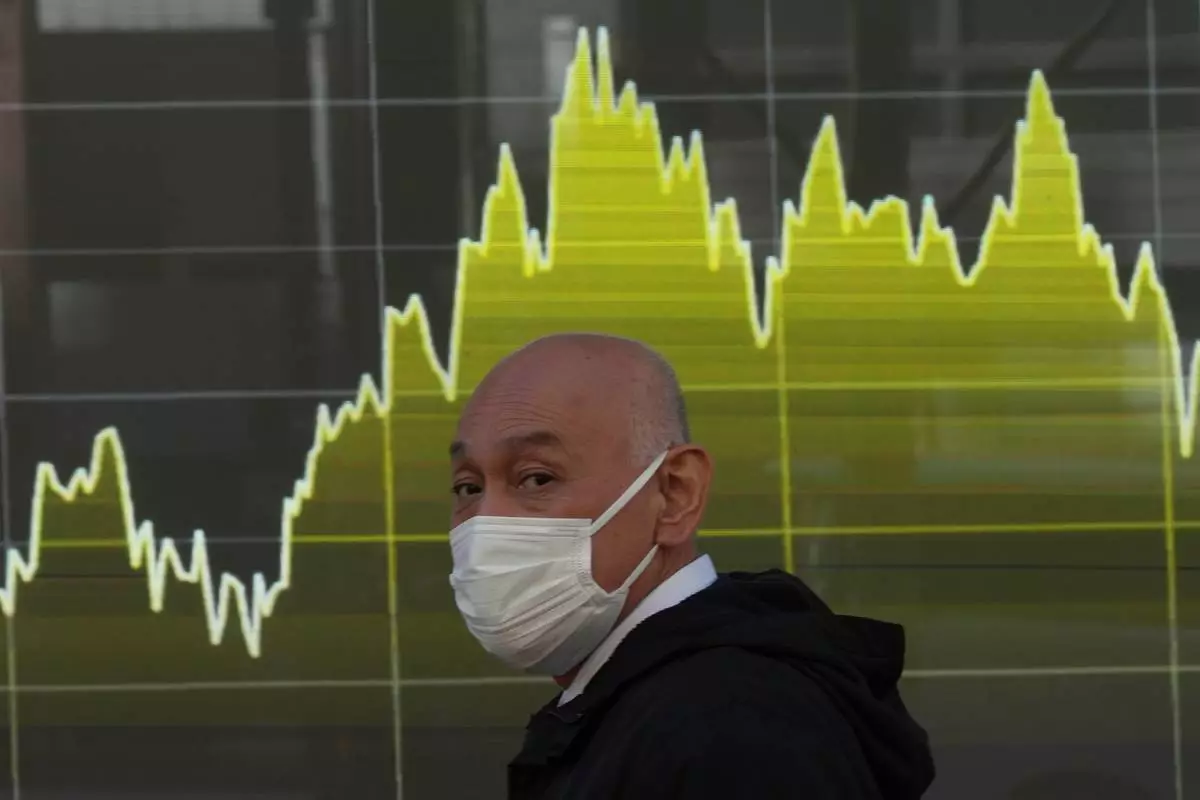
A person walks in front of an electronic stock board showing Japan's Nikkei index at a securities firm Monday, Nov. 16, 2026, in Tokyo.(AP Photo/Eugene Hoshiko)
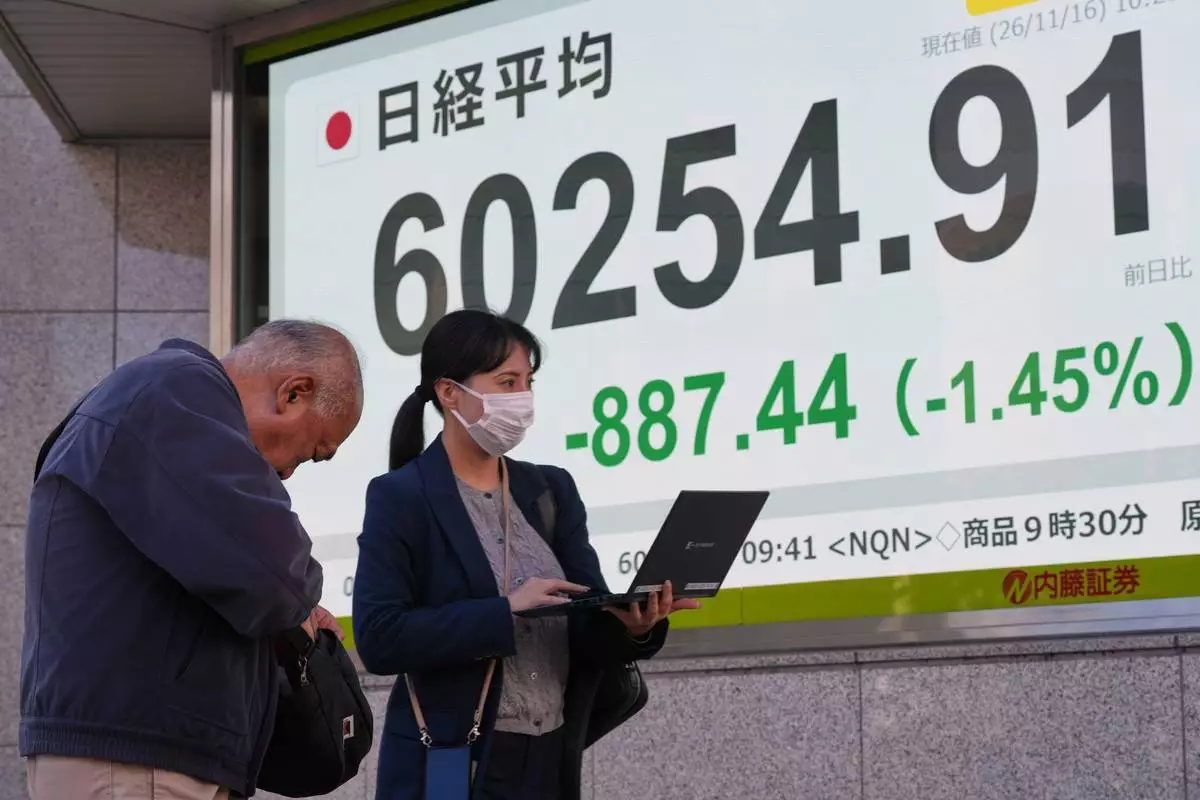
People walk in front of an electronic stock board showing Japan's Nikkei index at a securities firm Monday, Nov. 16, 2026, in Tokyo. (AP Photo/Eugene Hoshiko)
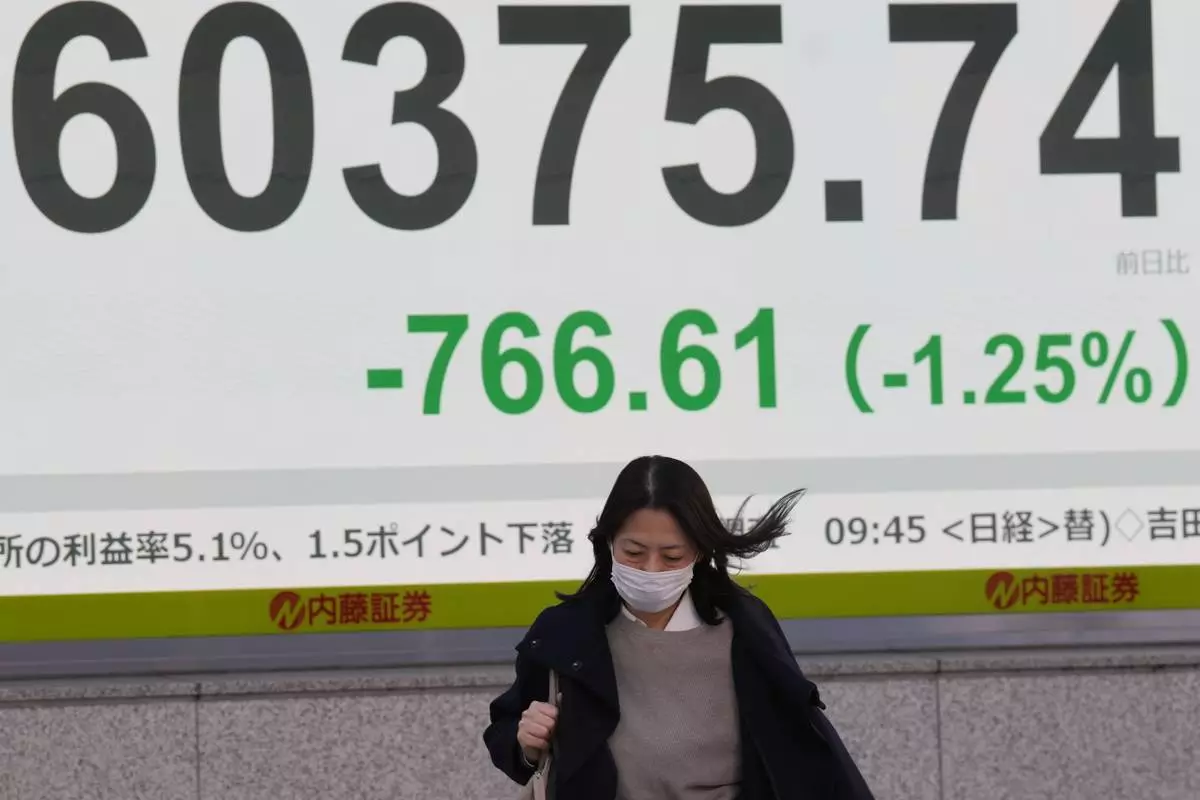
A person walks in front of an electronic stock board showing Japan's Nikkei index at a securities firm Monday, Nov. 16, 2026, in Tokyo.(AP Photo/Eugene Hoshiko)
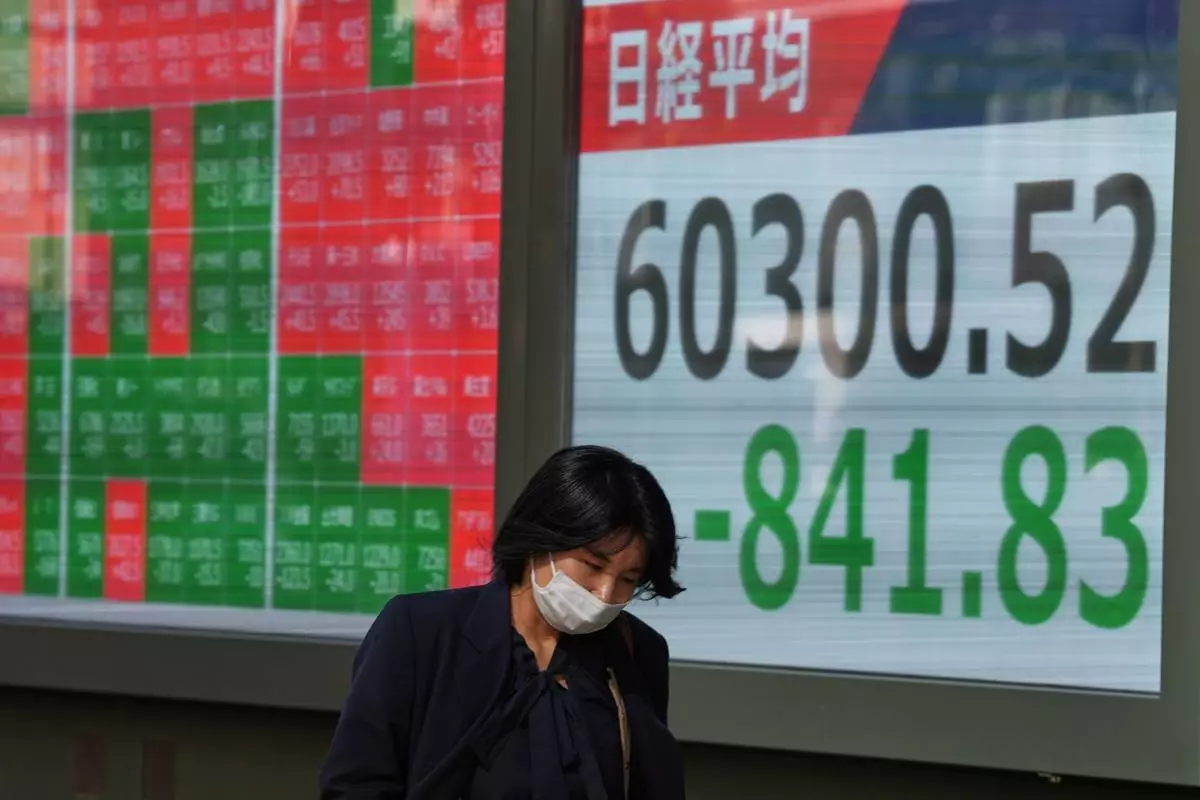
A person walks in front of an electronic stock board showing Japan's Nikkei index at a securities firm Monday, Nov. 16, 2026, in Tokyo. (AP Photo/Eugene Hoshiko)
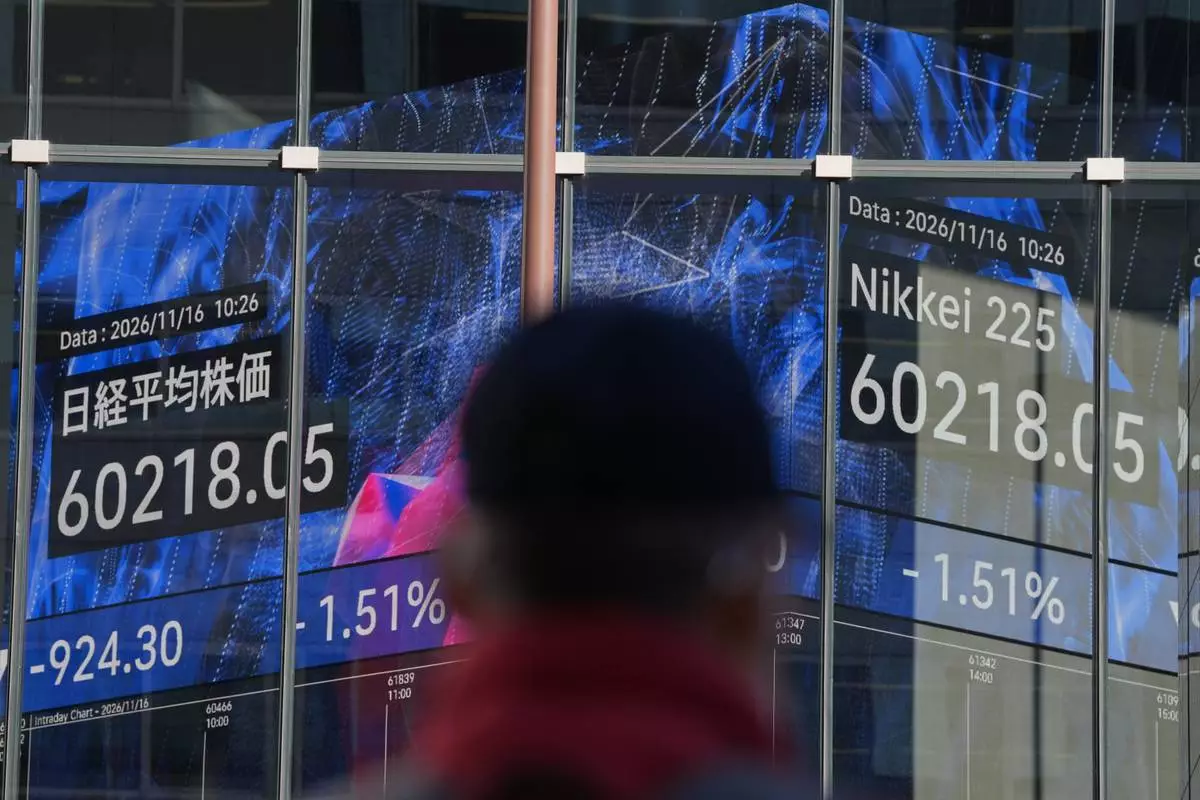
A person watches an electronic stock board showing Japan's Nikkei index at a securities firm Monday, Nov. 16, 2026, in Tokyo. (AP Photo/Eugene Hoshiko)