Margaret Hamilton, a groundbreaking computer scientist who led the team that created the onboard flight software for NASA’s moon-bound Apollo program and later in life was celebrated as a powerful symbol of women in technology, has died. She was 90.
Hamilton died Sept. 30 at a hospital in Cambridge, Massachusetts, her daughter, Lauren Hamilton, told The Associated Press on Thursday. NASA Administrator Jared Isaacman said on the social platform X that her work helped make humanity’s first journeys to the moon possible.
“To say Margaret Hamilton was a pioneer — to say she was ahead of her time — would be a dramatic understatement,” Olivier de Weck, the Apollo program professor at the Massachusetts Institute of Technology and interim head of its aeronautics and astronautics department, told MIT News, a publication of the university's communications office.
“She was a software engineer at a time when that field was in its infancy,” de Weck continued, “and she not only developed advanced code herself but also led a team in using that nascent technology to develop one of the most complex systems humanity had ever achieved.”
In recent years, a photo circulated online showing a smiling Hamilton, in her early 30s, standing next to a towering stack of pages containing codes her team used during the Apollo project. A Lego set celebrating the women of NASA that was unveiled in 2017 included a figure of Hamilton. And the marking in 2019 of the 50th anniversary of the Apollo 11 moon landing also brought attention, her daughter said.
“She definitely went from nobody knowing who she was to suddenly everyone knowing who she was, especially in her field,” Lauren Hamilton said. “And I think she was really happy to be acknowledged for what she did. But she was kind of a reserved person so the spotlight wasn’t necessarily a natural thing for her.”
Hamilton graduated with a degree in mathematics from Earlham College in Richmond, Indiana, in 1958 and went to work for MIT in 1959. Her early focus there included working with a meteorology professor on weather prediction software, according to the MIT News article. In the mid-1960s, she started at MIT's Instrumentation Lab, which had a NASA contract for Apollo.
After first working on software for uncrewed missions, she later led the team developing the onboard flight software for the crewed missions, and by 1968 she was assistant director in charge of the command and service module team, according to MIT News.
“We took our work seriously, many of us beginning this journey while still in our 20s,” Hamilton told MIT News in 2009. “Coming up with solutions and new ideas was an adventure.”
“Because software was a mystery, a black box, upper management gave us total freedom and trust,” she continued. “We had to find a way, and we did. Looking back, we were the luckiest people in the world; there was no choice but to be pioneers.”
She worked at the Instrumentation Lab into the 1970s and then founded two software companies, according to MIT News.
Lauren Hamilton said her mother’s biggest interest was in the abstract. “She was very much a mathematician and into the abstraction of how to turn thought, I guess, into software,” she said.
She said her mother was also “a really eccentric and fun character” who loved collecting vintage clothing and had “a very mischievous sense of humor.”
“She encountered a lot of sexism in her field but she didn’t come back aggressively,” Lauren Hamilton said. “She would disarm people with her sense of humor or … just kind of dominate quietly.”
Born on Aug. 17, 1936, in Indiana, Hamilton grew up mostly in the Upper Peninsula of Michigan, her daughter said, and she lived in Cambridge from when she was in her early 20s until her death.
Hamilton received many awards and accolades, including being awarded the Presidential Medal of Freedom, the nation’s highest civilian honor, in 2016 by President Barack Obama.

FILE - Margaret Hamilton, chief executive officer of Hamilton Technologies, Inc., poses in her Cambridge, Mass., home and office, Sept. 17, 1986, with company vice president John Schickling. Hamilton directed on-board software development for Apollo missions. (AP Photo/Carol Francavilla, File)
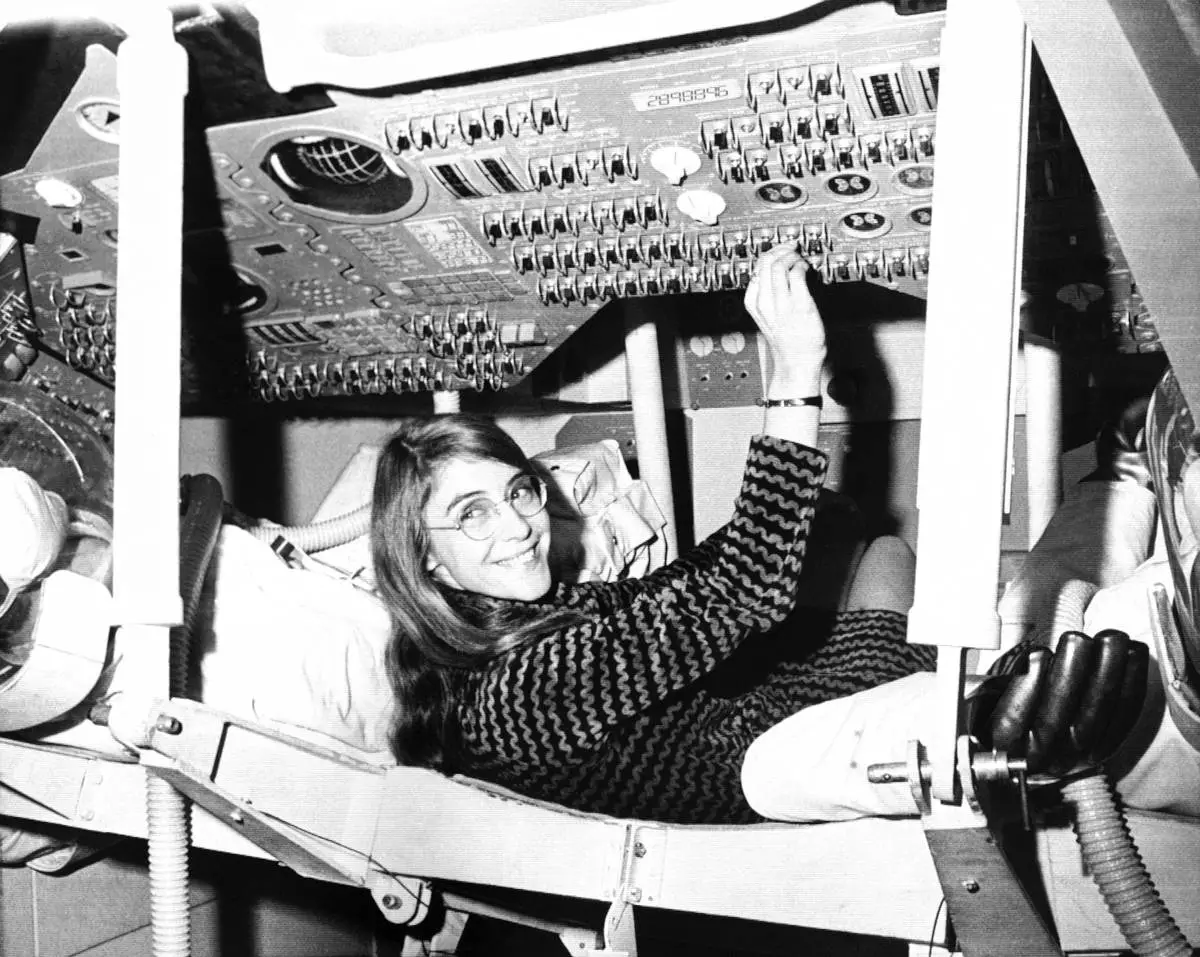
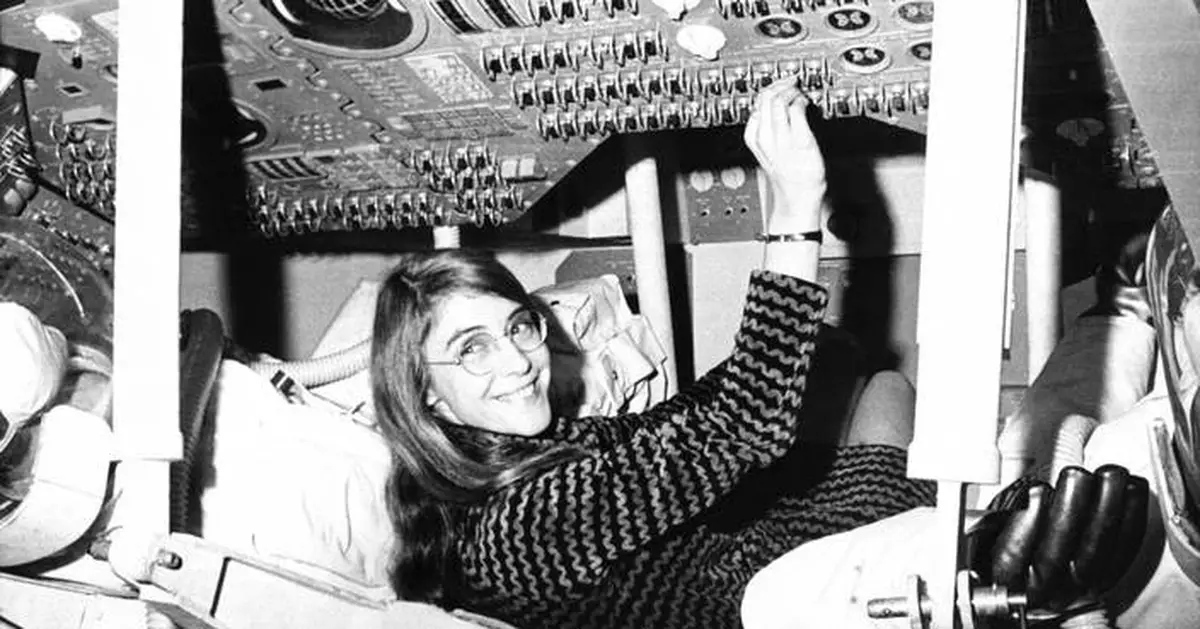
FILE - Margaret Hamilton, of Cambridge, Mass., mathematic and computer programmer at the MIT Instrumentation Laboratory, sits in mock up of Apollo command module on display at the Cambridge school, Nov. 25, 1969, where she headed group that programmed Intrepid's pinpoint landing in the Sea of Storms on the moon. (AP Photo/File)
CORONADO, Calif. (AP) — Sailors disembarked the USS Lincoln on Thursday following a deployment that included a record 265 uninterrupted days at sea supporting the Iran war and reports of supply shortages and deteriorating mental health among the crew.
Families waiting for the aircraft carrier’s arrival in San Diego Bay described crying and losing sleep after hearing about the ship’s food shortages and tough conditions. Many said the sailors had sent lists of the food they were craving.
Abel Ramirez, 20, walked off the carrier with a big grin, overjoyed that his first deployment was over.
“It feels amazing,” he said while headed out to search for his parents who drove from Texas. “There was a certain point when I never thought I would come off.”
The carrier drew national attention following reports of stress among the crew and poor mental health, as well as supply shortages, including food and hygiene products, during its Iran war mission.
Dozens of sailors stood atop the Lincoln as it glided past the cityscape of downtown San Diego toward cheering families who were carrying flowers and balloons and ringing cowbells.
Cassity Garduque, 14, waved as her mom in her sailor uniform frantically waved back from the top deck. "It feels really overwhelming,” she said about being reunited, adding she's glad her mom won't need to eat ramen almost every day.
Defense Secretary Pete Hegseth flew out to the Lincoln on Wednesday to give the crew the Presidential Unit Citation, the highest honor a unit can receive.
Hegseth pushed back against what he said were efforts to turn the “Lincoln into some sort of a symbol, a symbol of dysfunction or a symbol of low morale or a symbol of a failed mission.”
Capt. Daniel Keeler, the ship’s commander, said most of the crew was on their first deployment and that the issues they faced were normal for such a long deployment, adding everyone had access to four meals a day.
Among the first to depart the carrier at the naval base in Coronado were 64 fathers meeting their babies for the first time, the Navy said.
Waiting for the Lincoln to bring her husband home, sailor Kathy Monterrosa held her 6-month-old daughter, Sarahi, outfitted in a tiny blue and white sailor dress.
“She’s our deployment baby,” said Monterrosa, of Virginia Beach, Virginia.
It was tough to hear about the ship’s conditions while she was pregnant, she said. “I was crying a lot and worried. I wasn’t sure if he was OK or not,” she said.
When she finally heard from her husband, he told her it was “pretty bad.”
Sailor Steven Rivas beamed as he held is 7-month-old daughter.
“I couldn’t grasp the reality of it,” he said about coming home. He said he became overwhelmed as they pulled into the bay, “seeing everyone and knowing my family was waiting for me.”
Alma Solano Velez said her husband gave his family an extensive list of the foods he has been craving over the past 10 months: oxtail, barbecue chicken, broccoli and shrimp empanadas to name a few.
He had told his wife about “the lack of food and showers” on board and was looking forward to seeing their daughter, who turned 4 while he was away, she said.
The Navy initially downplayed any problems during the deployment, and President Donald Trump commented in August that the Lincoln’s lengthy deployment was “not nearly long enough.”
Hegseth told the crew that “what makes the U.S. military and the U.S. Navy and all these sailors different is that you adapt and that you’re resilient and you overcome — you finish the mission nonetheless.”
The carrier left San Diego in November and arrived in the Middle East in January. U.S. and Israeli forces launched airstrikes against Iran on Feb. 28.
Navy leaders eventually acknowledged there were some issues aboard.
In August, acting Navy Secretary Hung Cao said the Lincoln maintained adequate food supplies, but because combat operations limited resupply opportunities, meal options were reduced for a short time.
After more than 10 months at sea, the Lincoln’s crew got a stop in Thailand early last month on the way back from the Middle East.
Extended naval deployments can wear on service members who are away from home for long periods and increase strain on the ship and its equipment.
The Navy told lawmakers that eight sailors attempted suicide during the record-setting deployment, though experts say that number is low in a strike group of 6,000 sailors over 10 months.
According to the citation that Hegseth read to the crew, the Lincoln and its strike group executed nearly 3,700 combat missions, launched 450 Tomahawk cruise missiles, shot down 77 one-way attack drones, sank 64 Iranian warships, and destroyed 21 anti-ship cruise missiles.
The Lincoln, which set a record for days between ports of call, is the second carrier to endure an unusually long deployment during the Iran war and to receive the Presidential Unit Citation afterward, typically reserved for significant achievement in combat.
The crew of the USS Gerald R. Ford returned in May from a 326-day deployment — the longest for an aircraft carrier in the past 50 years and a record in the post-Vietnam War era. The deployment didn’t include as many uninterrupted days at sea as the Lincoln.
Another carrier, the usually Asia-based USS George Washington, relieved the Lincoln in the Middle East in August.
Seewer reported from Toledo, Ohio.
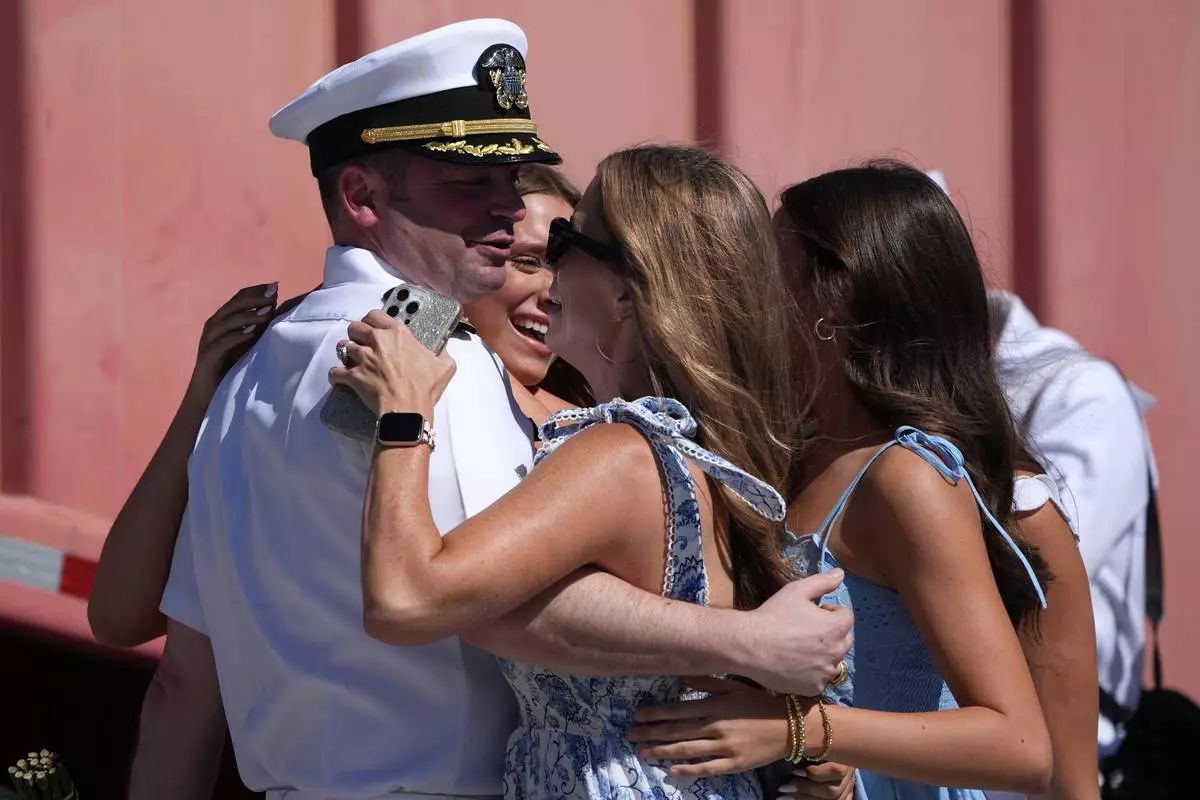
Captain Daniel J. Keeler, Commanding Officer of the USS Abraham Lincoln, greets his family after the aircraft carrier returned to Naval Air Station North Island after deployment Thursday, Oct. 8, 2026, in Coronado, Calif. (AP Photo/Gregory Bull)
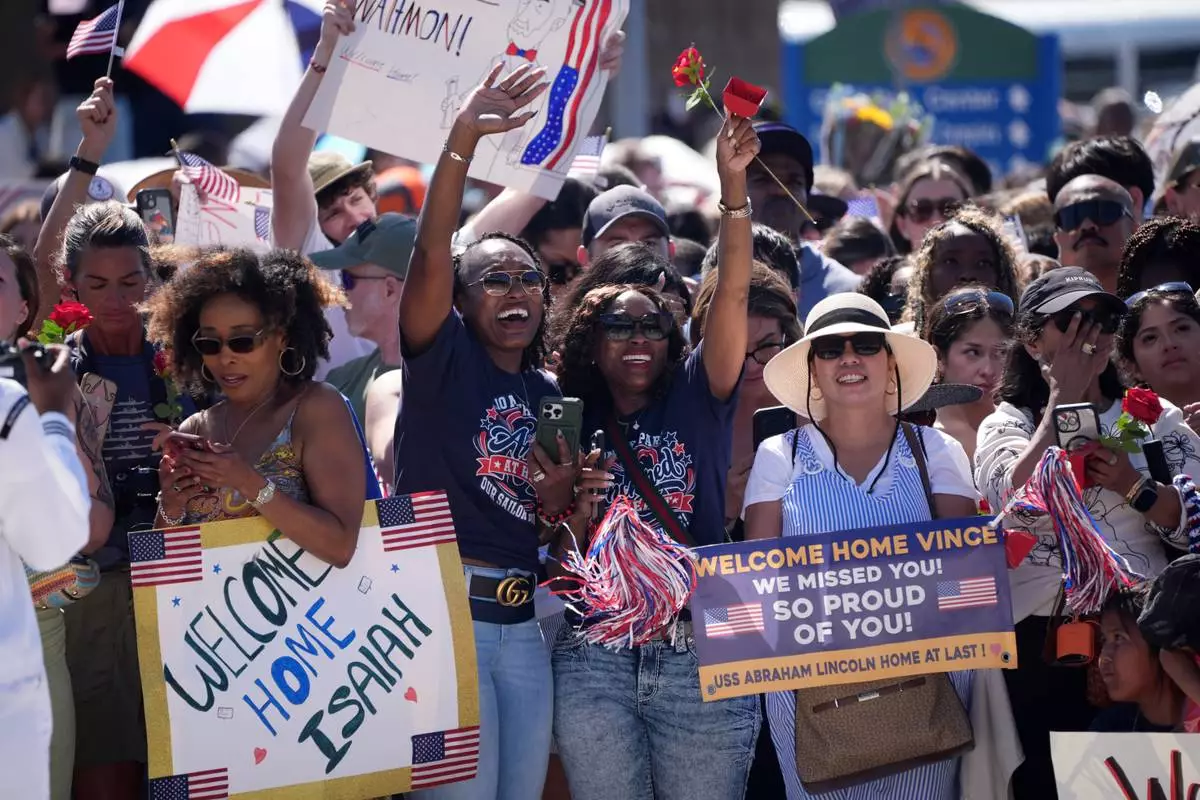
Family and friends cheer as the USS Abraham Lincoln aircraft carrier returns to Naval Air Station North Island after deployment Thursday, Oct. 8, 2026, in Coronado, Calif. (AP Photo/Gregory Bull)
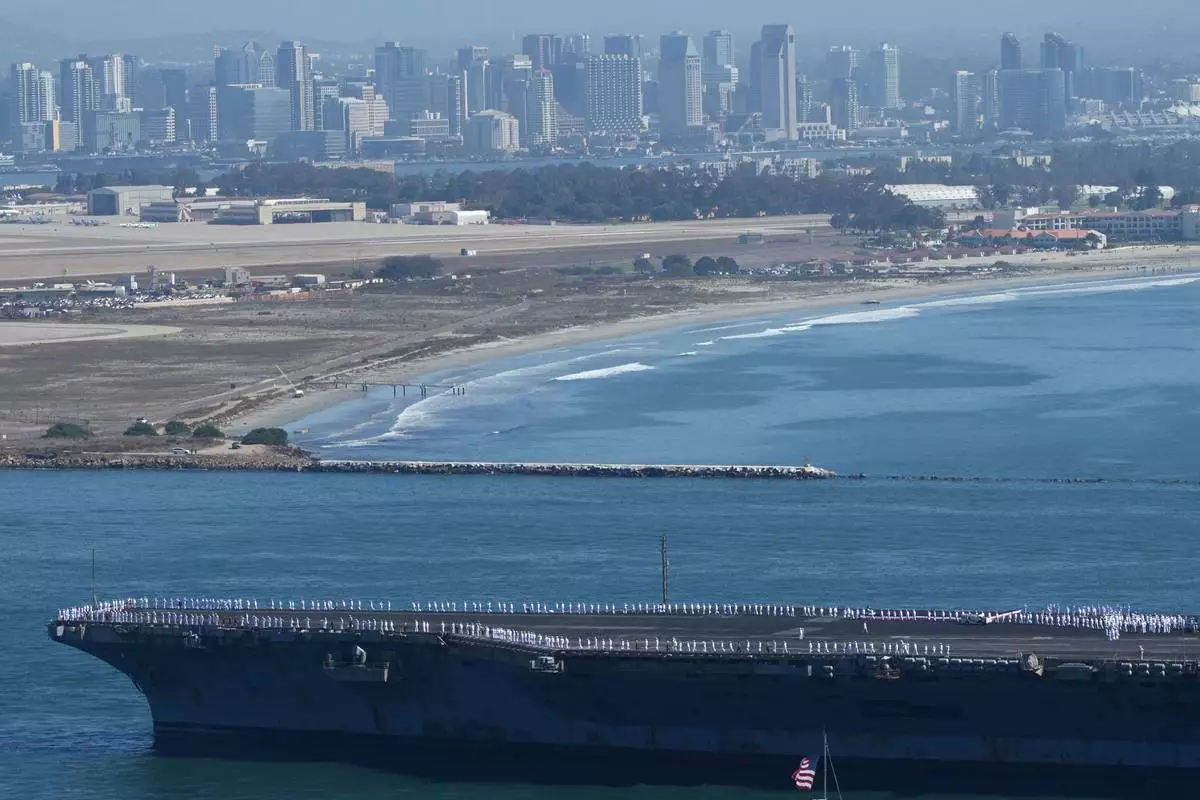
The USS Abraham Lincoln aircraft carrier returns to the San Diego Bay after deployment Thursday, Oct. 8, 2026, in San Diego. (AP Photo/Jae C. Hong)
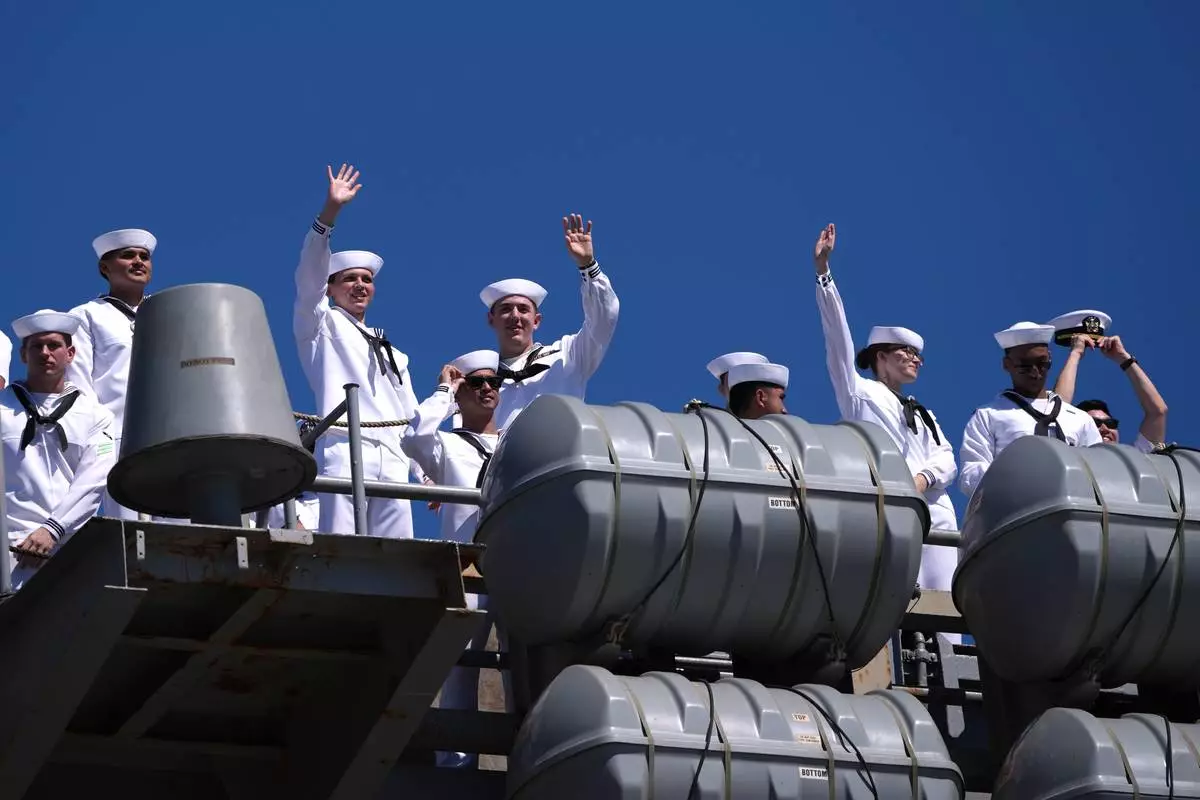
Sailors wave aboard the USS Abraham Lincoln aircraft carrier as it returns to Naval Air Station North Island after deployment Thursday, Oct. 8, 2026, in Coronado, Calif. (AP Photo/Gregory Bull)

The USS Abraham Lincoln aircraft carrier returns to the San Diego Bay after deployment Thursday, Oct. 8, 2026, in San Diego. (AP Photo/Karl Anderson)
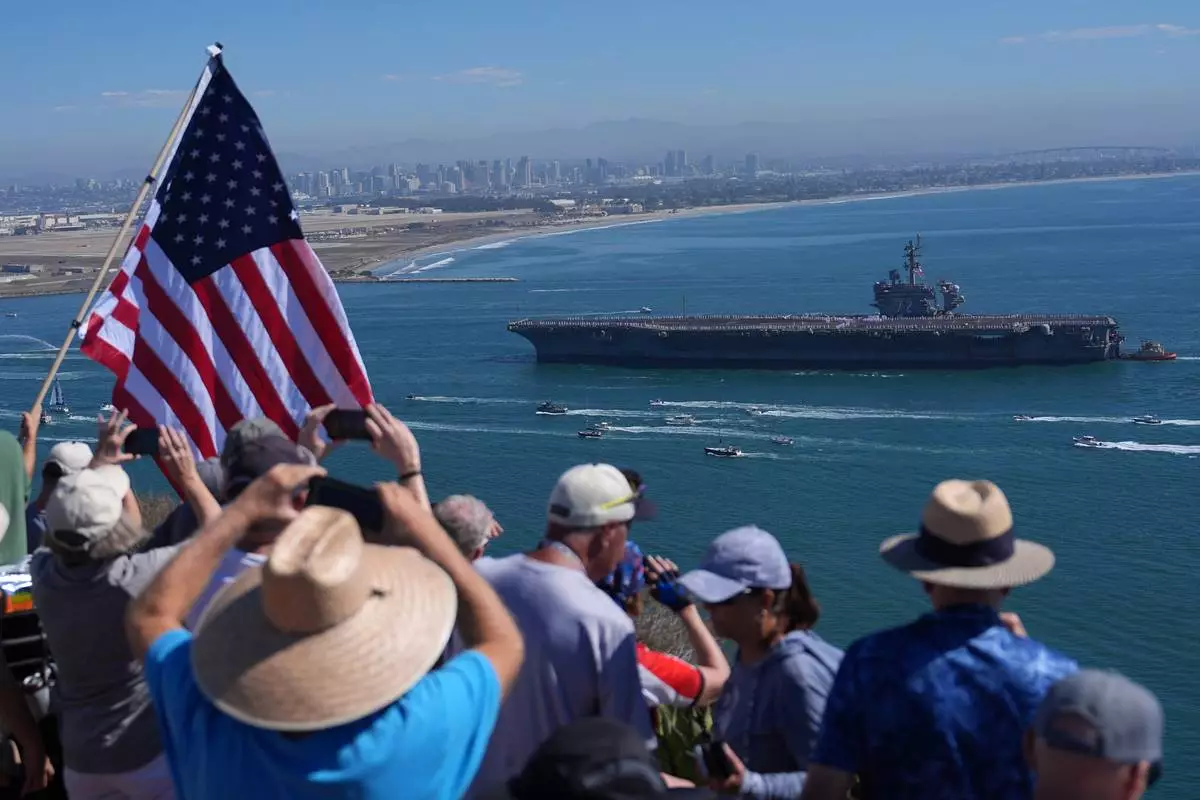
The USS Abraham Lincoln aircraft carrier returns to the San Diego Bay after deployment Thursday, Oct. 8, 2026, in San Diego. (AP Photo/Jae C. Hong)

Ofelia Woodruff waits to greet her son, sailor Michael Woodruff, as the USS Abraham Lincoln aircraft carrier returns to Naval Air Station North Island after deployment Thursday, Oct. 8, 2026, in Coronado, Calif. (AP Photo/Gregory Bull)
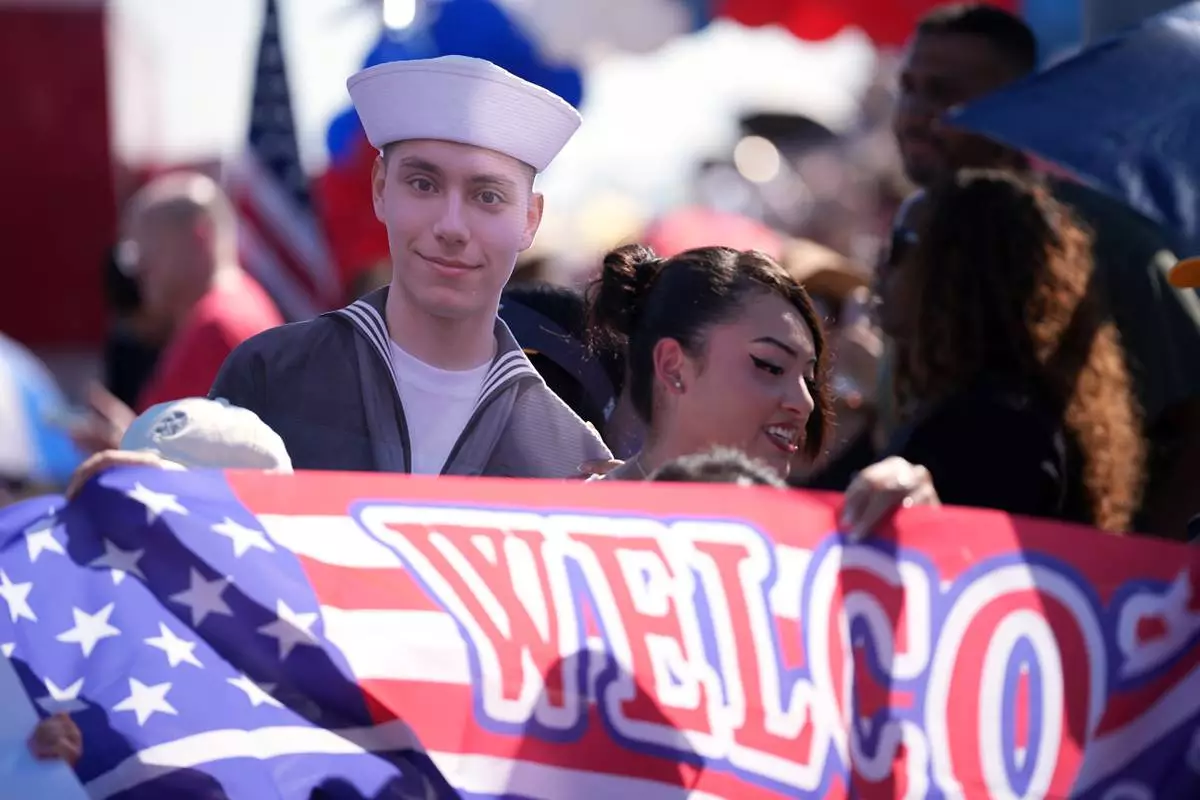
Family and friends gather to welcome sailor Frankie Valdovinos as the USS Abraham Lincoln aircraft carrier returns to Naval Air Station North Island after deployment Thursday, Oct. 8, 2026, in Coronado, Calif. (AP Photo/Gregory Bull)
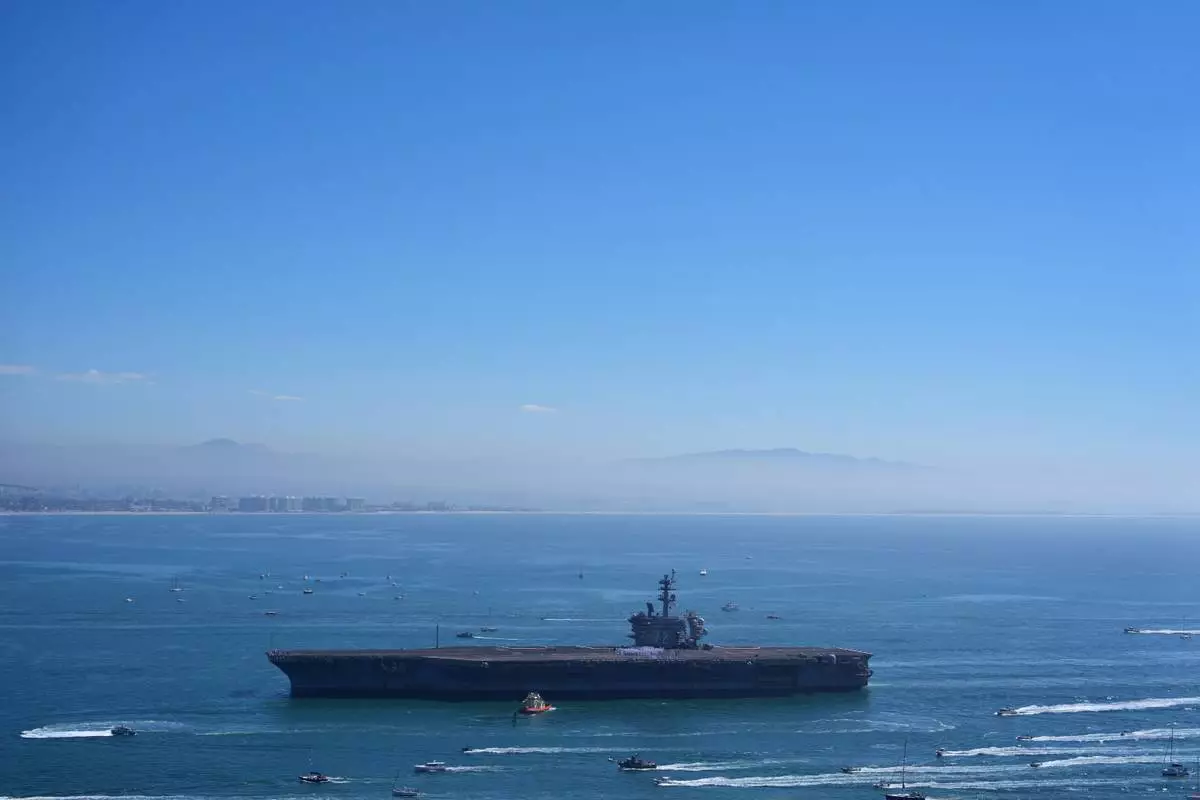
The USS Abraham Lincoln aircraft carrier returns to the San Diego Bay after deployment Thursday, Oct. 8, 2026, in San Diego. (AP Photo/Jae C. Hong)
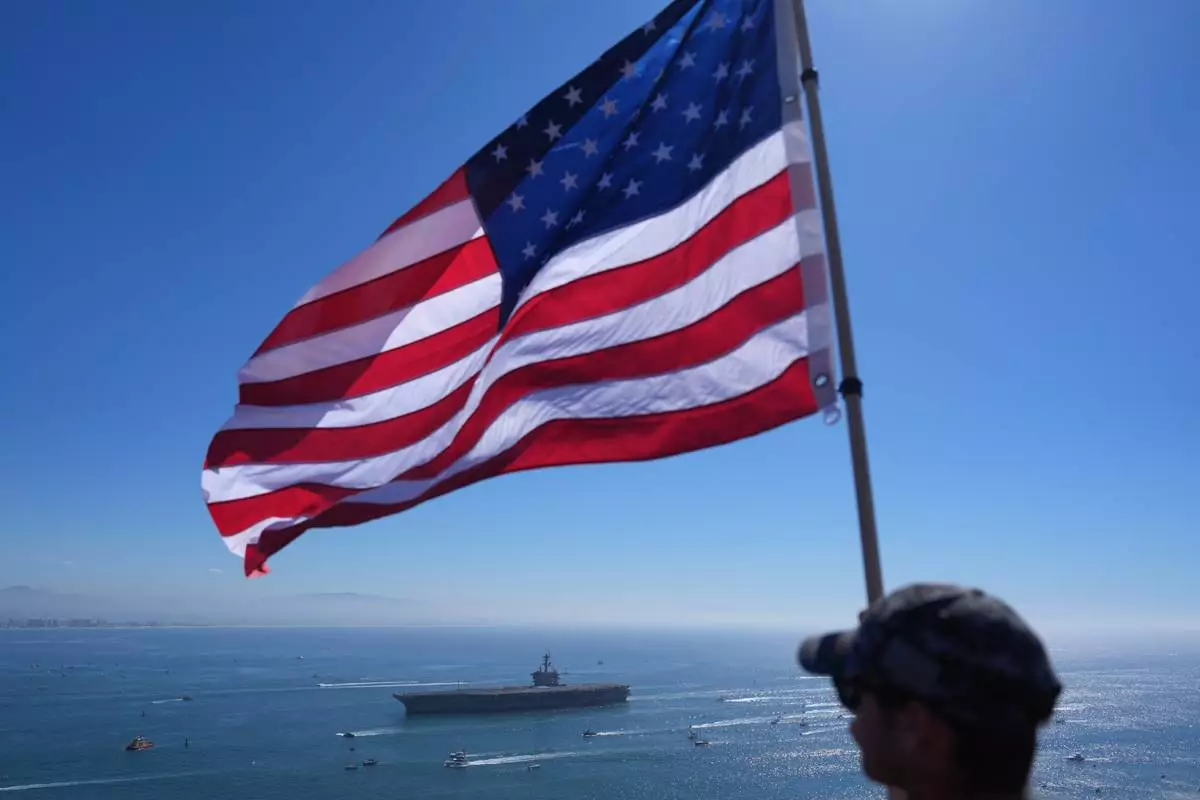
The USS Abraham Lincoln aircraft carrier returns to the San Diego Bay after deployment Thursday, Oct. 8, 2026, in San Diego. (AP Photo/Jae C. Hong)