HANOI, Vietnam (AP) — Heavy rains lashed much of central Vietnam on Friday and caused flooding in parts of the historic city of Hue, a day after floods and landslides hit the coastal port city of Danang. Troops were mobilized and amphibious armored vehicles readied for rescue operations, state media reported.
More rainfall was forecast through Sunday morning and authorities warned that continued downpours could trigger flash floods and landslides in mountainous areas and flooding in low-lying communities.
In Hue, the country’s former imperial capital known for its centuries-old palaces, rainfall over the past three days exceeded 800 millimeters (31.5 inches), increasing the risk of flash floods and landslides. The rain was heaviest in coastal lowlands and hilly areas in the city’s south.
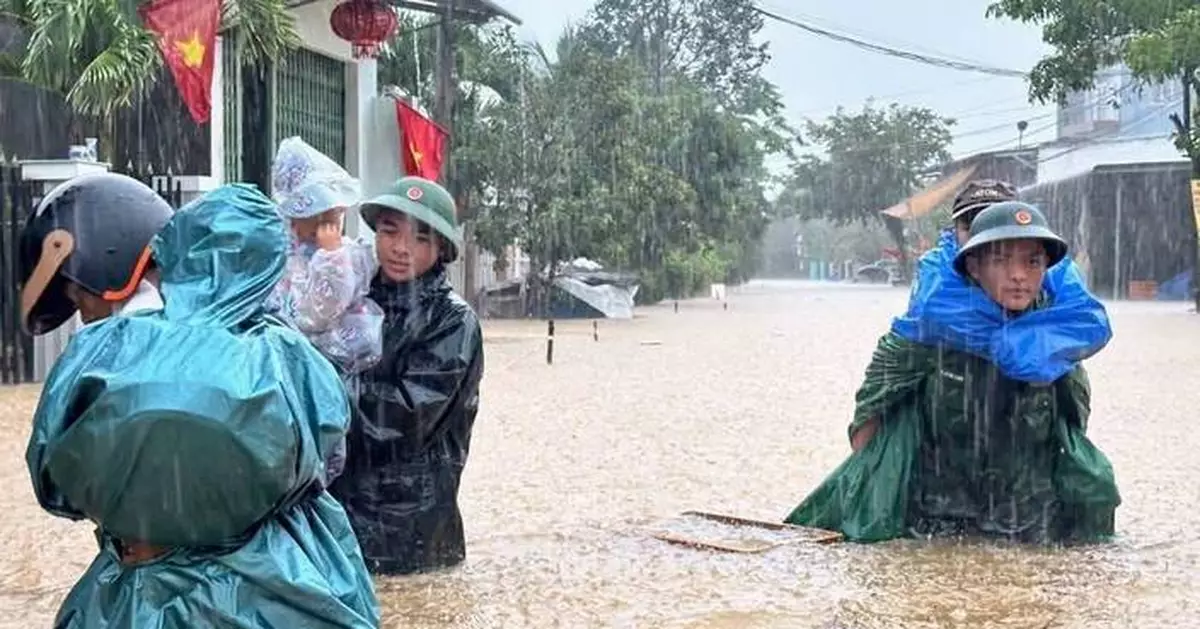
In Danang, residential areas and streets were inundated on Thursday, with water levels more than waist-high in some areas, exceeding 1 meter (3.3 feet). Rescue teams helped evacuate children and move residents’ belongings to safety.
A man remained missing after a boat carrying him and his wife capsized on the Truong Giang River on Wednesday afternoon, state media reported. The couple were returning home after cutting grass when their boat overturned.
The woman, who could not swim, clung to a sack of grass and was swept nearly 300 meters (yards) downstream before residents rescued her. Her husband was carried away by the current.
The military deployed nearly 130 troops in Danang and more rescue teams were formed. Amphibious armored vehicles were readied in case conditions worsen, state media said.
Landslides also blocked roads in the mountainous areas around Danang. In Tra Linh, a remote commune in the southwestern highlands, earth, rocks and fallen trees blocked a road leading to a nearby hamlet. Authorities cleared the debris and partially reopened the road, but further landslides remained possible, reports said.
Vietnam’s rainy season typically runs from May through November across much of the country. Last year, rains caused major flooding in central Vietnam as rivers swelled and submerged homes and tourist destinations in Hue and neighboring Hoi An.
Benjamin Horton, a professor of earth science at City University of Hong Kong, said governments cannot prevent extreme rainfall but they can act to reduce the damage it causes.
That includes early warnings, preparing rescue teams in advance, protecting key infrastructure, evacuating people before roads flood, and building better drainage systems, he said in an email to The Associated Press.
“Recovery must also build resilience to the next flood, not simply replace what was damaged,” Horton said.
The Associated Press’ climate and environmental coverage receives financial support from multiple private foundations. AP is solely responsible for all content. Find AP’s standards for working with philanthropies, a list of supporters and funded coverage areas at AP.org.
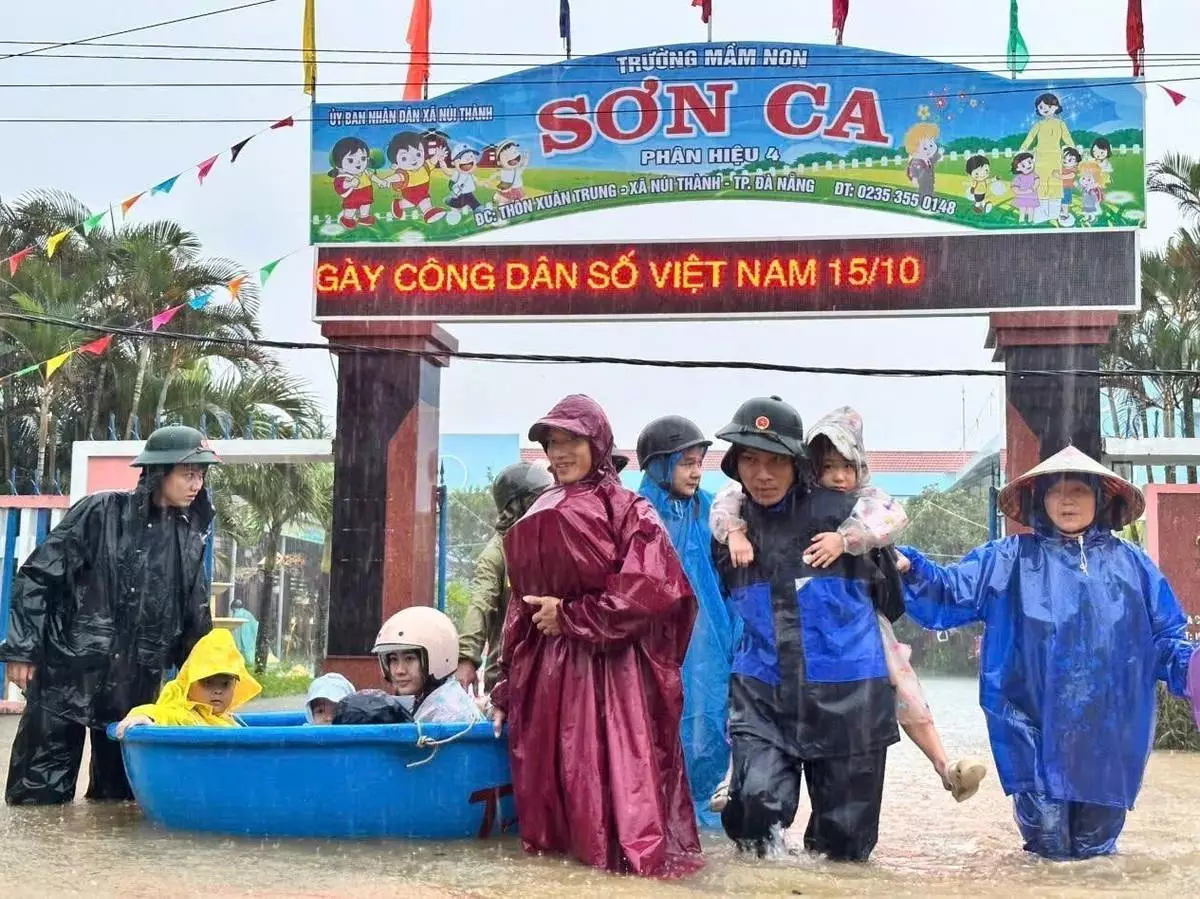
Military personnel evacuate children and people from a flooded school in Da Nang, Vietnam, Thursday, Oct. 8, 2026. (Nguyen Khoa Chuong/VNA via AP)
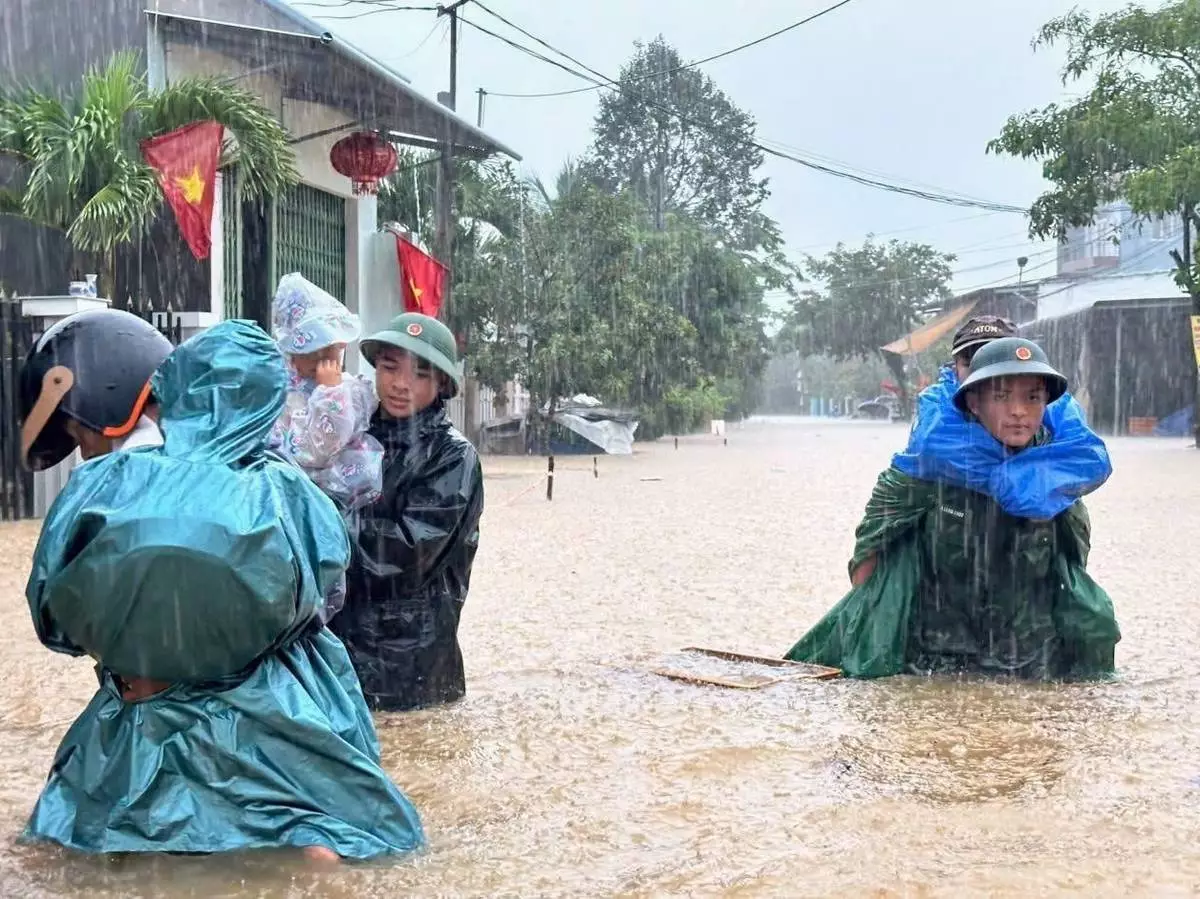
Military personnel evacuate children and people from floods in Da Nang, Vietnam, Thursday, Oct. 8, 2026. (Nguyen Khoa Chuong/VNA via AP)