Skip to Content Facebook Feature Image

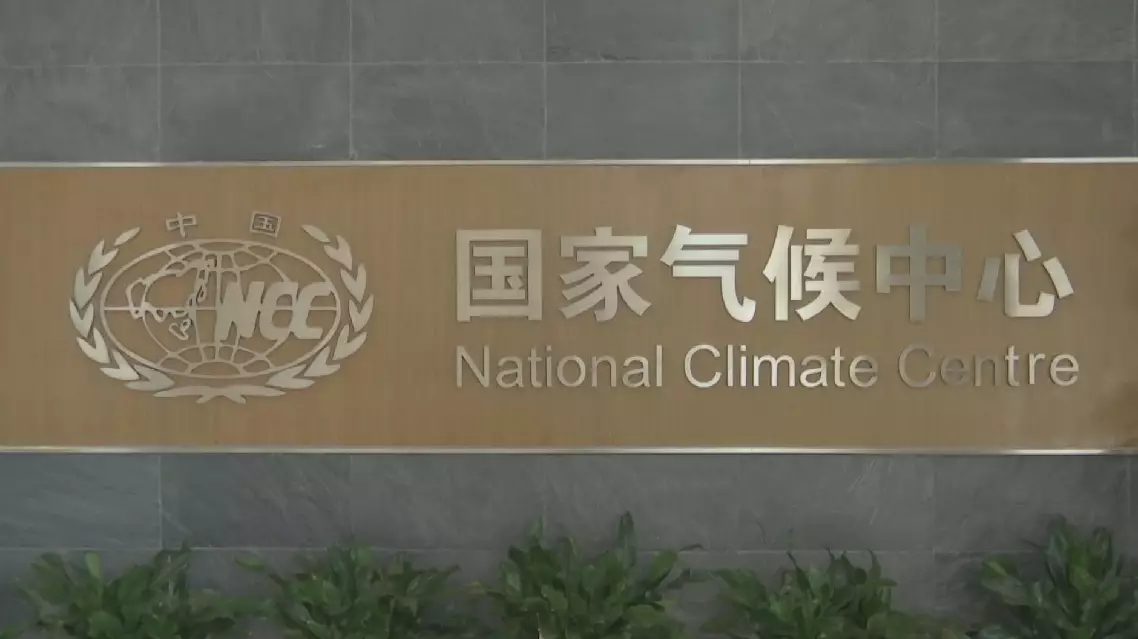
Super El Nino event formed in September: China's National Climate Center

China

China

China

Super El Nino event formed in September: China's National Climate Center

2026-10-09 17:44 Last Updated At:21:07

A super El Nino event officially formed in September 2026, monitoring data from China's National Climate Center showed on Friday.

Zhao Junhu, chief forecaster at the center, said that the equatorial central and eastern Pacific entered an El Nino state in May this year, with sea surface temperatures in the key monitoring region rising rapidly and continuously from May to September.

The three-month running mean of the sea surface temperature (SST) index in the monitoring region has remained above 0.5 degrees Celsius for five consecutive months. The index exceeded 2.5 degrees Celsius for the July-September period, meeting the threshold for a super El Nino event.

The event is classified as an eastern Pacific-type El Nino, in which the warmest sea surface temperatures are concentrated in the equatorial eastern Pacific.

Monitoring data showed that sea surface temperatures across most of the equatorial Pacific in September were above average of the same period, with temperatures in the warm pool of the eastern Pacific exceeding the climatological average by more than 3 degrees Celsius.

The SST index for the monitoring region reached 2.94 degrees Celsius in September, up 0.35 degrees Celsius from August. The average index for the July-September period stood at 2.54 degrees Celsius.

Based on a combination of domestic and international dynamical climate models and statistical forecasting methods, the center expects sea surface temperatures in the equatorial central and eastern Pacific to continue rising over the next three months, peaking in late autumn or early winter, Zhao said.

The event is expected to become the strongest El Nino on record since systematic monitoring began, he added.
Super El Nino event formed in September: China's National Climate Center
Super El Nino event formed in September: China's National Climate Center

Super El Nino event formed in September: China's National Climate Center
Super El Nino event formed in September: China's National Climate Center

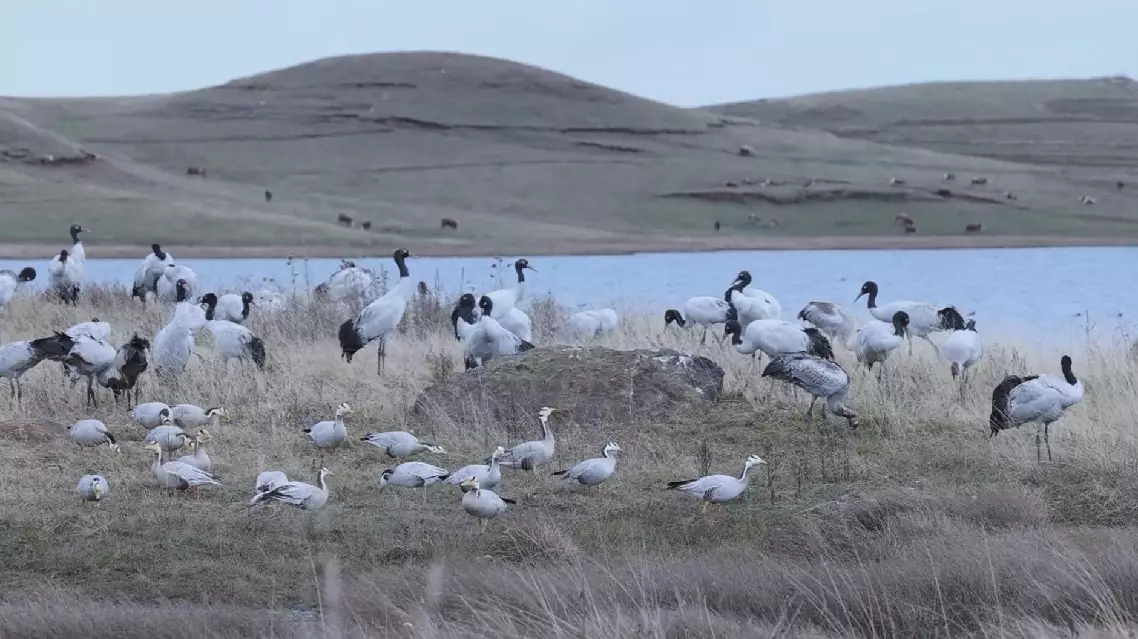
Migratory birds are gathering at wetlands in western China for the winter, with black-necked cranes arriving at a reserve in southwestern province of Yunnan and ducks and egrets seen at a park in northwest China's Xinjiang Uygur Autonomous Region.

Staff at the Yunnan Dashanbao National Nature Reserve for Black-necked Cranes in Zhaotong had counted 2,036 cranes as of Sunday. The first group arrived in early November, and their numbers have risen steadily since.

In the reserve's shallow marshes, cranes foraged and preened, while bar-headed geese and ruddy shelducks have also arrived.

"As black-necked cranes are arriving at Dashanbao, we have dedicated staff to patrol the area. Our main job is to protect the birds' wintering habitat. We have also deployed some crane wardens to provide supplemental food," said Wang Yuanjian, deputy head of the reserve's Changhuikou management station.

At an average elevation of 3,200 meters, the reserve is an important wintering ground and migratory stopover for black-necked cranes. It has restored wetlands and grasslands and developed feeding areas for the birds in recent years.

Far to the northwest, birds have also been arriving at Yarkand National Wetland Park in Shache County, Xinjiang's Kashgar Prefecture. Some flew over the lake or skimmed its surface, while ducks swam and egrets fed at the water's edge.

The park covers about 2,450 hectares, with poplar trees and desert forming a backdrop to its waters. The number and variety of birds wintering there have increased in recent years as local habitat conditions have improved.

Migratory birds flock to wetlands in western China

Migratory birds flock to wetlands in western China

Recommended Articles