RAMALLAH, West Bank (AP) — President Mahmoud Abbas postponed what would have been the first Palestinian elections in nearly 20 years, issuing a decree on Friday to further delay voting for the Palestinian Legislative Council almost another year.
Rather than take place as scheduled next month, the decree pushes the elections back to Sept. 11, 2027, according to WAFA, the official Palestinian news agency. Presidential elections, which have not taken place for more than two decades, are scheduled for the same day.
The postponement leaves entrenched Palestinian leaders unchallenged and threatens to further erode the Palestinian Authority’s credibility among ordinary Palestinians and donor countries who fund it.
The internationally backed body is dominated by Abbas' party, Fatah, and has administered semiautonomous parts of the Israeli-occupied West Bank since agreements reached in the 1990s. It has grown increasingly unpopular throughout Abbas’ presidency. Many Palestinians view it as corrupt and criticize its security cooperation with Israel.
The decree came after a committee of top Palestinian officials met Saturday morning to discuss postponing the vote. The Palestine Liberation Organization’s Executive Committee, which Abbas heads, said in a statement that conditions in East Jerusalem, the West Bank and the Gaza Strip were not conducive to holding elections, noting that Israel had not allowed election materials or international observers to enter Gaza.
The move was expected after Palestinian factions across the political spectrum met in Cairo for discussions on delaying the vote, Islamic Jihad deputy secretary-general Mohammed al-Hindi told The Associated Press earlier this week.
Palestinians have not held a legislative election since 2006, when Hamas won a majority of seats. Israel and Western countries then boycotted its government, fueling months of unrest that led to the Hamas takeover of Gaza the following year. Power has been divided between Gaza and the West Bank in the two decades since, with Hamas in control of Gaza and Abbas’ Palestinian Authority in power in the West Bank.
The West Bank has grown increasingly violent in recent years as Israel has expanded settlements and outposts. Settler attacks on Palestinians and Israeli army raids on cities under the authority’s control are both regularly reported.
Though the U.S.-brokered ceasefire plan reached last year outlined a future role for the authority, its immediate role was left mostly undefined as Hamas has continued to govern and the technocrats under the Board of Peace remain in Cairo awaiting permission to enter Gaza to transition power.
Before the postponement, leading factions had not registered slates to contest the election. But behind the scenes, veteran officials had been in talks to join forces and take aim at Abbas. An unlikely alliance had emerged between Hamas, Islamic Jihad and a bloc led by former Fatah security chief Mohammed Dahlan. Dahlan had previously been driven from Gaza by Hamas and was exiled in 2010 after a falling-out with Abbas.
“Abbas is terrified by the electoral alliance bringing our faction together with opposition factions and forces within Fatah that reject his leadership," Dimitri Dilliani, a spokesperson for Dahlan's faction, said in a statement.
Abbas has served as president since 2005 and delayed several presidential and legislative elections throughout his tenure.
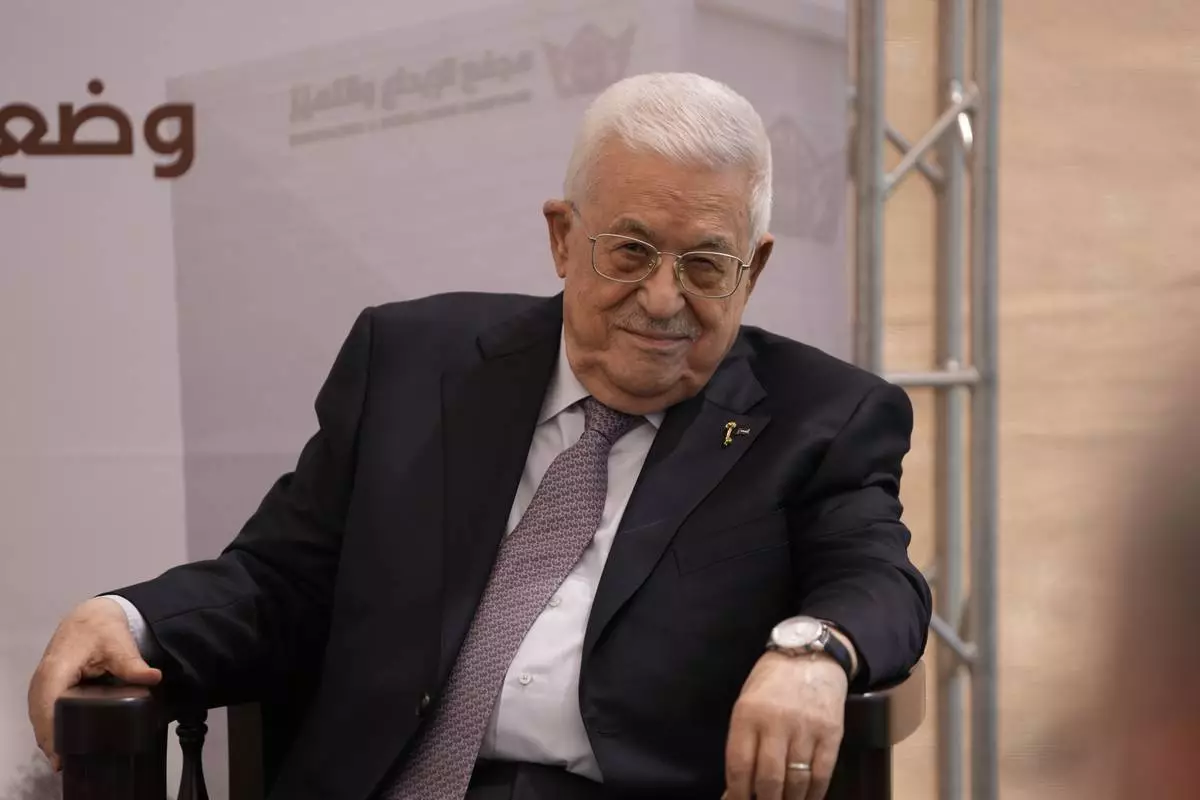
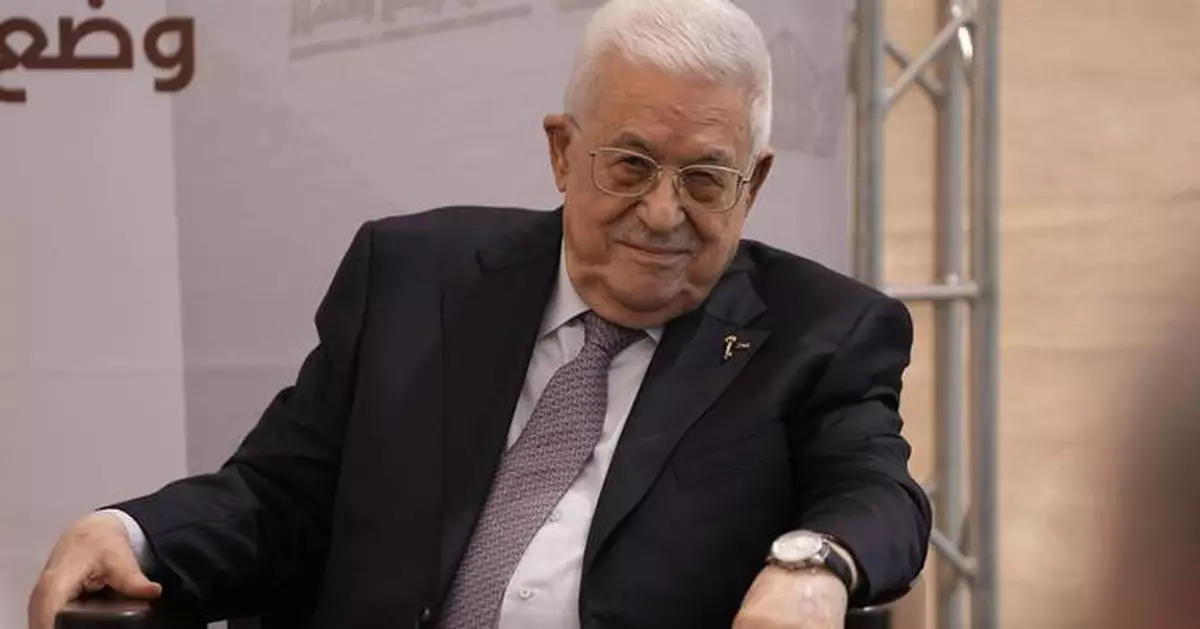
Palestinian President Mahmoud Abbas attends the inauguration ceremony of the Innovation and Excellence Compound in the West Bank city of Ramallah, Wednesday, Sept. 9, 2026. (AP Photo/Mahmoud Illean)
KYIV, Ukraine (AP) — Russian strikes killed at least 17 people in Ukraine’s Zaporizhzhia region, Ukrainian officials said Saturday, a day after U.S. President Donald Trump announced a deal to buy Russian diesel that Kyiv warned would help bankroll Moscow’s war in Ukraine.
Three children were among those killed when Russian aerial bombs hit residential buildings in Zaporizhzhia, Ukraine's State Emergency Service said Saturday. At least 18 people were wounded in the attack.
Missiles also struck Kyiv in a daytime attack Saturday. Mayor Vitalii Klitschko said four people were wounded.
Russia and Ukraine are locked in a long-range aerial war while their armies remain largely deadlocked on the front line, more than 4 1/2 years since Moscow’s full-scale invasion. Ukraine is struggling to counter escalating Russian bombardments that have killed more than 60 people over the past four days.
Trump said Friday he had struck a deal to obtain diesel from Russia, a stunning reversal of years of U.S. pressure on Moscow over its war with Ukraine and an attempt to address high fuel prices ahead of the U.S. midterm elections.
“Today, Russia expressed its thanks for the lifting of sanctions on diesel exports by dropping five glide bombs on residential buildings in Zaporizhzhia,” Ukrainian President Volodymyr Zelenskyy wrote Saturday on X.
He said the attacks show Moscow understands “any easing of pressure to mean they can keep fighting, to mean they can keep dropping bombs on cities."
“Russia’s choice is war,” Zelenskyy said in a later Telegram post, after drone attacks on energy facilities and a ballistic missile attack on Kyiv. He said every additional billion dollars Russia earns from exports would help pay for weapons components, drone upgrades, missile production and the recruitment of mercenaries, and that Moscow would only be ready to stop when its ability to fight diminished.
Moscow received from diesel deal "signals that it is apparently permissible to continue attacking. And this needs to be corrected,” he said, urging the U.S., Europe and other partners to limit Russia’s capacity to wage war.
Zelenskyy said Ukraine was coordinating steps to counter the extra revenue Russia will receive, and that he had spoken to French President Emmanuel Macron about shoring up air defenses, warning of an increased risk of further missile strikes in the coming days.
He also said he had discussed the developments with Finnish President Alexander Stubb, and that Ukraine would receive ammunition in the coming days for the F-16s it uses to intercept Shahed drones.
Trump had been set to discuss a suspected case of plague in Russia with President Vladimir Putin in a phone call.
Instead, the American leader announced Friday that Russia will immediately supply more than 300,000 tons of diesel, followed by an additional 500,000 tons in November and 1 million tons “immediately thereafter.” Russia will deliver an additional 3 million tons “within a short period of time” after that, he wrote.
In Kyiv, people gathered at a memorial to fallen soldiers on Independence Square greeted the deal with a mix of anger and resignation.
“Trump has once again shown his true face,” said Oleksandr Petrenko, 26. “He didn’t care about the situation, the shelling or the destruction of our homes. All he’s interested in is oil or the fuel prices and how much Americans have to pay.”
“Knowing Trump, he tries to manipulate the markets. He’s got an election coming up soon,” Petrenko said. “So he needs to emphasize to his voters that gasoline will be cheap. But it won’t be effective.”
For Oksana Yakunina, a financial adviser from the central city of Kropyvnytskyi, the announcement “didn’t really come as a surprise.”
“Trump has been working with Putin for a long time,” she told The Associated Press.
Ukraine's European allies expressed dismay at the deal and said they stood by their commitment to sanctions.
Swedish Prime Minister Ulf Kristersson said Stockholm regretted the agreement, “as energy revenues are central to the Russian war chest,” and noted that the European Union would adopt its most comprehensive sanctions package yet on Monday, with 1,600 listings targeting Russia’s military-industrial complex.
The German government “remains committed to the sanctions imposed on Russia and is working with its European partners on further sanctions,” spokesperson Stefan Kornelius said, adding that support for Ukraine “remains unwavering.”
Polish Foreign Minister Radoslaw Sikorski questioned whether Russia could deliver at all. Citing his embassy’s reports of fuel shortages even in Moscow, and “serious sources” saying Ukraine has damaged about half of Russia’s refining capacity, he asked on X: “So where will the surpluses for export come from?”
Trump’s announcement was in stark contrast to a sweeping Russia sanctions law he signed last month that aimed at clamping down on the oil and gas revenues that fuel Russia’s war against Ukraine.
Trump announced the deal as his envoy Steve Witkoff and son-in-law Jared Kushner met with Ukrainian officials in Miami on Friday to discuss a proposal to end the war.
“I believe our team is simply being used as a smoke screen. And that is certainly not fair. It is certainly not how partners should treat each other,” Zelenskyy said Friday.
Morton reported from London. Associated Press journalist Bela Szandelzsky in Kyiv, Ukraine, contributed to this report.
Follow the AP’s coverage of the war in Ukraine at https://apnews.com/hub/russia-ukraine
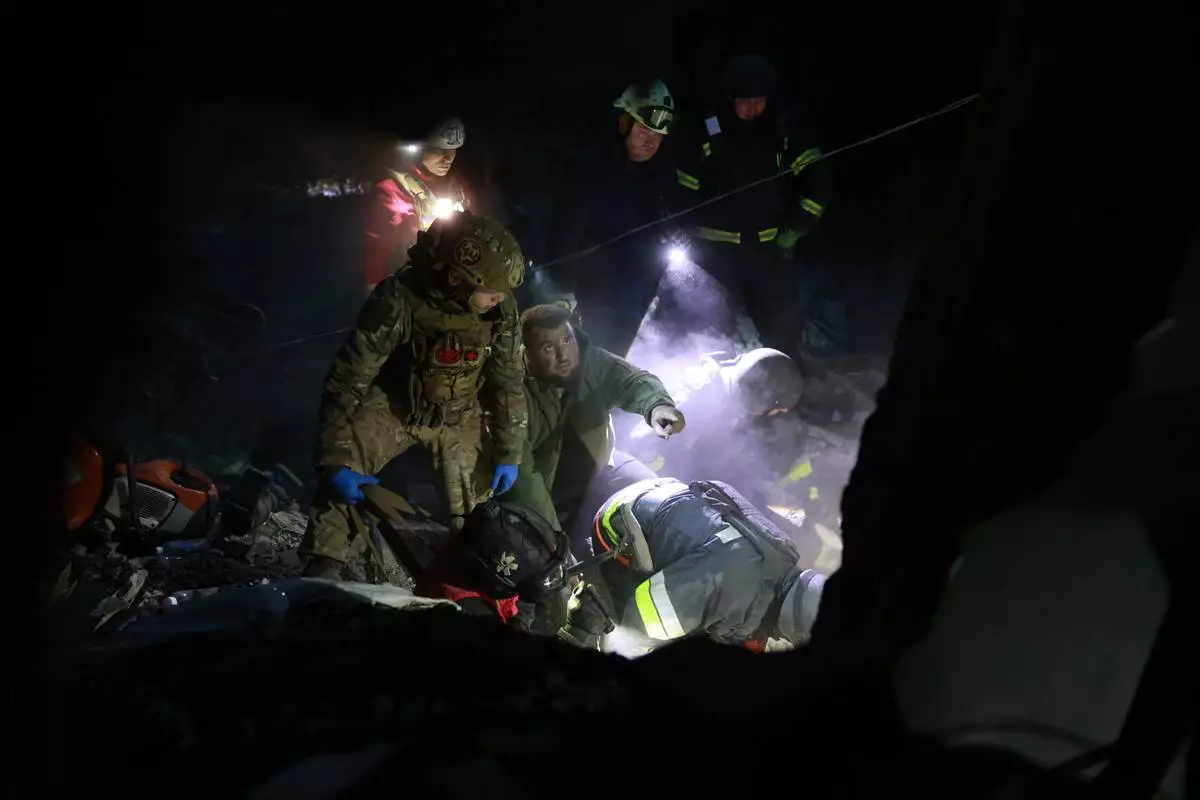
Rescue workers clear the rubble of a residential building destroyed by a Russian airstrike in Zaporizhzhia, Ukraine, Saturday, Oct. 10, 2026. (AP Photo/Kateryna Klochko)
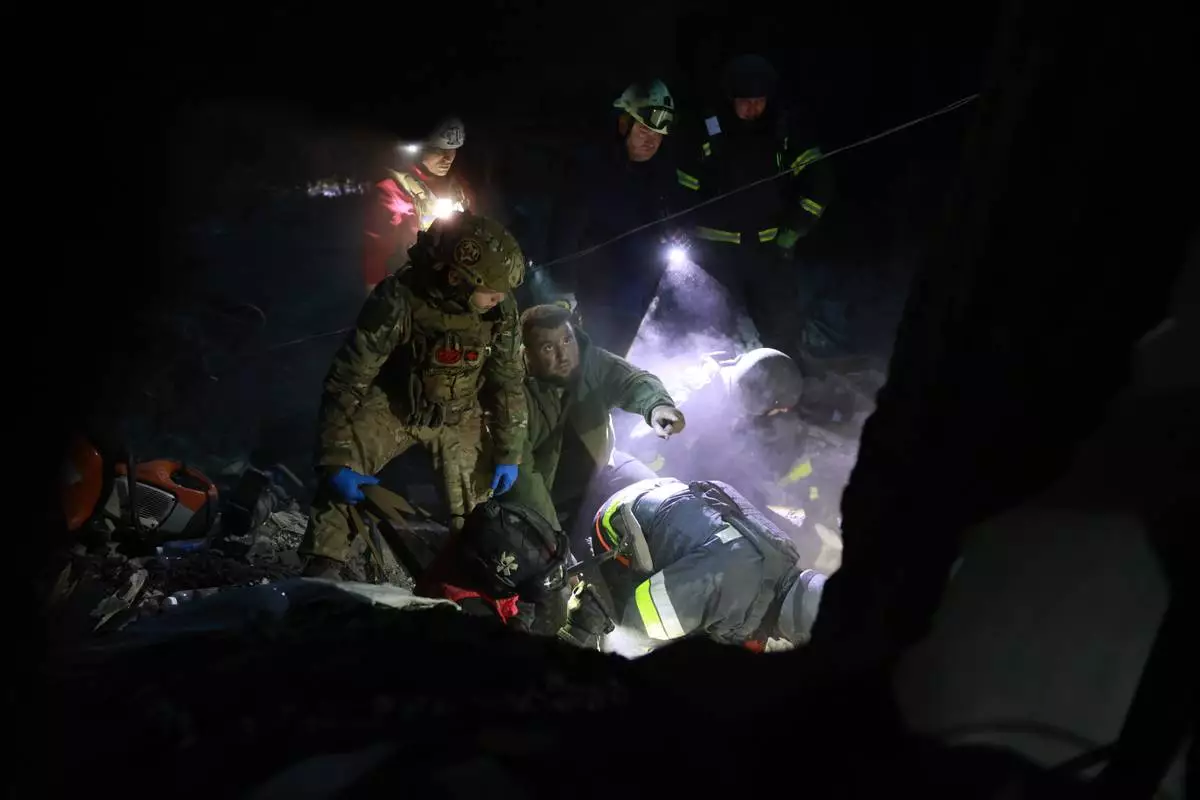
Rescue workers clear the rubble of a residential building destroyed by a Russian airstrike in Zaporizhzhia, Ukraine, Saturday, Oct. 10, 2026. (AP Photo/Kateryna Klochko)
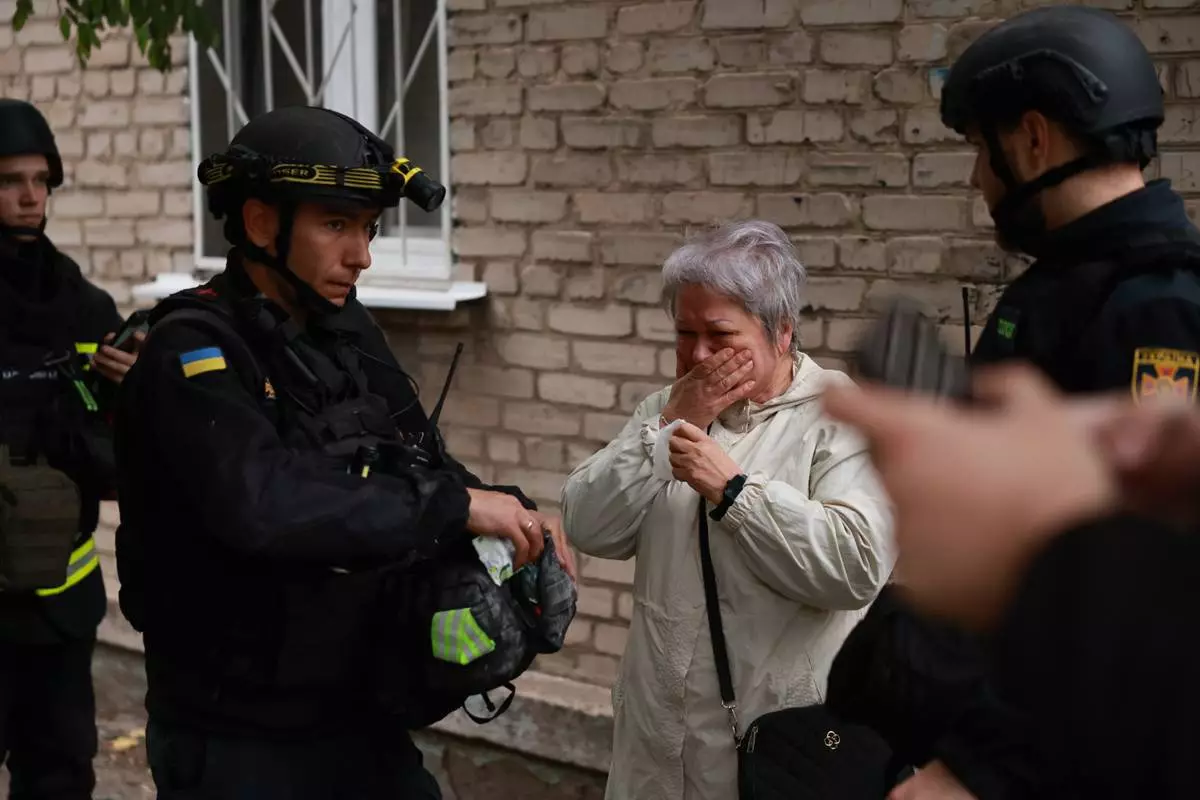
A woman reacts after pulling her relatives from the rubble of a residential building destroyed by a Russian airstrike in Zaporizhzhia, Ukraine, Saturday, Oct. 10, 2026. (AP Photo/Kateryna Klochko)
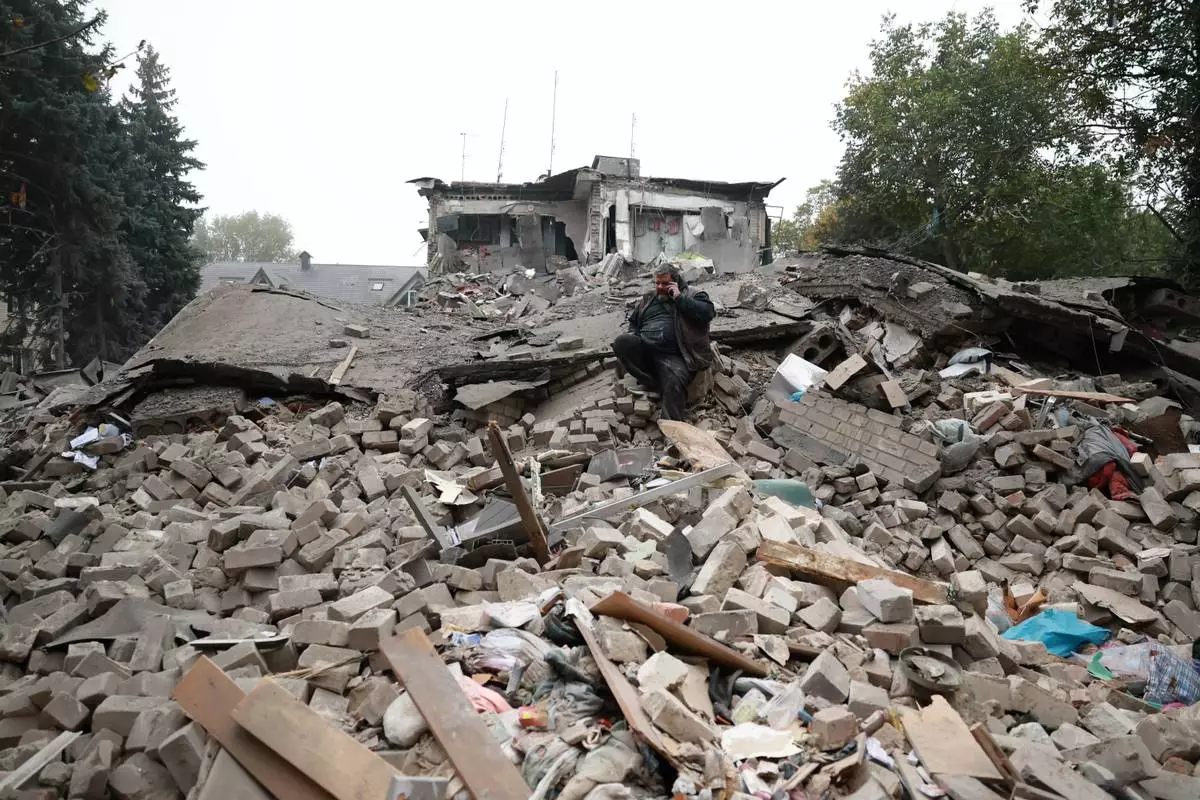
A man talks on the phone while sitting on the rubble of a residential building destroyed by a Russian airstrike in Zaporizhzhia, Ukraine, Saturday, Oct. 10, 2026. (AP Photo/Kateryna Klochko)
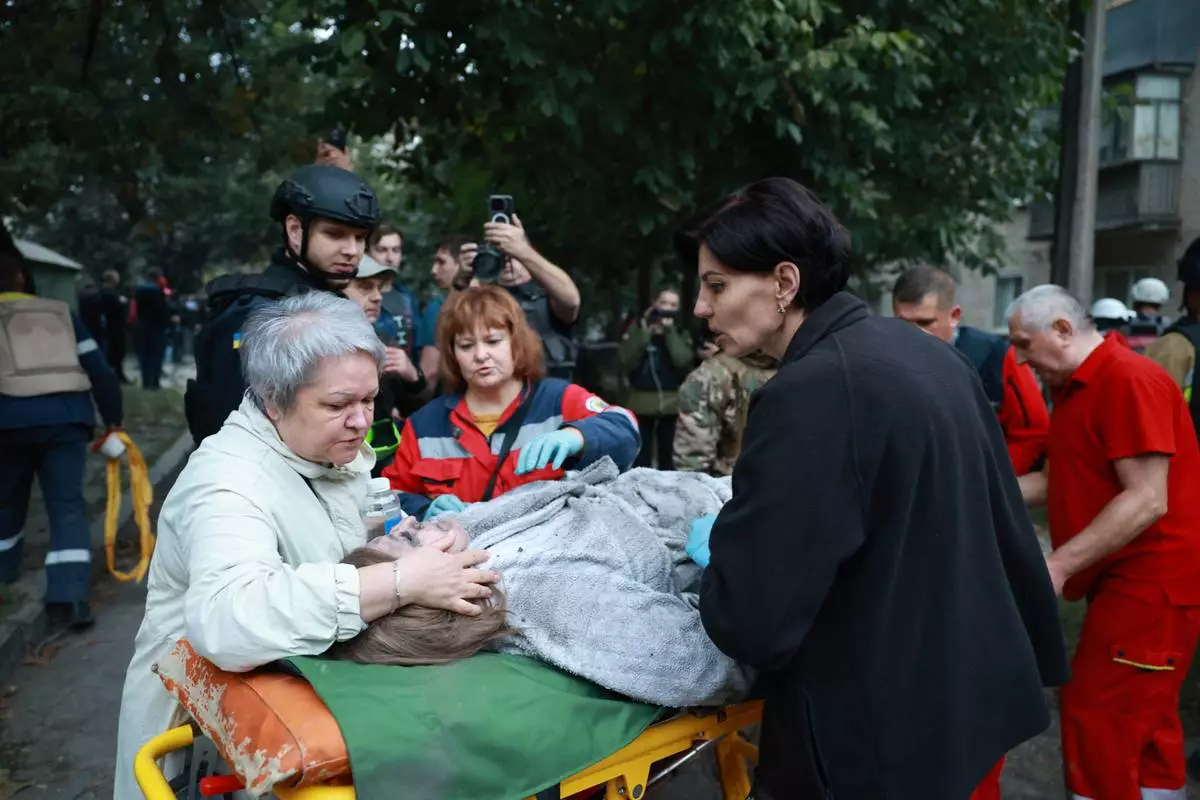
A relative speaks to a woman on a stretcher after pulling her and her husband from the rubble of a residential building destroyed by a Russian airstrike in Zaporizhzhia, Ukraine, Saturday, Oct. 10, 2026. (AP Photo/Kateryna Klochko)
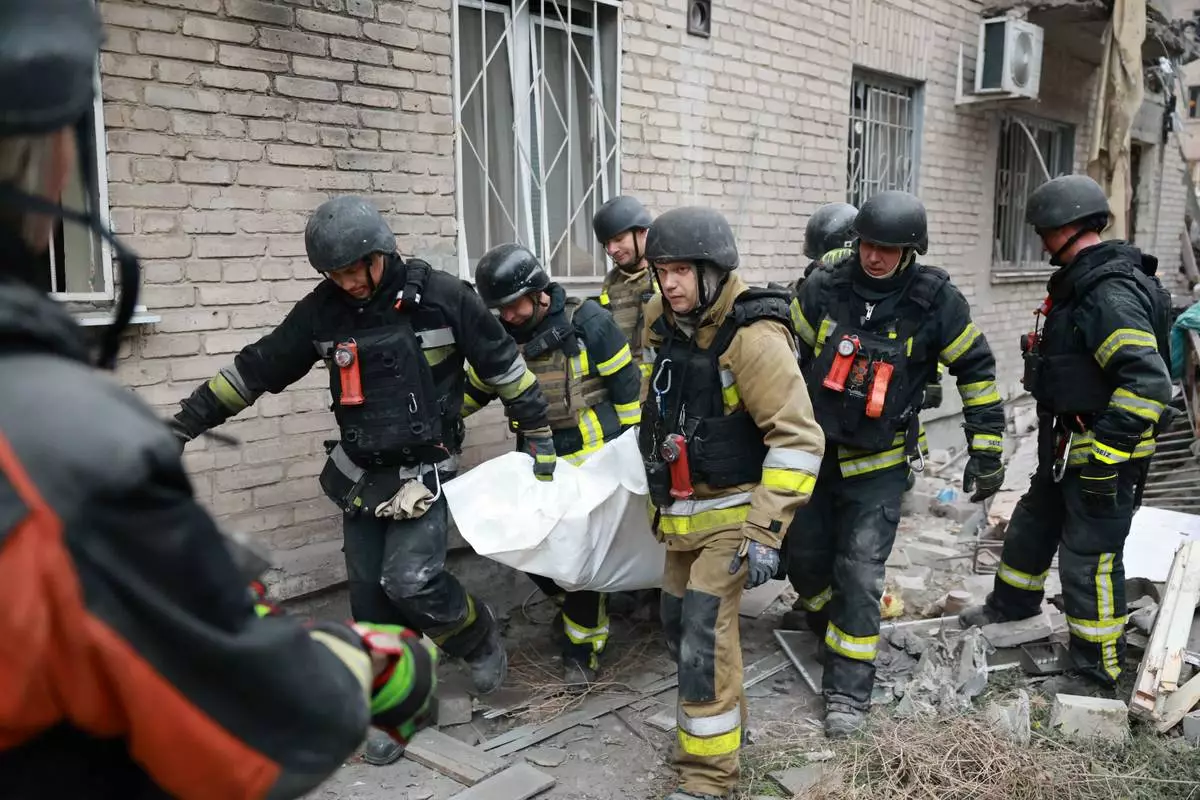
Rescue workers carry a body after pulling from the rubble of a residential building destroyed by a Russian airstrike in Zaporizhzhia, Ukraine, Saturday, Oct. 10, 2026. (AP Photo/Kateryna Klochko)