Skip to Content Facebook Feature Image

Pope Leo declares death penalty 'inadmissible' as his native US plans to livestream execution

News

Pope Leo declares death penalty 'inadmissible' as his native US plans to livestream execution
News

News

Pope Leo declares death penalty 'inadmissible' as his native US plans to livestream execution

2026-10-10 21:45 Last Updated At:21:50

ROME (AP) — Pope Leo XIV on Saturday declared capital punishment ''inadmissible" as he marked the World Day Against the Death Penalty and his native United States announced plans to livestream an execution by firing squad.

In a post on X, the American pope quoted the revised Catholic teaching on capital punishment ushered in by Pope Francis that the death penalty attacks the inherent dignity of a human being.

More Images
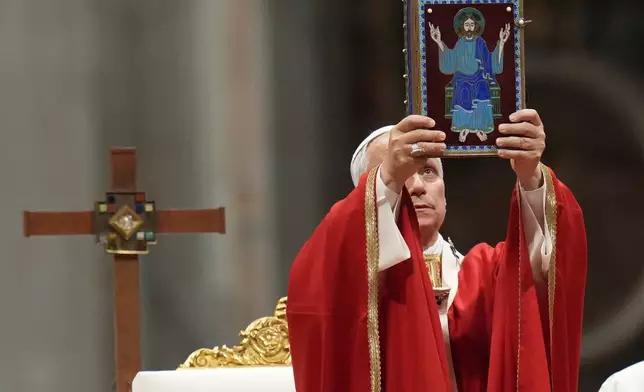
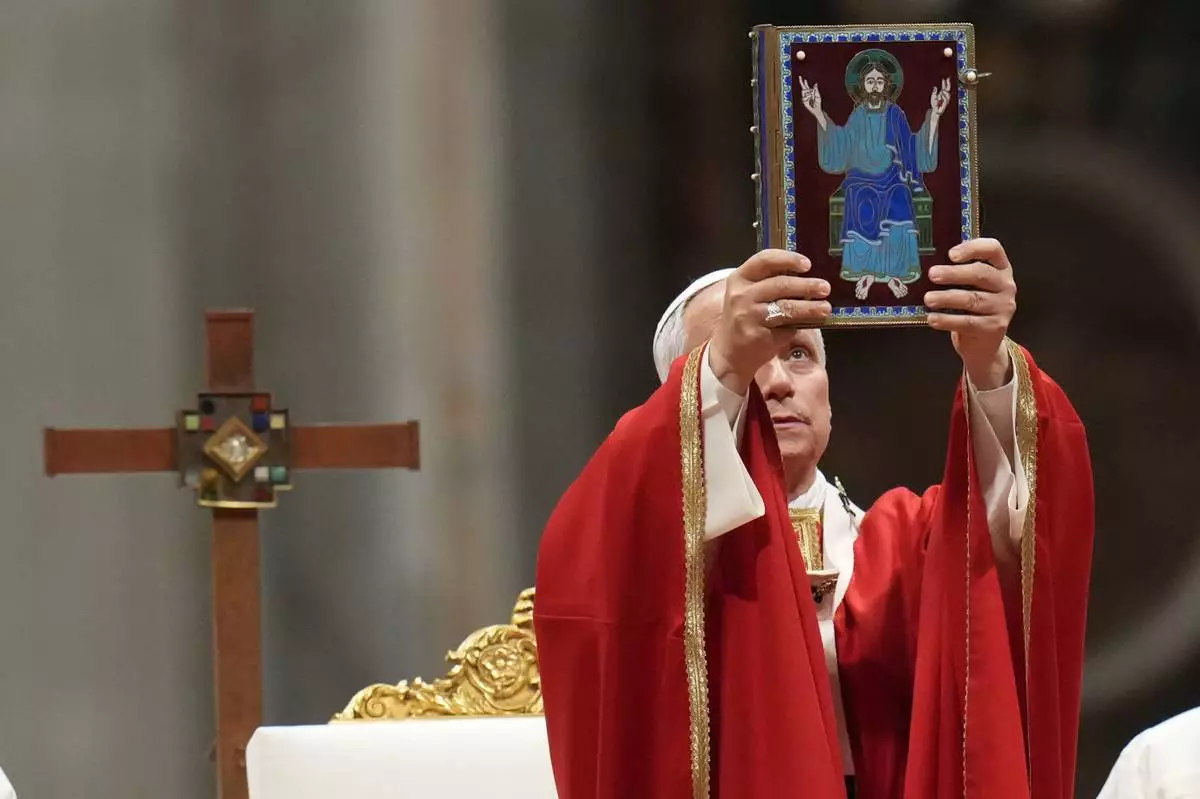
Pope Leo XIV holds up the book of the Gospel as he celebrates a mass in St. Peter's Basilica at the Vatican, Thursday, Oct.8, 2026, for the annual opening of the academic year at pontifical universities, joining Rome's 22 pontifical institutions and numerous others worldwide. (AP Photo/Gregorio Borgia)
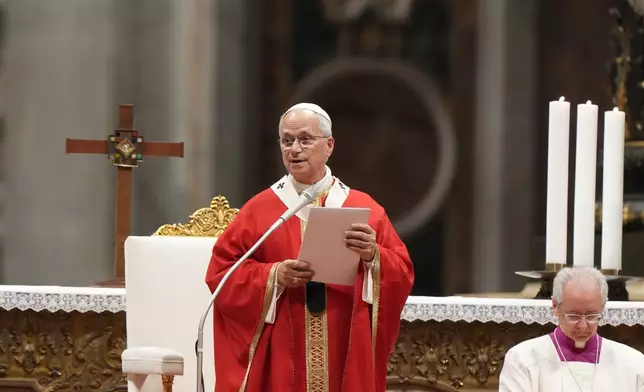
Pope Leo XIV holds up the book of the Gospel as he celebrates a mass in St. Peter's Basilica at the Vatican, Thursday, Oct.8, 2026, for the annual opening of the academic year at pontifical universities, joining Rome's 22 pontifical institutions and numerous others worldwide. (AP Photo/Gregorio Borgia)
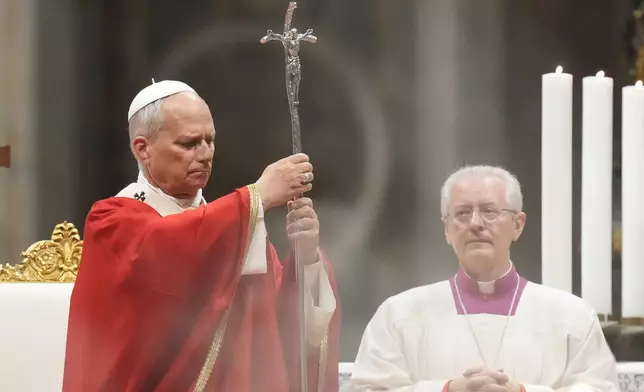
Pope Leo XIV celebrates a mass in St. Peter's Basilica at the Vatican, Thursday, Oct.8, 2026, for the annual opening of the academic year at pontifical universities, joining Rome's 22 pontifical institutions and numerous others worldwide. (AP Photo/Gregorio Borgia)
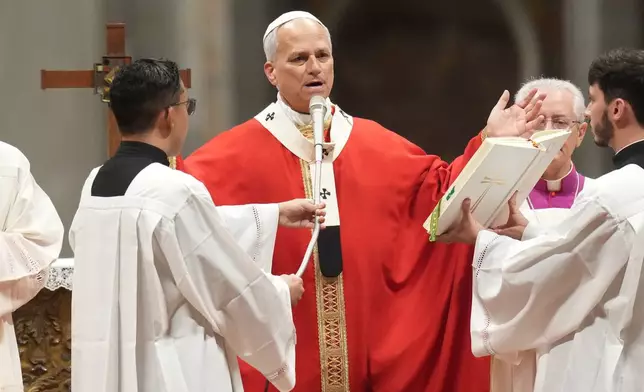
Pope Leo XIV celebrates a mass in St. Peter's Basilica at the Vatican, Thursday, Oct.8, 2026, for the annual opening of the academic year at pontifical universities, joining Rome's 22 pontifical institutions and numerous others worldwide. (AP Photo/Gregorio Borgia)
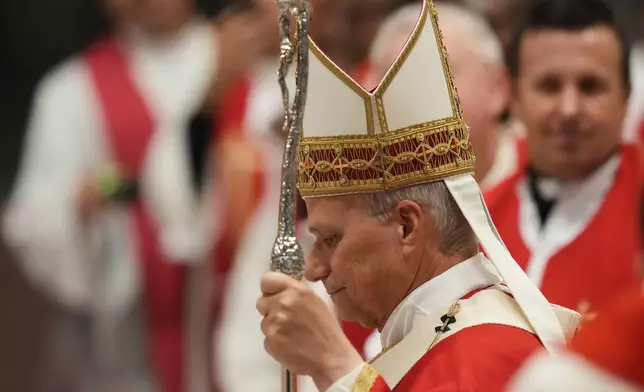
Pope Leo XIV celebrates a mass in St. Peter's Basilica at the Vatican, Thursday, Oct.8, 2026, for the annual opening of the academic year at pontifical universities, joining Rome's 22 pontifical institutions and numerous others worldwide. (AP Photo/Gregorio Borgia)

Pope Leo XIV celebrates a mass in St. Peter's Basilica at the Vatican, Thursday, Oct.8, 2026, for the annual opening of the academic year at pontifical universities, joining Rome's 22 pontifical institutions and numerous others worldwide. (AP Photo/Gregorio Borgia)

Pope Leo XIV celebrates a mass in St. Peter's Basilica at the Vatican, Thursday, Oct.8, 2026, for the annual opening of the academic year at pontifical universities, joining Rome's 22 pontifical institutions and numerous others worldwide. (AP Photo/Gregorio Borgia)

Pope Leo XIV celebrates a mass in St. Peter's Basilica at the Vatican, Thursday, Oct.8, 2026, for the annual opening of the academic year at pontifical universities, joining Rome's 22 pontifical institutions and numerous others worldwide. (AP Photo/Gregorio Borgia)

Pope Leo XIV arrives to celebrate a mass in St. Peter's Basilica at the Vatican, Thursday, Oct.8, 2026, for the annual opening of the academic year at pontifical universities, joining Rome's 22 pontifical institutions and numerous others worldwide. (AP Photo/Gregorio Borgia)

Pope Leo XIV arrives to celebrate a mass in St. Peter's Basilica at the Vatican, Thursday, Oct.8, 2026, for the annual opening of the academic year at pontifical universities, joining Rome's 22 pontifical institutions and numerous others worldwide. (AP Photo/Gregorio Borgia)

“The common good can be safeguarded and the requirements of justice can be met without recourse to capital punishment," read the post under Leo's official handle, @Pontifex. "Effective systems of detention have been developed that protect citizens while at the same time do not completely deprive those who are guilty of the possibility of redemption.”

The post ended with the hashtag #NoDeathPenalty.

The U.S. Defense Department announced Thursday that the firing squad execution of Nidal Malik Hasan, convicted of a 2009 shooting at the Fort Hood military base, will be livestreamed. Hasan, scheduled to be executed at Fort Hood on Dec. 3, was convicted of killing 13 people and wounding 32 others.

Leo didn’t refer specifically to the planned execution, or the botched lethal injection in Tennessee earlier that has revived debate over the death penalty in the United States. Saturday is World Day Against the Death Penalty, and it is common for the pope's official social media accounts to post messages marking such commemorations.

But Leo's post came just hours after his top deputy, Cardinal Pietro Parolin, the Vatican secretary of state, said explicitly that the planned U.S. public execution was “unacceptable.”

Pope Francis in 2018 amended official Catholic teaching to declare capital punishment “inadmissible” in all circumstances.

Previously, the Catechism of the Catholic Church, the official compendium of church teaching, said the church didn’t exclude recourse to capital punishment “if this is the only possible way of effectively defending human lives against the unjust aggressor.”

Past popes had upheld that position, though St. John Paul II began urging an end to the practice and stressed that guilty people were just as deserving of dignity as innocent ones.

Like Francis before him, Leo has made visiting prisons a key part of his papal travel in a bid to give a message of hope to inmates and underscore their inherent dignity, that God loves them and that there is always a chance for redemption.

“If any of you fear being abandoned by everyone, know that God will never abandon you, and that the church will stand by your side,” Leo told inmates at the notorious Bata prison in Equatorial Guinea during his visit in April. Leo is to visit a prison in Buenos Aires during his upcoming tour through Latin America.

Speaking specifically about the United States, Cardinal Pietro Parolin, the Vatican secretary of state, said the planned livestreamed execution was “truly incomprehensible” and “unacceptable to turn death into a spectacle.”

“The Church’s position is one of total opposition to the death penalty; it is incompatible with human dignity and serves as no deterrent…,” Parolin said in comments carried by Vatican News. “It is truly incomprehensible that anyone would want to use this system today — I don’t know for what purpose. It is certainly unacceptable to turn death into a spectacle; even if the person is guilty, of course, there are other methods.”

The head of the U.S. bishops conference, Archbishop Paul Coakley, expressed “shock” and “great sorrow” at the Pentagon's plans.

“In no way can Hasan’s actions be condoned but this decision is a barbaric promotion of a culture of death and must be reconsidered,” he said in a statement Friday. “The public execution even of one who has done grave harm will only further undermine the moral fabric of our nation and be a blight on the conscience of its people.”

Associated Press religion coverage receives support through the AP’s collaboration with The Conversation US, with funding from Lilly Endowment Inc. The AP is solely responsible for this content.
Pope Leo XIV holds up the book of the Gospel as he celebrates a mass in St. Peter's Basilica at the Vatican, Thursday, Oct.8, 2026, for the annual opening of the academic year at pontifical universities, joining Rome's 22 pontifical institutions and numerous others worldwide. (AP Photo/Gregorio Borgia)
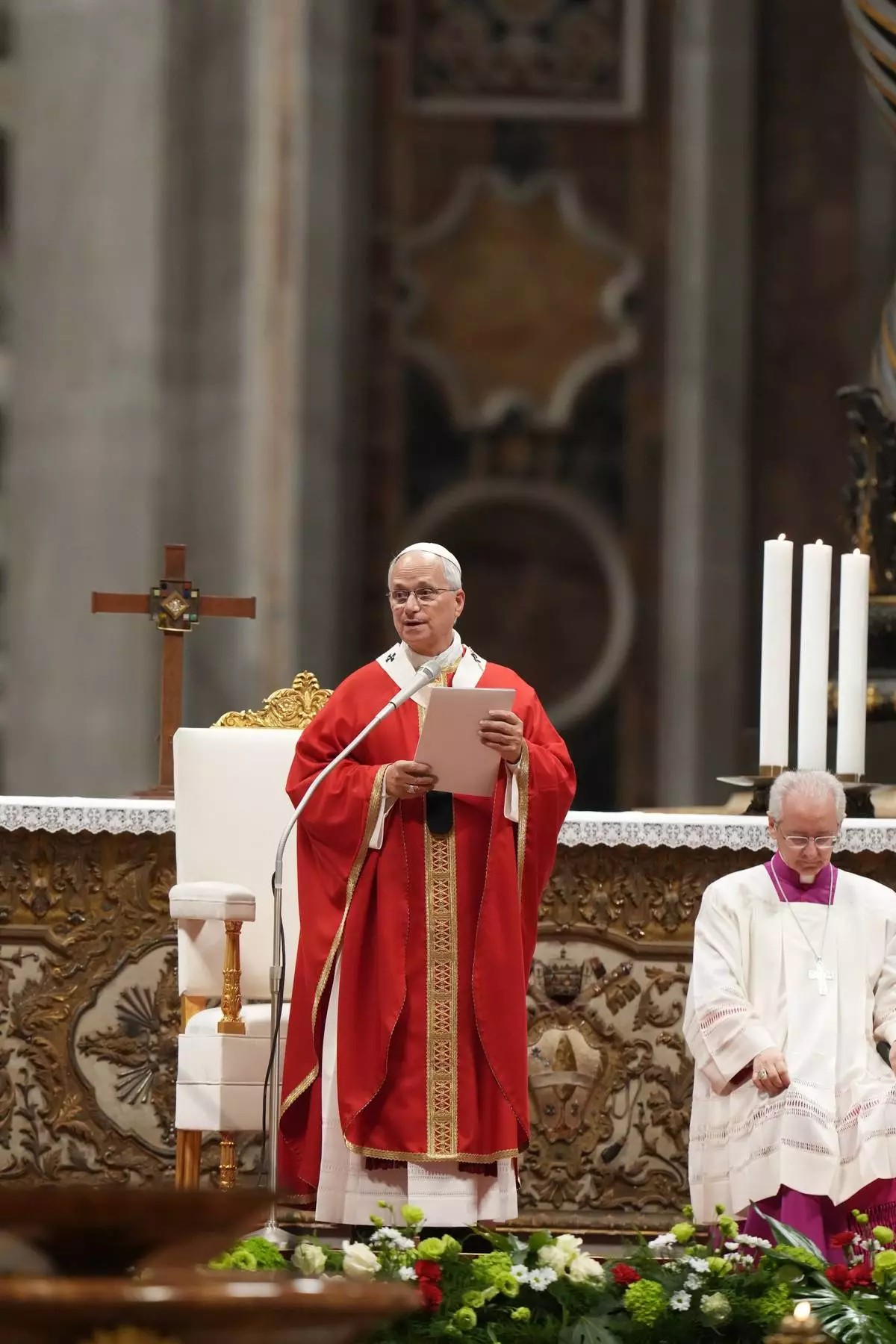
Pope Leo XIV holds up the book of the Gospel as he celebrates a mass in St. Peter's Basilica at the Vatican, Thursday, Oct.8, 2026, for the annual opening of the academic year at pontifical universities, joining Rome's 22 pontifical institutions and numerous others worldwide. (AP Photo/Gregorio Borgia)
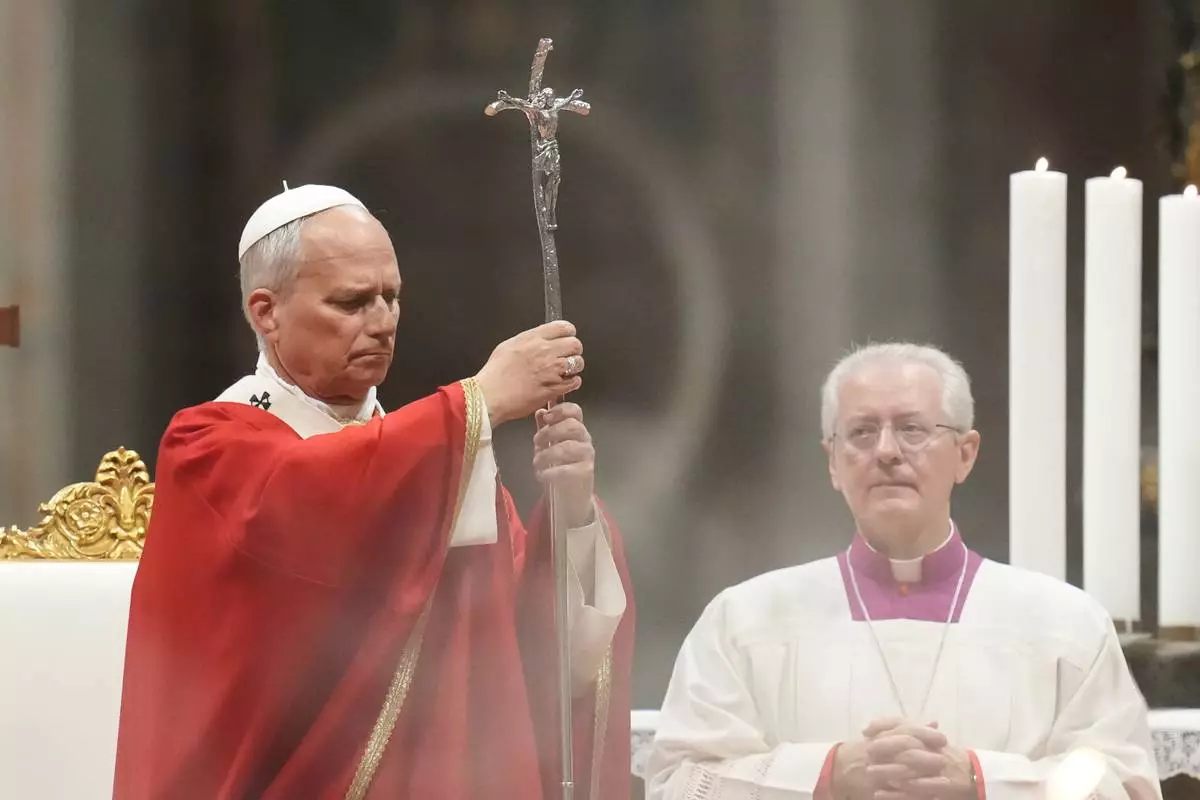
Pope Leo XIV celebrates a mass in St. Peter's Basilica at the Vatican, Thursday, Oct.8, 2026, for the annual opening of the academic year at pontifical universities, joining Rome's 22 pontifical institutions and numerous others worldwide. (AP Photo/Gregorio Borgia)
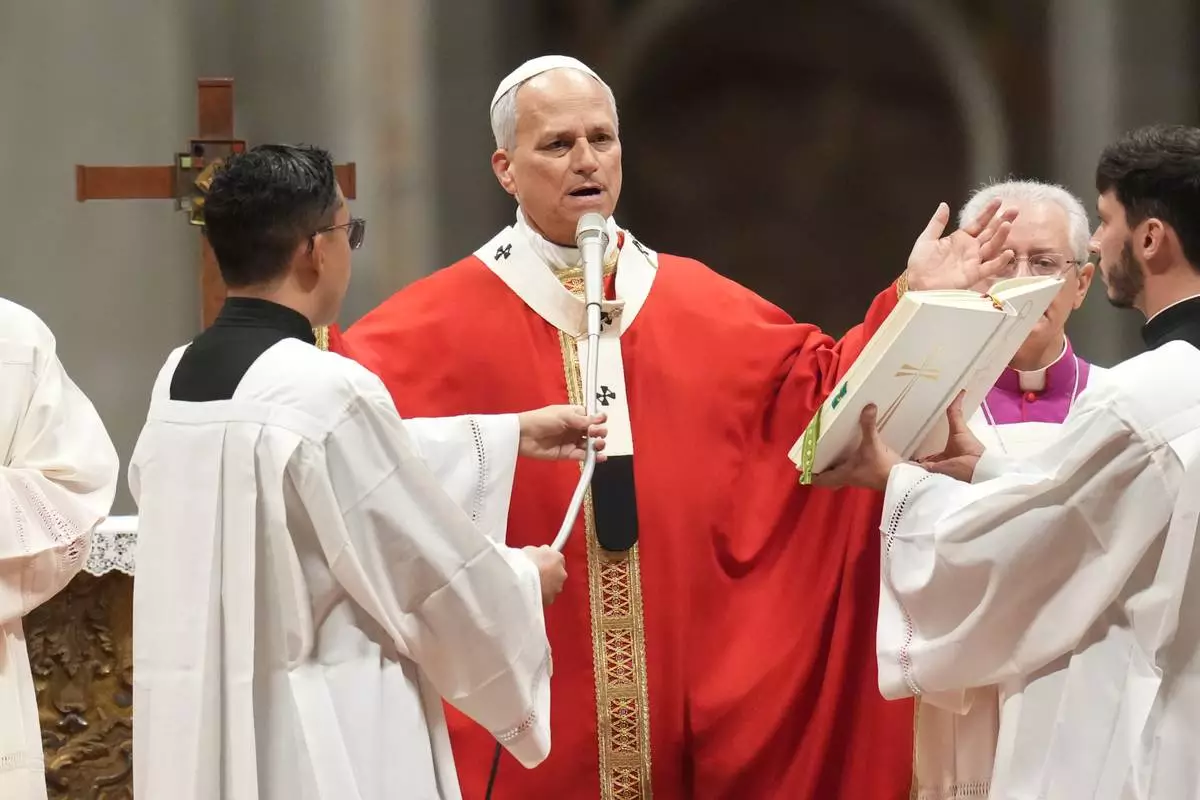
Pope Leo XIV celebrates a mass in St. Peter's Basilica at the Vatican, Thursday, Oct.8, 2026, for the annual opening of the academic year at pontifical universities, joining Rome's 22 pontifical institutions and numerous others worldwide. (AP Photo/Gregorio Borgia)
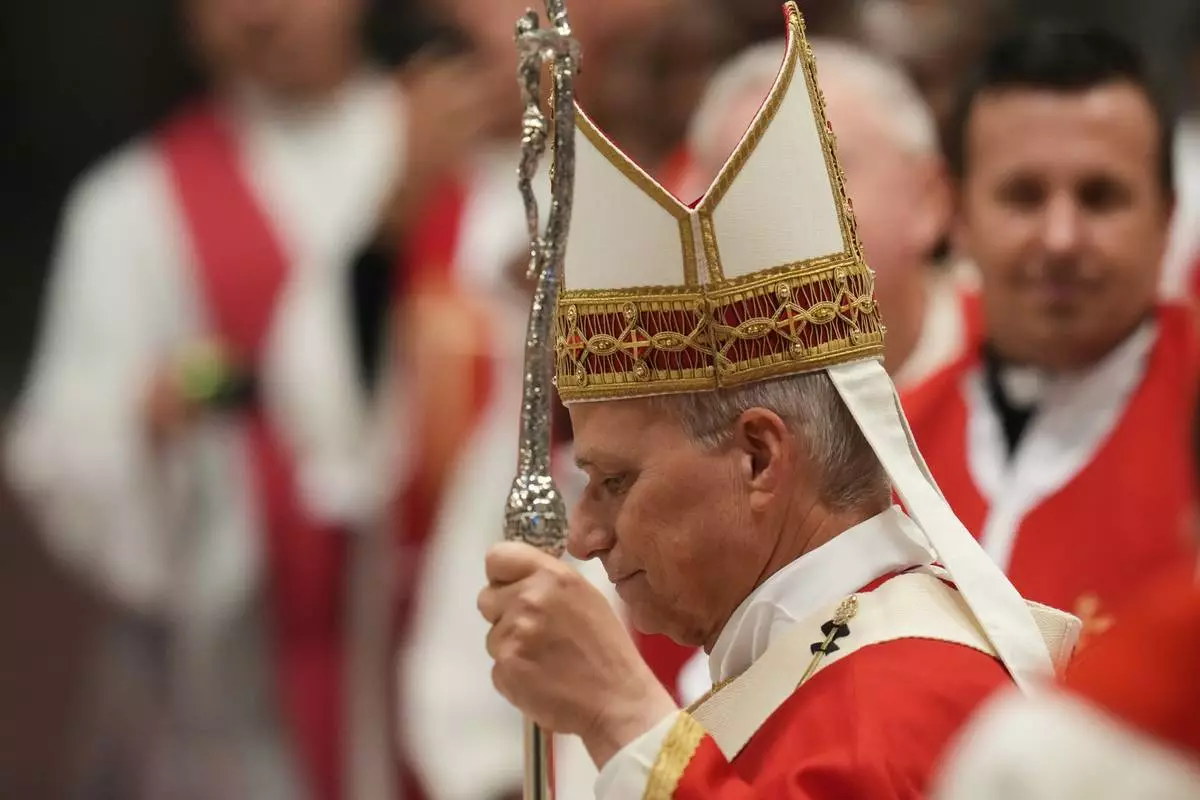
Pope Leo XIV celebrates a mass in St. Peter's Basilica at the Vatican, Thursday, Oct.8, 2026, for the annual opening of the academic year at pontifical universities, joining Rome's 22 pontifical institutions and numerous others worldwide. (AP Photo/Gregorio Borgia)

Pope Leo XIV celebrates a mass in St. Peter's Basilica at the Vatican, Thursday, Oct.8, 2026, for the annual opening of the academic year at pontifical universities, joining Rome's 22 pontifical institutions and numerous others worldwide. (AP Photo/Gregorio Borgia)
Pope Leo XIV celebrates a mass in St. Peter's Basilica at the Vatican, Thursday, Oct.8, 2026, for the annual opening of the academic year at pontifical universities, joining Rome's 22 pontifical institutions and numerous others worldwide. (AP Photo/Gregorio Borgia)
Pope Leo XIV celebrates a mass in St. Peter's Basilica at the Vatican, Thursday, Oct.8, 2026, for the annual opening of the academic year at pontifical universities, joining Rome's 22 pontifical institutions and numerous others worldwide. (AP Photo/Gregorio Borgia)

Pope Leo XIV arrives to celebrate a mass in St. Peter's Basilica at the Vatican, Thursday, Oct.8, 2026, for the annual opening of the academic year at pontifical universities, joining Rome's 22 pontifical institutions and numerous others worldwide. (AP Photo/Gregorio Borgia)
Pope Leo XIV arrives to celebrate a mass in St. Peter's Basilica at the Vatican, Thursday, Oct.8, 2026, for the annual opening of the academic year at pontifical universities, joining Rome's 22 pontifical institutions and numerous others worldwide. (AP Photo/Gregorio Borgia)

RAMALLAH, West Bank (AP) — President Mahmoud Abbas postponed what would have been the first Palestinian elections in nearly 20 years, issuing a decree on Friday to further delay voting for the Palestinian Legislative Council almost another year.

Rather than take place as scheduled next month, the decree pushes the elections back to Sept. 11, 2027, according to WAFA, the official Palestinian news agency. Presidential elections, which have not taken place for more than two decades, are scheduled for the same day.

The postponement leaves entrenched Palestinian leaders unchallenged and threatens to further erode the Palestinian Authority’s credibility among ordinary Palestinians and donor countries who fund it.

The internationally backed body is dominated by Abbas' party, Fatah, and has administered semiautonomous parts of the Israeli-occupied West Bank since agreements reached in the 1990s. It has grown increasingly unpopular throughout Abbas’ presidency. Many Palestinians view it as corrupt and criticize its security cooperation with Israel.

The decree came after a committee of top Palestinian officials met Saturday morning to discuss postponing the vote. The Palestine Liberation Organization’s Executive Committee, which Abbas heads, said in a statement that conditions in East Jerusalem, the West Bank and the Gaza Strip were not conducive to holding elections, noting that Israel had not allowed election materials or international observers to enter Gaza.

The move was expected after Palestinian factions across the political spectrum met in Cairo for discussions on delaying the vote, Islamic Jihad deputy secretary-general Mohammed al-Hindi told The Associated Press earlier this week.

Palestinians have not held a legislative election since 2006, when Hamas won a majority of seats. Israel and Western countries then boycotted its government, fueling months of unrest that led to the Hamas takeover of Gaza the following year. Power has been divided between Gaza and the West Bank in the two decades since, with Hamas in control of Gaza and Abbas’ Palestinian Authority in power in the West Bank.

The West Bank has grown increasingly violent in recent years as Israel has expanded settlements and outposts. Settler attacks on Palestinians and Israeli army raids on cities under the authority’s control are both regularly reported.

Though the U.S.-brokered ceasefire plan reached last year outlined a future role for the authority, its immediate role was left mostly undefined as Hamas has continued to govern and the technocrats under the Board of Peace remain in Cairo awaiting permission to enter Gaza to transition power.

Before the postponement, leading factions had not registered slates to contest the election. But behind the scenes, veteran officials had been in talks to join forces and take aim at Abbas. An unlikely alliance had emerged between Hamas, Islamic Jihad and a bloc led by former Fatah security chief Mohammed Dahlan. Dahlan had previously been driven from Gaza by Hamas and was exiled in 2010 after a falling-out with Abbas.

“Abbas is terrified by the electoral alliance bringing our faction together with opposition factions and forces within Fatah that reject his leadership," Dimitri Dilliani, a spokesperson for Dahlan's faction, said in a statement.

Abbas has served as president since 2005 and delayed several presidential and legislative elections throughout his tenure.

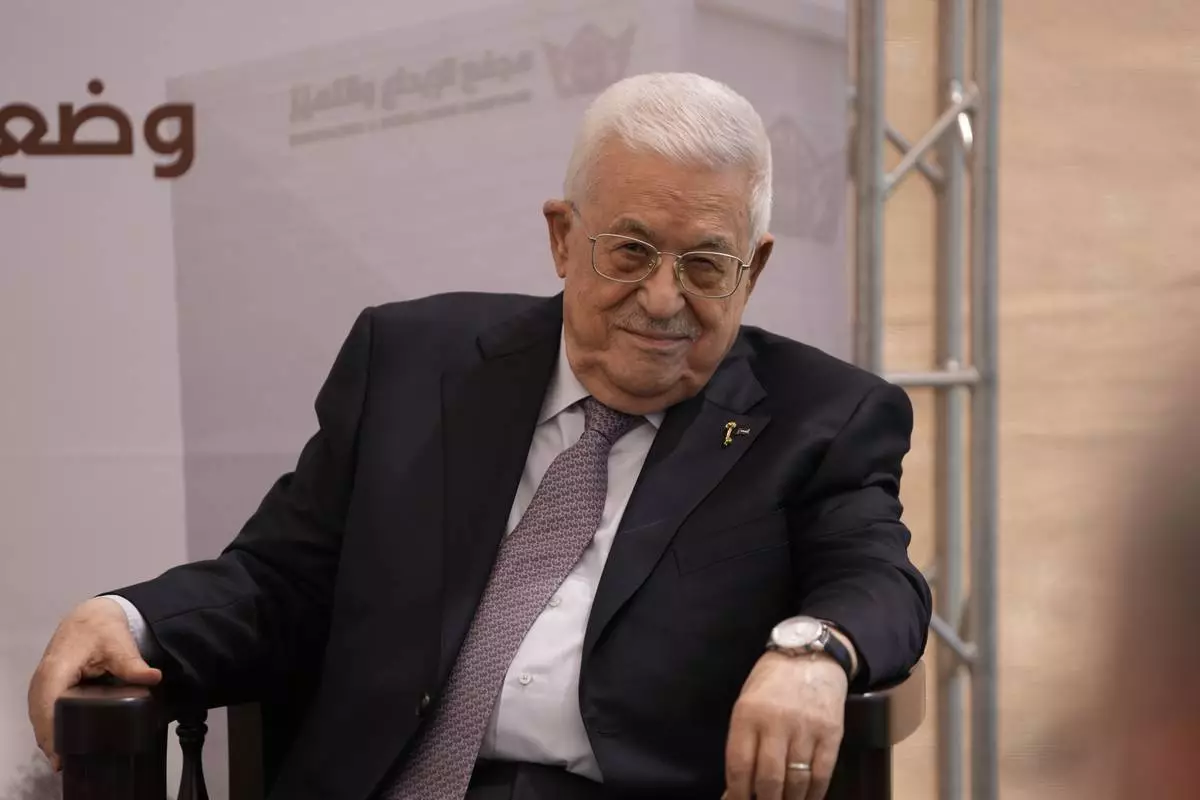
Palestinian President Mahmoud Abbas attends the inauguration ceremony of the Innovation and Excellence Compound in the West Bank city of Ramallah, Wednesday, Sept. 9, 2026. (AP Photo/Mahmoud Illean)

Palestinian President Mahmoud Abbas attends the inauguration ceremony of the Innovation and Excellence Compound in the West Bank city of Ramallah, Wednesday, Sept. 9, 2026. (AP Photo/Mahmoud Illean)

Recommended Articles