American businesses are eager for cheaper imports ahead of the Christmas shopping season, even after pre-stocking led to record cargo volumes at California's busiest ports from July to August amid steeper tariffs on Chinese goods.
Following the recent meeting between Chinese President Xi Jinping and U.S. President Donald Trump, proposed tariff reductions on toys and other consumer goods are offering hope of lower costs for American businesses and shoppers.
However, many U.S. suppliers and shops began stocking up for the holidays well before the reduction was announced. As a result, the Port of Los Angeles, America's busiest container port, saw an unprecedented summer.
More than 2.9 million units were handled at the port in just three months, with cargo ships arriving and cranes unloading around the clock. The historic highs may have been driven in part by uncertainty about future tariffs.
"When tariffs are announced, we see a big rush of cargo, so the products can get here before they're taxed with higher levels, and then afterwards we see a real downturn in the cargo flow because inventory has been built up," said Eugene Seroka, executive director at the Port of Los Angeles.
Last year, 82 billion U.S. dollars' worth of goods passed through the Port of Los Angeles in trade with China alone. Together with Long Beach, it forms America's largest container port complex.
"When you look at our cargo volumes, we are ahead of where we were last year, and last year was a record for us. This year, due largely to the front-loading activity employed by our shippers, we saw Christmas shipments arriving as early as May and June," said Dr. Noel Hacegaba, chief executive officer at Port of Long Beach.
Cargo that arrives at the ports ends up in warehouses across the U.S. With possible tariff relief on Chinese-made toys coming just before the holidays, businesses are watching to see whether lower costs could reach consumers.
Toy wholesaler Claire Martinsen imports all her merchandise from China. Trump's tariffs initially left her fearing for her business.
"We were nervous. We were really scared at that time because the company was growing and we were actively hiring at the same time," said Martinsen.
Her company absorbed much of the added costs, but lower tariffs could bring relief.
"When President Xi and President Trump met, I was ecstatic. I knew something had to happen. Right now, we're averaging at about three to four containers a week. During the holiday seasons, we're expecting about seven to 10 containers a week," she said.
At a Los Angeles toy store, shopper Maria Rodriguez hopes prices will fall.
"It's good for our wallets because we'll be able to stretch our money and buy gifts for everyone," she said.
For families facing rising costs, easing trade tensions could make Christmas a little more affordable.
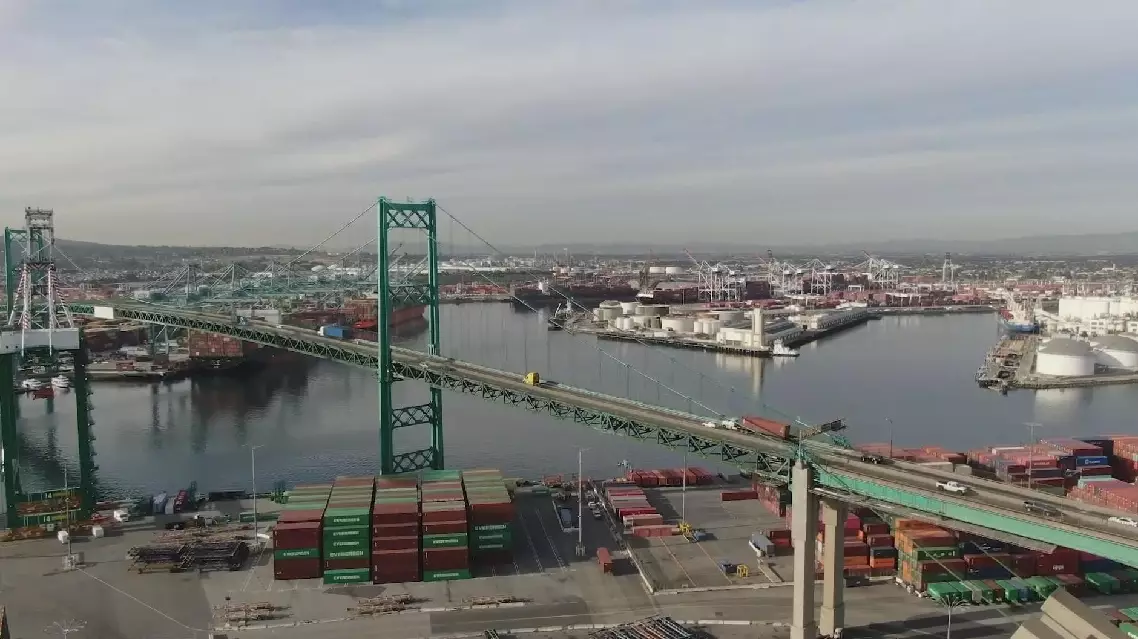
US businesses eye more holiday season imports after record cargo at California ports