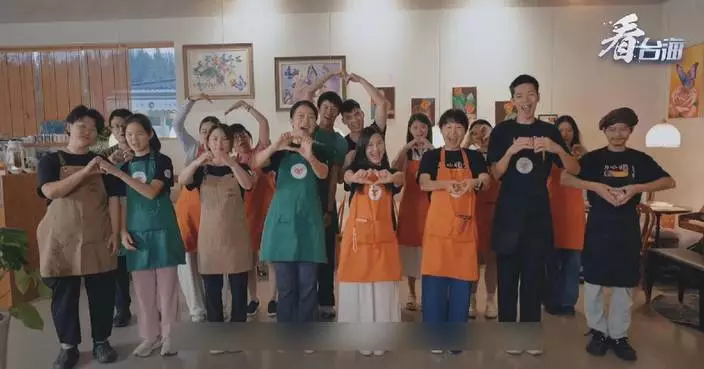
For a group of young musicians from China's Taiwan region, a journey to Beijing that began with simple curiosity has led to something far more meaningful: a shared stage, a shared rhythm and a sense of home.
Members of the China National Centre for the Performing Arts (NCPA) Orchestra, several of whom were born and raised in Taiwan, said music has become a bridge that connects them to the Chinese mainland and to a life they never imagined.
Li Jiaying, a violinist from New Taipei City, shared his story of moving to Beijing after attending a concert at the NCPA.
"Being from Taiwan, the information we get about the Chinese mainland is actually quite limited, or rather one-sided. I had always wanted to come and see for myself. Beijing turned out to be a great choice. After attending a concert at the NCPA, I thought working here would be nice. I never expected that dream would come true," said Li.
Ye Yireng, born in Taiwan's Pingtung, is now the principal flautist with the NCPA orchestra. For her, the warmth of her fellow musicians quickly changed her view of Beijing.
"When I first arrived at the theater, my colleagues were all very friendly to me. Gradually, Beijing seemed no longer just a place to work. I think the way people treat each other here still makes me feel very warm," said Ye.
Liu Wanyu, a cellist, described Beijing as a highly inclusive city.
"I think Beijing is a highly inclusive city. For Taiwanese compatriots, it feels like living and working at home, exactly the same. It gives me a sense of belonging," said Liu.
That sense of belonging was echoed by others.
"Beijing now feels more like home. I'm very used to it," said Li.
"For me, Beijing is a very inclusive city. But I was a bit worried about whether I would have trouble adapting to the climate, the food, or the lifestyle here. But later I found that those worries were completely unfounded," said Ye.
"I hope I can stay in Beijing longer, because I really like this city," said Liu.
For the musicians from Taiwan region, dreams that once set out separately now share a common beat through day-after-day companionship.
"Whether at work or in daily life, everyone helps each other. Even though we come from Taiwan, there isn't much of a gap with people here. We all speak the same language, and we are actually one family," said Li.
"As long as everyone shares a similar way of thinking, it's easy to blend in," said Ye.
The musicians’ stories reflect a broader trend, as younger generation on both sides of the Taiwan Strait lay their own passions into a shared future.
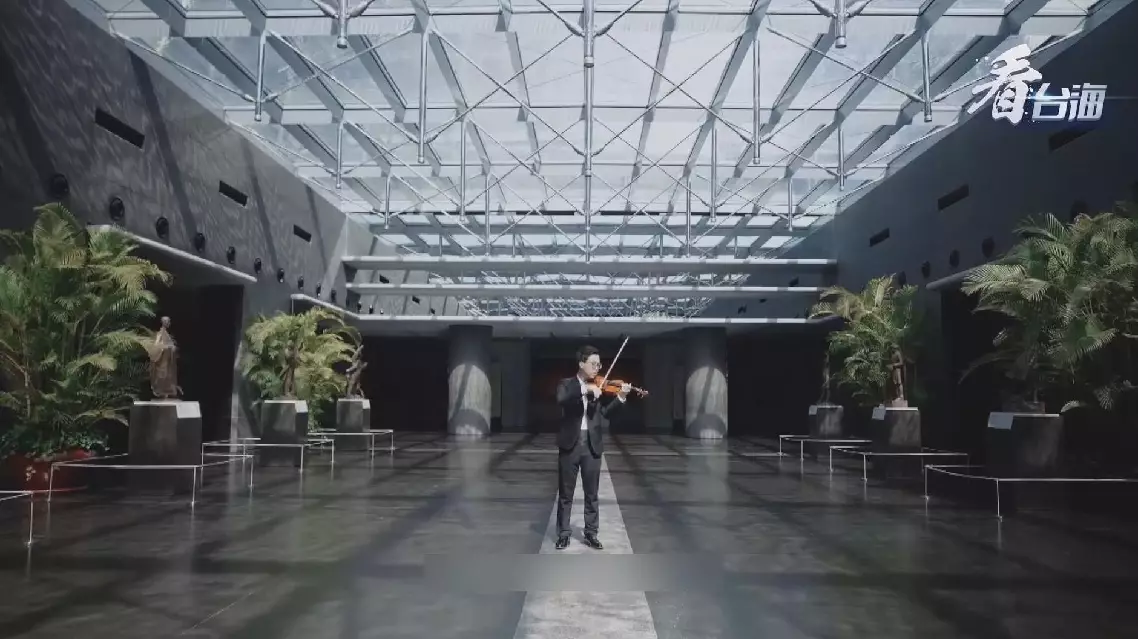
Taiwan youths find second home in Beijing through music
In the war-ravaged Gaza Strip, the ruins of destroyed buildings are becoming a source of income and building materials. With reconstruction stalled by persistent Israeli military attacks, Palestinians are recovering waste steel from among the debris to make a living and reinforce their shelters.
With a heavy hammer and his bare hands, Ahmed Al-Kafarna, a displaced Palestinian, spends a grueling day breaking concrete blocks and extracting waste steel from the ruins of destroyed buildings.
Steel is one of the essential construction materials whose entry into Gaza remains restricted by Israel.
Ahmed Al-Kafarna and his fellow workers struggle daily to earn a living, breaking apart tons of concrete slabs from war-damaged homes.
"This was never my line of work. Before the war, I was a student and a farmer. The war destroyed our lives and took away job opportunities. I was forced into this dangerous and exhausting work to provide for my family and keep us going," said Ahmed Al-Kafarna.
More than a million displaced Palestinians are living in tents, many of them worn out. As winter approaches, another displaced Palestinian Mohammed Abu Zaher is using waste steel recovered from the rubble to build a stronger shelter for his family.
"I'm buying these steel bars to build a better tent. Our current tents are weak and too low, offering little protection in summer or winter. With this steel, I can build a larger tent with a higher roof and windows, and secure it firmly before winter arrives," said Mohammed Abu Zaher.
Yahya Al-Sarraj, mayor of Gaza City, said the key to addressing the destruction and shelter crisis lies in reopening Gaza's crossings and allowing heavy machinery and construction materials to enter, enabling debris removal and reconstruction to begin.
"The people of Gaza are now suffering very much because there's no start for the reconstruction process of the damaged buildings in all the Gaza Strip. This is causing a lot of problems and people are still living in tents and the tents are now not very useful in winter and summer, and there is a risk of flooding during this coming winter," said Yahya Al-Sarraj.
Gaza is estimated to be buried under more than 60 million tons of rubble. UN estimates suggest that clearing most of the debris could take between seven and ten years and cost billions of U.S. dollars.
Three years after the war began and one year into the so-called "ceasefire period", Gazans are struggling to rebuild their lives. They are taking the search for building materials literally into their own hands amid millions of tons of rubble and widespread destruction.
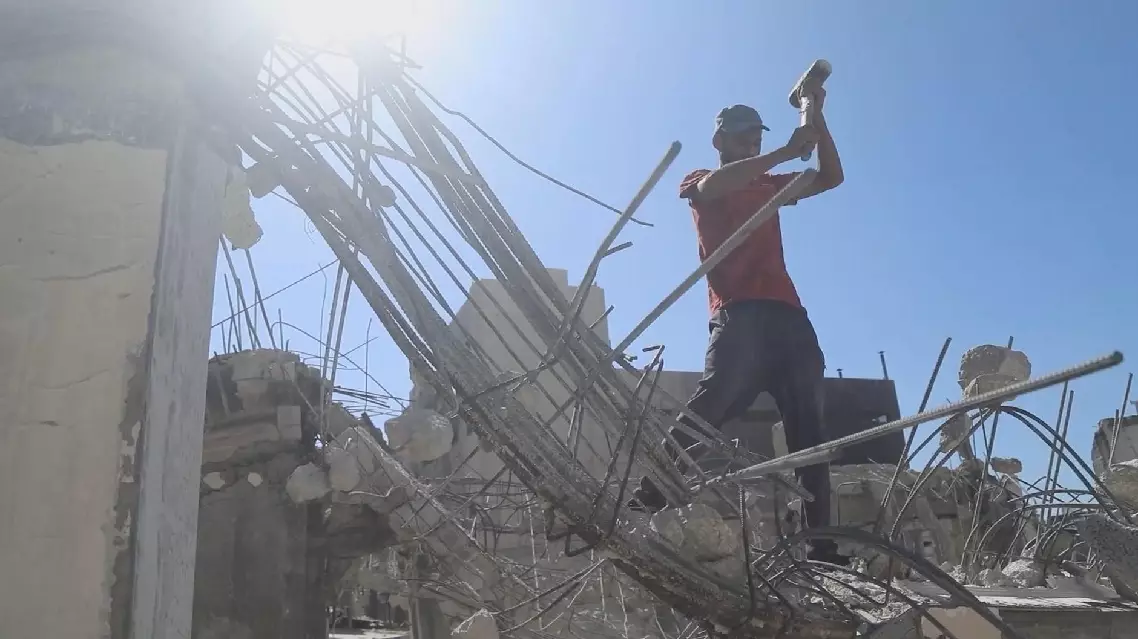
Palestinians recover waste steel from building ruins to make a living, reinforce shelters