PARIS--(BUSINESS WIRE)--Oct 11, 2026--
Sky9 Capital, a global Asia-rooted technology venture capital firm with approximately $2 billion in assets under management, announced the opening of its Paris office at Station F, Europe's largest startup campus.
This press release features multimedia. View the full release here: https://www.businesswire.com/news/home/20260924712927/en/
Founded by veteran venture capitalist Ron Cao, Sky9 has invested in and supported over 150 Asia- and US-based startups, resulting in 16 global IPOs and 19 M&A exits over more than a decade of investing.
Sky9 Capital is headquartered in Singapore and has offices in Shanghai and San Francisco. Its new Paris office marks an important milestone in Sky9's international expansion and reinforces the firm's long-term commitment to the European innovation ecosystem.
"I am very excited about our Paris office at Station F, as we partner with one of the best European startup ecosystems to continue building out our long-term commitment to connecting Europe and Asia. We look forward to supporting Asian companies expanding into Europe and backing European founders with global ambitions," said Ron Cao, Founder of Sky9 Capital.
"Sky9 Capital's arrival at Station F strengthens the bridge between European and Asian innovation. We look forward to seeing the connections this will create for our entrepreneurs as they develop their projects internationally," said Roxanne Varza, Director of Station F.
The new office will serve as a hub for supporting portfolio companies expanding into Europe, partnering with European founders building globally ambitious businesses, and strengthening collaboration between Europe and Asia. Through its presence in Paris, Sky9 connects founders and investors to its global network, operational expertise, and cross-border opportunities. For more information on Sky9 Capital, please visit www.sky9capital.com.

Ron Cao, Founder and CEO of Sky9 Capital, participating in a panel discussion at VivaTech 2026 in Paris.
NEW YORK (AP) — More drops for stocks in the artificial intelligence industry dragged the U.S. market lower on Monday, led by Nvidia.
The weakness for tech stocks helped knock the S&P 500 index 1.9% lower and pushed the Nasdaq composite index to a 2.5% loss. The Dow also fell sharply as losses broadened into other sectors. AI-focused companies were by far the biggest weights on the market and have been behind much of the recent turbulence on Wall Street.
Nvidia sank 4.1% and was again the heaviest weight on Wall Street following its crisis of leadership. The company has lost $735 billion in market value since the scandal erupted about CEO Jensen Huang’s infidelities and his ties to an alleged Chinese spy.
Nvidia is one of the most influential companies in the world not only because its chips are powering much of the world’s move into AI technology but also because its cash has helped companies across the industry to grow.
Now, following Huang’s resignation as Nvidia’s CEO last week, both the chip company and the broad industry are facing a more uncertain future without the leather-jacketed man who became one of AI’s biggest celebrities.
It’s the latest challenge for the AI industry, which had already been shaken by criticism that stock prices in the industry shot too high and were in a bubble. The sweeping victories for Democrats in this month’s U.S. midterm elections also raised worries about possible restrictions on further construction of AI data centers.
“The market was already worried about this risk before what happened at Nvidia,” Zhiwei Zhang, president and chief economist at Pinpoint Asset Management, said in a commentary. “Now the risk has become even more serious.”
The sector is also now facing more scrutiny from the U.S. government. The Trump administration on Monday issued new rules to restrict remote access to advanced U.S. computing chips and servers.
Outside of Nvidia, other chip companies also fell. They had climbed in the earlier days of Nvidia’s fall on hopes that they could gain a competitive advantage. But Broadcom dropped 3.9% and notched its second straight loss on concerns about the broader industry. Advanced Micro Devices fell 5.6%.
CoreWeave, which buys Nvidia chips and then rents out access to them to customers over the cloud, sank 6.1%. GE Vernova, which is helping to power AI data centers, fell 4.9%.
The next big milestone for the AI industry may arrive Tuesday after trading in the U.S. stock market ends for the day. That’s when Nvidia will report its latest quarterly results, and interim CEO Colette Kress is set to speak to Wall Street. Investors have become accustomed to Nvidia not only reporting stronger results than analysts expected for each quarter but also giving a forecast for upcoming revenue that’s well above expectations.
Elsewhere on Wall Street, L3Harris Technologies fell 3.9% after officials in President Donald Trump’s administration suggested the contractor for the Federal Aviation Administration may be at fault for a nationwide ground stop Friday. L3Harris said Saturday that it’s supporting the FAA in its investigation.
Summit Therapeutics sank 16.5% after the biopharmaceutical company said the U.S. Food and Drug Administration indicated it cannot approve its application for a therapy to treat certain patients with lung cancer.
Tyson Foods rose 8.7% after reporting a stronger profit for the latest quarter than analysts expected. The company behind the Jimmy Dean and Hillshire Farm brands, though, also reported weaker revenue than expected after selling less beef than it did a year earlier.
Overall, the S&P 500 shed 145.08 points to close at 7,416.59, marking the third straight loss for the benchmark index. The Dow Jones Industrial Average fell 739.38 points, or 1.4%, to 51,608.17. The Nasdaq composite fell 626.52 points to 24,509.76.
The recent swings for AI stocks have overshadowed what's been another strong earnings reporting season for U.S. companies. The big businesses in the S&P 500 index are on track to deliver earnings per share for the summer nearly 32% higher than a year earlier, according to FactSet.
It's the third straight quarter of growth above 25% for the index, which is important because corporate profits are one of the two big levers that set stock prices over the long term, along with interest rates.
In the bond market, Treasury yields eased back following last week's jump due to a worse-than-expected report on U.S. inflation.
The yield on the 10-year Treasury fell to 5.13% from 5.15% late Friday, though it remains well above a low of 4.80% reached earlier this month. Higher yields make borrowing money more expensive for everyone, and they’ve already hurt the housing industry through expensive mortgage rates.
Yields fell as oil prices sank, which took away some of the upward pressure on inflation. The price for a barrel of Brent crude oil fell 3.5% to $92.44. It’s been yo-yoing amid uncertainty about what will happen in the war with Iran.
In stock markets abroad, indexes were mixed in Europe.
AP Business Writers Chan Ho-him and Michelle Chapman contributed to this report.
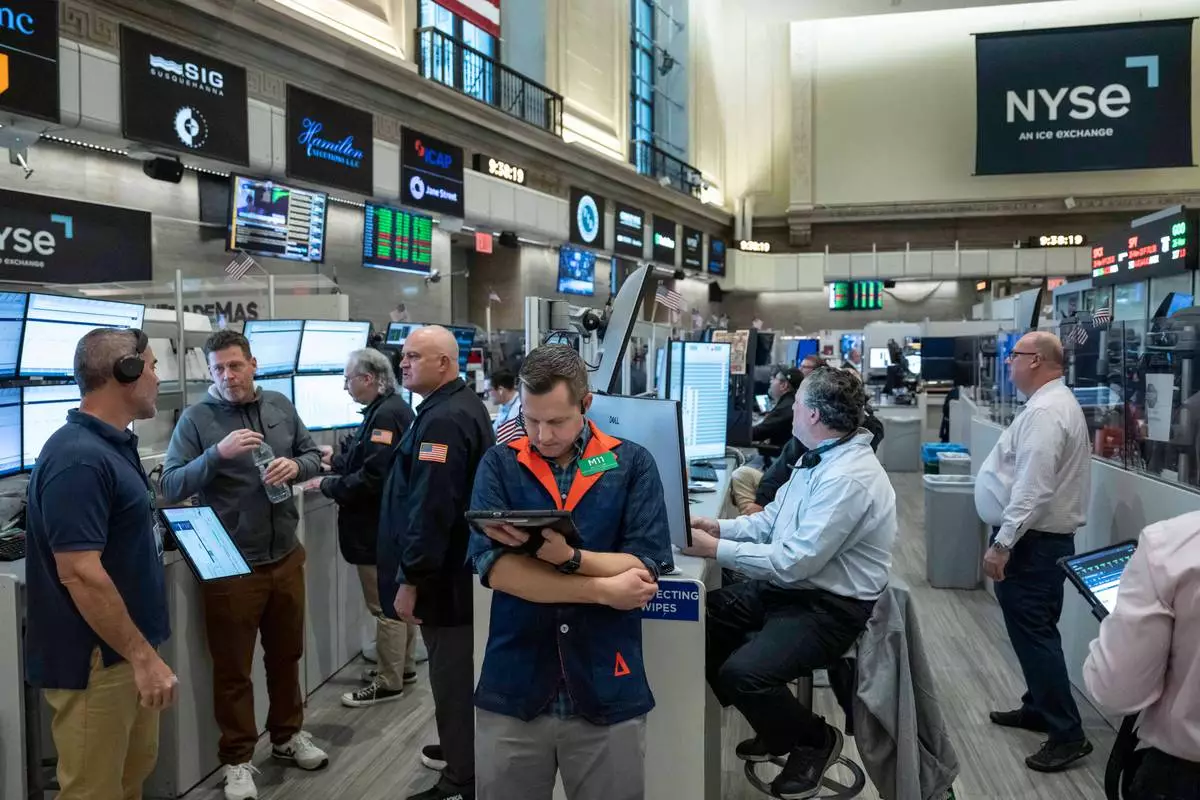
Options traders, including Bill Taylor, center, work on the floor of the New York Stock Exchange in New York, Monday, Nov. 9, 2026. (AP Photo/Yuki Iwamura)
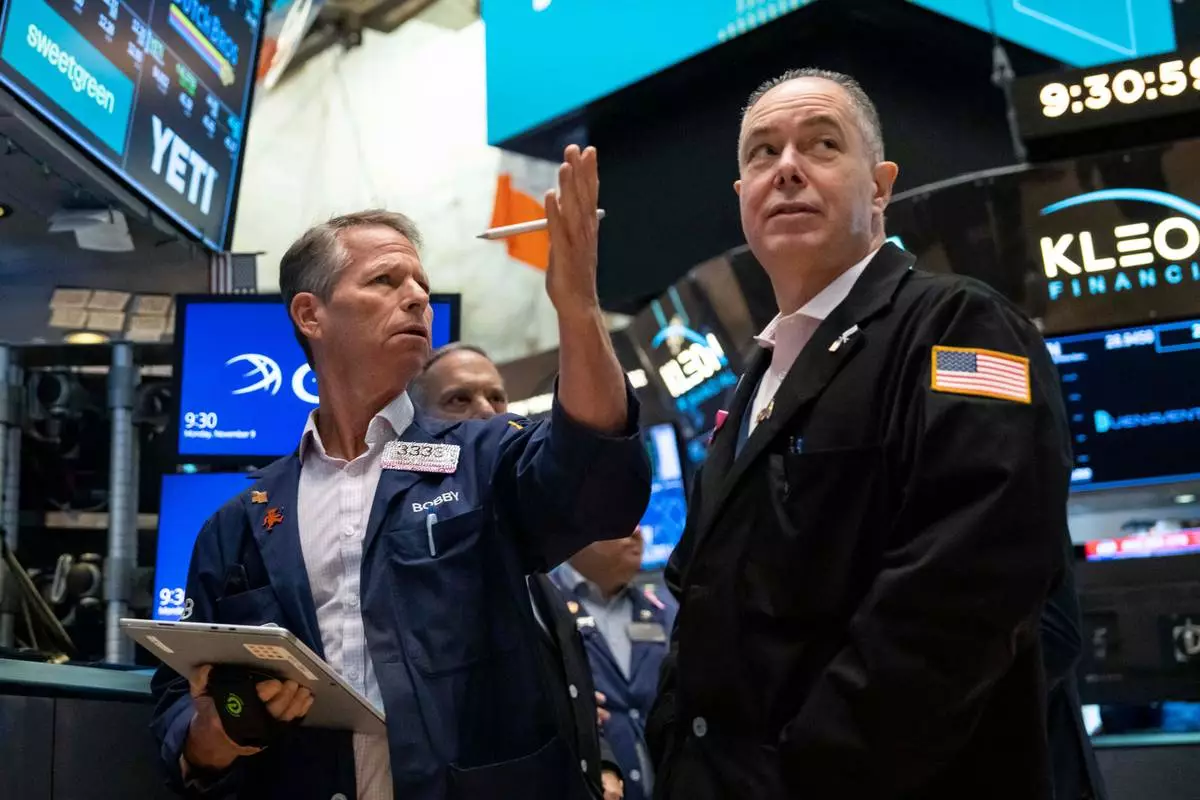
Trader Robert Charmak, left, works on the floor of the New York Stock Exchange in New York, Monday, Nov. 9, 2026. (AP Photo/Yuki Iwamura)
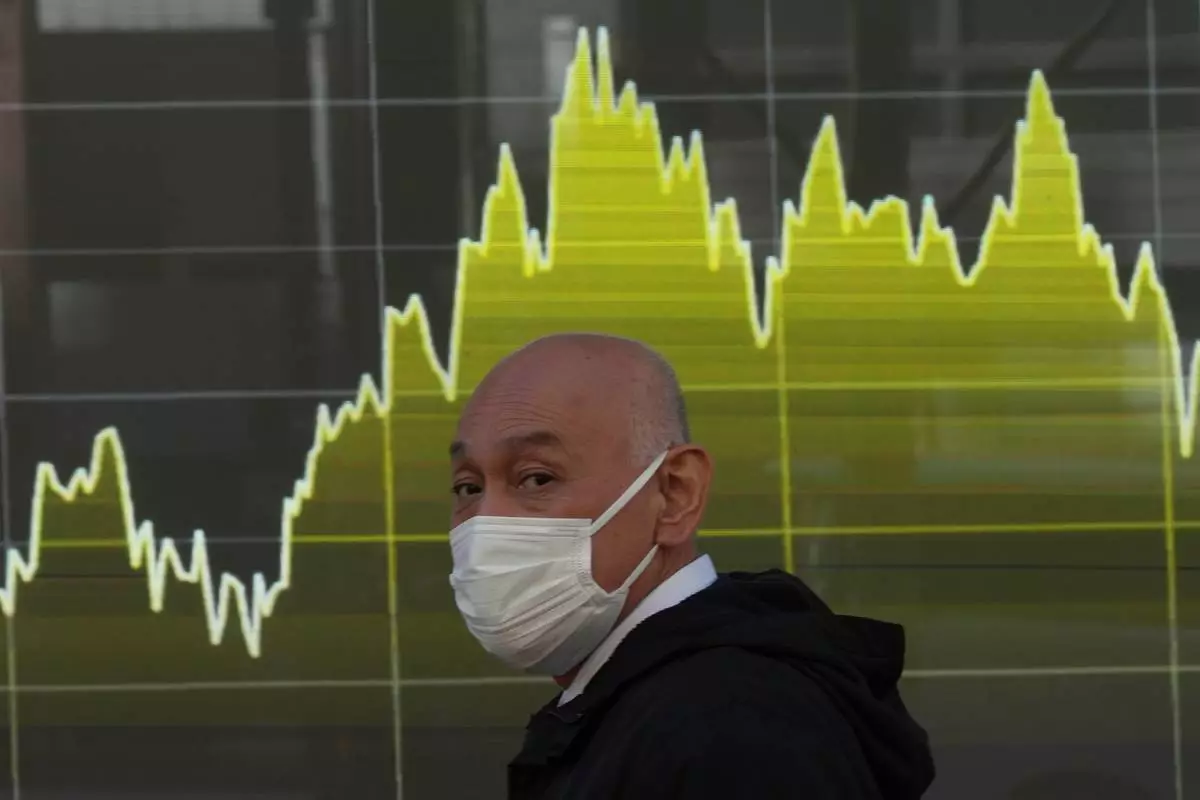
A person walks in front of an electronic stock board showing Japan's Nikkei index at a securities firm Monday, Nov. 16, 2026, in Tokyo.(AP Photo/Eugene Hoshiko)
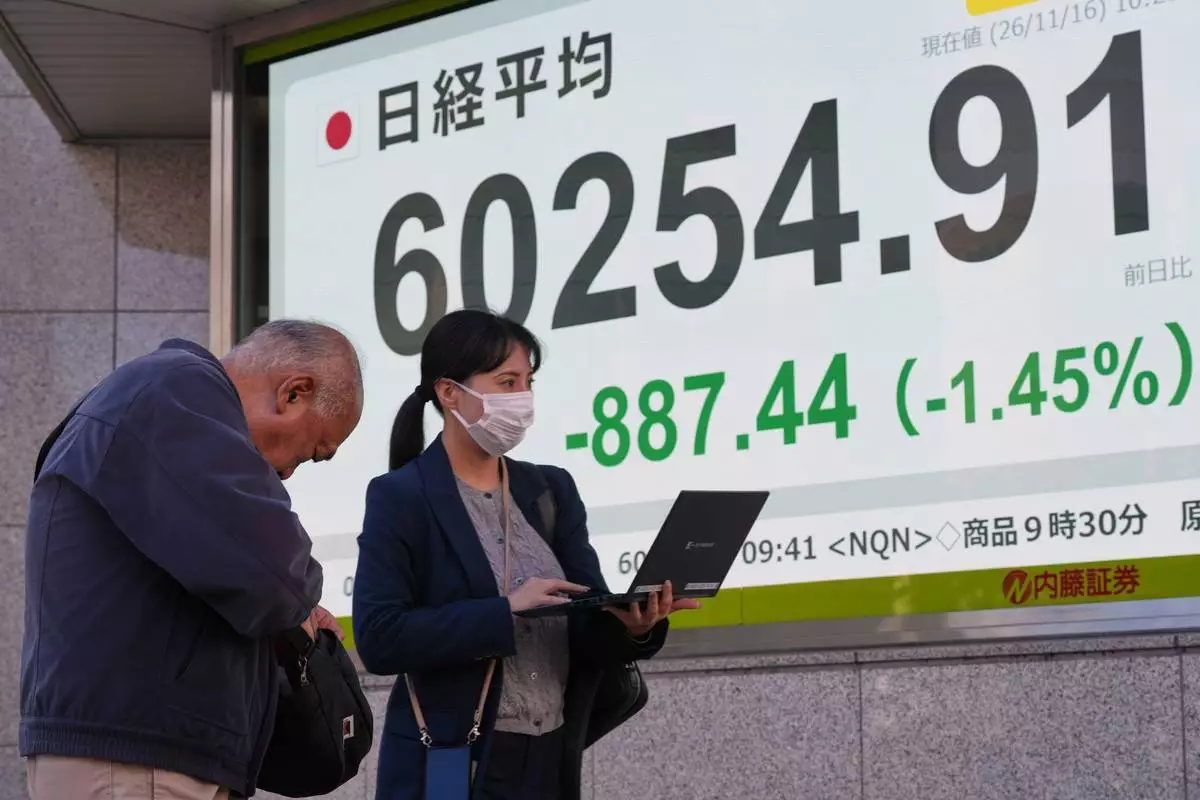
People walk in front of an electronic stock board showing Japan's Nikkei index at a securities firm Monday, Nov. 16, 2026, in Tokyo. (AP Photo/Eugene Hoshiko)
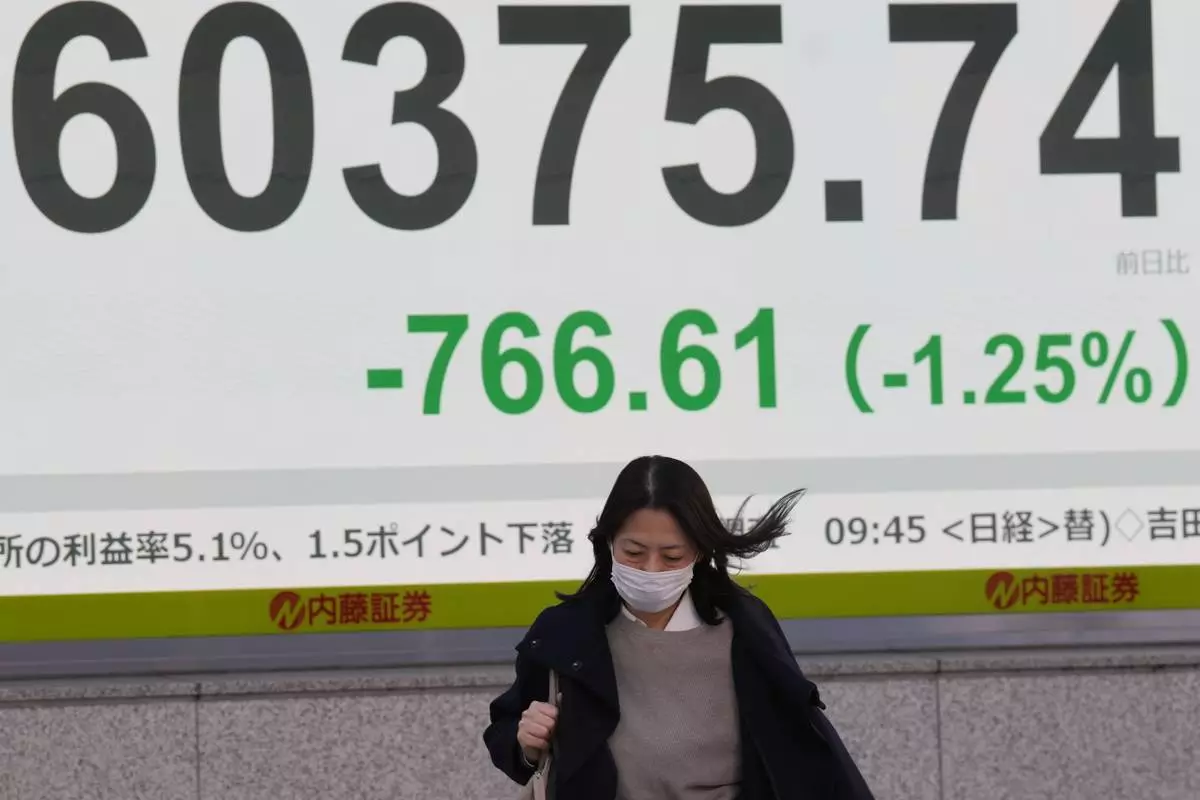
A person walks in front of an electronic stock board showing Japan's Nikkei index at a securities firm Monday, Nov. 16, 2026, in Tokyo.(AP Photo/Eugene Hoshiko)
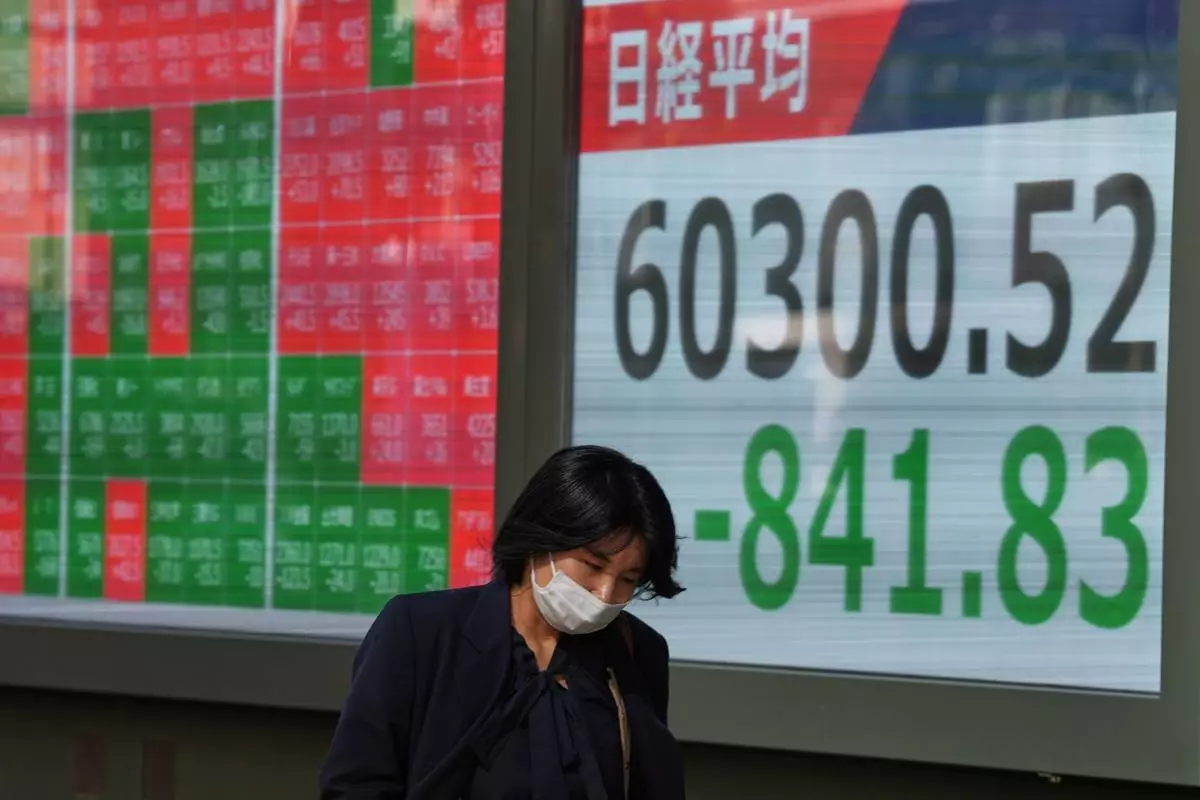
A person walks in front of an electronic stock board showing Japan's Nikkei index at a securities firm Monday, Nov. 16, 2026, in Tokyo. (AP Photo/Eugene Hoshiko)
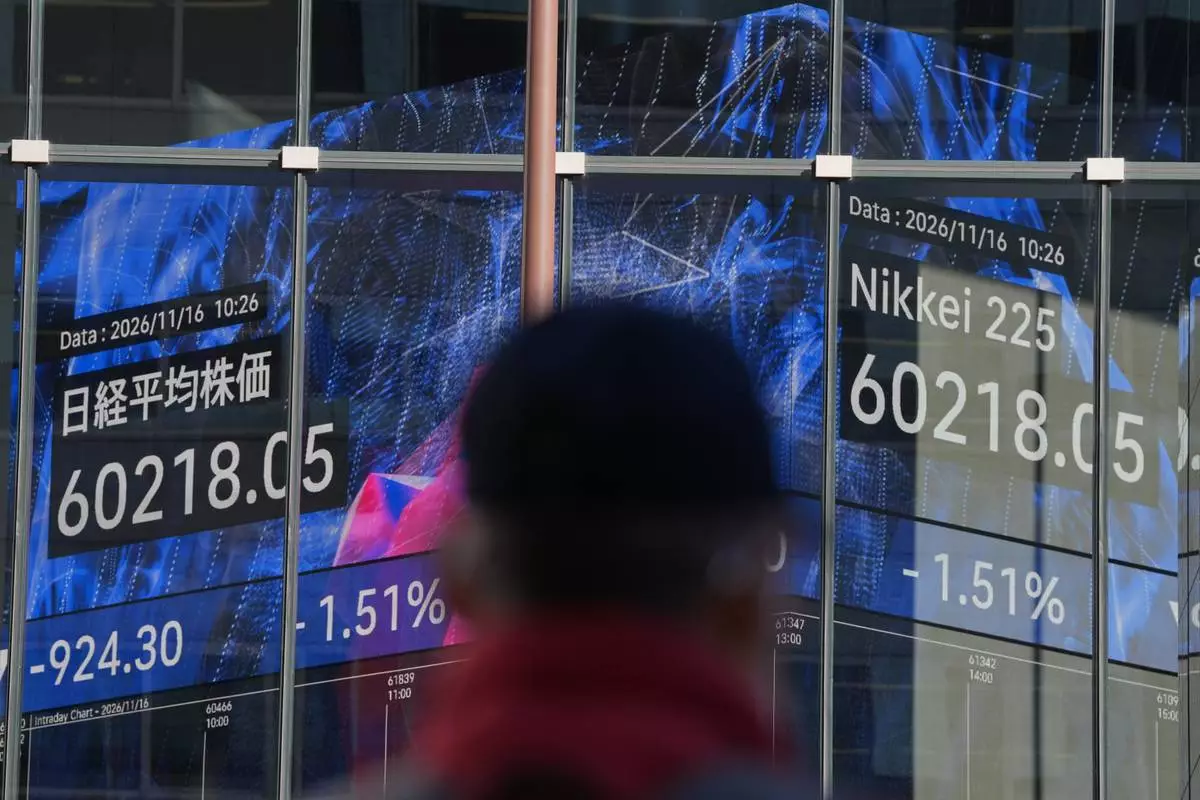
A person watches an electronic stock board showing Japan's Nikkei index at a securities firm Monday, Nov. 16, 2026, in Tokyo. (AP Photo/Eugene Hoshiko)