Once known for its high asbestos production, Shimian County in southwest China's Sichuan Province is revitalizing itself by turning its aging factories into hotels and cultural blocks to meet modern needs.
Shimian, which translates to asbestos, is the only county in China named after a mineral.
Asbestos mines here once accounted for 60 percent of the country's total output, making a monumental contribution to China's early industrialization. But resources are finite.
As the asbestos industry declined, the old factory buildings were gradually abandoned. Now, however, they have been revived through rebuilding.
One of these buildings was an old factory dormitory. It has been turned into a stylish, industry-chic hotel that receives tourists from around the country.
"The original foundation and walls have been preserved. To ensure guests can stay comfortably, we reinforced and renovated the building's exterior and added more modern designs," said Wu Di, head of the hotel.
Now the hotel has 57 rooms, with occupancy holding around 60 percent.
Right next to the hotel is a huge gate with "Sichuan Provincial Asbestos Mine" written at the top. It's a replica of the old factory gate, now serving as the entrance to the culture block and featuring memories of the mine's golden era.
"In 1950, the local government decided to establish Shimian County and went all out to mine asbestos. In the later stage of its development, there were over 17,000 miners," said Zhao Min, deputy director of Sichuan Asbestos Mine Memory Exhibition Hall.
According to Zhao, the cultural district was reconstructed around the former office building of the mining area, along with some of its former residential areas.
Inside the exhibition hall, photos, miners' clothes, and the mine's largest single asbestos sample are preserved for visitors and study tour programs.
Outside, statues, machines, and replicas of the mine shaft pass down the mine's spirit.
The culture block now receives about 45,000 visitors each year.

Sichuan county transforms abandoned factories into hotels, cultural hubs
Yemen's Houthi group said that it had carried out multiple attacks on Saudi and Saudi-led coalition targets, while the Saudi-led coalition said it intercepted a Houthi missile, and Yemeni government forces reported operations against the group on several fronts.
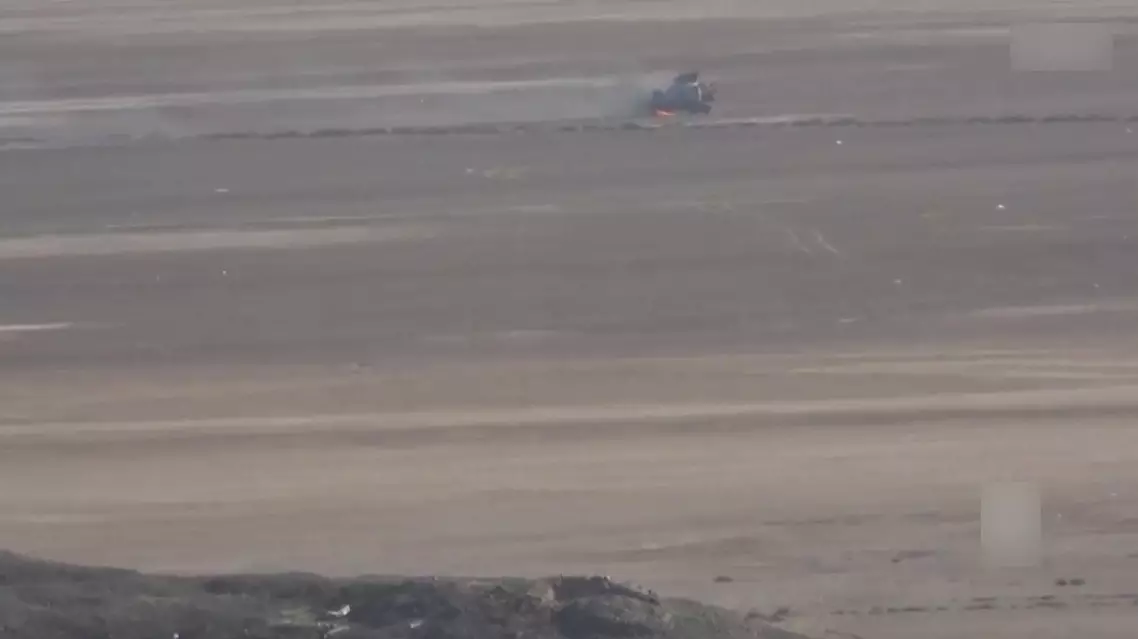
In a statement released early Thursday, the Houthis said they used a surface-to-air missile to hit a Saudi Typhoon fighter jet. The aircraft, they said, had taken off from Saudi Arabia's Taif Air Base and was hit over Yemen's Sa'adah Province. Saudi Arabia has not yet responded to the claim.
Earlier on Wednesday, the Houthis said they launched a large-scale attack using ballistic missiles, cruise missiles and drones against oil facilities of energy giant Saudi Aramco in Dhahran in eastern Saudi Arabia, as well as King Khalid International Airport and a Saudi Aramco refinery in the Saudi capital, Riyadh.
The Houthis said in a separate statement released Wednesday evening that the group had fired one more ballistic missile at King Khalid International Airport and launched three ballistic missiles at Saudi-led coalition targets in southern Yemen.
Turki al-Maliki, spokesman for the Saudi-led coalition, said on Wednesday that they had intercepted and destroyed a Houthi ballistic missile fired toward Riyadh. Saudi Arabia's General Directorate of Civil Defense said in a statement on Wednesday that fragments from the intercepted missile fell in Riyadh, injuring one person.
Meanwhile, the Houthi-run al-Masirah TV reported that late on Wednesday the Saudi-led coalition carried out an airstrike on a residential building in the Al Maravi'ah area of Hodeidah province, which is under Houthi control. Early on Thursday, al-Masirah also reported that Yemen's capital, Sanaa, had come under Saudi attack.
According to a Houthi statement issued on Wednesday evening, the Saudi-led coalition launched 42 airstrikes and missile attacks on Houthi-controlled areas in the previous 24 hours. The Houthis said that Saudi attacks on islands in the Bab el-Mandeb Strait directly threatened the safety of maritime shipping routes.
Separately, Yemeni government forces said on Wednesday that they continued to strike Houthi targets and personnel on the eastern and southern fronts.
Yemen has been mired in conflict since late 2014, when the Houthis seized the capital Sanaa and much of northern Yemen, prompting a Saudi-led coalition to intervene in 2015 in support of the Yemeni government.
Houthis, Saudi-led coalition report fresh military actions against each other