ATLANTA (AP) — Falcons quarterback Michael Penix Jr. sustained a rib injury when he was sacked by Ravens linebacker Tavius Robinson late in the fourth quarter of Atlanta's 30-23 overtime loss to Baltimore on Sunday night and was unable to finish the game.
Penix was hopeful to return and play in overtime, but during the Ravens' opening possession of the extra session, Penix said the pain was getting worse and worse as his body cooled down.
Click to Gallery
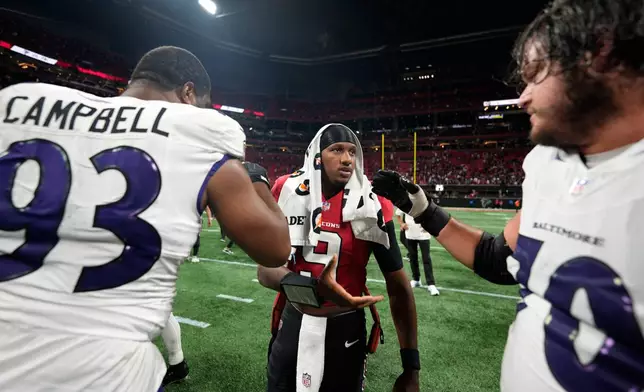
Atlanta Falcons quarterback Michael Penix Jr. (9) talks with Baltimore Ravens defensive end Calais Campbell (93) and offensive tackle Roger Rosengarten (70) after a NFL football game, Sunday, Oct. 11, 2026, in Atlanta. (AP Photo/Mike Stewart)
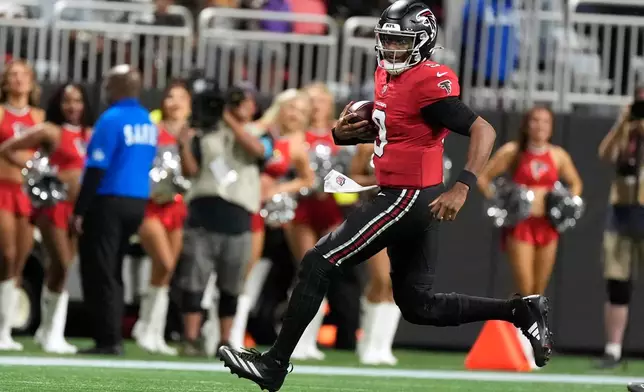
Atlanta Falcons quarterback Michael Penix Jr. runs up field during the first half of an NFL football game against the Baltimore Ravens, Sunday, Oct. 11, 2026, in Atlanta. (AP Photo/Mike Stewart)
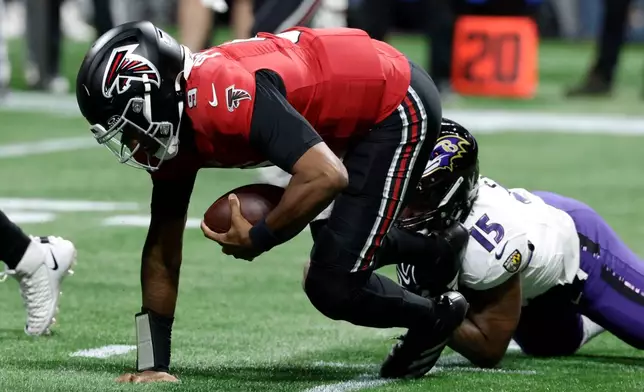
Atlanta Falcons quarterback Michael Penix Jr. (9) is sacked by Baltimore Ravens linebacker Mike Green (15) during the first half of an NFL football game, Sunday, Oct. 11, 2026, in Atlanta. (AP Photo/Erik S. Lesser)
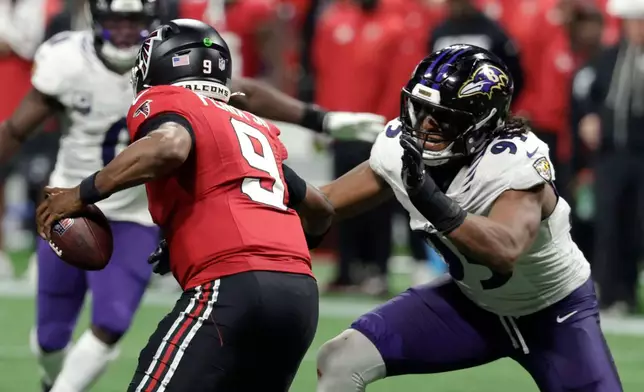
Baltimore Ravens linebacker Tavius Robinson (95) pressures Atlanta Falcons quarterback Michael Penix Jr. (9) during the second half of an NFL football game, Sunday, Oct. 11, 2026, in Atlanta. (AP Photo/Erik S. Lesser)
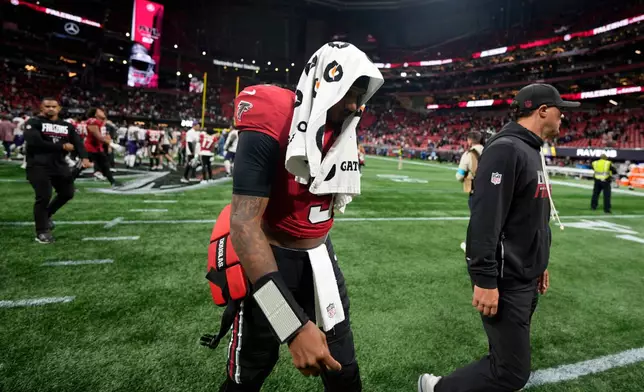
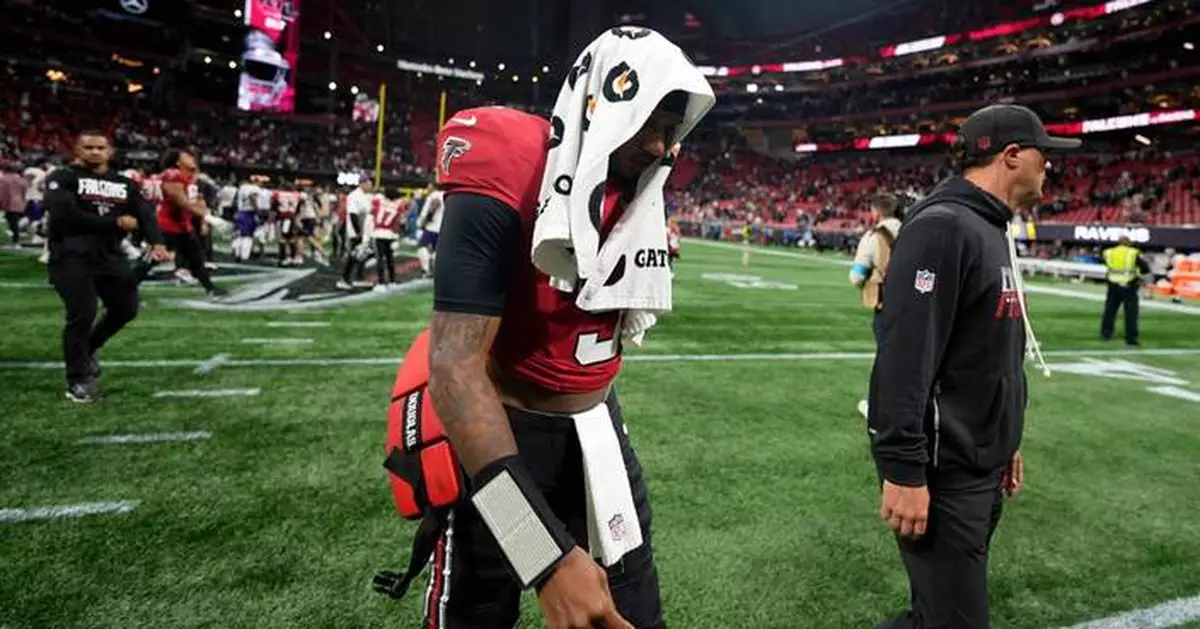
Atlanta Falcons quarterback Michael Penix Jr. walks off the field after a NFL football game against the Baltimore Ravens, Sunday, Oct. 11, 2026, in Atlanta. (AP Photo/Mike Stewart)
“I did take some throws on the sideline to see how I felt, and I did not feel like I was going to be able to give our team what we needed to to be able to help us win that football game because of the pain that I was feeling,” Penix said.
After he was sacked with 27 seconds left in regulation, Penix stayed down and was attended to by athletic trainers. He was replaced for one play by Tua Tagovailoa, but then reentered the game for one play, throwing an incomplete pass on third down. The Falcons then punted on the final play of regulation.
“I was trying to get out there,” he said. “I feel like if we had the ball first in overtime, I probably would have been out there.”
Penix was hopeful this will not be a long-term injury.
“Knowing me, I’m going to be ready to go next week because I sat out enough in my career,” he said. “I’m going to do everything I can in the training room, make sure I get back to where I want to be.”
Penix missed the first two games of the regular season recovering from Achilles tendon surgery last November, during which the Falcons lost twice and the offense did not enter the red zone in either game. He returned in blowout wins over the Packers and Saints, and played fairly well against the Ravens. Penix was 19 of 32 for 240 yards and a touchdown while getting sacked three times.
“I thought versus a tough defense up front, a tough coverage, I thought he made some plays,” Falcons coach Kevin Stefanski said. “Like every quarterback, you’re not going to make every play, but there’s things that he can certainly improve upon. But I thought he battled.”
Should Penix be sidelined, it will be Tagovailoa who would start against the Bears, not Cooper Rush, who played in Atlanta's first two games. Tagovailoa came on for the Falcons' overtime possession Sunday. He completed one pass in his Falcons debut and then had a pass intercepted by Kyle Hamilton to end the game.
Penix had a towel over his head in overtime sitting on the bench, revealing some of the frustration of having to deal with another injury. Since becoming the full-time starter at the start of last season, the former 2024 first-round draft pick has only played in 12 of his team's 22 games.
“It’s frustrating, you know?” he said. “But I think the biggest thing is just, I want to be out there, especially in a big moment in a game like that.”
See AP’s full NFL coverage here
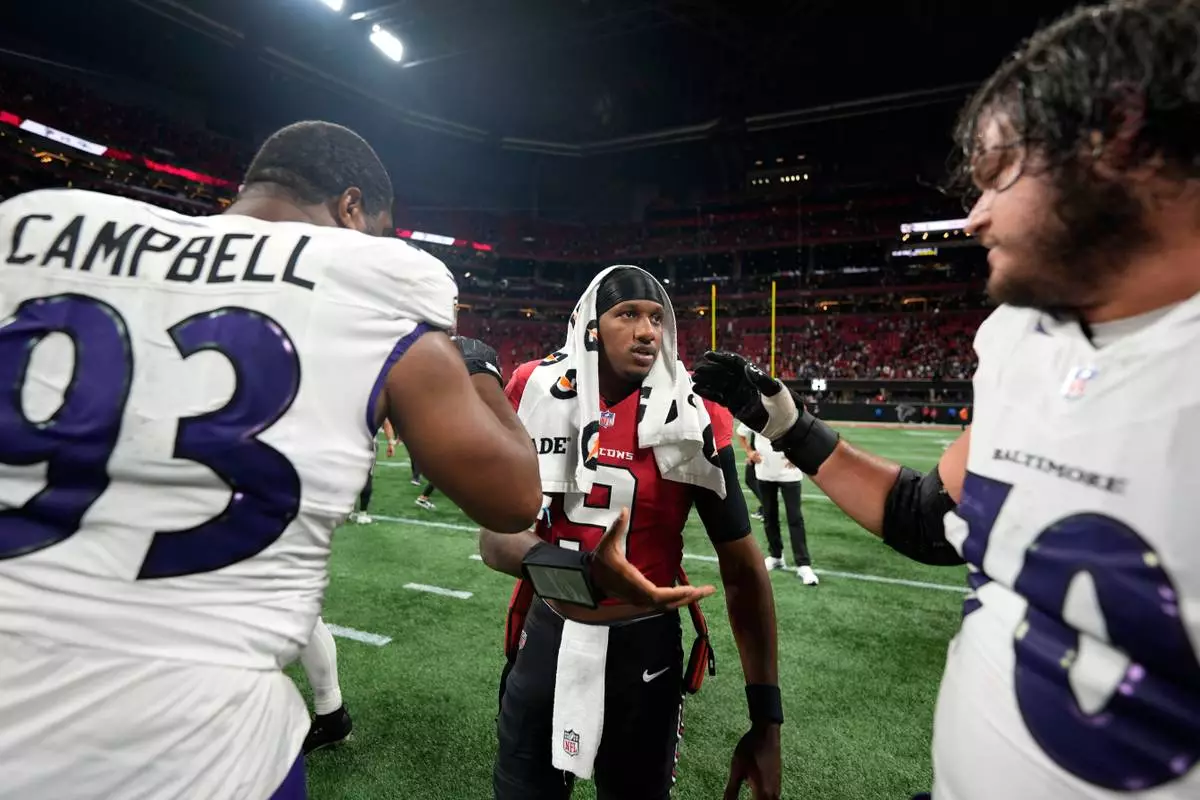
Atlanta Falcons quarterback Michael Penix Jr. (9) talks with Baltimore Ravens defensive end Calais Campbell (93) and offensive tackle Roger Rosengarten (70) after a NFL football game, Sunday, Oct. 11, 2026, in Atlanta. (AP Photo/Mike Stewart)
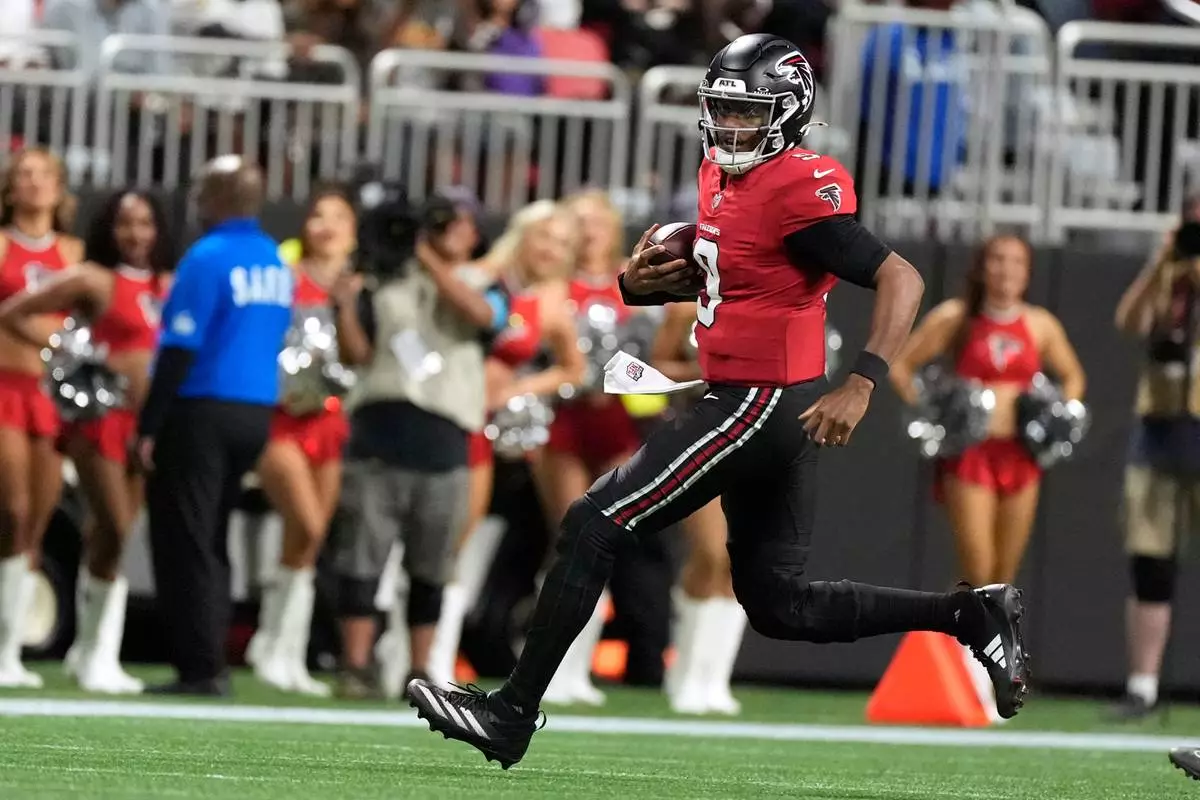
Atlanta Falcons quarterback Michael Penix Jr. runs up field during the first half of an NFL football game against the Baltimore Ravens, Sunday, Oct. 11, 2026, in Atlanta. (AP Photo/Mike Stewart)
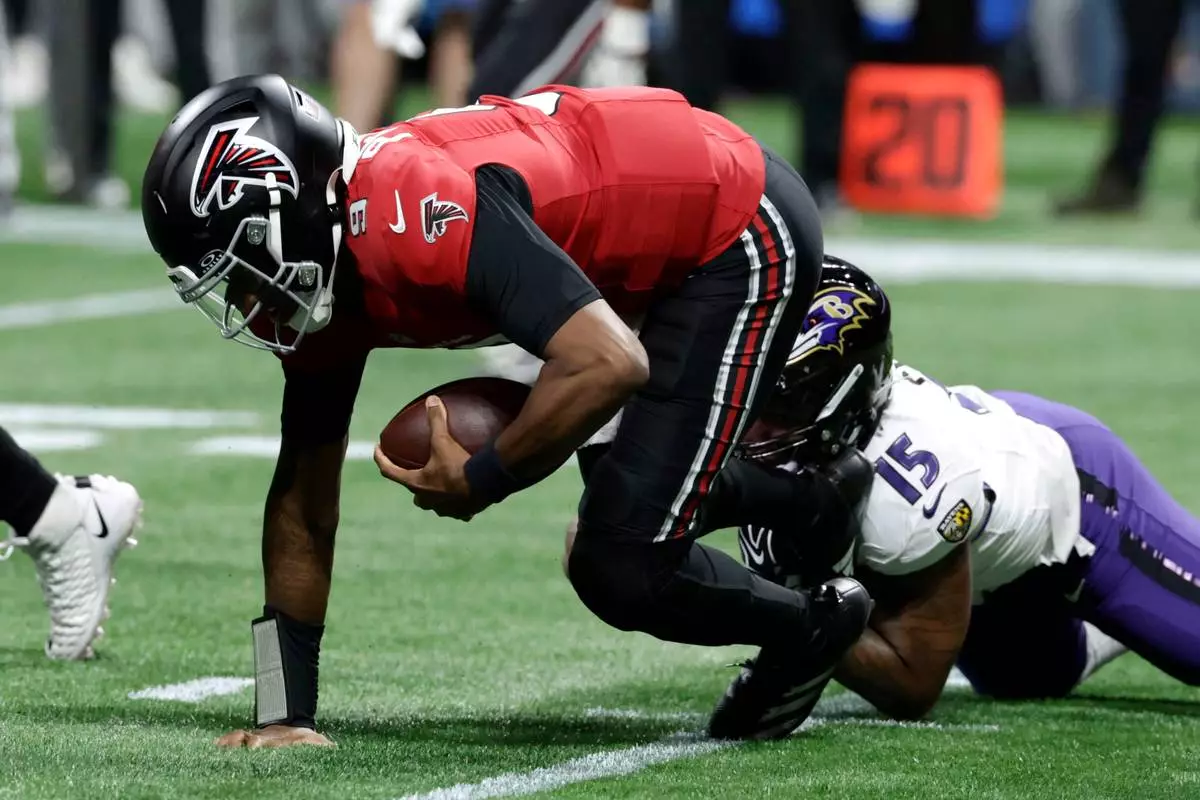
Atlanta Falcons quarterback Michael Penix Jr. (9) is sacked by Baltimore Ravens linebacker Mike Green (15) during the first half of an NFL football game, Sunday, Oct. 11, 2026, in Atlanta. (AP Photo/Erik S. Lesser)
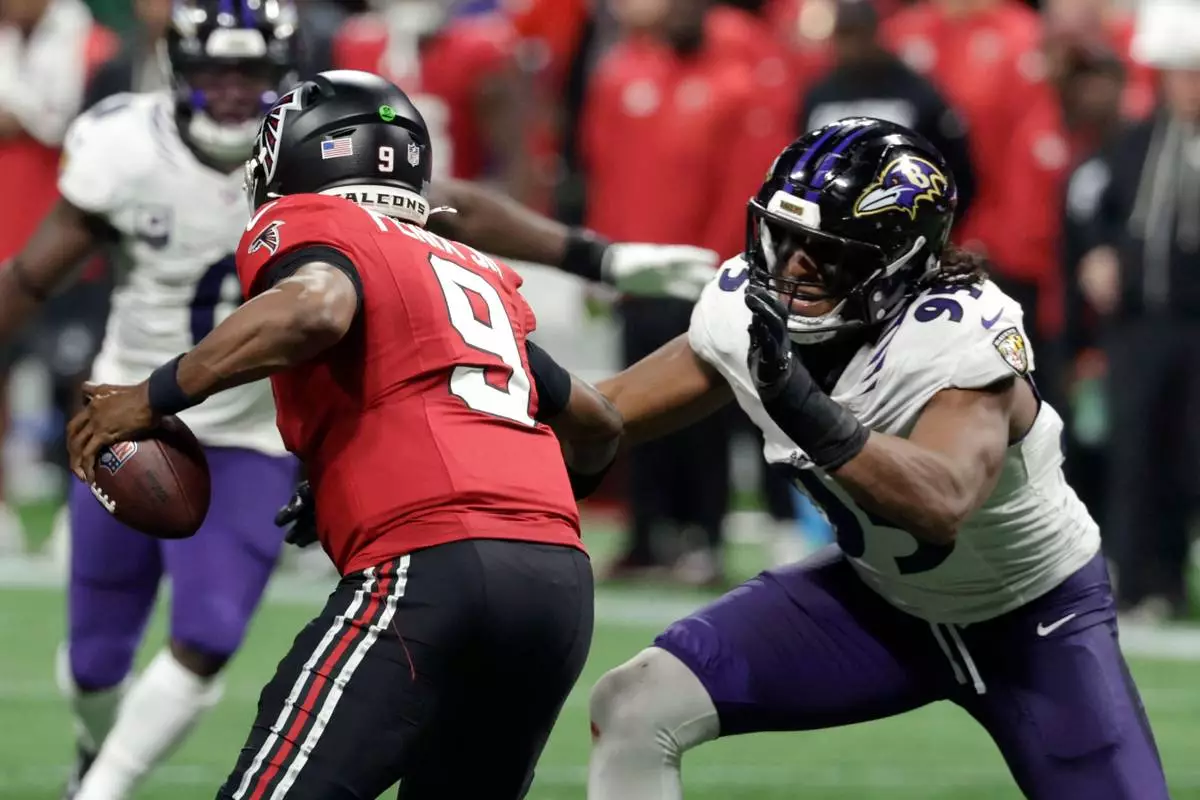
Baltimore Ravens linebacker Tavius Robinson (95) pressures Atlanta Falcons quarterback Michael Penix Jr. (9) during the second half of an NFL football game, Sunday, Oct. 11, 2026, in Atlanta. (AP Photo/Erik S. Lesser)
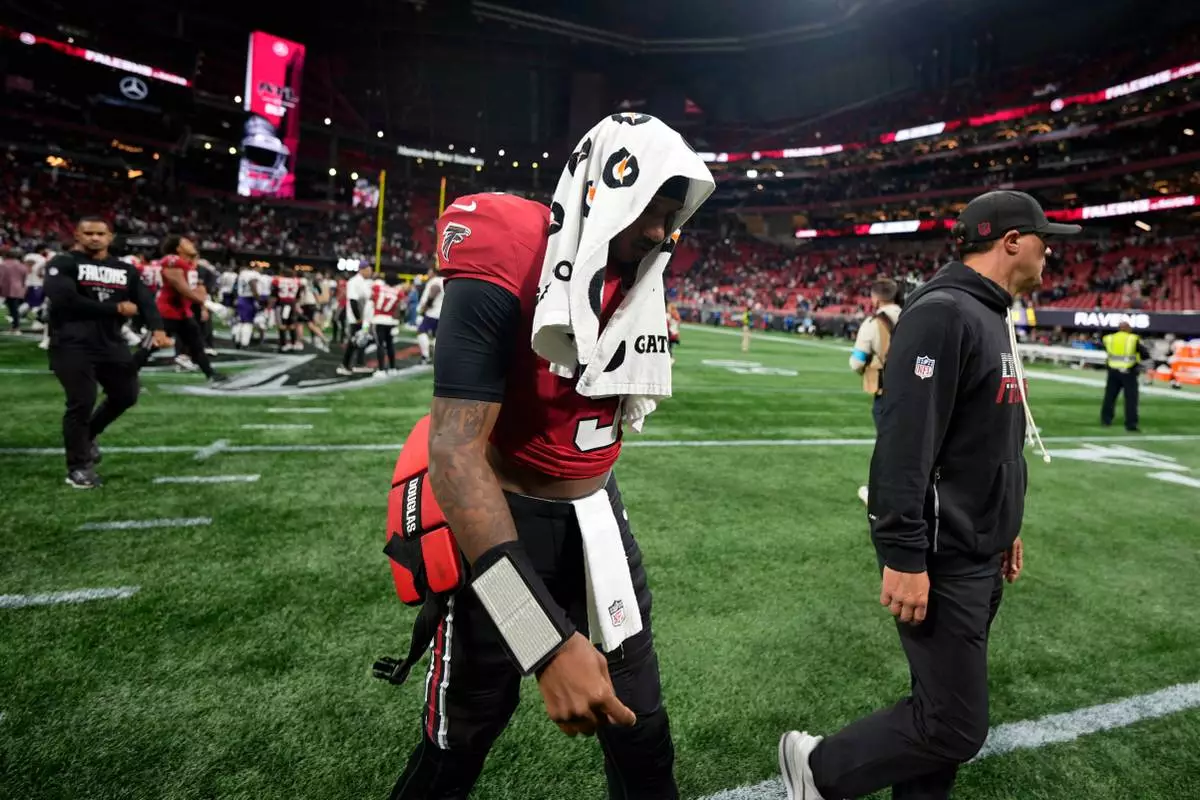
Atlanta Falcons quarterback Michael Penix Jr. walks off the field after a NFL football game against the Baltimore Ravens, Sunday, Oct. 11, 2026, in Atlanta. (AP Photo/Mike Stewart)