BERLIN (AP) — A former Ukrainian army officer is going on trial in Germany this week over undersea explosions that damaged the Nord Stream gas pipelines between Russia and Germany four years ago in one of the biggest acts of sabotage in Europe since the Second World War.
The suspect faces charges of causing an explosion, damaging property, disrupting public service and being an “accomplice to war crimes” by attacking civilian infrastructure, according to prosecutors.
The attack laid bare Europe's dependence on Russian energy but also raised sensitive questions about Ukraine and its Western allies.
While international observers initially blamed Moscow, there are now increasing suggestions that Ukrainian state security agencies may have been involved — even though Ukraine counts Germany as one of its closest allies.
According to German privacy rules, the suspect will be identified in court only as Serhii K., although he was publicly named as Serhii Kuznietsov in extradition proceedings in Italy.
Here's what we know about the alleged ringleader of the attack and one of the most politically charged court cases of wartime sabotage that will be heard at the Hanseatic Higher Regional Court in Hamburg starting this Wednesday.
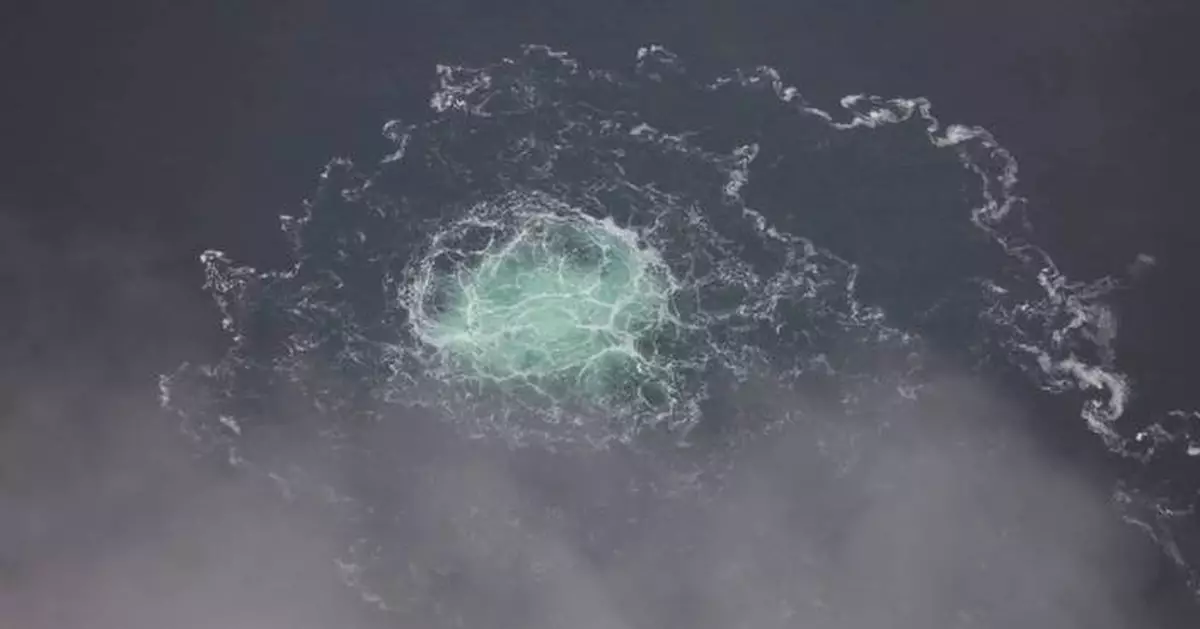
The explosions on Sept. 26, 2022, damaged pipelines that were built to carry Russian natural gas to Germany under the Baltic Sea.
At the time, European countries were moving to wean themselves off Russian energy sources, following the Kremlin’s full-scale invasion of Ukraine in February 2022.
Prosecutors say the aim of the plot was to permanently disrupt gas deliveries and prevent Russia from using the revenues to finance its military operations.
The defendant and others allegedly used a yacht that set off from the German port of Rostock. It had been hired from a German company using forged IDs and with the help of intermediaries.
The explosions ruptured the Nord Stream 1 pipeline, which was Russia’s main natural gas supply route to Germany until Moscow cut off supplies in August 2022. They also damaged Nord Stream 2, which never entered service because Germany suspended its certification process shortly before Russia’s invasion of Ukraine.
The suspect allegedly organized and carried out the detonation of at least four bombs between 14 and 27 kilograms (around 31 to 62 pounds) at a depth of 70 to 80 meters (230 feet to 263 feet) near the Danish island of Bornholm.
He was detained in August in an Italian village, where officers raided a bungalow where he was staying with his family. Police said he surrendered without resistance. He was extradited to Germany in November.
A second suspect was arrested on a European warrant in the northern Croatian town of Pula in August. He has applied for asylum in Croatia to fight his extradition to Germany.
The pipelines were long a target of criticism by the U.S. and some of its allies, which warned that they increased dependence on Russian gas.
Russian officials, however, have claimed that U.S. and British intelligence agencies were involved in staging the explosions, which Moscow declared “an act of international terrorism,” and have launched their own investigation.
Russia has also accused NATO of involvement in the attack, while several Western countries initially blamed Russia.
More recently, the Kremlin has expressed hope that those who orchestrated the explosions will be held accountable.
Asked what Moscow expects from the trial, Kremlin spokesperson Dmitry Peskov said Monday that “we expect objectivity.”
“We expect … that both the perpetrators and those who ordered it will be named. That would be very important. I think no one doubts who it really is,” Peskov said.
Ukrainian President Volodymyr Zelenskyy has denied allegations that his country was involved in the pipeline blasts.
He also told reporters in August that Ukraine’s prosecutors and Foreign Ministry were already cooperating with partners and that Kyiv was “absolutely open to joint steps on the investigation,” stressing the importance of keeping Europe’s trust.
Nonetheless, “all the evidence points very clearly to the fact that Ukraine blew up the Nord Stream pipelines, not the Russians, whom they initially tried to pin the blame on,” says Joachim Weber, a security expert at the Center for Advanced Security, Strategic and Integration Studies at the University of Bonn.
“This is, of course, highly explosive politically, because, as is well known, Germany is one of Ukraine’s closest allies, supporting the country on a massive scale with huge sums of money and also by taking on considerable political risks,” Weber said.
However, the German government has so far refrained from comment on the upcoming trial, pointing out that no verdict has yet been reached and the case is in the hands of the independent judiciary.
Even if it were proven in the course of the trial that Ukrainian government agencies were somehow involved in the sabotage act, that would likely have few consequences for Germany’s relationship with Ukraine, “because we naturally want Ukraine to survive,” not least as a buffer against Russia, said Weber.
“In that respect — even if it sounds cynical to some — Ukraine also serves a purpose for us, and it is in our interest to preserve it,” he said.
The outcome of the trial is unlikely to have major repercussions on German-Ukrainian relations, he argued.
“In short, I don’t see us going through some kind of list of punishments against Ukraine right now,” Weber said. “But we should take this as a warning, so to speak, to view things realistically.”
Niemann reported from Bonn, Germany. AP writers Hanna Arhirova in Kyiv, Ukraine and Jovana Gec in Belgrade, Serbia contributed reporting.
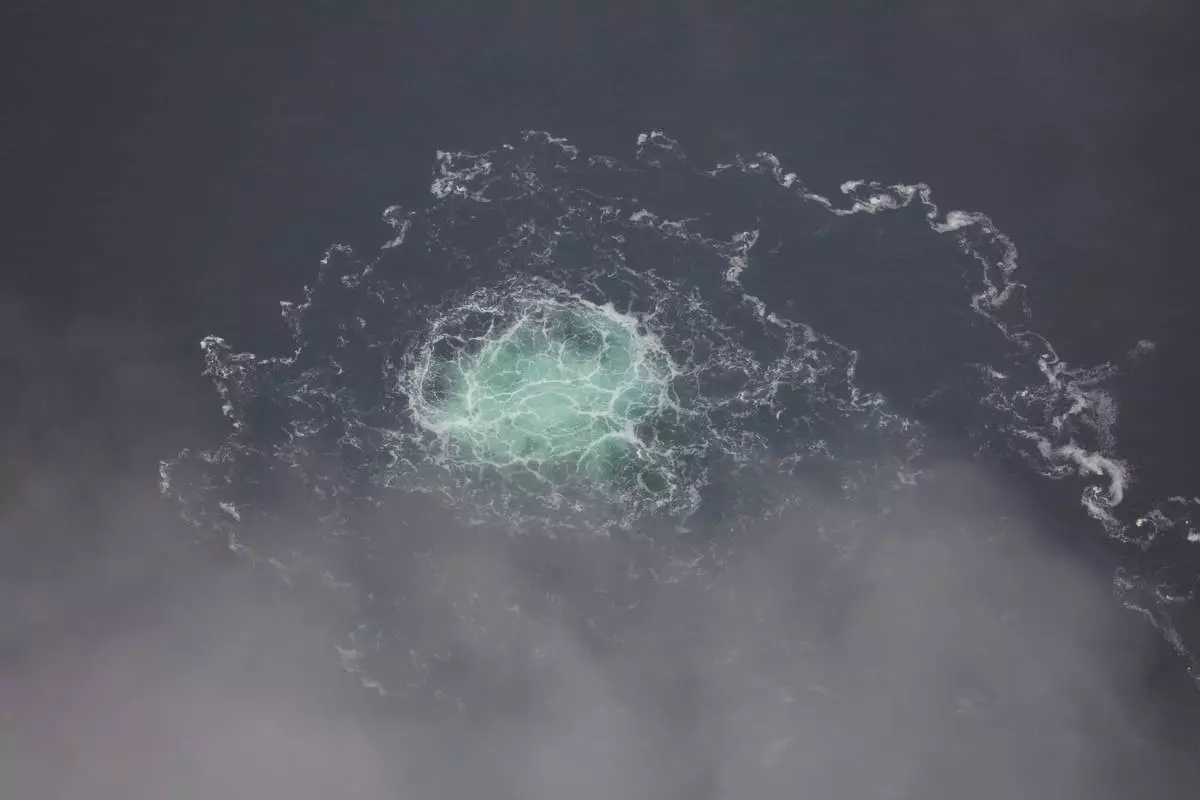
FILE - In this picture provided by Swedish Coast Guard a leak from Nord Stream 2 is seen on Sept. 28, 2022. (Swedish Coast Guard via AP, File)
THE HAGUE, Netherlands (AP) — One candidate to be a judge on the International Criminal Court was accused of bullying in the workplace and other inappropriate behavior. Another was accused of touching a colleague and then threatening to retaliate if reported.
The court received the complaints as part of a new process to vet nominees to the bench. But it failed to fully investigate the accusations — and hasn't passed them along to nations voting on the nominations — saying it could not look into them without revealing the identities of the complainants, according to exclusive reporting by The Associated Press.
Yet an AP reporter was able to uncover substantial new information about one of the accused candidates. The gaps in vetting the two potential new judges occurred despite the reputational damage the court has already suffered after the removal of its former chief prosecutor over accusations of workplace misconduct.
In total, the court received complaints about seven of the 14 nominees for a judicial election that will be held in the coming days. It examined the other complaints more fully — but still not in time for the committee assessing the candidates to consider the findings.
The election comes as the court — responsible for prosecuting the world’s gravest atrocities, including war crimes and genocide — is facing an existential threat from the Trump administration, which is engaged in a campaign to dismantle the institution over investigations into the United States and Israel. Washington has imposed sanctions on more than a dozen current and former staff members and the institution itself.
Civil society groups have long said the court wasn’t sufficiently vetting applicants for senior positions, and that criticism took on new urgency in the wake of sexual misconduct allegations against Karim Khan. The former chief prosecutor denies the accusations.
So the court adopted a new process, used for the first time in this year’s election.
Anyone with concerns about the contenders, whose names are public, had 60 days to file a complaint, which would be evaluated by the court’s internal watchdog, the Independent Oversight Mechanism.
The court received complaints that included accusations of bribery, misrepresenting professional credentials and other misconduct, according to documents seen by AP.
The AP has learned the names of the candidates who faced formal complaints but was only able to investigate some of the allegations and so has chosen to not name any of the nominees.
Accusations against four of the candidates focused on issues that had been reported in the media or that had been looked into by other institutions — and, in these cases, the IOM said it was able to substantiate them.
But the complaints that alleged inappropriate behavior by two of the nominees had not been aired publicly before.
In one case, three women alleged the candidate berated them until they cried, or made them uncomfortable by inviting them for late-night drinks or to travel together, the documents show.
The AP spoke to 13 people who have worked with or had professional contact with the nominee. Four of them said they had experienced behavior similar to what was alleged in the formal complaints — but had not themselves submitted complaints. Two had witnessed similar behavior. All of them said they had not been contacted by investigators — and all spoke on condition of anonymity because they feared retaliation.
The nominating country said it looked into the allegations and couldn’t substantiate them. But a senior diplomat, who also spoke on condition of anonymity because he wasn’t authorized to discuss the matter publicly, told AP that the country didn’t interview any of the candidate’s current or former staff because it “didn’t have the resources” to conduct such an investigation.
In the other case, a woman said the nominee touched her inappropriately during a work event and threatened retaliation if she reported the behavior, according to the documents.
The IOM said in its annual report that it was unable to reach its own conclusions about the accusations since the women didn’t want their identities disclosed and that “limited the IOM’s ability to ensure the due process rights of the candidates.”
The IOM didn’t reply to a request for comment.
After nominations for the bench opened in January, the court struggled to get a sufficient number of nominations, a problem it has encountered before. The deadline for countries to submit candidates was pushed back three times, and, in turn, the cutoff for grievances was also extended.
Of the 14 candidates nominated, three subsequently withdrew.
The delays left the IOM just two weeks to compile evaluations for candidates from across the world on their “high moral character” — the standard required for top staff in the court’s founding treaty, the Rome Statute — before the committee of legal experts tasked with assessing the nominees began its interviews.
In fact, the IOM didn’t complete that vetting before the committee met. Instead, the IOM provided the committee with a preliminary report on the candidates just three days before interviews started. It’s not clear what information that report contained.
“There was insufficient time to do any proper vetting,” Ezequiel Jimenez, an international legal expert who has written a book on ICC governance, told AP.
The IOM eventually finished the vetting — but the committee did not take it into account since it had already wrapped up its meeting. The committee’s own public report said that meant it “could not make a conclusive determination regarding the criterion of ‘high moral character’” for any of the candidates.
The committee and the ICC spokesperson directed requests for comment to the court’s oversight body, the Assembly of States Parties. In response to a question from AP at a news conference, the assembly’s president, Päivi Kaukoranta, said the process was confidential and meant to ensure the people “in those high positions would have the high moral character that we would expect.”
The assembly also told AP that it was reviewing its procedures for possible improvements.
Diplomats from around the world are gathering in The Hague starting Monday for the court’s annual meeting, where the judicial election will take place.
Earlier this month, the court’s oversight body provided “relevant extracts” of the IOM’s report on the complaints to member states, including a summary of the accusations and responses from candidates, the body told AP. Documents seen by AP show that information was sent only about the three remaining candidates for whom the IOM said it could substantiate the allegations.
Immediately following the judicial elections, the court will move on to selecting a new chief prosecutor to replace Khan — and the court is using the same process to vet the candidates.
Associated Press writers Mike Corder in The Hague, Netherlands, and Lorne Cook in Brussels contributed to this report.
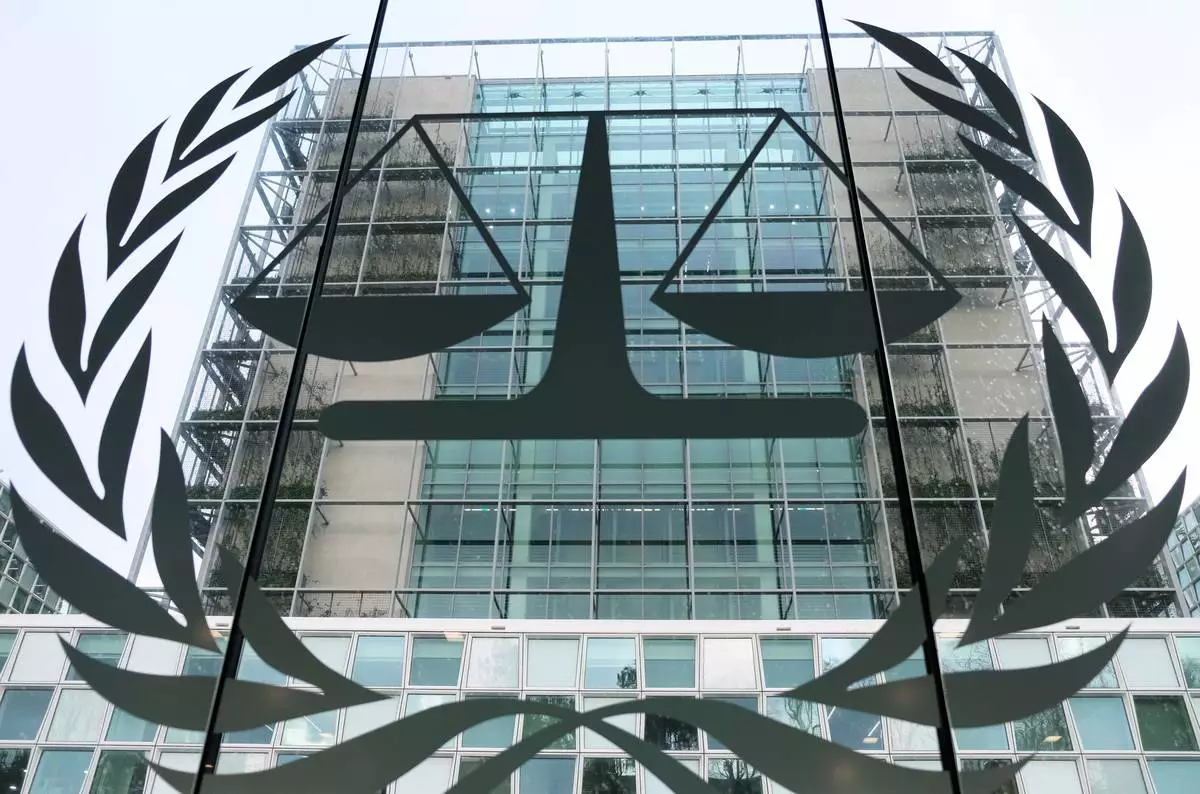
FILE -The headquarters of the International Criminal Court is seen in The Hague, Netherlands, Jan. 12, 2016. (AP Photo/Mike Corder,File)
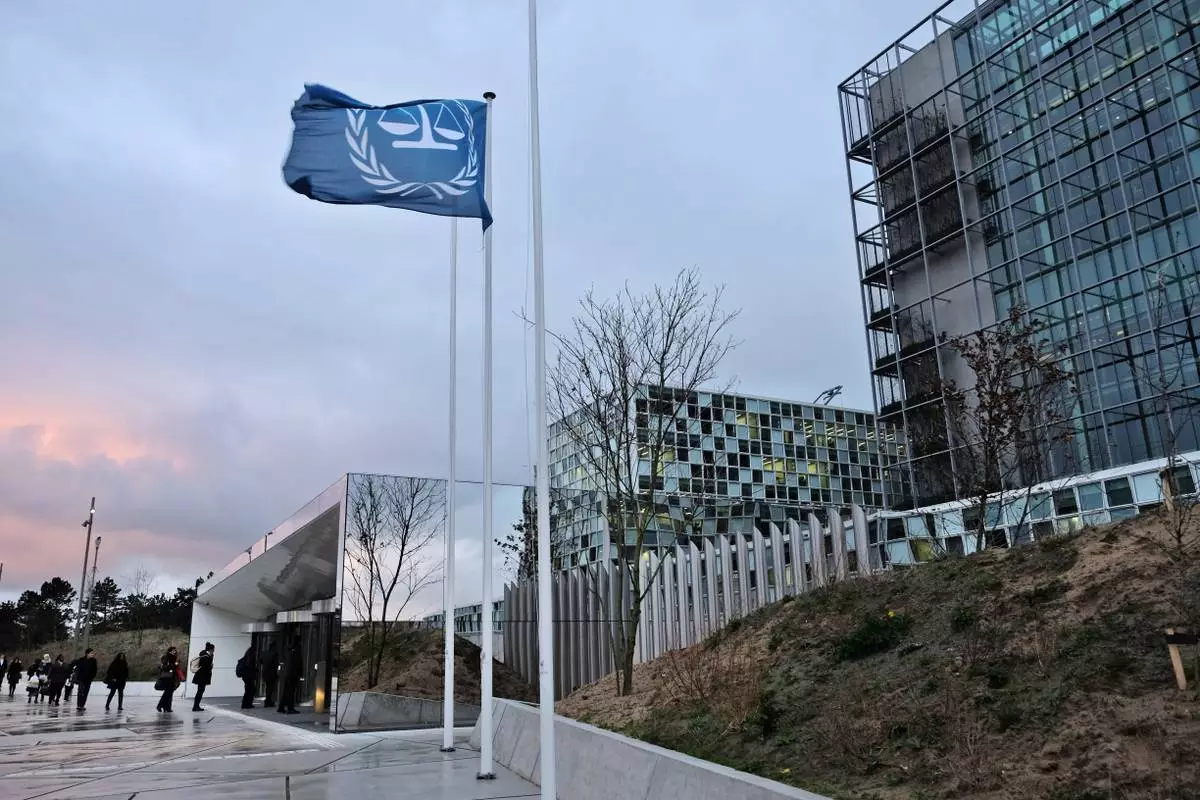
FILE -People wait to enter the headquarters of the International Criminal Court in The Hague, Netherlands, Jan. 12, 2016. (AP Photo/Mike Corder File)