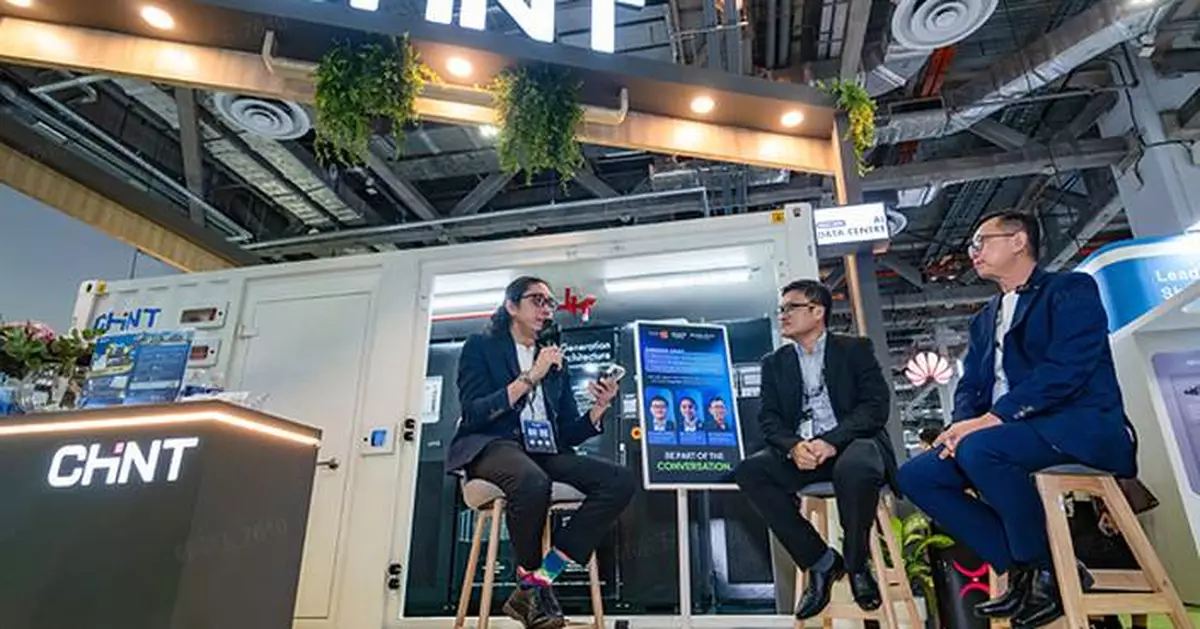
At Data Centre World Asia 2026, CHINT showcased its factory-built Power Pod and next-generation solid-state transformer technology for the region's rapidly expanding AI data centre market.
SINGAPORE, Oct. 13, 2026 /PRNewswire/ -- CHINT, a trusted provider of integrated power and energy solutions, showcased its factory-built Power Pod at Data Centre World Asia 2026, held in Singapore. The solution demonstrated how a pre-engineered approach to data centre power infrastructure can help operators accelerate deployment and simplify on-site integration.
Factory-Built Power Infrastructure for Faster Deployment
As AI workloads increase power density and accelerate data centre expansion, power infrastructure is becoming an increasingly important factor in project timelines and scalability. At Data Centre World Asia 2026, CHINT demonstrated how its approach addresses multiple stages of the data centre power chain, from grid connection and medium-voltage distribution and transformation to low-voltage distribution and circuit protection at the IT load.
Rather than treating each stage as a standalone product, CHINT brings electrical systems, engineering, manufacturing, and testing together. This holistic and cohesive one-stop model supports the complete data centre power journey, minimizing disruptions so data centres can begin operations as soon as possible. The Power Pod is one example of this philosophy.
CHINT's factory-built Power Pod brings key electrical infrastructure together in a compact, integrated and pre-engineered solution, and can cut on-site installation time by up to 60% compared with field-built systems. With deployment made possible in as little as one week once the unit reaches site, CHINT is helping to significantly narrow the gap between equipment delivery and an energized data hall.
"Power is now the hardest part of building AI infrastructure," said Paul Lee, APAC Strategic Segment Director at CHINT. "Operators don't need another pile of components to integrate, wire, and commission on site – they need a single, factory-validated power block they can install and switch on. That's the problem our Power Pod is built to solve."
The Power Pod is a fully enclosed, containerized power system engineered for outdoor installation, integrating switchgear, transformer, and circuit protection, alongside supporting systems such as cooling, fire protection, lighting and security. All of it comes pre-assembled and factory tested before shipping. It is available in configurations from 500kW to 4,000kW, enough to power anything from a single high-density AI rack up to roughly a full data hall of them.
Most of the Power Pod's core equipment is manufactured and factory-tested in-house. The equipment is put through validation at CHINT's own testing facility before a unit ships. Through providing a single point of accountability from build through validation, CHINT's Power Pods are helping AI data centres achieve system readiness sooner rather than later.
Supporting Asia Pacific's Data Centre Growth
Alongside the Power Pod, CHINT previewed its Solid-State Transformer (SST), a key part of the next-generation DC power architecture. This technology is a building block for future HVDC data centre architectures, aimed at cutting the number of separate conversion stages – and the associated energy losses – between the grid and the IT rack.
CHINT's presence at Data Centre World Asia 2026 comes as the Asia Pacific data centre market enters another phase of capacity expansion. The combination of accelerating AI demand, constrained power infrastructure and increasingly complex project requirements is placing greater emphasis on solutions that can be manufactured, tested and deployed with greater predictability.
Through its participation at the event, CHINT demonstrated its continued focus on supporting the evolving power requirements of data centres across Asia Pacific, combining engineering capabilities, manufacturing resources and emerging power technologies to address the demands of increasingly power-intensive computing environments.
** This press release is distributed by PR Newswire through automated distribution system, for which the client assumes full responsibility. **
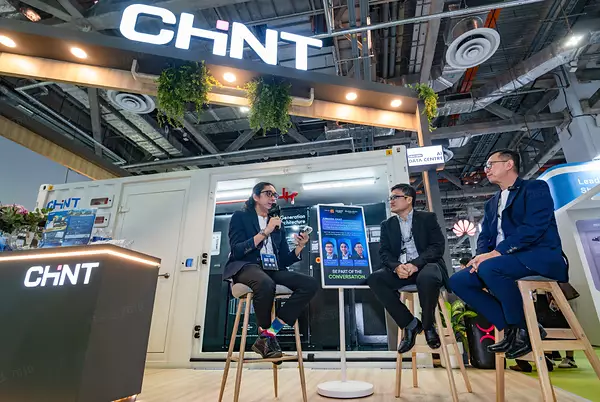
CHINT Showcases Prefab Power Pods at DCWA 2026 to Accelerate AI Data Centre Deployment