WARSAW, Poland (AP) — Poland is blaming Russia for an arson attack on a Starlink satellite station in September and two Turkish citizens have been arrested in connection with the suspected act of sabotage, authorities said.
The suspects, whose names were not released in line with Polish privacy rules, were arrested in Germany, Polish officials said Monday. They are accused of deliberately setting fire to Starlink infrastructure on Sept. 23 in Wola Krobowska, Poland, about 40 kilometers (25 miles) south of Warsaw.
“We have no doubt that Russian intelligence services are behind this act of sabotage,” Tomasz Siemoniak, Poland’s minister overseeing intelligence services, said in a news release, noting that Russian intelligence services are increasingly turning to people with ties to the criminal underworld.
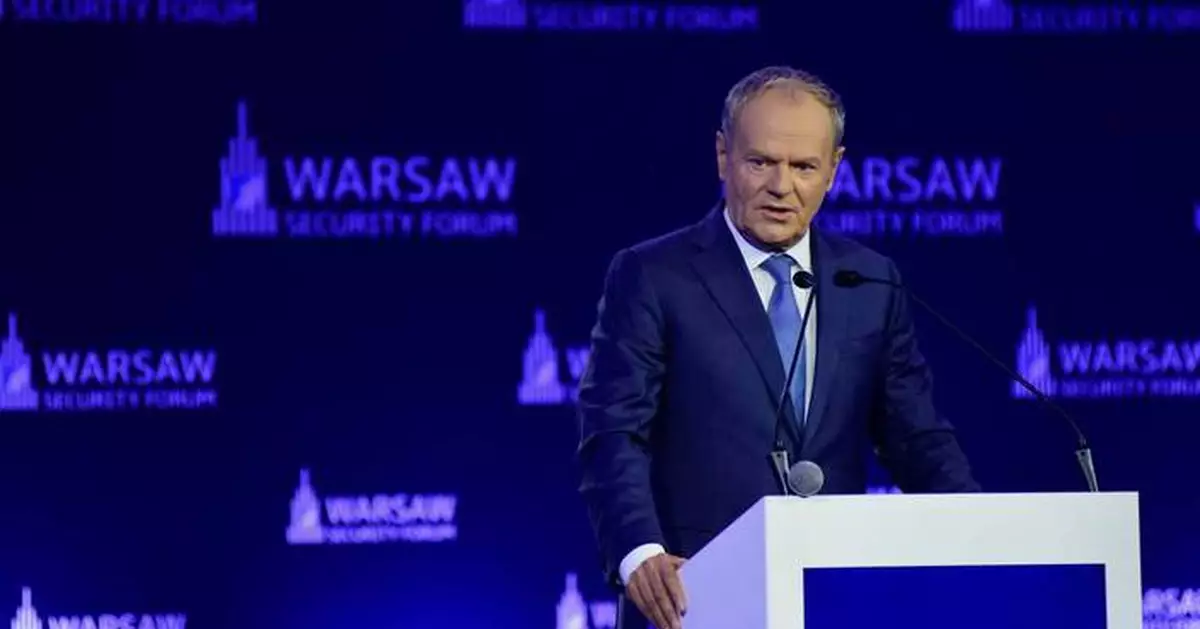
Polish Prime Minister Donald Tusk, in a post on X, called the incident “another act of hybrid warfare.”
Other details were not immediately available.
The Poland arson in September was one of more than 210 incidents across Europe that Western officials consider sabotage and malign activity linked to Russia tracked by The Associated Press since Moscow’s invasion of Ukraine in February 2022.
A British court last year found three men guilty of arson in a March 2024 plot that targeted a London warehouse with Starlinks for Ukraine inside. British prosecutors said it was masterminded by Russia’s intelligence services.
Officials say one goal of the attacks is to undermine support for Ukraine, spread fear and discord in European societies and drain investigative resources. Russia often uses proxies for such attacks and some perpetrators say they have no idea they have been hired by Moscow.
Tech titan Elon Musk has allowed the Ukrainians to use his Starlink satellite communications system inside their own territory, including in Russian-occupied regions, but has restricted use of the satellite system inside Russia. Starlink has become deeply embedded in Ukraine’s military operations, with commanders and soldiers relying on satellite connectivity to communicate and coordinate operations.
Russia’s intelligence services are carrying out almost “daily acts of subversion,” Siemoniak said Tuesday at a security conference in Warsaw.
“There is not a week where activities do not happen,” and the same goes for other European countries, he said, adding that the activity is aimed at countries that support Ukraine.
He said Russia’s covert malign activity in Poland started in early 2024 as Russia recruited disposable agents on platforms like Telegram to carry out attacks, including against a shopping center.
“Our enemy — that is Russia’s intelligence services — changes its methods of operation and has unlimited resources,” Siemoniak said.
Fighting against Russia’s intelligence services is not like taking down an organized crime group where the group is convicted and the case is closed, he said. In the case of subversive activity, as soon as you cut one head off, another grows and “you never know what direction they will pursue next,” he said.
“In cases of the subversive activity, it’s like the story of the dragon whose heads keep growing and you never know which direction they pursue next,” Beate Gangås, Norway's director-general of the Police Security Service, told the conference. “We are in the most serious situation since the Second World War.”
Dazio reported from Berlin.
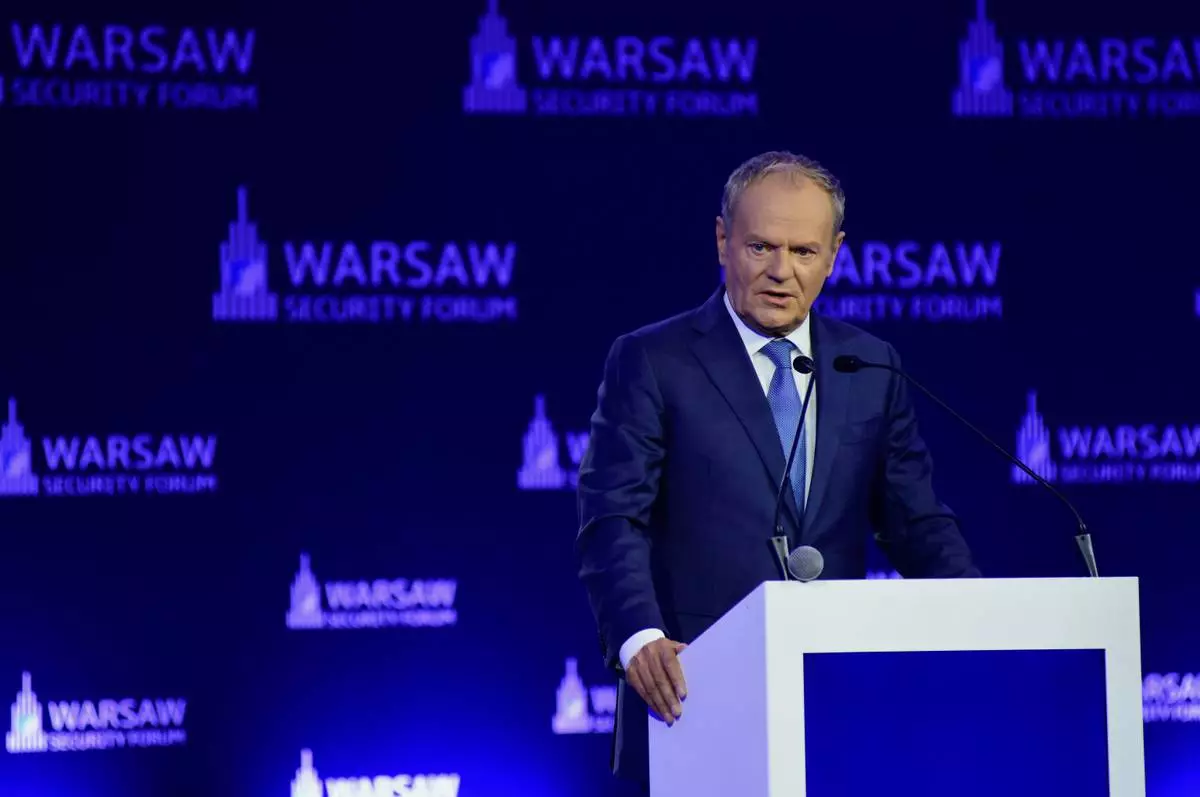
Polish Prime Minister Donald Tusk speaks at the Warsaw Security Forum in Warsaw, Poland, Monday, Oct. 12, 2026. (AP Photo/Attila Husejnow)
WASHINGTON (AP) — The House speaker stood before Donald Trump during his first term at the White House and pointed a finger, declaring that with this president, “All roads lead to Putin.”
The stark assessment years ago from Nancy Pelosi echoed anew after Trump’s surprise announcement last week that he struck a deal with Russian President Vladimir Putin to import tons of Russian diesel to the U.S. as a way to ease sky-high prices at the pumps for Americans ahead of the midterm elections.
Trump’s diesel deal with Putin has been criticized by both Republicans and Democrats as fueling Russia’s war against Ukraine, violating existing U.S. laws and drawing the U.S. closer to Russia. It joins a growing list of instances in which the Republican president has sided with Putin, often at the expense of Ukraine — and America’s own standing.
“The harm to the Ukrainians is real,” said William Taylor, a former U.S. ambassador to Ukraine, now a senior fellow at the Atlantic Council, in an interview Monday.
“And the cost to us, the United States, is high.”
It’s not at all clear the Trump-Putin deal will deliver the supply boost the president is seeking to bring down prices. Energy experts have said the flow of Russian diesel is unlikely to lower prices in the U.S., which have escalated largely due to disruptions from the U.S. war against Iran. But the agreement underlines a message at home and abroad that Trump is an unreliable ally as Ukraine battles Russia.
A bipartisan group of six senators urged Trump over the weekend to reverse course, saying the U.S. “should not provide Putin with a financial lifeline.” Trump, however, held fast to his deal with Putin and lashed out, blaming Ukrainian President Volodymyr Zelenskyy for America's high diesel costs and asserting he should step aside — something Ukraine's leader has no intention of doing.
“Anything that could help our farmers, our ranchers, I like,” Trump said Monday outside the White House.
Asked about Republican criticism of the Russia deal, Trump said they "can’t really be serious.”
Trump also insisted that an energy ceasefire is in place for Ukraine and Russia, despite Zelenskyy saying that Moscow continued to strike his country’s energy sites.
An AP-NORC Center for Public Affairs Research poll published Oct. 1 found that Americans disapprove of Trump’s handling of the Iran war and blame him for higher prices.
Congress swiftly approved legislation at the outset of the Russian invasion of Ukraine in spring of 2022 to ban the import of Russian energy products, which are widely viewed as providing the financial fuel for Putin’s military assault on Ukraine.
The bill passed the House on an overwhelming 414-17 vote and the Senate without a single senator opposed. The law says the president can seek to lift the prohibition if an agreement has been reached to withdraw Russian troops from Ukraine and cease military activity. Such a proposal would need to be reviewed by Congress and to have been “accepted by the free and independent government of Ukraine.”
“Trump is directly violating that law,” said Rep. Lloyd Doggett, D-Texas, the bill's chief sponsor, in a statement Monday.
He said Trump "illegally rewards his pal Putin while once again blaming Zelensky for not capitulating to Putin.”
More recently, Congress last month approved a sweeping Russian sanctions bill, named after the late GOP Sen. Lindsey Graham, that would slap tariffs on countries that continue importing Russian oil. Trump signed the bill into law.
The bulk of the law’s provisions go into effect Oct. 18, the end of the administration’s 30-day review period. But such action now appears to be in question since Trump's diesel deal with Putin will allow the flow of Russian energy.
In a letter to Treasury Secretary Scott Bessent and Secretary of State Marco Rubio, Senate leaders from both parties last week said the most urgent priority for the U.S. must be to tackle the “shadow fleet” of tankers that Moscow is using to transport oil and bypass America’s sanctions.
But that was before Trump announced his deal with Putin, which he said would unleash hundreds of tons of diesel.
Treasury did not immediately respond Monday to a request for comment.
Republican Rep. Ashley Hinson, who faces a competitive race for the U.S. Senate against Democrat Josh Turek in Iowa, where $6 a gallon diesel prices have become an issue, said, “It makes me a little bit nervous anytime we’re talking about relieving a sanction on Russia.”
Almost seven years ago this week, Pelosi stood before Trump and a roomful of U.S. officials during a heated White House meeting and leveled her accusation, suggesting the president's policy favored Putin.
The powerful House speaker led the first impeachment of Trump on corruption charges over his administration’s decision to withhold congressionally approved aid to Ukraine in 2019 as it faced Russian aggression at its border. Trump was later acquitted by the Senate.
Since Trump's return to the White House, he has seesawed between pressuring Zelenskyy to make concessions and showing frustration with Putin’s hard-line stance on the war. Trump often complains that he thought his good relationship with his Russian counterpart would have made it easier to end the war.
A year ago, Trump reversed his long-held position that Ukraine would have to give up land and suggested it could win back all the territory it has lost to Russia — only later to call on Kyiv and Moscow to “stop where they are” and end the war.
In July, Trump praised Zelenskyy and Ukraine for their wartime resilience. But by September, Trump was expressing frustration about strikes on Russian energy infrastructure.
Trump insisted Monday the sides agreed to a ceasefire on the energy systems. “They agreed,” Trump said. “Because I said, 'You agree.'”
When pressed about the attacks by Russia, Trump said he'd have to take a look, "because there’s been violations on both sides.”
Associated Press writers Collin Binkley and Josh Boak, and Steven Sloan in Dyersville, Iowa, contributed to this report.
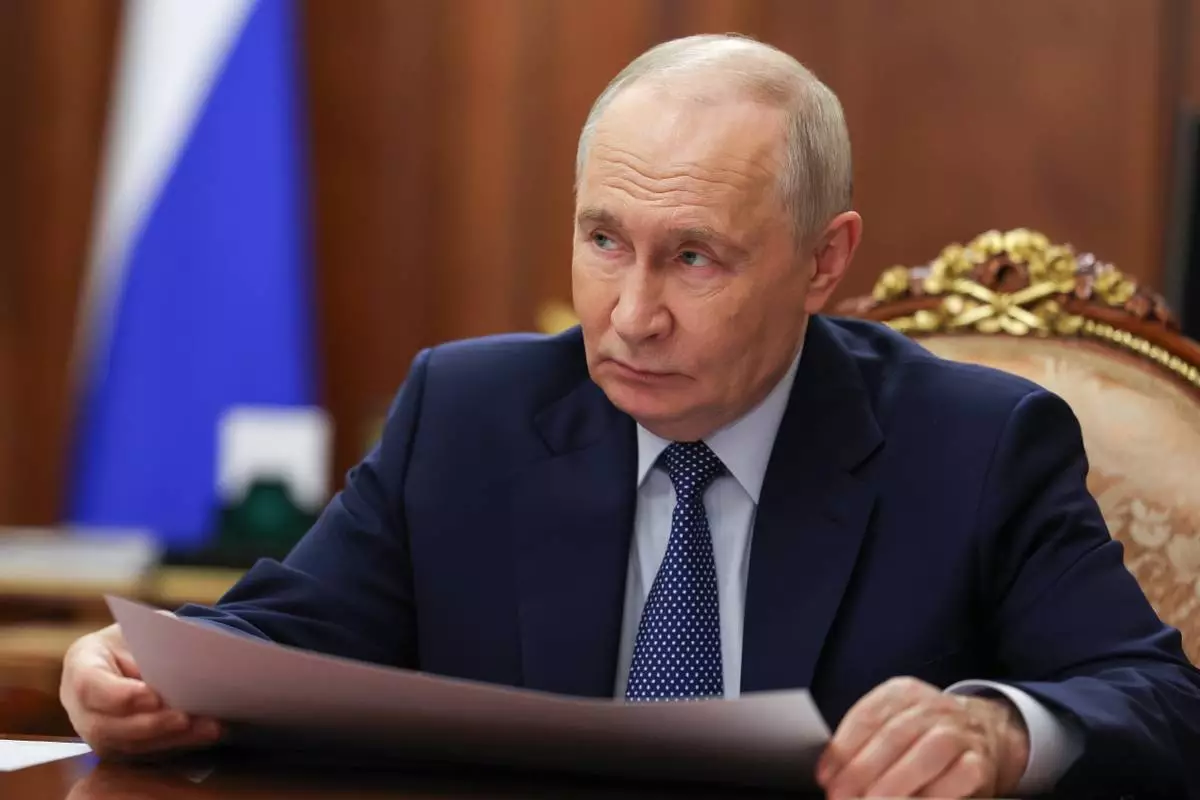
Russian President Vladimir Putin listens to head of the Delovaya Rossiya (Business Russia) National Public Organisation Alexei Repik during their meeting at the Kremlin in Moscow, Monday, Oct. 12, 2026. (Mikhail Metzel, Sputnik, Kremlin Pool Photo via AP)
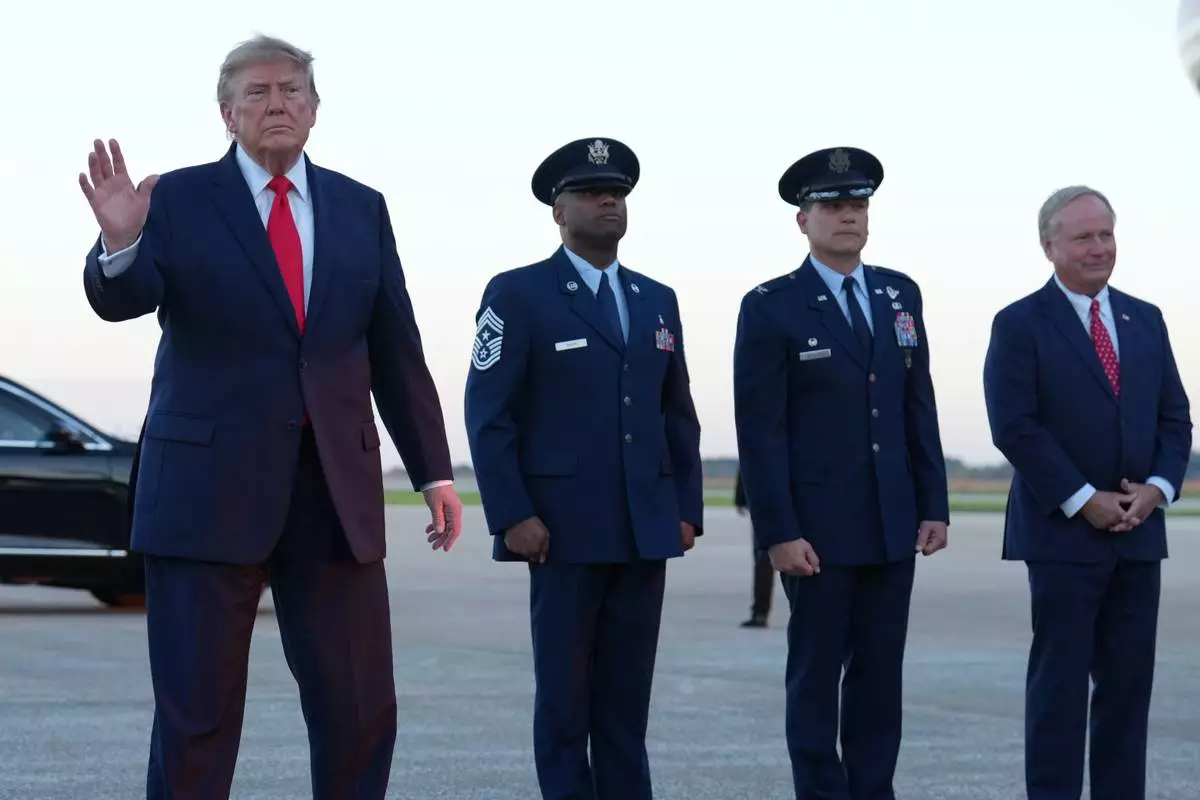
President Donald Trump arrives on Air Force One at Youngstown Air Reserve Station, in Youngstown, Ohio, Monday, Oct. 12, 2026. (AP Photo/Jacquelyn Martin)
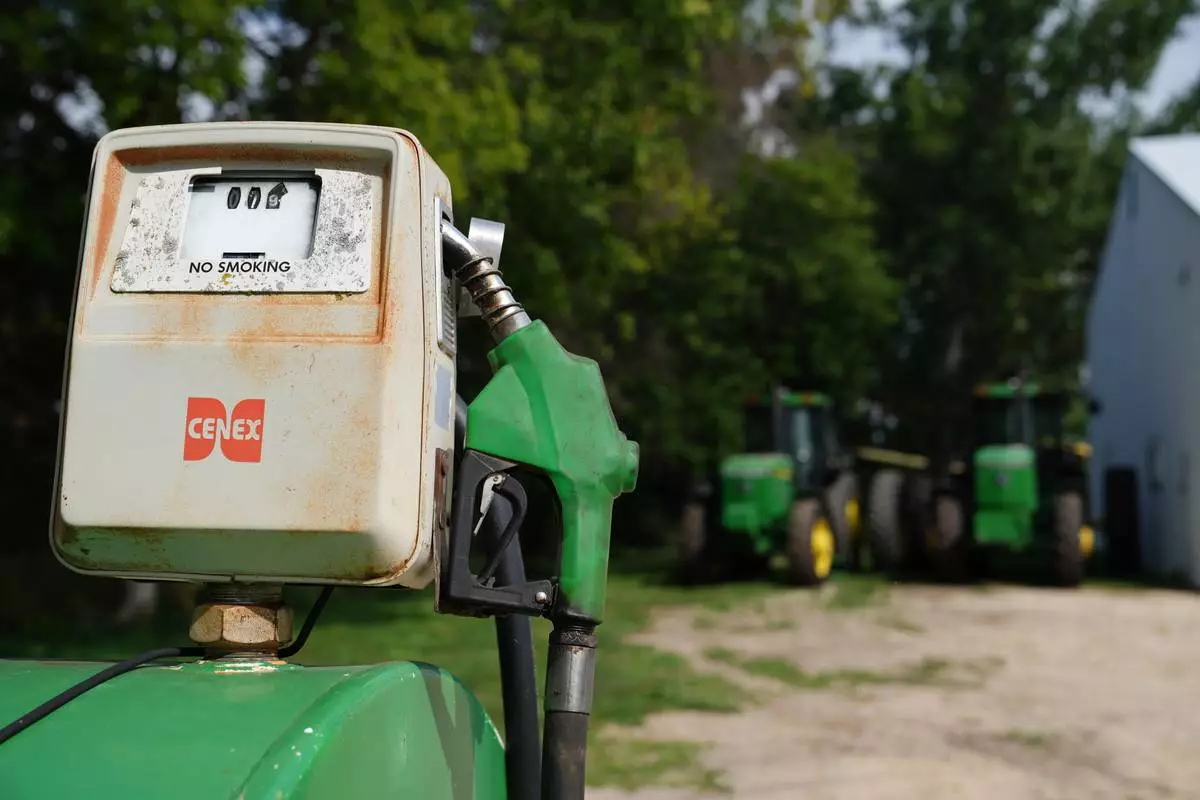
FILE - A diesel fuel tank is seen on a corn and soybean farm, Aug. 26, 2026, in Northfield, Minn. (AP Photo/Ellen Schmidt, File)