BRUSSELS (AP) — Political tensions mounted on Tuesday over the European Union’s next long-term budget as pressure builds to get the spending package agreed before a series of unpredictable elections in some of the biggest member countries next year.
The EU budget, known as the multiannual financial framework, amounts to around 1.2% of the 27-nation bloc’s gross national income. The MFF is financed mostly by the member countries based on the size of their economies.
The spending plan is the cash point where EU ambitions, conflicting policy priorities and economic realities collide and must be endorsed by all member countries and the European Parliament.
The 2028-2034 budget is being negotiated as the EU faces outside challenges including supporting Ukraine as it fights off the Russian invasion and remaining competitive in the face of high energy prices and trade tensions with the United States and China.
Inside the union, elections in France, Italy, Poland and Spain next year could test the resilience of the world’s biggest trading bloc, with the hard right leading in opinion polls in France and results in Poland and Spain difficult to predict.
Over the weekend, Ireland, which holds the EU’s rotating presidency, proposed to set the budget at 1.62 trillion euros ($1.81 trillion). That is a 30% increase over the current seven-year package, but 8% less than what the European Commission wants.
Sweden, one of about eight countries known as net contributors paying more into the budget than they receive back in allocations, insists “several hundred billion euros” more in cuts are needed.
“It’s wildly unaffordable, and the volume must go down,” Sweden’s EU Affairs Minister Jessica Rozencrantz said as she and her counterparts met to chew over the Irish presidency proposal ahead of an EU leadership summit later this week.
The Irish plan would mean “a 60% increase in the Swedish contribution” that amounts to “a fee for the Swedish taxpayers to pick up, which limits us to make the necessary priorities back home,” Rozencrantz said.
On Sunday, Chancellor Friedrich Merz of Germany, Europe’s biggest economy and a major net budget contributor, welcomed Ireland’s “tireless efforts” but said “we are still a long way from reaching an agreement.”
“The EU budget must be affordable for those who bear the main burden of financing,” said Merz, who will from Thursday join his counterparts in Brussels for two days of talks. “Everyone must contribute to the necessary adjustments.”
That “everyone” was a reference to countries rejecting cuts to cohesion funds for Europe’s poorer regions, or to agriculture policy, which subsidize the continent’s farmers. Combined, this money accounts for about two-thirds of the budget.
Ultimately, if countries aren’t willing to stump up more cash, then either farm or cohesion spending must shrink or Europe’s ambitions on defense, competitiveness and other priorities scaled back. Unless money can be found elsewhere.
Despite the uncertainty, Ireland’s EU Affairs Minister Thomas Byrne thinks the presidency has laid a good foundation for negotiations in the days and weeks ahead.
“That was our task, to find that basis,” he told reporters in Luxembourg before chairing Tuesday’s meeting. “We weren’t asked to find a basis for agreement. That will come later.”
Indeed, most of the parties involved are complaining more or less equally and none of them have yet walked away, which may be a good sign.
“Nobody’s going to get everything that they want. But we hope that there’ll be something there for everybody,” Byrne said.
Still, the negotiations are gathering pace just as ambitions for the EU in an uncertain world are on the rise but room for fiscal maneuver in many countries is disappearing.
The MFF is tiny compared with national budgets, but France, Italy and Belgium are mired in debt and oppose paying more.
As a bloc, the EU is not allowed to levy taxes, but does earn revenue from mechanisms such as customs duties and value added tax. The commission is looking for new ways to raise its “own resources” through the carbon emissions trading system and a new tobacco duty, among other measures.
Whatever happens, missing the end of December “deadline” does not mean that money runs out. Nations have another year, but much time is needed to adopt legislation on spending programs and approve it all so money can be flowing by January 2028.
In a letter inviting leaders to the summit, European Council President António Costa, said clinching a “timely agreement” is “essential to provide our economies with the predictability and stability they need in an unstable and unpredictable world.”
“I count on your leadership and collaborative spirit,” Costa wrote.
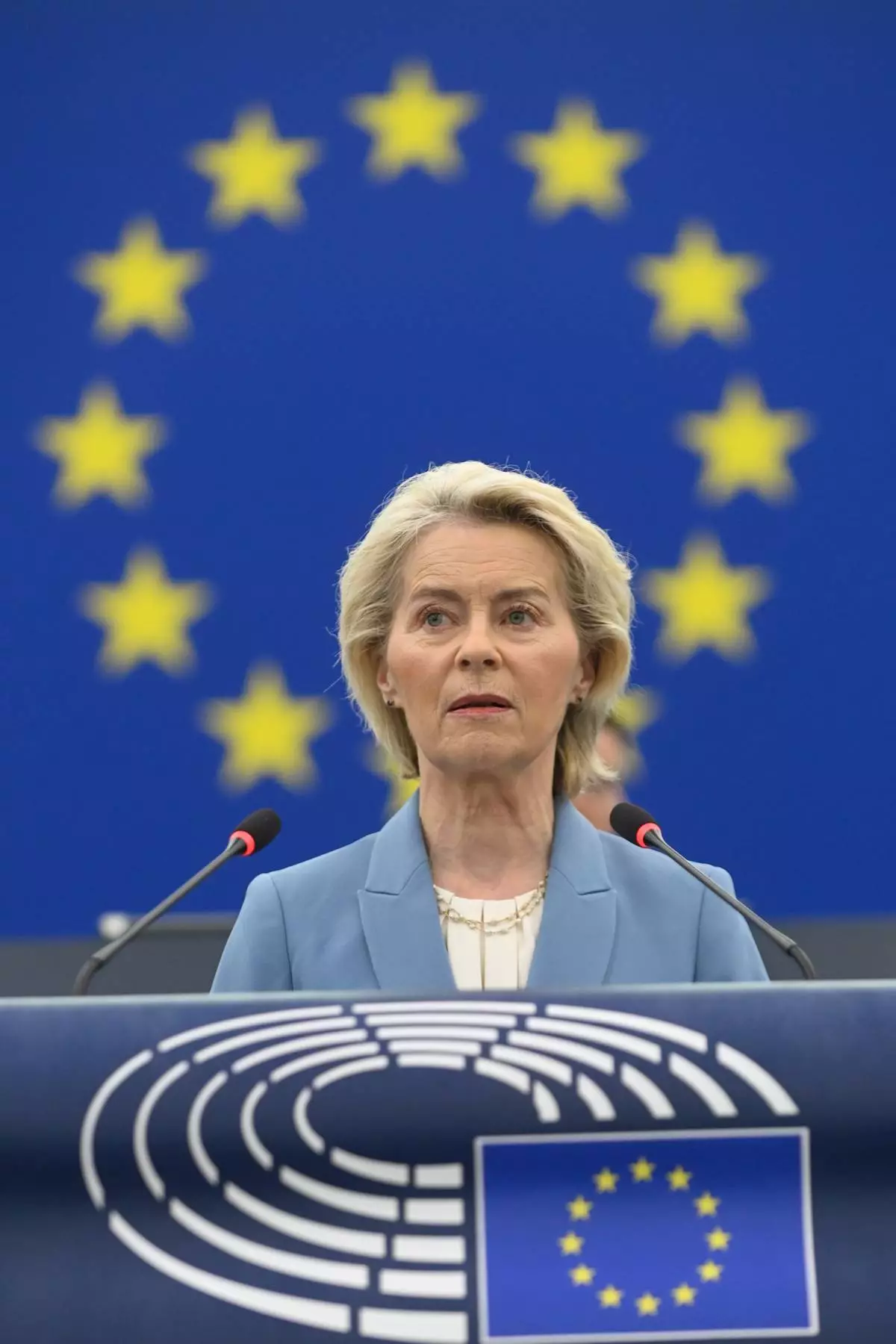
European Commission President Ursula von der Leyen attends a joint debate ahead to the 15-16 October EU summit in Strasbourg, France, Tuesday, Oct. 6, 2026. (AP Photo/Pascal Bastien)
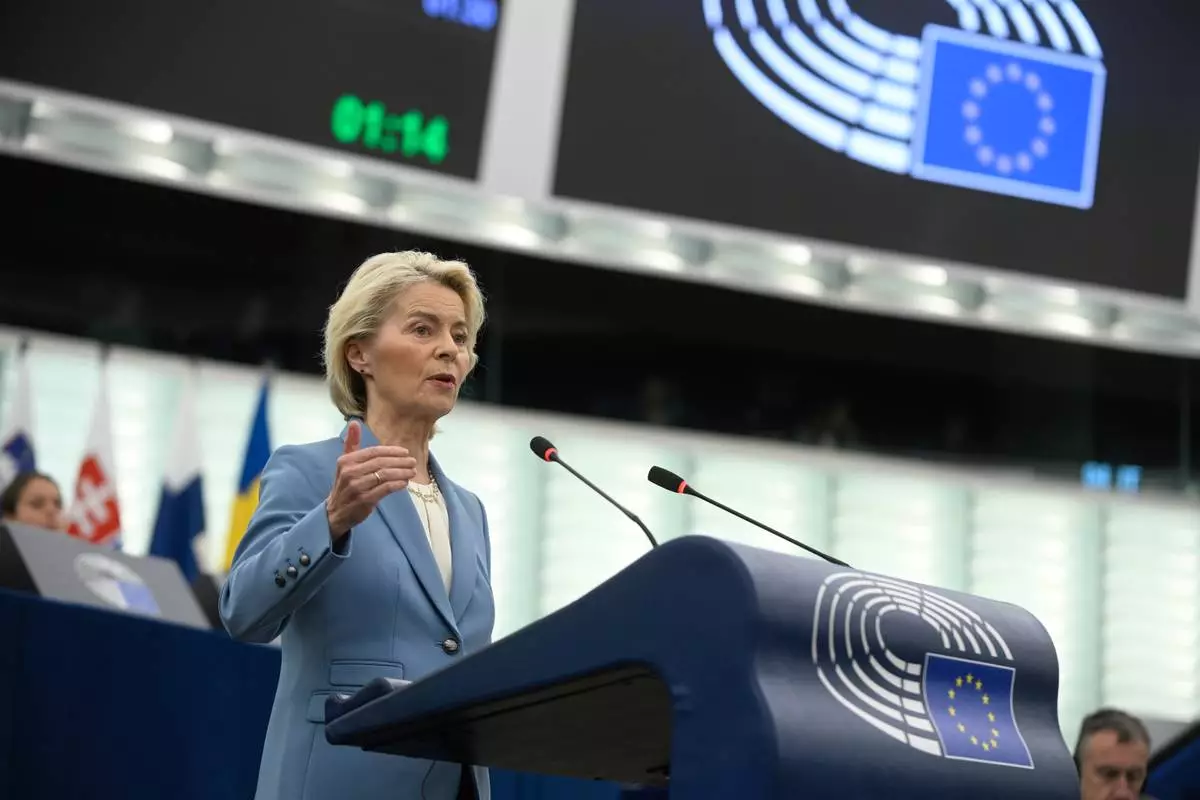
European Commission President Ursula von der Leyen attends a joint debate ahead to the 15-16 October EU summit in Strasbourg, France, Tuesday, Oct. 6, 2026. (AP Photo/Pascal Bastien)
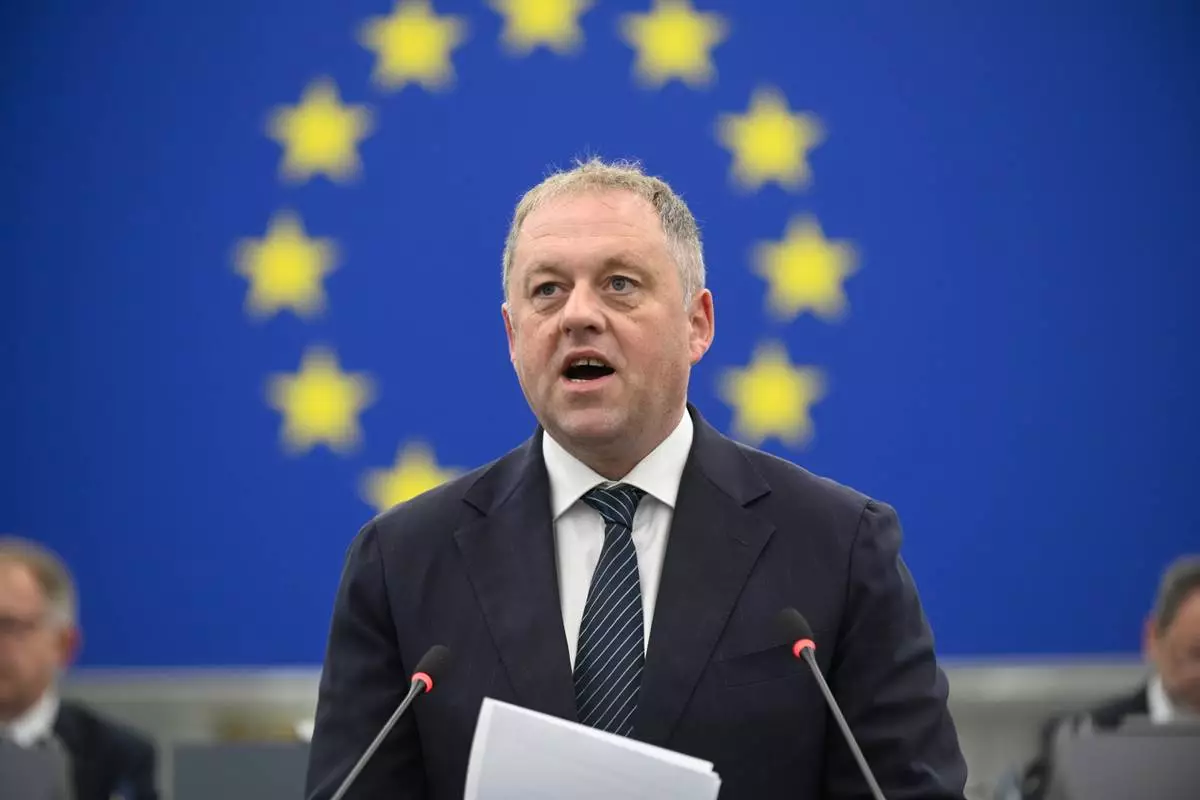
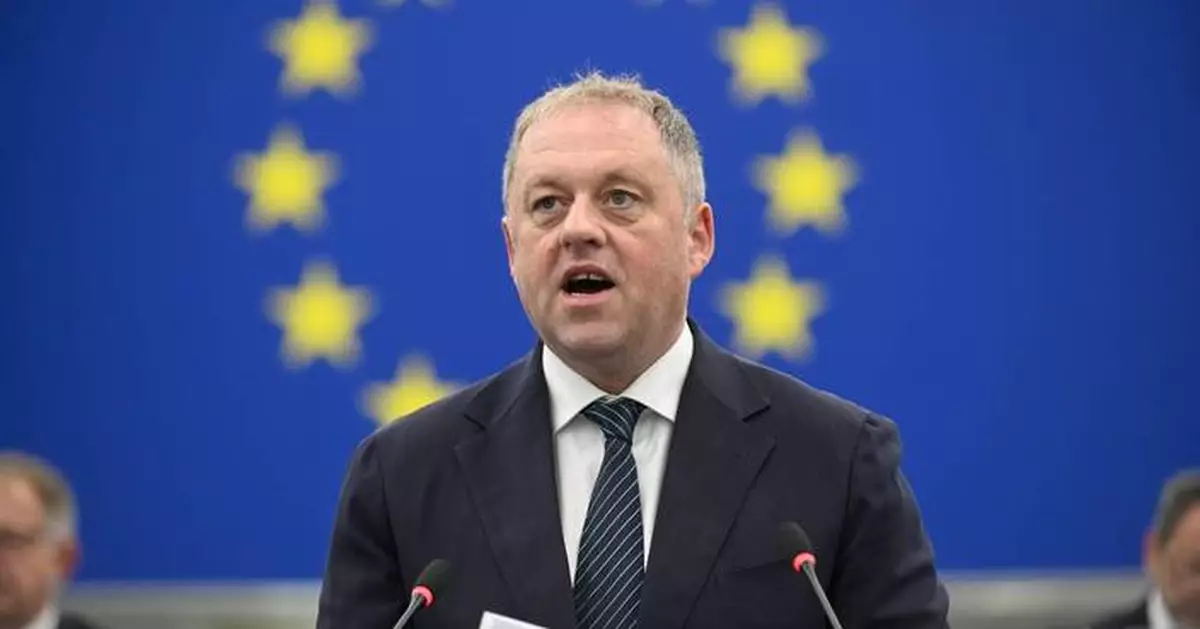
Irish Minister of State for European Affairs Thomas Byrne attends a joint debate ahead to the 15-16 October EU summit in Strasbourg, France, Tuesday, Oct. 6, 2026. (AP Photo/Pascal Bastien)
Yemen’s Iran-backed Houthi rebels on Tuesday accused Saudi Arabia of carrying out overnight airstrikes along Yemen’s northern border with the kingdom and its western coastline. Saudi Arabia did not immediately respond to the claim.
The reported strikes came hours after air raid sirens sounded and explosions were heard in the Saudi capital.
Here is the latest news from the Middle East on Tuesday. Read our full coverage here.
The rebel-run al-Masirah satellite television said Tuesday that two airstrikes hit the Houthi-held Red Sea island of Kamaran, while a third hit Qanawis district, 55 kilometers (34 miles) northwest of the port city of Hodeida.
The station also reported airstrikes in the province of Jawf, which borders Saudi Arabia.
Al-Masirah blamed Saudi Arabia for the strikes, but didn’t provide further details.
The rebels also said they shot down a Saudi drone over the Houthi stronghold province of Saada, which is in northern Yemen on the border with Saudi Arabia.
There was no immediate comment from Saudi Arabia.
The strikes came hours after Saudi Arabia sounded air raid sirens Monday evening in the capital, Riyadh, and residents heard explosions.
The Houthis also said they fired a ballistic missile toward King Khalid International Airport, which has been hammered by a string of deadly attacks in recent days.
The Institute for the Study of War said Tuesday Iran appears to be targeting vessels carrying out ship-to-ship oil transfers in and near the Strait of Hormuz to hobble their ability to move energy through the strait.
The think tank posted on X that Iran has increased its threats against vessels in the strait in order to reestablish control over the waterway by deterring vessels from using non-Iranian-approved routes.
It also said Iran may be developing its anti-ship missile capabilities to improve its ability to target vessels.
The U.K.'s Maritime Trade Operations Centre posted on X Monday that at least three vessels were attacked by unknown projectiles in the Strait of Hormuz a day earlier. The organization did not identify the ships and there were no immediate claims of responsibility for any of the attacks.
But Mohsen Rezaei, secretary of Iran’s top security body, told state TV on Saturday that Iranian forces were striking five “smuggling ships” every night on average over recent months.
Rezaei appeared to be referring to U.S. efforts to guide oil shippers through the strait before they are used to transfer oil to larger tankers waiting in the Gulf of Oman.
International airlines were warned by Yemen’s Houthi-controlled Foreign Ministry on Tuesday that flights to Saudi airports were “unsafe” except those serving the holy sites of Mecca and Medina.
The ministry said the kingdom “must realize that security, stability, and sovereignty must belong to everyone — otherwise, no one will enjoy them,” a statement published by the Houthi-controlled SABA news agency said.
Meanwhile, Air India has announced cancellation of all its flights to and from Riyadh, Dammam and Jeddah until Oct. 17.
An Israeli strike Tuesday killed one person in the Gaza Strip.
Health officials at Shifa Hospital said they received a body that was partially charred. The Israeli military said the strike, in the Tuffah area of Gaza City, targeted a military operative.
The death is the latest since a ceasefire took effect just over a year ago. Nearly 1,500 Palestinians have been killed since then, according to Gaza’s Health Ministry. The ministry does not distinguish between militants and civilians in its count, but says more than half of those killed were women and children.
Egypt's Foreign Minister Badr Abdelatty called Tuesday for an immediate halt to Houthi attacks on Saudi Arabia.
Abdelatty said during a phone conversation with his Iranian counterpart, Abbas Araghchi, that there was “no justification for these attacks and they cannot be accepted.”
Abdelatty also urged prioritizing diplomacy and finding a political solution to the conflict between Iran and the U.S. to avert “further escalation and instability” in the region, according to the Egyptian readout of the call.
Turkey's Defense Ministry said Tuesday the country's army chief of staff spoke by telephone with his Pakistani counterpart as both countries weigh dispatching military support to Saudi Arabia under a trilateral defense agreement.
The ministry said Turkish Gen. Selcuk Bayraktaroglu and Pakistan’s army chief, Asim Munir, discussed “bilateral relations and regional issues,” without providing details.
Turkish Foreign Minister Hakan Fidan said last week that Turkey and Pakistan were considering military support for their ally under the deal but ruled out sending combat troops. He added that Turkey was also trying to resolve the issue through diplomacy.
Qatar’s emir on Tuesday called for closer security coordination among Gulf countries as the conflict between the Houthis and Saudi Arabia escalates following months of Iranian attacks across the region during its war with the U.S. and Israel.
Sheikh Tamim bin Hamad Al Thani also called for stepped-up efforts to secure maritime routes in the Gulf and the Strait of Hormuz and energy infrastructure, which has been a main target of attacks since the Iran-U.S. war began on Feb. 28.
Speaking to the Shura Council, the emir accused Israel of committing crimes in Gaza that constitute “genocide,” a charge Israel vehemently denies.
The emir called for holding Israeli officials accountable.
The International Monetary Fund said Tuesday that the global economy held up better than expected in the first half of 2026, but warned that high energy and fuel prices continued to squeeze household incomes.
The IMF's World Economic Outlook projects inflation will rise to 4.7% this year before easing to 4.1% in 2027.
It warned that a prolonged stalemate or further escalation in the Middle East “could keep energy and food prices elevated and volatile, revive inflationary pressures, worsen fiscal and external balances, and weigh on growth.”
Global growth is projected to slow to 3.1% in 2026 from 3.5% last year, before rebounding to 3.4% in 2027, the IMF said.
This report will be updated throughout the day as new developments emerge.
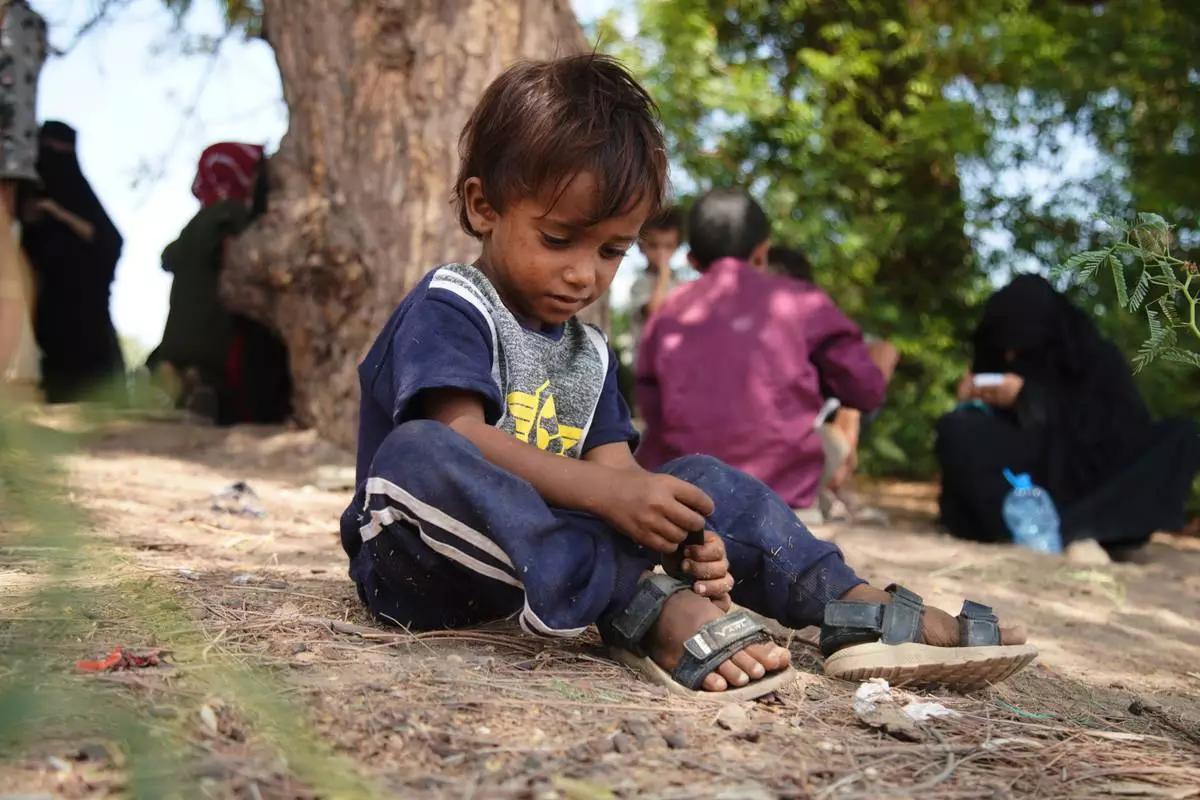
A displaced Yemeni child sits under a tree as families gather to receive aid at the Al-Fallahine displacement camp in Dar Saad district, Aden, Yemen, Monday, Oct. 12, 2026. (AP Photo/Abdulnasser Alseddik)
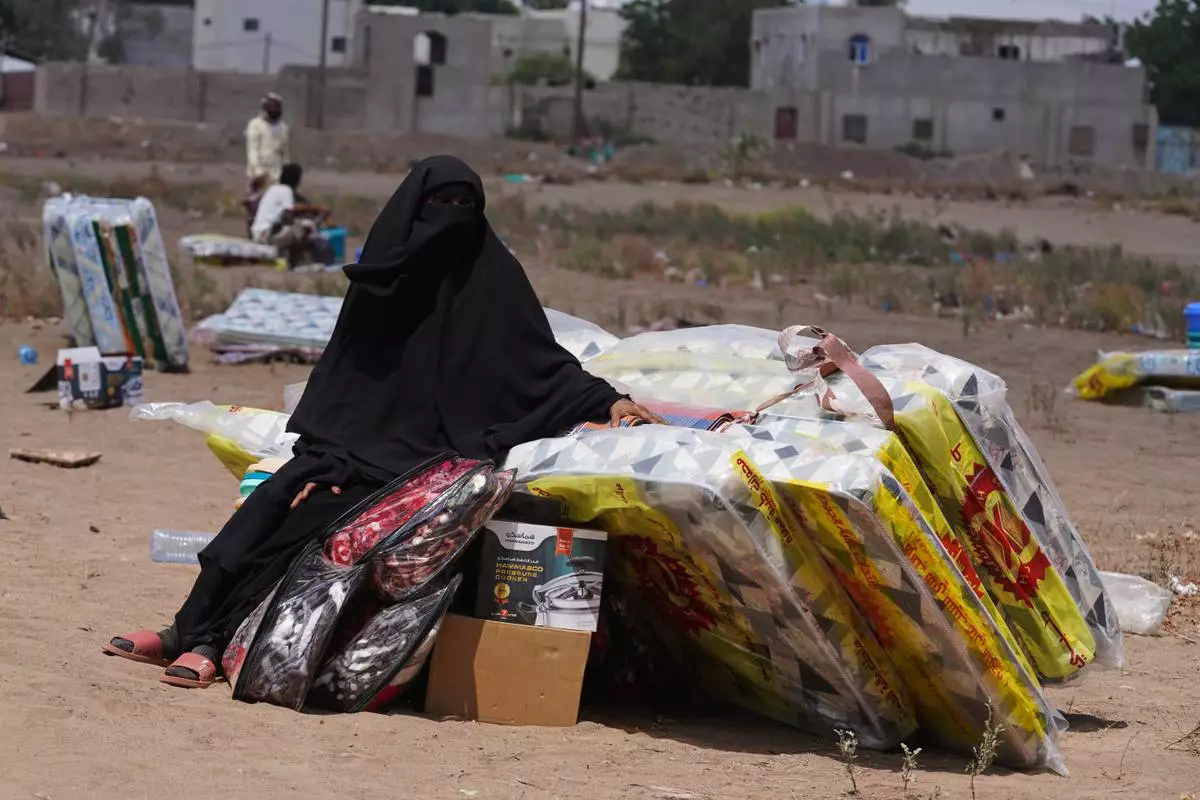
A displaced Yemeni woman sits beside mattresses distributed at the Al-Fallahine displacement camp in Dar Saad district, Aden, Yemen, Monday, Oct. 12, 2026. (AP Photo/Abdulnasser Alseddik)
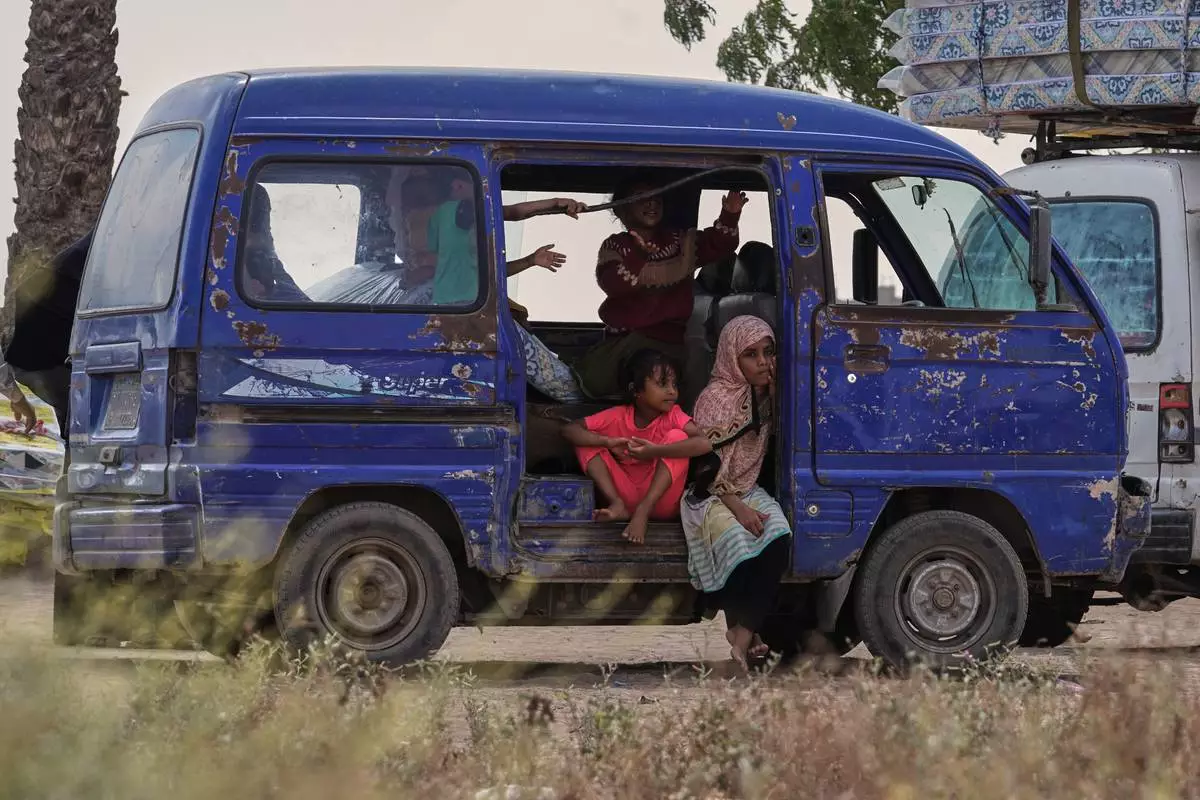
Displaced Yemeni children sit in a vehicle as families gather to receive aid at the Al-Fallahine displacement camp in Dar Saad district, Aden, Yemen, Monday, Oct. 12, 2026. (AP Photo/Abdulnasser Alseddik)