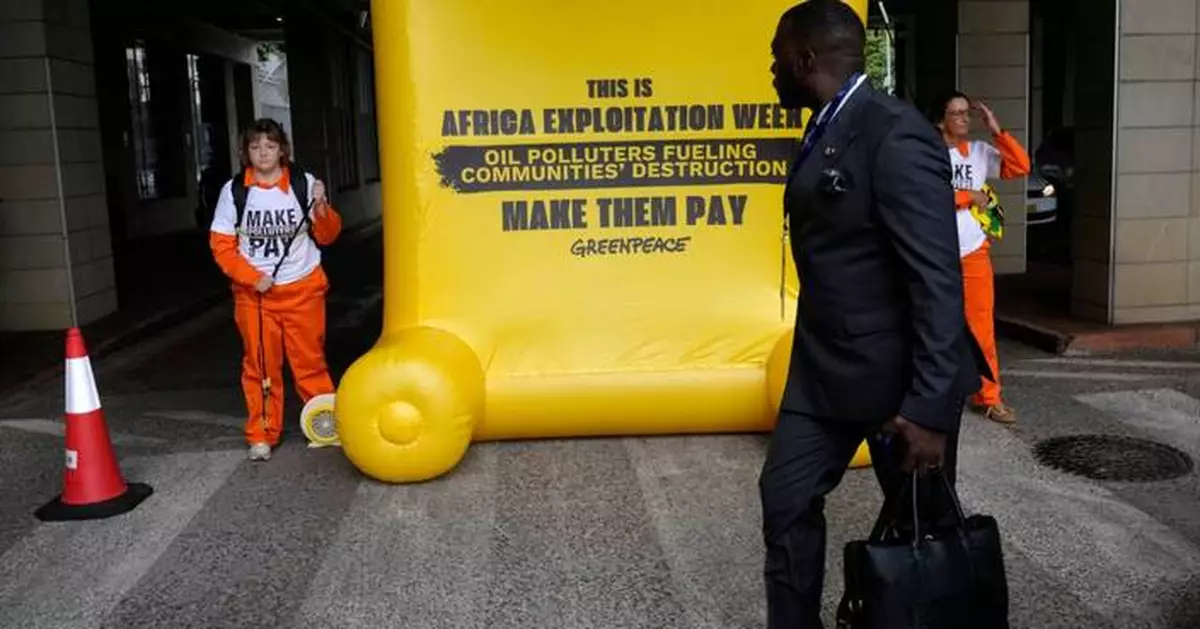
CAPE TOWN (AP) — Climate activists picketed outside the African Energy Week conference in Cape Town, South Africa, on Tuesday, calling for an end to new oil and gas exploration across the continent and accusing energy companies of prioritizing profits over people and the environment.
Greenpeace Africa and Extinction Rebellion campaigners challenged efforts to position Africa as a new frontier for fossil fuel development, arguing that further investment would worsen climate change and threaten communities already grappling with its effects.
“Oil companies from overseas have made billions in profits this year alone at the expense of people’s lives, at the expense of ecosystems, at the expense of African lives,” Siya Myeza, a climate and energy campaigner with Greenpeace Africa, told The Associated Press.
Myeza branded the gathering “Africa Exploitation Week,” accusing the industry of driving environmental destruction and poverty. Police removed the protesters, who wore T-shirts bearing the slogan “Make polluters pay.”
The protests come as South Africa seeks to expand oil and gas development to attract investment and bolster energy security. The government presents natural gas as a complement to renewable energy, saying gas-fired plants could provide electricity when wind and solar output drops.
Despite legal setbacks, British energy giant Shell plans to drill up to five deepwater wells in the Northern Cape Ultra Deep block off South Africa’s west coast to explore for and assess oil and gas deposits. The project’s environmental approval has drawn appeals.
Protesters say such plans risk prolonging dependence on fossil fuels at a time when countries should be cutting emissions.
Judy Scott-Goldman, a representative of Extinction Rebellion in Cape Town, acknowledged that renewable energy would feature at the conference but said campaigners opposed promoting new oil and gas exploration.
She said expanding fossil fuel use would run counter to commitments under the Paris climate agreement to reduce emissions.
“We’re here to say we don’t want to see any exploration of oil and gas on this continent,” she told the AP.
She pointed to fires, floods and rising food prices as consequences of climate change, warning that its effects could also drive migration and social unrest.
AP Africa news: https://apnews.com/hub/africa
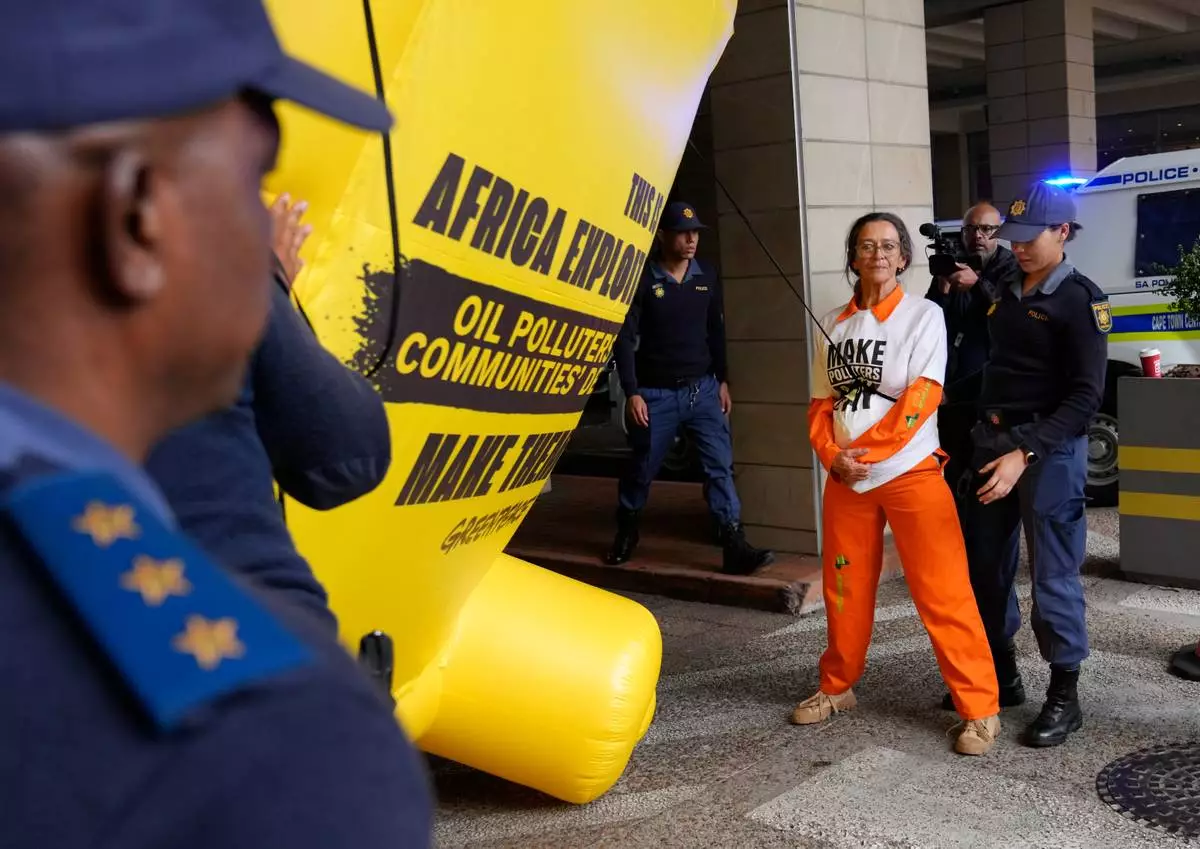
Police officers remove Greenpeace Africa activists protesting at the African Energy Week in Cape Town, South Africa, Tuesday, Oct. 13, 2026. (AP Photo/Nardus Engelbrecht)
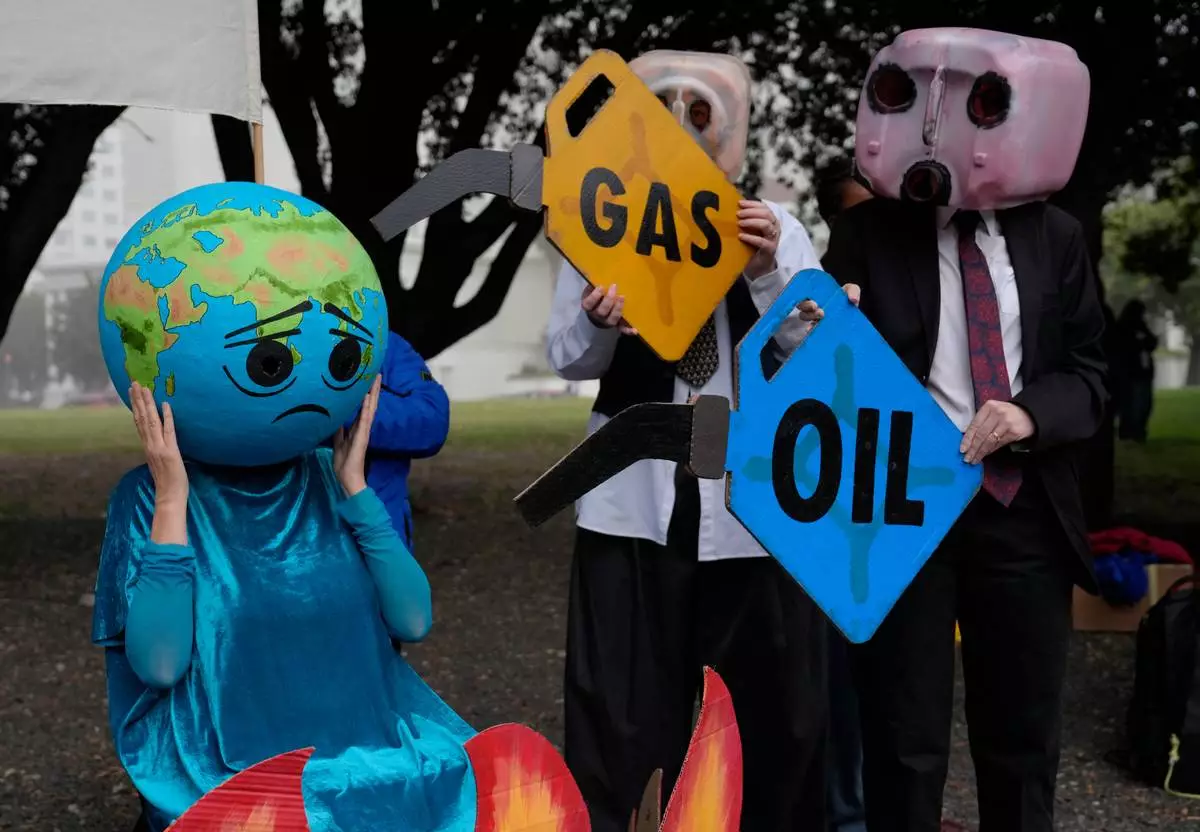
Activists from Extinction Rebellion attend a protest event at the African Energy Week in Cape Town, South Africa, Tuesday, Oct. 13, 2026. (AP Photo/Nardus Engelbrecht)
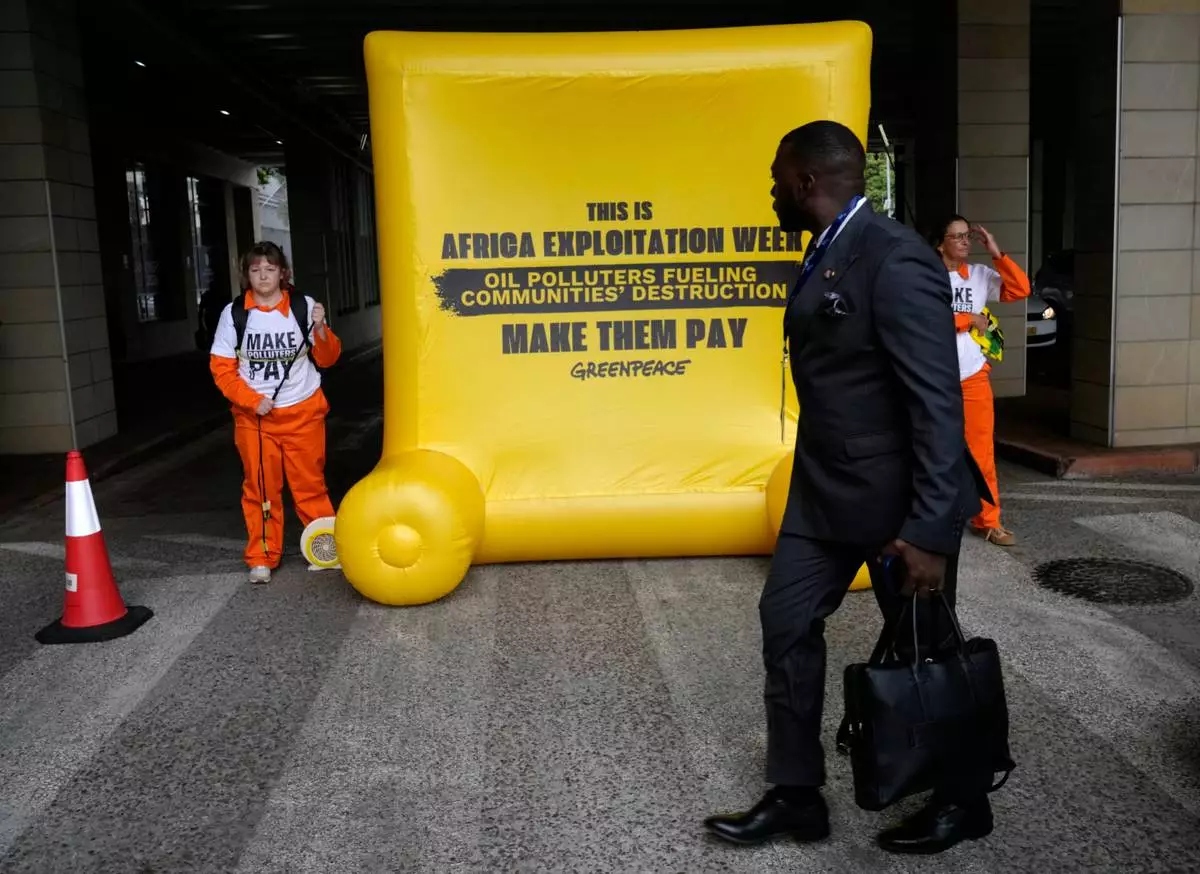
Greenpeace Africa activists protest at the African Energy Week in Cape Town, South Africa, Tuesday, Oct. 13, 2026. (AP Photo/Nardus Engelbrecht)
BRUSSELS (AP) — Political tensions mounted on Tuesday over the European Union’s next long-term budget as pressure builds to get the spending package agreed before a series of unpredictable elections in some of the biggest member countries next year.
The EU budget, known as the multiannual financial framework, amounts to around 1.2% of the 27-nation bloc’s gross national income. The MFF is financed mostly by the member countries based on the size of their economies.
The spending plan is the cash point where EU ambitions, conflicting policy priorities and economic realities collide and must be endorsed by all member countries and the European Parliament.
The 2028-2034 budget is being negotiated as the EU faces outside challenges including supporting Ukraine as it fights off the Russian invasion and remaining competitive in the face of high energy prices and trade tensions with the United States and China.
Inside the union, elections in France, Italy, Poland and Spain next year could test the resilience of the world’s biggest trading bloc, with the hard right leading in opinion polls in France and results in Poland and Spain difficult to predict.
Over the weekend, Ireland, which holds the EU’s rotating presidency, proposed to set the budget at 1.62 trillion euros ($1.81 trillion). That is a 30% increase over the current seven-year package, but 8% less than what the European Commission wants.
Sweden, one of about eight countries known as net contributors paying more into the budget than they receive back in allocations, insists “several hundred billion euros” more in cuts are needed.
“It’s wildly unaffordable, and the volume must go down,” Sweden’s EU Affairs Minister Jessica Rozencrantz said as she and her counterparts met to chew over the Irish presidency proposal ahead of an EU leadership summit later this week.
The Irish plan would mean “a 60% increase in the Swedish contribution” that amounts to “a fee for the Swedish taxpayers to pick up, which limits us to make the necessary priorities back home,” Rozencrantz said.
On Sunday, Chancellor Friedrich Merz of Germany, Europe’s biggest economy and a major net budget contributor, welcomed Ireland’s “tireless efforts” but said “we are still a long way from reaching an agreement.”
“The EU budget must be affordable for those who bear the main burden of financing,” said Merz, who will from Thursday join his counterparts in Brussels for two days of talks. “Everyone must contribute to the necessary adjustments.”
That “everyone” was a reference to countries rejecting cuts to cohesion funds for Europe’s poorer regions, or to agriculture policy, which subsidize the continent’s farmers. Combined, this money accounts for about two-thirds of the budget.
Ultimately, if countries aren’t willing to stump up more cash, then either farm or cohesion spending must shrink or Europe’s ambitions on defense, competitiveness and other priorities scaled back. Unless money can be found elsewhere.
Despite the uncertainty, Ireland’s EU Affairs Minister Thomas Byrne thinks the presidency has laid a good foundation for negotiations in the days and weeks ahead.
“That was our task, to find that basis,” he told reporters in Luxembourg before chairing Tuesday’s meeting. “We weren’t asked to find a basis for agreement. That will come later.”
Indeed, most of the parties involved are complaining more or less equally and none of them have yet walked away, which may be a good sign.
“Nobody’s going to get everything that they want. But we hope that there’ll be something there for everybody,” Byrne said.
Still, the negotiations are gathering pace just as ambitions for the EU in an uncertain world are on the rise but room for fiscal maneuver in many countries is disappearing.
The MFF is tiny compared with national budgets, but France, Italy and Belgium are mired in debt and oppose paying more.
As a bloc, the EU is not allowed to levy taxes, but does earn revenue from mechanisms such as customs duties and value added tax. The commission is looking for new ways to raise its “own resources” through the carbon emissions trading system and a new tobacco duty, among other measures.
Whatever happens, missing the end of December “deadline” does not mean that money runs out. Nations have another year, but much time is needed to adopt legislation on spending programs and approve it all so money can be flowing by January 2028.
In a letter inviting leaders to the summit, European Council President António Costa, said clinching a “timely agreement” is “essential to provide our economies with the predictability and stability they need in an unstable and unpredictable world.”
“I count on your leadership and collaborative spirit,” Costa wrote.
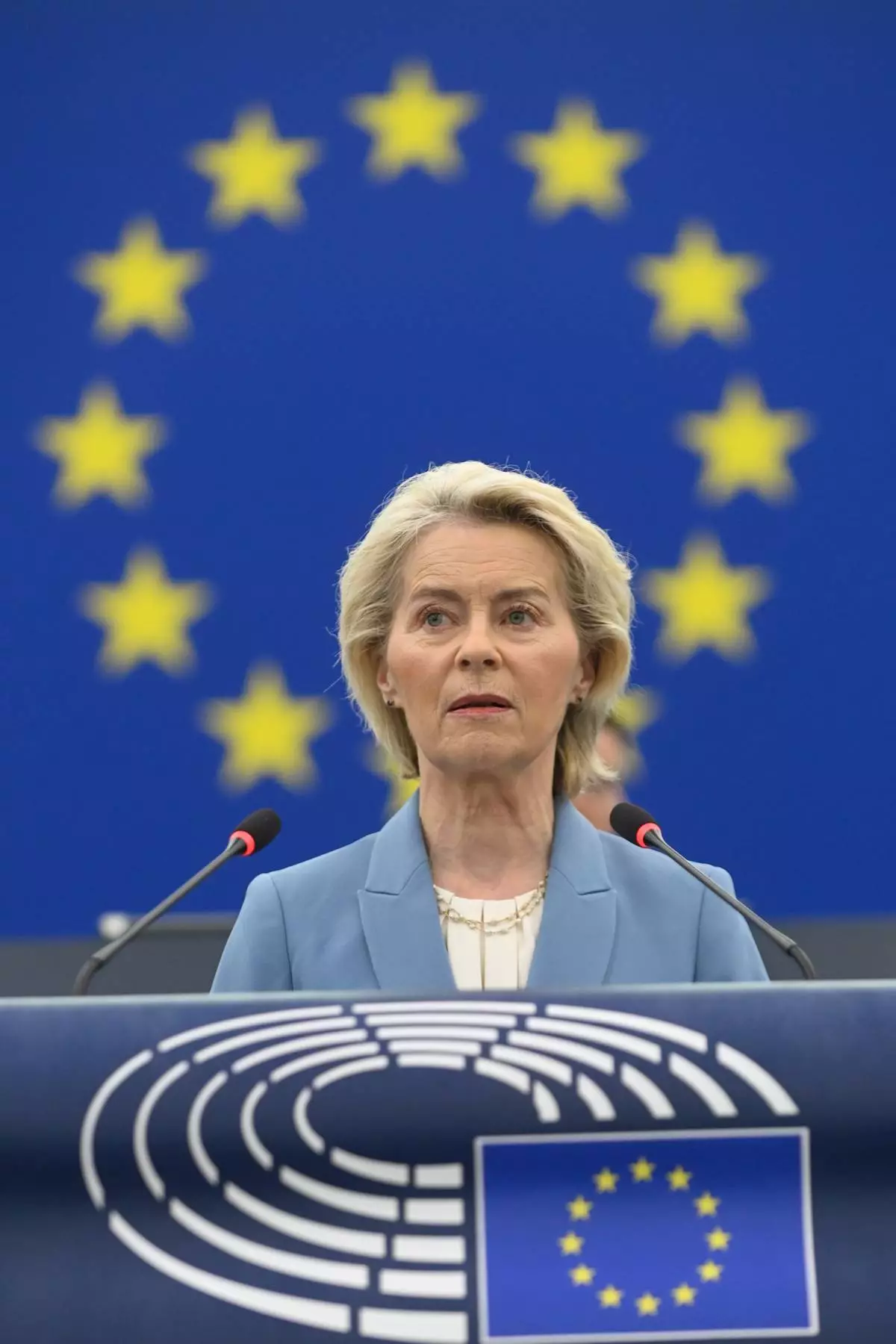
European Commission President Ursula von der Leyen attends a joint debate ahead to the 15-16 October EU summit in Strasbourg, France, Tuesday, Oct. 6, 2026. (AP Photo/Pascal Bastien)
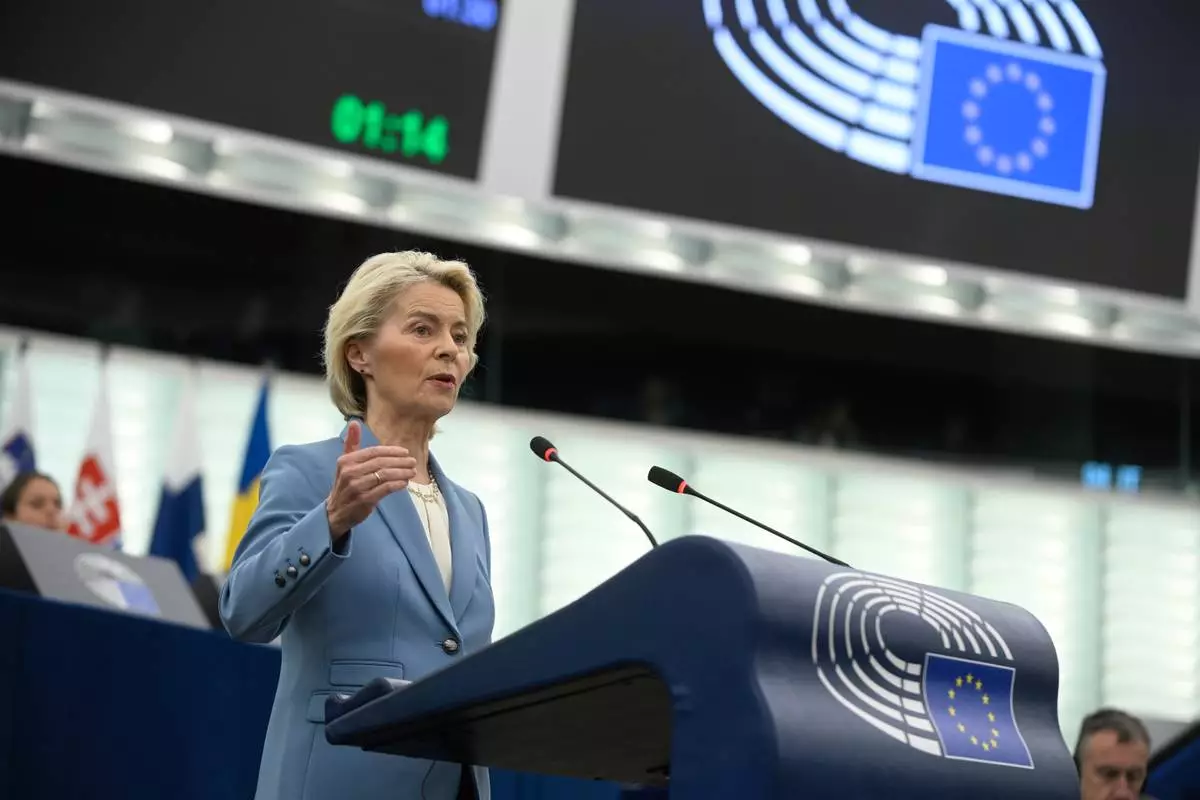
European Commission President Ursula von der Leyen attends a joint debate ahead to the 15-16 October EU summit in Strasbourg, France, Tuesday, Oct. 6, 2026. (AP Photo/Pascal Bastien)
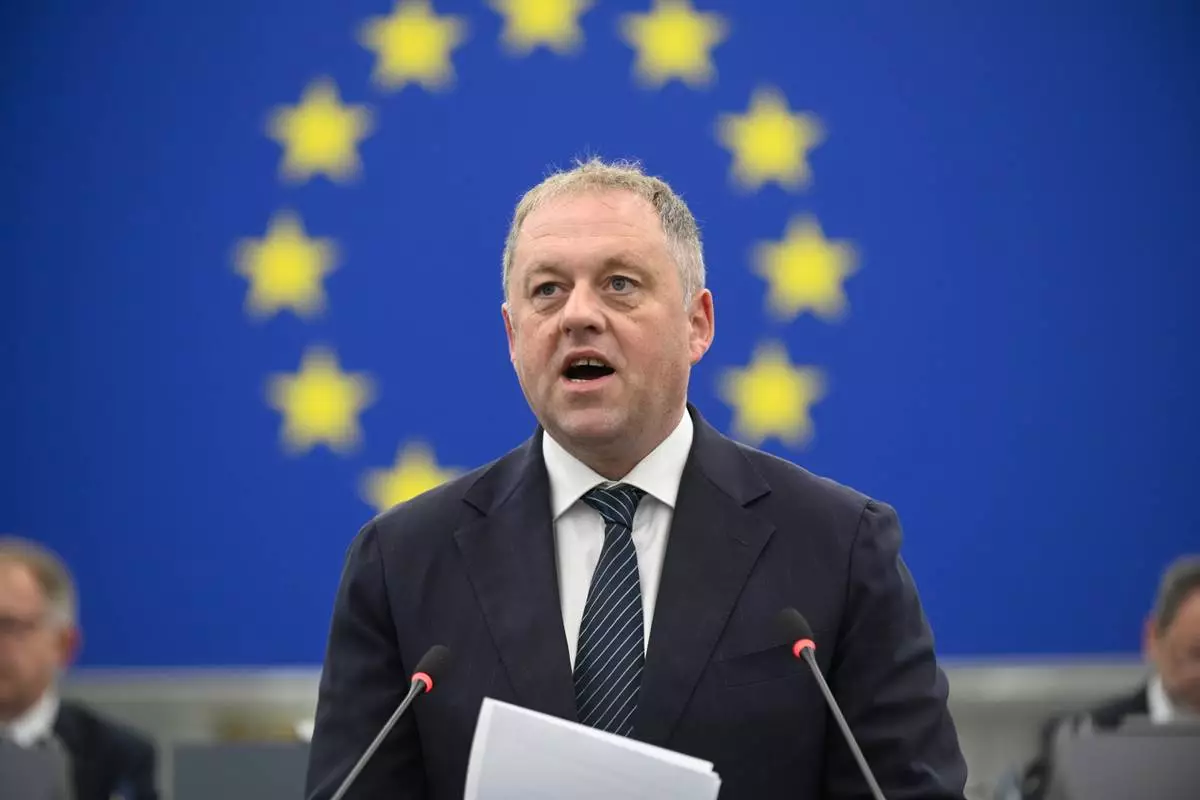
Irish Minister of State for European Affairs Thomas Byrne attends a joint debate ahead to the 15-16 October EU summit in Strasbourg, France, Tuesday, Oct. 6, 2026. (AP Photo/Pascal Bastien)