As artificial intelligence and digital-intelligent technologies are increasingly driving urban governance, Beijing's swift-response-to-public-complaints reform offers a good example of how AI can be used in addressing citizens' complaints, according to the 2026 Beijing Reform Forum on Swift Response to Public Complaints, which concluded on Tuesday.
The two-day forum, jointly hosted by the Chinese Academy of Social Sciences, China Media Group, the People's Government of Beijing Municipality, and the Beijing Municipal Committee of the Communist Party of China, was held under the theme "The Digital-Intelligent Era and the People's City." It drew more than 3,200 participants, including over 240 international guests from more than 70 countries.
At the opening ceremony, the latest theoretical research results of Beijing's swift-response-to-public-complaints reform were released, along with a global evaluation report on urban hotline services and governance effectiveness, as well as typical governance case studies.
These outcomes further enhance Beijing's reform efforts by giving theoretical interpretation based on summarizing experience, comparing Chinese and international practices, thus providing practical experience and theoretical support for global urban governance.
"The Chinese and international theoretical results and monographs we compiled and released this time focuses on how the government responded to the people's demands through its swift-response-to-public-complaints reform, and how it improved the urban governance system and governance capacity through such responses," said Zhang Yi, dean of the Capital Governance Research Institute at the Chinese Academy of Social Sciences.
"Among the 20 cities we evaluated internationally, the vast majority have already applied artificial intelligence to complaint answering, personnel dispatch, issue handling and finally the actual resolution of problems to meet citizens' demands. Looking to the future, it should be an urban governance system based on a digital-intelligent governance ecosystem," said Meng Tianguang, a tenured professor at the School of Social Sciences of Tsinghua University.
Since Beijing's swift-response-to-public-complaints reform began in 2019, the Beijing 12345 service hotline has received a total of about 200 million complaints, with both the resolution rate and satisfaction rate exceeding 97 percent.
"We have included complaints involving urban operations and concerning safety hazards into our key monitoring scope, while using artificial intelligence technology in automatic early warning and monitoring, so as to prevent these risks at the source. This helps to make urban governance more targeted and effective," said Song Dawei, deputy director of the Beijing Municipal Public Service Hotline Center.
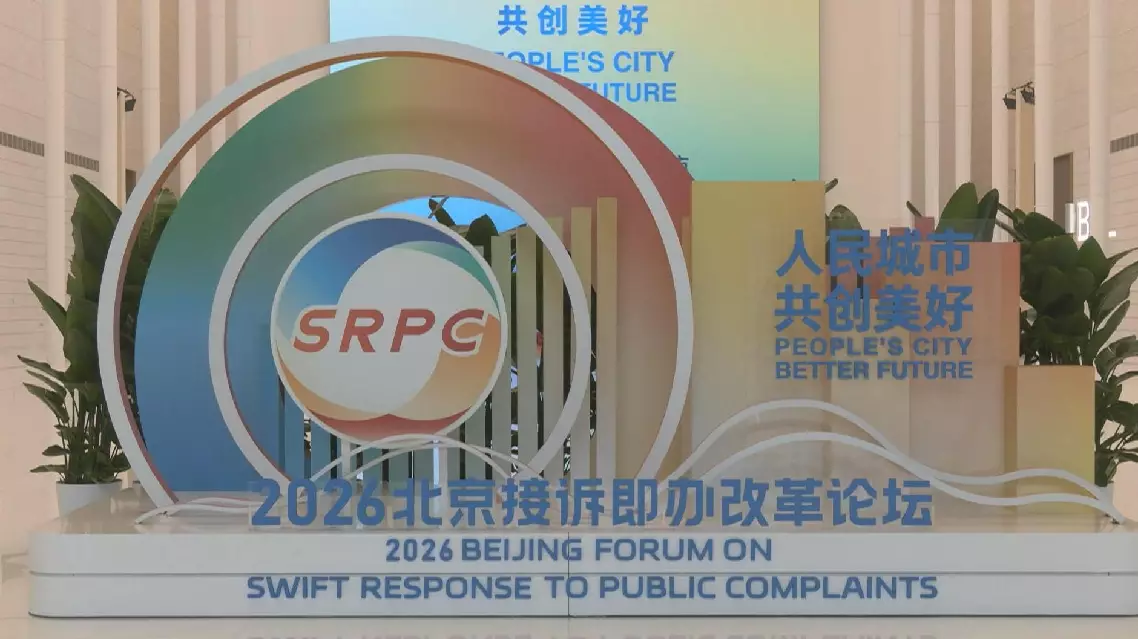
Forum on Swift Response to Public Complaints highlights digital-intelligent governance