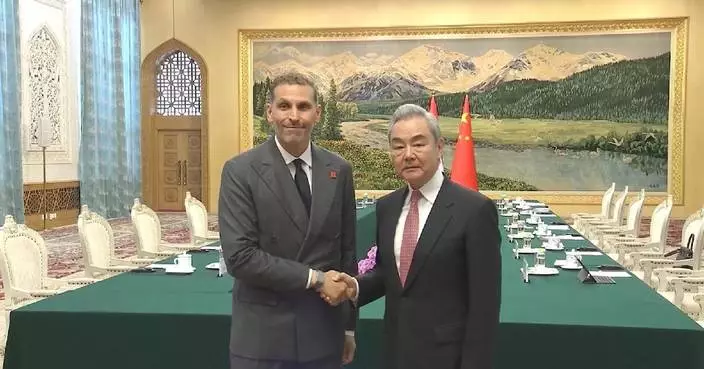
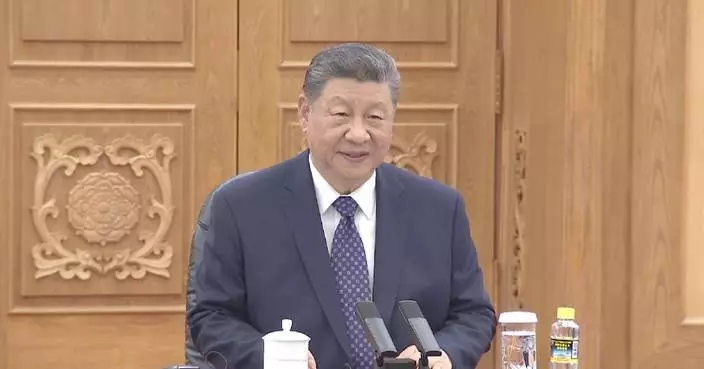
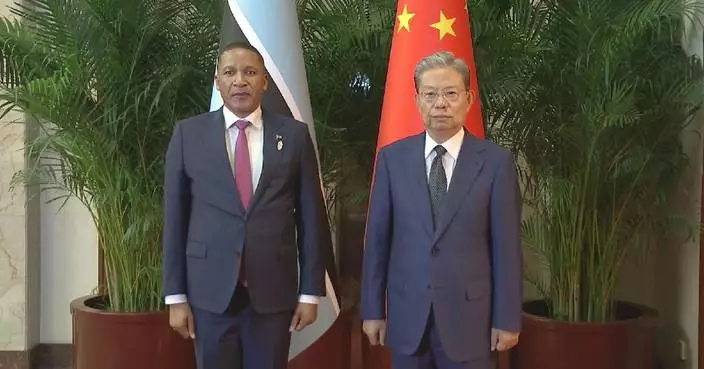
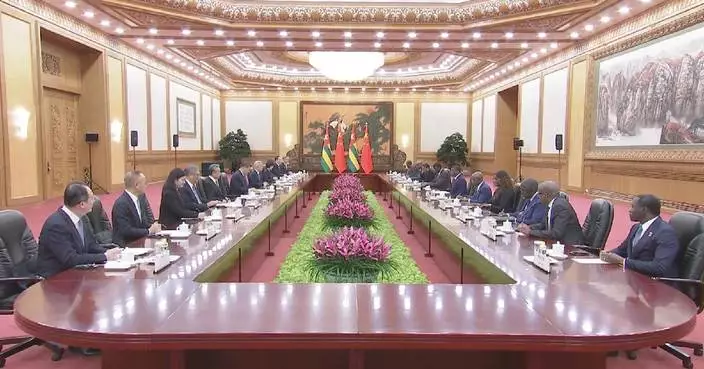
Chinese Vice Premier He Lifeng met with Evan Greenberg, executive vice chair of the National Committee on U.S.-China Relations (NCUSCR), in Beijing on Monday.
He, who is also a member of the Political Bureau of the Communist Party of China Central Committee, said Chinese President Xi Jinping paid a state visit to the United States recently, and the two heads of state agreed to build a constructive China-U.S. relationship of strategic stability based on respect, fairness and reciprocity.
China and the United States should jointly implement the important consensus reached by the two heads of state, and inject more certainty and stability into China-U.S. economic and trade cooperation and the world economy, He said.
It is hoped that the NCUSCR will continue to play an active role in promoting China-U.S. economic cooperation, He added.
Stressing that stable development of U.S.-China relations is of great significance, the U.S. side expressed willingness to continue to play a bridging role in enhancing economic exchanges and cooperation between the two sides.
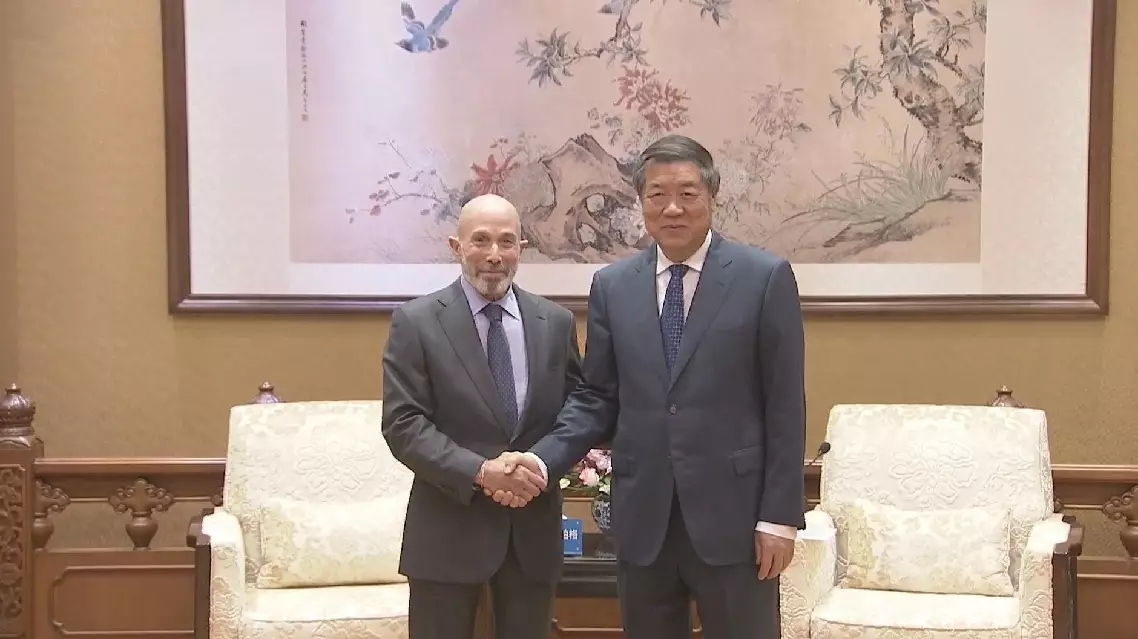
Chinese vice premier meets NCUSCR executive vice chair
A growing number of motorists in Iraq are turning to liquefied petroleum gas (LPG) as a cost-effective and readily accessible alternative to gasoline, a shift driven by mounting concerns over fuel prices, supply reliability and declining fuel quality, with implications that extend beyond household savings to Iraq's broader energy sector.
An auto workshop in Erbil, capital of Iraq's Kurdistan region, is one of many helping Iraqi motorists switch from gasoline to LPG. By installing an additional fuel system, drivers can reduce their reliance on gasoline while keeping the option to use it. For many drivers, the main motivation for adding the LPG system is economical.
"The difference is going to be very significant. Instead of spending 350,000 dinars (around 230 U.S. dollars) per month on gasoline, I'll now spend around 60,000 dinars on gas. Overall, this is going to make a very big difference in my running costs," said Haider Baha-Adin, an Iraqi driver.
But it's not just about saving money. For many motorists, switching to LPG also means avoiding long waits at gasoline stations.
"Just to get gasoline, I sometimes have to wait in line for three hours before I reach the station. With gas, that isn't the case. There are no such queues, so I can fill up very easily," said Baha-Adin.
The growing demand for LPG is also keeping mechanics busy. At the workshop in Erbil, technicians install LPG systems in around 5 to 10 vehicles a day. Installation costs vary depending on the vehicle and the type of system, ranging from several hundred to more than 800 U.S. dollars.
But cost and convenience aren't the only factors behind the shift. Workshop owner Saif Saad says concerns over declining gasoline quality are also pushing drivers toward LPG.
"The gasoline is not good, its octane rating has been declining, and its quality is poor. People are worried about their cars. GDI (gasoline direct injection) vehicles, GDI engines, and regular engines experience knocking and delayed combustion in the chamber," said Saif Saad, owner of the World Gas Systems workshop.
However, the growing demand is also creating challenges. Saad say his workshop is facing difficulties securing the equipment needed for LPG installations, especially with the current instability in the region which has disrupted supply chains.
Beyond the savings for motorists, the growing demand for alternative fuels could also have wider economic implications, creating new opportunities for investment in Iraq's energy sector.
"The Kurdistan Regional Government has a plan to invest in gas along with the oil because we used to invest in oil only, but nowadays the government is looking for alternatives, because that's a new, emerging trend and an emerging business for the government to help with the budget at the same time, to help the citizen. The government is trying to focus on LPG and electric vehicles," said Nabaz Nawzad, dean of the College of Administration and Economy at Lebanese French University in Erbil.
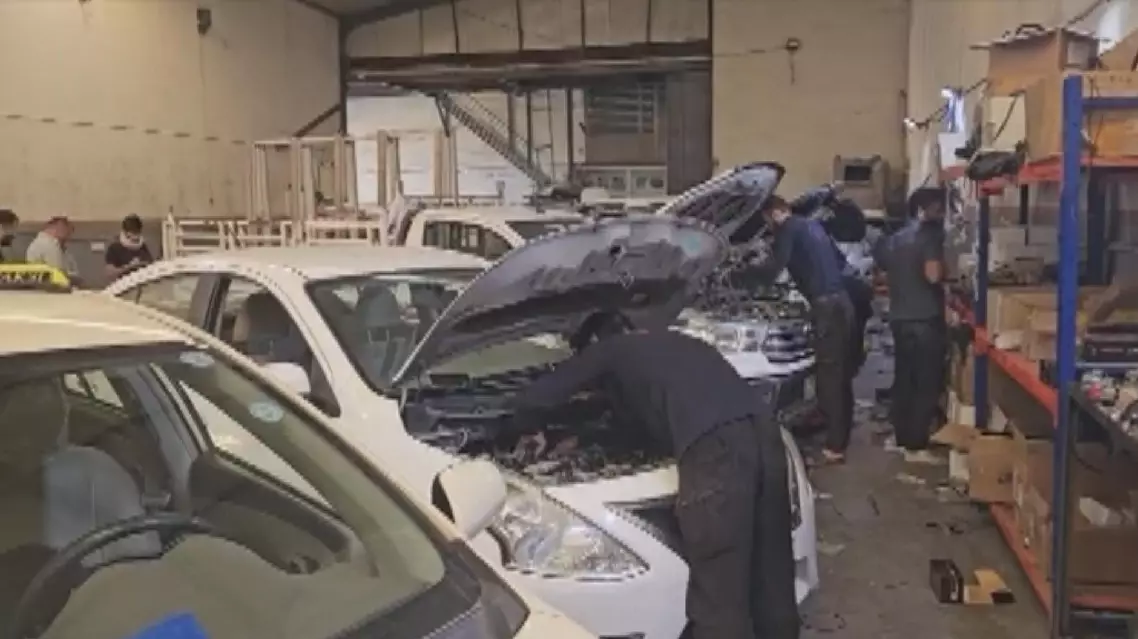
Iraqi motorists turn to LPG amid fuel price hikes, quality concerns