WASHINGTON--(BUSINESS WIRE)--Oct 13, 2026--
Lockheed Martin (NYSE: LMT) and Avio announced a strategic cooperation agreement for the production of solid rocket motors (SRMs). This collaboration will accelerate and expand the SRM industrial base with key manufacturing capabilities, bringing resiliency to a vital U.S. supply chain.
This press release features multimedia. View the full release here: https://www.businesswire.com/news/home/20261013766935/en/
THE BIG PICTURE
After qualification, initial work will focus on the production of solid rocket motors for the Extended Range GMLRS ® (ER GMLRS) and the Precision Strike Missile (PrSM). SRM production for these essential programs will be performed at Avio USA’s new state-of-the-art facility in Hurt, Virgina, drawing on the longstanding solid propulsion expertise of its parent company, Avio S.p.A. (EXM: AVIO).
WHY IT MATTERS
EXPERT PERSPECTIVE
ADDITIONAL DETAILS
This strategic cooperation agreement between Lockheed Martin and Avio USA will strengthen the U.S. SRM industrial base, bolstering the defense supply chain and enabling our troops to have access to reliable, high-performance munitions to defend our nation and its allies.
About Lockheed Martin
About Avio USA
Avio USA Inc., headquartered in Arlington, Virginia, is a subsidiary of Avio S.p.A. structured to operate in compliance with U.S. security and export-control regulations. The company is governed by a U.S.-based board of directors and led by CEO James Syring, a retired U.S. Navy Vice Admiral and former Director of the U.S. Missile Defense Agency. Avio USA is building a growing U.S. engineering, manufacturing and operations presence, leveraging Avio’s global propulsion expertise to expand domestic production and serve as an independent supplier to U.S. defense customers and industry partners. Learn more at AvioUSA.com.
About Avio
Avio S.p.A. (EXM: AVIO) is a leading international group engaged in the manufacturing and development of space launchers and solid, liquid and cryogenic propulsion systems. The experience and know-how built up over more than 50 years puts Avio at the cutting edge of the space launcher sector and defense programs. Avio is present in Italy, France, the United States and French Guiana, employing more than 1,500 highly qualified personnel. Avio is the prime contractor for the Vega program and a subcontractor for the Ariane program, as well as a leading solid rocket motor subcontractor for the design and manufacturing of major European tactical missile programs. Learn more at Avio.com.

Avio USA CEO James Syring (L) and Lockheed Martin MFC President Tim Cahill announce a strategic cooperation agreement for the production of solid rocket motors at AUSA Annual Meeting 2026.
SEATTLE (AP) — Nearly four decades ago, state auditors delivered a stark warning to Seattle Public Schools.
The district needed to close several campuses with low enrollment to avert a deepening budget crisis. But the recommendations generated a fierce neighborhood outcry, so Seattle officials set the audit aside.
Then, 34 years later, history repeated itself. In 2024, Seattle’s then-superintendent proposed shuttering up to a fifth of its schools because there weren’t enough students to fill them, but again scrapped the plan after community resistance.
Now, the district’s back in the same financial bind, with opposition already building against a new plan to shutter nearly a dozen campuses.
The cycle in Seattle reflects what some education experts call a national paralysis in school district boardrooms. Public school enrollment has plummeted by more than 1.4 million students since the pandemic, according to a recent study by Stanford University researchers Thomas Dee and Jaymes Pyne. That’s primarily due to declining birth rates and expanding school choice. Yet, rather than downsize to match their new financial reality, district leaders throughout the country have largely hesitated.
AP is covering school closures in partnership with The Hechinger Report and Big Local News at Stanford University.
One out of every 4 public schools in the U.S. has lost 15% or more of its student population since 2019, according to the study. (In Seattle, enrollment has fallen by roughly 8% since that year, to below 49,000 students.) Despite these empty desks, the overall number of schools in operation remains virtually unchanged — and teacher headcounts have actually grown by 1% nationwide.
“School districts have been playing Hamlet on this for a while now and dithering on this question,” Dee said. “We’ve never had more teachers per student in our nation’s history.”
Today’s budget woes can be attributed, at least in part, to more than $190 billion in federal pandemic relief aid. The one-time cash allowed superintendents to maintain staffing levels in spite of shrinking student bodies. With those federal funds exhausted, many districts now must confront painful structural deficits. And the needs remain acute. Disability diagnoses are rising — and they’re costly, adding to the financial strain. Many students also haven’t caught up academically after the pandemic.
Research from Arkansas, California, Chicago and elsewhere suggests closing a school yields only modest and temporary budget relief.
“The conversation really should be about the educational experience: How do we better serve the students with the resources we have left?” said Liza Rankin, a Seattle school board member since 2019, noting that employee pay and benefits account for roughly 80% of a district’s budget. “Closing schools doesn’t save much money to begin with. Payroll is where the big money is.”
Instead, leaders have preferred to rely on one-time reserves or small administrative cuts.
In San Francisco, where enrollment fell 10% since 2019, a $100 million-plus deficit prompted a chaotic proposal from the district in late 2024 to shutter more than a dozen schools. That plan was shelved following the superintendent’s resignation. And earlier this year, a new superintendent reached a $183 million contract with the United Educators of San Francisco, or UESF.
In its most recent budget, the district projects it will close its structural deficit next school year, mostly relying on early retirements and cuts to central office to avert closures. The current budget also projects, however, a $26 million deficit by the following year.
Labor leaders insist any panic is unwarranted.
A UESF spokesperson argued the district’s substantial cash reserves could stabilize the budget. Its rainy day fund stood at nearly $139 million last year, according to the district, though it expects to draw down its reserves to just $52 million over the next two years.
Experts strongly warned against tapping rainy day funds to cover ongoing expenses, like salary.
“That could buy them more time, maybe provide another year of planning, but it doesn’t come close to resolving the structural issues that San Francisco has,” said Jason Willis, a school finance expert with research group WestEd who trains K-12 budget officers.
There are no easy solutions — and students could pay the price. Closing schools can set students back academically, research shows, and teacher layoffs may be even more disruptive to student learning.
Still, Dee, the Stanford researcher, warned that if local leadership fails to act, other political actors might. State takeovers of school districts have been rising, with at least 21 happening since 2023, according to a tally from nonprofit news outlet Chalkbeat.
Under state takeovers, school board members and superintendents often have much less flexibility to determine how to cut budgets — or whom to lay off.
Sharon Lurye of The Associated Press contributed reporting.
The Associated Press’ education coverage receives financial support from multiple private foundations. AP is solely responsible for all content. Find AP’s standards for working with philanthropies, a list of supporters and funded coverage areas at AP.org.
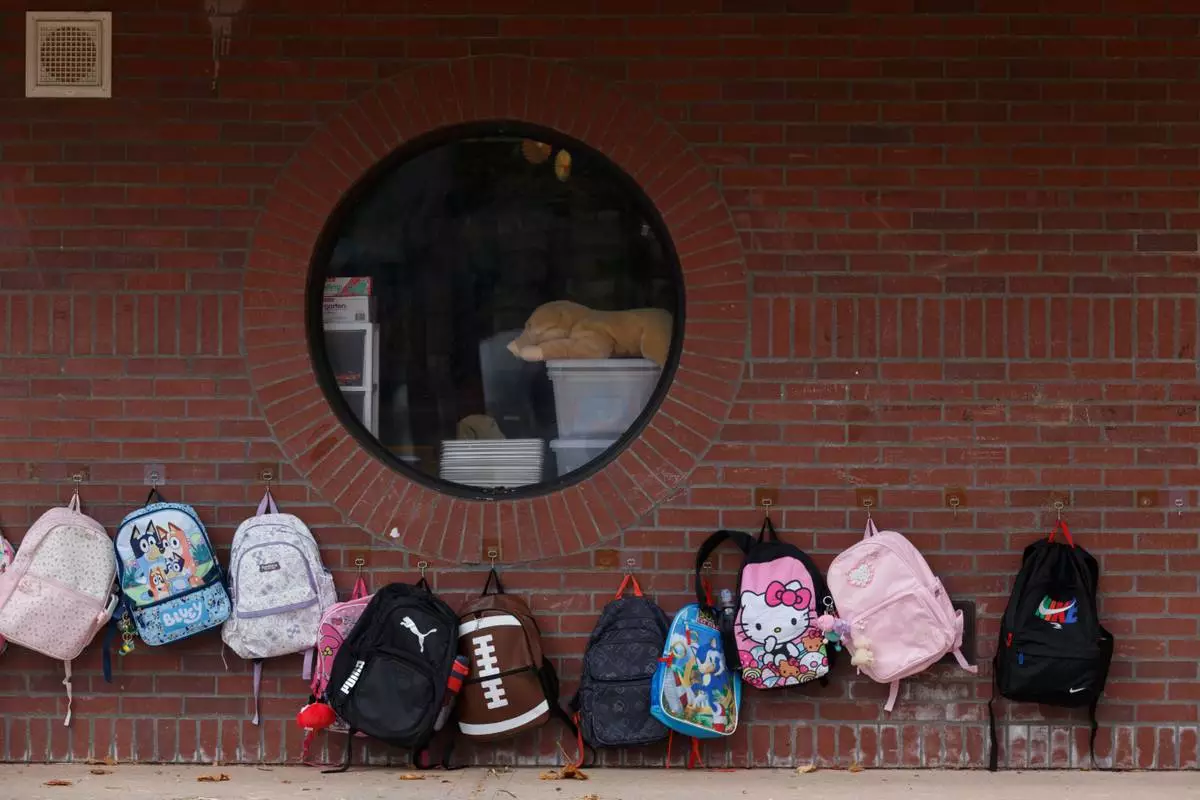
Backpacks hang outside a classroom at Glen Cove Elementary on Monday, Aug. 17, 2026, in Vallejo. (AP Photo/Juliana Yamada)
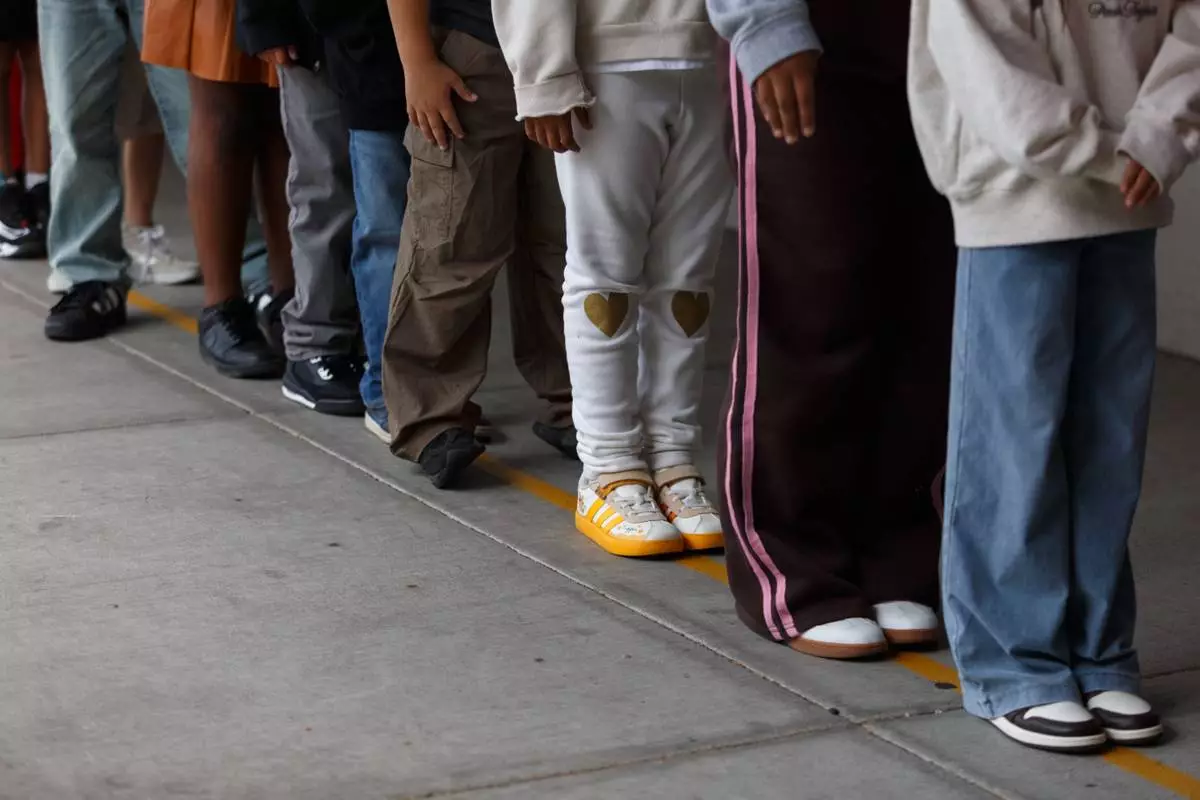
Fourth graders in Mrs. Johnson's class wait in line at Steffan Manor Elementary on Monday, Aug. 17, 2026, in Vallejo. (AP Photo/Juliana Yamada)
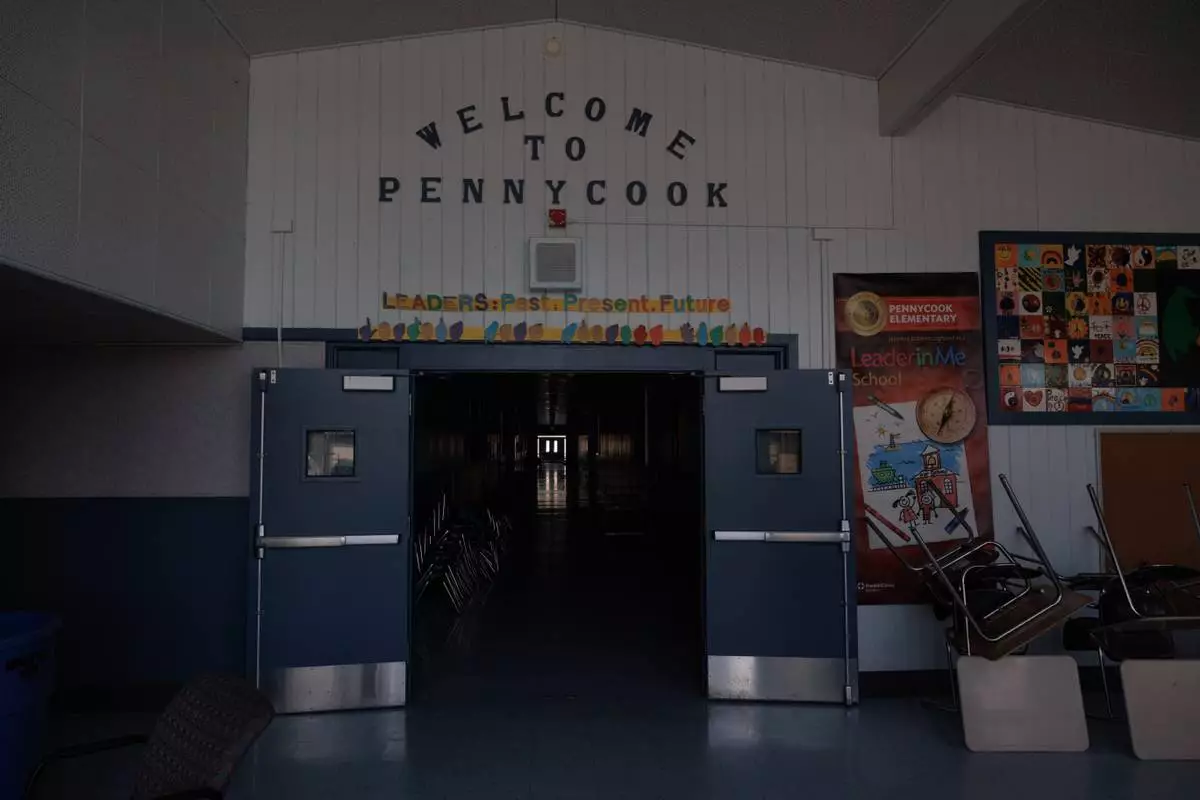
A dark and empty Pennycook Elementary School is shown on Tuesday, Aug. 18, 2026, in Vallejo. (AP Photo/Juliana Yamada)