Skip to Content Facebook Feature Image

Los Javis storm global cinema with 'La Bola Negra.' It might mean Oscar glory for Netflix

ENT

Los Javis storm global cinema with 'La Bola Negra.' It might mean Oscar glory for Netflix
ENT

ENT

Los Javis storm global cinema with 'La Bola Negra.' It might mean Oscar glory for Netflix

2026-10-14 04:20 Last Updated At:04:30

NEW YORK (AP) — For the Spanish writing-directing duo Javier Ambrossi and Javier Calvo, having their film, “La Bola Negra,” selected earlier this year for the Cannes Film Festival was meaningful, partly because they were relatively unknown.

“(Cannes director) Thierry Frémaux was like, ‘I love this movie. Who are you?’” says Ambrossi, laughing.

But five months later, there are few in global cinema who aren’t now familiar with Ambrossi and Calvo. The directing pair, known in Spain as Los Javis, have taken the movie world by storm with an audacious queer epic that’s brought them to the center of the Oscar race.

“La Bola Negra,” which Netflix will release in select theaters Friday, is about the interconnected lives of three gay men across a history that spans the early 20th century, the Spanish Civil War and the modern day. “La Bola Negra” tells a story of generational pain and queer legacy with a grand, lyrical melancholy.

After a rapturous response in Cannes, Calvo and Ambrossi were almost instantly catapulted onto the global stage. They shared the festival’s award for best director with Pawel Pawlikowski (“Fatherland”). Netflix emerged victorious in a bidding war. Now, the streamer is giving “La Bola Negra” a 46-day exclusive run in cinemas, the longest ever for the company.

Expectations are high. “La Bola Negra” — a $15 million Spanish film — is expected to challenge “The Odyssey” for best picture.

For Ambrossi, 42, and Calvo, 35, it’s been a head-spinning rise. They went almost straight from a darkened editing suite to the bright lights of the Cannes premiere. Since then, with the help of some therapy, they’ve gotten used to the dramatic shift in their lives. In an interview last month, the pair warmly greeted a reporter and soon fell into considering why “La Bola Negra” has struck such a nerve.

“I hear a lot, ‘It was so poetic.’ Maybe audiences aren’t used to that because movies are supposed to be liked by everyone at the same time,” Ambrossi says. “People are asking themselves: Why was I crying?”

“Every generation needs that big movie that speaks to their desires, their warmth,” says Calvo. “People really connect to that feeling of: Don’t lose your life, just live. Just make the decision you want to make. We only have now.”

Beginning with the sound of a mournful trumpet, “La Bola Negra” (“The Black Ball” in English) opens with the story of Sebastián (played by the Spanish singer-songwriter Guitarricadelafuente in his screen debut), a musician who, after the bombing of his village, joins the Nationalist army. There, he becomes infatuated with an imprisoned freedom fighter named Rafael (Miguel Bernardeau) recuperating in a military hospital.

But that story is only the spine of a movie that reaches both into the past and into the future. Rafael’s relationship with the (real) poet Federico García Lorca involves their private struggle as gay men in a strictly heterosexual military world — a struggle that includes the preservation of a work about gay identity, dignity and survival begun by Lorca before his assassination by Nationalist forces in 1936.

“It’s a way of honoring our grandparents and our LGBTQ elders,” Calvo says. “They fought for us. They died for us. We were crying on the set every day.”

“We have forgotten them,” adds Ambrossi. “It was not that long ago. My grandmother is 90. It was yesterday, and we have forgotten that.”

Ambrossi and Calvo are far more glamorous than most filmmakers. They both began as actors. Their dark curls and expressive eyes suggest they belong in front of the camera rather than behind it. In Spain, they are celebrities.

They have been judges on the Spanish edition of “RuPaul’s Drag Race.” They have been game-show panelists and award-show hosts. And Ambrossi and Calvo's films and TV series have won them a wide range of fans, including Penélope Cruz and Glenn Close, both of whom co-star in “La Bola Negra.” Pedro Almodovar, the master Spanish filmmaker, is a producer on the film.

Calvo and Ambrossi were a couple for years until making “La Bola Negra,” an ironic development for a deeply emotional movie about love.

“Every project is a road to the unknown and we know we’re going to be different at the end of the road,” says Calvo. “We faced desire, love and all these complex feelings.”

As they completed the film, the pair split romantically, and decided to go their separate ways professionally. But by the time Ambrossi and Calvo reached Cannes, they reversed course.

“We have been working together forever,” Ambrossi says. “I don’t know what it is to be a director if he’s not there. It’s going to stay that way. We love to work together.”

“It’s natural to wonder what’s next,” says Calvo, nodding. “But we won best director, the two of us. Très chic. It’s like: Yes, we are unstoppable together.”

“La Bola Negra” has already been a box-office smash in Spain, setting records for an independent film. In September, it won the Toronto International Film Festival's People's Choice Award, confirming its Oscar status. “La Bola Negra” will soon reach American audiences, and Oscar voters. If the film continues to garner such an emotional response from moviegoers, it could even lead Netflix to the streamer's first best-picture win.

“Netflix understood perfectly that we did a movie for theaters," says Ambrossi. “Even with the round borders of the 35 mm, it is made for that. But they understood and we understood that it’s a movie with a powerful message, and being with Netflix, it’s going to go directly to the people. It’s a movie that could really change consciousness.”

A common compliment “La Bola Negra” receives is that its historical sweep and stylish telling suggest a movie with a much heftier budget. But for Los Javis, this is part of the power of being a duo.

“Being two really helps you,” Ambrossi says. “You can do more with less. He can be rehearsing and I can be thinking about the next day with production design.”

He smiles. “It makes us big.”
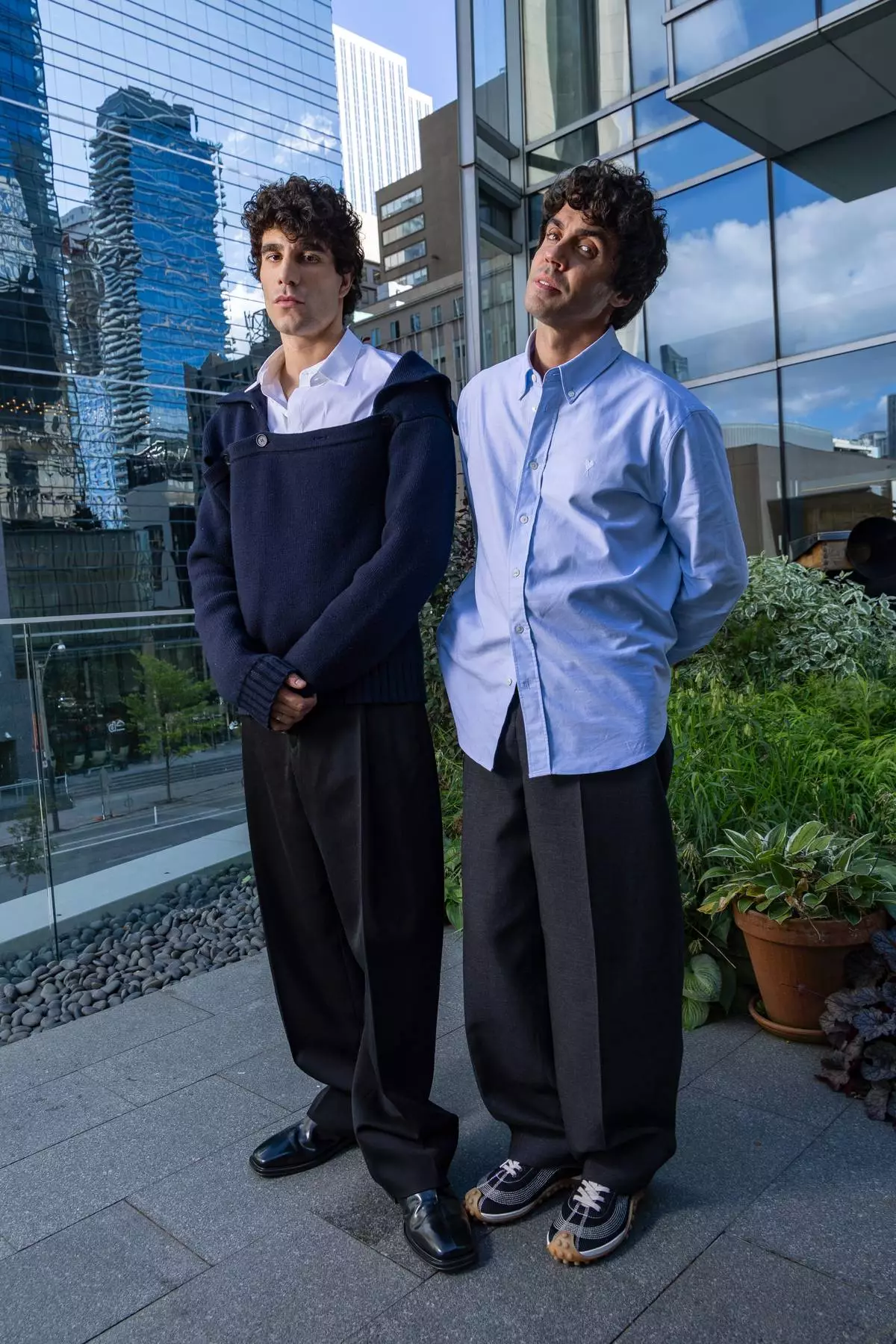
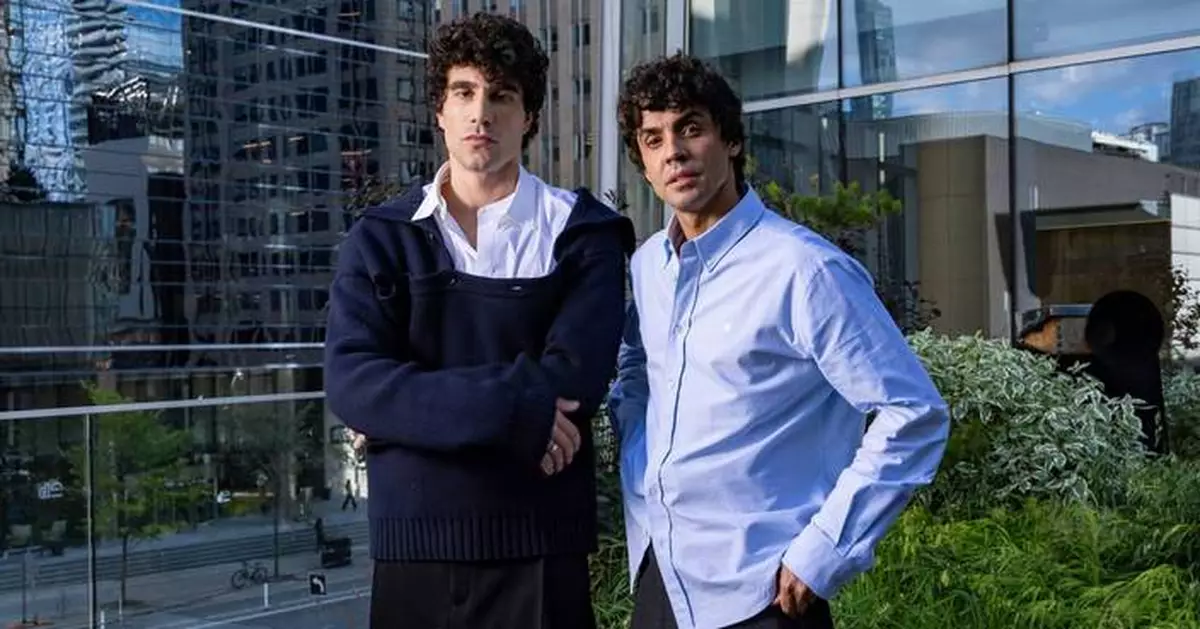
Directors Javier Calvo, left and Javier Ambrossi pose for a portrait to promote "La Bola Negra" during the Toronto International Film Festival on Monday, Sept. 14, 2026, in Toronto. (Photo by Joel C Ryan/Invision/AP)
Directors Javier Calvo, left and Javier Ambrossi pose for a portrait to promote "La Bola Negra" during the Toronto International Film Festival on Monday, Sept. 14, 2026, in Toronto. (Photo by Joel C Ryan/Invision/AP)

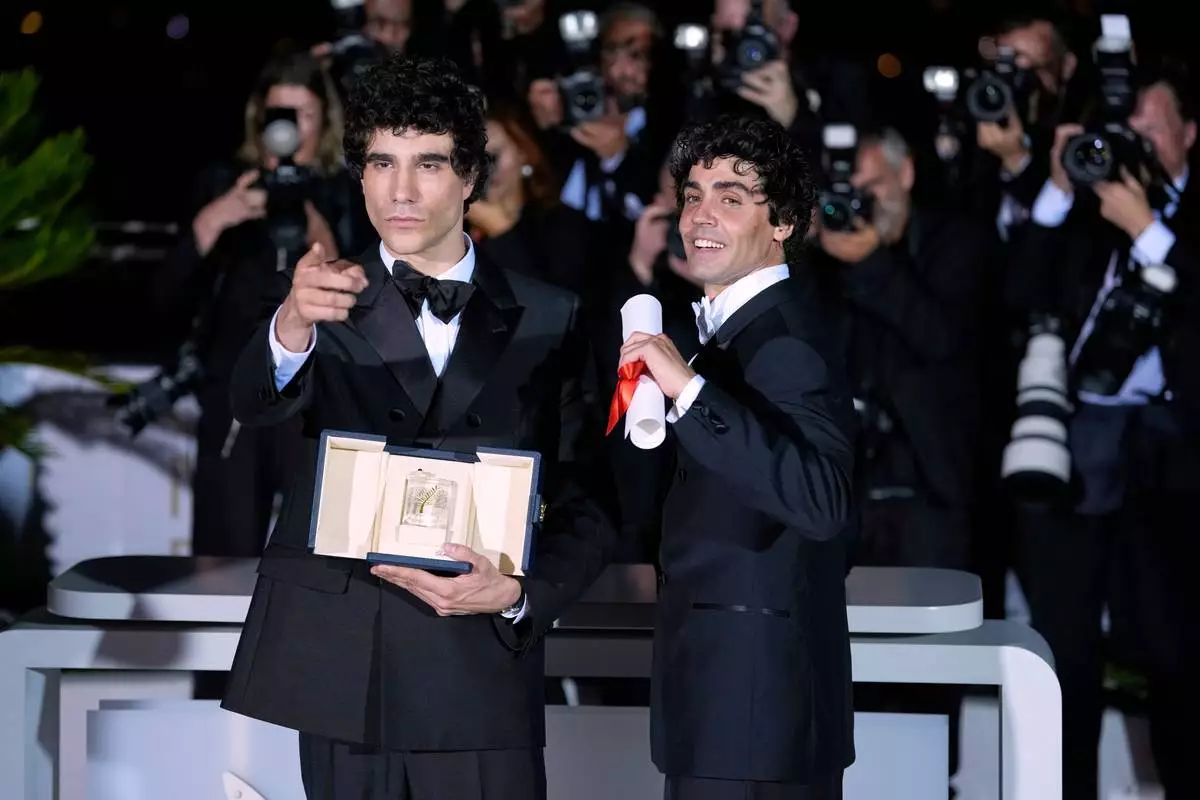
FILE - Javier Calvo, left, and Javier Ambrossi, winners of the award for best director for 'La bola negra,' appear at the awards ceremony during the 79th international film festival, Cannes, southern France, on May 23, 2026. (AP Photo/John Locher, File)
FILE - Javier Calvo, left, and Javier Ambrossi, winners of the award for best director for 'La bola negra,' appear at the awards ceremony during the 79th international film festival, Cannes, southern France, on May 23, 2026. (AP Photo/John Locher, File)

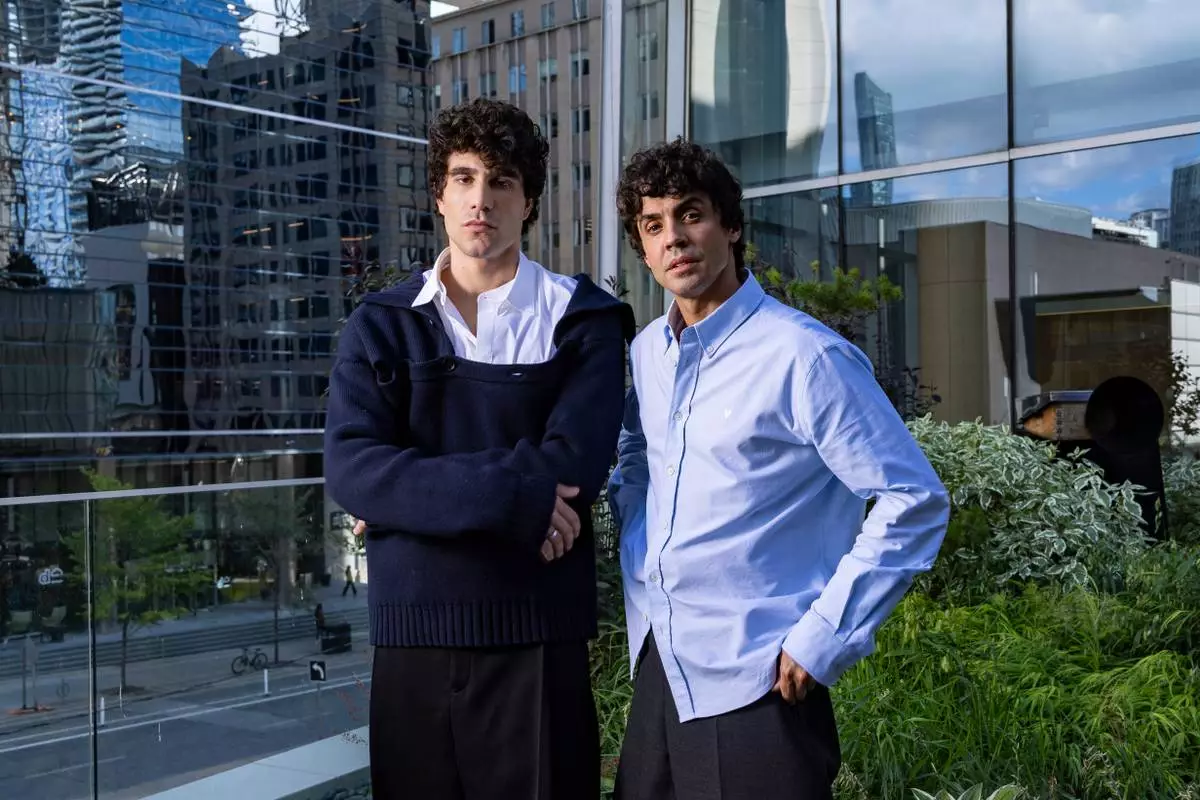
Directors Javier Calvo, left and Javier Ambrossi pose for a portrait to promote "La Bola Negra" during the Toronto International Film Festival on Monday, Sept. 14, 2026, in Toronto. (Photo by Joel C Ryan/Invision/AP)

Directors Javier Calvo, left and Javier Ambrossi pose for a portrait to promote "La Bola Negra" during the Toronto International Film Festival on Monday, Sept. 14, 2026, in Toronto. (Photo by Joel C Ryan/Invision/AP)
PARIS (AP) — Cyberattacks disrupted European supermarket chains, affecting refrigeration systems at hundreds of stores in France and forcing a major grocer to shut down websites serving customers in Europe and the United States.

French Finance Minister Roland Lescure told Parliament on Tuesday that about 700 of the country’s 10,000 supermarkets were affected. He said there was no risk to France’s food supplies but acknowledged that the attack “touches the heart of our food security.”

“It was a wake-up call for everyone,” he said.

Separately, Dutch supermarket giant Ahold Delhaize said Tuesday it was working to restore systems it had shut down following what it described as a security issue. The company said its stores — including Albert Heijn in the Netherlands, Delhaize in Belgium and Stop & Shop, Food Lion and Giant in the United States — remained open, but the websites for those brands remained offline Tuesday.

Ahold Delhaize said it had no evidence that customer or employee data had been stolen.

The Paris prosecutor’s office said Tuesday that its cybercrime unit was investigating the large-scale attack in France, including the extent of damage caused by spoiled food and reported fires. According to BFM-TV, hackers forced a continuous defrost cycle and set temperatures as high as 50 degrees Celsius (122 degrees Fahrenheit) on stores' refrigeration systems.

French supermarket group Groupement Mousquetaires, which operates more than 4,000 stores across Europe, said 300 of its Intermarché and Netto stores were impacted. Some refrigerated and frozen food display cases remained out of service Tuesday.

Dominique Schelcher, CEO of French grocery chain Cooperative U, said 80 of the company’s 2,000 stores were affected. Most managed to prevent disruptions to refrigeration, but some had to discard food, he said in a post on X.

“Targeting equipment essential to the preservation of fresh products is an attack on the French food supply chain. It is unprecedented, extremely serious, and unacceptable,” Schelcher said.

Carrefour and Monoprix supermarkets were also impacted.

The French government’s cybersecurity agency said Tuesday it was “aware of numerous compromises” involving refrigeration system remote control modules made by Danish company Danfoss as well as U.S.-based Copeland.

Danfoss said Monday that most affected systems were older products that no longer received software or security updates, and that it was working with affected customers to limit the damage.

“Danfoss has long advised customers to keep supported systems updated with the latest firmware, as well as to operate behind a firewall,” the company said.

In an August report, U.S. cybersecurity firm Claroty identified vulnerabilities in the Danfoss AK-SM 800A and Copeland XWeb Pro platforms, which are used to manage refrigeration infrastructure in supermarkets, warehouses and other facilities.

For example, Claroty said “numerous controllers” using the Danfoss system were directly accessible from the public internet, leaving them wide open for cyberattacks. But it noted that Danfoss and Copeland had since fixed the vulnerabilities.

Copeland said Tuesday that a vulnerability had been identified in “a discontinued, end-of-life generation of controllers," and that it was working with impacted customers.

Christopher Whyte, an associate professor of homeland security and emergency preparedness at Virginia Commonwealth University, said it’s “not too difficult” to carry out such an attack.

“It looks like almost certainly what happened here was these controls were left open to the broader network being used by the supermarket,” Whyte said.

Similar attacks on water systems, power infrastructure and other kinds of physical operations have been fairly common for years, often coming from Iran and other state actors, Whyte said. Over the summer, Minnesota and Michigan reported cyberattacks on their states’ water systems.

Whyte said attacks on refrigerator systems are not unprecedented. Last month, Stars and Stripes reported that three military agencies were investigating refrigeration outages at U.S. military commissaries that occurred within days of each other. The Associated Press left a message Tuesday seeking comment on that case with the U.S. Army’s Criminal Investigation Division Cyber Field Office.

But Whyte said the scale of the French attack, and the fact that there appeared to be no ransom demand or stealing of information, made this situation unusual.

It was unclear Tuesday whether the French cyberattack involved artificial intelligence. But advances in AI have contributed to an increase in cybersecurity incidents, said Varun Chandrasekaran, an assistant professor of electrical and computer engineering at the University of Illinois’ Grainger College of Engineering.

Chandrasekaran said there’s also a possibility that the attack happened because of an experiment an AI lab was doing — like what happened with OpenAI's breach of an Australian health department website last month. He said people should absolutely expect an increase in such cyberattacks in the future thanks to AI.

But Chandrasekaran said AI could also be useful in preventing such hacks.

“Right now it seems like a lot of the defensive countermeasures people have are quite passive,” Chandrasekaran said. “What we need is a proactive defender, like another AI model sitting on the defender side that’s trying to counter whatever the attacker AI is doing.”

Durbin contributed from Detroit. Associated Press Business Writer Barbara Ortutay reported from San Francisco. Associated Press Writer Mike Corder reported from The Hague.

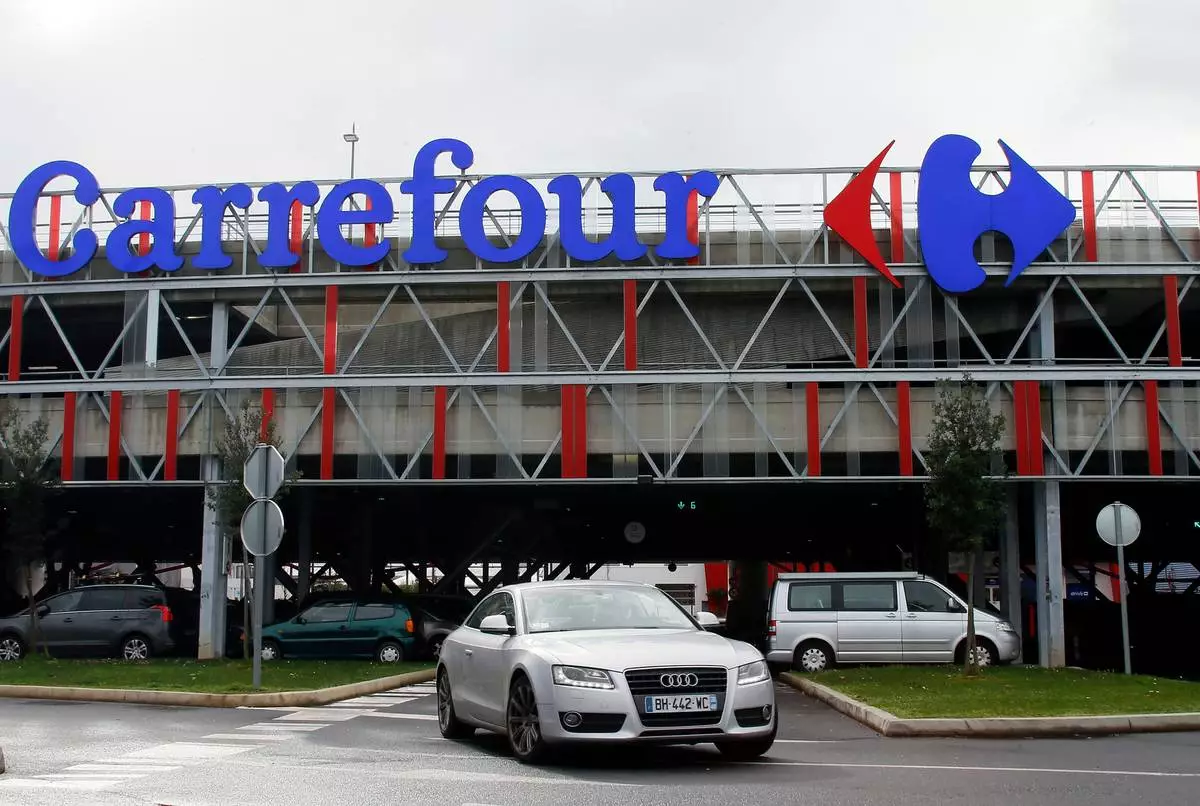
FILE - A car leaves a Carrefour supermarket in Anglet, southwestern France, on Jan. 23, 2018. (AP Photo/Bob Edme, File)

FILE - A car leaves a Carrefour supermarket in Anglet, southwestern France, on Jan. 23, 2018. (AP Photo/Bob Edme, File)

Recommended Articles