U.S. President Donald Trump said “massive” oil, gas and mineral exploration is set to begin in “our new and beautiful Greenland ” early Wednesday.
It wasn’t immediately clear what exploration or developments the U.S. president was referring to in his post, and Greenland is a self-governing territory of Denmark, rather than a part of the United States.
Trump posted on his Truth Social platform following a campaign event Tuesday in Wasilla, Alaska, to stump for Republican U.S. Sen. Dan Sullivan as he seeks his third term to represent the state in an election against Democratic former U.S. congresswoman Mary Peltola.
Rising energy prices — a direct result of Trump’s war in Iran — are creating serious and sustained financial hardships for America’s working class ahead of the midterm elections next month. Trump’s comments Wednesday are likely aimed at addressing voters’ concerns before they head to the polls.
But despite Trump’s optimism, resource exploration and extraction in Greenland has stymied companies for decades thanks to the island’s harsh climate, lack of key infrastructure and difficult geology. Previous efforts to extract so-called rare earth minerals, as well as oil and gas, have never progressed beyond the exploratory stage.
Trump’s comments about the Arctic island come less than a month after he signed an agreement with the leaders of Denmark and Greenland to strengthen security in the Arctic and North Atlantic following months of tensions with NATO allies over the U.S. president's repeated demands to take control of the semiautonomous Danish territory. It does not grant the U.S. any special exploration rights, but does place some limits on investments by non-NATO countries in strategic sectors.
The deal also paved the way for more U.S. bases in Greenland and eased tensions over Trump's repeated calls for Greenland to become part of the United States. The agreement would still apply if Greenland eventually chooses independence.
Trump has expressed his desire to acquire Greenland since as long ago as 2019 and, during his second term, issued threats to seize the territory from Denmark, a NATO ally.
Representatives of the leaders of Denmark and Greenland did not immediately return requests for comment Wednesday.
Greenland has large deposits of the rare earth minerals that are needed to make everything from computers and smartphones to the batteries, solar and wind technologies that will power the transition away from fossil fuels. China currently dominates the world's supply of these critical minerals and the Trump administration is seeking to break Beijing's chokehold on them.
The U.S. Geological Survey has also identified major potential offshore deposits of oil and natural gas.
But tapping these resources could be prohibitively difficult: the rare earth minerals are encased in rock, and the offshore oil and natural gas deposits are covered by Arctic ice.
Trump's Truth Social post also touted Greenland's strategic location, saying that “from a Security Purpose in the Defense and Offense of both the United States of America, and Europe,” the island is “second to none.”
“Any future attack on the United States will have to come across Greenland, where our Defense will routinely knock down drones, missiles, or any other form of weapon not yet even conceived," he wrote. "It gives us time, location, and sightline, like nowhere else in the World!”
The United States was prominent in Greenland for decades but, since 1945, the U.S. military presence in Greenland has decreased from thousands of soldiers on 17 bases and installations to roughly 200 soldiers on the remote Pituffik Space Base in the northwest. The base supports missile warning, missile defense and space surveillance operations for the U.S. and NATO.
Trump said last month that the U.S. would “immediately begin the process of developing a large military presence in the appropriate locations,” including “building two very major military bases.”

President Donald Trump speaks at a campaign rally at the Curtis D. Menard Memorial Sports Center, Tuesday, Oct. 13, 2026, in Wasilla, Alaska. (AP Photo/Alex Brandon)
HAMBURG, Germany (AP) — A former Ukrainian army officer goes on trial in Germany on Wednesday over undersea explosions that damaged the Nord Stream gas pipelines linking Russia and Germany four years ago in what is considered one of Europe's biggest acts of sabotage since World War II.
The suspect faces charges of causing an explosion, damaging property, disrupting public service and being an “accomplice to war crimes” by attacking civilian infrastructure, according to prosecutors.
According to German privacy rules, the suspect will be identified in court only as Serhii K., although he was publicly named as Serhii Kuznietsov in extradition proceedings in Italy.
While international observers initially blamed Moscow, investigators have increasingly examined suggestions that Ukrainian state security agencies may have been involved — even though Ukraine counts Germany as one of its closest allies.
The trial of the suspect, who is believed to be the alleged ringleader of the attack, is being held under strict security measures at the Hanseatic Higher Regional Court in Hamburg.
According to the charges, the defendant was allegedly involved in causing the Sept. 26, 2022, explosions that damaged pipelines built to carry Russian natural gas to Germany under the Baltic Sea.
At the time, European countries were moving to wean themselves off Russian energy sources, following the Kremlin’s full-scale invasion of Ukraine in February 2022.
Prosecutors say the aim of the plot was to permanently disrupt gas deliveries and prevent Russia from using the revenues to finance its military operations.
The defendant and others allegedly used a yacht that departed from the German port of Rostock. It had been rented from a German company using forged IDs and with the help of intermediaries.
The explosions ruptured the Nord Stream 1 pipeline, which was Russia’s main natural gas supply route to Germany until Moscow cut off supplies in August 2022. They also damaged Nord Stream 2, which never entered service because Germany suspended its certification process shortly before Russia’s invasion of Ukraine.
The suspect allegedly organized and carried out the detonation of at least four bombs between 14 and 27 kilograms (around 31 to 62 pounds) at a depth of 70 to 80 meters (230 feet to 263 feet) near the Danish island of Bornholm.
He was detained in 2025 in an Italian village, where officers raided a bungalow where he was staying with his family. Police said he surrendered without resistance. He was extradited to Germany in November.
A second suspect was arrested on a European warrant in the northern Croatian town of Pula in August. He has applied for asylum in Croatia to fight his extradition to Germany.
The pipelines were long a target of criticism by the U.S. and some of its allies, which warned that they increased dependence on Russian gas.
Russia has claimed that U.S. and British intelligence agencies were involved in staging the explosions and has also accused NATO of involvement in the attack, while several Western countries initially blamed Russia.
Ukrainian President Volodymyr Zelenskyy has denied allegations that his country was involved in the pipeline blasts.
The German government has so far refrained from comment on the upcoming trial, pointing out that no verdict has yet been reached and the case is in the hands of the independent judiciary.
So far, 16 court dates have been scheduled through Dec. 17. Additional dates are also planned for January and February 2027. It is not yet known when the verdict will be announced.
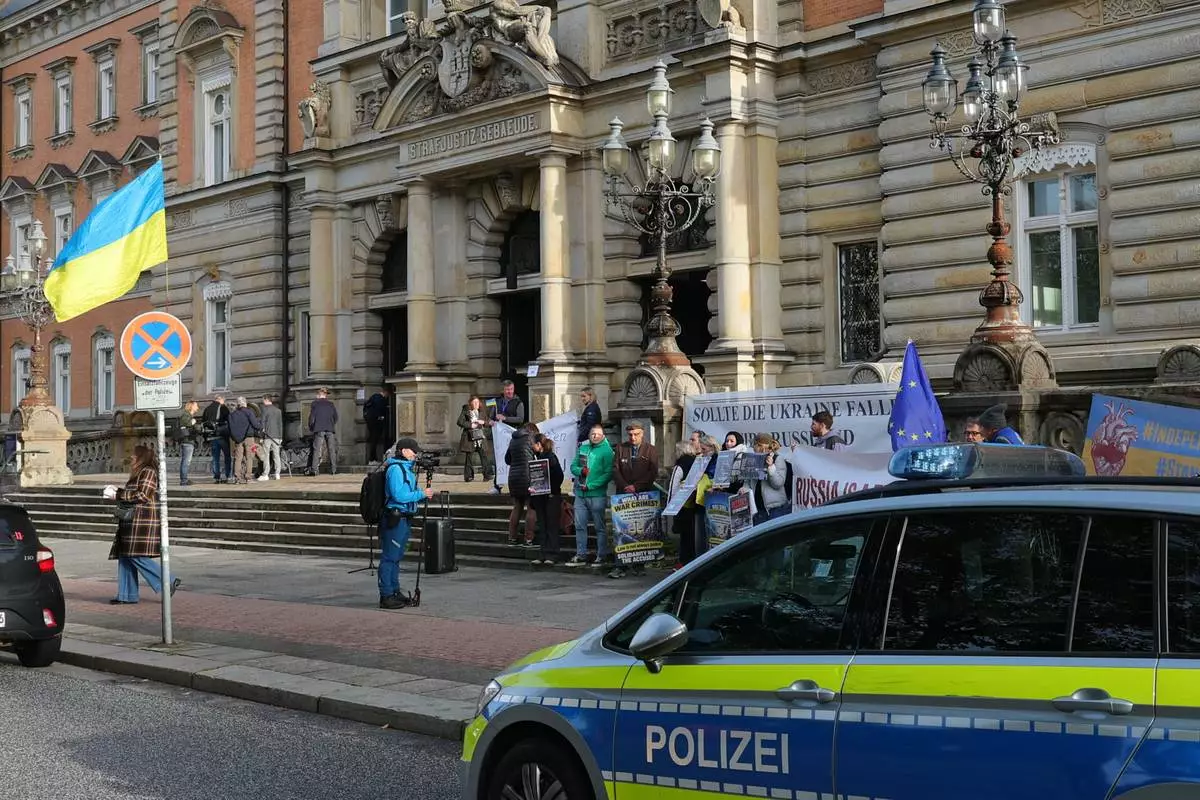
Ukraine supporters gather at the entrance to the Hanseatic Higher Regional Court before the trial of Serhij K., a former Ukrainian army officer, in Hamburg, Germany, Wednesday, Oct. 14, 2026. (Markus Scholz/dpa via AP)
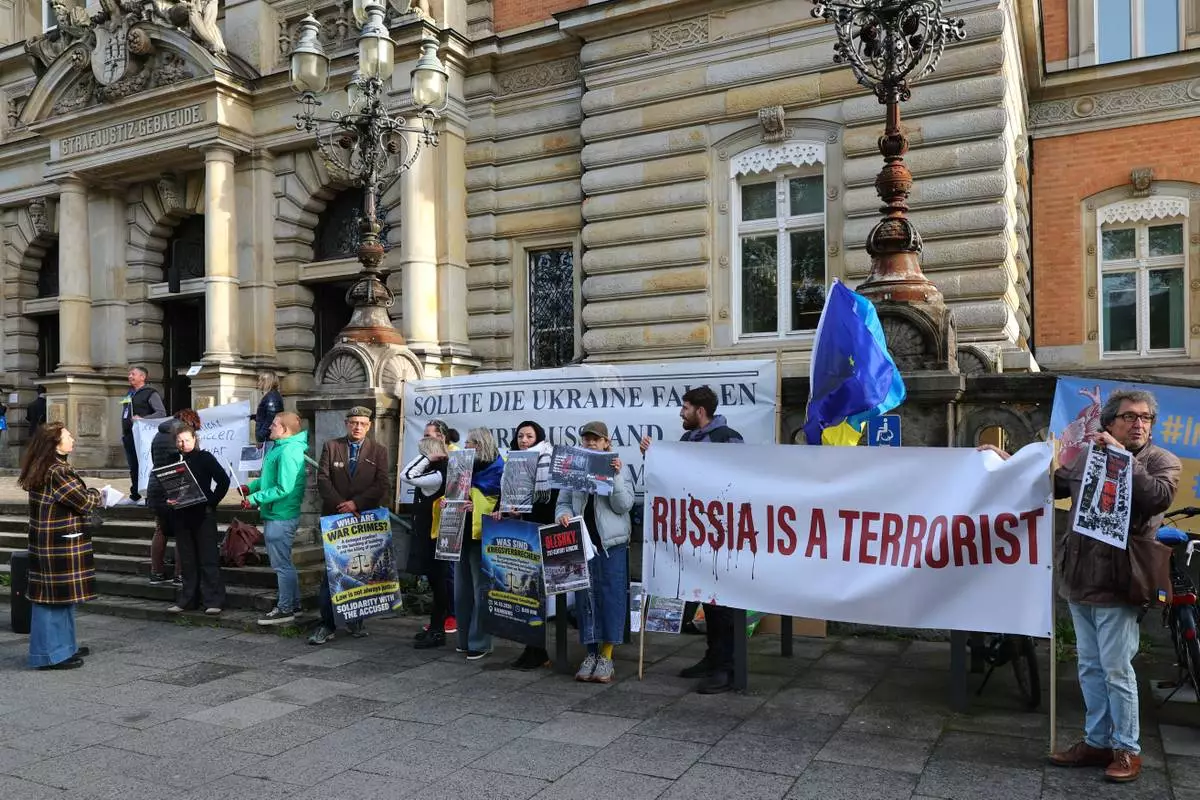
Ukraine supporters gather at the entrance to the Hanseatic Higher Regional Court ahead of the trial of Serhij K., a former Ukrainian army officer, in Hamburg, Germany, Wednesday, Oct. 14, 2026. (Markus Scholz/dpa via AP)
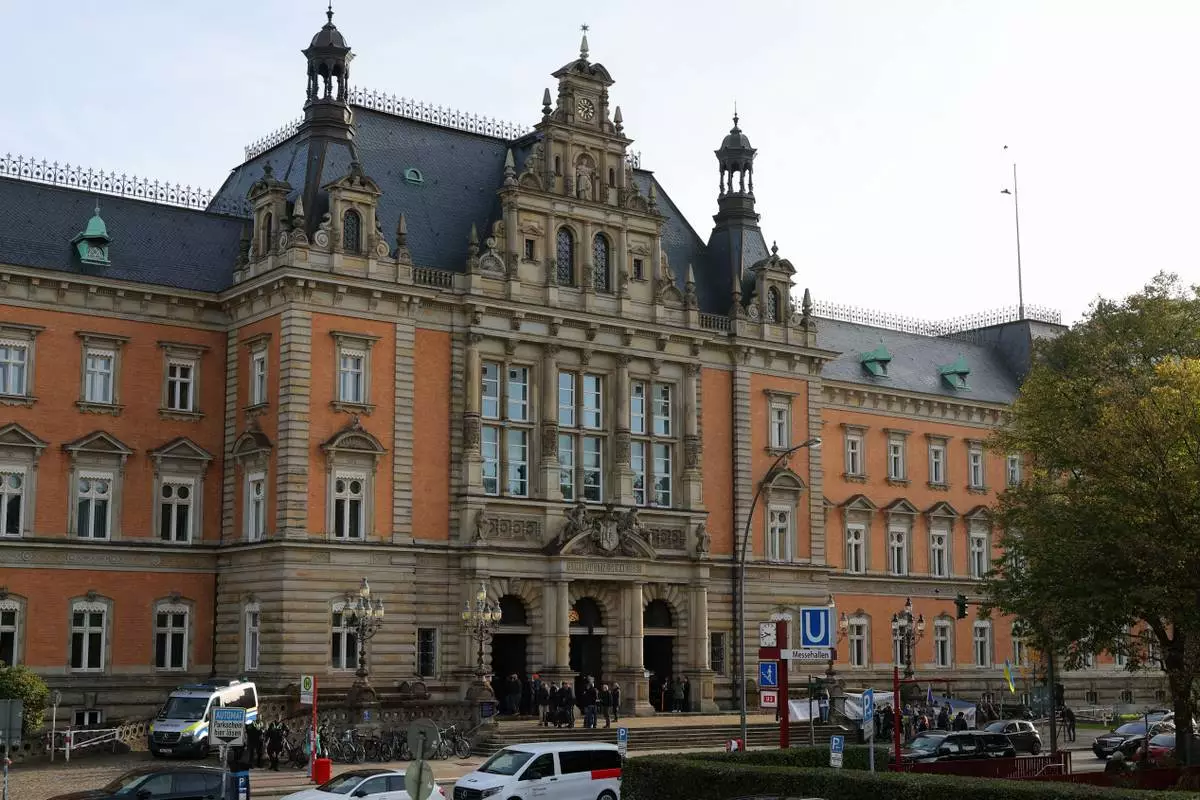
Journalists wait at the entrance to the Hanseatic Higher Regional Court before the trial of Serhij K., a former Ukrainian army officer, in Hamburg, Germany, Wednesday, Oct. 14, 2026. (Markus Scholz/dpa via AP)
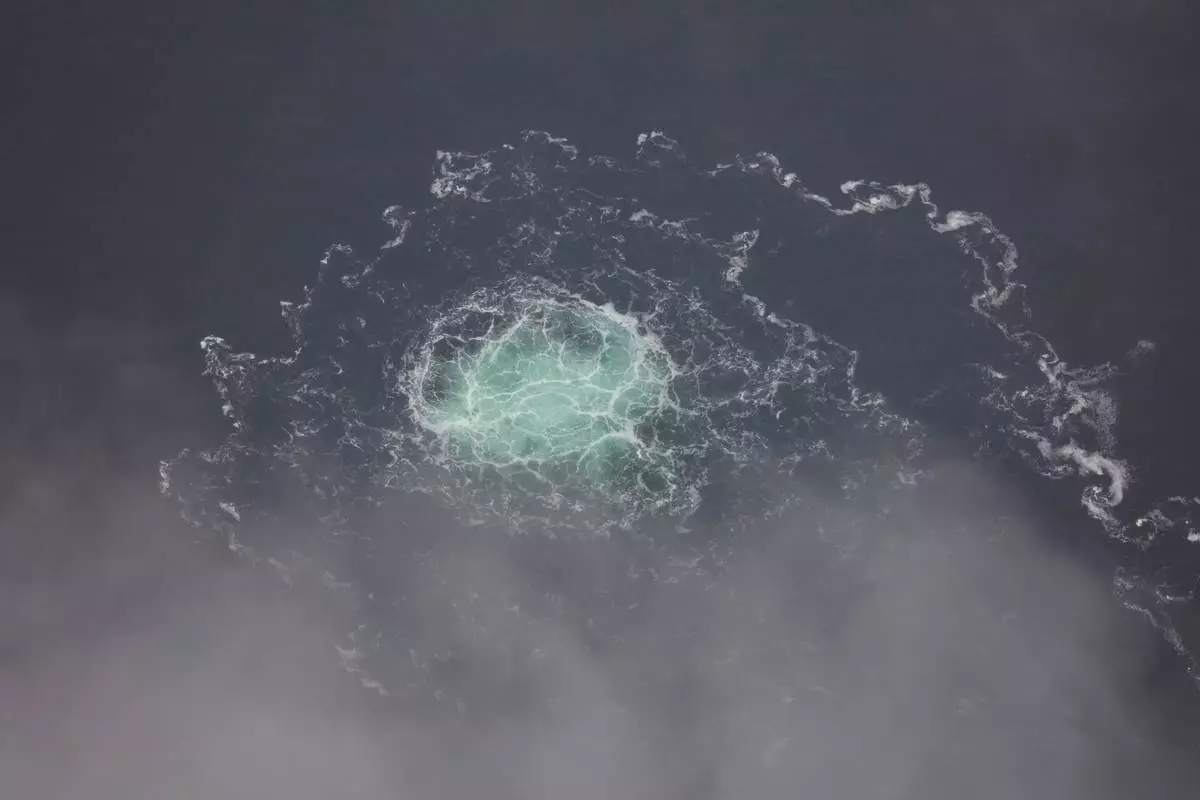
FILE - In this picture provided by Swedish Coast Guard a leak from Nord Stream 2 is seen on Sept. 28, 2022. (Swedish Coast Guard via AP, File)
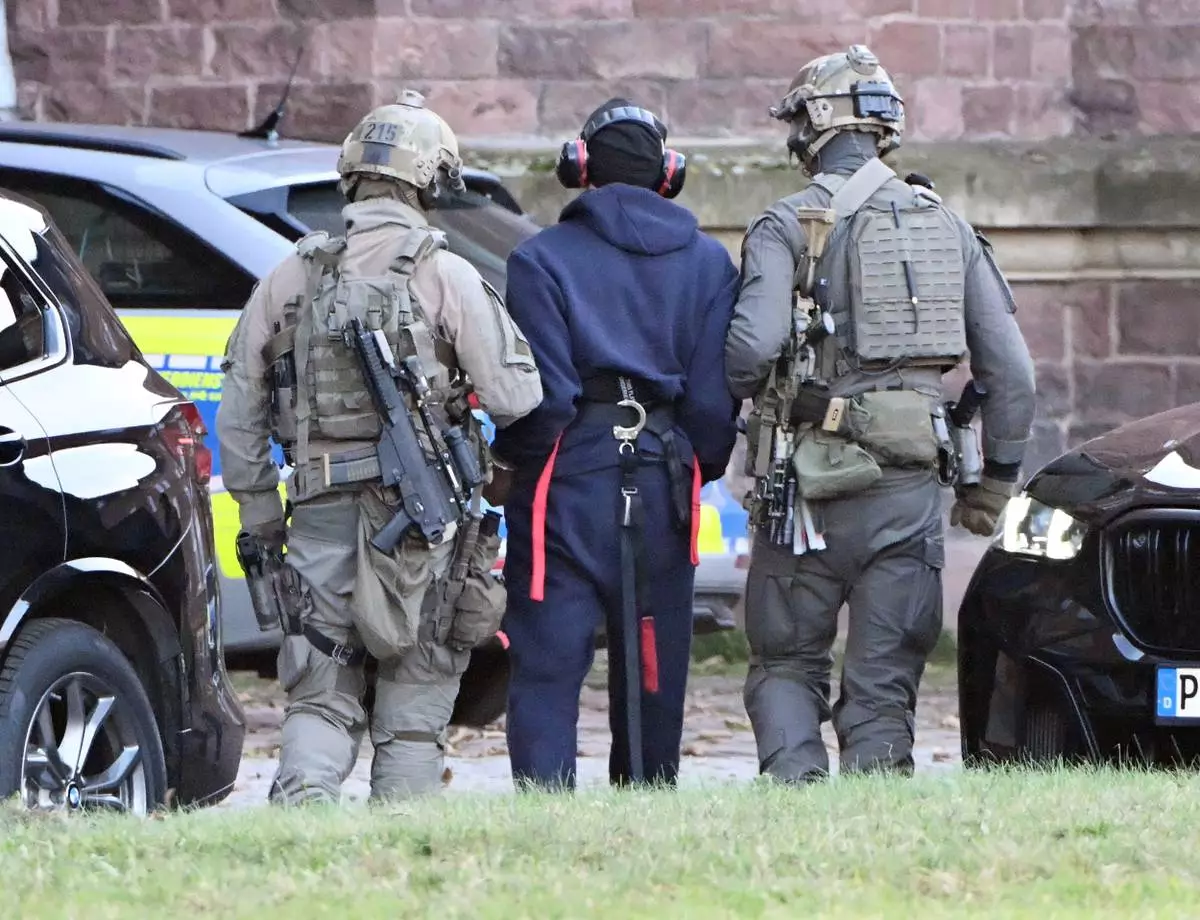
FILE - A suspect detained in Italy for the Nordstream pipelines bombing is lead from an helicopter to a motorcade to a court in Karlsruhe, Germany, Nov. 27, 2025. (Uli Deck/dpa via AP, File)