LONDON (AP) — The building that houses London's oldest restaurant has been donated to Europe's biggest conservation charity, a move that will, it is hoped, secure one of the U.K. capital's go-to eateries for centuries to come.
Established in 1798 by Thomas Rule as an oyster bar when Europe was in turmoil in the aftermath of the French Revolution, Rules has survived the British Empire, the Blitz and even plans for a new road layout that would have seen it demolished.
Click to Gallery
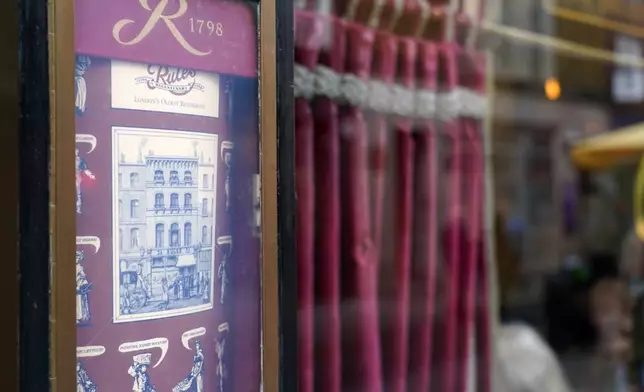
View of a board inside London's oldest Restaurant ' Rules' which has been donated to Europe's biggest conservation charity in London, Wednesday, Oct. 14, 2026.(AP Photo/Alberto Pezzali)
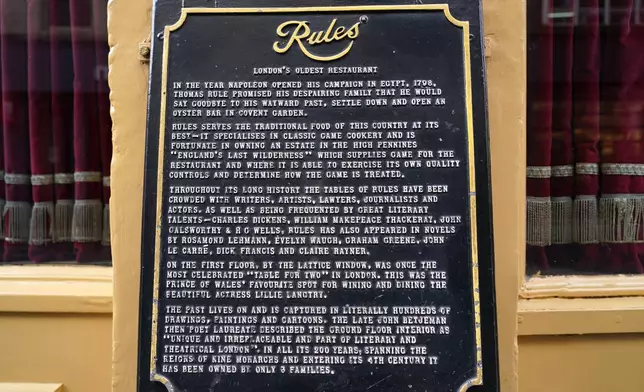
A board explaining the history stands outside London's oldest Restaurant ' Rules' which has been donated to Europe's biggest conservation charity in London, Wednesday, Oct. 14, 2026.(AP Photo/Alberto Pezzali)
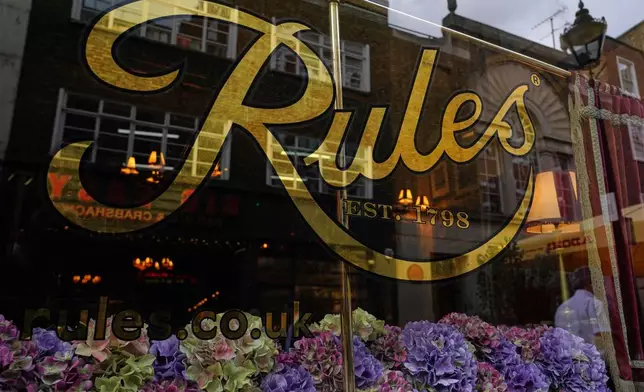
View at the window of London's oldest Restaurant ' Rules' which has been donated to Europe's biggest conservation charity in London, Wednesday, Oct. 14, 2026.(AP Photo/Alberto Pezzali)
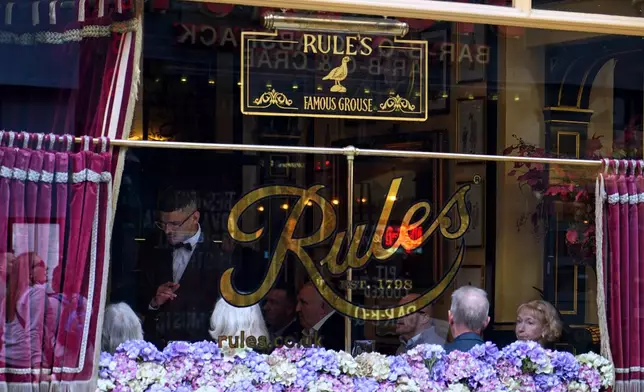
View at the window of Britain's oldest Restaurant ' Rules' which has been donated to Europe's biggest conservation charity in London, Wednesday, Oct. 14, 2026.(AP Photo/Alberto Pezzali)
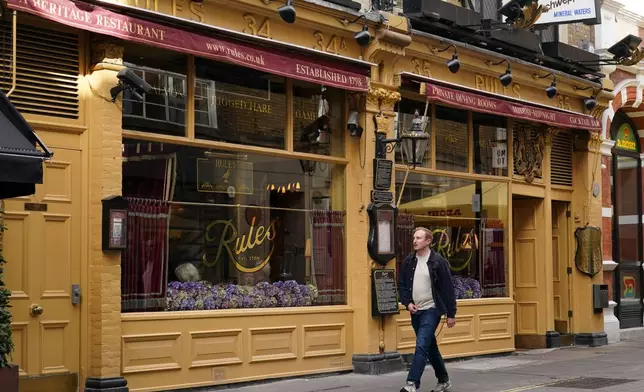
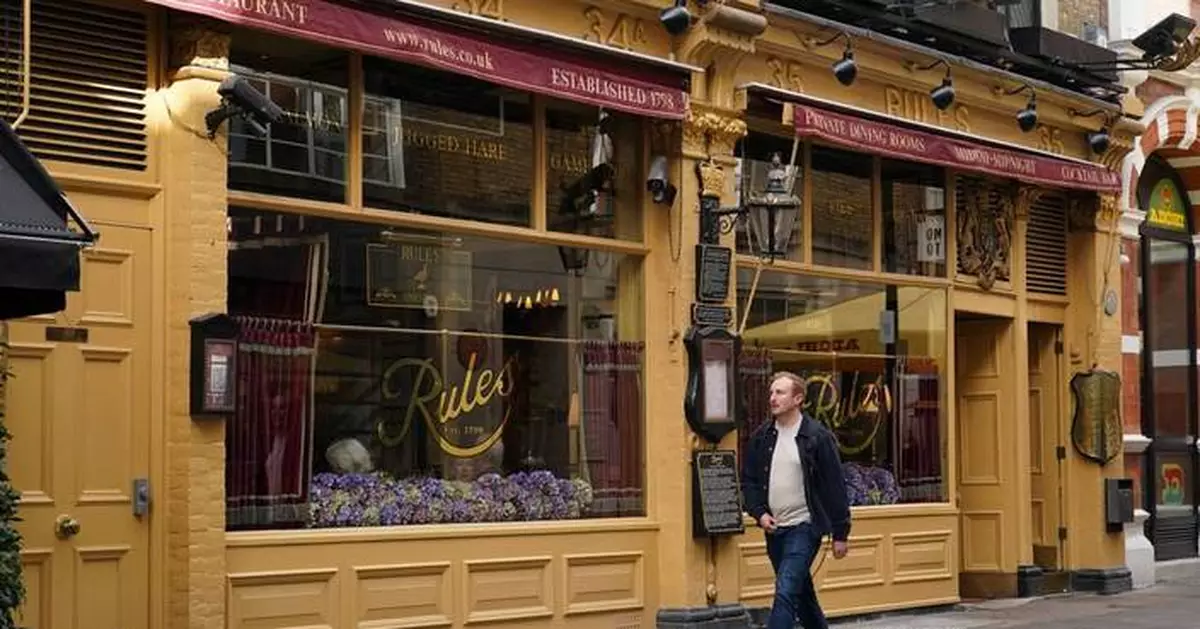
A man walks past London's oldest Restaurant ' Rules' which has been donated to Europe's biggest conservation charity in London, Wednesday, Oct. 14, 2026.(AP Photo/Alberto Pezzali)
Its menu expanded to traditional British fare and the restaurant welcomed generations of high profile figures from Charles Dickens to Charlie Chaplin, David Bowie to Madonna. King Edward VII would even rendezvous with his lovers there.
Now, the four-decade owner of the building that houses Rules, J-P Mayhew, has made the selfless decision to donate 34-35 Maiden Lane in bustling Covent Garden in central London to the National Trust, itself a British institution hailing back to 1895.
“There are few restaurants in the world that have endured the test of time like Rules,” Mayhew said Wednesday. “The Trust will protect this place in a way that no one else could, safeguarding its bricks and mortar, its famous interior and its invisible atmosphere, too.”
The charity, which seeks to save important sites while opening them up for everyone to enjoy, said that the 11 million-pound ($14 million) donation would secure the future of a building where “kings dined and writers and politicians plotted.”
Along with the four-story building, the donation includes items such as visitor books, menus, caricatures, photographs, stained glass and signs. The gift also includes the annual rent from the ongoing restaurant business, which will go into conservation work each year.
The trust described it as a “rare example of living heritage” where both the historic structure and the original use of the building — a restaurant — remain intact.
“This place is an outstanding piece of living history, with its corners where kings dined and writers and politicians plotted, and the traditions it kept alive through wars and upheaval,” said Hilary McGrady, director-general of the National Trust. “It has defied the odds to be standing here today, doors still open and treacle sponge still on the menu.”
Going into the restaurant is like stepping back into a London that's long gone, with the interiors plush and colorful. The menu is rich and in many cases old-school English — fans of steak and kidney pies and guinea fowl and of course the desserts, such as sticky toffee pudding and apple crumble, are unlikely to be disappointed. The restaurant can accommodate around 90 guests, many of whom come before or after a visit to one of the many theaters and cinemas nearby.
There are rooms named after poet John Betjeman, who gave an impassioned speech in defense of the restaurant's “invisible atmosphere” when London's then governing authority planned to expand the nearby Strand thoroughfare in 1971 that would have led to the demolition of Rules.
There's also a room named after one of the restaurant's most loyal customers, writer Graham Greene, who had birthday meals there and featured it in his novel “The End Of The Affair.”
The restaurant’s proprietor Ricky McMenemy, who has worked there since 1989, will become a commercial tenant of the National Trust.
“As an independent business, it gives us both the security and peace of mind that our home will be in very good hands and be protected and secure going forward,” he said. “Having already established a very amicable working relationship with the Trust, we look forward to another two centuries in this, our home.”
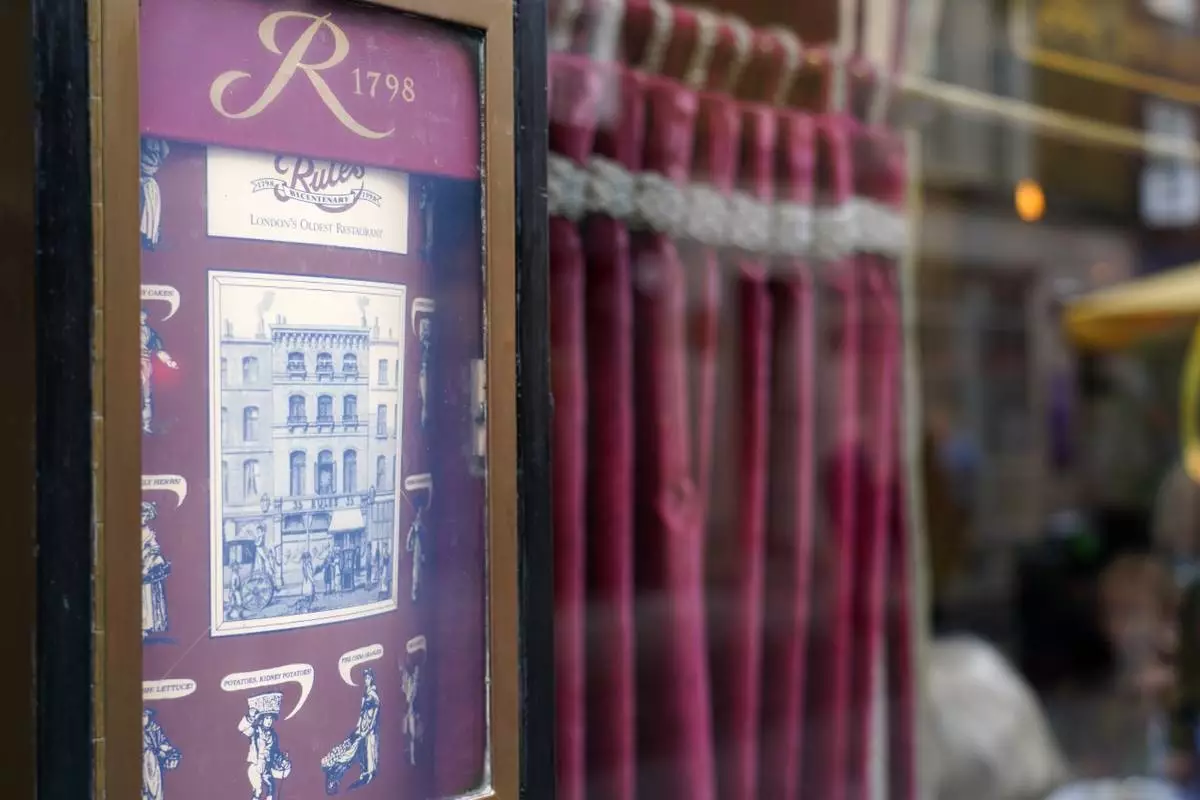
View of a board inside London's oldest Restaurant ' Rules' which has been donated to Europe's biggest conservation charity in London, Wednesday, Oct. 14, 2026.(AP Photo/Alberto Pezzali)
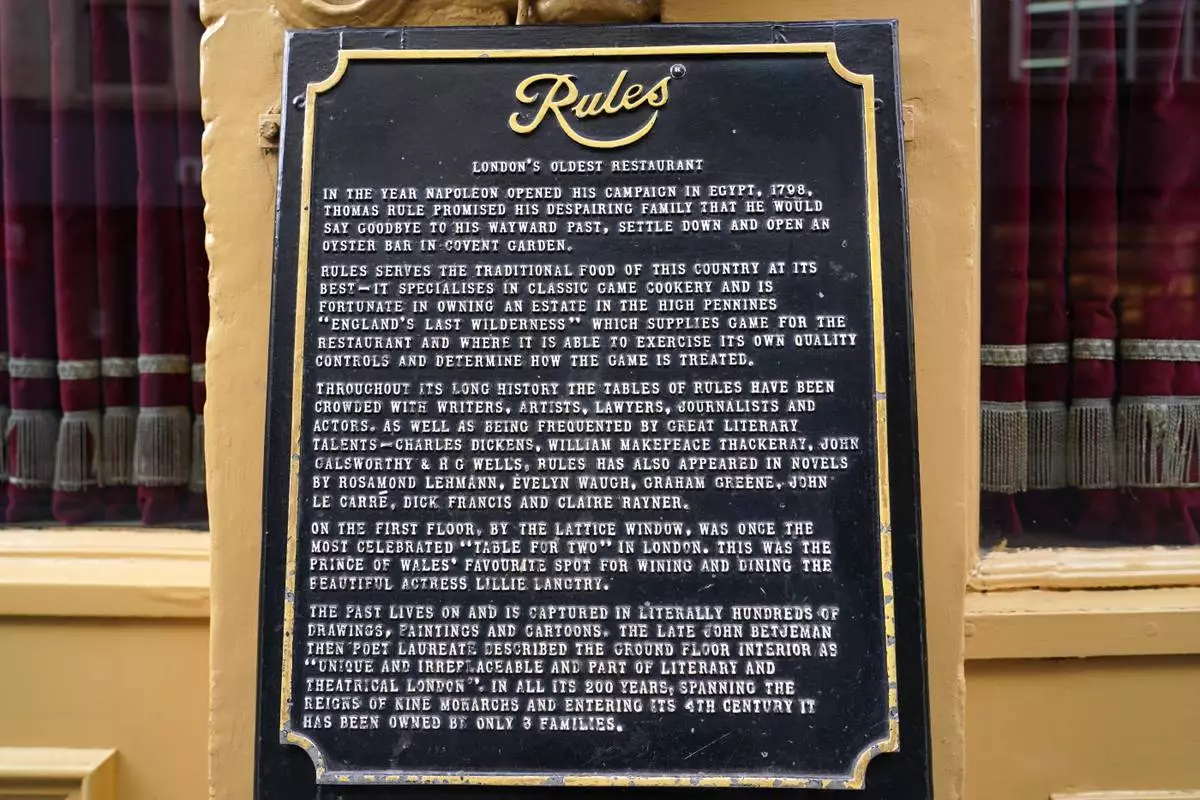
A board explaining the history stands outside London's oldest Restaurant ' Rules' which has been donated to Europe's biggest conservation charity in London, Wednesday, Oct. 14, 2026.(AP Photo/Alberto Pezzali)
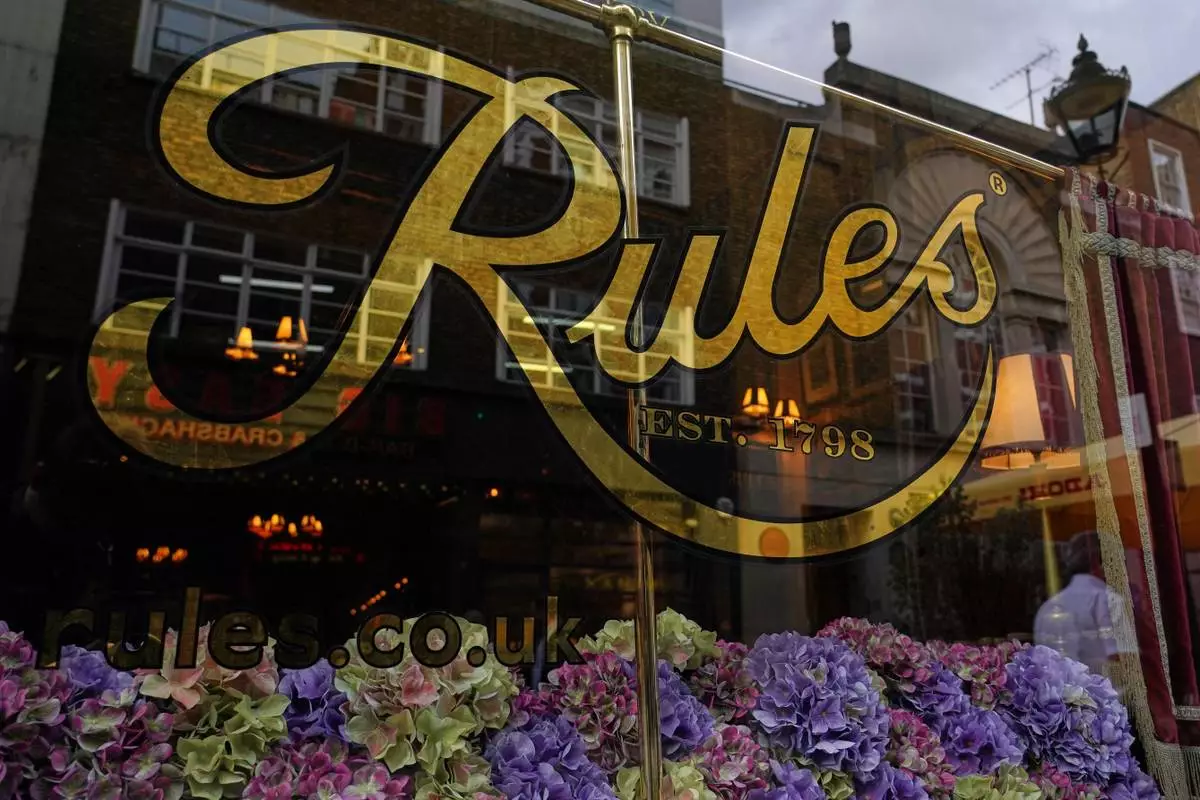
View at the window of London's oldest Restaurant ' Rules' which has been donated to Europe's biggest conservation charity in London, Wednesday, Oct. 14, 2026.(AP Photo/Alberto Pezzali)
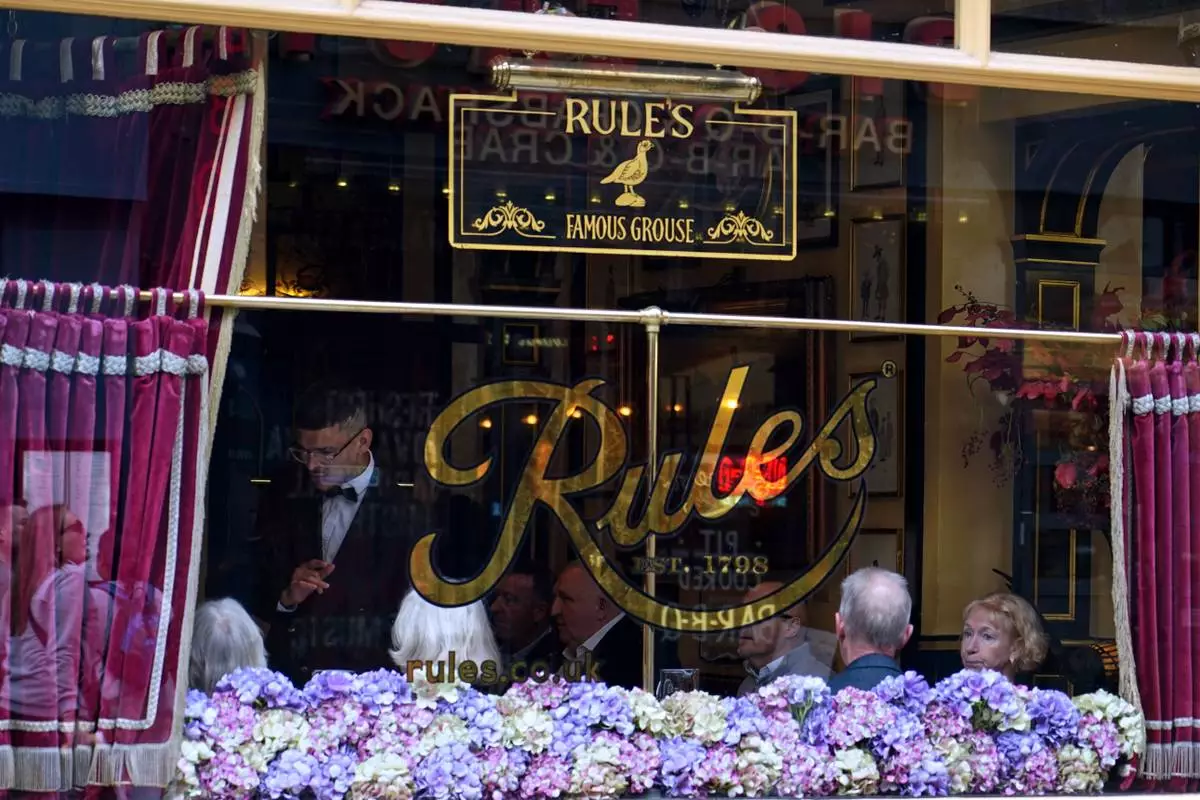
View at the window of Britain's oldest Restaurant ' Rules' which has been donated to Europe's biggest conservation charity in London, Wednesday, Oct. 14, 2026.(AP Photo/Alberto Pezzali)
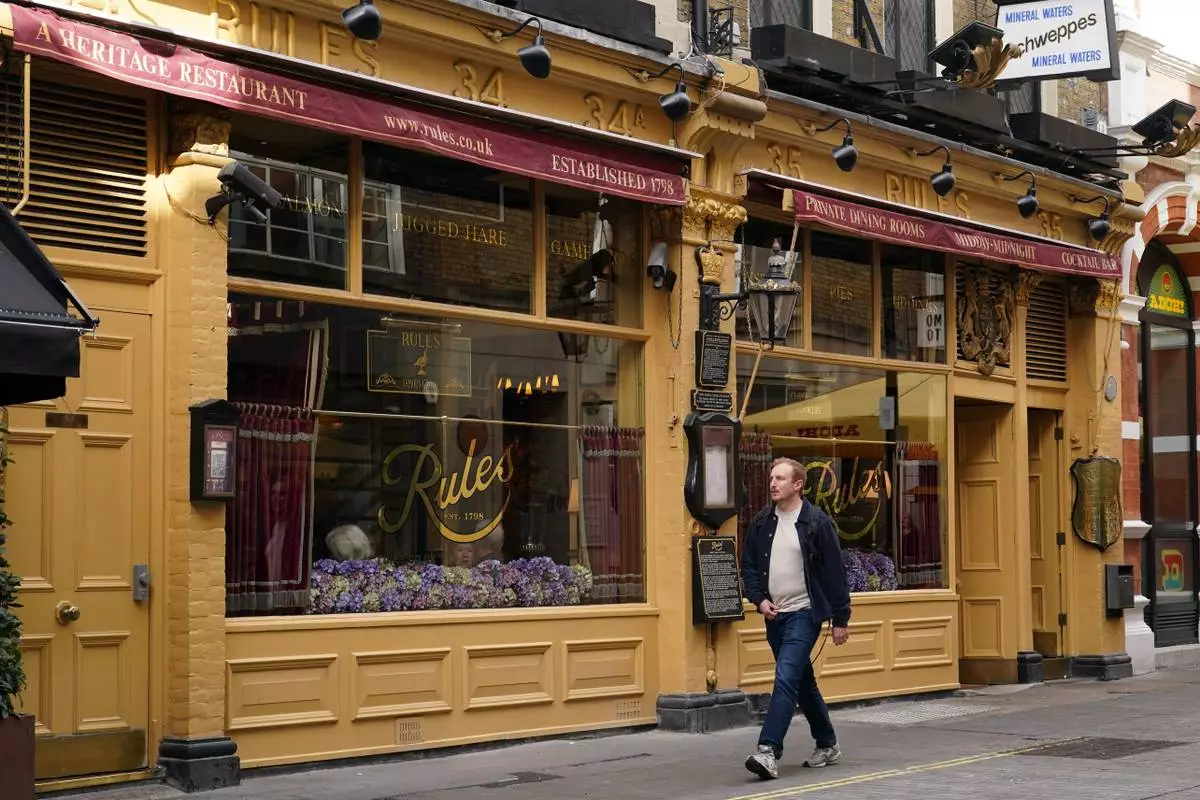
A man walks past London's oldest Restaurant ' Rules' which has been donated to Europe's biggest conservation charity in London, Wednesday, Oct. 14, 2026.(AP Photo/Alberto Pezzali)