WASHINGTON (AP) — For the first time in more than a quarter-century, Americans have a new option when shopping for sunscreen: a skin-protecting chemical that’s long been a go-to option in Europe and other parts of the world.
The U.S. Food and Drug Administration approved bemotrizinol — sometimes called BEMT — in June. The first sunscreens containing it are now hitting U.S. store shelves, including formulas from Neutrogena and other manufacturers.
Dermatologists say the chemical fills an important market gap by offering broad protection, like the most well-established sunscreen ingredients, but without their cosmetic downsides, including white streaking.
BEMT has decades of safety data behind it, including studies showing it has minimal absorption into the skin. That’s been a concern with some older sun-blocking chemicals.
“It’s not a brand-new ingredient that you’re going to be the first person to try,” said Dr. Jennifer Stein, a dermatologist at NYU Langone Health.
Here’s what to know:
To be effective, sunscreens must protect against both forms of ultraviolet light that can damage the skin — UVB rays, which cause most sunburn, and UVA rays that pose the greatest risk of skin cancer and wrinkles.
Sunscreens that block both forms are labeled “broad spectrum protection.” Those that don’t must carry an FDA warning label.
BEMT is the first chemical-based sunscreen in the U.S. that offers this dual protection. Previously, manufacturers had to mix multiple ingredients to protect against both UVA and UVB light.
“This ingredient provides a solution for what is currently a big gap with respect to providing strong UVA protection,” said David Andrews, chief science officer of the Environmental Working Group, a nonprofit that advocates for higher sunscreen standards.
A different class of sunscreens, using minerals such as zinc oxide and titanium dioxide, has long been shown to offer strong protection against both forms of ultraviolet light. These mineral-based formulas work by physically blocking harmful rays from the skin.
But some people — particularly those with darker complexions — tend to avoid them because they cause white streaking and discoloration. In other cases, people don’t like their texture or consistency.
“Those are good sunscreens,” Stein said. “But for people who aren’t so inclined to use them — maybe they don’t like how it feels on their skin — this is a nice option.”
The fact that chemical-based sunscreens are absorbed into the skin means they have to be carefully studied to make sure they aren't building up in the body at unsafe levels.
Last month, the FDA revoked approval of an older chemical ingredient, oxybenzone, after determining it was “absorbed through the skin to a greater extent than previously understood.”
That’s not a problem with BEMT.
“It’s a molecule that’s too big to really penetrate through the skin and get absorbed into the bloodstream,” Stein said. “The older chemical sunscreens had small molecules.”
As part of its safety review, the FDA reviewed studies of BEMT in more than 500 patients conducted by Dutch manufacturer DSM Nutritional Products. Levels of the chemical absorbed into the skin were nearly undetectable, the studies found.
Agency reviewers said research in people who used the sunscreen daily for up to three weeks showed that BEMT “did not cause irritation” or allergic reactions. As a result, the FDA designated the ingredient as “generally recognized as safe and effective,” alongside the older mineral ingredients zinc oxide and titanium dioxide.
More than a dozen other ingredients are currently used in U.S. sunscreens, but the FDA has said they will require additional evidence to support their safety and effectiveness. The FDA review is part of an ongoing effort to overhaul U.S. sunscreen ingredients that kicked off in 2019.
Scientists have shown that some sunscreen ingredients can trigger bleaching and damage coral reefs. That's led to bans on two chemical ingredients — oxybenzone, the ingredient recently targeted by the FDA, and octinoxate — in Hawaii and parts of Florida. It's estimated about 25% of the sunscreen people apply to their skin washes off while swimming or wading in the ocean.
The U.S. government doesn't classify the environmental impact of sunscreens, and marketing claims like “reef safe” or “reef friendly” have no standard definition or requirements. The European Union's environmental agency has found “limited evidence of environmental toxicity” with BEMT, but longer-term research is needed.
Mineral ingredients like zinc oxide are generally considered safer for the environment, although some experts recommend staying away from so-called nano formulations. Those products are made with tiny particles that are more likely to be inhaled or absorbed by marine organisms.
Experts say BEMT has one other key advantage, in that it doesn’t quickly break down in the sun. That’s been a particular issue for avobenzone, the only other chemical-based ingredient that filters UVA light.
“Avobenzone has been known to be particularly unstable on its own, and a lot of work and reformulation efforts have gone into trying to find ways to stabilize it,” said Andrews. “BEMT is significantly more stable.”
As with all sunscreens, dermatologists say it’s important to reapply every few hours — more frequently if you’re swimming or sweating a lot.
Also, people shouldn’t rely on sunscreen alone when spending time outside, Stein said. Taking breaks in the shade, wearing a hat and sun-protective clothing are all important protections.
“Sunscreen is just one part of an overall sun-protection plan,” Stein said. “Clothing is even better.”
The Associated Press’ health and science coverage receives financial support from the AP Fund for Journalism and private foundations. AP is solely responsible for all content. Find AP’s standards for working with philanthropies, a list of supporters and funded coverage areas at AP.org.

FILE - A fan puts on sunscreen prior to the World Cup Group G soccer match between Belgium and Egypt in Seattle on June 15, 2026. (AP Photo/Lindsey Wasson, File)
NEW YORK (AP) — Wall Street is steadying Thursday following jarring drops for stocks worldwide in the artificial-intelligence industry on worries about how much longer the AI frenzy will last.
After initially falling to a loss following its worst day since July, the S&P 500 quickly erased it and added 0.1% to edge closer to its all-time high set last week.
Continued weakness for AI stocks dragged the Nasdaq composite down 0.4%. But most of the rest of the U.S. stock market nevertheless rose, and the Dow Jones Industrial Average was up 406 points, or 0.8%, as of 12:15 p.m. Eastern time.
Markets were much shakier earlier in the day. A sell-off for AI stocks that began on Wall Street Wednesday whipped around the world and sent South Korea’s Kospi stock index down 7.6% and Japan’s Nikkei 225 down 4.9%.
They're the latest swings for AI stocks after they led the market for years. Companies are pouring money into the technology in hopes of bigger profits and improved productivity. But data centers and AI chips cost money, and many companies have been borrowing the cash to get them.
Now, after yields in bond markets worldwide hit their highest levels in years and made borrowing money more expensive, worries are rising about how resilient that boom in spending can be. Many AI-related companies have already taken on debt to build out their aspirations, and stocks are struggling under the debt loads.
CoreWeave, which offers AI computing power to customers over the cloud, fell 2.5% a day after tumbling 15.5%. It said in the summer that it had $4.41 billion in principal payments to make on its debt over the second half of this year and another $6.18 billion in 2027. It had more than $5.5 billion in cash, as of June 30.
High yields in the bond market also generally make investors less willing to pay high prices for stocks, particularly those seen as the most expensive.
Nvidia, the chip company that’s ridden the AI boom to become Wall Street’s most valuable company, fell 1.8% and was the heaviest weight on the S&P 500. It came into the day with a nearly 1,415% gain since the end of 2022.
The losses for AI stocks moderated as the day progressed, which helped broad U.S. indexes to steady. CoreWeave had been down as much as 9.5% in the morning before more than halving its loss, while stocks outside of AI were much more resilient.
Marsh & McLennan helped lead the market after the insurance and professional services firm reported a stronger profit for the summer than analysts expected. The company, which updated its brand name to Marsh earlier this year, also made more revenue than expected, and its stock climbed 5.2%.
Expectations are high for profits at all kinds of companies this reporting season, which began in earnest this week. That's what's allowed U.S. stocks to set records despite high inflation and many other worries weighing on Wall Street. Now, companies will need to surpass those high expectations to drive their stock prices even higher.
Seven out of every 10 stocks within the S&P 500 rose. But because AI stocks have become so big in value, their stock movements have more effect on the index and can drown out the rest of the market.
In the bond market, Treasury yields fell, which means investors were willing to pay higher prices to buy U.S. government bonds. Treasurys have a reputation as a safer investment, one with less risk of the borrower going bankrupt, and investors often flock to them when feeling nervous.
The yield on the 10-year Treasury sank to 5.09% from 5.19% late Wednesday. It had topped 5.30% earlier this month and touched its highest level since 2002 because of worries about high inflation, signals of a strong U.S. economy and other factors.
The drop in yields came even though another report signaled inflation has worsened in the United States by more than economists expected.
Several reports on the U.S. economy also came in stronger than economists expected, which typically push yields upward. One report said U.S. retailers made more money last month than economists expected, while another said fewer U.S. workers applied for unemployment benefits last week than expected.
In stock markets abroad, South Korea’s loss was the headliner. Its Kospi index is dominated by two chip companies, Samsung Electronics and SK Hynix, and it fell to its worst day since July. It has dropped 39% since setting a record in June.
Indexes were stronger in Europe, which has less of a dependence on tech stocks, and London's FTSE 100 rallied 1.1% for one of the world's biggest gains.
AP Business Writers Chan Ho-him and Matt Ott contributed to this report.
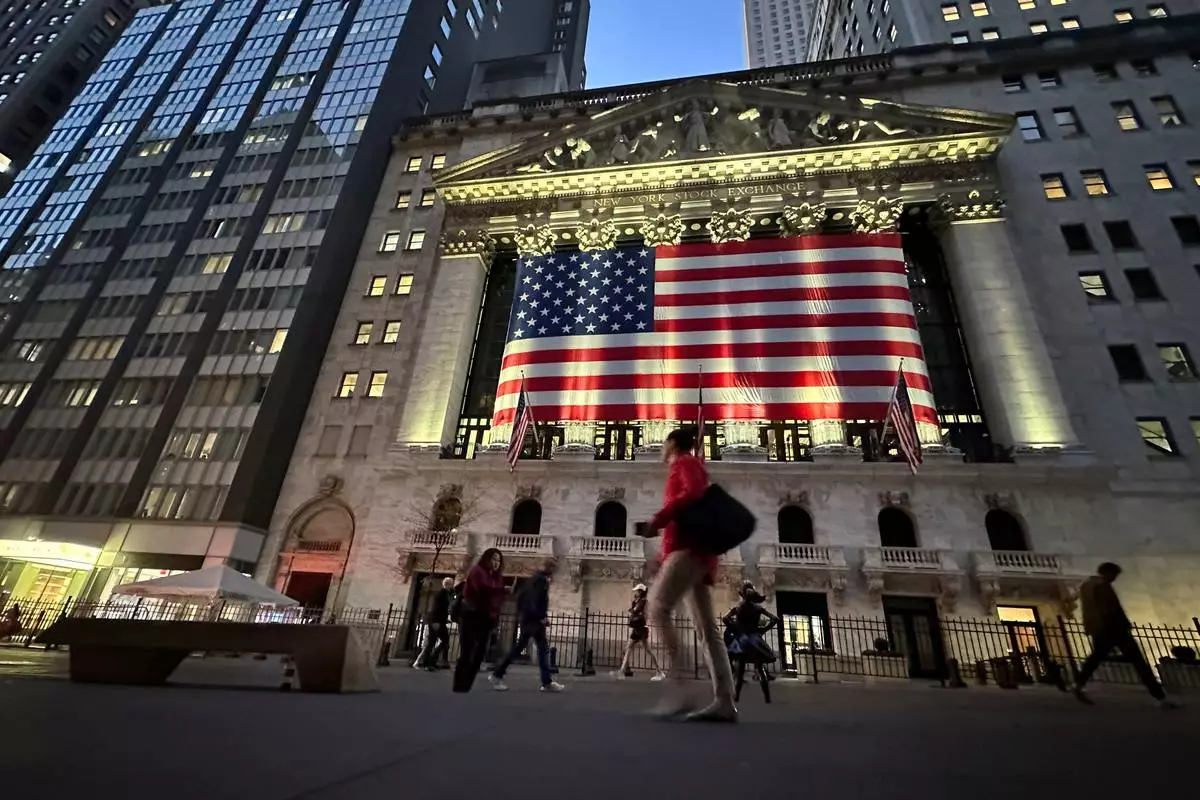
FILE - People pass the New York Stock Exchange on Nov. 5, 2024, in New York. (AP Photo/Peter Morgan, File)
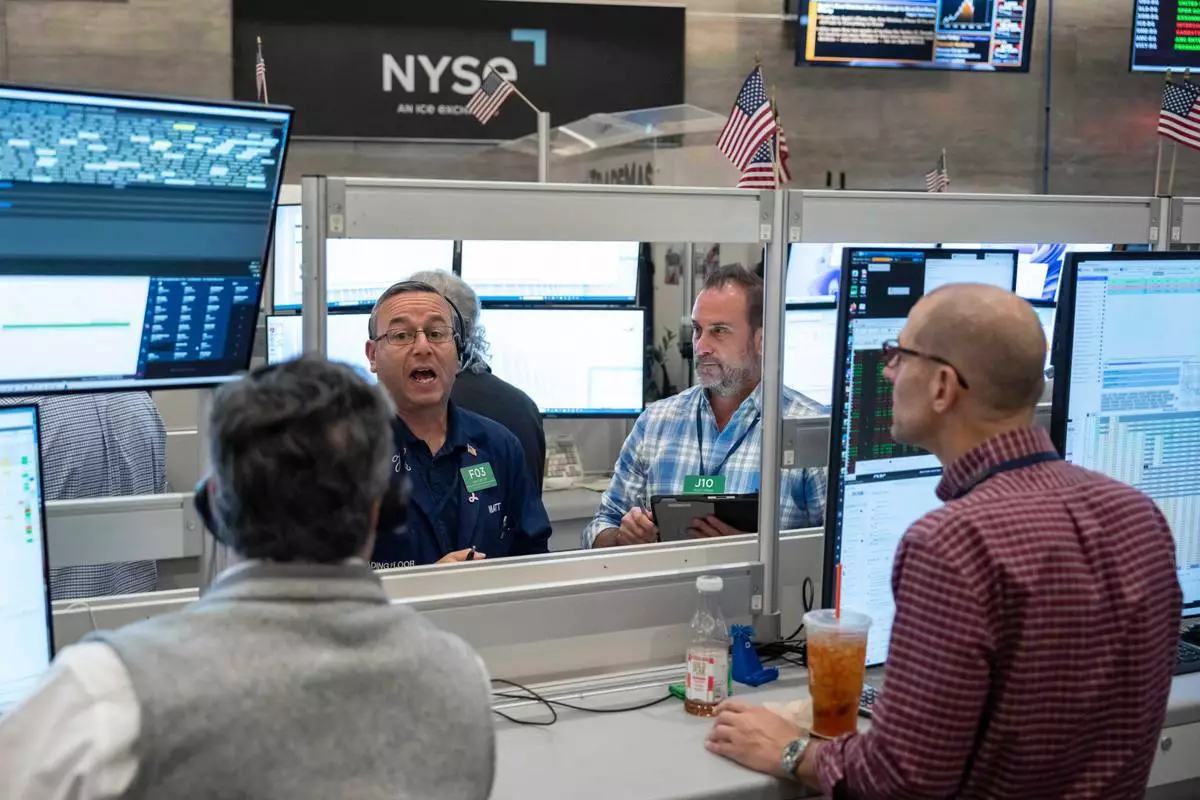
Options trader Matt Hefter works on the floor of the New York Stock Exchange, Thursday, Oct. 8, 2026, in New York. (AP Photo/Yuki Iwamura)
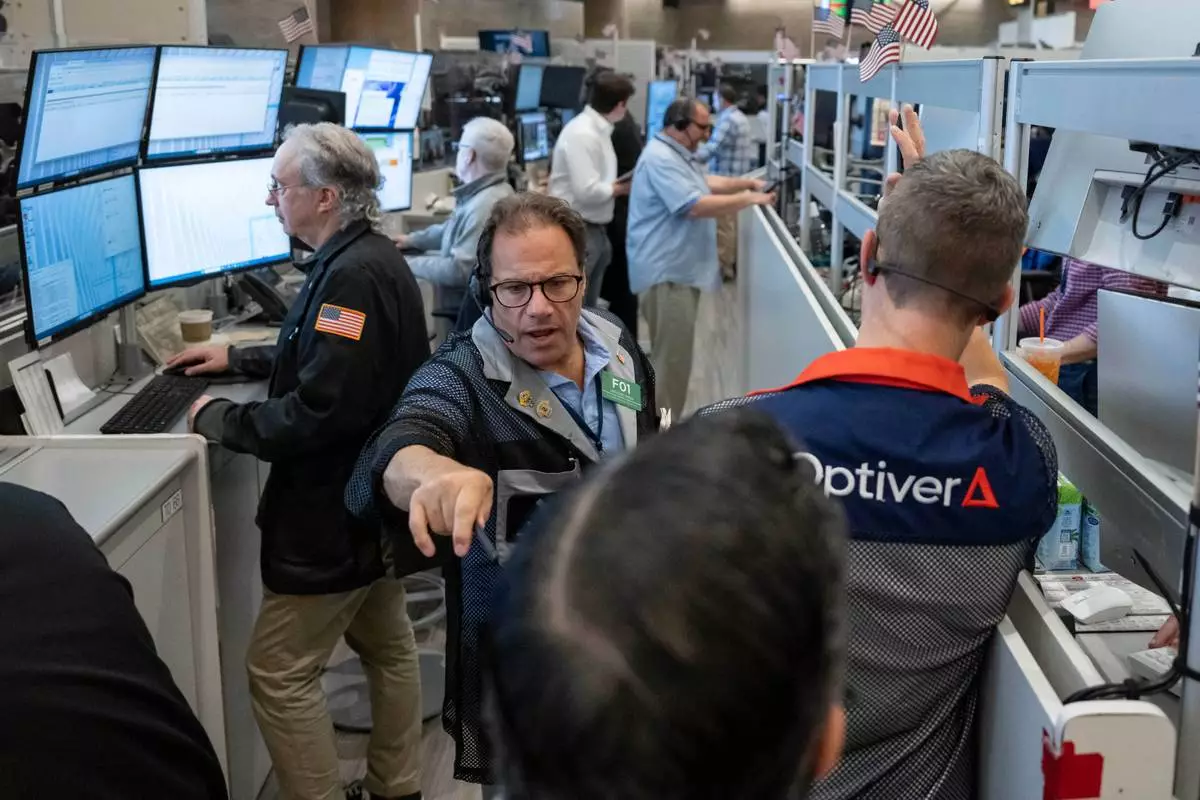
Options trader Anthony Spina works on the floor of the New York Stock Exchange, Thursday, Oct. 8, 2026, in New York. (AP Photo/Yuki Iwamura)
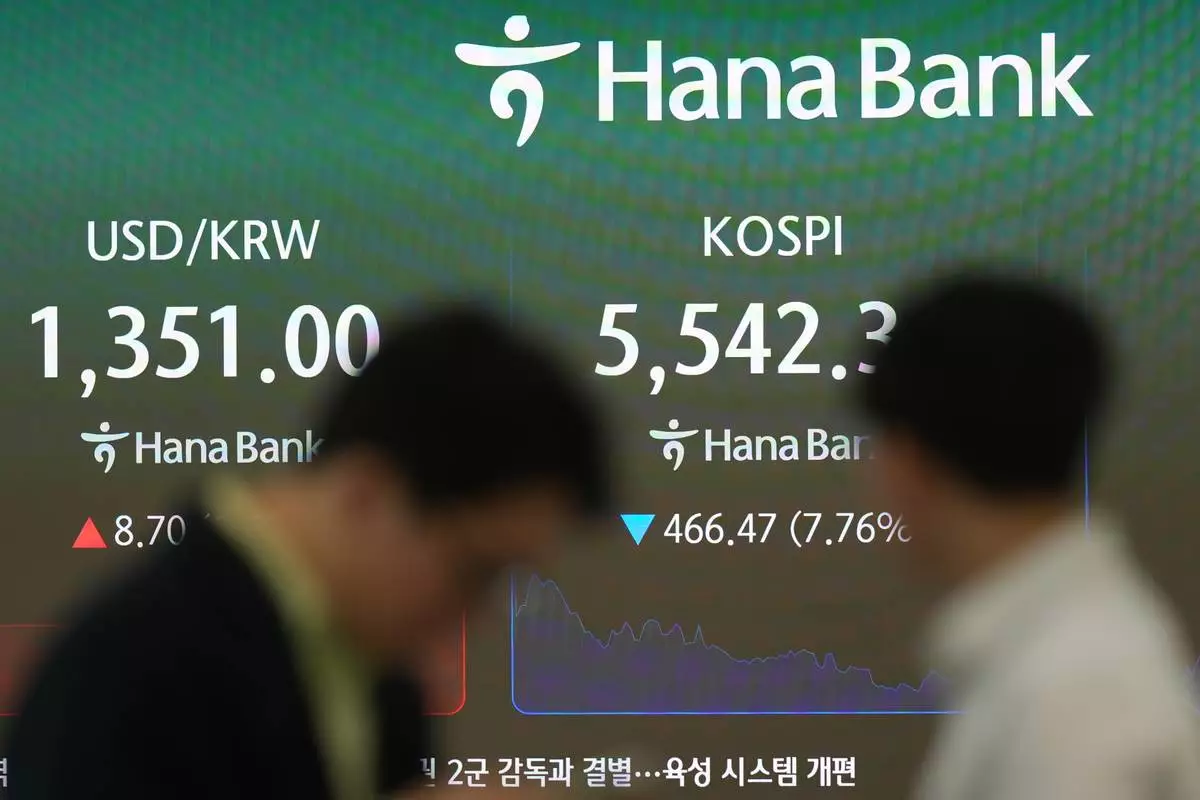
Dealers stand near the screens showing the Korea Composite Stock Price Index (KOSPI), left, and the foreign exchange rate between U.S. dollar and South Korean won at a dealing room of Hana Bank in Seoul, South Korea, Thursday, Oct. 15, 2026. (AP Photo/Lee Jin-man)
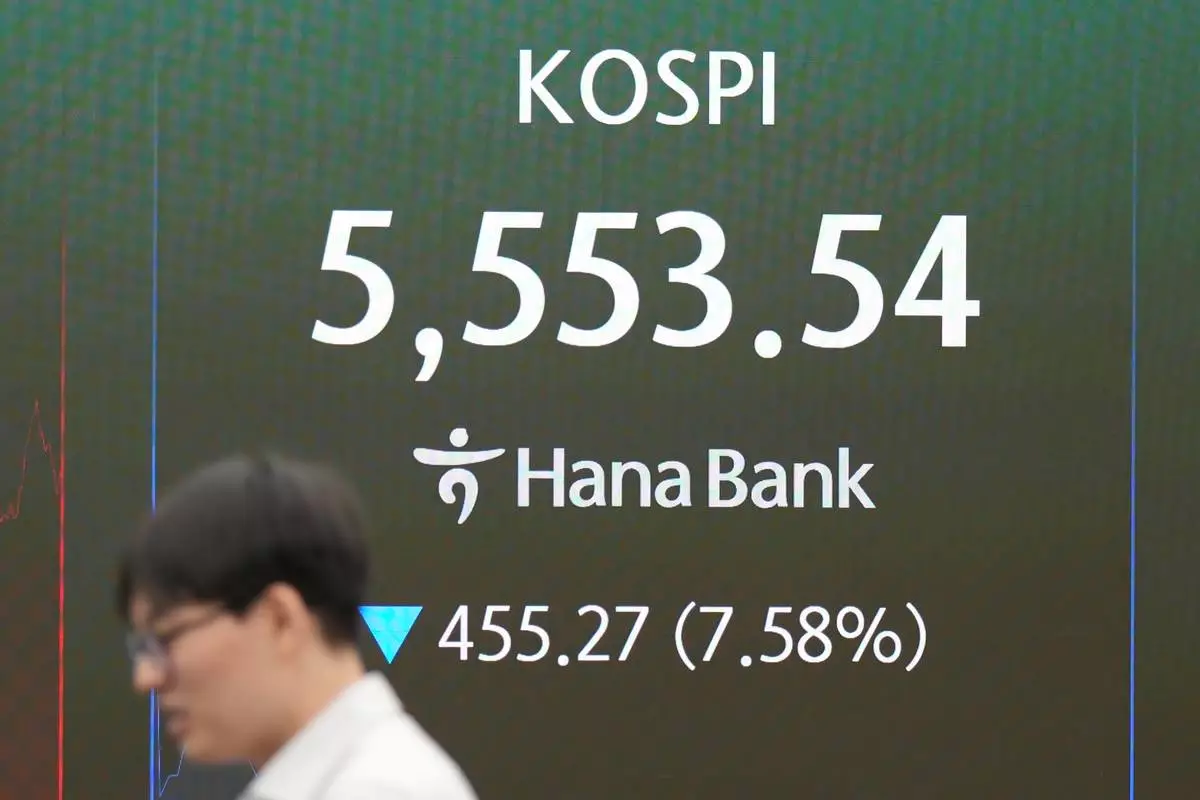
A dealer stands near the screen showing the Korea Composite Stock Price Index (KOSPI) at a dealing room of Hana Bank in Seoul, South Korea, Thursday, Oct. 15, 2026. (AP Photo/Lee Jin-man)
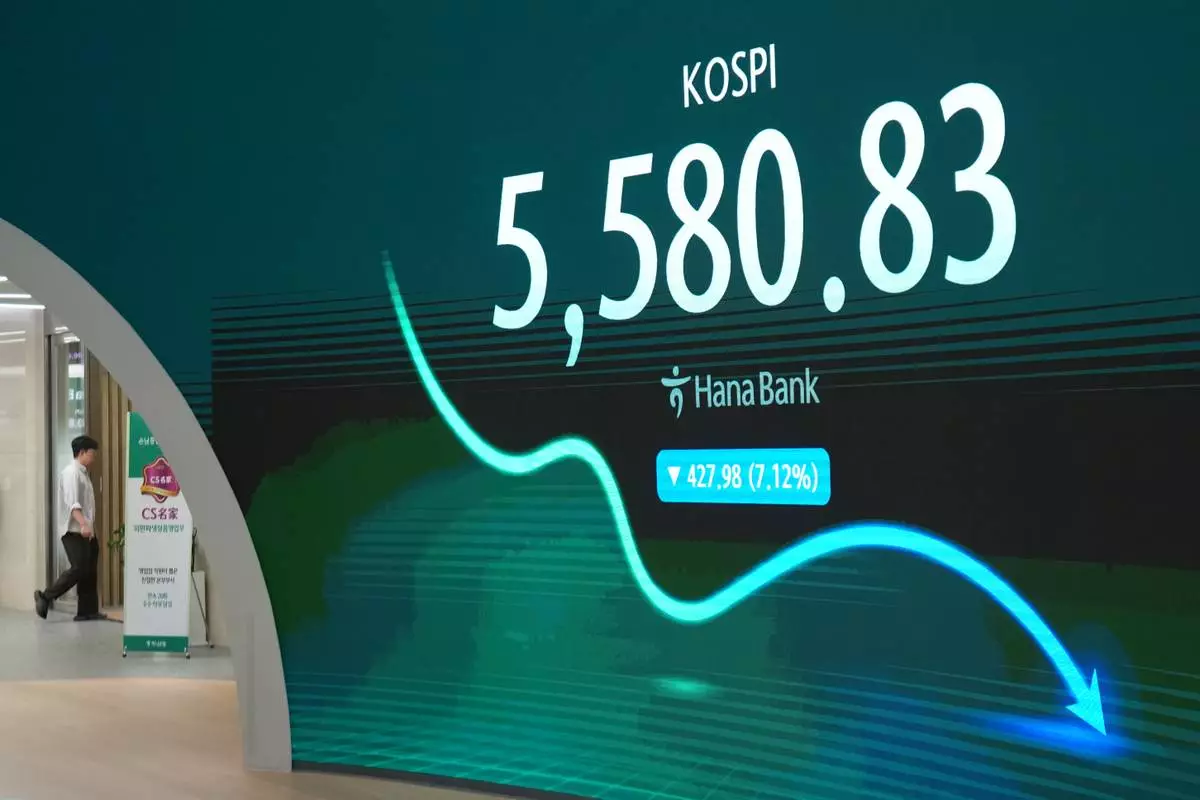
A dealer walks near the screen showing the Korea Composite Stock Price Index (KOSPI) at a dealing room of Hana Bank in Seoul, South Korea, Thursday, Oct. 15, 2026. (AP Photo/Lee Jin-man)
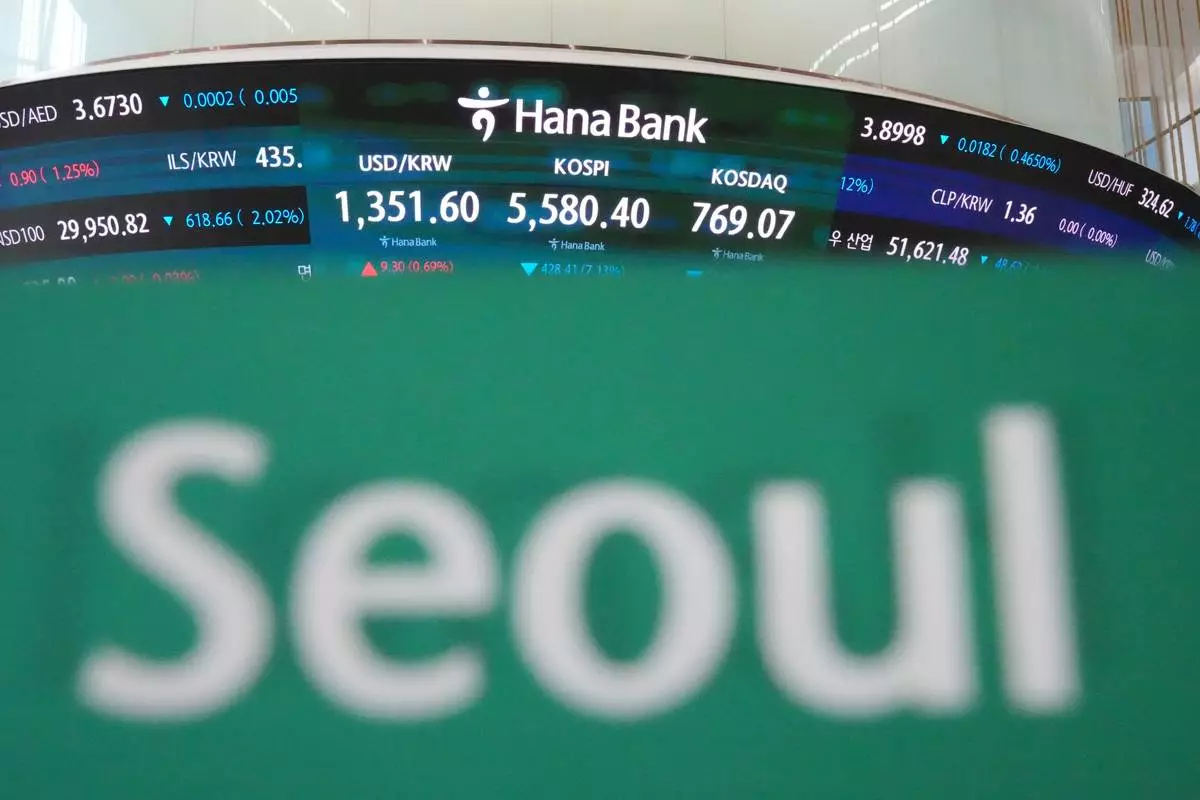
Screens showing the Korea Composite Stock Price Index (KOSPI), the Korean Securities Dealers Automated Quotations (KOSDAQ) and the foreign exchange rate between U.S. dollar and South Korean won are seen at a dealing room of Hana Bank in Seoul, South Korea, Thursday, Oct. 15, 2026. (AP Photo/Lee Jin-man)
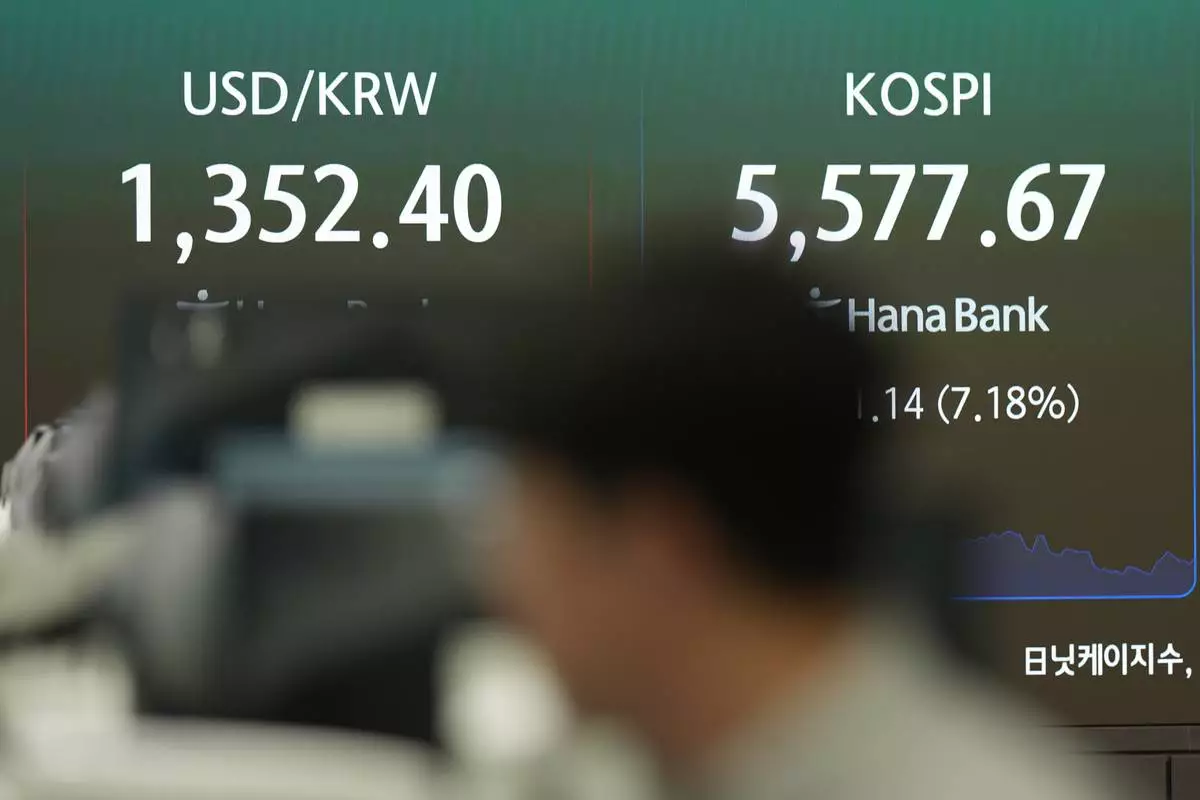
A dealer walks near the screens showing the Korea Composite Stock Price Index (KOSPI) and the foreign exchange rate between U.S. dollar and South Korean won at a dealing room of Hana Bank in Seoul, South Korea, Thursday, Oct. 15, 2026. (AP Photo/Lee Jin-man)
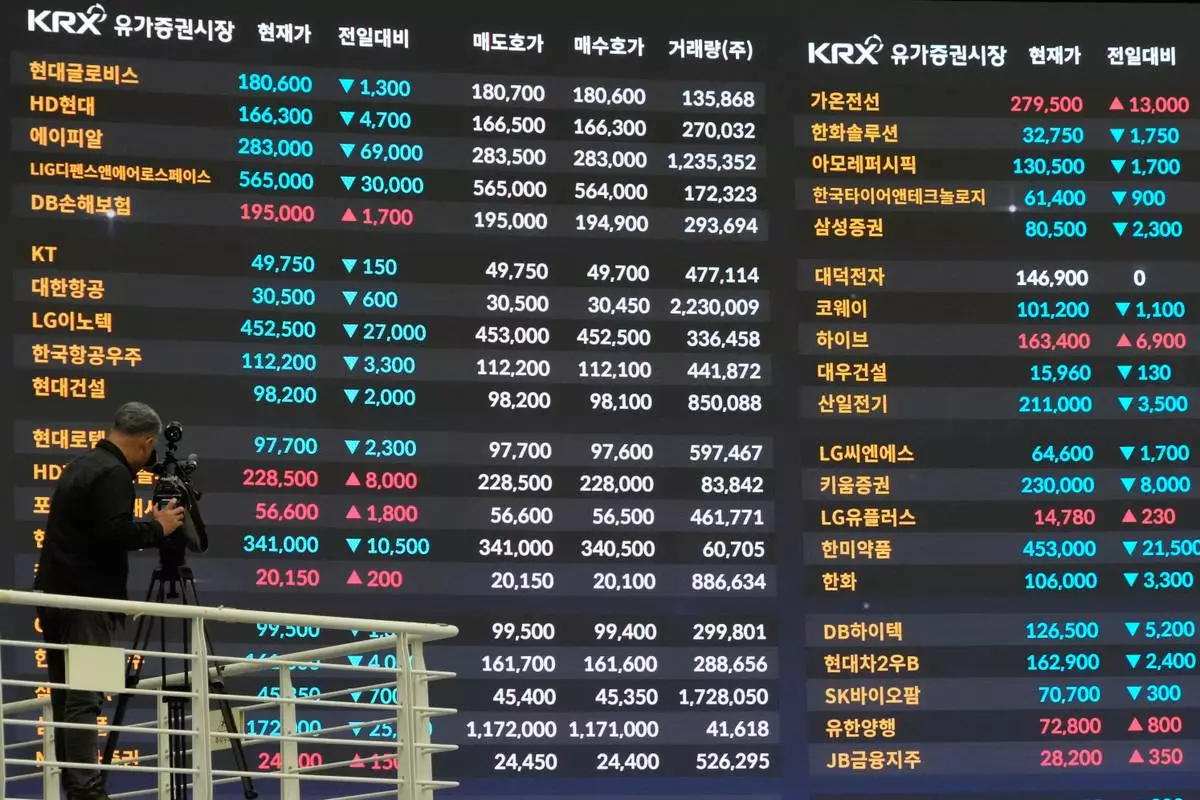
A TV camera man works in front of a screen showing stock prices at the Korea Exchange in Seoul, South Korea, Tuesday, Oct. 13, 2026. (AP Photo/Ahn Young-joon)