LAKE FOREST, Ill. (AP) — The Chicago Bears are navigating a tricky situation with their quarterbacks while working through a murky picture along their defensive line.
Coach Ben Johnson has a lot going on at the moment.
Johnson said Caleb Williams would be a projected full participant for the team's walkthrough on Wednesday, but he declined to announce his starting quarterback for this weekend's game at Atlanta. Williams hasn't played since he hurt his right hamstring in the fourth quarter of a 9-3 loss to Minnesota on Sept. 20.
Tyson Bagent started Sunday’s 31-7 loss at Green Bay and threw two interceptions. Case Keenum was picked off and lost a fumble after replacing Bagent early in the fourth quarter.
“In regards to the quarterback situation, a lot of things have gone through our minds,” Johnson said. “First and foremost, health is the No. 1 priority for all three guys. I don’t know that any of them are exactly 100% at this point in the season. That’s something that we certainly look at.”
Another complicating factor is a quick turnaround from Sunday's matchup with Atlanta to next Thursday's home game against the New England Patriots.
The 24-year-old Williams worked out on the field before the loss to the Packers. Asked if he was preparing for Williams to start against the Falcons, Johnson said it's still a fluid situation.
“But I feel good about the plan that we have in place at this point,” he said.
Beyond Williams, it's unclear who exactly is regarded as the team's No. 2 QB at the moment. Bagent began the season as Williams' backup, but he was 12 for 21 for just 87 yards against the Packers.
“I think once again, I put our struggles on myself more than anything else from the game the other day,” Johnson said, “and I have to do a better job making sure we get in a rhythm on offense, regardless of who’s playing the quarterback position.”
Depth along the defensive line also has become a major question after Montez Sweat was suspended for two games for violating the NFL’s performance-enhancing substances policy. Dayo Odeyingbo departed Sunday's loss with a quadriceps injury, and Johnson said the 27-year-old defensive end is expected to miss some time.
Shemar Turner replaced Sweat on Chicago’s roster, but he is a bit of a wild card after opening the season on the physically unable to perform list while continuing his recovery from a torn ACL. The 23-year-old Turner was a second-round selection in last year’s draft.
Austin Booker, who has a team-high four sacks, likely will see increased playing time while Sweat and Odeyingbo are out. Jamree Kromah and Jayden Loving also could figure into the mix after they were inactive against Green Bay.
“The good thing is we have really planned for this,” Johnson said. “We’ve got some guys on the active roster that haven’t even been active yet. Some defensive linemen that we feel really strongly about and what they did during training camp. This might be their opportunity as well.”
Chicago also could be without linebacker T.J. Edwards and defensive back Tyrique Stevenson for the matchup with Atlanta because of hamstring injuries. Johnson described Stevenson as more day to day while Edwards is more of a week-to-week situation.
The defensive injuries make the already daunting task of stopping Falcons running back Bijan Robinson even more difficult.
“It takes a whole unit to attempt to slow down a special player like Bijan, God-given ability to see, to burst, to separate, to contact balance,” said defensive tackle Grady Jarrett, a Georgia native who spent his first 10 seasons with the Falcons. "I mean this is a really, really special player, special person, and he knows he’s the bloodline of that organization. So we’ve got a heck of a challenge ahead of us.”
See AP’s full NFL coverage here
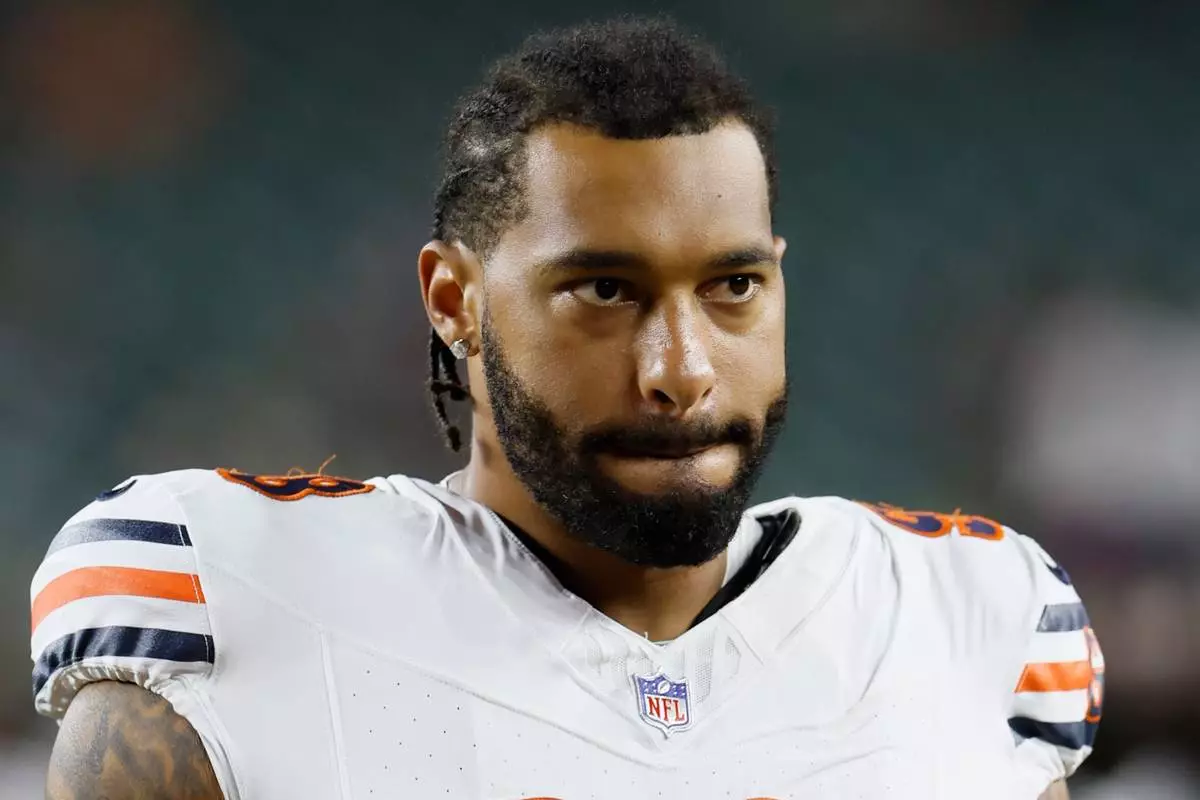
FILE - Chicago Bears defensive lineman Montez Sweat leaves the field after an NFL preseason football game against the Cincinnati Bengals in Cincinnati, Aug. 22, 2026. (AP Photo/Jay LaPrete, File)
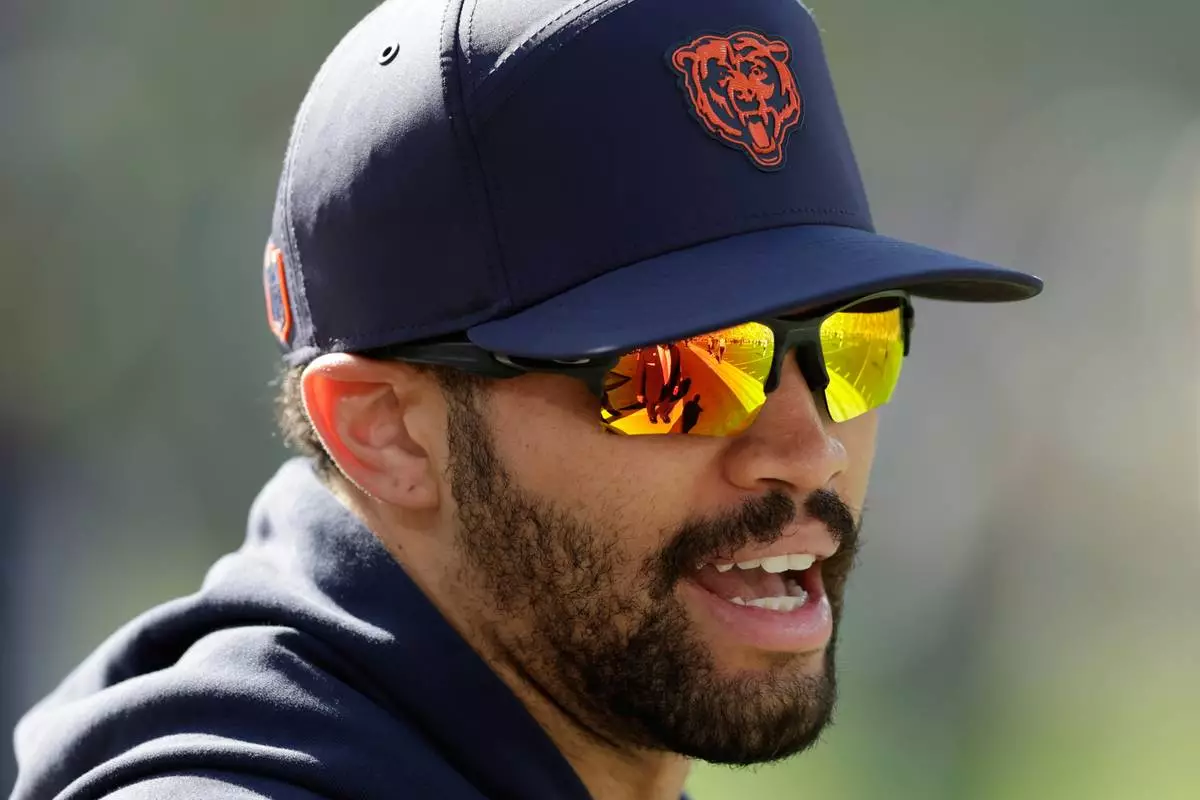
Chicago Bears' Caleb Williams is seen before an NFL football game against the Green Bay Packers in Green Bay, Wis., Sunday, Oct. 11, 2026. (AP Photo/Matt Ludtke)

Chicago Bears head coach Ben Johnson talks after an NFL football game against the Green Bay Packers in Green Bay, Wis., Sunday, Oct. 11, 2026. (AP Photo/Mike Roemer)
WASHINGTON (AP) — More than a year after President Donald Trump deployed National Guard members to begin patrolling the streets of the nation's capital, a federal appeals court on Wednesday opened a hearing on the legality of his action by asking the government if there were any limits on a president's authority to do so.
The hearing began with the three-judge panel collectively questioning the government’s attorney, Eric McArthur. Judge Cornelia T.L. Pillard asked how the government's argument about an administration's authorities was “not federalization and therefore running up against" the Posse Comitatus Act, an 1878 U.S. law forbidding the use of the federal military for domestic law enforcement unless authorized by the Constitution or Congress.
McArthur, answering Judge Judith Rogers' question on the limits of a president's action, said, “I think the limiting principle in our position is the president has to be calling out the guard in aid of the civil authorities.”
Trump deployed the guard in August 2025 as part of what he said was a crime-fighting mission in Washington, D.C. The force, which rose to a peak of about 5,000 troops over the summer, has supported arrest operations, patrolled city streets and neighborhoods and participated in cleanup efforts.
Trump’s Republican administration says the deployment has contributed to a decrease in crime in the city, where crime was already on the decline before the National Guard arrived. Officials and activists in the overwhelmingly Democratic city say the deployment is a waste of taxpayer money and has normalized the militarization of a major American city.
Mitchell Reich, who was arguing for D.C., did not escape the hearing unscathed, with the panel concentrating on his argument that there are laws and guidelines that lay out a president's ability to call out the guard and there were circumstances when those steps would be unnecessary, including during an invasion or an insurrection.
“If there’s any kind of organized violence in the district, the president can deploy the guard for the purpose of suppressing the same,” he said.
The 90-minute hearing came months after a different three-judge panel paused a lower court’s ruling that Trump's deployment of the guard was illegal.
The three judges who issued the stay last December — two appointed by Trump and one appointed by President Barack Obama, a Democrat — said in a unanimous 32-page ruling that a number of factors favored the Trump administration, including the “disruption to the lives of thousands of service members,” as well as what it said was the president’s interest “in the protection of federal governmental functions and property within the nation’s capital.”
The three judges on the panel on Wednesday were nominated by Democratic presidents: Pillard by Obama, Rogers by Bill Clinton and Bradley Garcia by Joe Biden.
At the heart of the court case, brought by D.C.'s attorney general, is whether the president has the authority to deploy the National Guard to the city, which, as a federal district, has limited autonomy over its own affairs. The U.S. Constitution gives federal lawmakers authority over the District of Columbia, while the Home Rule Act of 1973 lets residents elect a mayor, a council and neighborhood commissioners.
The city has argued that the mobilization is an illegal use of the military for domestic law enforcement, a point Reich made during the hearing.
Last December, the three-judge panel that paused the lower court's ruling said Trump might prevail in his argument that the president “possesses a unique power” to mobilize the guard in Washington.
Those judges found that the district “has not identified any ongoing injury to its statutory interests.”
Even if D.C. wins at the appeals court level, the Trump administration will undoubtedly go to the U.S. Supreme Court, which has already shown deference to the president in a number of cases.
Syracuse law professor William Banks said D.C. might have a slim argument under its home rule, questioning whether National Guard units can be deployed to the city when it isn’t authorized by local law.
But, he said, outside of that argument “there is no overarching federal principle that would bail out the district in this case."
Because D.C. is not a state and because the president is commander in chief, there’s a "tremendous amount of leeway and discretion for the president” to control or delegate control of the local National Guard and out-of-state units, Banks said.
U.S. District Judge Jia Cobb concluded last November that Trump’s military takeover in Washington illegally intrudes on local officials’ authority to direct law enforcement in the district.
Cobb, a Biden nominee, found that while the president does have authority to protect federal functioning and property, he can’t unilaterally deploy the D.C. National Guard to help with crime control as he sees fit or call in troops from other states.
The appeals court stayed the order and has allowed the guard to remain in place while the case is pending.
The mobilization, extended until January 2029 by the Defense Department, has taken on a sense of permanence, despite the court case.
The federal government awarded a $292 million contract to a private company to provide members of the Joint Task Force-D.C. with apartments. The numbers have grown as well, ballooning to around 5,000 during the height of the semiquincentennial celebration. As of last week, that number had dropped to about 2,900.
Before the hearing began, several dozen people rallied outside the courthouse to oppose the continuing presence of the military in the city.
David Barrows, a retired office manager and city resident, was dressed in a Trump costume. “It’s easier to boss around the people in Washington, D.C., because we don’t have any representation in either House or Congress. So we’re basically an abused people,” he said. “We pay the highest federal taxes in the land, and we get no representation in both houses. So we’re a cheated people, and we’re scapegoats for Trump.”
He also questioned the premise of the guard's presence: “There's no national emergency here in Washington,” he said.
Jennifer Pace, a longtime resident and former banker, said she suspected the case would continue through the courts.
“But I really want it to move forward so they can just go home,” Pace said. "I’m sure they want to go home, too, because it’s clear they’re bored. They’re just standing around.”
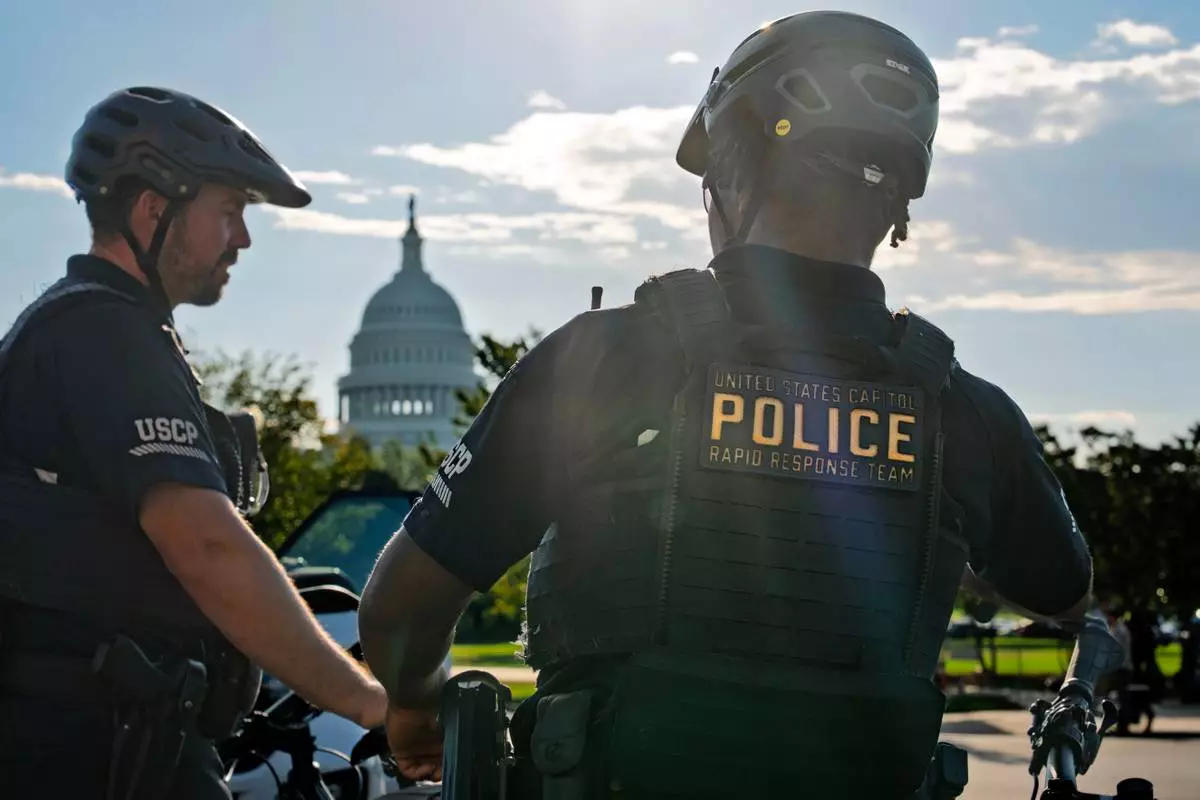
U.S. Capitol Police secure an intersection near the Capitol as activists stop traffic and call for the ouster of President Donald Trump's National Guard deployment in Washington, Wednesday, Oct. 14, 2026. (AP Photo/J. Scott Applewhite)
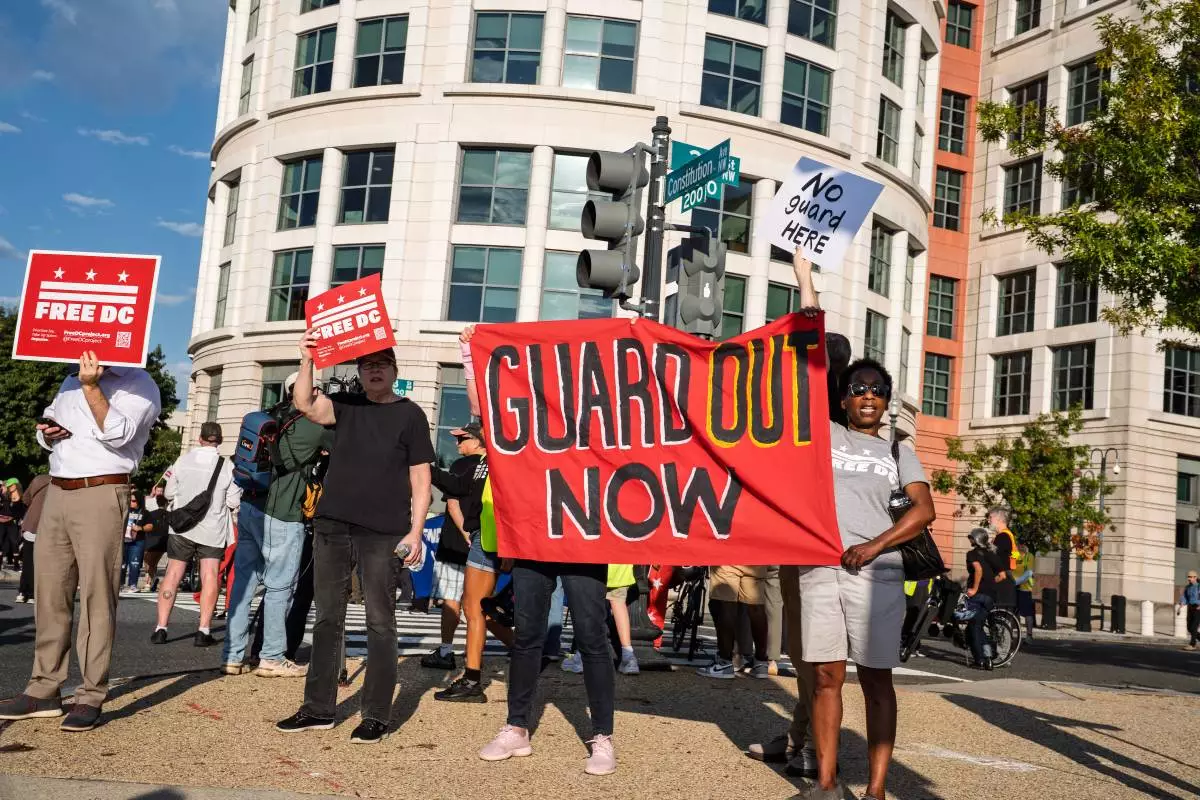
Protestors near the federal courthouse stop traffic and call for the ouster of President Donald Trump's National Guard deployment in Washington, Wednesday, Oct. 14, 2026. (AP Photo/J. Scott Applewhite)
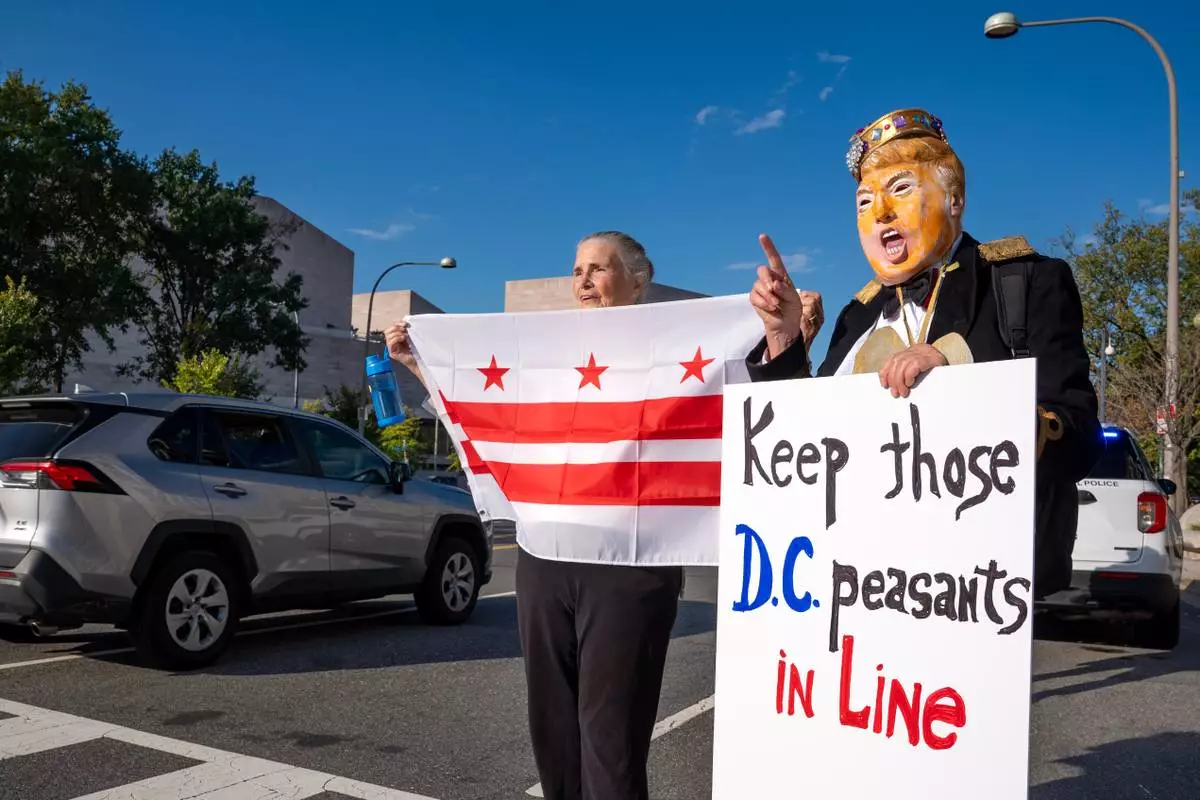
Protestors near the Capitol stop traffic and call for the ouster of President Donald Trump's National Guard deployment in Washington, Wednesday, Oct. 14, 2026. (AP Photo/J. Scott Applewhite)
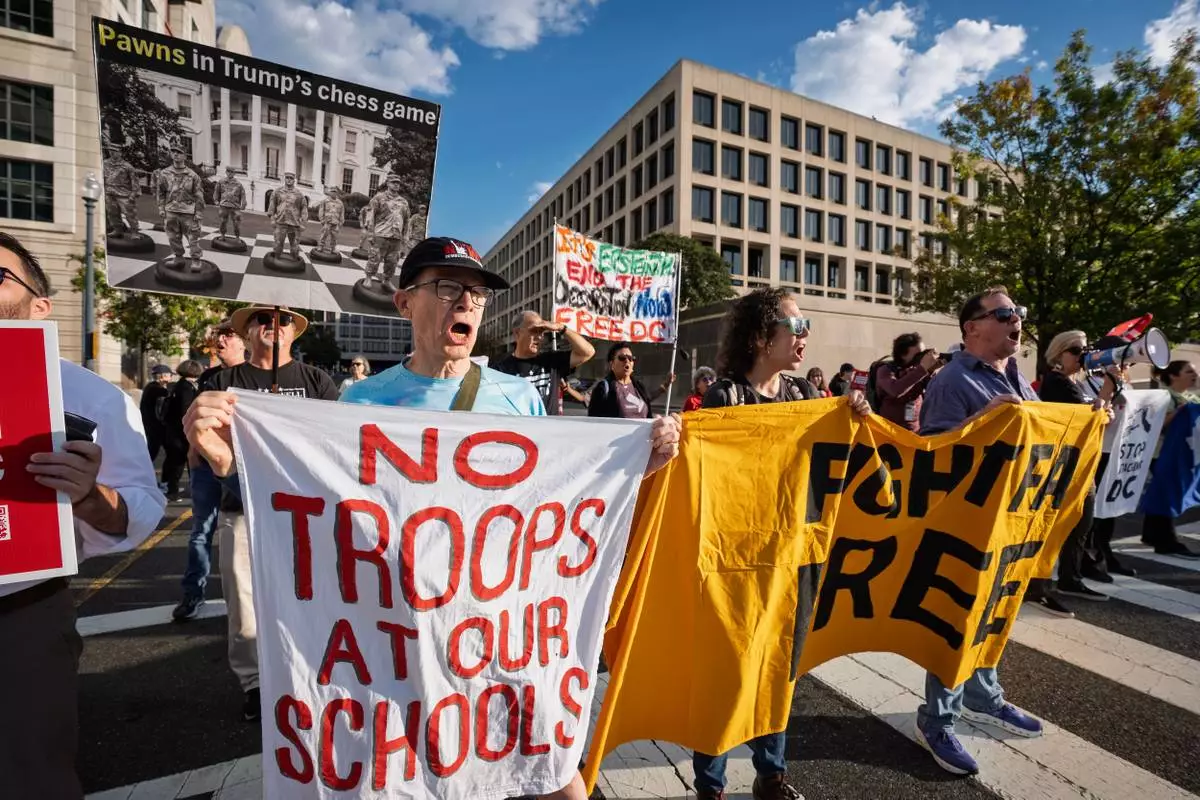
Protestors near the federal courthouse stop traffic and call for the ouster of President Donald Trump's National Guard deployment in Washington, Wednesday, Oct. 14, 2026. (AP Photo/J. Scott Applewhite)
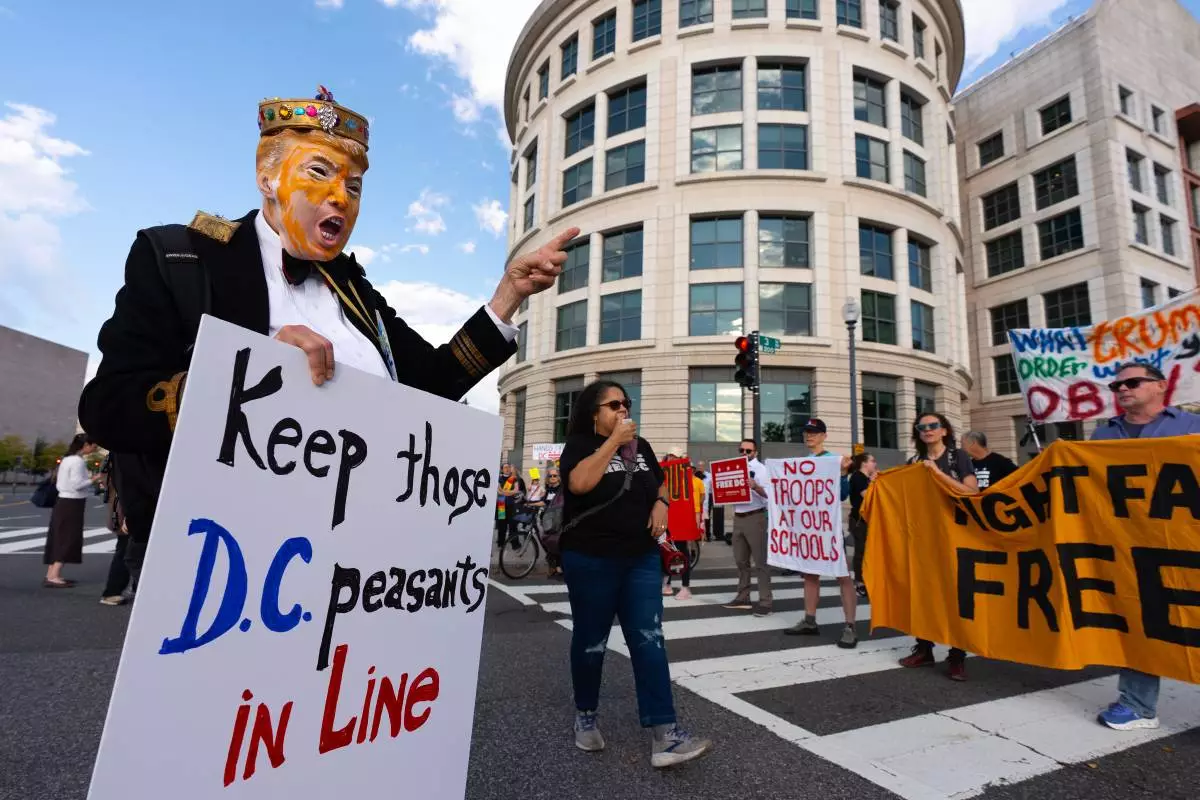
Protestors near the federal courthouse stop traffic and call for the ouster of President Donald Trump's National Guard deployment in Washington, Wednesday, Oct. 14, 2026. (AP Photo/J. Scott Applewhite)
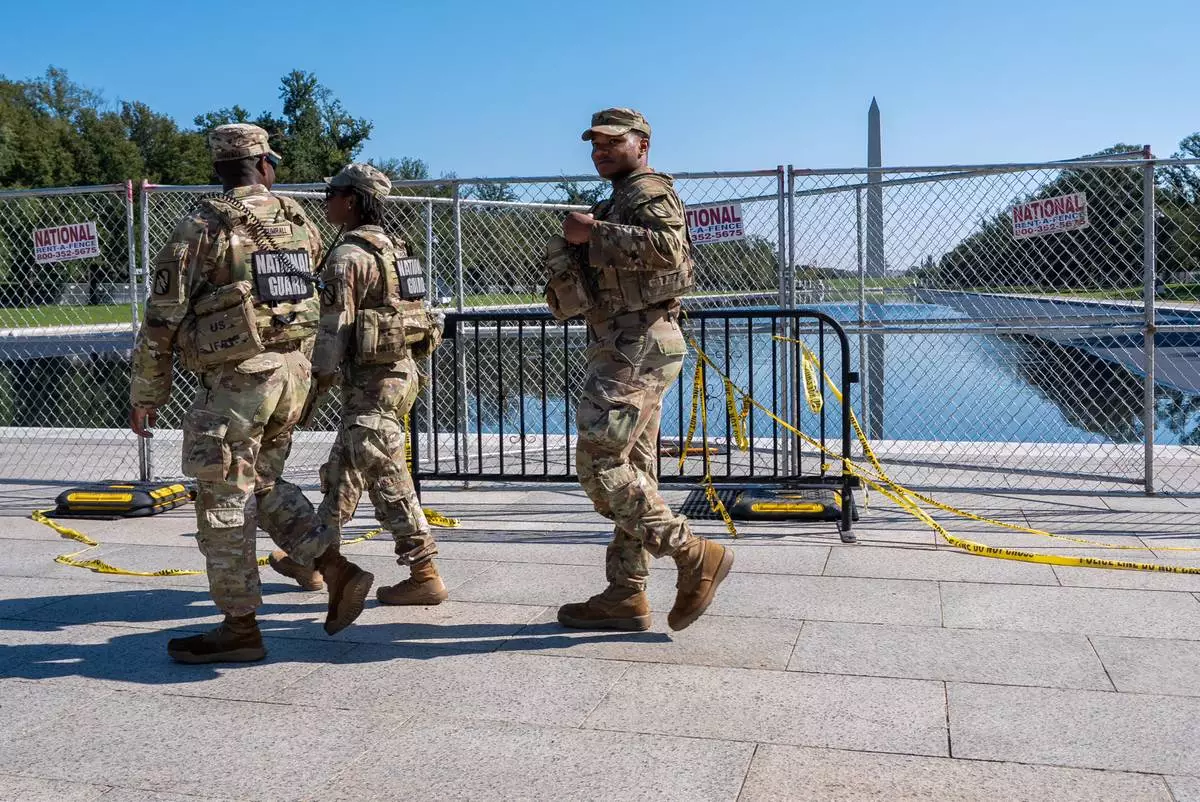
Members of the National Guard walk past the Lincoln Memorial Reflecting Pool, where some water can be seen, Tuesday, Oct. 13, 2026, in Washington. (AP Photo/Jacquelyn Martin)