HARARE, Zimbabwe (AP) — Zimbabwean author Simbarashe Kundizeza, whose prize for a short story is under review over allegations of AI use, denied using artificial intelligence to write what he said was a story inspired by his family’s experiences, and he suggested that AI-detection technology is biased.
Kundizeza's “The Blue Fighter” won this year’s $10,000 Caine Prize for African Writing last week, but a report in The Atlantic magazine said the AI detection tool Pangram had indicated the entire story was AI-generated with the exception of an excerpt from a poem by another author.
Kundizeza posted a denial on X late Tuesday, and in an interview Wednesday with The Associated Press said that African writers and readers should challenge such accusations.
“There is need to use technology responsibly so that it is not deployed to create a bias against natives who seek to write about their own experiences and cultures,” he said. “Although I am not too well versed with these technologies, it is well known that AI is in certain ways biased against us, it’s something that really needs to be looked at because this kind of treatment I got is not going to stop,” he added.
The Caine Prize organizers have not retracted the prize, but have said that it is under review and that they have a responsibility to examine such AI claims. “We aim to do this by taking a human-centered approach, ensuring that writers are supported and cared for during the process. We have initiated that process in this case,” the organizers said this week.
In his statement on X, Kundizeza insisted that his story, centered on family relationships and economic hardship, was entirely his own work. He said it had gone through standard editorial processes. He said the story reflected his family’s life during Zimbabwe’s years of economic turmoil.
“Aspects of the story, including characters and the setting, are drawn from events in my own life,” he said, describing it as “a deeply personal story about economic collapse and familial relationships.”
He challenged the suggestion that differences between the winning story and his earlier work should cast doubt on his authorship.
“As writers, we develop recurring interests, but we don’t produce work from a single fixed template. To suggest that a writer cannot write in different styles or genres, or improve his writing substantially after five or more years, fundamentally misunderstands the craft of writing,” he said in his X post.
The allegations have prompted a wider debate on social media, with some questioning whether Black authors are being unfairly targeted by AI-related accusations.
Radical Books Collective, an international group that organizes online book clubs, literary events and podcasts focused on political literature and ideas, described the controversy as part of a broader pattern. “The digital lynchings continue as Black authors are being targeted in AI/plagiarism scandals: Jamir Nazir, Jerry Falade, Thélyson Orélien and now Simbarashe Kundizeza,” the collective posted.
Nhlandla Duba, a linguist from Zimbabwe who researches English literature at the University of Pretoria, said Kundizeza's story rings true.
“That story sounds human. Zimbabwean literature is alive!" Duba proclaimed on X.
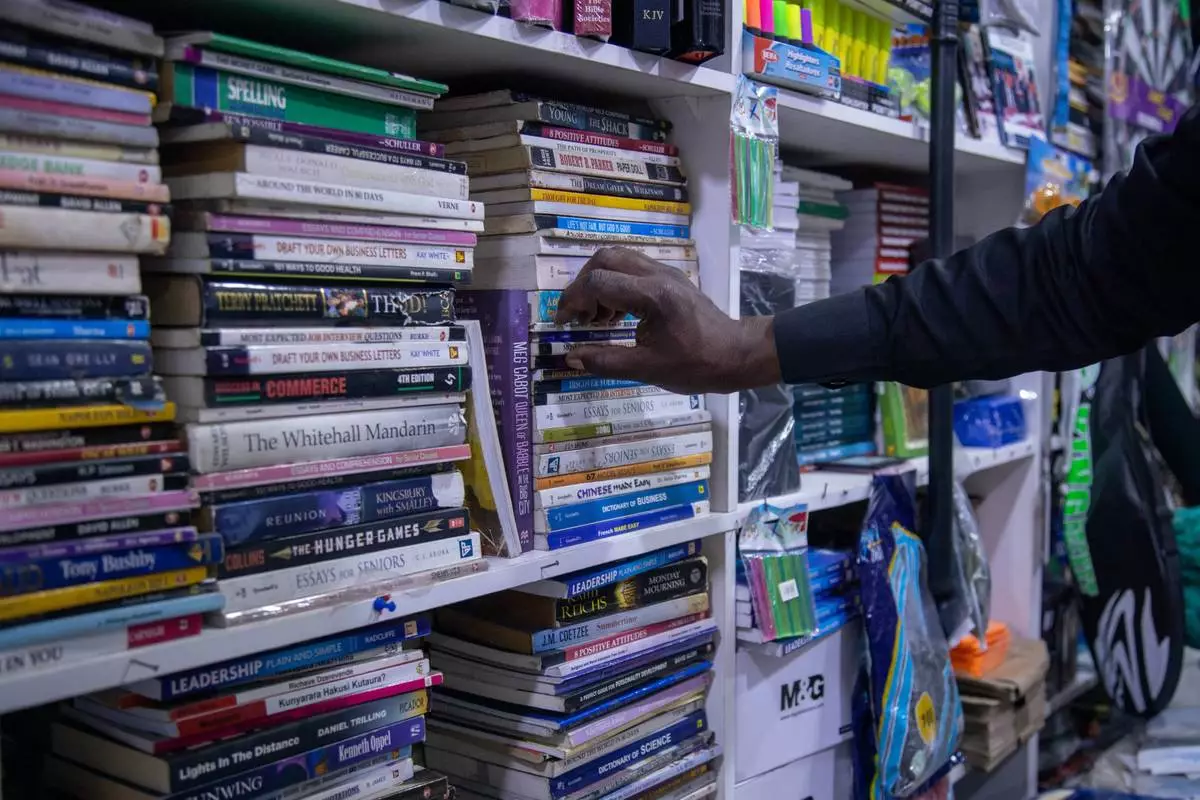
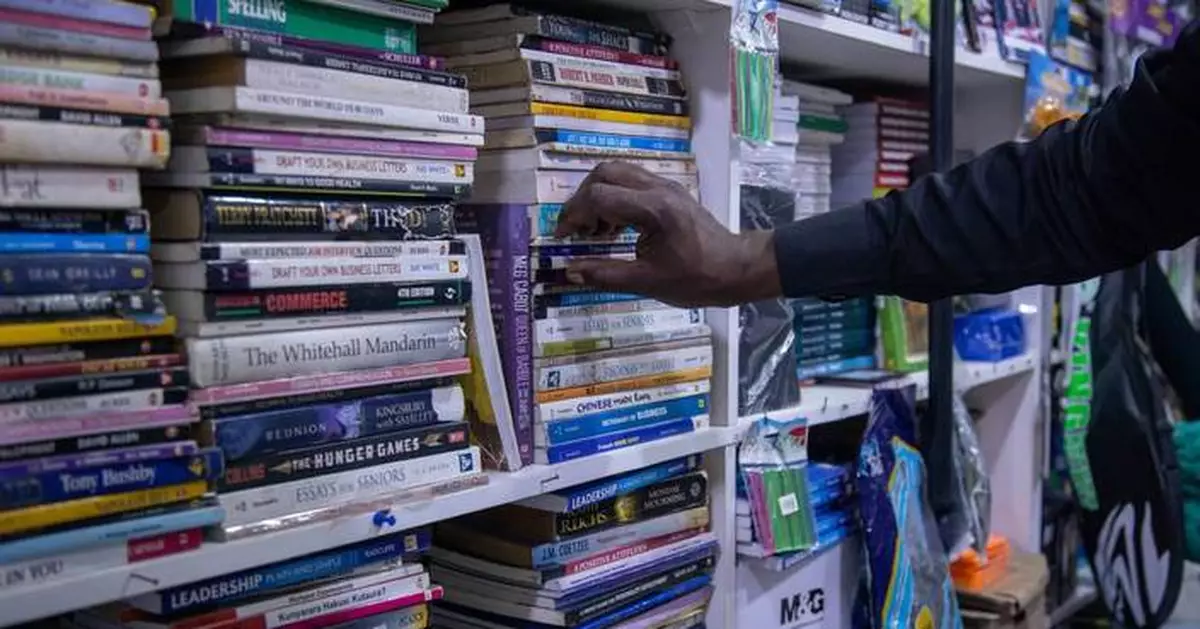
A customer browses for books at a bookstore in Harare, Zimbabwe, Wednesday, Oct. 14, 2026. (AP Photo/Aaron Ufumeli)
Cornell University President Michael Kotlikoff knew in 2024 that a student had reported being gang raped at a fraternity house, but never followed up to learn what had happened to her or whether any of the accused students had been punished.
In an interview with The New York Times published Tuesday, a day before Cornell’s Faculty Senate began debating a no-confidence resolution in his administration, Kotlikoff acknowledged that he did not know until recently that the woman had dropped out of Cornell or that students had been expelled or suspended over the incident.
Kotlikoff publicly addressed what he called “deeply disturbing” allegations involving drug use and sexual violence at the Chi Phi fraternity house in a November 2024 message to the Cornell community, saying criminal and university investigations were underway.
He subsequently convened a presidential task force to examine how Cornell handles sexual assault, but said this week that he never followed up to learn the outcomes of the criminal or Title IX investigations into the woman’s allegations.
The case has drawn national attention since the woman, identified in court documents as Jane Doe, filed a lawsuit alleging that seven Chi Phi fraternity members sexually assaulted or exploited her in October 2024 and that Cornell mishandled her complaints.
On Tuesday, Kotlikoff announced a ban on fraternity parties through the end of the academic year and plans to give state police a role in investigating sexual assault reports.
Tompkins County District Attorney Matthew Van Houten initially declined to pursue charges after reviewing a summary prepared by Cornell University Police, but later said it omitted key details. He reopened the investigation after the lawsuit was filed. Gov. Kathy Hochul subsequently removed him from the case, appointed Attorney General Letitia James as special prosecutor and ordered an independent review of Cornell’s handling of the allegations.
The Cornell Faculty Senate's proposed resolution, declaring no confidence in the administration's ability to handle reports of sexual assault on campus, reflects growing concerns among some faculty members that people who report sexual misconduct face institutional barriers and fear retaliation. Some have called for Kotlikoff’s resignation, while others have urged patience as independent investigations proceed.
Kotlikoff was to address the Faculty Senate before members began debating the resolution. Debate was expected to continue Oct. 28, followed by electronic voting by the Faculty Senate, which has approximately 130 voting members. A simple majority is required for passage.
For Ariana Kim, an associate music professor at Cornell and co-sponsor of the resolution, Kotlikoff’s acknowledgment that he had not followed up on the woman’s case was deeply troubling.
“I mean, that’s appalling in and of itself, right?” Kim said. “That you don’t know about a student who faced an alleged horrific crime, that you don’t think to check in.”
Kim, a Grammy-nominated violinist, said she was motivated to take action after being struck by Jane Doe's story, as well as her own personal experiences on campus since she started at Cornell a decade ago as a young academic in her 20s. She said when she experienced bullying and sexual harassment by senior colleagues, Cornell failed to properly document her complaints and that she was never clearly informed what disciplinary action, if any, had been taken.
“I was asked what I had done to provoke the situation,” she said.
Kim said she continued to be expected to work alongside colleagues she said had harassed her. Her efforts to avoid them later became a point of criticism during her tenure review. In one instance, a senior professor cited her unwillingness to accept his advice and her avoidance of him in explaining his vote against granting her tenure.
Kim spent more than a year appealing the initial denial of tenure, a process during which she said she lost 20 pounds (9 kilograms) and struggled to eat or sleep. The original decision was ultimately overturned, and she secured tenure.
Now seeking promotion to full professor, Kim said she recognizes that publicly criticizing university leaders could again jeopardize her career.
“I’m speaking out publicly against this administration that may very well deny my promotion,” she said.
Kim said she has considered leaving Cornell many times over the years but is determined to stay and make the university safer for those who come after her.
“If by me fighting, it helps move the needle a little bit so that my female students aren’t going through this in 10 years or my female colleagues aren’t going through this in five years, then maybe it’s worth it.”
Anne Marie Brady, a senior extension associate at Cornell’s School of Industrial and Labor Relations and another co-sponsor of the resolution, questioned whether Cornell University Police can independently investigate serious allegations of sexual misconduct.
“There doesn’t seem to be independence between the administration and the Cornell Police Department,” Brady said. She pointed to its handling of campus protests as one reason for her concerns and said serious criminal allegations should be investigated by outside law enforcement agencies.
Brady welcomed Kotlikoff’s announcement that state police would take on a role in sexual assault investigations, saying it showed the administration was listening to faculty concerns. But she questioned the timing, a day before the Senate was scheduled to begin debating the no-confidence resolution.
“I’m happy that they are listening — we need a dialogue,” she said. “We need to debate and discuss this. But I also feel it’s a bit disingenuous that it comes out just before the resolution.”
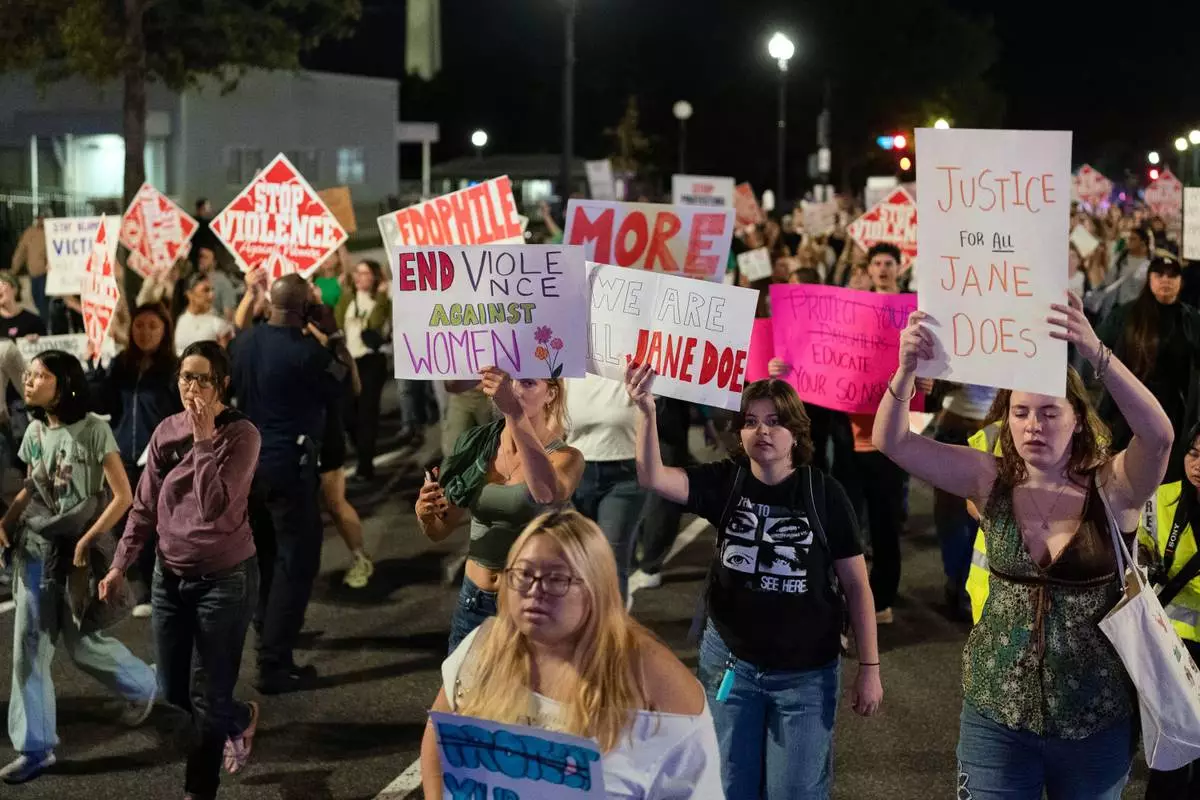
Demonstrators march from the Washington Monument to the White House during a "Stop Sexual Violence" protest in Washington, Thursday, Oct. 8, 2026. (AP Photo/Jose Luis Magana)
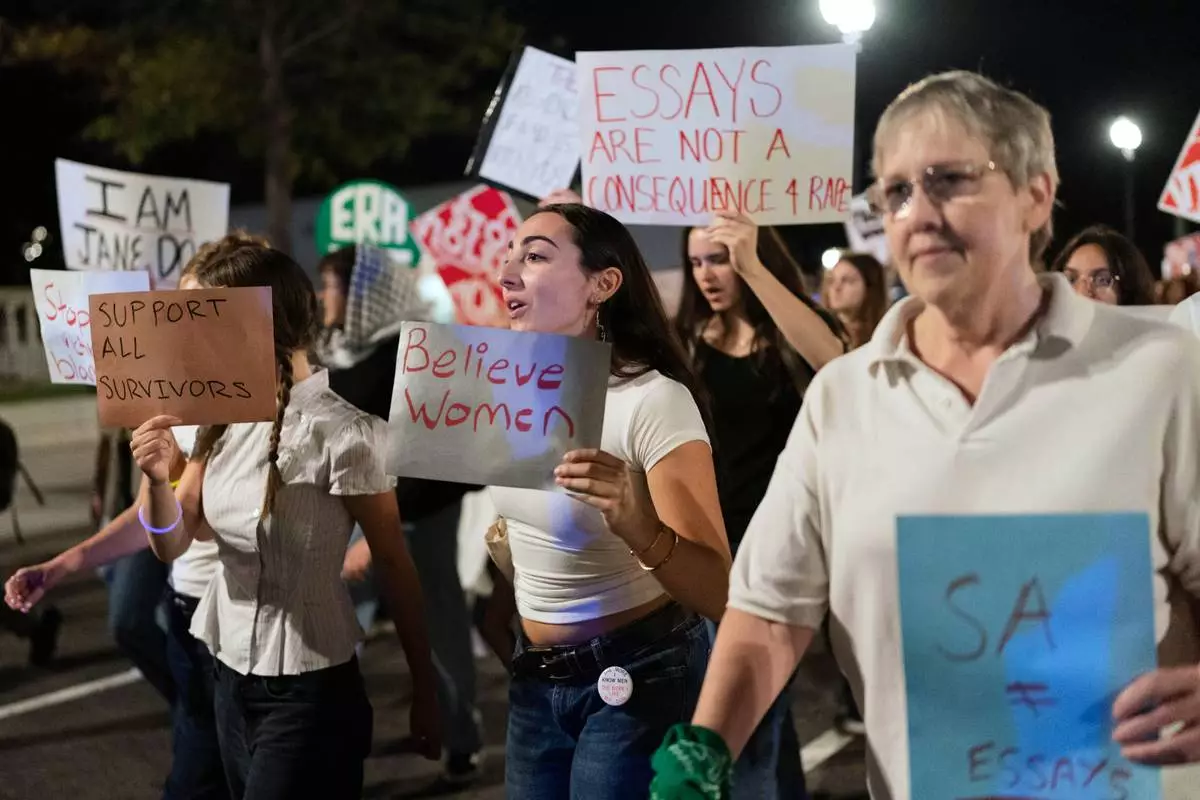
Demonstrators march from the Washington Monument to the White House during a "Stop Sexual Violence" protest in Washington, Thursday, Oct. 8, 2026. (AP Photo/Jose Luis Magana)