Skip to Content Facebook Feature Image

Brazil's Senate approves a shorter workweek in major win for Lula ahead of runoff

News

Brazil's Senate approves a shorter workweek in major win for Lula ahead of runoff
News

News

Brazil's Senate approves a shorter workweek in major win for Lula ahead of runoff

2026-10-15 09:55 Last Updated At:11:46

SAO PAULO (AP) — Brazil’s Senate approved a constitutional amendment Wednesday to reduce the country's maximum workweek from 44 to 40 hours without a salary cut, a move backed by President Luiz Inácio Lula da Silva, who hopes it will boost his standing against Flávio Bolsonaro in the Oct. 25 presidential runoff.

Lula is expected to sign the shorter workweek into law next week after the measure passed the Senate in two rounds of voting with the same result: 75 to 1 out of 81 members. The sole vote against it came from former Vice President Hamilton Mourao, who served under President Jair Bolsonaro.

More Images
Opposition presidential candidate Sen. Flavio Bolsonaro, center, and his wife Fernanda pose for a selfie with a youth after attending Mass at the Metropolitan Cathedral of Our Lady of Aparecida, the patron saint of Brazil, on her feast day in Brasilia, Brazil, Monday, Oct. 12, 2026. (AP Photo/Arthur Menescal)
Opposition presidential candidate Sen. Flavio Bolsonaro, center, and his wife Fernanda pose for a selfie with a youth after attending Mass at the Metropolitan Cathedral of Our Lady of Aparecida, the patron saint of Brazil, on her feast day in Brasilia, Brazil, Monday, Oct. 12, 2026. (AP Photo/Arthur Menescal)

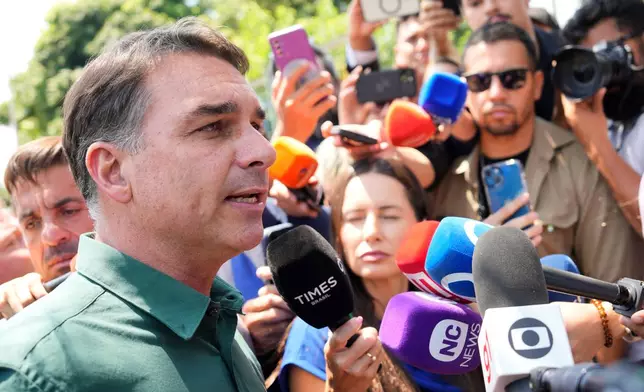
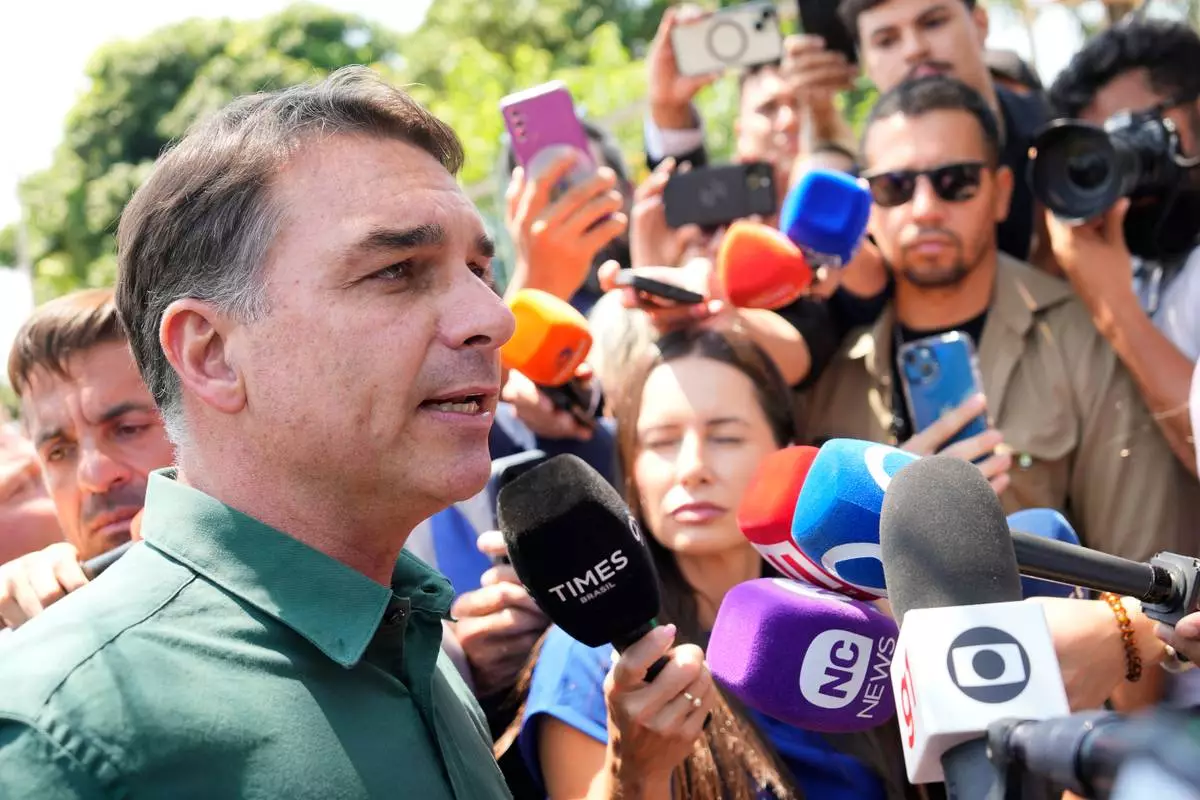
Opposition presidential candidate Sen. Flavio Bolsonaro speaks to the press after visiting his father, former President Jair Bolsonaro who is serving his sentence for a coup attempt at home, in Brasilia, Brazil, Tuesday, Oct. 13, 2026. (AP Photo/Eraldo Peres)
Opposition presidential candidate Sen. Flavio Bolsonaro speaks to the press after visiting his father, former President Jair Bolsonaro who is serving his sentence for a coup attempt at home, in Brasilia, Brazil, Tuesday, Oct. 13, 2026. (AP Photo/Eraldo Peres)

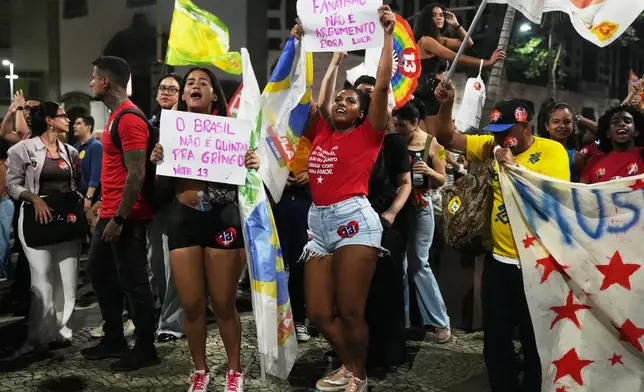
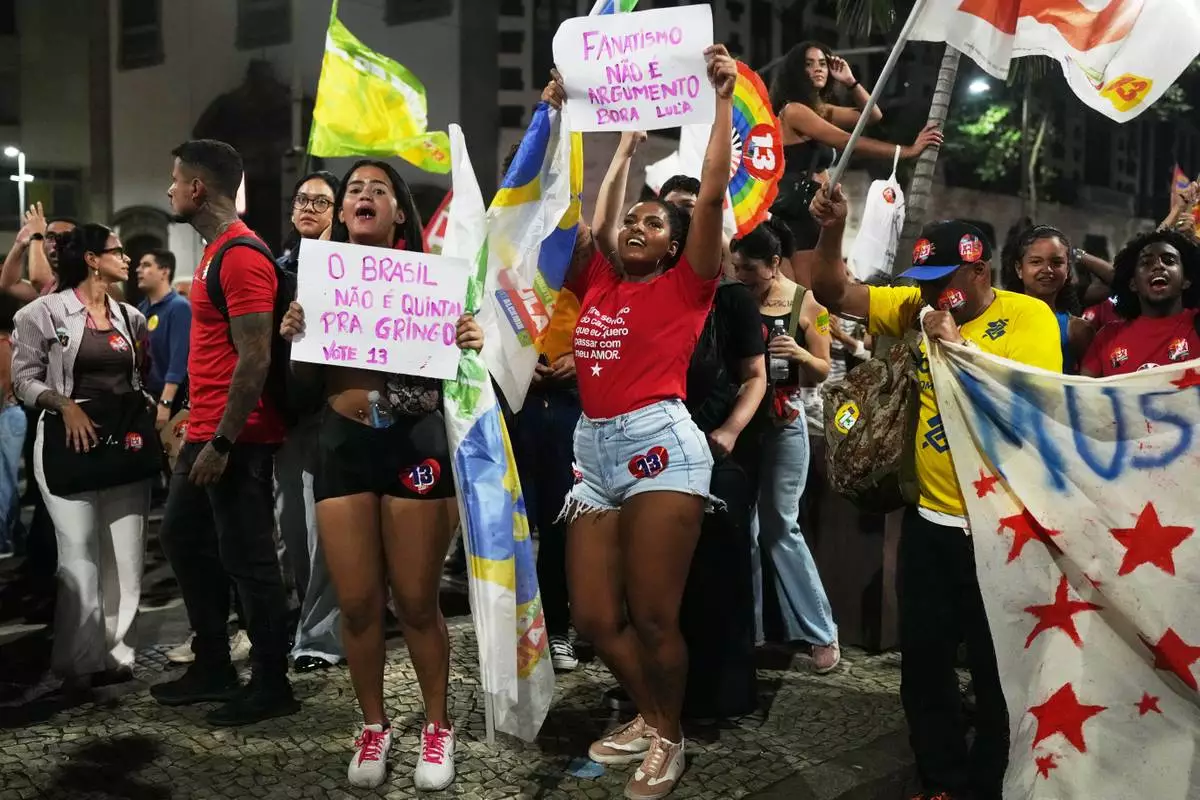
Supporters of Brazilian President Luiz Inacio Lula da Silva, who is running for reelection, shout slogans during a rally ahead of the presidential runoff election, in Rio de Janeiro, Wednesday, Oct. 14, 2026. (AP Photo/Silvia Izquierdo)
Supporters of Brazilian President Luiz Inacio Lula da Silva, who is running for reelection, shout slogans during a rally ahead of the presidential runoff election, in Rio de Janeiro, Wednesday, Oct. 14, 2026. (AP Photo/Silvia Izquierdo)

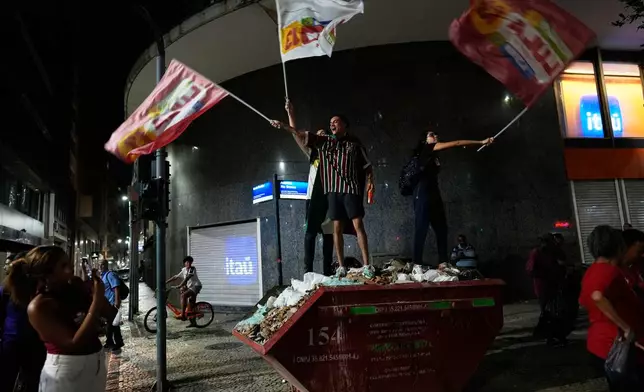
Supporters of Brazilian President Luiz Inacio Lula da Silva, who is running for reelection, stand on a dumpster during a rally ahead of the presidential runoff election, in Rio de Janeiro,Wednesday, Oct. 14, 2026. (AP Photo/Silvia Izquierdo)

Supporters of Brazilian President Luiz Inacio Lula da Silva, who is running for reelection, stand on a dumpster during a rally ahead of the presidential runoff election, in Rio de Janeiro,Wednesday, Oct. 14, 2026. (AP Photo/Silvia Izquierdo)

Brazilian President Luiz Inacio Lula da Silva, who is running for reelection, attends a ceremony to sign a decree regulating the video game industry in Brasilia, Brazil, Wednesday, Oct. 14, 2026. (AP Photo/Eraldo Peres)

Brazilian President Luiz Inacio Lula da Silva, who is running for reelection, attends a ceremony to sign a decree regulating the video game industry in Brasilia, Brazil, Wednesday, Oct. 14, 2026. (AP Photo/Eraldo Peres)

Flávio Bolsonaro, who opposed the initiative until early this week, voted for it remotely as he campaigned in southern Brazil. Analysts and politicians say his allies in the Senate stopped blocking the popular move so he wouldn't be hurt in his neck-to-neck race against Lula.

The amendment gives businesses 14 months to adopt the shorter workweek, which was a key sticking point in the negotiations. Many business leaders and lawmakers wanted the changes to be made gradually over 10 years.

The constitutional amendment establishes a 40-hour weekly limit and two rest days without reducing pay. More than 37 million workers could benefit from the new rules, according to the government.

Brazil's president was quick to celebrate the decision.

“Today is a day to celebrate a historic achievement for millions of workers,” Lula said in a statement. “This means having more time to live, rest, be with family, watch your children grow up, take care of yourself, and enjoy life. Those who work so hard to build Brazil also deserve to have time to live.”

Many senators chanted Lula's name after the vote, while Bolsonaro supporters quickly left the chamber.

“Didn't I say this was going to work?” Davi Alcolumbre, the president of Brazil's Senate, told a leading senator of Lula's Workers' Party after the result. He timed the decision to take place between the first and the second round of the election, which benefits the incumbent.

Recent polls indicated widespread support for the measure, despite the opposition of many business owners. Many Bolsonaro allies said in their remarks they see the cost of living going up because of the new schedule.

Lula has taken a number of steps in recent days to shore up support before the runoff, including new fuel tax cuts, the extension of existing subsidies, the pledge to pardon debts of more than 3.6 million small businesses with the federal government, the decision to block signal for cellphones around prisons, and a boost in payments of a welfare program for university students.

The change in the workweek system is regarded as the pinnacle of those initiatives.

Bolsonaro, who bested Lula by 2.2 million votes in the first-round election, reversed his long-standing opposition to the measure on Tuesday. He previously advocated for a more flexible payment-by-the-hour regime, called for individual negotiations between employees and employers and repeatedly called the legislation election-motivated.

Hours after announcing his support for the change, Bolsonaro told business owners that the new Congress, where his party could reach a simple majority with other allied parties come February, could review the measure, local newspaper O Globo reported.

The approval of the reduced workweek was a theme in dozens of pro-Lula protests taking place nationwide since last week. Some celebrated the Senate vote on Wednesday in streets of Rio de Janeiro and Sao Paulo.

“We needed the people out on the streets,” said Lunna Normande, 23, during a protest with hundreds of people in Rio. “We will continue to be on the streets until this inhumane work week ends.”

Lula's government has been working on the proposal since last year. “Any change made in an election year can be considered an electoral measure,” said Carla Beni, an economist at the Getulio Vargas Foundation, a think-tank and university.

People working in the shadow economy, such as freelancers and delivery drivers, will not be affected by the new legislation.

The momentum behind this reform reflects a growing trend across Latin America. Neighboring countries such as Chile and Colombia have recently enacted landmark legislation to shorten their respective workweeks to 40 and 42 hours, which emboldened Brazilian labor groups to seek the same.

In February, Mexican lawmakers approved a proposal by President Claudia Sheinbaum to trim the 48-hour workweek. Working hours will be shortened gradually to a 40-hour workweek by 2030.

Chile in 2023 passed the so-called 40-Hour Law, which reduced its workweek to 40 hours as of last year. It applies to all workers under Chile’s Labor Code, without reducing pay.

But Argentina has bucked that trend under President Javier Milei and may extend its 48-hour workweek.

Hughes reported from Rio de Janeiro.

Follow AP’s coverage of Latin America and the Caribbean at https://apnews.com/hub/latin-america

Opposition presidential candidate Sen. Flavio Bolsonaro, center, and his wife Fernanda pose for a selfie with a youth after attending Mass at the Metropolitan Cathedral of Our Lady of Aparecida, the patron saint of Brazil, on her feast day in Brasilia, Brazil, Monday, Oct. 12, 2026. (AP Photo/Arthur Menescal)
Opposition presidential candidate Sen. Flavio Bolsonaro, center, and his wife Fernanda pose for a selfie with a youth after attending Mass at the Metropolitan Cathedral of Our Lady of Aparecida, the patron saint of Brazil, on her feast day in Brasilia, Brazil, Monday, Oct. 12, 2026. (AP Photo/Arthur Menescal)

Opposition presidential candidate Sen. Flavio Bolsonaro speaks to the press after visiting his father, former President Jair Bolsonaro who is serving his sentence for a coup attempt at home, in Brasilia, Brazil, Tuesday, Oct. 13, 2026. (AP Photo/Eraldo Peres)
Opposition presidential candidate Sen. Flavio Bolsonaro speaks to the press after visiting his father, former President Jair Bolsonaro who is serving his sentence for a coup attempt at home, in Brasilia, Brazil, Tuesday, Oct. 13, 2026. (AP Photo/Eraldo Peres)

Supporters of Brazilian President Luiz Inacio Lula da Silva, who is running for reelection, shout slogans during a rally ahead of the presidential runoff election, in Rio de Janeiro, Wednesday, Oct. 14, 2026. (AP Photo/Silvia Izquierdo)

Supporters of Brazilian President Luiz Inacio Lula da Silva, who is running for reelection, shout slogans during a rally ahead of the presidential runoff election, in Rio de Janeiro, Wednesday, Oct. 14, 2026. (AP Photo/Silvia Izquierdo)

Supporters of Brazilian President Luiz Inacio Lula da Silva, who is running for reelection, stand on a dumpster during a rally ahead of the presidential runoff election, in Rio de Janeiro,Wednesday, Oct. 14, 2026. (AP Photo/Silvia Izquierdo)

Supporters of Brazilian President Luiz Inacio Lula da Silva, who is running for reelection, stand on a dumpster during a rally ahead of the presidential runoff election, in Rio de Janeiro,Wednesday, Oct. 14, 2026. (AP Photo/Silvia Izquierdo)

Brazilian President Luiz Inacio Lula da Silva, who is running for reelection, attends a ceremony to sign a decree regulating the video game industry in Brasilia, Brazil, Wednesday, Oct. 14, 2026. (AP Photo/Eraldo Peres)

Brazilian President Luiz Inacio Lula da Silva, who is running for reelection, attends a ceremony to sign a decree regulating the video game industry in Brasilia, Brazil, Wednesday, Oct. 14, 2026. (AP Photo/Eraldo Peres)
New Zealand has avoided major changes to its starting lineup while selecting a more experimental bench for the second Bledisloe Cup rugby test against Australia on Saturday in Sydney.

Three of the eight changes to the matchday 23 have come in response to injuries as the All Blacks' selectors have mainly obeyed the adage to never change a winning combination.

The backline is altered only by the selection of Josh Moorby on the left wing in place of Leroy Carter, who injured his ankle late in the first test, which New Zealand won 50-19.

Damian McKenzie remains at flyhalf and Beauden Barrett at fullback in the dual playmaker setup that worked efficiently last weekend at Eden Park.

There are two changes in the forward pack where George Bower will start at loosehead in place of Ethan de Groot and Fabian Holland, a surprise omission last weekend, will return at lock for Josh Lord.

On the bench, hooker Samisoni Taukei'aho replaces Asafo Aumua, who has concussion, and DuPlessis Kirifi, who was left out of New Zealand's initial squad for the two-test series, returns in place of the injured Anton Segner.

Cortez Ratima takes over from Kyle Preston as the scrumhalf replacement and the powerful Timoci Tavatavanawai has been called on to make an impact in the centers.

There had been speculation that, having secured the Bledisloe Cup for the 24th year, New Zealand might have more changes with a view to next year's World Cup. But the All Blacks expect the Wallabies to provide stiff opposition at home.

“Last week was a big week with it being our first game back on New Zealand soil after a long tour away and the Bledisloe Cup on the line,” head coach Dave Rennie said. “We put in a performance befitting the occasion. Now we need to back that performance up.

“The Wallabies are a proud side and they'll be hurting after last week. It's a great challenge for us to now face them in front of their home crowd.”

That victory ended New Zealand's three-match losing streak — all in the Greatest Rivalry series against South Africa. For Australia, the loss ended an unbeaten run of six tests, which included a dramatic, upset win over the World Cup champion Springboks.

Injuries have reshaped the Australian backline for the match, forcing a significant change at flyhalf.

Declan Meredith will start at No. 10 in place of Ben Donaldson, who sustained a leg injury during the first test at Auckland. Harry McLaughlin-Phillips has been included to make his test debut from the bench as Wallaby No. 1,001.

Joseph-Aukuso Sua'ali'i moves from the wing to outside center in place of Len Ikitau who has a concussion, and Harry Potter returns on the left wing.

There are two changes in the front row where former All Black Aidan Ross will start at loosehead and Josh Nasser, a tryscorer last weekend, is named at hooker.

Among several changes on the Australian bench, Billy Pollard returns to cover hooker and Josh Canham is named as the second row backup. Carlo Tizzano provides backrow cover.

Scrumhalf Kalani Thomas has been selected for his first Bledisloe Cup test as replacement scrumhalf.

The Wallabies scored first and trailed 17-14 at halftime last week before the All Blacks dominated the second half, posting five tries.

“We got a clear picture last weekend of where we need to be better,” Wallabies coach Les Kiss said. “We’ve said all along we’ll continue to work hard and grow our game and the squad has been impressive in the way they have prepared this week.”

See AP’s full rugby coverage here

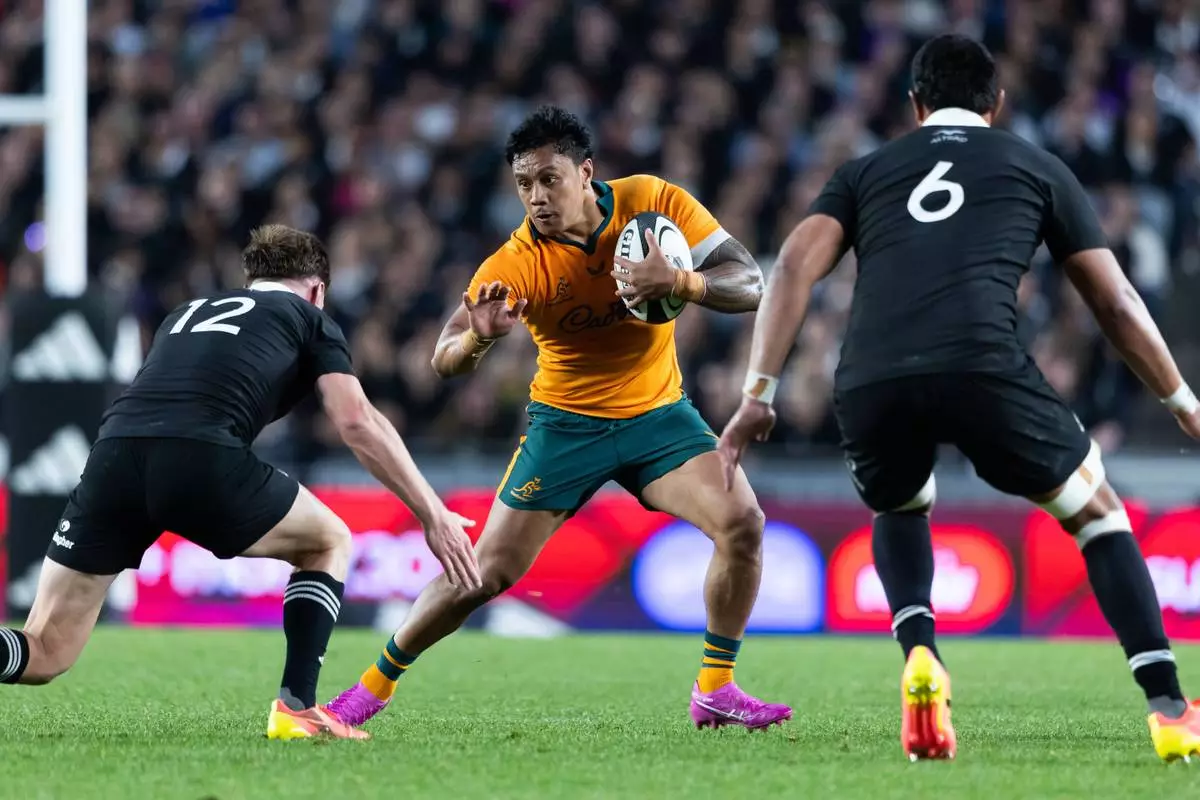
Australia's Len Ikitau, center, looks to split the defence of New Zealand's Jordie Barrett, left, and New Zealand's Tupou Vaa'i during a Bledisloe Cup rugby union test match in Auckland, New Zealand on Saturday, Oct. 10 2026. (Brett Phibbs/Photosport via AP)

Australia's Len Ikitau, center, looks to split the defence of New Zealand's Jordie Barrett, left, and New Zealand's Tupou Vaa'i during a Bledisloe Cup rugby union test match in Auckland, New Zealand on Saturday, Oct. 10 2026. (Brett Phibbs/Photosport via AP)

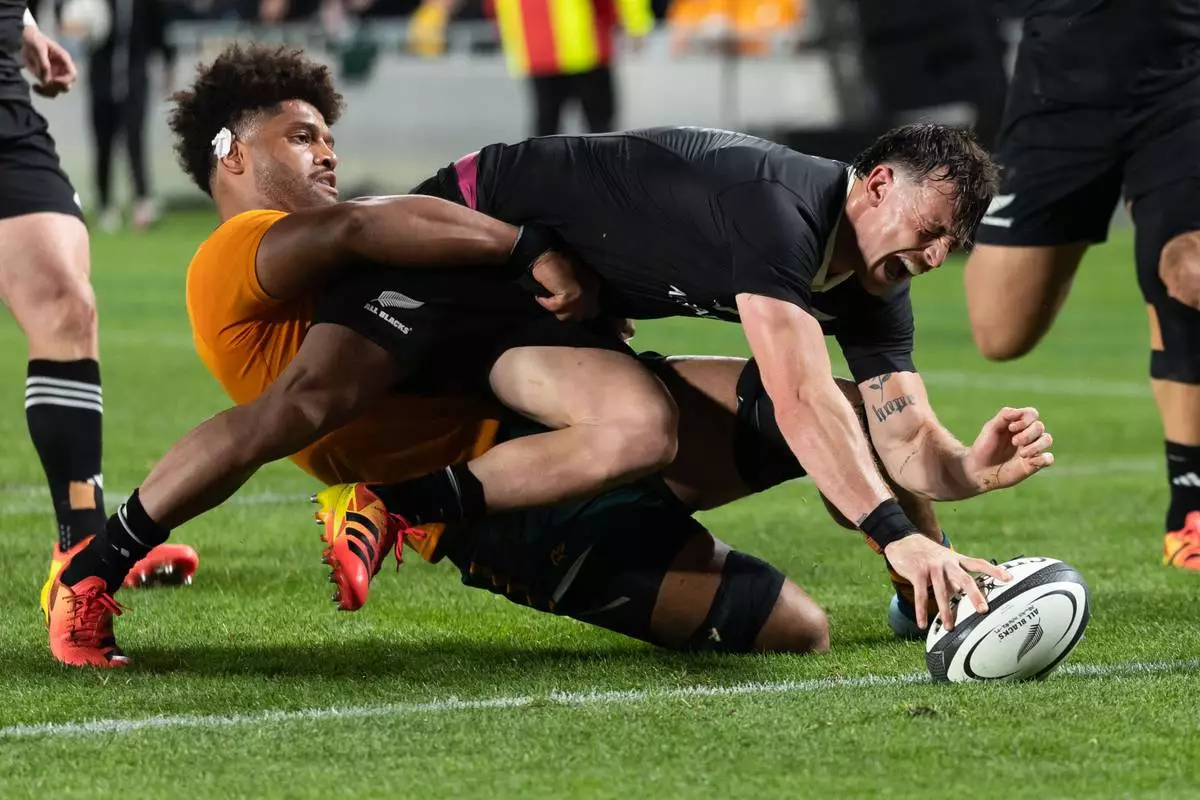
New Zealand's Leroy Carter, scores a try as Australia's Rob Valetini tackles him during a Bledisloe Cup rugby union test match in Auckland, New Zealand on Saturday, Oct. 10, 2026. (Brett Phibbs/Photosport via AP)

New Zealand's Leroy Carter, scores a try as Australia's Rob Valetini tackles him during a Bledisloe Cup rugby union test match in Auckland, New Zealand on Saturday, Oct. 10, 2026. (Brett Phibbs/Photosport via AP)

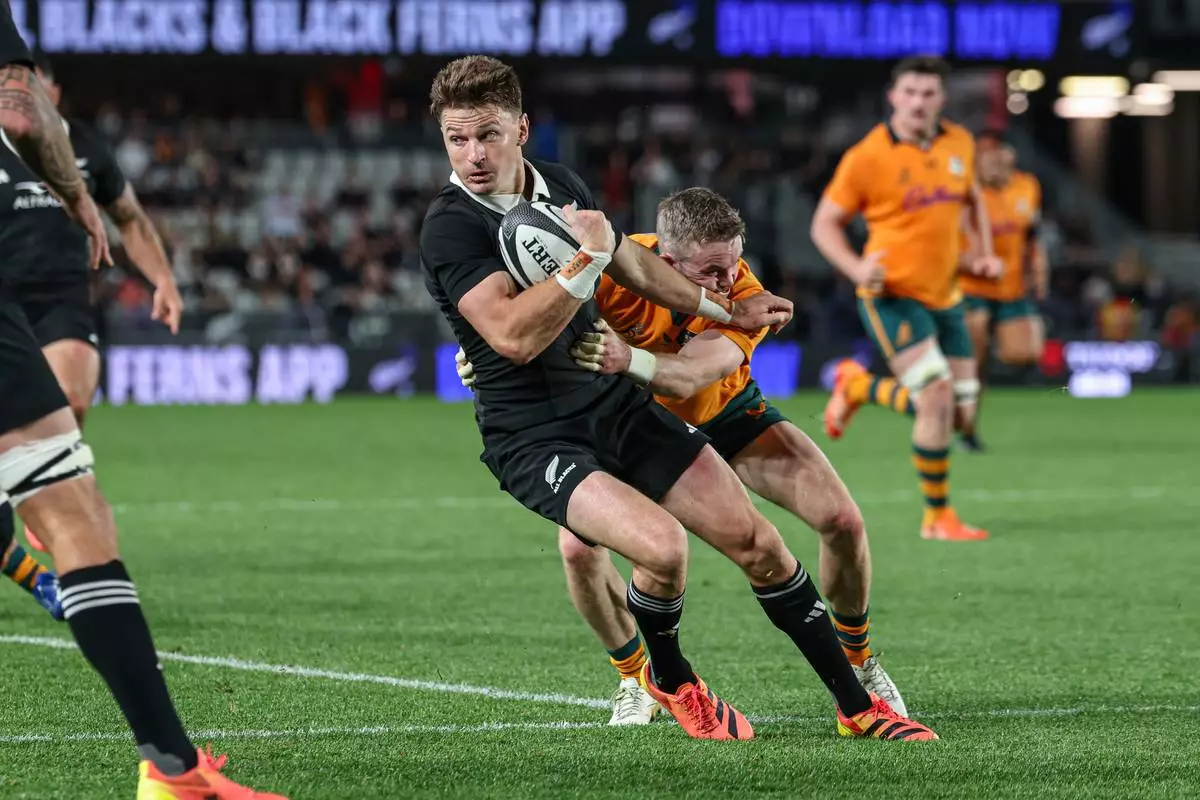
New Zealand's Beauden Barrett, left, is tackled by Australia's Ryan Lonergan during a Bledisloe Cup rugby union test match in Auckland, New Zealand on Saturday, Oct. 10, 2026. (Shane Wenzlick/Photosport via AP)

New Zealand's Beauden Barrett, left, is tackled by Australia's Ryan Lonergan during a Bledisloe Cup rugby union test match in Auckland, New Zealand on Saturday, Oct. 10, 2026. (Shane Wenzlick/Photosport via AP)

Recommended Articles